


Sherpa vs Fleece: Outdoor Blanket Guide
Dominic PalmowskiSherpa vs fleece is a cozy fabric debate until you are at a windy campsite, your coffee is cooling fast, and only one fleece blanket or sherpa blanket earns its spot in the car, van, tent, or backpack. The quick verdict: sherpa usually feels warmer and softer for lounging, while fleece is usually lighter, easier to pack, faster to dry, and more practical outdoors.
| Blanket Type | Material | Price | Best For |
|---|---|---|---|
| Fleece blanket | Usually polyester knit fabric with a brushed surface | Usually lower to mid-range | Backpacking, hiking breaks, damp conditions, kids, pets, frequent washing |
| Sherpa blanket | Usually polyester with a curly, wool-like high-pile side, often paired with a smooth fleece side | Usually mid-range to higher | Car camping, van life, cabins, stargazing, couch-level coziness outdoors |
If you are buying a blanket for outdoor life, not just the couch, the answer is not as simple as thicker equals better. Warmth, softness, weight, packed size, wind, dew, dirt, washing, and campfire sparks all matter. A sherpa blanket can feel like being hugged by a cloud. A fleece blanket can feel like the sensible trail friend who actually remembered the headlamp.
Let us sort it out without fabric snobbery.
In This Article
- Sherpa vs Fleece Blanket: Quick Outdoor Verdict
- What Is the Difference Between a Fleece Blanket and a Sherpa Blanket?
- Sherpa vs Fleece Blanket Which Is Warmer?
- Sherpa vs Fleece Blanket Which Is Softer?
- Which Blanket Packs Smaller for Camping and Travel?
- How Do Sherpa and Fleece Handle Dew, Rain, and Drying?
- Best Blanket for Cold Camping: Fleece or Sherpa?
- What Is the Name for the Fluffy Material Used for Blankets?
- What Are the Disadvantages of Fleece?
- Is Sherpa Like Wool?
- Is Teddy Fleece the Same as Sherpa Fleece?
- Outdoor Testing Factors Most Blanket Guides Ignore
- Washing and Care: How to Keep Both Blankets Soft
- Final Buying Guide: When to Choose Sherpa vs Fleece
- Frequently Asked Questions
- The Cozy Bottom Line
Sherpa vs Fleece Blanket: Quick Outdoor Verdict
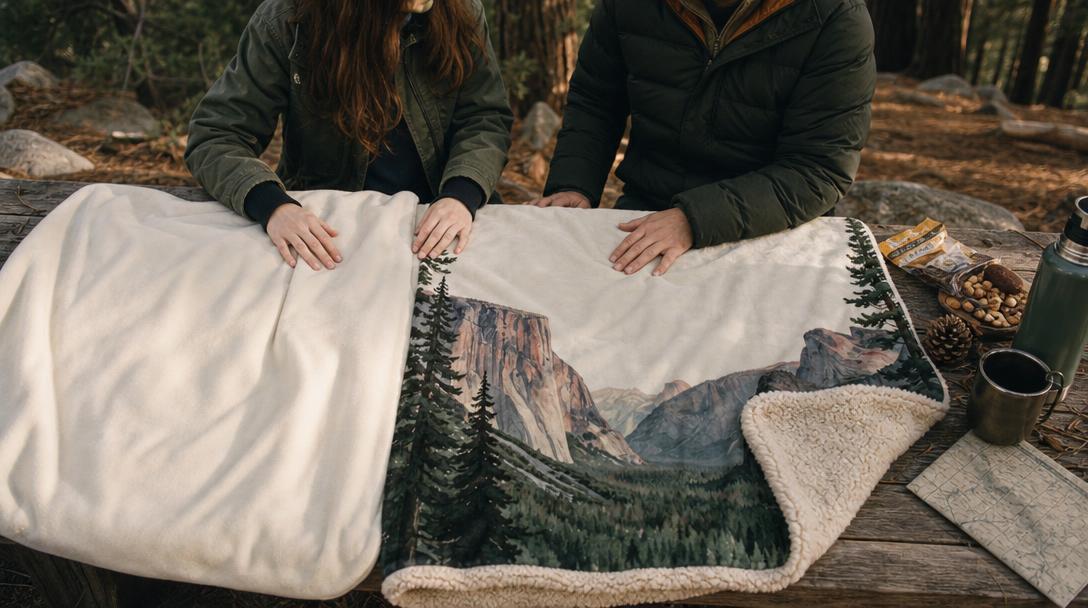
For outdoor use, sherpa vs fleece blanket choices come down to comfort versus practicality. Choose sherpa if you want maximum plush softness and cozy warmth for car camping, van life, cabins, or stargazing. Choose fleece if you need a lighter, more packable, faster-drying blanket that handles damp ground, dew, washing, and trail use better.
Here is the practical breakdown:
- Warmest feel: Sherpa blanket
- Softest plush feel: Sherpa blanket
- Best warmth-to-weight: Fleece blanket
- Best for backpacking: Fleece blanket
- Best for car camping: Sherpa blanket
- Best for damp mornings: Fleece blanket
- Best around dogs, leaves, grass, and burrs: Fleece blanket
- Best for becoming a human burrito: Sherpa blanket, no contest
The big catch: sherpa and fleece are broad categories, not exact performance ratings. A thick, dense fleece blanket can be warmer than a thin sherpa throw. A lightweight sherpa blanket can feel plush but still perform poorly in wind. Always compare fabric weight, construction, care instructions, and intended use.
What Is the Difference Between a Fleece Blanket and a Sherpa Blanket?
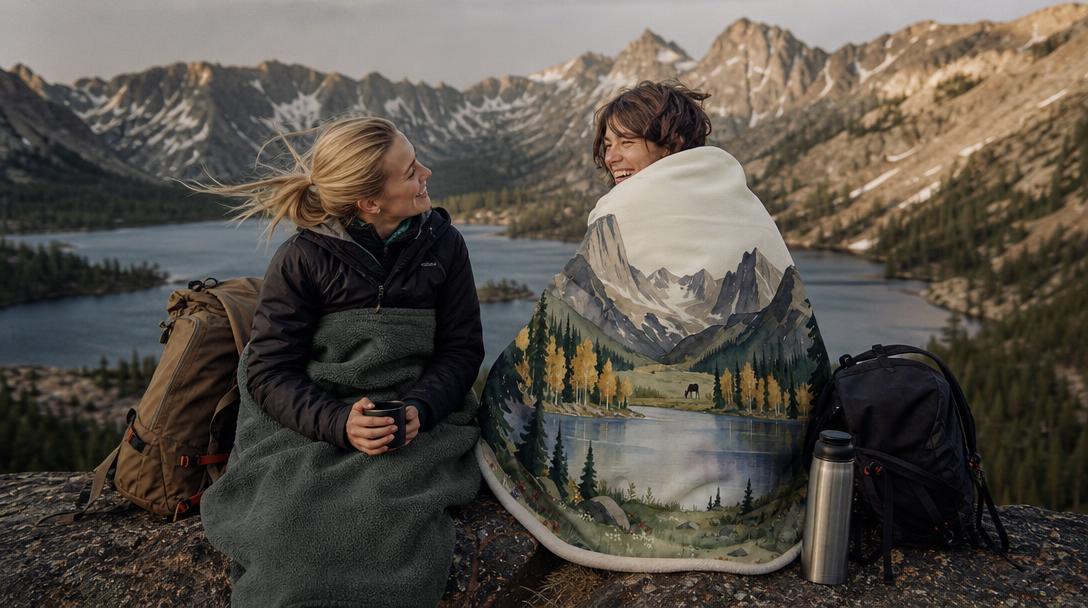
A fleece blanket is typically a soft polyester knit brushed to create tiny insulating fibers, while a sherpa blanket has a thicker, curly, wool-like pile that traps more air and feels fluffier. Fleece is usually lighter and faster-drying; sherpa is usually plusher, bulkier, and warmer-feeling for relaxed use.
A standard fleece blanket has a smoother, lower-pile surface. It is soft, warm, and flexible, but it does not usually have the deep, cloud-like loft of sherpa.
A sherpa blanket is often two-sided: one side may be smooth fleece or microfiber, while the other side has that curly, sheep-fleece-inspired texture. Sherpa-style fabrics commonly fall around 250 to 400 GSM with a curly pile, though exact specs vary by product.
That GSM number matters. GSM stands for grams per square meter, and it gives you a rough sense of fabric weight. More GSM often means more warmth, but also more bulk and slower drying.
Sherpa vs Fleece Blanket Which Is Warmer?
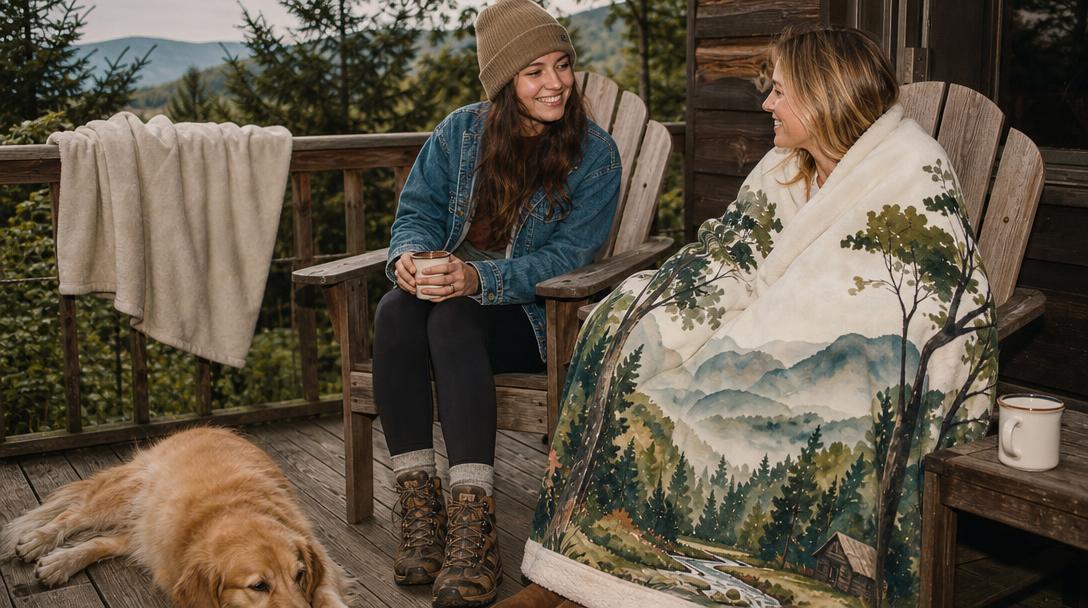
A sherpa blanket is usually warmer than a basic fleece blanket because its curly, high-pile surface traps more still air next to your body. However, a dense warm fleece blanket can outperform a thin sherpa blanket, especially in wind or damp conditions, where packability, drying speed, and surface construction matter.
Warmth comes from trapped air. Your body heats the air pockets inside the blanket, and those air pockets slow heat loss. Sherpa’s fluffy pile creates more air space, which is why it often feels warmer immediately.
Warmth depends on four things
- Fabric weight: Higher GSM generally means more insulation.
- Loft: Fluffier materials trap more air.
- Wind resistance: Breathable fabrics lose heat quickly in wind.
- Moisture handling: Damp insulation feels colder and dries slower.
Fleece insulation is breathable and fast-drying, which helps manage moisture during active use. That is great if you are hiking, layering, or dealing with morning dew. But breathability is a double-edged hiking pole: ordinary fleece lets wind pass through more easily than tightly woven or wind-resistant fabrics.
Sherpa’s loft gives it a cozy edge when you are sitting still. But if the wind is whipping across a viewpoint, that fluffy pile alone will not necessarily block air movement. You may need a shell, wind-blocking layer, sleeping bag, insulated quilt, or a better campsite setup to stay truly warm.
Approximate warmth-to-weight comparison
Because blanket brands vary widely, the fairest comparison is by typical construction:
- Light fleece blanket: around 150 to 200 GSM
- Midweight fleece blanket: around 200 to 300 GSM
- Sherpa fleece blanket: often around 250 to 400 GSM
- Heavy plush sherpa blanket: can exceed that depending on backing and size
For a common throw size around 50 x 60 inches, a basic fabric-weight estimate looks like this:
- 200 GSM fleece: roughly 390 grams or 0.86 lb of fabric before edging or trim
- 300 GSM fleece: roughly 580 grams or 1.28 lb
- 350 GSM sherpa: roughly 680 grams or 1.5 lb
- 400 GSM sherpa: roughly 775 grams or 1.7 lb
That does not include stitching, binding, double layers, waterproof backing, or decorative details. Still, it shows the pattern: sherpa usually buys warmth with extra weight and bulk.
Sherpa vs Fleece Blanket Which Is Softer?
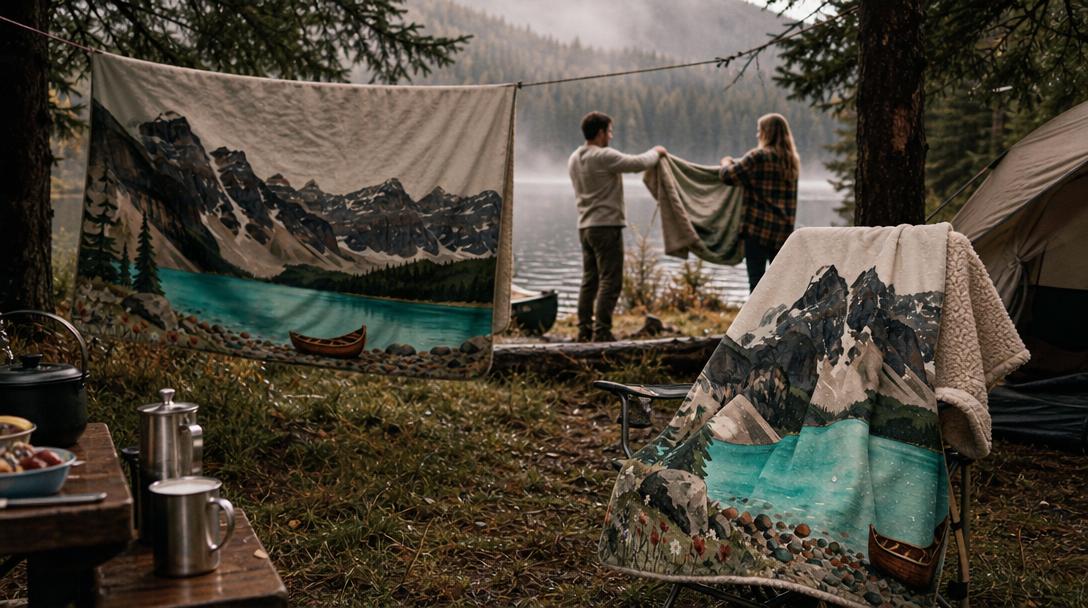
A sherpa blanket usually feels softer in a plush, fluffy, sink-your-hands-in way, while a fleece blanket usually feels smoother, lighter, and less bulky against the skin. If softness means cloud-like texture, sherpa wins; if softness means smooth, easy, low-maintenance comfort, fleece may be the better choice.
Sherpa feels luxurious because of its raised pile. It has that teddy-bear texture people love for couch naps, chilly cabins, and I refuse to move until spring evenings. For dry car-camping comfort with national-park style, options like the Acadia Lighthouse Coast Sherpa Blanket fit best in the cozy camp-chair and cabin category rather than the backpacking category.
Fleece is softer in a simpler way. It is smooth, flexible, and less textured. Some people actually prefer fleece because sherpa can feel too warm, bulky, or fuzzy, especially if you are using it inside a sleeping bag, in a hammock, or while layering around camp.
The softness problem nobody mentions
Sherpa can lose softness faster if it is washed or dried incorrectly. High heat can mat the pile, making it clumpy instead of fluffy. Fleece can pill over time, especially when rubbed against backpacks, Velcro, rough camp chairs, or the ground.
To keep either blanket soft:
- Wash cold.
- Use mild detergent.
- Avoid fabric softener.
- Avoid high heat.
- Keep away from Velcro and rough zippers.
- Air dry or tumble dry low if the care label allows.
Fabric softener feels like it should help, but it can coat synthetic fibers and reduce moisture performance. Your blanket does not need a spa day. It needs gentle laundry manners.
Which Blanket Packs Smaller for Camping and Travel?
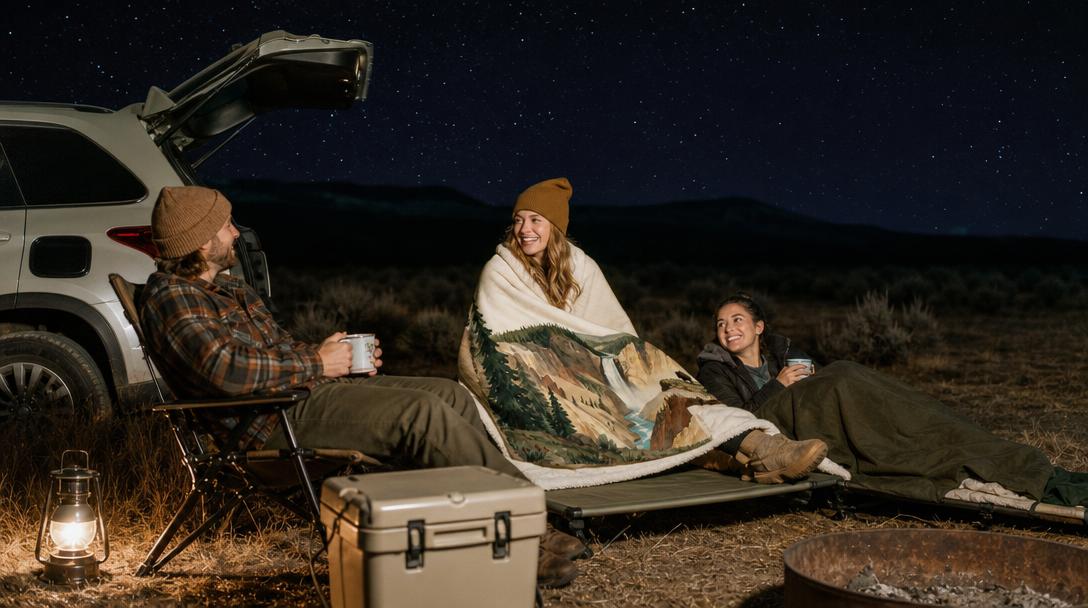
A fleece blanket usually packs smaller than a sherpa blanket because it has a lower pile and less loft. Sherpa’s fluffy texture traps more air, which is great for coziness but not great for compression. For backpacks, picnic totes, national-park day trips, and emergency car kits, fleece is easier to carry.
Packed size matters a lot once you leave the living room. A bulky blanket can hog half your pack faster than a bear discovering an unattended cooler.
Outdoor packed-size reality check
For the same coverage size:
- Fleece compresses flatter.
- Sherpa rebounds puffier.
- Double-sided sherpa takes the most room.
- Thick sherpa is better clipped to a car seat than stuffed in a hiking pack.
If you are backpacking, fleece wins easily. A fleece blanket can work as:
- A lunch-stop layer
- A dog blanket
- A backup warmth layer
- A sleeping bag booster
- A wrap for chilly trailheads
- A ground cover over a dry pad or chair
Sherpa is better when your vehicle is nearby. Think tailgates, cabins, camper vans, RVs, picnic tables, and drive-up campsites.
How Do Sherpa and Fleece Handle Dew, Rain, and Drying?
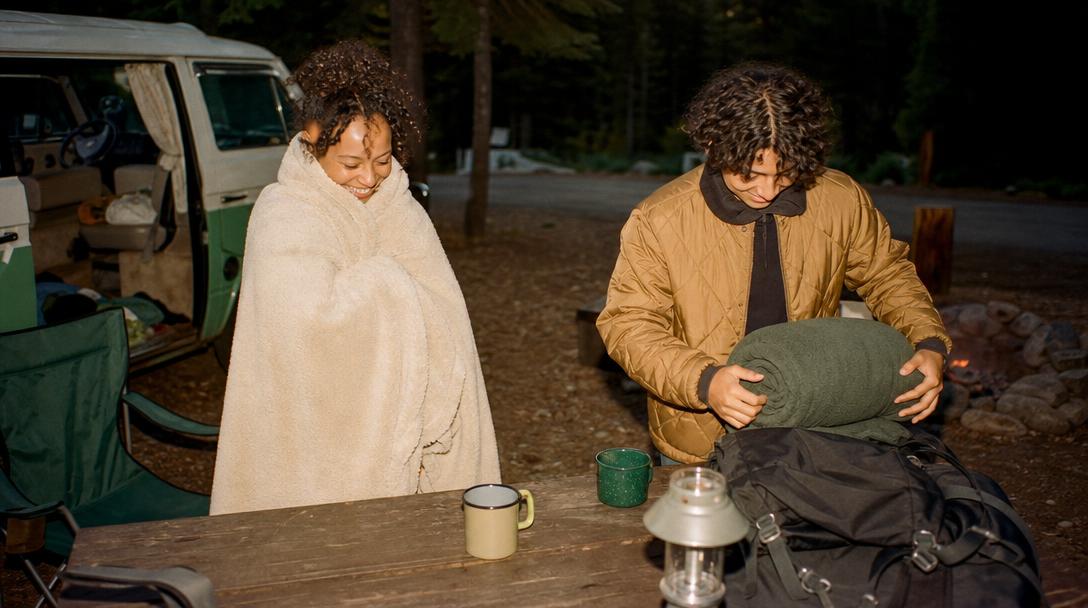
Fleece handles moisture better outdoors because polyester fibers are hydrophobic, meaning they resist absorbing water and dry relatively quickly. Sherpa is often polyester too, but its thicker pile holds more surface moisture, takes longer to dry, and can feel clammy if dew settles into the curls overnight.
Neither material is waterproof. Let us make that clear before your blanket gets baptized by a surprise drizzle.
A fleece blanket can shed light moisture better than cotton and dry faster once hung in moving air. That is one reason fleece became so popular in outdoor apparel. If wet weather is likely, pair your blanket choice with smart campsite habits from Camping in the Rain: 15 Tips to Stay Dry.
Sherpa has similar synthetic roots when made from polyester, but the structure is different. More pile means more places for droplets to sit. Morning dew can cling to the curly surface, especially if the blanket is left outside on a chair or picnic table.
Moisture performance outdoors
Choose fleece if you expect:
- Dewy mornings
- Foggy overlooks
- Damp grass
- Light mist
- Frequent washing
- Kids dropping things in questionable places
Choose sherpa if you expect:
- Dry cold
- Covered porches
- Van or cabin use
- Camp chairs under a canopy
- Lounging more than hiking
If your blanket gets damp, shake it out and hang it fully open. Draping it in a clump over a chair slows drying dramatically. Blankets, like hikers, perform better with airflow.
Best Blanket for Cold Camping: Fleece or Sherpa?
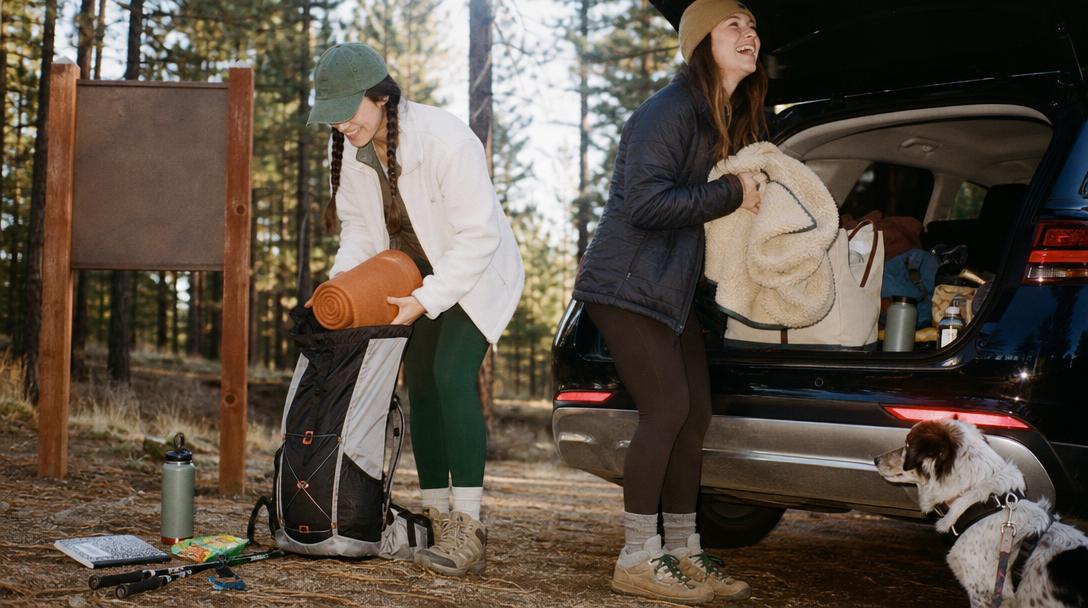
The best blanket for cold camping is usually a layered system: a warm fleece blanket for packable insulation and a sherpa blanket for plush comfort at camp if weight is not an issue. For backpacking, choose fleece; for car camping in dry cold, sherpa can be the cozier and warmer-feeling option.
A blanket alone is rarely enough for true cold-weather camping. Ground insulation, sleeping pad R-value, sleeping bag temperature rating, clothing layers, wind protection, and moisture control all matter. For colder nights, start with Cold Weather Camping Tips for Warmer Nights before expecting any blanket to do the whole job.
Best for backpacking
Pick a fleece blanket.
Why:
- Lighter
- Packs smaller
- Dries faster
- Easier to shake out
- Less likely to trap sticks, burrs, and pine needles
- More useful as an active layer around camp
A sherpa blanket is usually too bulky for backpacking unless you are carrying it a short distance or splitting gear with a group.
Best for car camping
Pick a sherpa blanket if conditions are dry.
Why:
- Warmer-feeling while sitting still
- Softer for camp chairs and sleeping setups
- Great for kids, stargazing, and chilly mornings
- Makes your tent feel less like a nylon cave
If the forecast is damp, pack fleece as your practical backup. For a cabin-style camp setup, the Great Smoky Mountains Cabin Sherpa Blanket is a good match for dry, drive-up camping comfort.
Best for van life
Pick both if you have room: fleece for utility, sherpa for comfort.
Fleece works well as a washable, everyday blanket. Sherpa adds cozy cabin energy when temperatures dip. Van life is basically a rolling blanket ecosystem anyway.
Best for national park day trips
Pick a fleece blanket.
It is better for overlook picnics, post-hike layers, scenic naps, and emergency warmth in the car. Bonus points if it matches your general tired-but-outdoorsy vibe.
Best for stargazing
Pick a sherpa blanket if you are close to the car.
Stargazing usually means sitting still, often at night, often after the temperature drops. Sherpa’s plush warmth shines here. Just keep it off wet ground and away from sparks. A scenic option like the Yellowstone Falls Bison Sherpa Blanket belongs in this relaxed, close-to-the-car comfort role.
What Is the Name for the Fluffy Material Used for Blankets?
The fluffy material used for blankets is often called fleece, sherpa fleece, plush fleece, teddy fleece, coral fleece, or high-pile fleece, depending on the texture and construction. Sherpa usually refers to a curly, wool-like pile, while fleece is the broader category for soft, brushed insulating fabric.
In stores, names are not always standardized. One brand’s plush fleece may feel like another brand’s teddy fleece. One sherpa blanket may have sherpa only on one side, while another may be fluffy on both sides.
Common blanket fabric names include:
- Polar fleece: Classic smooth synthetic fleece
- Microfleece: Lightweight, thin, soft fleece
- Plush fleece: Softer, thicker, more velvety fleece
- Sherpa fleece: Curly, wool-like pile
- Teddy fleece: Plush, teddy-bear-like texture
- Coral fleece: Very soft, velvety synthetic fleece often used in throws
The safest move is to read the material label and product specs instead of relying only on the cozy name.
What Are the Disadvantages of Fleece?
The disadvantages of fleece are that it is not windproof, can pill with abrasion, may attract lint and pet hair, can hold odors, may shed microfibers in the wash, and can melt or deform near high heat or campfire sparks. It is practical outdoors, but not indestructible.
Fleece is popular because it is warm, soft, lightweight, and affordable. But every fabric has trail gremlins.
Common fleece drawbacks
- Wind cuts through it: Regular fleece is breathable, not wind-blocking.
- It can pill: Friction creates small fiber balls over time.
- It attracts static: Hair, lint, and trail dust may cling.
- It is not fire-safe: Polyester can melt near sparks or flame.
- It can hold odor: Synthetic fibers may retain body oils.
- It sheds microfibers: Synthetic textiles can release tiny fibers during laundering.
- It loses warmth when saturated: It dries faster than cotton, but wet fleece is still not ideal.
For camping, the campfire issue is big. Keep both fleece and sherpa away from flames, embers, heaters, lanterns, and hot cookware. Wool handles sparks better than polyester, but most fleece and sherpa blankets are synthetic.
Is Sherpa Like Wool?
Sherpa is like wool in appearance and feel, but it is usually not wool. Most sherpa blankets are made from polyester or polyester blends with a curly pile designed to mimic sheep’s fleece. Wool is a natural animal fiber with different warmth, moisture, odor, and flame-resistance properties.
This is one of the most common shopping confusions.
Sherpa looks woolly. It feels fluffy. It gives cozy mountain-lodge energy. But unless the label specifically says wool, it is probably synthetic.
That is not automatically bad. Polyester sherpa is often:
- Softer to many people
- Less expensive than wool
- Easier to wash
- Less itchy
- More widely available
- Vegan-friendly if no animal fibers are used
But wool has its own advantages, especially for outdoor use. It naturally resists odor, insulates well in damp conditions, and is generally more flame-resistant than polyester. So if you need a blanket for rugged campfire-heavy use, wool may be worth considering separately.
Is Teddy Fleece the Same as Sherpa Fleece?
Teddy fleece and sherpa fleece are similar but not always the same. Sherpa usually has a curly, sheep-fleece-like pile, while teddy fleece often has a plush teddy-bear texture that may be longer, smoother, or more uniform. Product names overlap, so compare pile, backing, weight, and care instructions.
Think of teddy fleece and sherpa as cousins in the fluffy blanket family. Both are soft. Both are cozy. Both can be made from polyester. Both can make you question whether leaving the couch is really necessary.
But there are differences:
- Sherpa fleece: Often curlier and more wool-like
- Teddy fleece: Often plusher and more teddy-bear-like
- Sherpa: Common as a lining or reverse side
- Teddy: Common in jackets, throws, and fashion blankets
- Both: Can mat if washed with high heat
Since terms vary by brand, do not buy on the name alone. Check photos, close-ups, reviews, GSM if listed, and cleaning instructions.
Outdoor Testing Factors Most Blanket Guides Ignore
Indoor blanket advice usually stops at soft and warm. Outdoor people need more. A blanket that feels dreamy on the couch can become a pine-needle magnet after one campsite breakfast.
Wind
Fleece and sherpa are both typically breathable. That means neither is automatically windproof.
For windy overlooks or exposed campsites:
- Use a wind shell over your body.
- Wrap the blanket inside a jacket layer.
- Sit behind a windbreak.
- Choose tighter, denser fleece over loose plush fabric.
Dew
Morning dew loves fluffy surfaces. Fleece dries faster. Sherpa feels wetter longer because moisture sits in the pile.
If you leave a sherpa blanket outside overnight, expect it to feel damp even if it did not rain.
Ground contact
Fleece handles ground contact better because it has a flatter surface. Sherpa grabs debris like it is collecting souvenirs.
Avoid placing sherpa directly on:
- Pine needles
- Damp grass
- Sand
- Gravel
- Muddy picnic benches
- Burr-heavy meadows
Use a tarp, sleeping pad, camp chair, or picnic blanket underneath. If sleeping comfort is part of your setup, How to Choose a Sleeping Pad explains why ground insulation matters as much as the blanket on top.
Campfire exposure
Both fleece and sherpa are commonly polyester, which can melt. Do not use either as a spark shield.
Campfire tips:
- Keep blankets several feet from flames.
- Avoid wearing loose blanket edges near fire rings.
- Do not drape synthetic blankets over hot camp chairs or heaters.
- Shake out blankets before packing so hidden embers or ash do not travel with you.
Debris resistance
Fleece wins here.
Sherpa is cozy, but it traps:
- Leaves
- Grass
- Burrs
- Pet hair
- Sand
- Crumbs
- Mystery campsite particles best left unnamed
If you camp with dogs or kids, fleece is easier to live with.
Washing and Care: How to Keep Both Blankets Soft
Always follow the care label first. In general, fleece and sherpa blankets last longer when washed cold, dried low or air-dried, and kept away from fabric softener, bleach, high heat, Velcro, and rough laundry loads.
Basic care steps
- Shake out dirt before washing. This is especially important for sherpa.
- Wash cold on gentle. Hot water can stress synthetic fibers and encourage matting.
- Use mild detergent. More detergent does not mean cleaner; it can leave residue.
- Skip fabric softener. It can coat fibers and reduce performance.
- Dry low or air dry. High heat is the enemy of fluffy texture.
- Brush sherpa gently if matted. Use a soft brush when slightly damp, and do not attack it like you are grooming a wild raccoon.
For outdoor blankets, wash after smoky campfires, muddy trips, or heavy pet use. But do not overwash unnecessarily; every wash adds wear.
Final Buying Guide: When to Choose Sherpa vs Fleece
Choose a fleece blanket if you want the most practical outdoor option. It is better for backpacking, hiking, damp mornings, kids, pets, beach trips, emergency car kits, and frequent washing.
Choose a sherpa blanket if you want the coziest comfort option. It is better for dry car camping, van life, cabins, movie nights after hikes, stargazing, and anyone who believes softness is a legitimate survival strategy.
Best use by scenario
- Backpacking: Fleece blanket
- Car camping: Sherpa blanket, with fleece backup if damp
- Van life: Both, if storage allows
- National park day trips: Fleece blanket
- Cold stargazing: Sherpa blanket
- Dog-friendly camping: Fleece blanket
- Damp climates: Fleece blanket
- Maximum cozy factor: Sherpa blanket
- Best blanket for cold camping near the car: Sherpa blanket
- Best sherpa blanket for camping: One with a durable backing, washable construction, and manageable weight
The simplest rule: fleece is the trail tool; sherpa is the camp comfort blanket.
Frequently Asked Questions
What is the difference between a fleece blanket and a sherpa blanket?
A fleece blanket usually has a smoother, brushed polyester surface, while a sherpa blanket has a curly, wool-like pile that feels thicker and fluffier. Fleece is generally lighter and faster-drying; sherpa is usually warmer-feeling and softer for lounging.
Sherpa vs fleece blanket: which is warmer?
For most people, a sherpa blanket feels warmer because the high-pile texture traps more air. However, a dense warm fleece blanket may perform better in wind, damp conditions, or situations where weight and drying speed matter.
Sherpa vs fleece blanket: which is softer?
A sherpa blanket usually feels softer if you like plush, fluffy texture. A fleece blanket feels smoother and less bulky, which some people prefer for sleeping, layering, or travel.
What are the disadvantages of fleece?
Fleece can pill, attract lint and pet hair, hold odors, shed microfibers, and allow wind to pass through. It is also usually synthetic, so it can melt near campfire sparks or high heat.
Is sherpa like wool?
Sherpa is like wool in texture and appearance, but it is usually made from polyester rather than animal fiber. Always check the material label if you specifically want real wool or want to avoid synthetic fabrics.
Is teddy fleece the same as sherpa fleece?
Teddy fleece and sherpa fleece are similar fluffy fabrics, but they are not always identical. Sherpa is usually curlier and more sheep-fleece-like, while teddy fleece often has a plush teddy-bear texture.
The Cozy Bottom Line
If you want one outdoor blanket that can handle the widest range of adventures, choose fleece. It is lighter, more packable, quicker to dry, easier to clean, and better for real-world trail mess.
If your priority is maximum softness and cozy warmth at camp, choose sherpa. It is bulkier and fussier, but it wins the wrap me up and let me stare at the stars category by a landslide.
For the happiest setup, pair them by purpose: fleece for movement and moisture, sherpa for comfort and cold lounging. Add a dry place to sit, keep both away from campfire sparks, wash gently, and your blanket should stay adventure-ready for many chilly mornings to come.


