


What to Wear Hiking in 40 Degree Weather | Hike Tee
Dominic PalmowskiWhat to wear hiking in 40 degree weather is the difference between crisp-air bliss and becoming a chilly little trail popsicle. The goal is simple: stay warm when you stop, but not so bundled up that the first uphill soaks your clothes.
Forty degrees Fahrenheit can sound “not that cold” from your kitchen window. On trail, it can feel wildly different depending on wind, rain, shade, elevation, and how hard you’re moving. According to NOAA’s wind chill chart, 40°F with a 10 mph wind can feel closer to the mid-30s on exposed skin, and 20 mph wind can feel around 30°F. Add rain or sweat, and the CDC notes hypothermia can happen even around 50°F when a person is chilled by moisture and wind.
So yes, 40°F hiking is very doable. You just need a smarter outfit than “hoodie and hope.”
What to Wear Hiking in 40 Degree Weather: The Quick Outfit Formula
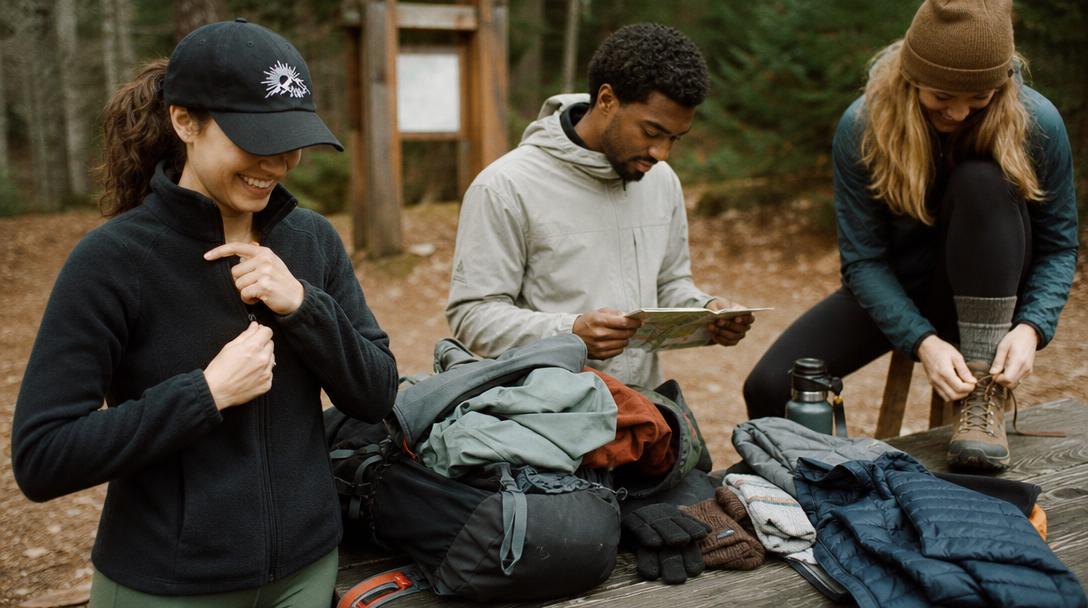
For most 40°F hikes, wear a moisture-wicking base layer, lightweight fleece or active insulation, hiking pants, wool socks, hiking boots or trail shoes, thin gloves, and a beanie or buff. Pack a rain shell, warmer jacket, dry socks, and an extra layer for breaks, wind, rain, or slower-paced walking.
Here’s the simple version:
Wear:
- Moisture-wicking long-sleeve hiking base layer
- Lightweight fleece, grid fleece, or breathable midlayer
- Synthetic hiking pants or softshell pants
- Wool or synthetic hiking socks
- Hiking boots or trail shoes with good traction
- Light gloves
- Beanie, fleece headband, or buff if your ears get cold
Pack:
- Rain shell or wind shell
- Lightweight insulated jacket
- Extra dry socks
- Extra gloves if conditions are wet
- Warm hat if you are not already wearing one
- Packable neck gaiter or buff
- Rain pants for wet, windy, or exposed hikes
Think of 40°F as “adjustment weather.” You may start cold in the parking lot, heat up five minutes into a climb, freeze again at a viewpoint, then get blasted by wind on the way down. Your outfit should make those changes easy.
The 40°F Hiking Clothes Cheat Sheet
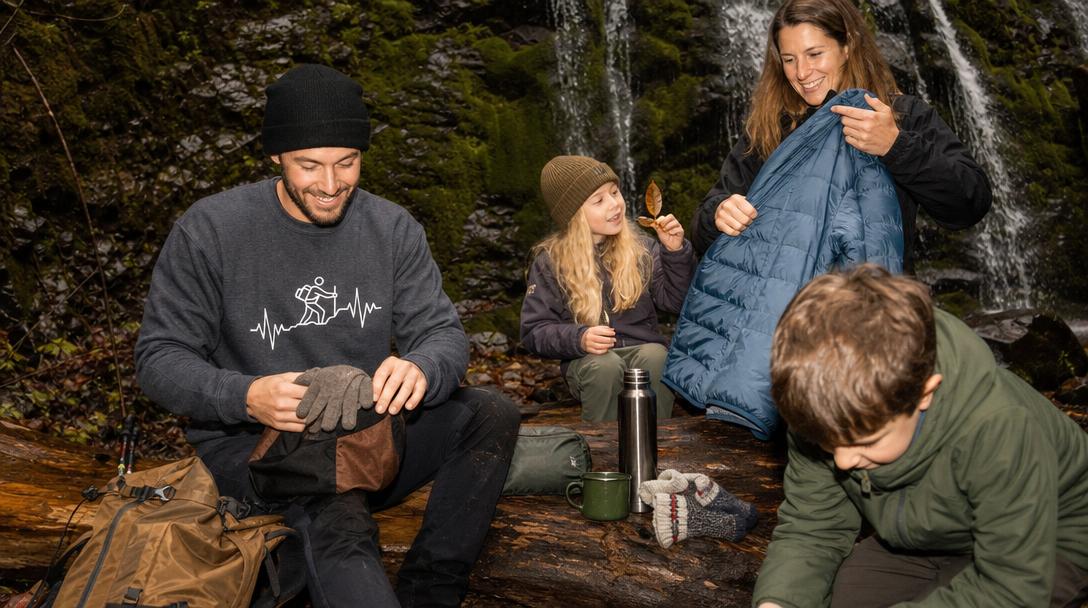
Use this as your one-screen decision guide before you leave the house.
| Condition | Wear on Trail | Pack as Backup | Best Material Choices |
|---|---|---|---|
| Dry + calm 40°F | Base layer, light fleece, hiking pants, wool socks | Insulated jacket, shell, gloves | Merino or synthetic base, fleece midlayer |
| Windy 40°F | Base layer, fleece, wind shell, hiking pants | Insulated jacket, warm hat, extra gloves | Synthetic base, wind-resistant shell |
| Rainy 40°F | Base layer, fleece, rain jacket, water-resistant pants | Dry socks, insulated jacket in dry bag, rain pants | Synthetic or wool, waterproof shell |
| Strenuous uphill | Base layer, hiking pants, maybe light fleece unzipped | Shell, fleece, insulated jacket for stops | Breathable synthetic or merino |
| Easy walk or family hike | Base layer, fleece, shell if breezy | Insulated jacket, gloves, hat | Warmer midlayer, wind protection |
| Long breaks/camping after hiking | Base layer, fleece, insulated jacket | Extra dry layer, hat, gloves | Synthetic insulation or protected down |
If you only remember one thing: dress for movement, pack for stopping.
What Hiking Base Layers Work Best at 40°F?
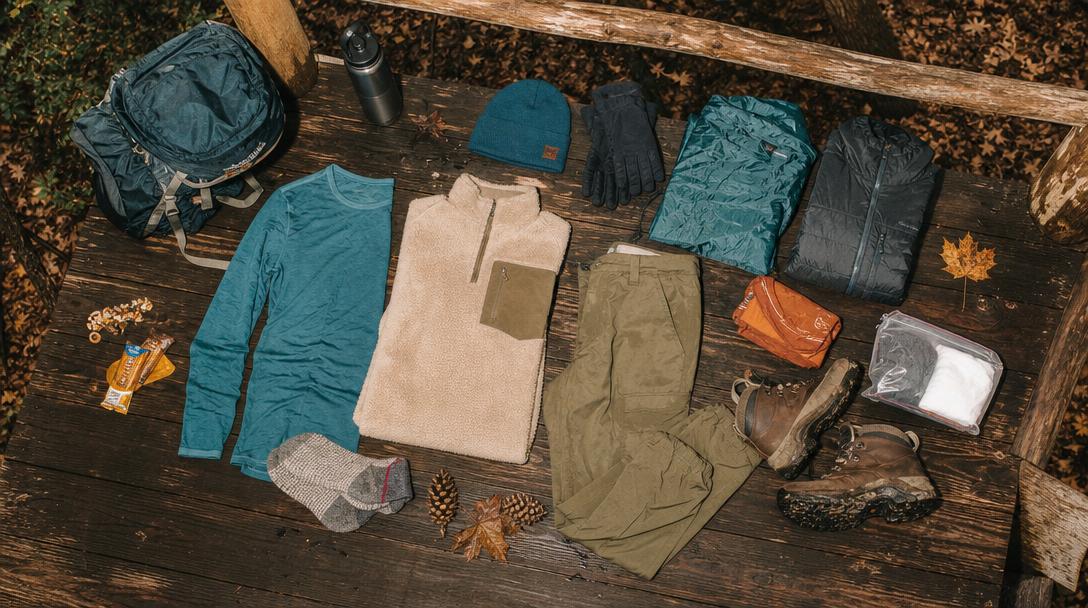
The best hiking base layers for 40°F are lightweight or midweight merino wool or synthetic tops that move sweat off your skin and dry faster than cotton. Choose lightweight for steep hikes or warm-bodied hikers, and midweight for easy hikes, windy trails, colder mornings, or people who chill easily.
Your base layer is the shirt touching your skin, so it matters more than people think. This is not the place for a regular cotton T-shirt if the trail is cold, wet, or exposed.
Best Merino Wool Base Layer Hiking Picks
Merino is a favorite because it:
- Feels warm without being bulky
- Resists odor better than many synthetics
- Still insulates reasonably well when damp
- Works nicely for stop-and-go hiking
A best merino wool base layer hiking choice is usually a lightweight or midweight long-sleeve crew. Go lightweight if you’re climbing hard. Go midweight if the hike is casual, shaded, or windy.
Synthetic Hiking Base Layers
Synthetic hiking base layers are usually made from polyester or nylon blends. They are great because they:
- Dry quickly
- Wick sweat well
- Tend to cost less than merino
- Hold up well to frequent washing
If rain is likely or you sweat a lot, synthetic may be the most practical option. For a deeper fabric breakdown, Hike Tee’s guide to moisture-wicking hiking clothes explains why sweat management matters so much in cool weather.
Cotton Base Layers and Casual Graphic Tees
Cotton is comfy for lounging, but not great for cool-weather hiking. The National Park Service recommends wool or synthetic materials over cotton because cotton absorbs moisture and won’t keep you warm when wet.
Translation: save your funny cotton hiking tee for the post-hike burger stop, the cabin, or a dry low-effort stroll. After the trail, a cozy casual layer like the Hiking Heart Rate Hoodie or Hiking Heart Rate Sweatshirt makes a lot more sense than using cotton as your cold-weather base layer.
Do I Need a Hiking Jacket for 40 Degrees?
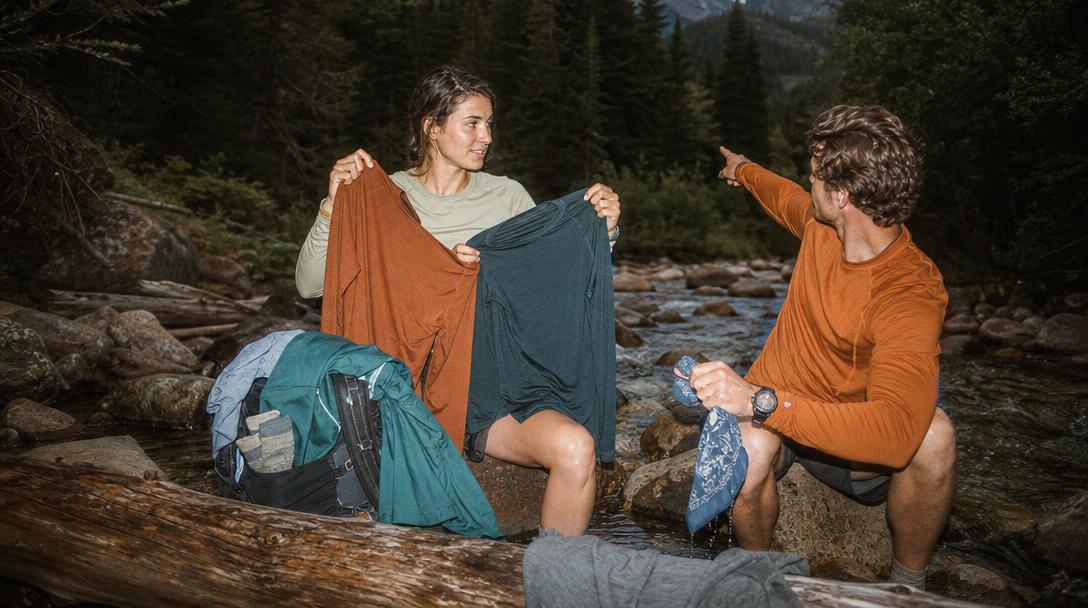
Yes, you should bring a hiking jacket for 40 degrees, especially when hiking. You may not wear it the entire time, but a wind shell, rain shell, or lightweight insulated hiking jacket protects you when the weather shifts, your pace slows, or you stop for snacks, views, photos, or tired kids.
The better question is: which jacket do you need?
If It’s Dry and Calm
Wear a fleece or light midlayer. Pack a wind shell or lightweight insulated jacket.
If It’s Windy
Wear or pack a wind-blocking hiking jacket. Even a thin shell can make a big difference because wind steals warmth fast.
If It’s Rainy
Bring a waterproof rain jacket with a hood. The National Park Service specifically advises putting on rain gear before you get wet, because wet clothing increases hypothermia risk. If wet weather is in the forecast, Hike Tee’s hiking in the rain gear guide is a helpful next read.
If You’ll Be Stopping Often
Pack an insulated jacket. This is especially important for:
- Family hikes with snack breaks
- Photography hikes
- Waterfall hikes
- Summit hangs
- Camping after the hike
- Slower group hikes
The best insulated jacket for hiking in 40°F weather is usually lightweight, packable, and breathable enough that it does not turn you into a walking sauna. Synthetic insulation is often better for damp conditions. Down is warmer for its weight, but it needs to stay dry to perform well.
What Hiking Clothes Should You Wear From Head to Toe?
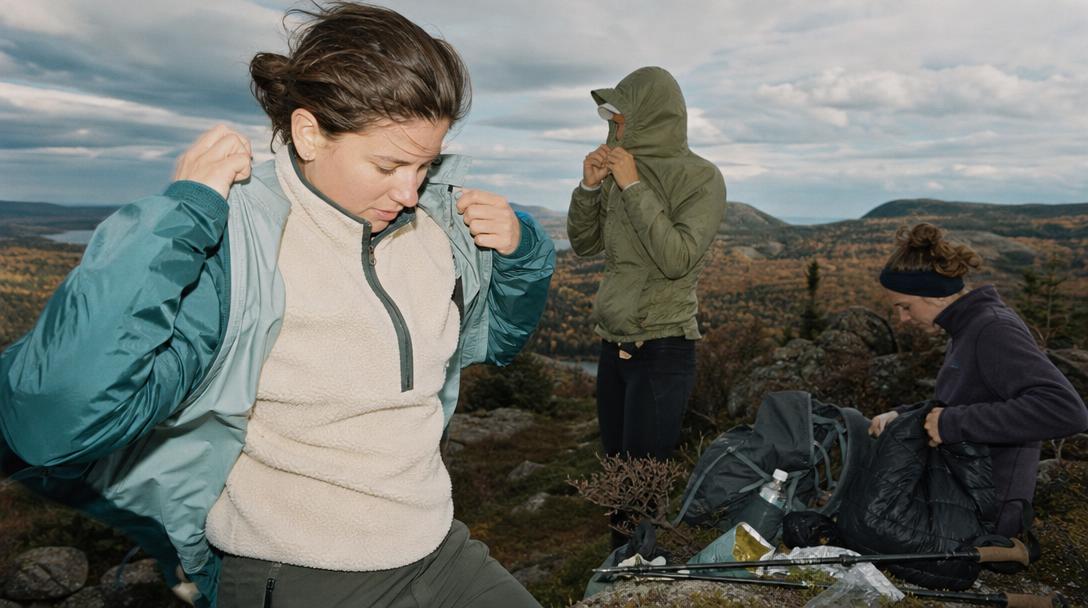
Your 40°F hiking clothes should include warm, moisture-wicking layers on top, flexible synthetic pants, wool socks, trail-ready footwear, and small accessories like gloves and a hat. The goal is to protect your core while keeping your hands, feet, ears, and neck from becoming tiny frozen complaint departments.
Here’s the head-to-toe breakdown.
Head and Neck
Bring at least one:
- Lightweight beanie
- Fleece headband
- Buff or neck gaiter
- Brimmed cap if sunny
You lose comfort quickly when wind hits your ears and neck. A buff is ridiculously useful because it can become a neck warmer, ear cover, face cover, or emergency “my nose is cold” solution.
Upper Body Hiking Layers
A reliable 40 degree setup:
- Base layer: Merino or synthetic long-sleeve
- Midlayer: Fleece, grid fleece, or active insulation
- Shell: Wind or rain jacket, depending on forecast
If you want the full strategy behind hiking layers, check Hike Tee’s full guide to what to wear hiking in cold weather and the 3-layer rule. For this 40°F cheat sheet, just remember: wick sweat, trap warmth, block weather.
Hands
Pack thin gloves even if you don’t think you’ll need them. Your hands can get cold fast when holding trekking poles, taking photos, or standing in wind.
Good choices:
- Lightweight fleece gloves
- Wool liner gloves
- Water-resistant gloves for rainy hikes
If the forecast is wet, bring a backup pair in a zip bag.
Legs
For most 40°F hikes, wear:
- Synthetic hiking pants
- Softshell pants
- Fleece-lined leggings under shorts or a skirt, if that’s your style
- Thermal leggings under pants if you run cold or expect wind
Avoid heavy cotton joggers or jeans if conditions are wet. They hold moisture and can feel brutally cold once damp.
Feet and Hiking Boots
Your sock choice matters as much as your footwear.
Wear:
- Wool or synthetic hiking socks
- Hiking boots or trail shoes with appropriate tread
- Waterproof hiking boots if trails are muddy, snowy, or wet
Pack:
- Extra dry socks
- Blister care
- Gaiters if there is mud, slush, or wet grass
Hiking boots are helpful in 40°F conditions when the trail is rocky, muddy, icy in patches, or when you want ankle support. Trail runners can be fine for dry, well-maintained paths, but cold, wet feet are the enemy of fun.
How Should Your Outfit Change for Uphill Hikes, Easy Walks, and Breaks?
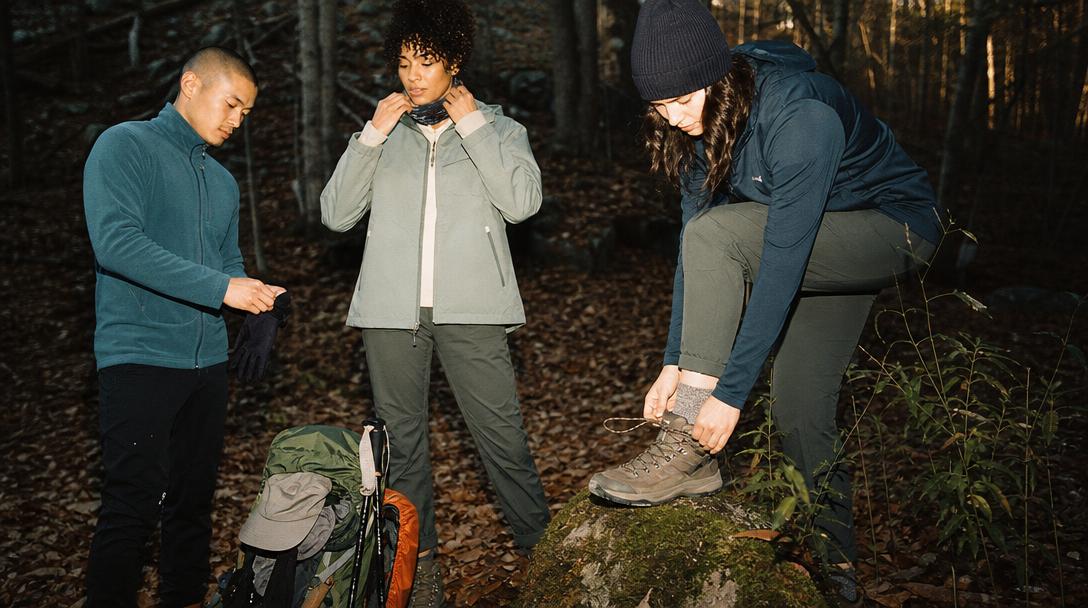
For uphill hikes, wear fewer layers and vent early to avoid sweating. For easy walks, wear warmer layers because you generate less body heat. For breaks, immediately add a jacket, hat, or gloves before you feel cold, especially in wind, shade, rain, or exposed areas.
Activity level is the missing piece in most 40°F clothing advice. The same temperature can feel like three different planets depending on pace.
Strenuous Uphill Hike
Wear:
- Lightweight base layer
- Hiking pants
- Light gloves if needed
- Maybe no fleece at first
Pack:
- Fleece
- Shell
- Insulated jacket for the top
- Dry layer if it’s a long hike
Your goal is to avoid soaking your base layer with sweat. Unzip, push sleeves up, remove your hat, or slow down before you overheat.
Easy Family Hike
Wear:
- Base layer
- Fleece
- Hiking pants
- Gloves or beanie if breezy
Pack:
- Rain/wind shell
- Insulated jacket
- Extra kid socks if hiking with children
Kids often stop to inspect every stick, rock, mushroom, and suspiciously shaped leaf. That’s delightful. It also means less continuous heat generation.
Waterfall, Summit, or Photo Hike
Wear:
- Base layer
- Fleece
- Wind/rain shell if misty or exposed
- Hiking boots with good traction
Pack:
- Insulated jacket
- Warm hat
- Dry gloves
- Extra socks
Waterfalls are often colder because of mist and shade. Summits are colder because of wind. Both are gorgeous. Both are also where snacks become a survival strategy.
How Do Wind and Rain Change a 40°F Hiking Outfit?
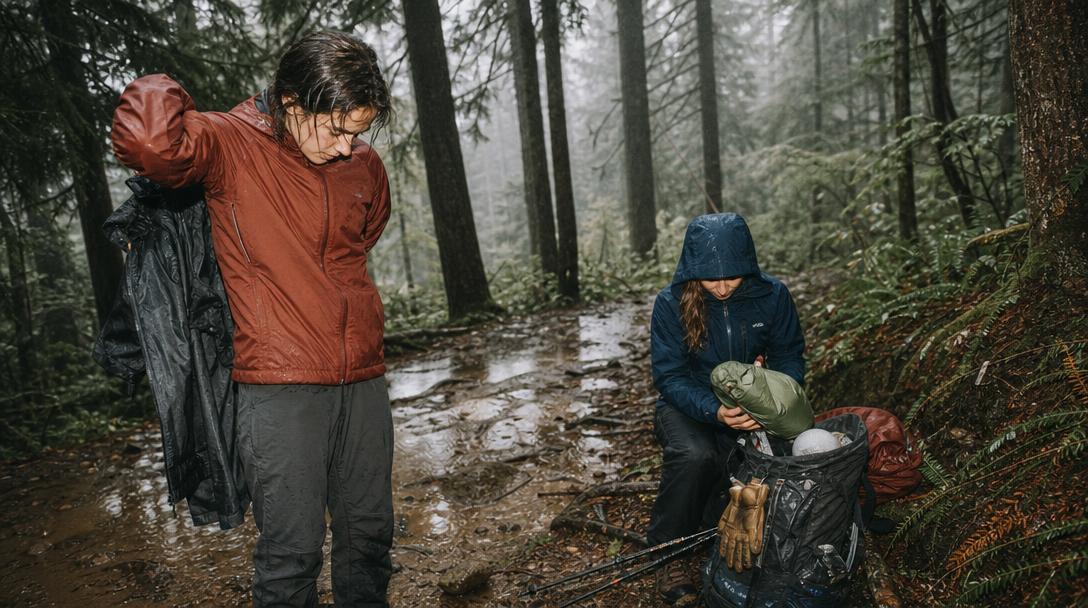
Wind and rain make 40°F hiking significantly colder because they increase heat loss and reduce clothing insulation. In windy weather, prioritize a wind shell and covered skin. In rainy weather, wear waterproof outerwear early, protect spare layers in a dry bag, and avoid cotton completely.
Use these quick adjustments:
Dry 40°F
- Wear base layer + fleece
- Pack shell + insulated jacket
- Use standard hiking socks and hiking boots or trail shoes
Windy 40°F
- Add a wind shell or rain shell
- Wear a beanie or headband
- Use gloves earlier than you think
- Consider softshell pants
Rainy 40°F
- Wear rain jacket before you’re soaked
- Use waterproof hiking boots or water-resistant footwear
- Pack dry socks
- Keep insulation in a waterproof stuff sack
- Add rain pants for longer hikes
The CDC lists shivering, exhaustion, confusion, fumbling hands, memory loss, and slurred speech as warning signs of hypothermia. If someone is wet, cold, clumsy, or acting “off,” stop and warm them up immediately.
What Should You Wear vs. Pack for a 40°F Hike?
Wear the layers that keep you comfortable while moving, and pack the layers that keep you safe when stopped or surprised by weather. At 40°F, that usually means wearing a base layer, hiking pants, socks, and a light midlayer, while packing a shell, insulated jacket, dry socks, hat, and gloves.
Here’s the simplest checklist.
Wear From the Trailhead
- Moisture-wicking long-sleeve base layer
- Light fleece or breathable midlayer
- Synthetic hiking pants
- Wool hiking socks
- Hiking boots or trail shoes
- Beanie/headband if cold or windy
- Light gloves if your hands chill easily
Pack in Your Backpack
- Rain jacket or wind shell
- Lightweight insulated jacket
- Extra dry socks
- Warm hat
- Extra gloves
- Buff or neck gaiter
- Rain pants for wet forecasts
- Emergency blanket or bivy on longer/remote hikes
- Snacks and warm drink if desired
If the hike is remote, long, or above tree line, pack more conservatively. A 40°F afternoon can become a very different situation if someone rolls an ankle, the group slows down, or rain arrives early.
Frequently Asked Questions
How should I dress for 40 degree weather?
Wear moisture-wicking hiking layers: a merino or synthetic base layer, light fleece, hiking pants, wool socks, and trail shoes or hiking boots. Pack a shell and insulated jacket so you can adjust for wind, rain, and rest breaks.
Is it better to hike in jeans or sweatpants?
Neither is ideal for 40°F hiking, especially if rain or sweat is involved. Jeans dry slowly and get cold when wet, while cotton sweatpants can do the same; synthetic hiking pants or softshell pants are much better hiking clothes.
Do I need a jacket for 40 degrees?
Yes, bring a jacket for 40 degrees even if you don’t wear it the whole time. A rain shell, wind shell, or insulated hiking jacket can keep you safe and comfortable when you stop moving or the weather changes.
Is 40 degrees warm enough for shorts?
Sometimes, but only for fast, strenuous hikes in dry and calm weather. Most hikers will be more comfortable in long pants, leggings, or softshell pants, especially on windy, wet, shaded, or slow-paced hikes.
What is the best base layer for hiking in cold weather?
The best base layer for hiking in cold weather is a moisture-wicking merino wool or synthetic long-sleeve top. Merino is warm and odor-resistant, while synthetic layers dry quickly and are great for high-output hikes.
What is the 3 layer rule for hiking?
The 3 layer rule uses a base layer to manage sweat, a middle layer to hold warmth, and an outer layer to block wind or rain. For 40°F, that usually means a merino or synthetic base layer, a light fleece, and a shell packed or worn depending on the forecast.
Final Trail-Ready Takeaway
For 40°F hiking, don’t dress like you’re standing still outside. Dress like you’ll be moving, sweating, stopping, snacking, climbing, descending, and possibly questioning why the wind has such personal beef with your ears.
Your safest, comfiest formula:
- Base layer: Merino or synthetic
- Midlayer: Light fleece or breathable insulation
- Outer layer: Wind or rain shell packed or worn
- Bottoms: Synthetic hiking pants or softshell pants
- Feet: Wool socks + hiking boots or trail shoes
- Accessories: Gloves, beanie/buff, extra socks
- Backup warmth: Packable insulated jacket
At 40°F, small choices matter. Keep sweat off your skin, keep rain out, block wind, and add warmth before you get chilled. Do that, and cool-weather hiking becomes less “why did I agree to this?” and more “wow, the trail is quiet, the air is crisp, and I absolutely earned the good snacks.”


