


Moisture-Wicking Hiking Clothes | Hike Tee
Dominic PalmowskiWhat Moisture-Wicking Hiking Clothes Actually Do
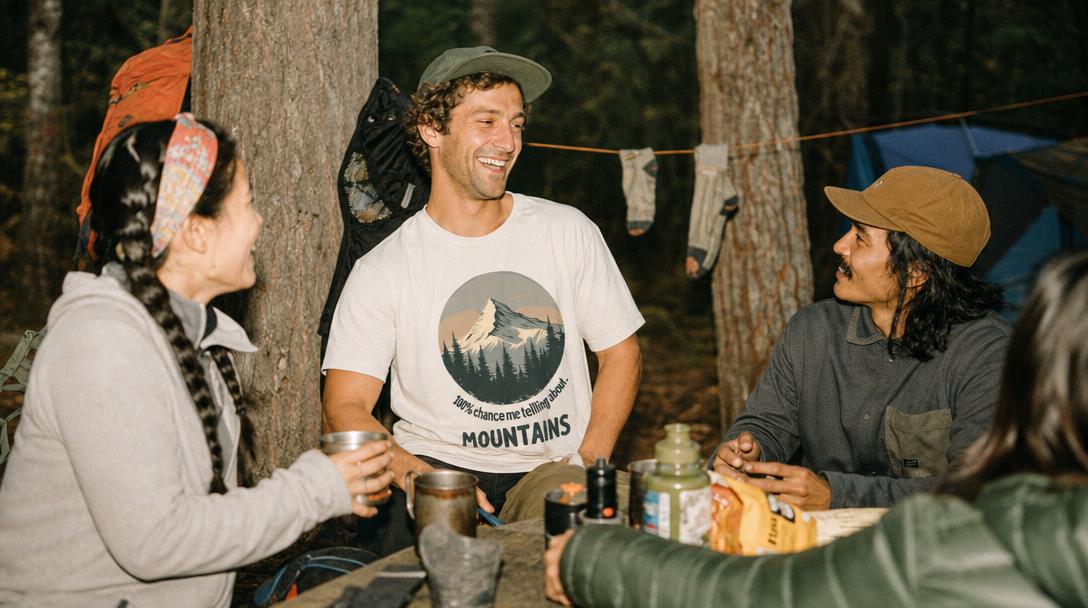
A true moisture-wicking fabric does two jobs:
- Moves sweat away from your skin
- Spreads that moisture across the outer surface so it can evaporate faster
Moisture-wicking fabrics rely on capillary action, which is the movement of liquid through tiny spaces in the fabric. The goal is not to magically eliminate sweat. It’s to move it somewhere less annoying. If you want the deeper fabric science, see our full guide to moisture-wicking fabric.
That matters because wet fabric against skin can:
- Cause chafing
- Feel clammy
- Make you cold when you stop moving
- Increase odor buildup
- Stay heavy and uncomfortable
- Make your backpack straps feel like medieval punishment devices
But here’s the trail truth: fabric is only part of the story. Fit, weave, airflow, garment cut, seams, pack pressure, humidity, and how much you sweat all affect performance.
A moisture-wicking hiking shirt that works beautifully on a breezy Colorado ridge may feel swampy in a humid Tennessee forest. Same shirt. Different battlefield.
Merino Wool vs Polyester for Hiking: The Fabric Showdown
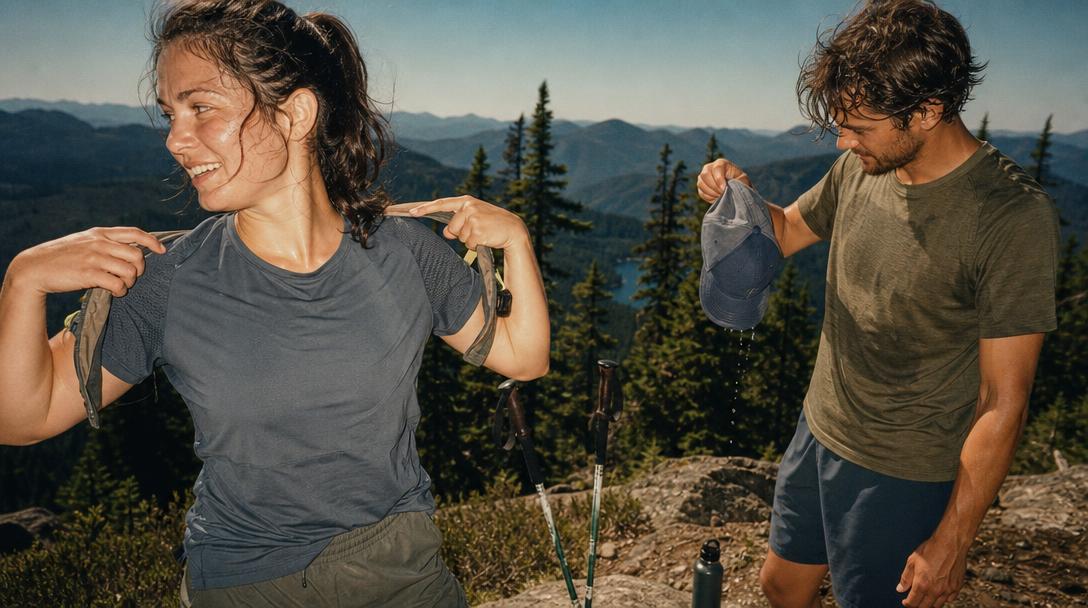
The big debate in hiking clothes usually comes down to merino wool vs polyester for hiking, with nylon and blends joining the party too. Each has strengths. Each has failure modes. No fabric wins every climate, every body, every trip.
Polyester: Best for Fast Drying and Sweaty Hikers
Polyester is the workhorse of quick-dry hiking clothes. It absorbs very little water into the fiber itself, so moisture can move across the surface and evaporate faster.
Best for:
- Hot-weather day hikes
- High-sweat hikers
- Trail running
- Humid conditions where every bit of drying speed helps
- Budget-friendly hiking shirts
- Lightweight backpacking
Downsides:
- Can hold odor
- Can feel plasticky if the weave is poor
- May cling when soaked
- Some cheap polyester shirts trap heat
Verdict: If you sweat a lot, polyester is usually the safest first pick for a moisture-wicking hiking shirt.
Merino Wool: Best for Odor Control and Multi-Day Trips
Merino wool is a favorite for backpackers because it manages odor better than most synthetics. It can absorb moisture vapor while still feeling relatively comfortable, and it helps regulate temperature across a wider range of conditions.
Best for:
- Multi-day backpacking
- Cool mornings and variable weather
- Odor-sensitive hikers
- Shoulder-season hikes
- Travel and van life
- Wearing the same shirt more than once without offending nearby squirrels
Downsides:
- Dries slower than polyester
- Costs more
- Less durable in thin weights
- Can feel warm in hot, humid weather
- Some people find it itchy, though quality merino is usually soft
Verdict: Merino is excellent for moisture-wicking clothes for backpacking, especially when odor control matters more than the fastest dry time.
Nylon: Durable, Fast-Drying, Great for Pants and Sun Hoodies
Nylon is often used in hiking pants, button-ups, sun hoodies, underwear, and socks. It’s durable, dries quickly, and handles abrasion better than many polyester knits.
Best for:
- Hiking pants and shorts
- Sun hoodies
- Button-up hiking shirts
- Underwear
- Rugged backpacking layers
Downsides:
- Can feel less soft than polyester or merino
- Odor resistance varies
- Tight nylon/spandex blends may feel hot
Verdict: Nylon shines when durability matters, especially below the waist or under pack friction.
Cotton: Comfortable at Camp, Risky as a Hiking Base Layer
Cotton feels great while sipping coffee at camp. It feels less great when soaked in sweat on a windy summit.
Cotton absorbs and retains water, then dries slowly. That’s the classic reason hikers say cotton kills—a dramatic phrase, yes, but rooted in a real concern: wet cotton can accelerate heat loss in cold or windy conditions.
Best for:
- Casual camp wear in dry, warm weather
- Short, low-risk walks
- Road trips and post-hike tacos
- Relaxed cotton or cotton-poly graphic tees after the hard miles are done
For casual trailhead style, not technical base-layer performance, a soft graphic tee like the Adventure Awaits hiking shirt fits the easygoing camp-and-coffee side of hiking culture.
Avoid cotton for:
- Base layers
- Cold weather
- Long hikes
- Backpacking
- Humid hikes
- Any situation where staying dry matters
Verdict: Cotton is not the villain of your closet, but it’s usually the wrong hiking base layer.
Moisture-Wicking vs Quick-Dry Hiking Clothes
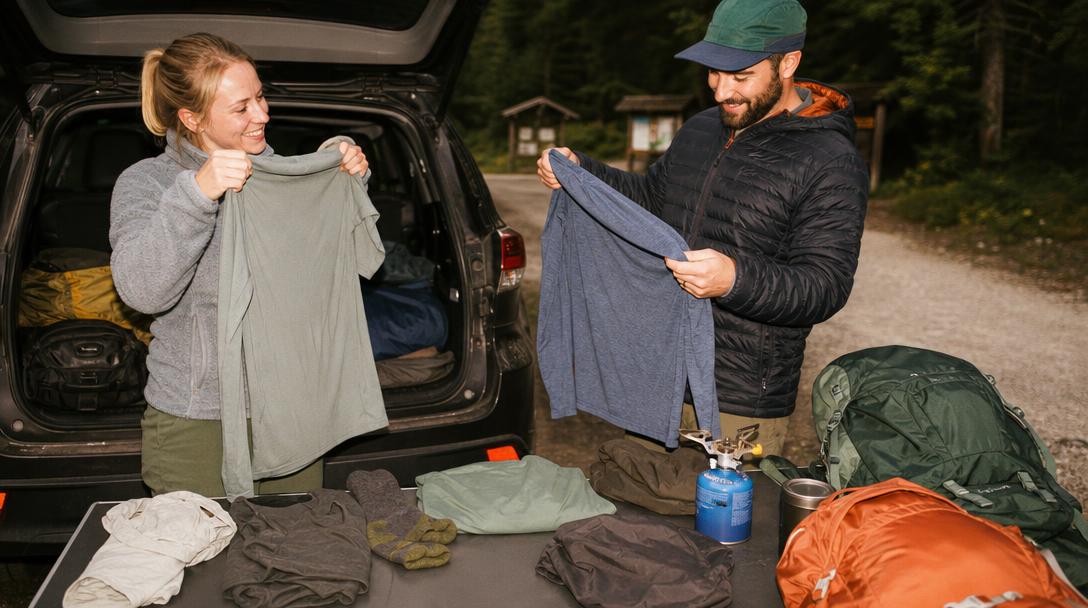
People often use moisture-wicking and quick-dry like they mean the same thing. Close, but not identical.
Moisture-wicking describes how fabric moves sweat away from your skin.
Quick-dry describes how fast the fabric releases that moisture into the air.
The best quick-dry hiking clothes do both.
A shirt can wick well but dry slowly if it holds a lot of water. Merino is a good example: it can manage moisture nicely and feel comfortable, but it generally dries slower than polyester. A cheap synthetic shirt may dry fast once removed but fail to move sweat well while you’re wearing it.
The Sink Test: A Simple At-Home Reality Check
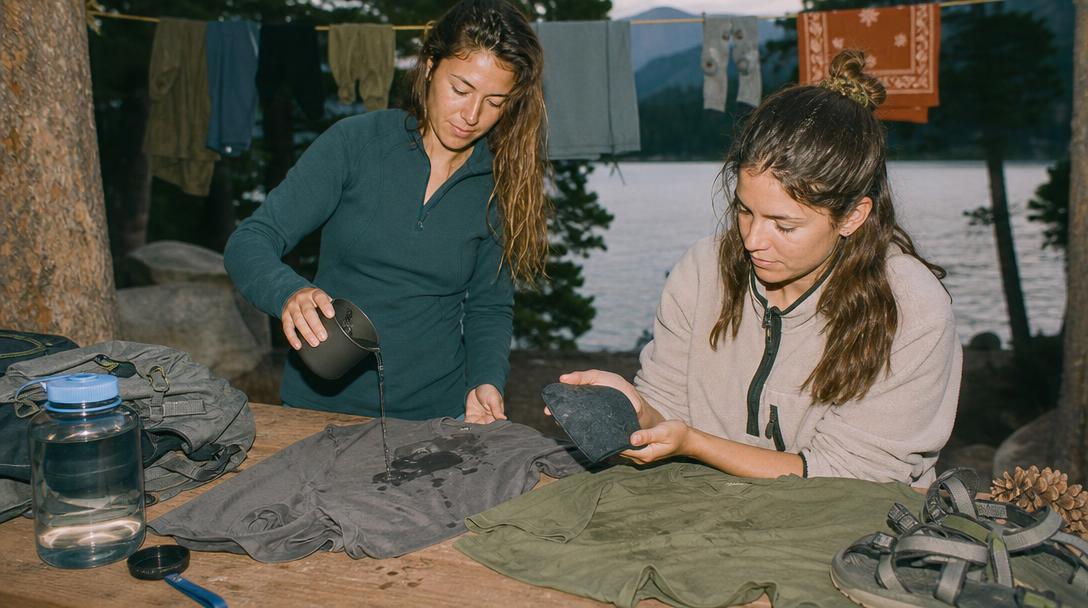
Before trusting a shirt on a 10-mile hike, try this:
- Drip a tablespoon of water onto the inside of the fabric.
- Watch how quickly it spreads.
- Press the wet area against your hand.
- Hang it up and time how long it takes to feel dry.
What you want:
- Water spreads instead of beading up
- The inside doesn’t stay soggy
- Fabric dries within a reasonable time
- It doesn’t feel heavy or clingy
Bonus test: wear it with a backpack for a brisk neighborhood walk. Pack straps change everything.
Best Moisture-Wicking Hiking Clothes by Climate
Hot and Dry Desert Hiking
In dry heat, evaporation works well. Sweat can actually cool you if your clothing allows airflow.
Best picks:
- Lightweight polyester or nylon sun hoodie
- Loose long-sleeve button-up with vents
- UPF-rated synthetic shirt
- Breathable synthetic underwear
- Thin wool or synthetic socks
Avoid:
- Tight compression tops
- Heavy merino
- Dark colors
- Thick waistbands under a pack
What actually works: Loose, light-colored, breathable fabrics. A sun hoodie can beat a tank top because it protects your skin while letting sweat evaporate.
Hot and Humid Forest Hiking
Humidity is the final boss of sweat management. When the air is already wet, evaporation slows way down. Even the best moisture-wicking hiking clothes can only do so much.
Best picks:
- Thin polyester shirt with mesh panels
- Loose-fitting synthetic tee
- Running-style shorts or vented hiking pants
- Quick-dry underwear
- Thin synthetic or merino-blend socks
Avoid:
- Thick merino tops
- Heavy hiking pants
- Tight shirts with no airflow
- Cotton underwear
What actually works: Ventilation matters as much as fabric. Look for open knits, back vents, half-zips, mesh panels, and looser fits.
Cold Weather and Shoulder Season Hiking
In cold weather, the goal changes. You don’t just want sweat off your skin—you want to avoid getting chilled when you stop.
Best picks:
- Lightweight or midweight hiking base layer
- Merino or synthetic long-sleeve top
- Fleece or active insulation midlayer
- Wind or rain shell
- Wool socks
- Moisture-wicking underwear
Avoid:
- Cotton base layers
- Overdressing at the trailhead
- Waterproof shells during climbs unless needed
What actually works: Start slightly cool. If you’re warm standing still, you’ll probably be sweaty in 15 minutes. For more seasonal comfort tips, read Nature in the Winter: A Hiker’s Friendly Guide.
Moisture-Wicking Clothes for Backpacking and Van Life
When laundry is limited, odor control and comfort become just as important as dry time.
Best picks:
- Merino or merino-blend shirt
- Synthetic backup tee
- Merino underwear or quick-dry synthetic underwear
- Two to three pairs of socks
- Lightweight sleep layer kept dry
Avoid:
- One-shirt systems with odor-prone polyester
- Slow-drying cotton camp clothes
- Thick waistbands that rub under hip belts
What actually works: Blends. A merino-polyester blend often gives you better durability and dry time than pure merino, with better odor resistance than pure polyester.
The Hiking Base Layer: Your Most Important Moisture Manager
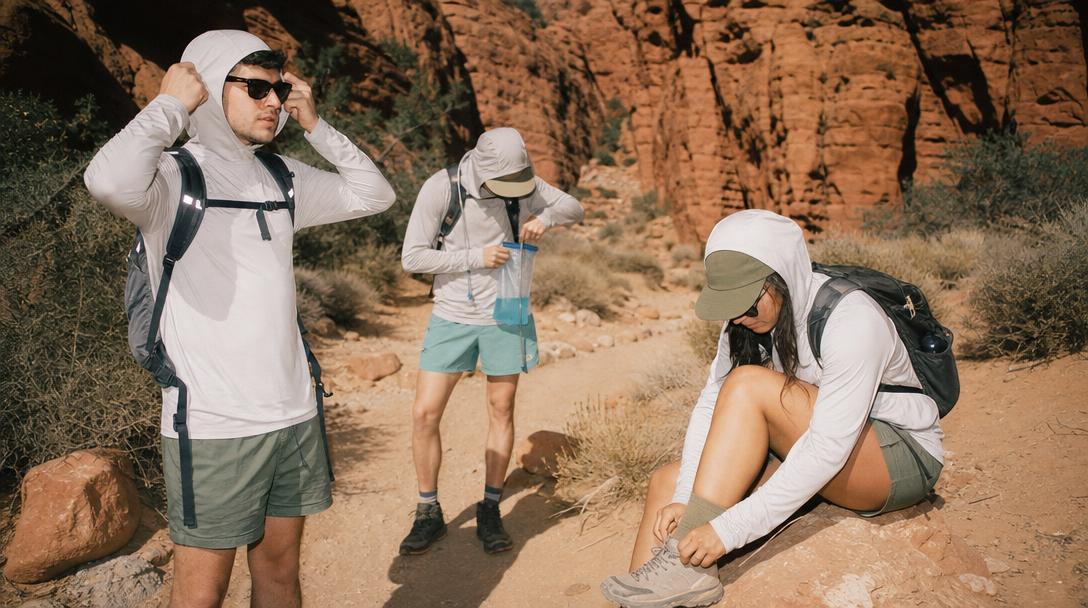
A hiking base layer is anything worn directly against your skin: shirts, underwear, sports bras, leggings, socks, and long underwear.
For active hiking, polyester, nylon, merino wool, or blends usually manage moisture better than cotton.
Base Layer Fit: Snug, But Not Sausage Casing
For cool weather, a hiking base layer should sit close enough to your skin to wick moisture. If it hangs too loosely, sweat has a harder time transferring into the fabric.
For hot weather, slightly looser can be better because airflow becomes more important.
Cool weather fit: close-fitting
Hot weather fit: relaxed but not baggy
Backpacking fit: no bunching under straps or hip belts
Seams Matter More Than You Think
A shirt can have magical unicorn-level fabric and still fail if the seams rub under your pack.
Look for:
- Flatlock seams
- Shoulder seams shifted away from backpack straps
- Tagless necklines
- Longer hems that stay tucked
- Smooth waistbands on underwear
- Gusseted crotches in underwear and pants
- Sports bras without bulky clasps under pack contact points
Tiny construction details become very loud around mile eight.
Why Avoid Cotton When Hiking?
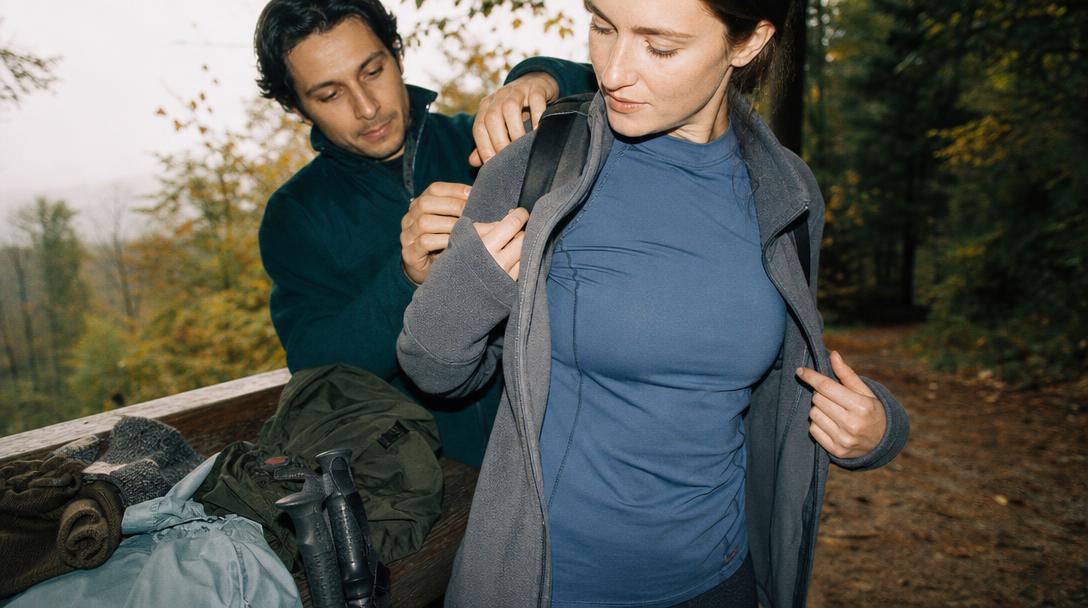
Avoid cotton when hiking because it absorbs moisture, holds it against your skin, and dries slowly. In warm weather, that can mean chafing and discomfort. In cold or windy weather, wet cotton can pull heat from your body and increase your risk of getting chilled.
Cotton is especially problematic for:
- Underwear
- Socks
- Base layers
- Sweatshirts
- Cold-weather hikes
- Backpacking trips
Cotton socks are blister gremlins. Cotton underwear is swamp engineering. Cotton hoodies are cozy until they become a wearable wet blanket.
Save cotton for camp, road trips, and post-hike diner stops. That’s where casual graphic tees shine—like the trail-humor-ready 100% Chance Shirt, which belongs in the fun layer category rather than your technical sweat-management system.


