


How to Choose a Sleeping Pad | Hike Tee
Dominic PalmowskiHow to choose a sleeping pad starts with one very unglamorous truth: the ground is a giant heat-sucking pancake. Pick the wrong camping sleeping pad, and your back, hips, shoulders, warmth, and patience will all know by sunrise.
A good sleeping pad does three jobs at once: it cushions your body, insulates you from cold ground, and fits the way you actually camp. The best sleeping pad for a family campground weekend is probably not the best sleeping pad for backpacking 12 miles into the mountains. And if you sleep on your side, share a tent with kids, or run cold at night, the details matter even more.
According to major outdoor gear guidance from REI, Switchback Travel, and OutdoorGearLab, the big factors are pad type, intended use, warmth, R-value, weight, cushioning, and packed size. Translation: you do not need to become a gear scientist, but a little know-how can save you from a long, chilly night of questioning your life choices.
How to choose a sleeping pad for camping: the quick decision tree
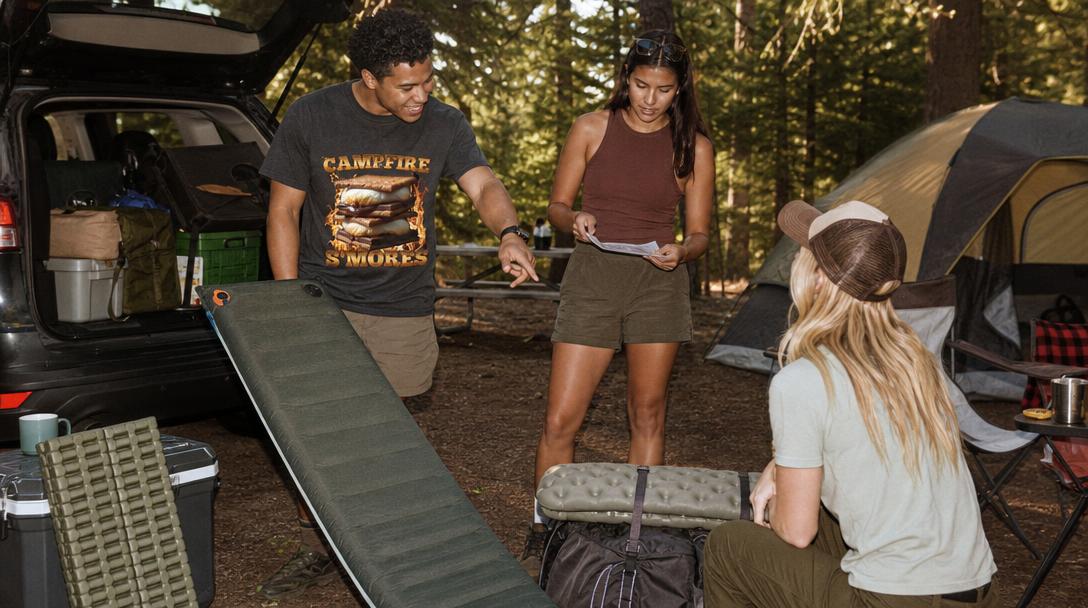
Use this fast trailhead-style decision tree before getting lost in specs.
If you mostly car camp
Choose a thicker self-inflating pad or insulated air pad.
Prioritize:
- Comfort over weight
- A rectangular shape
- Wider dimensions
- Higher R-value for spring and fall trips
- Easy inflation and deflation
Car camping is where you can let your comfort standards roam free like a raccoon near an unattended cooler. If you are not carrying it far, do not obsess over ounces.
If you backpack
Choose a lightweight air pad or compact closed-cell foam pad.
Prioritize:
- Low weight
- Small packed size
- Enough R-value for the coldest night
- Durable fabric or an included repair kit
- A shape that fits your tent and sleep style
For many three-season backpackers, an insulated air pad hits the sweet spot: warm enough, compact enough, and comfortable enough that you do not wake up feeling like a fossil.
If you camp in winter or on frozen ground
Choose an insulated sleeping pad with a high R-value, or stack an insulated inflatable pad over a closed-cell foam pad.
Prioritize:
- R-value of 5+ for winter conditions
- Full-length coverage
- Redundancy in case one pad fails
- Durability and repairability
Winter camping is not the time to gamble on a warm-weather pad. Frozen ground will steal heat fast, even if your sleeping bag is excellent. For the rest of your cold-night setup, pair this with Hike Tee's cold weather camping tips for warmer nights.
If you camp in a van, SUV, or truck bed
Choose a wider self-inflating pad, foam mattress-style pad, or insulated air pad that fits your platform.
Prioritize:
- Exact vehicle dimensions
- Comfort and width
- Insulation if sleeping in cold weather
- Non-slip base or bedding system
- Easy storage
Vehicle camping sounds cushy until your pad slides around all night like it is training for the luge.
If you camp with kids
Choose a durable foam pad, short inflatable pad, or regular adult pad they can grow into.
Prioritize:
- Durability
- Simple setup
- Good insulation
- Easy cleaning
- Low stakes if it gets stepped on, jumped on, or used as an imaginary canoe
For younger campers, a closed-cell foam pad is often the least stressful choice. It cannot pop, does not need inflating, and doubles as a camp seat.
What are the three main types of sleeping pads?
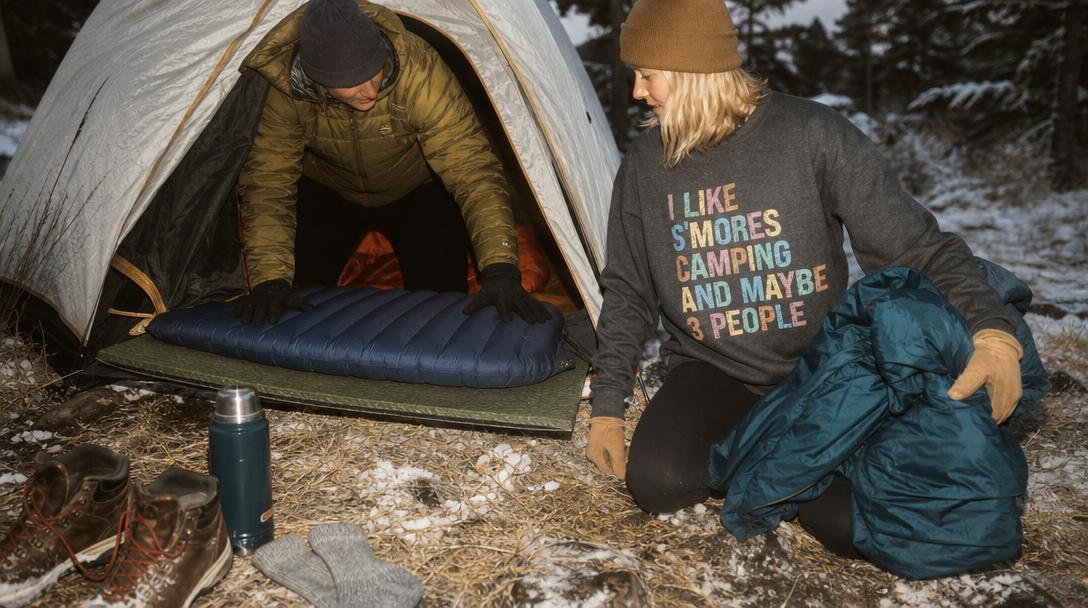
The three main types of sleeping pads are closed-cell foam pads, air pads, and self-inflating pads. Foam pads are durable and affordable, air pads are light and compact, and self-inflating pads blend foam cushioning with inflatable comfort. Your best choice depends on trip style, sleep comfort, warmth needs, and packed size.
Closed-cell foam pads
Closed-cell foam pads are the simplest option. They are usually made from dense foam and fold or roll up.
Best for:
- Budget campers
- Kids
- Ultralight minimalists
- Winter backup insulation
- Rough ground where punctures are likely
Pros:
- Affordable
- Nearly indestructible
- No inflation needed
- Works even if scratched or compressed
- Can double as a sit pad
Cons:
- Bulky
- Less cushioned
- Usually lower comfort for side sleepers
- Not ideal if you hate firm sleeping surfaces
A foam sleeping pad is the reliable trail friend who shows up on time, never complains, and also never brings snacks. Useful? Absolutely. Luxurious? Not exactly.
Air pads and backpacking sleeping pad options
Air pads inflate manually, with a pump sack, or sometimes with a built-in pump. Many modern backpacking sleeping pad designs use air chambers plus insulation to balance comfort, warmth, and packability.
Best for:
- Backpacking
- Bikepacking
- Hikers who need compact gear
- Side sleepers who want more thickness
- Campers who like adjustable firmness
Pros:
- Lightweight
- Packs small
- Often 2.5 to 4 inches thick
- Firmness can be adjusted
- Good warmth-to-weight ratio when insulated
Cons:
- Can puncture
- May be noisy
- Requires inflation
- Some feel bouncy or unstable
- More expensive than foam
If you are searching for the best sleeping pad for backpacking without wanting specific product picks, look for an insulated air pad with a suitable R-value, a comfortable thickness, and a packed size that will not eat your whole backpack.
Self-inflating pads
Self-inflating pads combine open-cell foam with air. Open the valve, and the foam expands, pulling in air. You usually add a few breaths or pump-sack fills to fine-tune firmness.
Best for:
- Car camping
- Casual backpacking
- Campers who value comfort
- Back sleepers and stomach sleepers
- Shoulder-season camping
Pros:
- Stable and supportive
- Easier setup than many air pads
- Good insulation
- More cushion than foam
- Less bouncy than many air pads
Cons:
- Heavier
- Bulkier
- Can still puncture
- Slower to pack
- Not always ideal for long backpacking trips
Self-inflating pads are the reasonable middle child of the camping sleeping pad world: not the lightest, not the cheapest, but often very comfortable.
Sleeping pad R-value guide: how warm should your pad be?
For warm summer camping, choose an R-value under 3. For most three-season camping, aim for R 3 to 5. For winter camping or frozen ground, choose R 5 or higher. R-value measures how well a sleeping pad resists heat loss into the ground, not the air temperature itself.
| R-Value | Best For | Example Conditions |
|---|---|---|
| Under 2 | Warm weather | Summer campgrounds, warm desert nights |
| 2-3.9 | Cool weather | Spring or fall camping, mild mountain nights |
| 4-5.4 | Cold weather | Frosty mornings, high elevations, chilly shoulder seasons |
| 5.5+ | Winter and extreme cold | Snow camping, frozen ground, deep winter trips |
R-value is not a sleeping bag temperature rating. An R-4 pad does not mean comfortable to 4°F.
Ground temperature matters. A 45°F night on warm soil feels different than a 45°F night on cold, wet ground.
You can stack pads. R-values are roughly additive, so a foam pad under an inflatable pad can boost warmth.
Your sleeping bag still matters. A warm bag and a cold pad are like hiking boots with no socks: technically gear, emotionally a mistake.
For more warmth planning, pair your pad with the right bag. Hike Tee's guide to the best sleeping bags for camping and backpacking is a smart next read if you are building a complete sleep system.
How thick should a sleeping pad be for side sleepers?
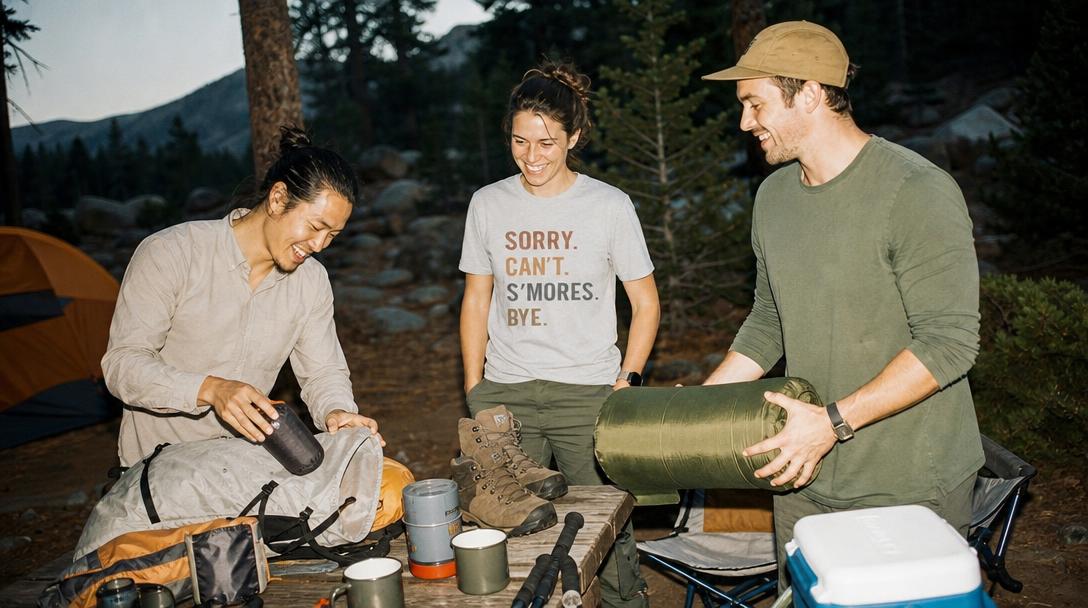
Side sleepers should usually choose a sleeping pad that is at least 3 inches thick, with 3.5 to 4 inches being more comfortable for many campers. Extra thickness helps prevent hips and shoulders from pressing into the ground, especially on uneven tent sites or after a long hiking day.
A sleeping pad for side sleepers needs to do more than look plush in photos. Side sleeping concentrates pressure on your hips and shoulders, so thin foam pads or firm minimalist pads often feel unforgiving.
Look for:
- 3+ inches of thickness
- A wide or regular-wide size
- Good edge stability
- Adjustable firmness
- Enough R-value for your climate
If you wake up with sore hips, try slightly underinflating an air pad. Many people inflate their pad rock-hard, then wonder why it feels like sleeping on a pool float made of regret. Letting out a little air allows your body to settle into the pad instead of perching on top of it.
Width, length, and tent fit: the part people forget
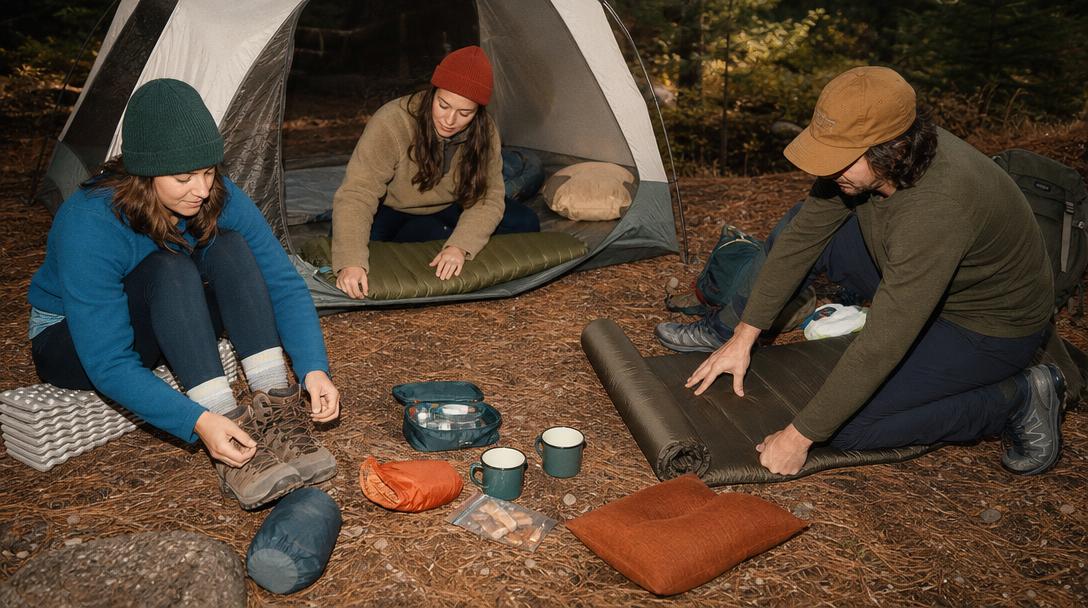
A camping sleeping pad can be warm, cushy, and technically amazing, but if it does not fit your tent, congratulations, you now own an expensive inflatable taco.
Before buying, check the inflated dimensions, not just the packed size.
Common sleeping pad sizes
Typical sizes vary by brand, but you will often see:
- Short: lighter, usually for minimalist backpacking or kids
- Regular: standard adult size
- Regular wide: standard length with extra width
- Long: extra length for taller campers
- Long wide: extra length and width
- Double or couples pad: designed for two people
Tent-fit advice for solo campers
Check:
- Tent floor length
- Tent width at shoulder level
- Whether the tent tapers
- Whether the pad pushes into sloped walls
- Space for gear inside the tent
A long/wide pad may fit on paper but press against tent walls in real life. That can cause condensation to rub onto your sleeping bag, which is not the cozy woodland experience anyone requested.
Tent-fit advice for couples
Couples have two main options:
- Two individual pads
- One double sleeping pad
Two individual pads are usually more flexible. Each person can choose their own firmness and R-value, and if one pad fails, both people are not doomed to ground-sleeping sadness.
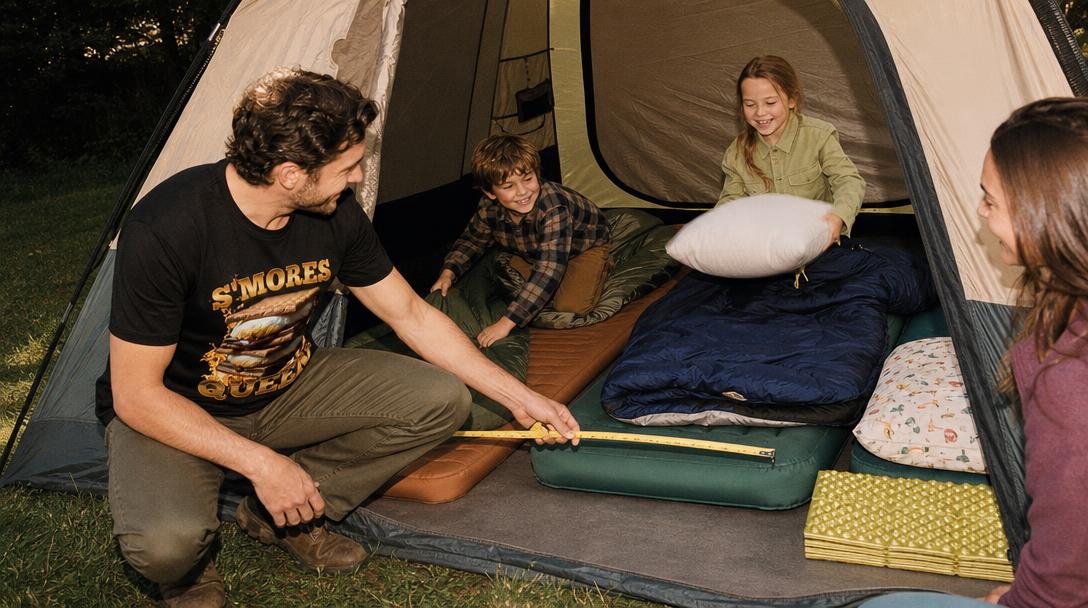
A double pad can be great for car camping, van life, or families who want a shared sleep surface. Just measure your tent carefully. Two wide pads or a double pad can overwhelm smaller backpacking tents.
Kids' pads and family tent layouts
For kids, consider:
- Short foam pads
- Youth-sized inflatable pads
- Standard adult pads they can grow into
- Foam pads layered under sleeping bags for durability
In family tents, lay out pads at home before the trip. Yes, your living room will look like a tiny campground. No, this is not a bad thing. If your crew is still dialing in the basics, Hike Tee's ultimate camping trip checklist can help you catch the little things before you leave the driveway.
Weight vs. comfort: where to compromise
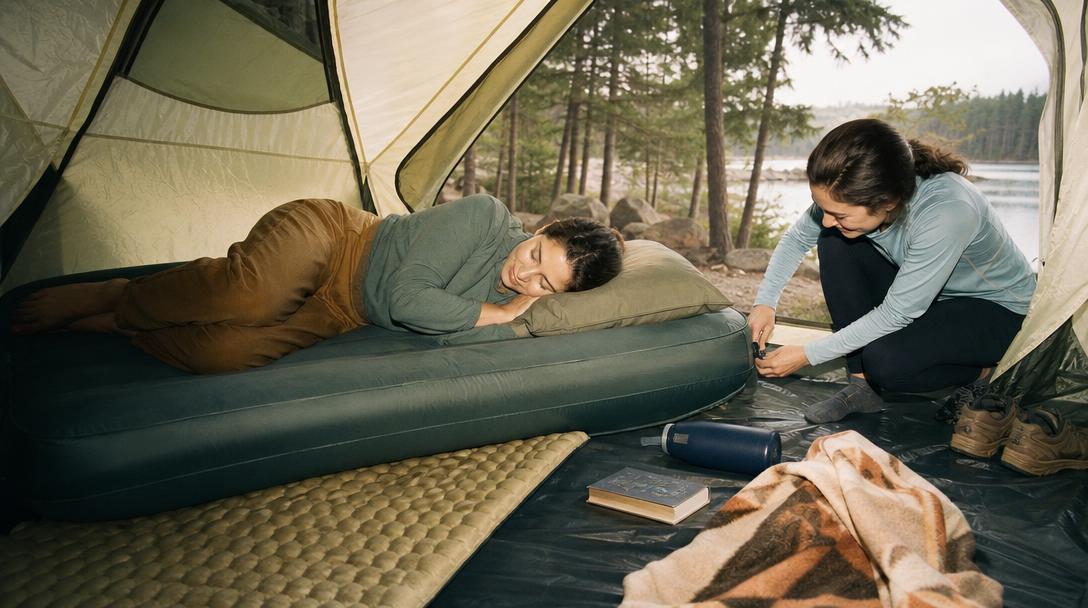
For backpacking, every ounce matters, until bedtime, when every sore hip also matters. The trick is choosing the lightest pad that still lets you sleep well enough to enjoy tomorrow's hike.
For backpacking
Prioritize:
- Weight under roughly 1.5 pounds if possible
- Compact packed size
- R-value matched to season
- Adequate thickness for your sleep style
- Reliable valve and patch kit
Ultralight hikers may accept less comfort to save weight. Most casual backpackers should not. If poor sleep ruins your next day, the weight savings did not really save you anything.
For car camping
Prioritize:
- Thickness
- Width
- Warmth
- Ease of inflation
- Durability
Car camping is your chance to bring the cozy. A plush self-inflating pad or thick insulated air pad can make a weekend campground trip feel much more civilized, even if someone still burns the pancakes.
For casual hikers and campground style
If camping is your reset button from a week of emails, errands, kid logistics, and general brain static, choose comfort. The outdoors should help you recover, not make you feel like you slept under a picnic table.
That comfort can extend beyond your sleep system. A soft casual graphic tee like the Campfire S'mores Camping Shirt is easy for campground evenings, and the S'mores Queen Camping Shirt brings the right kind of campfire energy without pretending to be a technical performance layer.


