


Durable Hiking Shirts for Extended Outdoor Use
Dominic PalmowskiDurable Hiking Shirts for Extended Outdoor Use: Quick Brand Comparison
Here’s the “just tell me what to buy” version before we wander deeper into fabric nerd territory.
| Use Case | Best Brands to Compare | Best Shirt Types | Why They Work |
|---|---|---|---|
| Hot-weather day hikes | Patagonia, Outdoor Research, REI Co-op, Columbia | Lightweight synthetic tees, UPF tees | Fast drying, breathable, often more durable than wool |
| Multi-day backpacking | Smartwool, Icebreaker, Patagonia, REI Co-op | Merino blends, synthetic odor-control tees | Better odor resistance and packability |
| High sun exposure | Outdoor Research, REI Co-op, Patagonia, Columbia | UPF hiking shirt, sun hoodie, long-sleeve tee | UPF 30–50+ protection, better coverage |
| Budget-friendly performance | REI Co-op, Columbia, Decathlon, Eddie Bauer | Polyester hiking shirts, Sahara-style tees | Solid moisture management without premium pricing |
| Best odor control | Icebreaker, Smartwool, Patagonia Capilene Cool Merino | Merino hiking shirt or merino blend | Naturally resists stink on multi-day trips |
| Rugged use under a pack | Outdoor Research, KÜHL, Patagonia, Arc’teryx | Nylon/poly blends, synthetic technical tees | Better abrasion resistance |
| Women’s and plus-size options | REI Co-op, Outdoor Research, Columbia | Plus-size sun shirts, technical tees | Broader sizing and trail-ready fabrics |
| Trail-to-town, van life, national parks | Patagonia, KÜHL, Smartwool, Hike Tee | Merino blends, clean-looking tech tees, outdoor lifestyle tees | Comfortable, packable, not too “expedition cosplay” |
What Makes Hiking Shirts Durable Enough for Long Days Outside?
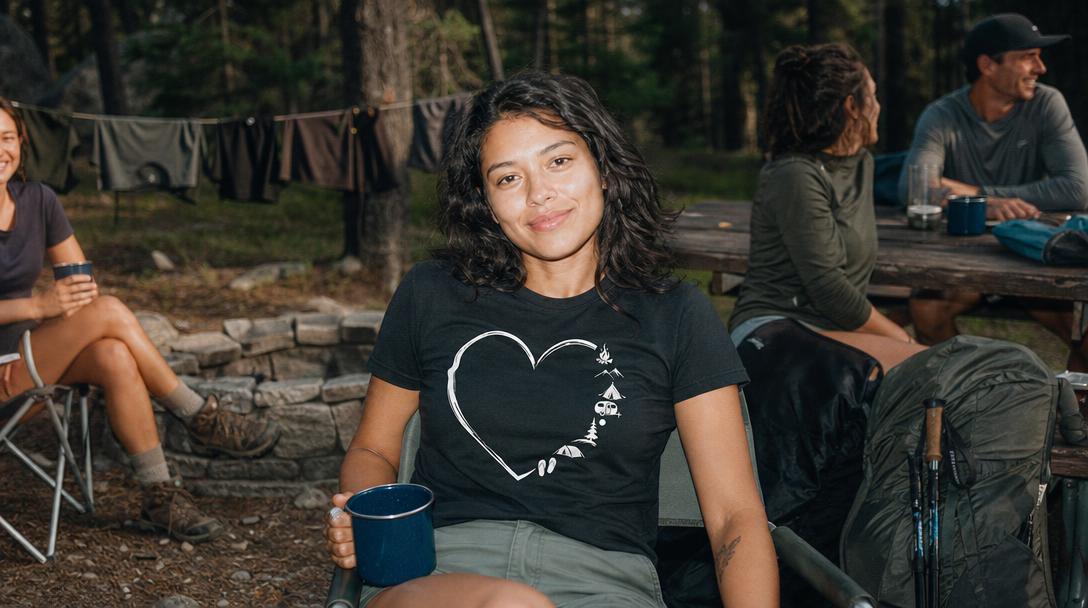
A good hiking shirt should do five things well:
- Wick moisture away from your skin
- Dry quickly after sweat, rain, or creek-splash incidents
- Resist odor over repeated wear
- Handle abrasion from backpack straps
- Protect your skin from sun when needed
The biggest choice is fabric. If you want a deeper fabric breakdown, Hike Tee’s guide to what moisture-wicking fabric does on trail explains why some shirts feel dry and breathable while others cling like regret.
Synthetic Hiking Shirts: Best for Sweat, Heat, and Durability
Synthetic hiking shirts are usually made from polyester, nylon, spandex, or a blend. They tend to dry faster than merino wool and hold up better under abrasion.
According to a 2026 comparison from KitAuthority, synthetic base layers generally dry faster and cost less than merino, while merino performs better for odor resistance. HikeLoad’s 2026 base layer guide similarly notes that synthetic layers may dry in roughly 30–45 minutes, while comparable merino can take 60–90 minutes.
Choose synthetic if you:
- Sweat heavily
- Hike in hot or humid weather
- Wear a backpack often
- Want a lower-cost shirt
- Prefer easy washing and fast drying
The downside? Synthetic shirts can get funky faster. Some brands use odor-control treatments like Patagonia’s HeiQ Mint or Outdoor Research’s ActiveFresh, but synthetic usually still loses to merino after multiple sweaty days.
Merino Hiking Shirt: Best for Odor Control and Multi-Day Comfort
A merino hiking shirt is made from wool fibers that naturally manage moisture and resist odor. It’s not the scratchy sweater wool of your childhood nightmares. Good merino is soft, breathable, and surprisingly comfortable in changing temperatures.
Merino is excellent if you’re backpacking for several days, traveling in a van, camping without laundry access, or trying not to scare your tent partner by day three.
Choose merino if you:
- Need the best merino hiking shirt for odor control
- Want one shirt for multiple days
- Hike in variable temperatures
- Prioritize comfort over maximum durability
- Pack light and wash less often
The downside? Pure merino can be less durable than synthetic, especially under heavy pack straps. For extended outdoor use, merino blends are often the sweet spot. For a closer comparison, see Hike Tee’s guide to merino vs synthetic hiking shirts.
Merino Blends: The Best Hiking Shirt for Backpacking Balance
Merino blends combine wool with polyester or nylon. You get better odor control than most synthetics and better durability/drying time than pure wool.
That’s why shirts like Patagonia’s Capilene Cool Merino Blend, Smartwool Merino Sport Ultralite, and Icebreaker Cool-Lite styles are popular for multi-day hikes.
If you’re shopping for the best hiking shirt for backpacking, start with merino blends and high-quality synthetics.
Best Brands for Hiking Shirts by Outdoor Use Case
Patagonia: Best All-Around Hiking T-Shirts
Patagonia is one of the safest bets for hiking t-shirts that work hard without looking overly technical. Their Capilene line is popular for a reason.
Standouts include:
- Patagonia Capilene Cool Daily
- Patagonia Capilene Cool Trail
- Patagonia Capilene Cool Merino Blend
- Patagonia Capilene Cool Sun
Backcountry’s product listing for the Patagonia Capilene Cool Trail notes an 85% recycled polyester and 15% TENCEL lyocell blend, with miDori bioSoft for softness and wicking and HeiQ Mint odor control. That makes it a strong pick for a moisture-wicking hiking shirt that can also handle travel and everyday wear.
Patagonia is especially good for:
- Long day hikes
- Travel
- Hot-weather hiking
- Lightweight backpacking
- Trail-to-town style
Best pick: Capilene Cool Daily or Trail for synthetic performance; Capilene Cool Merino Blend for odor control.
Outdoor Research: Best UPF Hiking Shirt Options for Hot Weather
Outdoor Research shines when the sun is doing the absolute most. Their sun shirts and technical tees are built for exposed trails, desert hikes, alpine routes, paddling, and sweaty summer adventures.
Notable options include:
- Outdoor Research Echo
- Outdoor Research Eclipse Sun T-Shirt
- Outdoor Research Astroman Sun Shirt
- Outdoor Research ActiveIce sun layers
According to Outdoor Research’s product page, the women’s Eclipse Sun T-Shirt uses lightweight polyester/spandex fabric, offers UPF 50+ protection, and includes ActiveFresh odor control. REI also lists the Outdoor Research Astroman Sun Shirt as UPF 30 and made with a durable recycled nylon blend.
Outdoor Research is especially good for:
- Desert hiking
- Exposed alpine hikes
- Hot-weather backpacking
- Sun hoodies
- Women’s and extended sizing
Best pick: Eclipse Sun T-Shirt for UPF 50 protection; Echo for ultralight breathability; Astroman for durability and versatility.
REI Co-op: Best Value and Inclusive Sizing
REI Co-op’s in-house hiking shirts are often less expensive than premium brands while still offering real trail performance.
Strong options include:
- REI Co-op Sahara T-Shirt
- REI Co-op Sahara Shade Hoodie
- REI Co-op Sahara Shade Long-Sleeve T-Shirt
- REI Co-op Active Pursuits Long-Sleeve T-Shirt
- REI Co-op Merino 185 Base Layer
REI’s Sahara Shade product pages list ShadeFactor UPF 50+ fabric, and REI notes that the sun protection is inherent in the fabric and does not wash out. That’s a big deal for long-term sun protection. If you’re comparing ratings, Hike Tee’s guide to UPF hiking shirts and what the numbers mean is a helpful primer.
REI Co-op is also one of the better mainstream outdoor brands for women’s plus-size hiking shirts. The Sahara Shade Hoodie is available in women’s plus sizes, and the REI Co-op Merino 185 base layer also comes in women’s plus sizes.
REI Co-op is especially good for:
- Budget-conscious hikers
- Beginners building a hiking wardrobe
- Sun protection
- Plus-size technical shirts
- Family hiking gear
Best pick: Sahara Shade for sun protection; Active Pursuits for athletic hiking and running crossover.
Smartwool: Best Merino Hiking Shirt for Odor Control
Smartwool is a go-to brand if you want merino comfort without feeling like you’re wearing a delicate museum artifact.
Popular choices include:
- Smartwool Classic All-Season Merino
- Smartwool Merino Sport Ultralite T-Shirt
- Smartwool Intraknit layers
Smartwool’s merino blends are great for people who want the best merino hiking shirt for odor control but still need enough durability for real trail use.
Smartwool is especially good for:
- Multi-day backpacking
- Cool mornings and warm afternoons
- Travel
- Odor control
- Lightweight layering
Best pick: Merino Sport Ultralite T-Shirt for warm-weather hiking and backpacking.
Icebreaker: Best Premium Merino for Multi-Day Trips
Icebreaker is another top merino brand, especially for hikers who want one shirt they can wear repeatedly without creating a personal weather event inside the tent.
BikeHikeSafari’s 2026 hiking shirt guide names the Icebreaker Merino 125 Cool-Lite Sphere III as a top merino wool hiking shirt, highlighting its odor resistance for multi-day trips.
Icebreaker’s Cool-Lite fabrics typically combine merino wool with plant-based or synthetic fibers to improve breathability and drying time.
Icebreaker is especially good for:
- Backpacking
- Travel
- Van life
- Minimalist packing
- Odor control
Best pick: Merino 125 Cool-Lite Sphere for lightweight multi-day wear.
Columbia: Best Budget UPF Hiking Shirt
Columbia has long been a solid choice for affordable sun protection. Their shirts often feature Omni-Wick moisture management and Omni-Shade sun protection.
Columbia is especially good for:
- Budget hiking shirts
- Hot weather
- Fishing/hiking crossover
- Family trips
- Easy-care synthetic shirts
Columbia may not always feel as premium as Patagonia or Arc’teryx, but for the price, their hiking shirts can be excellent—especially if you need several shirts for a trip.
Best pick: Columbia Omni-Wick or Omni-Shade short-sleeve hiking tees for hot-weather value.
KÜHL: Best Trail-to-Town Durability
KÜHL leans into rugged fabrics, practical cuts, and shirts that don’t scream “I own six titanium sporks.” Their hiking shirts are often durable enough for trail use but polished enough for breweries, campgrounds, and national park visitor centers.
KÜHL is especially good for:
- Trail-to-town wear
- Road trips
- Van life
- Durable button-ups and tees
- Hikers who dislike tight athletic fits
Best pick: lightweight synthetic or nylon-blend tees and button-ups for rugged travel.
Arc’teryx, Black Diamond, and Mountain Hardwear: Best for Technical Users
These brands are ideal if your hiking overlaps with climbing, mountaineering, scrambling, or high-output alpine days.
They tend to offer:
- Refined athletic fits
- Lightweight synthetic fabrics
- Excellent mobility
- Strong durability
- Technical sun hoodies and tees
They’re often pricier, but if you’re hard on gear, they’re worth comparing.
Best for:
- Technical backpacking
- Alpine hiking
- Climbing approaches
- Scrambling
- Minimalist gear kits
Best Lightweight Hiking Shirt for Hot Weather
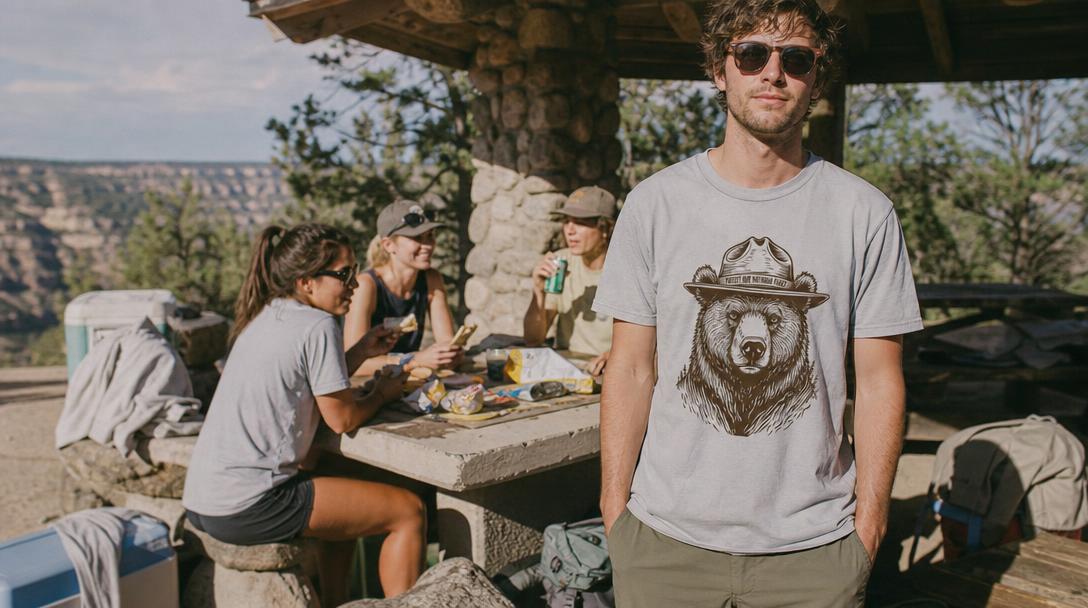
For hot weather, prioritize breathability, quick drying, and sun protection.
Look for:
- Polyester or nylon blends
- Mesh or airy knit construction
- UPF 30–50+
- Light colors
- Short sleeves if shade is common
- Long sleeves or hoodies if sun exposure is intense
Top hot-weather picks:
- Patagonia Capilene Cool Daily
- Outdoor Research Echo
- Outdoor Research Eclipse Sun T-Shirt
- REI Co-op Sahara T-Shirt
- Columbia Omni-Wick/Omni-Shade tees
If you’re choosing the best lightweight hiking shirt for hot weather, synthetic usually beats pure merino because it dries faster and handles heavy sweat better. For multi-day hot-weather trips, a merino blend can be a great second shirt for evenings, town stops, or lower-output days.
Best Hiking Shirt for Long Days on Trail
The best hiking shirt for long days on trail depends on the conditions, but here’s the plain-language breakdown:
- Hot and sweaty: Patagonia Capilene Cool Daily, OR Echo, REI Sahara
- Sunny and exposed: OR Eclipse, REI Sahara Shade, Patagonia Capilene Cool Sun
- Multi-day and smelly: Smartwool, Icebreaker, Patagonia Capilene Cool Merino
- Rugged and abrasive: Outdoor Research Astroman, KÜHL, Arc’teryx synthetic tees
- Budget: REI Co-op, Columbia
If you only buy one: choose a synthetic short-sleeve or long-sleeve UPF hiking shirt. It’ll work for the widest range of hikes.
If you buy two: add a merino or merino-blend shirt for odor control.
What to Wear for Long Distance Hiking?
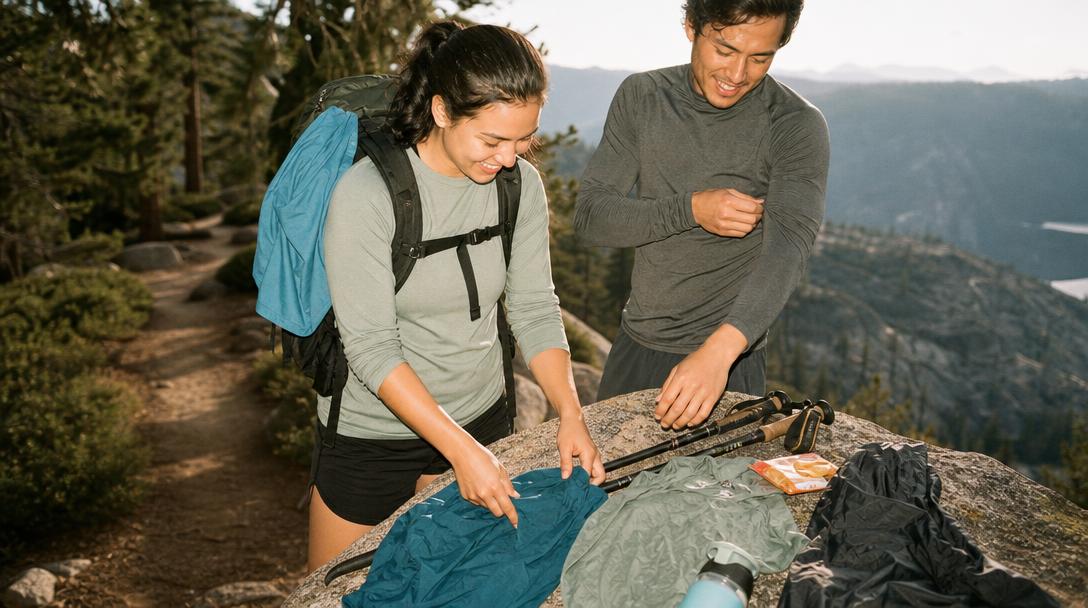
For long distance hiking, wear a moisture-wicking base layer made from synthetic fabric or merino wool, not cotton. Your hiking shirt should fit comfortably under backpack straps, dry quickly, and resist chafing.
A smart long-distance hiking outfit might include:
- Lightweight synthetic or merino hiking t-shirt
- Lightweight hiking pants or shorts
- Sun hoodie or UPF hiking shirt
- Fleece or active insulation layer
- Rain shell
- Wool or synthetic socks
- Hat, sunglasses, and sun gloves if exposed
For multi-day trips, many backpackers rotate two shirts:
- One synthetic shirt for hot, sweaty hiking
- One merino hiking shirt for cooler days, sleeping, or odor control
That way you’re not carrying your entire closet up a mountain like a very tired raccoon moving apartments.
What Is the 3 Layer Rule for Hiking?
The 3 layer rule for hiking is a simple clothing system:
- Base layer: Manages sweat
- Mid layer: Adds insulation
- Outer layer: Blocks wind and rain
Your hiking shirt is usually the base layer. It should be synthetic or merino so it can move moisture away from your skin.
For warm-weather hikes, your “three layers” might be:
- Moisture-wicking hiking shirt
- Lightweight fleece or sun hoodie
- Packable rain shell
For cold hikes, your base layer may be a long-sleeve merino shirt instead of a short-sleeve tee.
Why Avoid Cotton When Hiking?
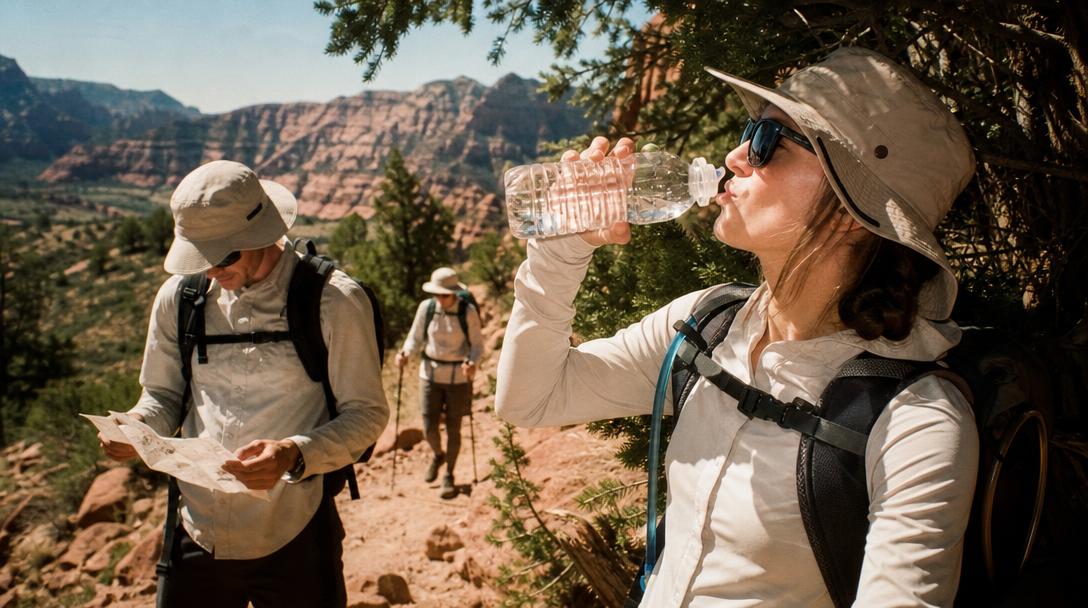
Avoid cotton when hiking because it absorbs moisture, dries slowly, and can leave you chilled once temperatures drop or wind picks up. The old trail saying is “cotton kills,” which sounds dramatic until you’re shivering in a damp shirt three miles from the trailhead.
Cotton can be fine for casual campground lounging, short walks, or low-risk summer outings. But for extended outdoor use, especially backpacking, mountain hikes, or unpredictable weather, choose synthetic or merino hiking shirts.
That doesn’t mean fun cotton tees have no place outdoors. A soft graphic tee—like Hike Tee’s Camp Lover Shirt or the nature-inspired Flow Shirt—can be perfect for campfire hangs, national park gift-shop wandering, or the drive home. Just don’t make it your main sweat layer for serious miles.
What Is the Best Shirt to Wear on Hikes?
The best shirt to wear on hikes is a moisture-wicking hiking shirt made from polyester, nylon, merino wool, or a merino blend.
For most people, the best all-around choice is:
- Lightweight
- Breathable
- Quick-drying
- Comfortable under a backpack
- UPF-rated if you hike in the sun
- Not cotton
A short-sleeve synthetic tee is great for forest trails and warm conditions. A long-sleeve UPF hiking shirt is better for desert, alpine, beach, canyon, and high-elevation hikes. A merino hiking shirt is best when odor control matters more than drying speed.
Women’s and Plus-Size Fit Guidance for Long Hikes
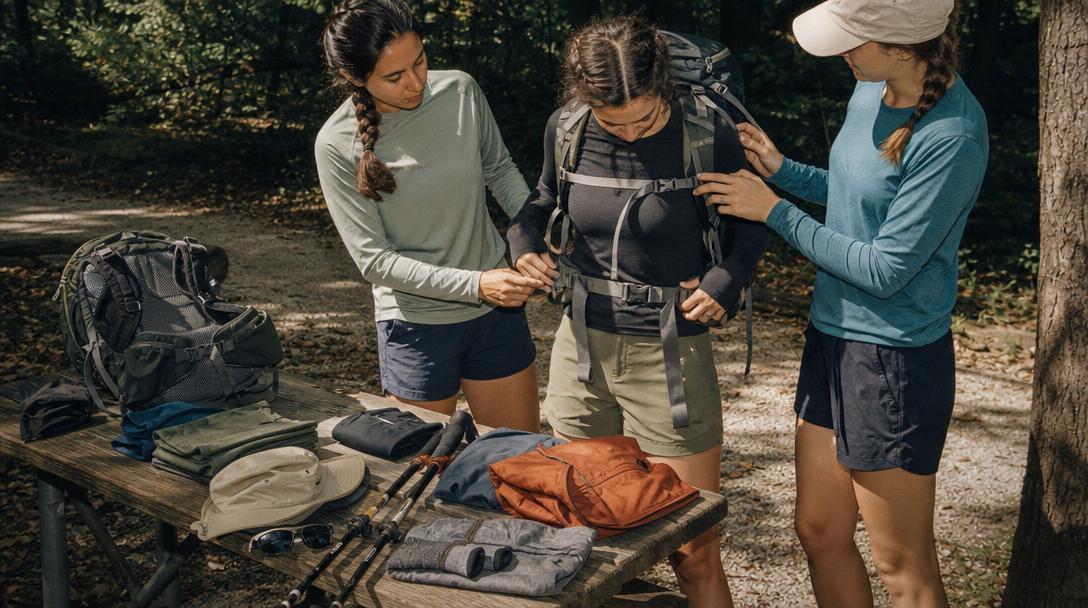
Fit matters more than people think. A shirt can have fancy fabric and still ruin your day if the seams rub under pack straps or the hem rides up every five minutes.
Look for:
- Shoulder seams that don’t sit directly under pack straps
- Enough room through the chest and hips for movement
- A hem long enough to stay put under a hip belt
- Stretch if you scramble or use trekking poles
- Sleeves that don’t dig into upper arms
- Inclusive size charts with real measurements
Brands doing better in women’s and plus-size technical hiking shirts include:
- REI Co-op: Sahara Shade Hoodie in women’s plus sizes; Merino 185 in women’s plus sizes
- Outdoor Research: women’s Echo and Eclipse styles with extended sizing in select models
- Columbia: broad availability and practical cuts
- Smartwool: strong women’s merino options, though sizing varies by model
For long hikes, avoid buying a shirt that only fits while standing still in front of a mirror. Try reaching overhead, bending, twisting, and wearing it with your pack if possible. If the shirt annoys you in the living room, it will become your sworn enemy by mile nine.
Short-Sleeve Hiking T-Shirts for Hot-Weather Multi-Day Use
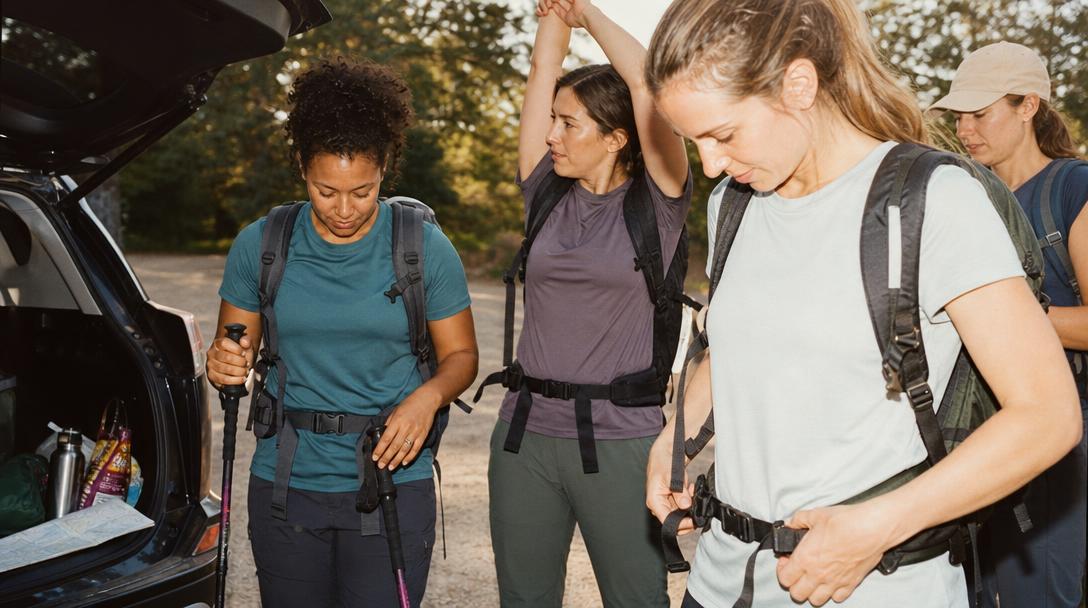
Short-sleeve hiking t-shirts deserve more love. Sun hoodies get all the glory lately, but a good technical tee is often the most comfortable choice for shaded trails, humid climates, and high-sweat days.
Best short-sleeve categories:
Synthetic Short-Sleeve Tees
Great for:
- Humid trails
- Fast drying
- Heavy sweat
- Budget-friendly packing
- Day hikes and backpacking
Top brands: Patagonia, REI Co-op, Outdoor Research, Columbia.
Merino Blend Short-Sleeve Tees
Great for:
- Odor control
- Travel
- Cooler mornings
- Multi-day backpacking
- Minimalist packing
Top brands: Smartwool, Icebreaker, Patagonia.
Casual Graphic Tees for Camp, Road Trips, and Rest Days
Great for:
- Campgrounds
- National park road trips
- Van life
- Casual hikes
- Post-trail pizza
This is where outdoor lifestyle shirts—like the funny hiking and camping tees from Hike Tee—fit naturally. They’re not meant to replace a technical base layer on a sweaty backpacking climb, but they’re ideal for camp, scenic drives, rest days, and reminding everyone that nature is serious business…but not too serious. For national park days, the Protect National Parks Shirt is a comfortable casual option when your agenda is scenic overlooks, visitor centers, and campfire lounging instead of high-output mileage.
Care Tips to Make Hiking Shirts Last Longer
Even durable hiking shirts need a little care.
To extend lifespan:
- Wash technical shirts in cold water
- Avoid fabric softener—it can reduce wicking performance
- Air dry when possible
- Turn merino shirts inside out before washing
- Use wool-specific detergent for merino
- Don’t cook synthetic shirts in a hot dryer
- Rinse salt and sweat after long trips
- Store fully dry to prevent funk
Merino needs gentler care than synthetic. Synthetic shirts can take more abuse, but odor treatments may fade over time.
Frequently Asked Questions
What to wear for long distance hiking?
Wear a moisture-wicking hiking shirt made from synthetic fabric or merino wool, plus comfortable hiking bottoms, wool or synthetic socks, and layers for changing weather. For multi-day trips, carry one fast-drying synthetic shirt and one merino hiking shirt for odor control.
What is the 3 layer rule for hiking?
The 3 layer rule means wearing a base layer for moisture management, a mid layer for warmth, and an outer shell for wind or rain protection. Your hiking t-shirt or technical base layer should be synthetic or merino, not cotton.
Why avoid cotton when hiking?
Cotton absorbs sweat and dries slowly, which can leave you cold, clammy, and uncomfortable. For extended outdoor use, choose a moisture-wicking hiking shirt made from polyester, nylon, merino, or a blend.
What is the best shirt to wear on hikes?
The best shirt to wear on hikes is lightweight, breathable, quick-drying, and comfortable under a backpack. For hot weather, choose a synthetic UPF hiking shirt; for multi-day trips, choose merino or a merino blend for odor control.
Is merino or synthetic better for backpacking?
Synthetic is usually better for hot, sweaty conditions because it dries faster and resists abrasion. Merino is better for odor control, especially on multi-day trips without laundry. A merino blend is often the best hiking shirt for backpacking because it balances both.
Should hiking shirts be tight or loose?
A hiking shirt should be close-fitting enough to wick moisture but loose enough for airflow and movement. For long hikes, avoid tight seams under pack straps and make sure the hem works comfortably with a hip belt.
The Trail-Ready Takeaway
The best durable hiking shirts for extended outdoor use come from brands that match fabric to function.
Choose:
- Patagonia for all-around hiking t-shirts and sustainable technical fabrics
- Outdoor Research for hot-weather performance and sun protection
- REI Co-op for value, UPF options, and plus-size availability
- Smartwool for merino odor control
- Icebreaker for premium multi-day merino comfort
- Columbia for budget-friendly UPF hiking shirts
- KÜHL for rugged trail-to-town wear
- Arc’teryx, Black Diamond, and Mountain Hardwear for technical alpine use
If you hike mostly in heat, start with a synthetic moisture-wicking hiking shirt. If you backpack for multiple days, add a merino or merino-blend shirt. If you hike under intense sun, prioritize UPF 40–50+ and consider long sleeves.
Your shirt doesn’t need to be fancy. It just needs to keep you dry, comfortable, protected, and slightly less stinky than your hiking socks. That’s a low bar—and also, somehow, a heroic achievement.


