


Camping Outfit Ideas for Hike Tee Camp Style
Dominic PalmowskiCamping outfit ideas get a whole lot easier when you stop packing “just in case” clothes and start building simple trail-to-campfire layers that can handle sweat, dirt, chilly nights, surprise drizzle, and at least one marshmallow-related incident.
Because let’s be honest: camping is oddly tricky to dress for. One minute you’re hiking uphill wondering why you wore sleeves, and three hours later you’re wrapped in a blanket by the fire questioning every life choice that didn’t involve wool socks.
The sweet spot? Camping outfits that are functional first, comfortable always, and still cute enough for National Park sign photos, campsite coffee walks, and “look, I’m outdoorsy now” selfies.
According to REI’s hiking and backpacking clothing guidance, the best outdoor clothes tend to be moisture-wicking, quick-drying, breathable, insulating when needed, and protective against wind, rain, sun, and bugs. That sounds technical, but the outfit formula is simple:
- A quick-dry base layer
- A flexible bottom
- A warm layer
- A weather layer
- Shoes that match the terrain
- Campfire-safe swaps for evening
Let’s build camping outfits that can go from trail dust to campfire smoke without requiring a full suitcase or a fashion degree from the University of Raccoon Chic.
Camping Outfit Ideas for the Trail, Campsite, Campfire, and Sleep
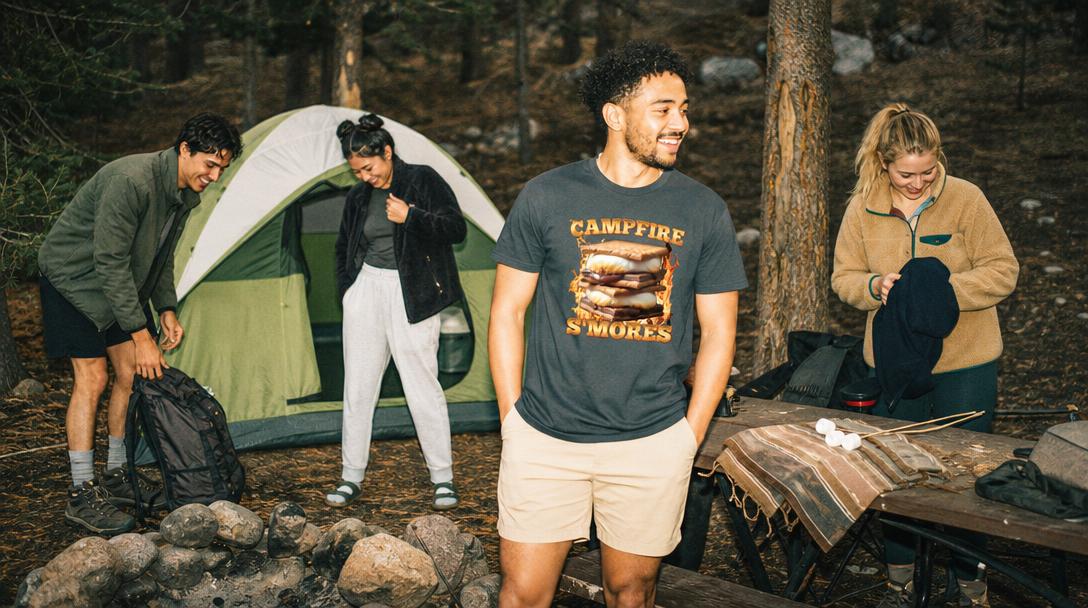
The best camping outfit ideas follow one simple flow: wear quick-dry, breathable layers for hiking; switch into warmer, cleaner layers at camp; add spark-safer outerwear near the fire; and sleep in dry base layers. This keeps you comfortable through sweat, temperature drops, smoke, and overnight chill without overpacking.
Think of your camping clothes in four mini “zones” instead of one outfit for the entire trip.
1. Trail Outfit: Sweat-Friendly and Sun-Smart
Your trail outfit needs to move, breathe, dry fast, and protect you from sun, brush, bugs, and surprise weather.
A reliable trail formula:
- Quick-dry T-shirt or lightweight long-sleeve sun shirt
- Hiking shorts, trail pants, or leggings
- Moisture-wicking socks
- Trail runners or hiking boots
- Cap or brimmed hat
- Lightweight fleece or wind shell in your daypack
For tops, look for polyester, nylon blends, or merino wool. REI notes that polyester and nylon are common hiking fabrics because they wick moisture and dry quickly. Merino wool is also popular because it manages odor well, which is helpful when your “laundry room” is a picnic table and optimism. If your trip includes real mileage, this beginner-friendly what to wear hiking guide breaks down trail layers in more detail.
Avoid jeans on the trail. Denim holds moisture, dries slowly, and gets stiff when wet. Great for a casual brewery stop after the trip; less great when you’re damp, cold, and hiking back to camp like a grumpy cowboy.
2. Campsite Outfit: Clean, Comfy, and Still Functional
Once you’re done hiking, change out of sweaty layers if you can. Even in warm weather, damp clothes can chill you quickly when the sun drops.
A campsite outfit can be casual and cozy:
- Fresh graphic tee or breathable long-sleeve
- Soft joggers, camp pants, or clean leggings
- Fleece hoodie or sweatshirt
- Camp sandals, clogs, or slip-on shoes
- Beanie or cap
This is where a funny outdoor tee or sweatshirt fits naturally. A bear, raccoon, sloth, or National Parks-inspired shirt gives you camp personality without sacrificing comfort. A soft cotton or cotton-blend camp tee like the Campfire S'mores Camping Shirt is made for relaxed campground time, not sweaty summit pushes. Bonus: animals don’t judge you for eating trail mix as dinner.
3. Campfire Outfit: Warm, Durable, and Spark-Aware
Campfire clothing deserves its own category because fire changes the rules.
Many technical hiking pieces are made from synthetic fabrics like polyester and nylon. They’re great for quick-dry performance, but they can melt if hit by sparks. Ultralight puffy jackets and down layers can also be vulnerable around embers because the thin shell fabric can easily get pinholes.
Better campfire layering ideas:
- Wool sweater, wool-blend shirt, or fleece under a sturdier outer layer
- Cotton canvas or heavier cotton overshirt if conditions are dry
- Durable camp pants instead of thin running tights
- Closed-toe shoes and wool socks
- Beanie or hood for warmth
Important nuance: cotton is not ideal for hiking in wet or cold conditions because it holds moisture. But a dry, sturdy cotton canvas layer can be useful near the fire because it won’t melt like many synthetics. The trick is to use cotton as a campfire outer layer or casual camp layer, not your sweaty trail base layer.
4. Sleep Outfit: Dry Layers Only
Your sleep clothes should be dry, warm, and separate from your sweaty hiking outfit.
A solid sleep setup:
- Dry base layer top
- Thermal leggings or joggers
- Warm socks
- Beanie if nights are cold
- Lightweight fleece nearby
Don’t sleep in the clothes you hiked in if they’re damp. Moisture steals warmth, and nobody wants to wake up at 3 a.m. feeling like a refrigerated burrito.
What Is the Best Attire to Wear When Camping?
The best attire to wear when camping is a layered outfit made from quick-dry, moisture-wicking fabrics: a breathable base layer, flexible hiking bottoms, insulating fleece or wool, and a rain or wind shell. Add sturdy footwear, warm socks, and dry sleep clothes so you’re prepared for changing temperatures.
A good camping outfit should solve three problems:
- You get hot while moving.
- You get cold when you stop.
- Weather does not care about your itinerary.
That’s why layering beats bulky clothing. Instead of one giant jacket, wear pieces you can add or remove throughout the day.
The Basic Camping Clothes System
Use this simple system for most three-season camping trips:
-
Base layer: T-shirt, tank, sun shirt, or thermal top
- Best fabrics: polyester, nylon, merino wool
- Job: manages sweat and keeps skin drier -
Mid layer: fleece, hoodie, wool sweater, or light puffy
- Best fabrics: fleece, wool, synthetic insulation
- Job: adds warmth when you stop moving -
Outer layer: rain jacket, windbreaker, softshell, or canvas camp layer
- Best fabrics: waterproof shell, wind-resistant nylon, cotton canvas for dry campfire use
- Job: blocks wind, rain, brush, or sparks depending on conditions -
Bottoms: hiking pants, shorts, joggers, leggings, or convertible pants
- Best fabrics: nylon/spandex, polyester blends, merino blends
- Job: comfort, movement, and weather protection -
Footwear: trail runners, hiking boots, camp shoes
- Choose based on terrain, pack weight, and ankle support needs
For beginners, a simple tee + trail pants + fleece + rain shell combo works for a huge range of camping conditions.
Quick-Dry Camping Outfit Essentials You’ll Actually Use
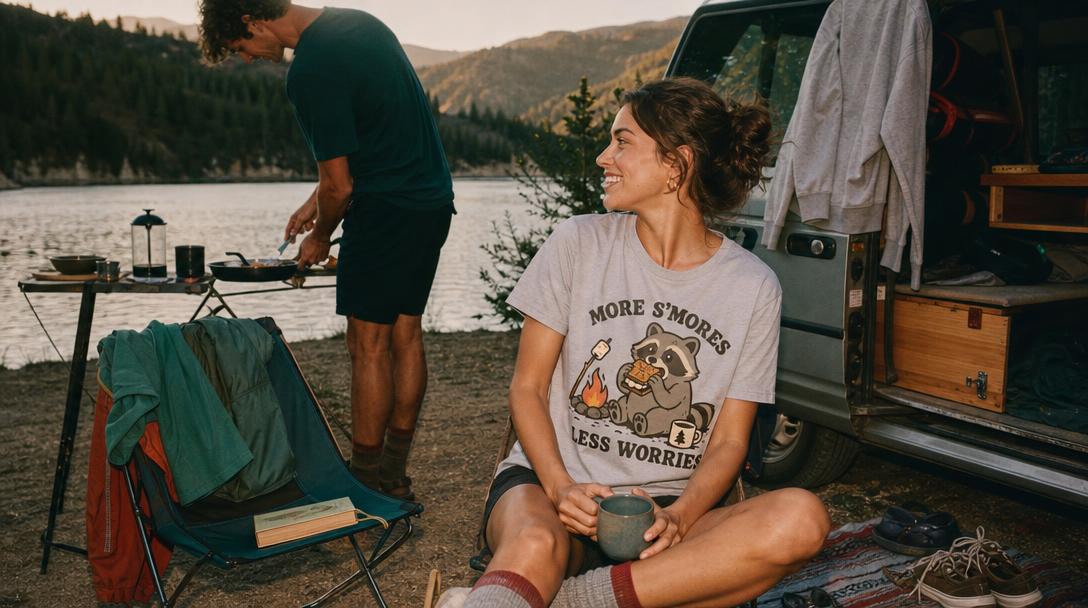
Quick-dry camping outfit essentials include moisture-wicking shirts, synthetic or merino socks, nylon hiking pants or shorts, a lightweight fleece, and a packable rain shell. These pieces dry faster than cotton, layer easily, reduce chafing, and help you stay comfortable when sweat, rain, creek crossings, or campsite spills happen.
Here’s the practical packing list:
- 2–3 quick-dry tops: tees, tanks, or long sleeves
- 1 sun hoodie or sun shirt: especially for exposed hikes
- 1 pair hiking pants: lightweight, stretchy, durable
- 1 pair shorts or leggings: depending on weather and preference
- 1 fleece or warm sweatshirt: for camp and cool mornings
- 1 rain jacket: even if the forecast looks friendly
- 2–4 pairs moisture-wicking socks: wool or synthetic
- 1 sleep outfit: dry and separate
- 1 camp hat or beanie: tiny item, big comfort upgrade
- 1 pair camp shoes: sandals, clogs, or slip-ons
According to KOA’s camping clothing advice, quick-drying clothing is especially useful because campground weather and activities can change fast. Between morning dew, dishwashing splashes, lake dips, and “oops, I sat on wet moss,” fast-drying fabric earns its spot.
Trail to Campfire Outfit Ideas by Scenario
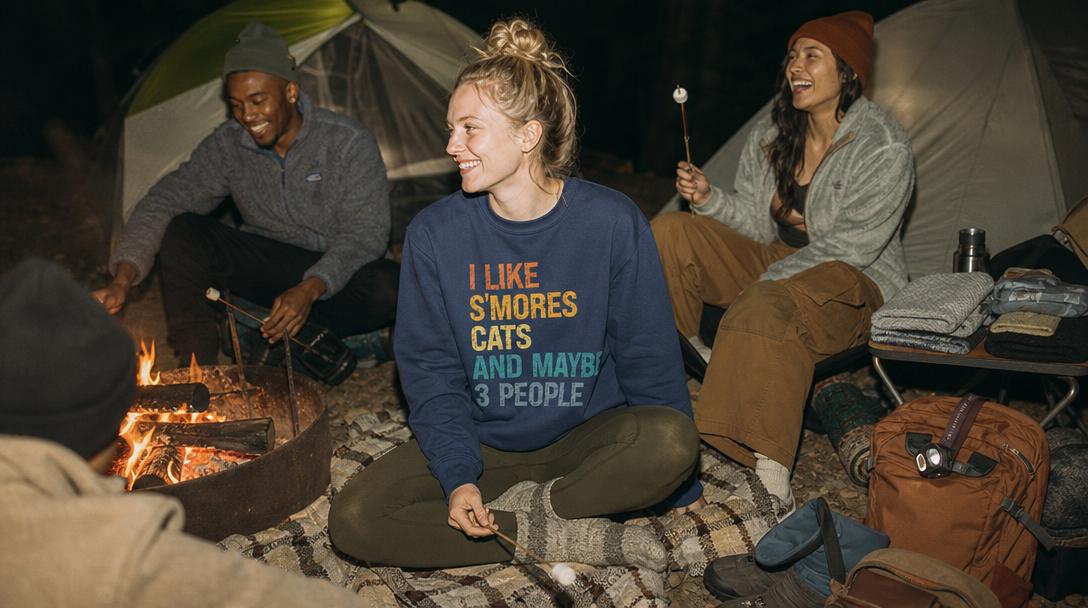
Instead of packing random clothes, build outfits around what you’ll actually do.
Easy Day Hike + Car Camping
This is the classic weekend setup: drive in, pitch tent, hike a few miles, make dinner, sit by the fire.
Women’s outfit idea:
- Quick-dry graphic tee
- High-waisted hiking shorts or trail leggings
- Lightweight flannel or sun shirt
- Trail runners
- Fleece hoodie for camp
- Beanie for night
Men’s outfit idea:
- Moisture-wicking tee
- Nylon hiking shorts or trail pants
- Lightweight overshirt
- Trail runners or hiking boots
- Fleece pullover
- Cap or beanie
Why it works: You can hike comfortably, then add the fleece or overshirt at camp. A fun outdoor tee keeps the look relaxed without feeling like you’re dressed for an expedition to the mailbox. For more casual camp-top inspiration, see these camping shirt ideas for outdoor style.
National Park Day + Scenic Overlook Photos
National Park outfits need to handle walking, changing temps, sun exposure, and inevitable “stand by the sign” photos.
Women’s outfit idea:
- Neutral quick-dry tee or National Park-inspired shirt
- Olive, tan, or black hiking pants
- Lightweight puffer vest or fleece
- Hiking boots or sturdy trail shoes
- Baseball cap
- Packable rain shell
Men’s outfit idea:
- Breathable long-sleeve sun shirt or tee
- Convertible hiking pants
- Lightweight fleece
- Trail shoes
- Brimmed hat
- Wind/rain shell
Style tip: Earth tones are popular for camping outfits because they mix easily: olive, rust, cream, charcoal, navy, tan, and forest green. They also hide dirt better than bright white, which is good because nature has opinions.
Lakeside Camping or Van Life Weekend
For van life, campground lounging, or lakeside camping, comfort and packability matter.
Women’s outfit idea:
- Cropped or relaxed outdoor tee
- Quick-dry shorts
- Oversized sweatshirt
- Wool socks
- Camp sandals
- Beanie or claw clip
Men’s outfit idea:
- Lightweight tee
- Stretch joggers or hybrid shorts
- Zip hoodie
- Camp clogs or sandals
- Cap
- Lightweight rain jacket
Why it works: You can walk to the lake, cook breakfast, read in a camp chair, and still look put together enough for a casual town stop. A relaxed cotton-blend tee like the More S'mores Less Worries Shirt also fits the laid-back lake-camp vibe.
Shoulder Season Camping
Spring and fall are sneaky. You’ll sweat during the day and shiver at night.
Women’s outfit idea:
- Merino or synthetic long-sleeve base layer
- Trail pants
- Fleece vest or pullover
- Wool socks
- Hiking boots
- Rain shell
Men’s outfit idea:
- Long-sleeve base layer
- Softshell or hiking pants
- Fleece hoodie
- Lightweight puffy for camp
- Waterproof boots
- Beanie
Key move: Pack gloves. They take almost no space and can make a cold morning coffee situation feel far less dramatic.
What to Wear Camping at Night
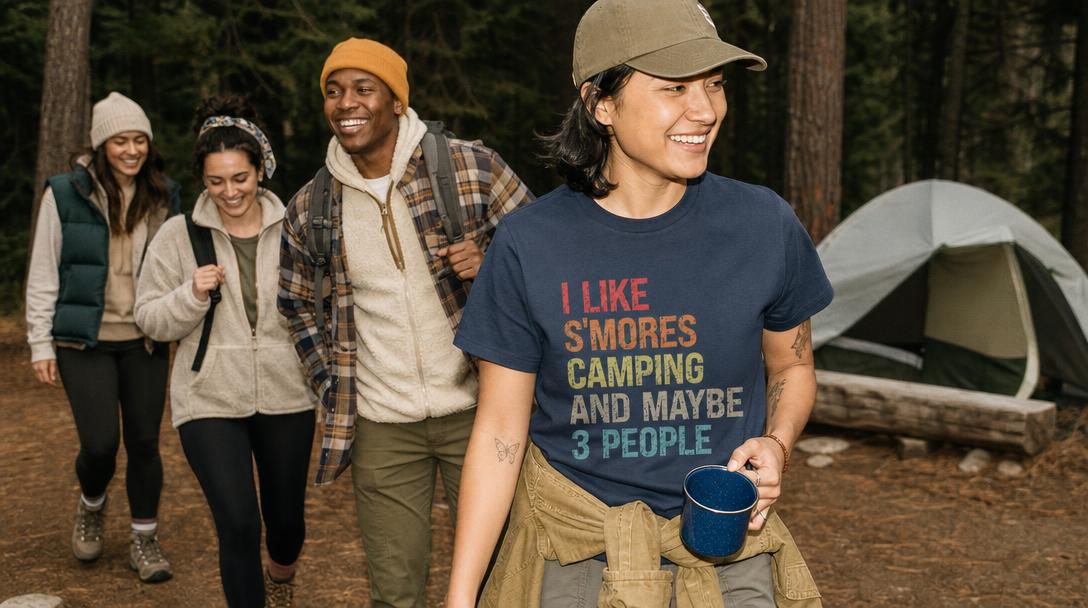
What to wear camping at night depends on the forecasted low, but the safest formula is dry base layers, warm socks, an insulating fleece or hoodie, and a beanie. Avoid sleeping in damp hiking clothes, and keep an extra layer nearby for midnight bathroom walks or chilly mornings.
Nighttime camping comfort is all about staying dry and trapping warmth.
Pack these for most nights:
- Dry long-sleeve top
- Dry leggings, joggers, or thermal bottoms
- Wool socks
- Fleece or sweatshirt
- Beanie
- Optional neck gaiter
- Slip-on shoes for leaving the tent
If the temperature drops below 50°F, add warmer base layers. If it drops below 40°F, consider fleece pants, thicker socks, gloves, and a properly rated sleeping bag. If you’re choosing between cozy layers for camp, this hoodie vs sweatshirt camping warmth guide can help.
A common beginner mistake is only packing for the daytime high. But camp life happens during the coldest parts of the day: early morning and after sunset. Your outfit should match the low temperature, not the sunny afternoon moment when you were eating chips in a camp chair.
What Are Some Cute Clothes to Wear While Camping?
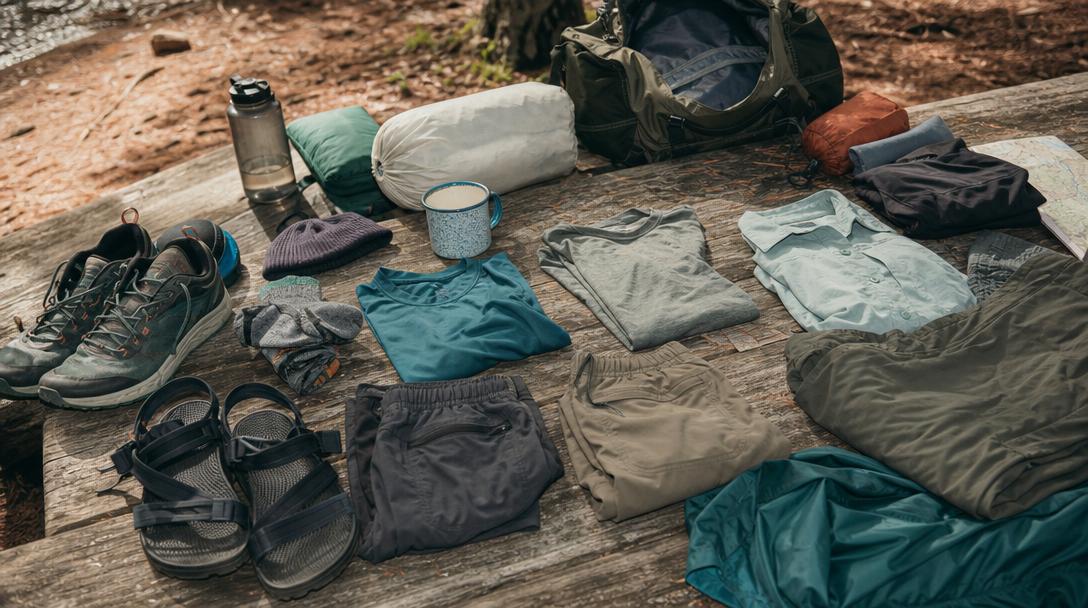
Cute clothes to wear while camping include fitted or oversized graphic tees, earth-tone hiking pants, cozy sweatshirts, shackets, fleece pullovers, beanies, trail shorts, leggings, and wool socks. The cutest camping outfits still use functional fabrics, comfortable shoes, and layers that work for real weather.
Cute camping style is basically “practical, but make it look intentional.”
Try these outfit formulas:
Cute Women’s Camping Outfits
- Graphic tee + hiking shorts + flannel + trail runners
- Tank + high-waisted trail pants + fleece vest + cap
- Oversized sweatshirt + bike shorts + wool socks + camp sandals
- Long-sleeve base layer + puffer vest + leggings + beanie
- National Park tee + joggers + canvas overshirt + hiking boots
Cute Men’s Camping Outfits
- Outdoor tee + nylon shorts + fleece pullover + trail shoes
- Long-sleeve sun shirt + hiking pants + cap + boots
- Graphic sweatshirt + joggers + wool socks + camp clogs
- Henley base layer + canvas overshirt + utility pants
- National Park tee + flannel + relaxed trail pants
Cute But Still Smart Styling Tips
- Stick to 3–4 colors so everything mixes.
- Use earth tones with one fun graphic piece.
- Choose fitted base layers under oversized camp layers.
- Pack one “photo-friendly” tee or sweatshirt.
- Let accessories do work: beanie, cap, bandana, wool socks.
The best camping outfits for women and the best camping outfits for men both follow the same rule: function first, personal style second, discomfort never.
Weather-Based Camping Outfit Formulas
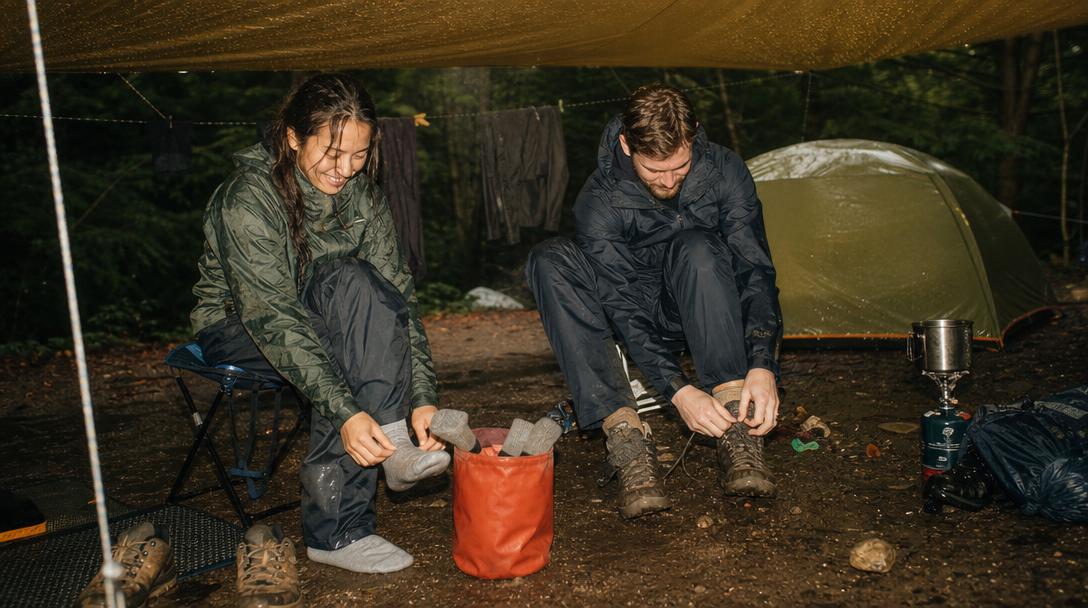
Camping weather can swing fast, so build outfits by temperature and conditions.
Hot Summer Camping
Choose breathable, sun-protective, sweat-friendly pieces.
Wear:
- Quick-dry tee or tank
- Lightweight hiking shorts
- Sun hoodie or UPF shirt
- Trail runners
- Cap or wide-brim hat
- Sunglasses
- Thin wool or synthetic socks
Pack:
- Fleece for evening
- Rain shell
- Dry sleep clothes
Avoid heavy cotton hoodies during hot daytime hikes. Save cozy layers for camp.
Buggy, Humid Camping
Mosquitoes are tiny vampires with wings. Dress accordingly.
Wear:
- Lightweight long-sleeve shirt
- Lightweight hiking pants
- Tall socks
- Closed-toe shoes
- Hat or bandana
Look for breathable fabrics and consider insect-repellent clothing if you’re camping in tick-heavy areas. The CDC recommends using EPA-registered insect repellents and checking for ticks after being outdoors in grassy or wooded areas.
Rainy Camping
Rainy camping can still be fun if you’re not dressed like a sponge.
Wear:
- Synthetic or merino base layer
- Nylon hiking pants
- Waterproof rain jacket
- Waterproof boots or fast-draining trail shoes
- Wool socks
Pack:
- Extra socks in a dry bag
- Dry camp clothes
- Camp towel
- Rain pants for serious weather
Avoid cotton sweatpants in rain. They absorb water and stay damp for ages. For more wet-weather planning, read these practical tips for camping in the rain while staying dry.
Cold Night Camping
Cold nights require insulation and dryness.
Wear at camp:
- Dry base layer
- Fleece or wool mid layer
- Puffy jacket away from direct campfire sparks
- Warm hat
- Gloves
- Wool socks
- Insulated camp shoes or boots
Sleep in:
- Dry thermals
- Beanie
- Warm socks
- No damp trail clothes
If your campsite has a fire ring, enjoy the fire—but don’t rely on it as your only warmth. Fires go out. Your layers should still work when the embers fade.


