


How to Choose a Camping Tent for Families | Hike Tee
Dominic PalmowskiLearning how to choose a camping tent gets a lot easier when you stop trusting the giant 4-person label on the box and start asking the real family-camping question: where will everyone sleep, where will the gear go, and can a parent change clothes without performing raccoon yoga?
Because a family tent is never just a fabric bedroom. It is your rainy-day playroom, changing room, nap zone, shoe-disaster containment unit, and sometimes your please-let-the-toddler-fall-asleep sanctuary. The right camping tent size can make the difference between a cozy weekend and a midnight game of human Tetris.
Listed tent capacity is usually based on how many sleeping bags can fit, not how much room people need to live comfortably. That is why many outdoor gear guides recommend sizing up by one or two people for family camping, especially if you are car camping, bringing kids, using air mattresses, or storing gear inside.
Let’s make this simple.
How to choose a camping tent: the quick family decision tree
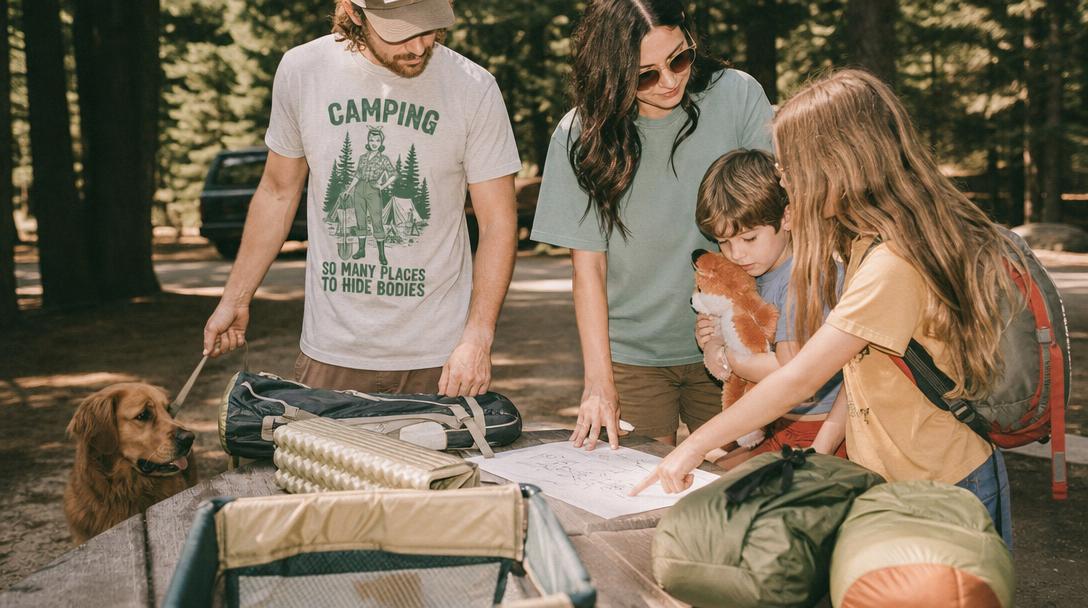
To choose a camping tent for your family, count every sleeper, add one to two extra people for comfort and gear, then check the actual floor area, peak height, doors, vestibules, and weather protection. For most families, a comfortable family camping tent is larger than the listed headcount suggests.
Use this decision tree before you get dazzled by skylights, gear lofts, and marketing phrases like palatial interior. Palatial is nice. Dry socks are nicer.
Step 1: Count sleepers, not just people
Start with who is actually sleeping in the tent:
- Adults
- Kids
- Toddlers in travel beds
- Babies in portable cribs
- Dogs
- Anyone who sleeps like a starfish
- Anyone who needs medical equipment, extra blankets, or nighttime access
A baby may be small, but a portable crib can take more floor space than a sleeping pad. A dog may be only 35 pounds, but somehow becomes a furry ottoman at 2 a.m.
Step 2: Add comfort space
For family camping, use this rule of thumb:
- Tight fit: listed tent capacity equals your group size
- Comfortable fit: tent capacity equals your group size plus 1 or 2
- Roomy car-camping fit: tent capacity equals your group size plus 2 or 3
So if you are asking, should I buy a 6 person tent for family of 4? the practical answer is usually yes. A 6-person tent is often the comfortable baseline for two adults and two kids.
Step 3: Check floor area, not just capacity
Person ratings vary by brand and tent shape. A 6-person tent might feel roomy or weirdly cramped depending on layout, wall slope, and whether the floor is rectangular or tapered.
Look for:
- Minimum floor area
- Actual dimensions
- Peak height
- Wall shape
- Vestibule size
- Door placement
As a general comfort target, 20–25 square feet of sleeping space per person can work for family tent camping, while 25–30 square feet per person feels roomier when gear is involved.
Step 4: Match the tent to your trip style
A giant cabin tent is wonderful at a drive-up campsite. It is less wonderful if you have to carry it two miles while a child asks if rocks are alive.
Ask:
- Are you car camping?
- Backpacking?
- Camping in a national park?
- Sleeping beside a van or SUV?
- Staying one night or a full week?
- Camping in hot, cold, windy, or rainy weather?
If you are still building the rest of your setup, pair your tent decision with a practical camping gear checklist so you do not forget stakes, a mallet, headlamps, or the one thing everyone asks for after dark.
Tent size guide for family camping by household size
| Family Setup | Listed Tent Capacity to Consider | Suggested Floor Area | Peak Height Goal | Comfort Notes |
|---|---|---|---|---|
| 1 adult + 1 child | 3-person | 40–50 sq. ft. | 44–60 in. | Room for two pads and a bag or small duffel |
| 2 adults | 3- to 4-person | 45–65 sq. ft. | 48–72 in. | Size up if using a queen air mattress |
| 2 adults + 1 child | 4- to 6-person | 60–90 sq. ft. | 60–72+ in. | A 4-person may work tight; 6-person is comfier |
| 2 adults + 2 kids | 6-person | 80–100 sq. ft. | 72+ in. if possible | The usual sweet spot for a family of 4 |
| 2 adults + 3 kids | 8-person | 100–130 sq. ft. | 72+ in. | Better with two doors or a room divider |
| Family of 5 + dog | 8- to 10-person | 120–150+ sq. ft. | 72+ in. | Add vestibule space or a gear-storage plan |
| Family of 6 | 10-person | 140–180+ sq. ft. | 72+ in. | Consider two rooms or two smaller tents |
These are not hard rules. A minimalist family using compact sleeping pads can fit into less space. A family with cots, air mattresses, a toddler cot, and three bins of snacks shaped like woodland animals will need more.
What size tent do I need for a family of 4?
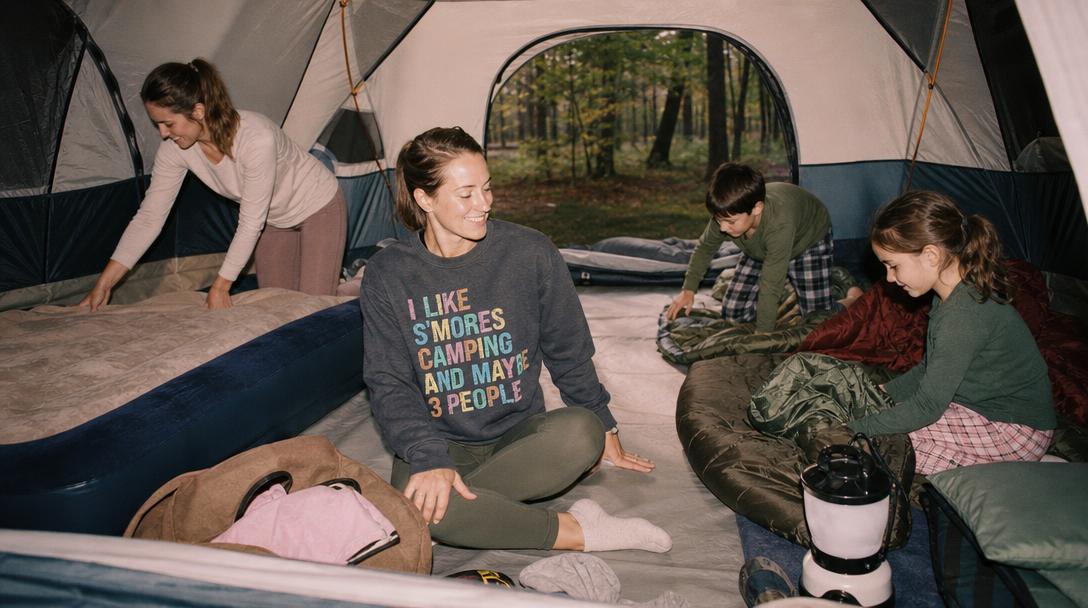
For a family of 4, a 6-person tent is usually the most comfortable starting point because a true 4-person tent often fits four sleeping bags with little room for gear, changing, or bad-weather downtime. Look for roughly 80–100 square feet of floor area and standing-height headroom if car camping.
A 4-person tent can work for two adults and two small kids on a short, fair-weather trip if you pack light and store most gear in the car. But for relaxed family camping, especially with kids who need help changing, finding pajamas, or locating the stuffed fox that prevents total bedtime collapse, a 6-person tent is usually worth it.
Family of 4 sizing examples
Choose a 4-person tent if:
- You are backpacking or walk-in camping
- Your kids are small
- You use compact sleeping pads
- You store gear outside or in the car
- You only need the tent for sleeping
Choose a 6-person tent if:
- You are car camping
- You use air mattresses or thick pads
- You want space to change clothes
- You camp for more than one night
- You expect rain
- You want the trip to feel like a vacation, not a puzzle
Choose an 8-person tent if:
- You bring a dog
- You use cots
- Your kids are older or tall
- You want a play or changing area
- You camp for several days at a time
- You want separate sleep zones
For many families, the best tent size for family camping is not the smallest tent that technically works. It is the smallest tent that still feels calm when everyone is inside at once.
How much gear space does a family tent really need?
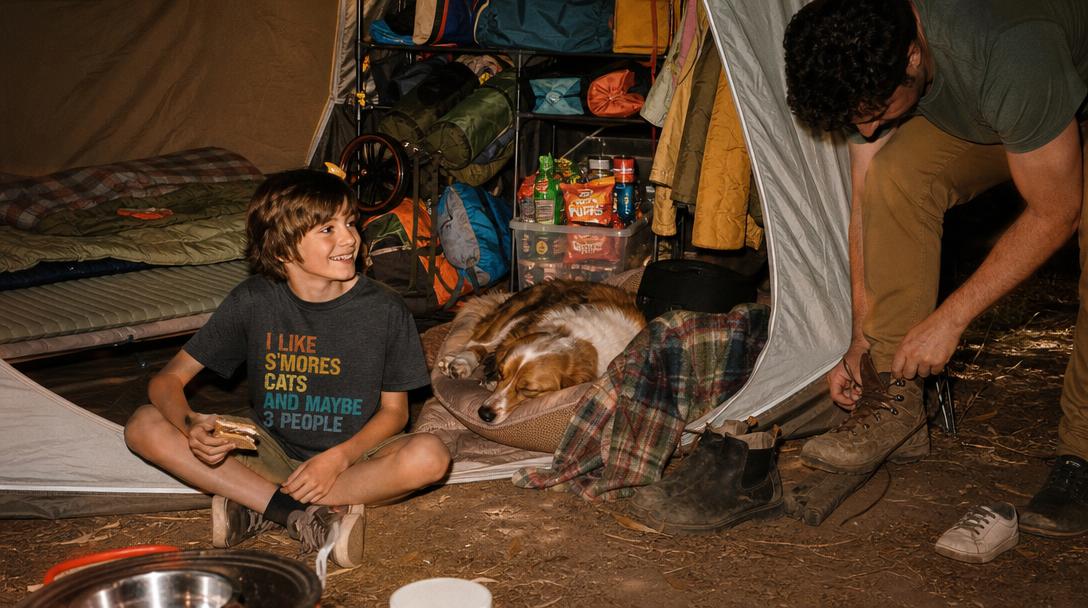
A family tent needs sleeping space plus extra room for shoes, packs, jackets, lights, comfort items, and bad-weather clutter. Add at least 10–15 square feet for basic gear, 20–30 square feet for a family with kids, and more if you bring a stroller, dog bed, cot, or bulky bedding.
This is where many tent purchases go sideways. Families calculate bodies but forget the stuff. And family camping comes with stuff. So. Much. Stuff.
Simple floor-area calculator
Use this quick formula:
-
Start with sleepers:
- Adult: 20–25 sq. ft.
- Child: 15–20 sq. ft.
- Dog: 8–15 sq. ft.
- Portable crib: check actual footprint, often 10+ sq. ft.
-
Add bedding space:
- Queen air mattress: about 30–35 sq. ft.
- Single sleeping pad: about 8–12 sq. ft.
- Cot: often 12–18 sq. ft.
-
Add gear space:
- Light gear: +10 sq. ft.
- Typical family gear: +20–30 sq. ft.
- Stroller, dog gear, extra bins: +30–50 sq. ft.
-
Add bad-weather space:
- If you will hang out inside during rain: add another 10–20 sq. ft.
Example: two adults, two kids, one dog, and normal gear:
- Adults: 45 sq. ft.
- Kids: 35 sq. ft.
- Dog: 10 sq. ft.
- Gear: 25 sq. ft.
Total: about 115 sq. ft. That family could survive in a smaller tent, but an 8-person tent may feel far more relaxed than a 6-person tent if the dog sleeps inside and the trip is longer than a weekend.
Peak height, doors, and vestibules: comfort features that matter
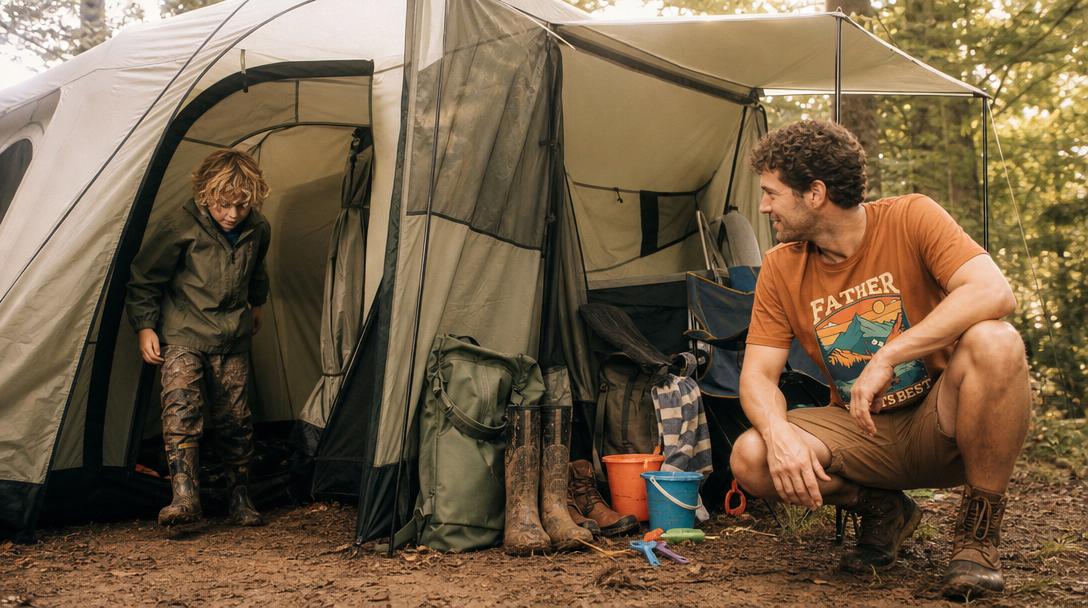
Peak height, doors, and vestibules matter because they affect daily family camp life more than flashy extras. Standing-height tents make changing easier, two doors reduce midnight traffic jams, and vestibules keep muddy shoes, wet jackets, packs, and pet gear out of your sleeping area.
For family camping, comfort features are not luxury. They are sanity infrastructure.
Peak height
Look for:
- 48–56 inches: sitting height only
- 60–70 inches: crouching and changing comfort
- 72+ inches: many adults can stand
Cabin-style tents often have more vertical walls and better usable headroom than dome tents. Dome tents can be strong and weather-worthy, but sloped walls reduce livable space near the edges.
Doors
One door is fine for two people. For families, two doors are often worth it.
Two doors help with:
- Nighttime bathroom trips
- Kids entering without crawling over bedding
- Better airflow
- Less bottlenecking during rain
- Separate adult and kid zones
Vestibules
A vestibule is the covered area outside the tent body but under the rainfly. It is perfect for:
- Boots
- Wet jackets
- Daypacks
- Camp chairs
- Dog towels
- Sand toys
- Stroller wheels
- The mystery bag no one claims
If your tent has small vestibules, plan to store more gear in your vehicle or under a separate tarp or shelter.
Weather resistance: do not buy a fair-weather fabric mansion
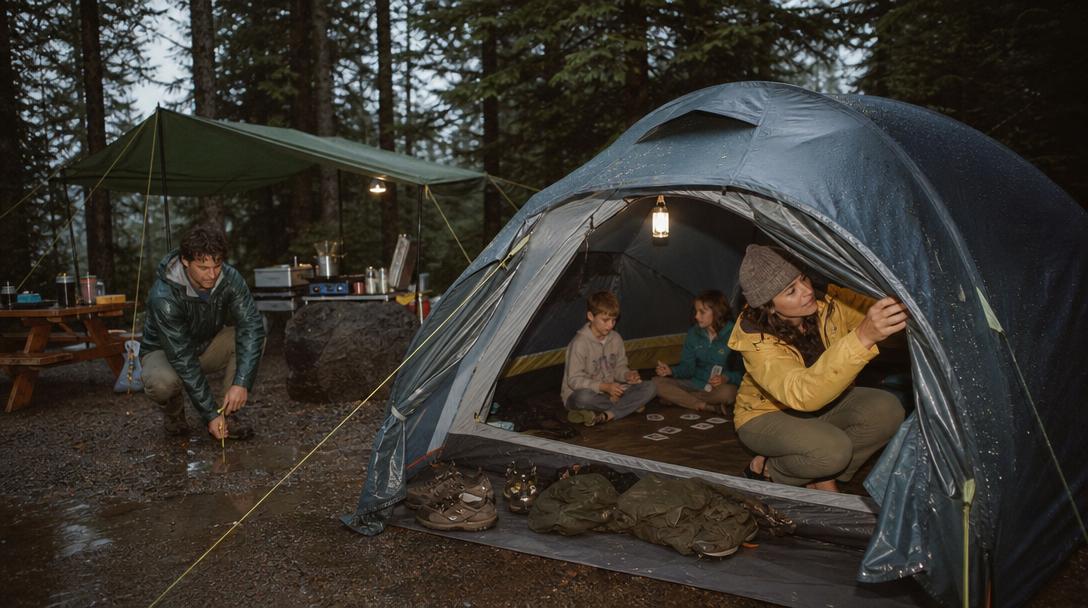
Weather resistance matters because family tents often become crowded during storms, and leaks turn a minor inconvenience into full campsite drama. Look for a full-coverage rainfly, strong poles, sealed or taped seams, durable floor fabric, good ventilation, and a shape that handles wind for your typical camping conditions.
A huge tent with weak weather protection is like a paper towel with a zipper.
Check for:
- Full rainfly: better than a tiny cap-style fly in sustained rain
- Bathtub floor: floor fabric curves up the sides to reduce water intrusion
- Taped or sealed seams: helps prevent leaks
- Good ventilation: reduces condensation
- Sturdy pole structure: important for wind
- Guyline points: help stabilize the tent
- Appropriate season rating: most family campers want a 3-season tent
If rain is likely, read these practical tips for camping in the rain before your first soggy forecast. A few setup habits can make the difference between cozy and chaotic.
Setup with kids: choose a tent you can pitch before the snacks run out
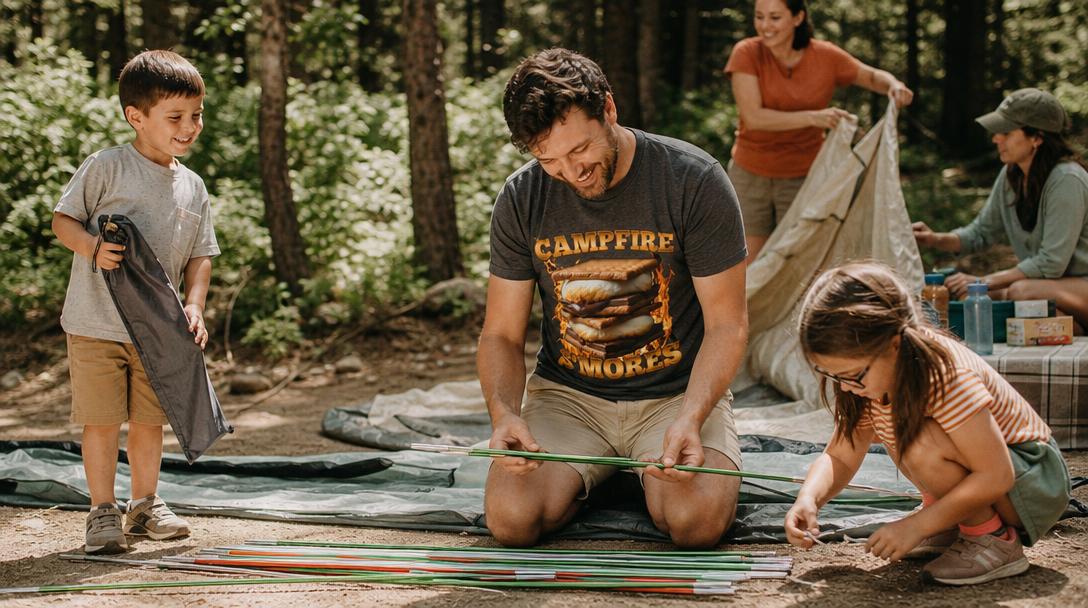
A family camping tent should be simple enough to set up while supervising kids, managing weather, and answering 47 questions about squirrels. Look for color-coded poles, fewer pole crossings, intuitive clips, clear instructions, and a realistic setup time you can handle with one adult if needed.
Before your first trip, do a backyard test pitch. Yes, even if you are pretty sure you know how it works. Especially then.
Kid-friendly setup tips
- Give kids small jobs: stake bag holder, pole sorter, flashlight captain
- Keep one snack accessible during setup
- Lay out the footprint first
- Stake corners before raising the tent in wind
- Keep the rainfly handy, not buried in the car
- Practice packing it back into the bag
If setup requires three adults, a weather degree, and a calm emotional support marmot, it may not be the right family tent.


