


Camping Gear Checklist for Easy Trips
Dominic PalmowskiKey Takeaways
- Dividing your camping gear into groups, such as shelter, cooking, safety, clothing, and personal items, helps you pack with purpose and avoid forgetting essentials.
- Selecting the right tents, sleeping bags, and sleeping pads for the weather and your comfort needs leads to a safer, more restful outdoor adventure.
- Stocking a simple camp kitchen with a stove, cookware, plates, and cleaning supplies makes cooking and cleanup easier anywhere.
- Dressing in layers, packing weather-appropriate garments, and choosing rugged footwear keeps you comfortable in changing outdoor conditions.
- Covering safety basics like a first aid kit, navigation tools, lighting, and backup power makes your trip more secure and enjoyable.
- Regularly update your checklist, practice basic skills, and keep a flexible attitude to get more out of every camping trip.
A good camping gear checklist covers five basics: shelter, sleep gear, a camp kitchen, weather-ready clothing, and safety tools. Get those five categories right and everything else on your trip tends to fall into place.
You are two miles from the trailhead, the rain starts coming in sideways, and you realize your jacket is sitting at home by the door. Sound familiar? The right camping gear does not just make trips more comfortable — it can be the difference between a story you laugh about later and one you would rather forget.
Camping gear includes the equipment and supplies you use outdoors, from tents and sleeping bags to portable stoves, backpacks, lighting, and first aid kits. Quality equipment helps keep you warm, dry, fed, organized, and ready for changing weather. Whether you are planning a solo overnight, a family campground weekend, or a relaxed car camping trip, a smart checklist makes the whole experience feel simpler. Let’s dig in.
Your Essential Camping Gear Checklist
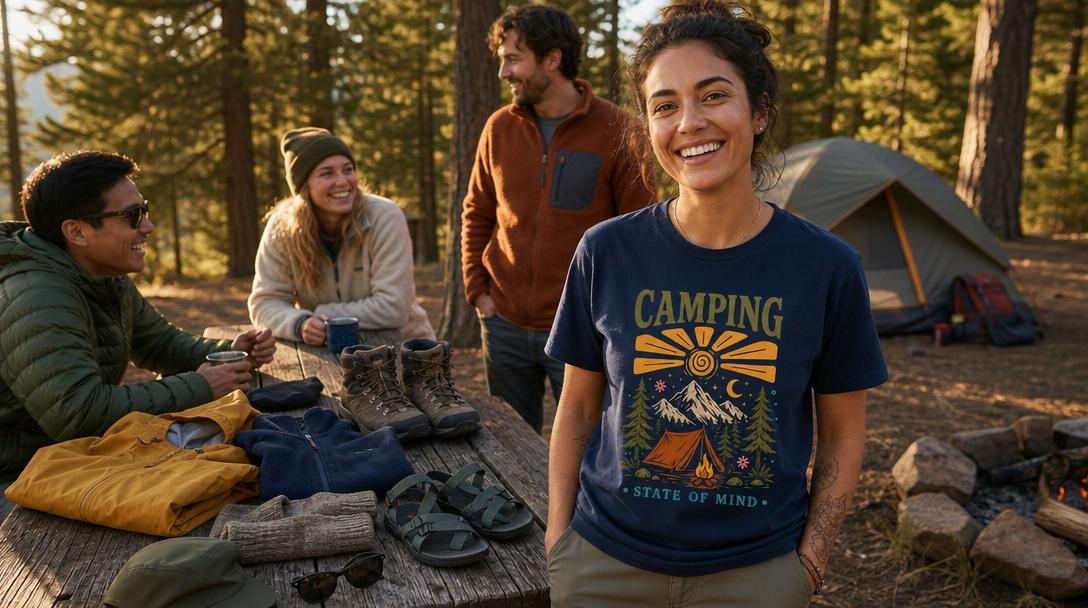
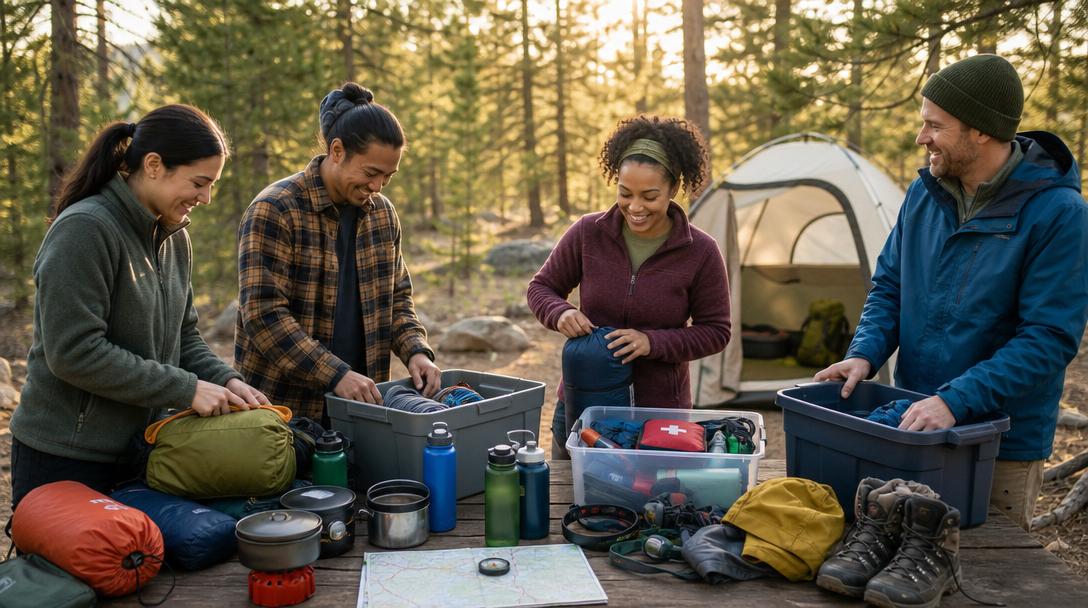
A solid camping trip starts with the right equipment. A basic camping gear checklist keeps you organized and covers the essentials, from shelter to safety, without turning packing into a last-minute scramble. Grouping gear by use — sleep, food, clothing, safety, and personal items — makes it easier to find what you need fast, both at home and at camp.
1. Shelter & Sleep
A tent is the center of your shelter system. Choose one sized for your group, your gear, and the weather you expect, from lightweight solo options to roomy family tents. Do not forget sturdy tent stakes, guy lines, and a groundsheet for added stability and moisture protection.
Choose a sleeping bag for the coldest temperature you expect. That helps you stay warm when nighttime temperatures drop. A sleeping pad or air mattress adds comfort and insulates you from the cold ground. If you want a deeper dive before buying, this guide to the best sleeping bags for camping and backpacking is a helpful next read.
Little luxuries matter, too. A small pillow can be the difference between waking up rested and spending half the night trying to fold a hoodie into something pillow-shaped.
2. Camp Kitchen
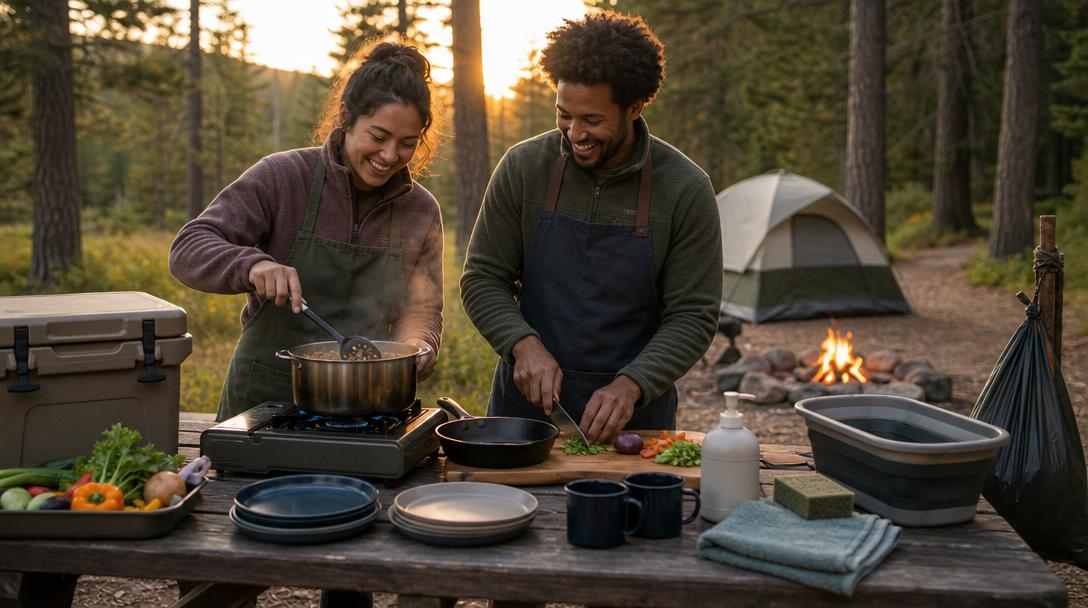
A portable stove and fuel make camp cooking much easier. Choose a stove that performs well in wind and matches the meals you plan to cook. Pack a pot, skillet, and utensils that fit your menu. A small cutting board and sharp knife handle most prep.
Bring plates, mugs, and reusable silverware for each camper. A cooler with ice packs keeps food fresh, and reusable containers help with leftovers.
For cleanup, pack biodegradable soap, a sponge, a quick-dry towel, and a couple of trash bags. A clean camp kitchen is easier to use, safer around wildlife, and much nicer to wake up to.
3. Clothing & Footwear
Layering is important. Start with a sweat-wicking base layer, add a fleece or down mid-layer, and top it with a waterproof jacket and pants. This system handles variable weather well.
Pack extra socks, a hat, and sunglasses. Rugged hiking boots work for most terrain, while camp sandals or slip-ons are perfect for relaxing after the day’s miles are done. For easy campground downtime, a casual cotton or cotton-poly tee like the Camping Peace Shirt can be a fun comfort item — just do not treat cotton as your main hiking layer in cold or wet conditions.
4. Safety & Navigation
Always pack a map and compass, even if you plan to use GPS or your phone. A first aid kit with personal medications, plus an emergency blanket, prepares you for common accidents.
A whistle and animal deterrent can improve safety in wildlife areas. For lighting, bring a headlamp, flashlight, or lantern, plus spare batteries.
These tools help you navigate, handle small problems, and stay safe once the sun goes down.
5. Personal Items
Toiletries like a toothbrush, toothpaste, and biodegradable soap are essentials. A quick-dry towel, toilet paper, and wipes add a lot of comfort.
Bring a reusable water bottle or hydration pack, plus a water filter or purification tablets if clean water is not guaranteed. Sunscreen, bug spray, and a multi-tool round out your kit.
These small items help keep you clean, safe, and ready for the next part of the adventure.
Selecting Your Shelter System
Choosing your shelter system is not just about having somewhere to sleep. You want the right blend of comfort, weather protection, weight, and simplicity. Your best shelter system should match your trip style, group size, pets, and gear storage needs.
Look for tents with vestibules or awnings if you want to keep packs and boots dry without crowding your sleeping area. In wet places, a detachable inner tent can make setup easier. Double-wall tents with bug nets and removable rainflies protect you from insects and weather. Always match your tent’s weight, durability, and weather rating to the trip you are actually taking.
For example, a lightweight tunnel tent can be great for backpackers, while a rooftop tent may suit car campers better. Side vestibules store gear out of the weather, and built-in bug nets help you sleep peacefully. If you expect heat, you probably do not need a heavy four-season tent.
Tent Types
Dome tents are popular because they resist wind, set up easily, and offer dependable structure. They work well for many trips, from solo weekends to family camping.
Tunnel tents usually provide more livable space and headroom, making them useful for groups or longer trips. Rooftop tents mount to vehicles, giving you an off-the-ground sleep setup and quick camp routine, but they are heavier and best for car-based adventures.
Weight matters most for backpackers. Look for lightweight fabrics and aluminum poles. For rough ground or frequent trips, durability matters more. Ripstop nylon or polyester, sealed seams, strong poles, and good waterproof ratings all help your tent hold up.
Sleeping Bags
Choose your sleeping bag based on the coldest temperature expected. Most bags list comfort and extreme temperature ratings; use the comfort rating for real planning. Mummy bags trap heat efficiently, while rectangular bags offer more room to move.
For backpacking, choose a bag that packs small and light. Breathable, moisture-managing fabrics help you stay comfortable, especially in damp environments.
Sleeping Pads
Inflatable pads are soft and pack small, but they can puncture. Foam pads are more durable and provide consistent insulation, though they are bulkier. Pay attention to the R-value: the higher the number, the warmer the pad.
A pad’s thickness affects both comfort and weight, so test a few styles if you can. If you camp often, rugged materials and reinforced seams are worth the upgrade.
Comfort Extras
A small pillow beats a rolled-up jacket any day. Light blankets add warmth on cold nights and can double as picnic mats during the day. Hammocks are wonderful for lounging, though not every campsite allows them.
Lightweight camp chairs add a big dose of comfort around the fire. These small extras can make your campsite feel more inviting without overcomplicating your packing list.
Building Your Camp Kitchen
A good camp kitchen helps you cook, eat, and clean up with less frustration. Smart gear and simple meals keep things easy and waste low, no matter where you pitch your tent.
Cooking
Pack lightweight dinnerware, such as stainless steel or silicone plates, bowls, and cutlery, to reduce single-use waste. Reusable gear lasts through many trips and is simple to wash.
For quick cleanup, biodegradable soap and a basic sponge keep dishes clean without harming the places you came to enjoy. Look for soap labeled biodegradable or outdoor-safe.
Always bring a trash bag. It is the simplest way to keep camp tidy and pack out what you packed in. For snacks, choose trail mix, dried fruit, and granola bars. They need no cooking and help keep your energy up.
For meals, one-pot options like pasta, stir-fry, rice and beans, or soup are convenient. They reduce cookware and use simple ingredients. If you want more ideas, check out these easy campfire cooking recipes. Test your stove and fuel at home before you leave.
Eating
A drying towel makes cleanup faster, especially if you need to reuse dishes before the next meal. Small microfiber towels work well and dry quickly.
A portable camp sink or collapsible washbasin lets you wash dishes without making a mess. Fill it with water and soap, scrub your gear, then dispose of wastewater properly based on local rules.
Keep soap, towels, sponges, and other cleaning items in a small bin or tote. That way, you are not digging through every bag while dinner gets cold.
Cleaning
Cleaning is where many campsites get messy fast, so keep your system simple. Scrape food scraps into your trash bag, wash dishes away from lakes and streams, and strain food bits from wastewater when required.
Use biodegradable soap sparingly. Even outdoor-safe soap should not go directly into natural water sources. Dry dishes fully before packing them away so your kitchen bin does not turn into a damp, smelly surprise.
Dressing for the Outdoors

Your clothing is just as important as your sleeping bag or tent. The right layers keep you dry, warm, and protected from sun, wind, and rain. A three-layer clothing system — base, mid, and outer — gives you flexibility when the forecast changes.
Each layer has a job. Base layers wick sweat, mid-layers trap heat, and outer layers block wind and water. Avoid cotton for active hiking in cold or wet weather because it holds moisture and can chill your skin. For a full breakdown, this guide on what to wear hiking in cold weather explains the three-layer rule well.
That said, cotton and cotton-poly graphic tees do have a place at camp. Once you are dry, warm, and done hiking for the day, a casual tee like the Camping Summer Shirt or Life is better Campfire Shirt is perfect for campground lounging, roasting marshmallows, or hanging out by the picnic table.
Layering System
Start with a moisture-wicking base layer so sweat does not sit against your skin. Add a fleece, wool, or synthetic mid-layer for warmth. Finish with a waterproof or wind-resistant shell when weather turns.
Quick-dry fabrics are especially useful for base layers. Thermal layers, like fleece or down, are a must for chilly nights or mountain environments. If freezing weather is possible, pack gloves and a warm cap.
Weather Protection
Bring a wide-brimmed hat and sunglasses to protect your face and eyes on sunny hikes. UV-protective clothing with a UPF rating adds another layer of sun defense.
For uncertain weather, lightweight rain gear is worth packing. A waterproof jacket and pants keep you dry without taking up much room. Staying dry is one of the easiest ways to stay warm and safe outdoors.
Proper Footwear
Good hiking boots or trail shoes give you traction, support, and confidence on uneven ground. The boots or shoes you pick should match the conditions you are heading into.
Breathable shoes work well in hot, dry conditions, while waterproof options are better for wet or muddy trails. Camp shoes, sandals, or slip-ons let your feet recover at the end of the day. Pack extra socks — wool if possible — to help prevent blisters and keep your feet warm.
Make sure your boots or hiking shoes fit well. Ill-fitting footwear can cause discomfort or injury, so break them in before your trip.
The Car Camping Advantage
Car camping is a happy medium between rugged backpacking and camper van convenience. With your vehicle nearby, you can bring more gear, better food, and a few home comforts while still staying close to nature.
It is a great choice for beginners, families, and anyone who wants an easier camping setup. You can explore nearby trails or lakes during the day and come back to a comfortable campsite at night.
Organization
Save room in your car by keeping gear in storage bins, packing cubes, or duffels. Group similar items together — kitchen gear, sleeping gear, clothing, and personal items — so everything is easier to find.
Keep frequently used items, like snacks, headlamps, and rain jackets, in an easy-to-reach spot. Label each bin or bag with tape and a marker. It may feel fussy at home, but it saves time when you are setting up in the dark.
Because car camping gives you more space than backpacking, you can bring bigger comfort items like a folding cot, cooler, camp table, or extra blanket.
Power Solutions
Car camping makes it easier to keep phones, cameras, GPS devices, and lanterns charged. For longer stays, solar chargers or portable power stations can be useful, especially if you want an eco-friendlier option. If you are comparing setups, this guide to portable solar generators for off-grid power is a practical resource.
Bring spare batteries for essentials like headlamps and lanterns. A car charger also helps you recharge devices while driving to the next trailhead or campsite.
Comfort Upgrades
Comfort upgrades can change the whole feel of a car camping trip. Bring sturdy camp chairs and a folding table for meals, games, or morning coffee. Choose a thicker sleeping mattress if you are staying more than one night.
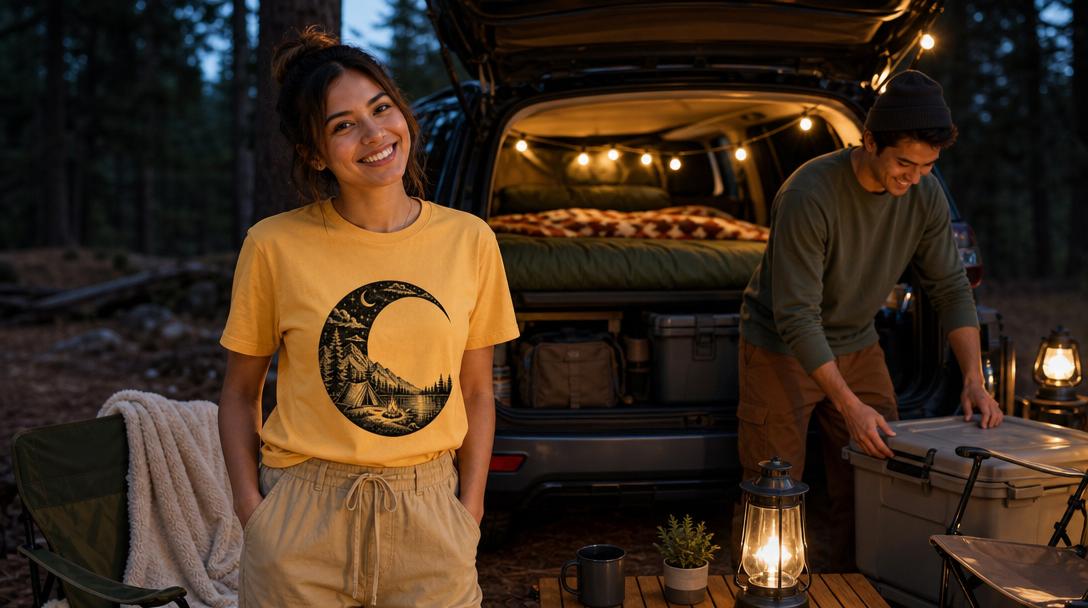
String lights, a small rug, or an extra blanket can make camp feel cozy. For laid-back evenings, a cotton or cotton-poly graphic tee like the Moonlight Camping Shirt fits the casual campground mood. Little touches like this make car camping feel less like roughing it and more like a home away from home.
Gear Beyond the Checklist
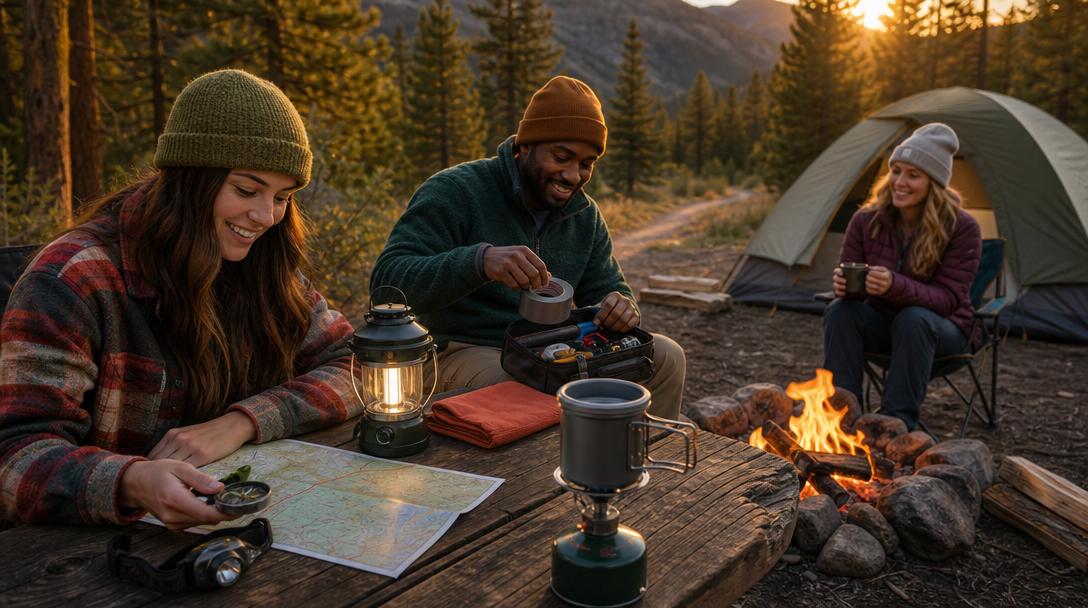
Camping is not only about checking items off a list. What matters is how you use your gear, the mindset you bring, and the skills you build along the way. A flexible attitude makes any trip easier and more memorable.
The outdoors does not have to feel like a survival test. It can be a place to recharge, laugh, learn, and come back with better stories.
Mindset
A good attitude makes camping more fun, no matter your experience level. Weather changes, meals take longer than expected, and something always ends up slightly muddy. That is part of the deal.
Instead of aiming for a perfect trip, aim for a prepared one. Test your gear, know your basic plan, and stay flexible when conditions shift. Confidence outdoors comes from preparation, not from packing every gadget you can find.
Skills
Basic outdoor skills make every trip smoother. Learn how to build a safe fire where fires are allowed, read a map, use a compass, and handle simple first aid. These skills are not just for emergencies; they help you relax because you know you can solve common problems.
Practice setting up and breaking down your tent at home. Try cooking a few simple meals on your camp stove before the trip. If you plan to cook over open flame, start easy with soup, foil-wrapped vegetables, or grilled sandwiches.
Good map and compass skills matter in places with weak mobile service. GPS is convenient, but knowing how to chart a route means you are not stuck if technology fails.
Repair Kits
A repair kit keeps your trip moving when something snaps, tears, or leaks. Pack a multi-tool, duct tape, extra tent stakes, a sewing kit, and any small spare parts your gear may need, such as tent pole sections or stove parts.
Store your repair kit somewhere easy to reach. Do not bury it under food bins or sleeping bags. Test your tent, stove, and lighting at home so you catch problems before you are in the field.
Review your camping gear checklist before each trip, not just once a season. Your needs may change with the campsite, weather, group size, or trip length. Adjust your list as you learn what works for you.
Conclusion
The right camping gear makes outdoor trips smoother, safer, and a lot more fun. A sturdy tent keeps out wind and rain. A warm sleeping bag helps you actually rest. A simple stove makes meals easier. Smart layers and comfortable footwear keep you moving when the weather changes.
Car camping gives you room for extras like chairs, coolers, and cozy camp touches, while a basic repair kit and navigation tools help you handle surprises. Test your gear at home, pack what you truly need, and leave behind what only adds clutter.
For your next adventure, build your own camping gear checklist, check it before you go, and swap lessons with friends or family afterward. That is how every trip gets easier.
Frequently Asked Questions
What are the most important items on a camping gear checklist?
Core essentials include a tent, sleeping bag, sleeping pad, weather-appropriate clothing, cooking supplies, water containers, lighting, navigation tools, and a first aid kit.
How do I choose the right tent for camping?
Choose your tent based on group size, expected weather, campsite type, and setup difficulty. Look for waterproof fabrics, good ventilation, durable poles, and enough space for people and gear.
What should I pack for a simple camp kitchen?
Bring a camp stove, fuel, pots and pans, utensils, plates, cups, a cutting board, biodegradable soap, a sponge, a towel, and trash bags. In bear country, use an approved bear canister or food storage system.
How should I dress for outdoor camping?
Wear layers. Choose moisture-wicking, quick-dry materials for active use, pack an insulating mid-layer, and bring a waterproof shell. Add sturdy shoes and extra socks.
What are the benefits of car camping?
Car camping lets you bring more gear, enjoy extra comfort, store food and supplies easily, and set up a more relaxed campsite. It is great for beginners, families, and longer campground stays.
What gear is recommended beyond the basics?
Consider a headlamp, power bank, compass and map, GPS, repair kit, bug spray, sunscreen, camp chairs, and a portable table.
How can I keep my camping experience safe and enjoyable?
Plan ahead, check the weather, use reliable gear, store food properly, follow local rules, and practice Leave No Trace habits. Preparation makes camping safer and more enjoyable.
What is a good beginner camping gear checklist?
A beginner checklist should cover a tent, sleeping bag, sleeping pad, basic cooking gear, a headlamp, a first aid kit, and weather-appropriate clothing. Starting with these core categories keeps early trips simple and reduces the chance of forgetting something important.
How do I make a printable camping gear checklist?
Group your gear into categories like shelter, sleep, kitchen, clothing, and safety, then list specific items under each one. Keep the list on your phone or print it out so you can check items off as you pack and again before you leave the campsite.
What camping gear do I need for a family trip?
Family trips usually call for a larger tent, extra sleeping pads or cots, a bigger cooler, and simple entertainment like cards or a frisbee, on top of the standard shelter, cooking, and safety basics. Packing a few comfort extras, like camp chairs and a lantern, also makes evenings easier with kids around.


