


Camping with Kids: Family Guide | Hike Tee
Dominic PalmowskiCamping with kids is way more fun when your first trip feels like a backyard sleepover with trees, snacks, dirt, and slightly more dramatic bedtime negotiations. For easy family camping, keep it short, close to home, and built around comfort instead of “roughing it.”
Family camping does not require you to become a wilderness survival expert overnight. For your first time camping as a family, the goal is simple: get everyone outside, keep everyone safe, sleep at least a little, and come home with the kind of memories that make the laundry pile worth it.
According to REI’s family camping guidance, families should choose kid-friendly campgrounds, bring layers, prepare for weather changes, and plan simple activities like scavenger hunts, games, and short hikes. Scouting Magazine also recommends first-timers start with car camping, make a reservation, and check the forecast before leaving—especially if it’s your child’s first camping trip.
Let’s make your first campout feel less like a logistical bear attack and more like a weekend your family might actually want to repeat.
Why Family Camping Is Easier When You Keep It Simple
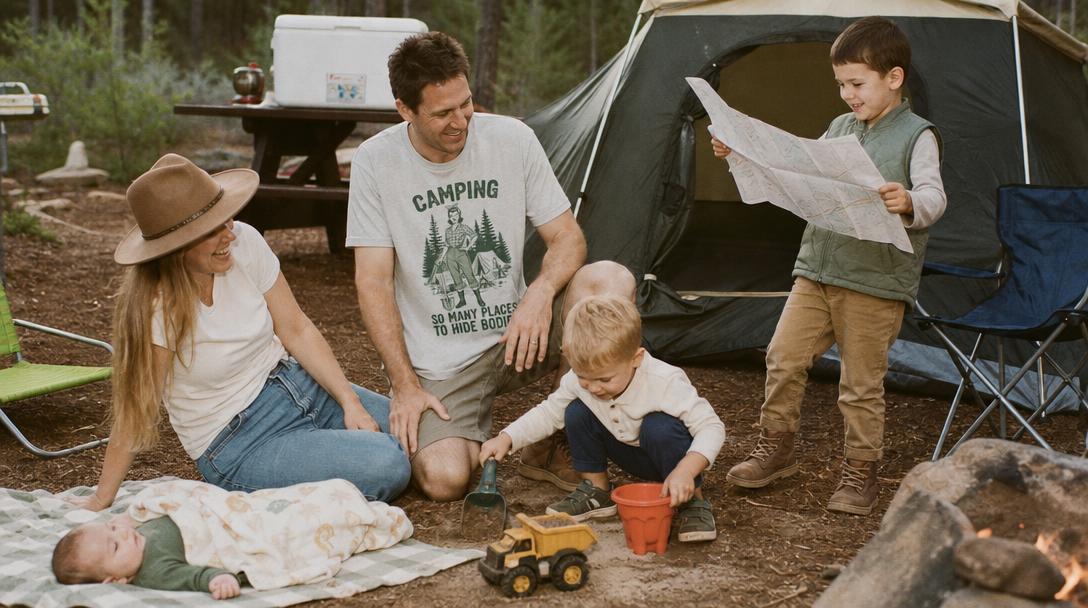
Camping with kids is easiest when you start with one night, one nearby campground, one simple meal plan, and one realistic goal: helping your family get comfortable outdoors. Skip remote sites, complicated recipes, and packed schedules on your first trip. Comfort, flexibility, and familiar routines matter more than doing everything “the camping way.”
A lot of first-time parents overpack gear and underpack patience. Totally normal. Kids experience camping differently than adults do. You may be thinking about tent placement, cooler ice, and firewood. They may be thrilled by a beetle, a stick, and the fact that dinner is happening outside like some kind of raccoon banquet.
For a first family camping trip, prioritize:
- A campground close to home
- Bathrooms and running water
- A tent with enough space
- Warm sleep gear
- Easy food
- A weather backup plan
- Low-pressure activities
- A flexible bedtime routine
If your child gets muddy, eats a slightly excessive number of marshmallows, and asks to go again next weekend, congratulations. You nailed it.
Where Is the Best Place to Go Kid Friendly Camping?
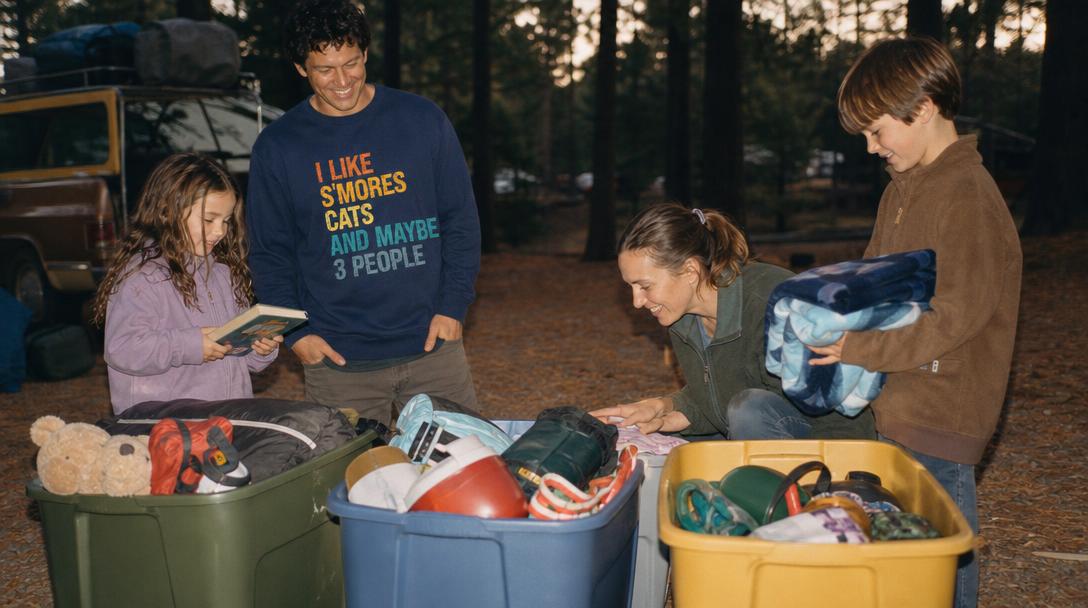
The best place to go camping with kids is a developed campground within one to two hours of home, with reservable sites, bathrooms, potable water, flat tent pads, shade, and nearby low-key activities. State parks, county parks, KOA-style campgrounds, and family-focused private campgrounds are often better first choices than remote backcountry sites.
For your first trip, think “easy exit” and “built-in support.” A campground with a camp host, restroom lights, a small camp store, or nearby town can save the weekend if someone forgets socks, diapers, allergy medicine, or sanity.
Look for kid friendly camping features like:
- Flush toilets or well-maintained vault toilets
- Potable water close to your site
- Flat, clearly marked campsites
- Fire rings or grills
- Picnic tables
- Quiet hours
- Short nature trails
- A playground, lake, creek, or open field
- Cell service or nearby ranger station, if possible
Avoid your first trip being:
- A remote dispersed campsite
- A multi-mile hike-in site
- A campground with no bathrooms
- A site beside fast-moving water
- A place known for heavy partying
- A trip during extreme heat, cold, or storms
Need ideas? Start with family-oriented parks and browse family fun campgrounds and kid-friendly campsites before you book. The best campground is not the most epic one—it’s the one where your family can relax enough to enjoy being outside.
What Is the Best Camping Setup for Families?
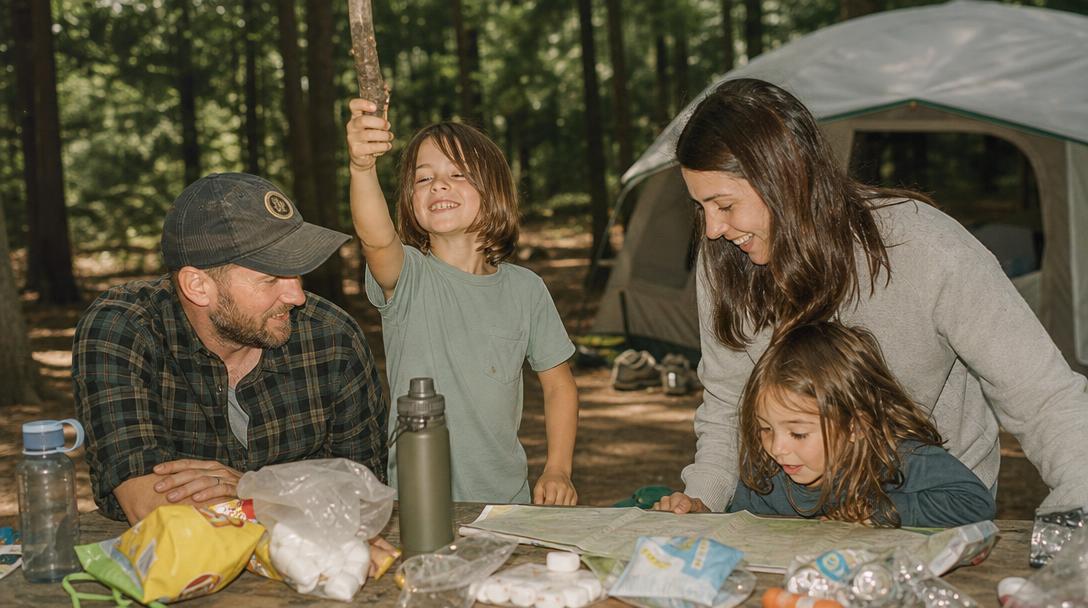
The best camping setup for families is car camping with a roomy tent, sleeping pads for everyone, organized gear bins, simple cooking equipment, layered clothing, and a covered hangout space like a canopy or tarp. This setup keeps kids comfortable, makes gear easier to find, and gives parents a backup zone for meals, rain, and meltdowns.
For most families, the sweet spot is a campsite where your car is parked right next to your tent. That way, the car becomes your closet, emergency snack vault, charging station, and temporary parent timeout chamber. No judgment. We’ve all needed thirty seconds beside the cooler.
Family tent setup basics
Choose a tent that sleeps one or two more people than your actual family size. REI’s family camping checklist recommends sizing up for comfort, especially when camping with kids. A four-person tent technically fits four bodies, but not necessarily four bodies plus pajamas, stuffed animals, water bottles, books, and the child who sleeps sideways like a starfish.
Helpful tent setup tips:
- Practice pitching the tent at home before the trip.
- Arrive with at least two hours of daylight.
- Put a tarp or footprint under the tent.
- Keep shoes outside or in a vestibule.
- Use small bins or bags for each person’s clothes.
- Set up sleeping spaces before dinner.
- Keep headlamps where kids can reach them.
- Do not store food in the tent.
Sleep setup that actually helps
Sleep is the make-or-break piece of first time camping with kids. Everyone needs insulation from the ground, not just a sleeping bag. A sleeping pad matters because the ground pulls heat from the body, even in mild weather.
Pack:
- Sleeping pad or camp mattress for each person
- Sleeping bag rated colder than the forecast low
- Pillow from home
- Favorite blanket or stuffed animal
- Warm pajamas
- Wool or synthetic socks
- Beanie for cool nights
- White noise app or small battery sound machine, if your child uses one
Toddlers and preschoolers often sleep better when the tent feels familiar. Let them test the sleeping bag at home. If your toddler normally sleeps with a certain blanket, bring it. This is not the weekend to suddenly become a minimalist mountain goat.
What Is a Good Age to Take a Child Camping?
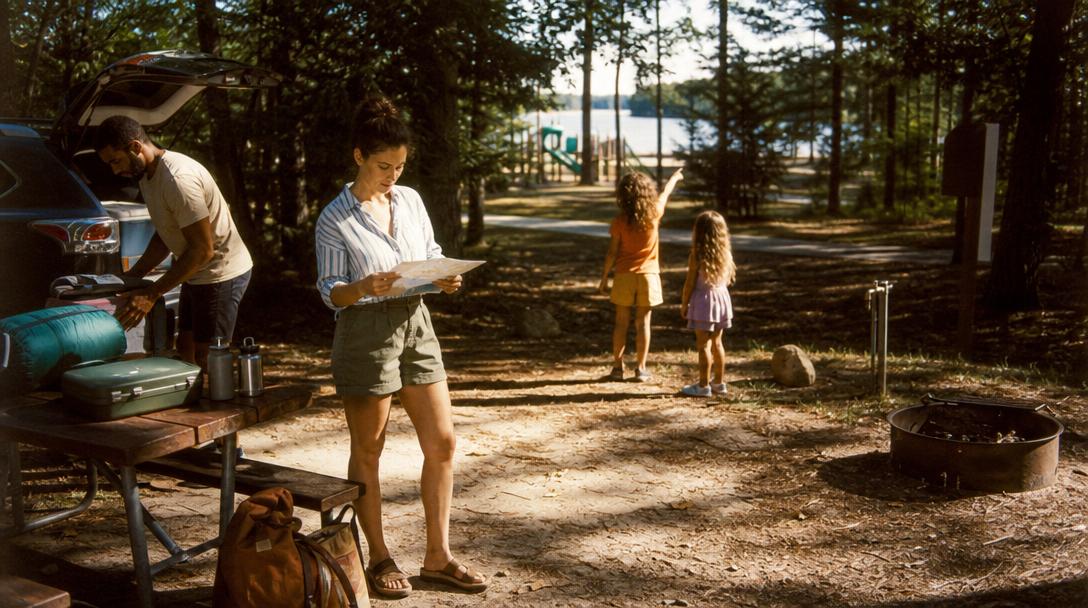
A good age to take a child camping is whenever the adults feel ready to manage sleep, feeding, safety, and comfort outdoors. Babies, toddlers, preschoolers, and older kids can all camp successfully, but the trip should match their stage. Start with one night near home and choose a campground with bathrooms.
There is no magic perfect age. The better question is: What kind of trip fits your child right now?
Camping with babies
Camping with babies can be surprisingly manageable if you are already comfortable with feeding, diapering, and sleep routines. Babies are portable, but they need temperature control and a clean place to rest.
Focus on:
- A safe sleep surface
- Extra layers
- More diapers than you think
- Wipes in multiple locations
- A shaded daytime spot
- Bug protection appropriate for age
- Easy access to warm water, if formula feeding
- A short drive home if the night falls apart
Avoid extreme temperatures. Babies cannot regulate body temperature as well as adults.
Family camping essentials for toddlers
Toddlers are adorable chaos goblins with hiking shoes. They want independence but have very little risk assessment. Your job is to create a campsite that gives them room to explore without turning every minute into a sprint.
Family camping essentials for toddlers include:
- Closed-toe shoes
- Extra clothes
- Rain suit or rain jacket
- Easy snacks
- Spill-proof water bottle
- Toddler-safe bug protection
- Small camp chair
- Comfort item from home
- Portable potty or toilet seat, if needed
- Headlamp or glow stick
- Simple toys like buckets, trucks, or nature cards
Toddlers often struggle most with transitions: leaving home, getting in the tent, stopping play for dinner, and bedtime. Give warnings like, “Five more minutes, then pajamas,” and expect the first night to be goofy.
Camping with preschoolers and elementary-age kids
This is a great stage for curiosity. Kids can help with camp jobs and enjoy simple independence.
Give them jobs like:
- Carrying kindling
- Filling water bottles
- Rolling sleeping bags
- Setting out plates
- Holding the trail map
- Looking for birds or animal tracks
- Being headlamp captain
Older kids are also ready for basic outdoor skills: Leave No Trace, fire safety, map reading, and what to do if separated.
Camping with tweens and teens
Tweens and teens may need more buy-in. Let them help choose the campground, meals, or activities. Consider bringing a hammock, card games, a book, or a casual graphic tee that fits the trip vibe without feeling like a forced family uniform. A soft Retro Camping Shirt or campfire-themed Campfire S’mores Camping Shirt can make the weekend feel like an event while still being easy to wear around camp.
First Camping Trip with Kids: What to Bring Without Packing the Whole House
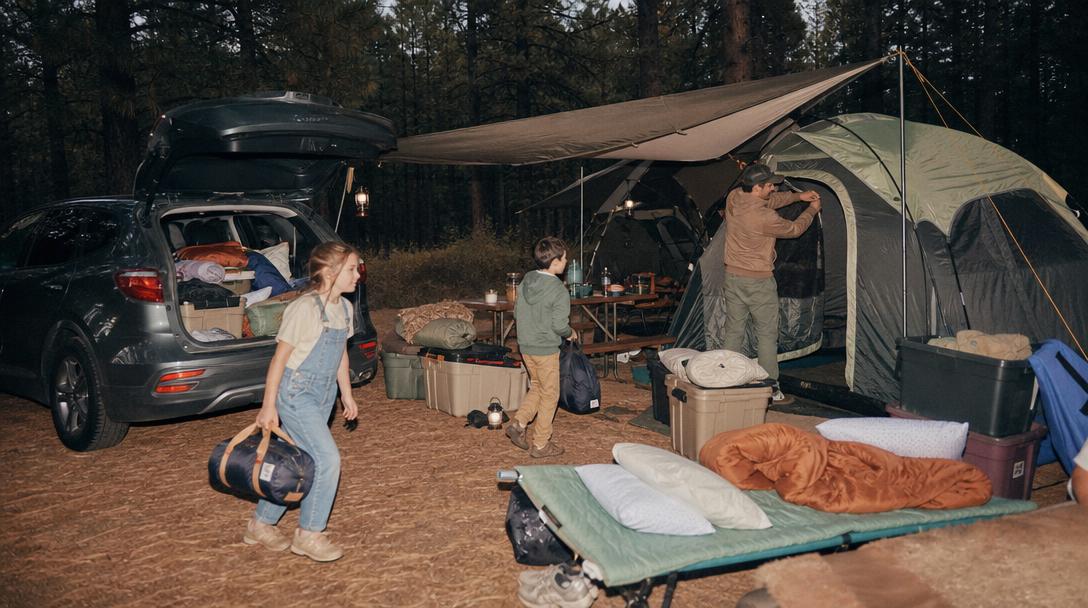
For a first camping trip with kids, bring shelter, sleep gear, simple cooking supplies, weather-appropriate clothing, safety items, toiletries, lighting, food, water, and comfort items from home. Use a family camping checklist, but pack in organized bins so you can find pajamas, snacks, and first aid quickly.
You do not need every gadget in the outdoor aisle. You do need the basics to be easy to access. For a deeper packing reference, save the ultimate camping trip checklist and then customize it for your family.
Camping checklist for first time parents
Use this as a quick planning list, then update it after your trip so your next campout is easier.
Shelter and sleep
- Tent with stakes and footprint
- Sleeping bags
- Sleeping pads or mattresses
- Pillows
- Extra blankets
- Pajamas and warm layers
Food and cooking
- Cooler with ice
- Easy meals
- Snacks
- Water bottles
- Camp stove and fuel
- Lighter or matches
- Plates, cups, and utensils
- Trash bags
- Dish soap and sponge
Clothing
- Base layers
- T-shirts
- Sweatshirts or fleece
- Rain jackets
- Extra socks
- Closed-toe shoes
- Hats
- Sleep clothes
For relaxed campground time, cotton or cotton-blend casual graphic tees are fine when the weather is mild and you are not relying on them as technical hiking layers. If your crew loves cozy campfire style, an I Like S’mores Sweatshirt is an easy layer for cool evenings, s’mores duty, and post-hike lounging.
Kid comfort
- Favorite stuffed animal or blanket
- Books
- Small toys
- Glow sticks or headlamps
- Camp chairs
- Baby wipes, even if no one is a baby
Health and safety
- First-aid kit
- Medications
- Sunscreen
- Insect repellent
- Tick remover
- Hand sanitizer
- Toilet paper
- Whistle for each child
- Map or downloaded campground info
Do not repeat a giant checklist from scratch every trip. Save your family’s version in your phone and update it after each campout.
How to Keep Kids Busy While Camping
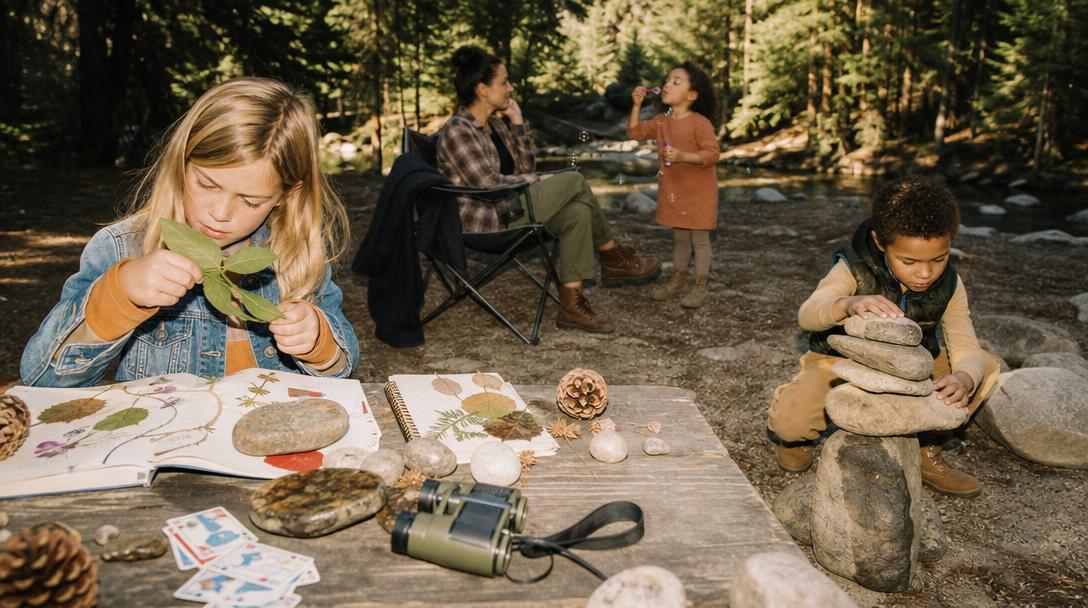
To keep kids busy while camping, give them simple outdoor jobs, open-ended nature play, short adventures, and a few backup activities for quiet time or bad weather. Kids usually do not need constant entertainment outdoors; they need permission, boundaries, and a few ideas to get started.
Try these low-effort activities:
- Nature scavenger hunt
- Rock stacking
- Leaf rubbing
- Campfire songs
- Flashlight tag
- Bug watching
- Drawing in a nature journal
- Card games
- Storytelling
- Stargazing
- Trail bingo
- Find-five-sounds listening game
- Build a fairy house with sticks and leaves
- Let kids help cook foil packets or s’mores
The National Forest Foundation suggests letting kids help choose activities, which gives them ownership and reduces boredom. Even younger kids can vote between short hike and creek time.
For toddlers, bring a few dirt-friendly toys:
- Dump truck
- Small bucket
- Measuring cups
- Animal figures
- Bubbles
- Board books
For older kids, try:
- Binoculars
- Compass
- Field guide
- Hammock
- Sketchbook
- Camp card games
Nature does a lot of the entertaining if we do not over-schedule it.


