


Hiking with Toddlers: Hike Tee Trail Guide
Dominic PalmowskiHiking with toddlers can turn a half-mile trail into a full-blown expedition: rocks, snack breaks, muddy puddles, and look, a pinecone included. Ages 2–5 are wonderfully chaotic trail years: your kid may sprint like a mountain goat for 90 seconds, then request a royal shoulder ride back to the car.
That does not mean you should wait until they are older. It just means the plan needs to fit tiny legs, big feelings, and a very serious commitment to crackers.
| Gear Category | Material | Price | Best For |
|---|---|---|---|
| Lightweight sun hoodie or UPF shirt | Polyester/nylon blend, UPF-rated fabric | $20–$45 | Sunny trails, national parks, beach hikes |
| Breathable hiking tee | Cotton blend or moisture-wicking synthetic | $12–$30 | Mild weather, short local hikes, camping days |
| Fleece layer | Polyester fleece | $18–$40 | Cool mornings, shaded forests, shoulder seasons |
| Rain shell | Waterproof/breathable nylon or polyester | $25–$70 | Drizzle, wind, unpredictable mountain weather |
| Toddler hiking shoes or trail sneakers | Rubber outsole, mesh/synthetic upper | $25–$65 | Dirt paths, roots, rocks, everyday trail use |
| Wide-brim hat | Nylon/polyester, UPF-rated if possible | $12–$30 | Sun protection for face, ears, and neck |
Hiking with Toddlers: The Golden Rule for Ages 2–5
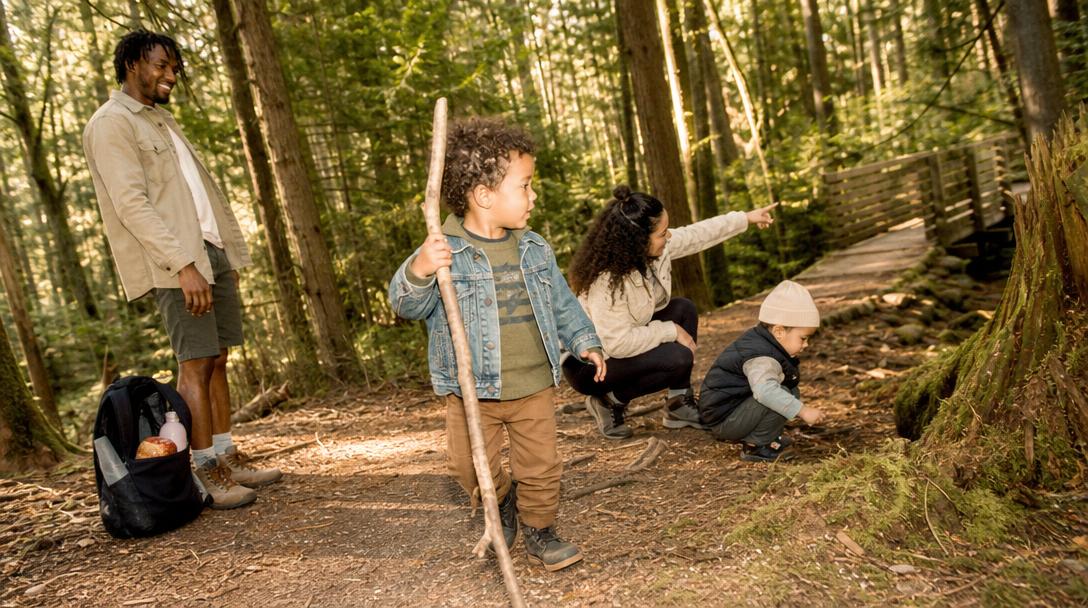
Hiking with toddlers works best when you choose short, interesting trails, expect frequent stops, and make turning around part of the plan. For ages 2–5, distance matters less than terrain, weather, snacks, mood, and whether the trail has exciting treasures like bridges, creeks, logs, birds, or bugs.
A toddler hike is not an adult hike with a smaller person attached. It is its own sport. Possibly an Olympic sport if your child insists on carrying one stick for 0.7 miles and then melts down because it is too sticky.
Here is the practical mindset:
- Plan for half the distance you think they can do.
- Budget twice the time you would need without kids.
- Choose trails with quick exit options.
- Bring a carrier or backup carry plan.
- Stop before everyone is exhausted.
According to REI family hiking guidance, toddlers often want independence but still need plenty of breaks, snacks, water, and sometimes help being carried. American Hiking Society also recommends short, interesting hikes with destinations like streams, overlooks, historic sites, lakes, or waterfalls to keep kids engaged.
If you are building your family trail rhythm, pair this guide with Family Hiking 101 so your toddler hikes fit into a bigger, low-pressure outdoor routine.
Can You Take a 2 Year Old on a Hike?
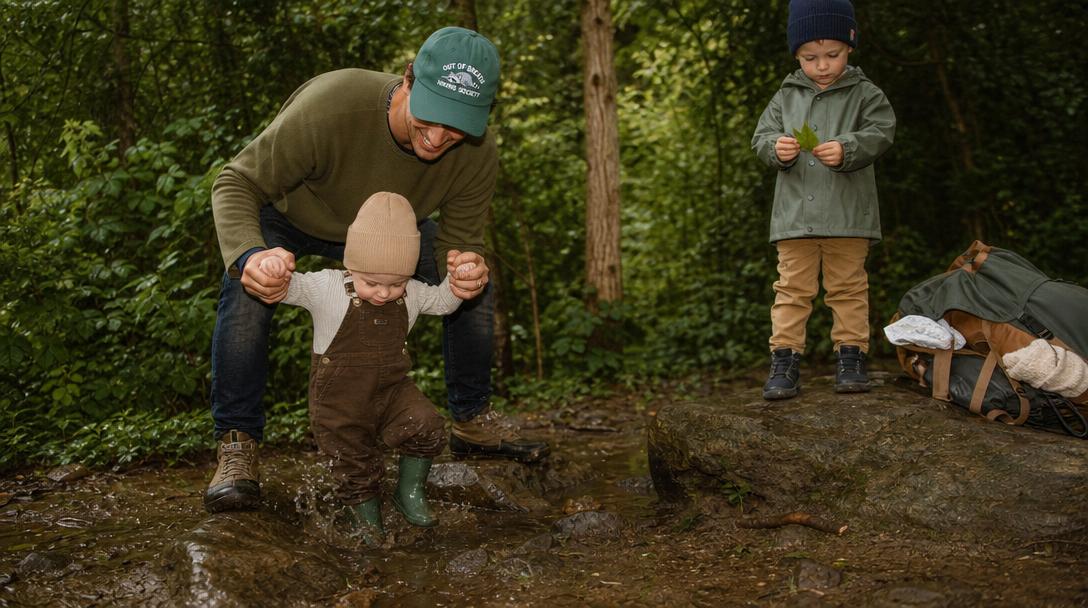
Yes, you can take a 2 year old on a hike if you keep it short, flat, flexible, and close to the trailhead. A good first goal is 0.25–1 mile total, with lots of stops, snacks, water, and a carrier or stroller-friendly backup if your toddler gets tired.
At age 2, the hike may look more like outdoor wandering. That still counts. In fact, it might be the best kind of hiking for this stage.
Look for:
- Paved nature paths
- Flat forest loops
- Boardwalk trails
- Lake edges
- Picnic-area trails
- Short national park interpretive walks
- Campground nature trails
Avoid starting with steep climbs, exposed ridgelines, cliff edges, long desert walks, or trails where turning around is complicated.
A 2-year-old may walk beautifully for 10 minutes, then decide their socks are spicy. Totally normal. The win is getting outside, practicing trail habits, and ending before the wheels fall off the tiny wagon.
What Age Should Kids Start Hiking?
Kids can start hiking as soon as they can safely spend time outdoors, but ages 2–5 are ideal for short, playful family hiking experiences where walking is optional and curiosity leads the way. Start with easy nature walks, then slowly increase distance as your child’s stamina, balance, and interest grow.
For this article, we are focusing on toddlers and preschoolers ages 2–5, not infants or older kids. That stage matters because little hikers are developing balance, coordination, emotional regulation, and endurance all at once.
A simple age-by-age starting point:
- Age 2: 0.25–1 mile total on easy terrain, with carrying expected.
- Age 3: 0.5–1.5 miles total, depending on terrain and mood.
- Age 4: 1–2 miles on easy trails with breaks.
- Age 5: 1.5–3 miles may be possible for active kids on gentle terrain.
These are not rules carved into a national park boulder. They are starting points.
Backpacker has shared expert guidance that younger kids should carry very little, around 5–10% of body weight for children under 7 or 8. For toddlers, that means if they wear a backpack, keep it symbolic: one snack, a tiny toy, or a feather collection that somehow becomes extremely important.
How Long of a Hike Can a 3 Year Old Do?
A 3 year old can often hike about 0.5–1.5 miles total on flat or gently rolling terrain, especially with snacks, shade, and frequent breaks. Some energetic preschoolers can do more, but many will need carrying before the end, so choose short loops or out-and-back trails.
Think of age 3 as the I do it myself hiking year, followed immediately by carry me.
For 3-year-olds, success depends on:
- Trail surface: smooth dirt beats loose rock.
- Elevation gain: flatter is better.
- Weather: cool mornings are easier than hot afternoons.
- Motivation: waterfalls, bridges, and snack rocks are powerful.
- Sleep: a tired toddler hikes like a raccoon with a grudge.
A useful planning formula:
- Start with 30–45 minutes outside.
- Pick a route under 1 mile if it is your first hike.
- Add distance only after several happy outings.
- Turn around while everyone is still having fun.
For family camping or van life itineraries, this age does well with micro-hikes built around a basecamp. Instead of one big trail day, try:
- Morning nature loop
- Midday nap or quiet time
- Evening sunset stroll
- Campground scavenger hunt
That rhythm keeps adventure high and meltdown probability slightly less volcanic.
Can a 2 Year Old Walk 1 Mile?
A 2 year old can sometimes walk 1 mile, but it should be an easy, flat mile with plenty of breaks and no pressure to finish independently. Many 2-year-olds will walk part of the way and need to be carried, so treat 1 mile as a flexible outing, not a requirement.
If the route is a 1-mile loop, remember: once you start, you are committed. That can be risky with a toddler who suddenly decides walking is illegal.
For age 2, an out-and-back trail is often better. Walk 10–20 minutes out, then turn around. If your toddler is still happy near the car, add a little more exploring.
Watch for signs they are done:
- Frequent tripping
- Asking to be held repeatedly
- Crying over small things
- Refusing water or snacks
- Red face, heavy sweating, or unusual quietness
- Sitting down and becoming one with the dirt
That last one is not scientific, but parents know.
Can a 5 Year Old Do a 3 Mile Hike?
A 5 year old may be able to do a 3 mile hike if the trail is easy, the weather is mild, and they already enjoy walking outdoors. For many kids, 3 miles is a big day, so choose gentle terrain, start early, pack extra snacks, and be ready to shorten the route.
Age 5 is where some kids surprise you. They may have the endurance for a mellow 3-mile nature trail, especially if they have been hiking since toddlerhood. But do not compare your kid to someone else’s mini thru-hiker. Family hiking is not a preschool CrossFit competition.
A 3-mile hike is more realistic when:
- Elevation gain is minimal.
- The trail has shade.
- There are natural stopping points.
- You start after a good breakfast.
- You avoid peak heat.
- Your child has done 1–2 mile hikes before.
- You have enough daylight and flexibility.
Skip the 3-mile goal if your child is recovering from illness, slept poorly, is new to hiking, or the trail includes steep climbs, intense sun, loose rock, or water crossings.
How to Carry a 3 Year Old on a Hike
To carry a 3 year old on a hike, use a structured child carrier if they fit the weight limit, a soft carrier for shorter carries, or a piggyback or shoulder carry only on safe, easy terrain. Always keep your balance, avoid exposed edges, and choose routes short enough for your own comfort.
A 3-year-old can be tricky: too big for some baby carriers, too little to reliably hike the whole route, and somehow dense as a sleepy bear cub when carried.
Your options:
- Framed child carrier: Best for longer hikes if your child fits the height and weight limits.
- Soft toddler carrier: Good for shorter hikes, travel, airports, and van-life days.
- Piggyback carry: Fine for brief sections on flat trails.
- Shoulder carry: Use cautiously; avoid rocks, roots, slopes, cliffs, and fatigue.
- Trail stroller: Great on paved, gravel, or accessible paths.
Before relying on a carrier, check the manufacturer’s weight limit and test it at home. A living room test is better than discovering shoulder-strap regret halfway up a hill.
Also remember the adult carrying the child needs water, snacks, sun protection, and realistic expectations. Carrying 30–40 pounds uphill turns quick little hike into why did we do this to ourselves?
What to Pack for Hiking with Toddlers
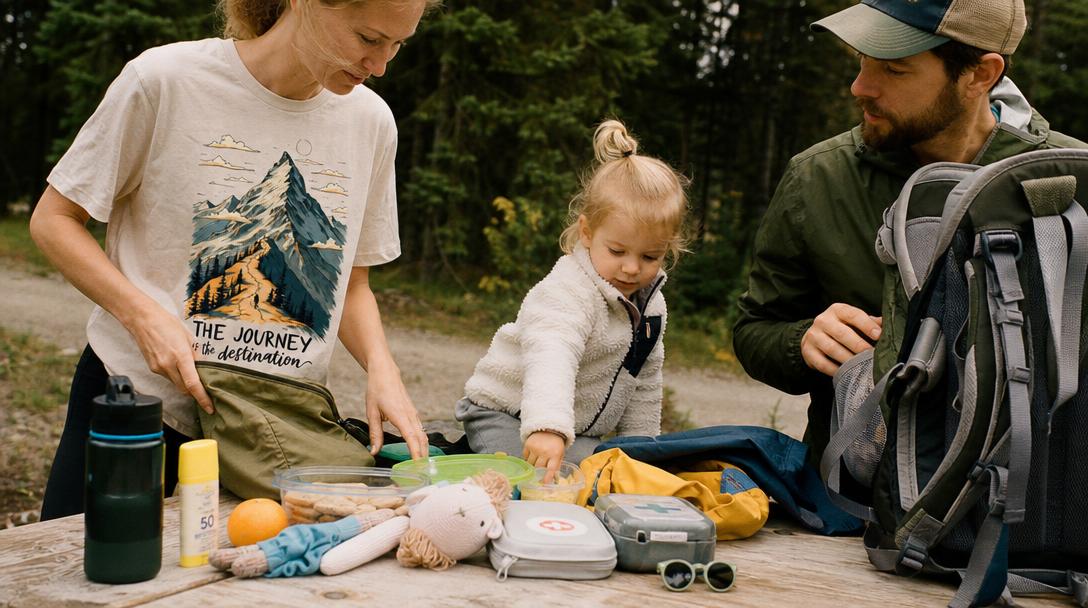
The best answer to what to pack for hiking with toddlers is: bring the essentials for safety, plus the tiny comforts that prevent small problems from becoming trail drama. Pack water, snacks, sun protection, layers, first aid, diapers or potty supplies, wipes, and a backup carry option.
Here is a toddler-specific packing checklist for ages 2–5.
Safety basics
- Water for every person
- Kid bottle or hydration cup
- Snacks and extra snacks
- Small first aid kit
- Sunscreen
- Hat and sunglasses
- Insect repellent when needed
- Map or downloaded offline map
- Fully charged phone
- Whistle for adults and older preschoolers
- Emergency blanket
- Hand sanitizer
- Wipes
- Waste bags
For a broader day-hike safety framework, compare your toddler list with Hike Tee’s hiking gear checklist for day hiking essentials.
Toddler comfort items
- Extra socks
- Extra underwear or diaper
- Lightweight change of clothes
- Small comfort item
- Bandana or buff
- Favorite trail snack
- Tiny toy, magnifying glass, or nature card
- Lightweight blanket for picnic breaks
Parent sanity items
- More snacks than seems reasonable
- A small trash bag
- Backup shirt for you
- Bribe-level snack for the return trip
- Car towel
- Dry shoes or sandals for after muddy hikes
AAA’s national park family hiking advice recommends packing first aid supplies, snacks, extra layers, water, and age-specific supplies like diapers, wipes, hand sanitizer, and bags to carry out waste. That last part matters: if you pack it in, pack it out, even the gross stuff. Especially the gross stuff.
Best Hiking Clothes for Toddlers by Weather
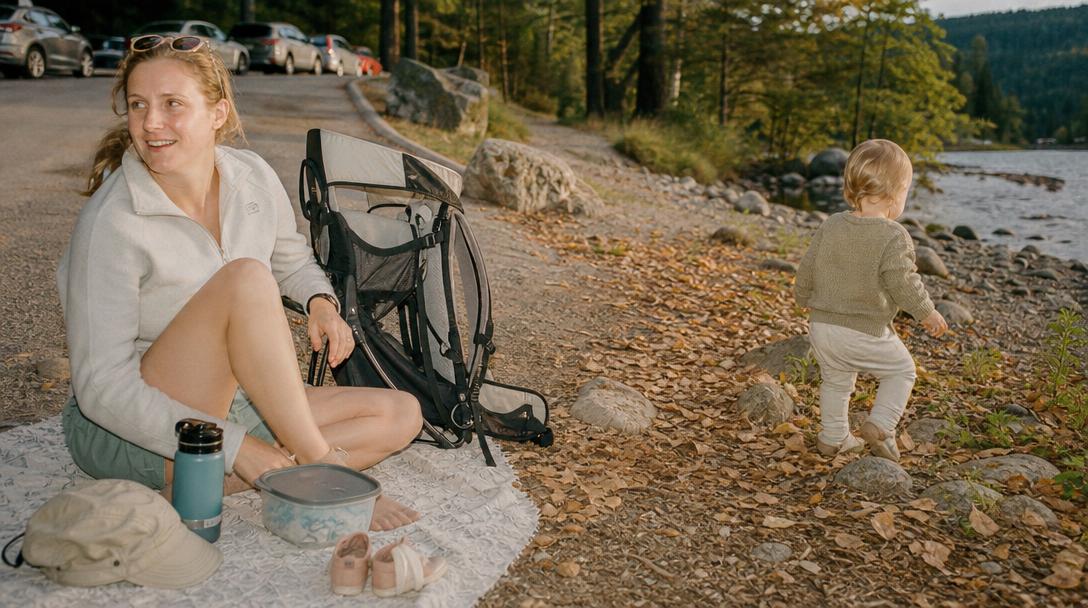
The best hiking clothes for toddlers are comfortable, layered, weather-appropriate, and easy to move in. Choose breathable shirts, flexible pants or shorts, moisture-wicking socks, sun hats, and a warm or waterproof layer when needed. Skip stiff outfits that limit climbing, crawling, puddle-stomping, or dramatic log inspections.
Toddler hiking outfit ideas should start with the forecast, not the Instagram photo. Though if your kid looks adorable in a bear shirt while yelling at a beetle, that is just a bonus.
Warm weather toddler hiking outfit ideas
- UPF long-sleeve shirt or lightweight tee
- Breathable shorts or lightweight pants
- Wide-brim hat
- Sunglasses with strap
- Thin moisture-wicking socks
- Trail sneakers or toddler hiking shoes
Toddler sun protective clothing for hiking is especially helpful in exposed places like Utah parks, beach trails, alpine meadows, and desert paths. The American Academy of Dermatology recommends broad-spectrum SPF 30 or higher sunscreen and protective clothing, hats, and shade whenever possible. For more detail on fabric ratings and coverage, read Sun Protective Clothing for Hikers.
Cool weather toddler hiking outfit ideas
- Base layer or soft tee
- Fleece pullover
- Flexible hiking pants or leggings
- Warm socks
- Beanie
- Light gloves
- Wind or rain shell
Avoid bulky coats if your toddler will ride in a carrier, because overheating can sneak up quickly. Layers are easier to adjust.
Rainy or muddy trail outfit
- Rain jacket
- Rain pants or durable pants
- Wool or synthetic socks
- Grippy shoes
- Extra socks in the pack
- Dry clothes waiting in the car
Cotton can be comfortable for short, mild hikes, but it stays wet longer. For longer outings, cooler conditions, or unpredictable weather, synthetic or wool layers are usually better.
Cotton, blends, and casual graphic tees for easy trail days
A soft, funny outdoor tee can still be part of the rotation for easy local trails, nature-center walks, campground days, and post-hike snack runs, especially when your family’s vibe is less summit warrior and more snack-powered raccoon expedition.
For parents or family crews, casual graphic tees like the Sloth Hiking Team Shirt, Turtle Hiking Team Steady Shirt, or The Journey Shirt fit relaxed hikes, campfire evenings, and matching-without-trying family photos. Save technical fabrics for hot, wet, long, or high-output toddler missions.
Breaks, Snacks, and Games for Little Legs
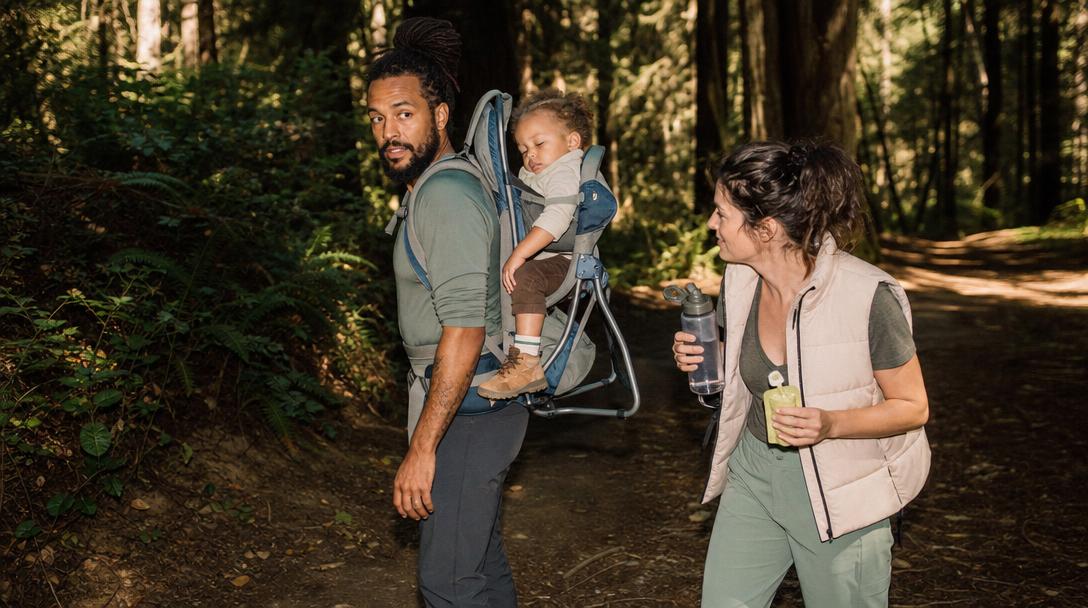
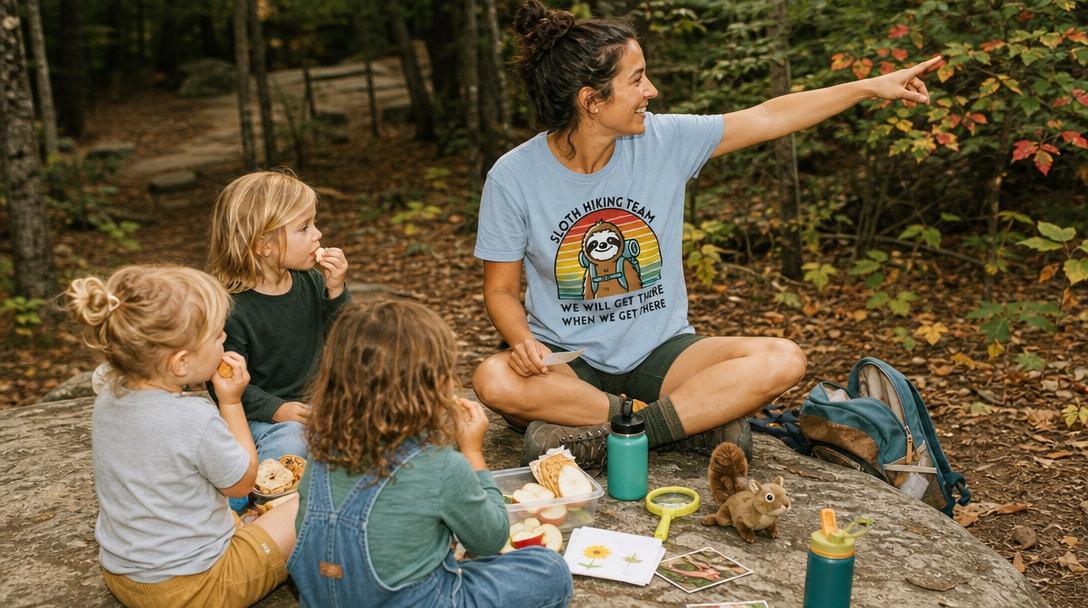
The best toddler hiking breaks happen before your child is exhausted. Stop often for water, snacks, nature play, and small goals like reaching the next bridge or big tree. Games, songs, scavenger hunts, and trail jobs help toddlers keep moving without feeling pushed.
Toddlers are powered by curiosity and carbohydrates.
Try these trail games:
- Color hunt: Find something green, brown, yellow, or red.
- Animal walk: Stomp like a bear, hop like a bunny, sneak like a fox.
- Sound safari: Listen for birds, wind, water, bugs, or footsteps.
- Tiny ranger job: Let them spot trail markers.
- Snack rock mission: Walk to the next good sitting rock.
- Story hike: Make up a tale about a squirrel looking for treasure.
- Follow the leader: Take turns choosing silly steps.
Snack ideas:
- Crackers
- Apple slices
- Cheese sticks
- Nut-free trail mix if needed
- Granola bars
- Dried fruit
- Pretzels
- Pouches
- Mini sandwiches
- Tortillas with nut or seed butter
Keep snacks easy to access. A hungry toddler with snacks buried at the bottom of your pack is nobody’s friend.


