


Hoodie vs Sweatshirt: Camping Warmth Guide
Dominik PalmowskiHoodie vs sweatshirt: the quick warmth answer
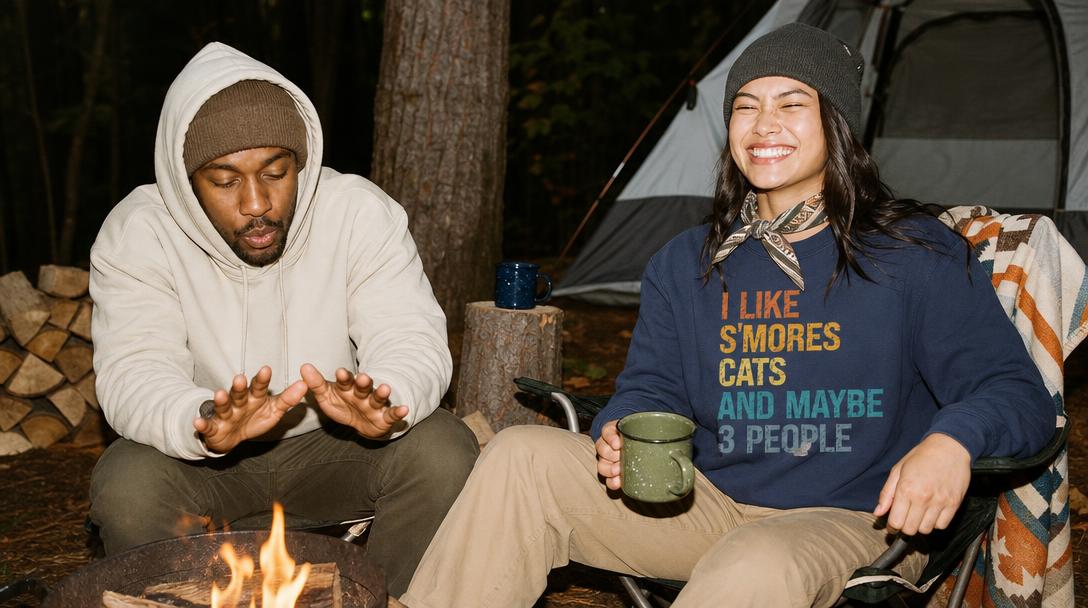
If both garments are made from the same fabric and same thickness, the hoodie is warmer because it covers more of your body.
That hood matters. You lose heat faster when your head, neck, and ears are exposed to cold air and wind. A hood gives you instant coverage without needing to dig through your pack for a beanie while your hands are busy roasting marshmallows or pretending the tent setup is “going fine.”
But here’s the catch:
A heavyweight fleece sweatshirt will usually be warmer than a lightweight cotton hoodie.
So the true hierarchy looks more like this:
- Material
- Fabric weight and thickness
- Fit and coverage
- Wind resistance
- Moisture management
- Packability
- Hood vs no hood
A hoodie wins on coverage. A sweatshirt wins on simplicity and cleaner layering. The best choice depends on what kind of camping you’re doing.
What qualifies as a hoodie?
A hoodie is basically a sweatshirt with an attached hood. Merriam-Webster defines a hoodie as “a hooded sweatshirt,” and the Cambridge Dictionary similarly describes it as a sweatshirt with a hood that covers the head.
Most hoodies include some combination of:
- An attached hood
- Drawstrings or a cinch opening
- A kangaroo pocket or front pockets
- Ribbed cuffs and hem
- Pullover or zip-up construction
- Cotton, fleece, synthetic, wool, or blended fabric
For camping, the defining feature is obvious: the hood. That extra fabric can block light wind, hold warmth around your head and neck, and layer under a rain shell or insulated jacket.
A hoodie can be casual, technical, lightweight, heavyweight, fleece-lined, zippered, or pullover. If it has a hood attached to a sweatshirt-style body, it qualifies.
Is a hoodie still a hoodie if it has a zipper?
Yes. A zip-up hoodie is still a hoodie.
The zipper changes how it opens and vents, not what it is. Pullover hoodies usually have one big kangaroo pocket, while zip hoodies often have two front pockets. For camping, that zipper can be genuinely useful because it lets you regulate temperature quickly.
Pullover hoodie pros
- Usually warmer across the front because there is no zipper gap
- Cozy and simple
- Good for sitting around camp
- Often has a large kangaroo pocket for cold hands
Zip-up hoodie pros
- Easier to take on and off without removing a hat
- Better ventilation while hiking or cooking
- Easier to layer over a base layer
- More convenient in a tent or van
If you run cold, a pullover fleece hoodie may feel toastier. If you overheat while moving, a zip fleece hoodie is easier to manage.
Are hoodies called sweatshirts?
Yes—sometimes.
A hoodie is often called a hooded sweatshirt. So all hoodies can be considered a type of sweatshirt, but not all sweatshirts are hoodies. A standard sweatshirt usually means a long-sleeve, soft knit top without a hood.
Think of it like this:
- Sweatshirt: warm pullover or crewneck layer, no hood
- Hoodie: sweatshirt-style layer with a hood
- Fleece hoodie: hooded layer made with fleece fabric
- Camping sweatshirt: sweatshirt used as a casual or midlayer at camp
That distinction matters outdoors because the hood affects warmth, layering, packability, and how well it fits under jackets and backpack straps.
Which is better, a sweatshirt or a hoodie?
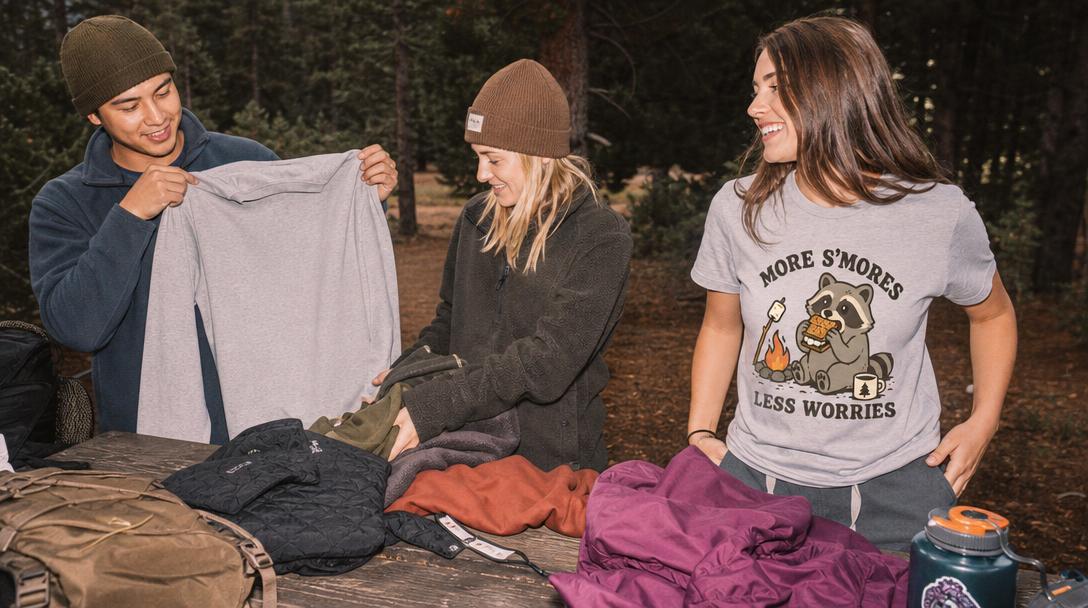
For camping warmth, a hoodie is usually better if you want maximum cozy coverage around camp. For layering efficiency, especially under a rain jacket or backpack, a sweatshirt can be better because it has less bulk around the neck and shoulders.
Here’s the practical breakdown:
| Camping need | Better choice | Why |
|---|---|---|
| Sitting by the fire on a chilly night | Hoodie | Hood adds head and neck warmth |
| Wearing under a rain shell | Sweatshirt or low-profile hoodie | Less hood bulk is easier to layer |
| Backpacking with limited pack space | Depends on material | Lightweight fleece or synthetic wins |
| Windy campsite | Hoodie | Hood blocks more exposed skin |
| Sleeping in a tent | Hoodie | Hood can replace or supplement a beanie |
| Active hiking | Zip hoodie or sweatshirt | Venting and breathability matter |
| Wearing with a backpack | Sweatshirt | No hood bunching under pack straps |
| Van life lounging | Hoodie | Cozy, flexible, easy warmth |
So if you’re asking which is warmer hoodie or sweatshirt, the answer is: a hoodie is warmer when fabric and thickness are equal, but material matters more than the category name.
Material matters more than the hood
A hood helps, but fabric decides whether your layer is trail-smart or just couch-smart.
Outdoor layering guidance usually emphasizes avoiding cotton as a base layer because cotton retains moisture instead of moving it away from your skin. Cold-weather layering advice also favors wool and synthetic fabrics because they manage moisture better than cotton.
That matters because camping is not just “standing in cold air.” You’re walking, sweating, setting up tents, carrying firewood, cooking, sitting still, and then wondering why your back feels clammy.
Cotton hoodie or cotton camping sweatshirt
Cotton feels soft and familiar. It is great for dry, mild weather and casual camp lounging.
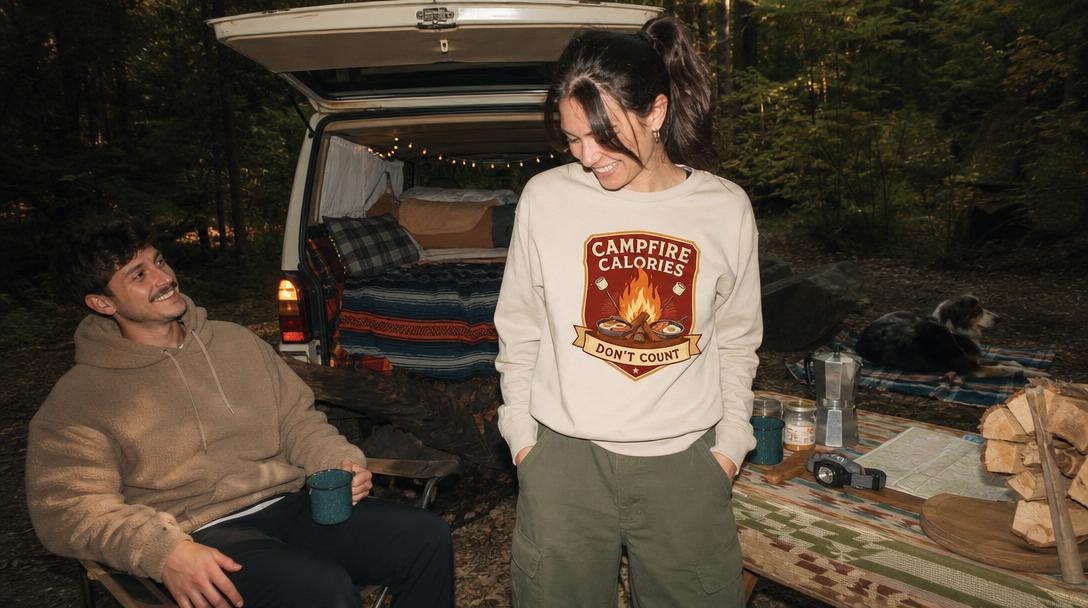
But cotton has one big camping flaw: it holds moisture. Sweat, mist, spilled coffee, light rain, and tent condensation can all turn cotton into a slow-drying chill machine. If you love relaxed cotton or cotton-blend layers for campground evenings, a casual graphic camping sweatshirt like the Campfire Calories Sweatshirt can be a fun comfort layer after the hiking is done.
Best for:
- Dry car camping
- Mild summer evenings
- Campground lounging
- Short walks near camp
- Wearing after you’re done sweating
Avoid for:
- Cold rain
- Backpacking
- High-output hiking
- Snowy conditions
- Wearing as your only insulation layer
A cotton camping sweatshirt or hoodie is fine for comfort. It is just not the layer you should depend on when conditions get cold, wet, or unpredictable. For a deeper fabric comparison, see Hike Tee’s guide to cotton vs synthetic hiking shirts.
Fleece hoodie or fleece sweatshirt
A fleece hoodie is one of the most useful camping layers because fleece traps warm air, dries faster than cotton, and still performs decently if it gets a little damp.
Midlayers work by trapping warm air close to your body; thicker trapped air generally means more warmth. Fleece is popular because it does that without absorbing water like cotton.
Best for:
- Cool evenings
- Car camping
- Hiking breaks
- Shoulder-season camping
- Layering under a shell
- A reliable camping hoodie or sweatshirt
Tradeoffs:
- Fleece can be bulky
- It does not block wind well on its own
- It can shed microfibers when washed, so use a microfiber-catching bag if possible
If you want the warmest hoodie for camping in normal three-season conditions, start with fleece or a technical synthetic blend—not basic cotton.
Synthetic hiking hoodie or sweatshirt
Synthetic fabrics like polyester and nylon blends are common in outdoor layers because they dry quickly and move moisture better than cotton.
A synthetic hiking hoodie can be excellent when you’re active because it balances warmth and breathability. Lightweight synthetic hoodies also pack smaller than bulky cotton sweatshirts.
Best for:
- Hiking
- Backpacking
- Damp climates
- Layering systems
- Quick-dry travel
- Van life where laundry is irregular and mysterious
Tradeoffs:
- Can hold odor more than wool
- Thin versions may not be very warm at camp
- Some feel less cozy than cotton or fleece
For active use, synthetic often beats cotton by a landslide. A very practical landslide. The kind wearing trail runners.
Wool hoodie or wool sweatshirt
Wool, especially merino wool, is a strong outdoor performer because it insulates when damp, resists odor, and regulates temperature well.
Best for:
- Cold-weather camping
- Multi-day trips
- Base or midlayer use
- People who hate smelling like “campfire raccoon” by day two
Tradeoffs:
- Usually more expensive
- Can be less durable than synthetics
- Some wool layers dry slower than thin synthetics
Wool is especially useful for backpacking and van life because it handles repeated wear better than many synthetic layers.
Where hoodies and sweatshirts fit in a camping layering system
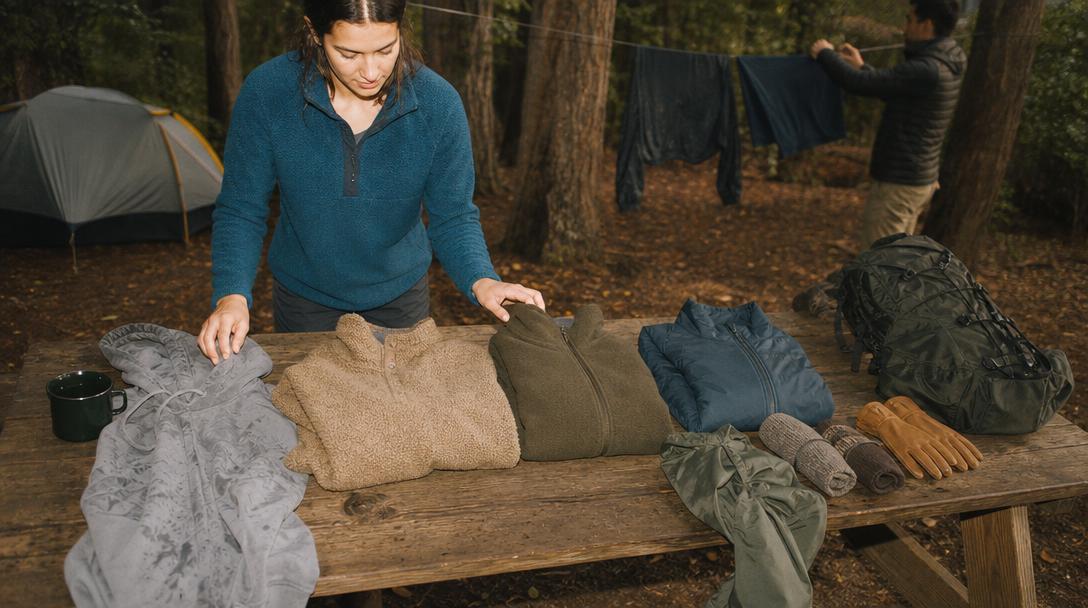
The best camping outfit usually works like this:
- Base layer: manages moisture
- Midlayer: traps warmth
- Outer layer: blocks wind and rain
A hoodie or sweatshirt usually belongs in the midlayer category. If you are building a complete cold-weather outfit, Hike Tee’s guide to what to wear hiking in cold weather explains the three-layer rule in more detail.
Base layer: keep sweat off your skin
This is the layer touching your body. Choose wool or synthetic if it is cold or active. Avoid cotton when conditions are wet or chilly.
Good base layers:
- Merino wool long sleeve
- Polyester sun hoodie
- Synthetic thermal top
Midlayer: add warmth
This is where your fleece hoodie, camping hoodie, or camping sweatshirt shines.
Good midlayers:
- Fleece hoodie
- Fleece crewneck sweatshirt
- Wool pullover
- Lightweight synthetic insulated layer
Outer layer: block wind and weather
Neither a hoodie nor a sweatshirt is usually enough in wind or rain. Fleece especially lets wind pass through, so add a shell when needed.
Good outer layers:
- Rain jacket
- Wind shell
- Softshell jacket
- Insulated puffy for cold, dry camp nights
The biggest mistake? Wearing one thick cotton hoodie and hoping it does everything. Layers work better because you can adjust as your activity level changes.
Hoodie vs sweatshirt for different camping styles
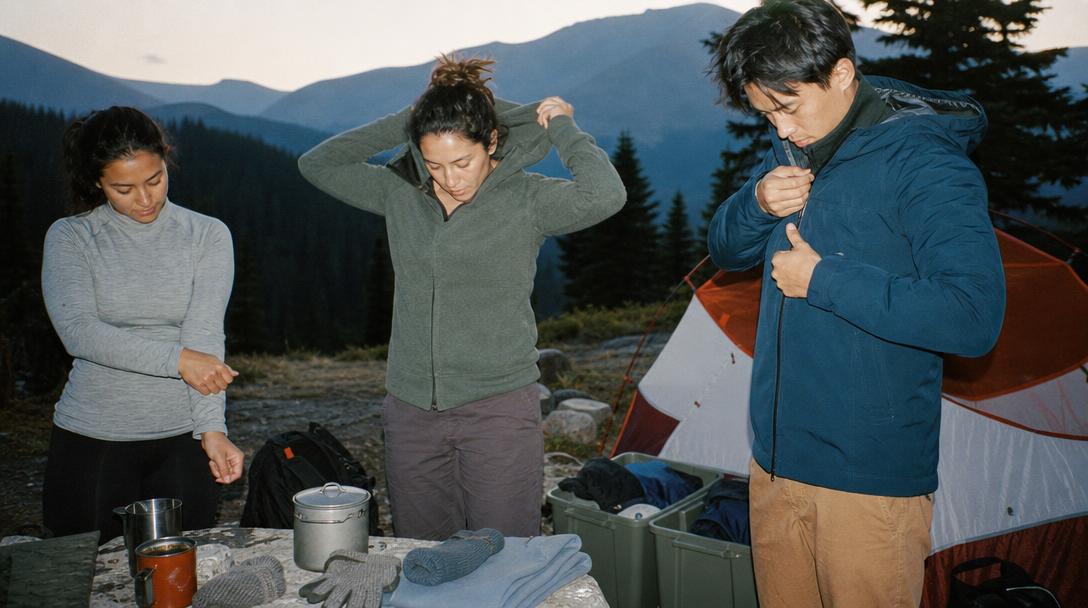
Different trips call for different layers. A family campground weekend is not the same as a 20-mile backpacking loop, unless your family has suspiciously intense vacation energy.
Car camping: camping hoodie wins for comfort
For car camping, packability matters less because your “backpack” is basically the trunk.
A camping hoodie is often the better choice because:
- The hood adds warmth around camp
- It is cozy for sleeping
- You can wear it during chilly breakfasts
- Pockets are useful for headlamps, snacks, and cold hands
Best choice: fleece hoodie or heavyweight cotton/poly hoodie, plus a rain shell if the forecast looks moody.
A sweatshirt is still great if you prefer a crewneck feel or plan to wear a separate beanie. For dry campground lounging, a soft cotton/poly layer like the Life Is Better Campfire Sweatshirt fits the casual campfire role well—just do not treat it as your wet-weather insulation plan.
Backpacking: sweatshirt or low-bulk hoodie wins
Backpacking is where warmth-to-weight and packability matter.
A bulky cotton hoodie may feel heavenly at home, but it takes up space, dries slowly, and weighs more than better-performing layers. For backpacking, choose a lightweight fleece, synthetic grid fleece, or wool midlayer.
Best choice:
- Lightweight fleece hoodie
- Thin synthetic hiking hoodie
- Fleece sweatshirt if you do not want hood bulk
- Wool midlayer for odor resistance
If your rain shell already has a hood, a hooded midlayer can feel crowded around your neck. Some backpackers prefer a crewneck or quarter-zip sweatshirt-style fleece for that reason.
Hiking: choose breathability over maximum warmth
A hiking hoodie should not be too warm while you’re moving. Overheating leads to sweat, and sweat leads to chill when you stop.
Best choice:
- Lightweight synthetic hiking hoodie
- Thin fleece hoodie in cool weather
- Breathable sweatshirt-style fleece
- Zip hoodie if you want easy ventilation
Avoid heavy cotton if you’ll be sweating, climbing, or hiking in damp weather.
Hoodie for van life and camping: versatility wins
A hoodie for van life and camping is hard to beat. It works as a morning layer, evening layer, travel pillow, laundry-day outfit, and emergency “I’m going outside but emotionally I’m still in bed” uniform.
Best choice:
- Fleece hoodie for warmth
- Wool hoodie for odor resistance
- Zip hoodie for easy temperature control
- Sweatshirt if you want less bulk under jackets
For van life, the best layer is often the one you’ll actually wear repeatedly. Bonus points if it dries quickly and does not smell like a camp stove after one day.
Hoodie warmth advantages: why the hood helps
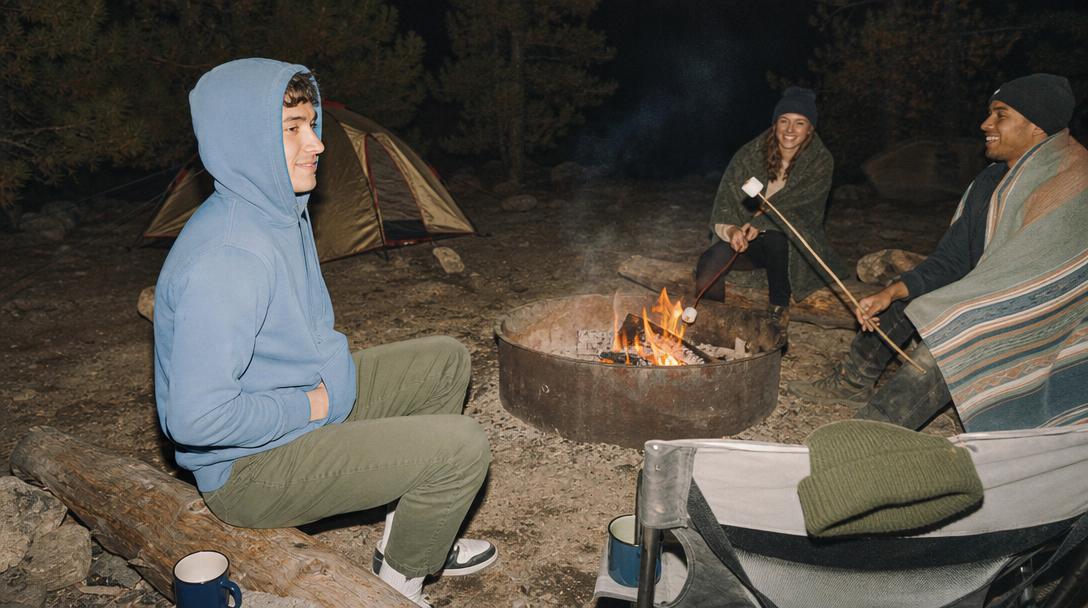
A hoodie has several warmth advantages over a sweatshirt:
- Head coverage: Helps retain warmth when temperatures drop
- Neck coverage: Reduces drafts around your collar
- Wind buffering: Blocks light breezes better than an open crewneck
- Sleep comfort: Hood can act like a soft beanie
- Pocket warmth: Kangaroo pockets help warm hands at camp
The hood is especially helpful during low-activity moments:
- Sitting by the fire
- Watching stars
- Cooking breakfast
- Walking to the bathroom at 2 a.m.
- Waiting for coffee while questioning every life choice before caffeine
If you camp in shoulder seasons, a hood is a small feature with a big comfort payoff.
Sweatshirt advantages: why no hood can be better
A sweatshirt can be better than a hoodie when layering is the priority.
No hood means:
- Less bunching under backpack straps
- Easier fit under a rain jacket hood
- Less bulk in your pack
- Cleaner neck layering with a buff, scarf, or beanie
- More comfortable under a puffy jacket
A fleece or wool sweatshirt can be an excellent cold-weather camping midlayer. If you already carry a warm hat and a hooded shell, skipping the hoodie hood may make your system more comfortable.
The best sweatshirt for cold weather camping is usually not a fashion cotton crewneck. Look for fleece, wool, or a warm synthetic blend with enough room for a base layer underneath.
Warmth-to-packability checklist
Before packing a hoodie or sweatshirt, run it through this quick test:
- Is it cotton? Fine for dry car camping, risky for cold/wet trips.
- Is it fleece? Great general camping midlayer.
- Is it synthetic? Best for quick drying and active use.
- Is it wool? Great for odor control and damp warmth.
- Does it compress well? Important for backpacking and travel.
- Does it fit under your rain shell? Test before the trip.
- Does the hood bunch under your pack? Walk around with your backpack loaded.
- Will you wear a beanie too? If yes, a sweatshirt may be enough.
- Are you mostly sitting still? Prioritize warmth.
- Are you mostly hiking? Prioritize breathability.
A good camping layer should keep you warm without trapping too much sweat. Cozy is good. Swampy is not.
Simple decision tree: should you pack a hoodie or sweatshirt?
Use this quick trail-brain guide.
Choose a hoodie if:
- You want extra warmth around your head and neck
- You’ll be sitting around camp in chilly weather
- You sleep cold
- You’re car camping or van camping
- You do not want to rely only on a beanie
- You want the coziest option for evenings
Choose a sweatshirt if:
- You’re backpacking and saving space
- You already have a beanie and hooded shell
- You dislike hood bulk under jackets
- You want a cleaner midlayer
- You wear a backpack for long periods
- You’re layering under a puffy or rain jacket
Choose neither as your main warmth layer if:
- Heavy rain is likely
- You need serious winter insulation
- Your only option is thick cotton
- You’re backpacking in cold, wet conditions
In those cases, bring a proper fleece, wool midlayer, synthetic insulated jacket, or puffy—then use the hoodie or sweatshirt as a comfort layer. For wet trips, start with these practical camping in the rain tips before deciding what layers to pack.
So, which one keeps you warmer?
A hoodie keeps you warmer than a sweatshirt when all else is equal because the hood adds coverage.
But the warmest camping setup is usually:
- Wool or synthetic base layer
- Fleece hoodie or fleece sweatshirt
- Wind/rain shell
- Beanie or hood
- Puffy jacket for colder nights
If you want one cozy layer for relaxed camping, choose a fleece hoodie. If you want a cleaner, more packable midlayer for hiking and backpacking, choose a fleece or wool sweatshirt.
If you’re building out your camping layers and want more style-specific ideas without turning your closet into an outdoor gear garage sale, Hike Tee has a helpful guide to outdoor sweatshirts. This guide is the “which cut works better?” trail sign; that one is better for browsing sweatshirt styles.
Frequently Asked Questions
Is a hoodie still a hoodie if it has a zipper?
Yes. A zip-up hoodie is still a hoodie because the defining feature is the attached hood. The zipper just makes it easier to vent, layer, and take on or off while camping.
Which is better, a sweatshirt or a hoodie?
A hoodie is better for warmth and cozy campsite comfort, while a sweatshirt is better for low-bulk layering under jackets or backpacks. For camping, the better choice depends on fabric: a fleece hoodie or fleece sweatshirt will usually outperform cotton in cold conditions.
Are hoodies called sweatshirts?
Yes, hoodies are often called hooded sweatshirts. A hoodie is basically a sweatshirt with a hood, while a regular sweatshirt usually has no hood.
What qualifies as a hoodie?
A hoodie is a sweatshirt-style garment with an attached hood. It may be pullover or zip-up, and it may include drawstrings, a kangaroo pocket, or front pockets.
Which is warmer hoodie or sweatshirt for camping?
If the material and thickness are the same, a hoodie is warmer because it covers your head and neck. But a heavyweight fleece camping sweatshirt can be warmer than a thin cotton hoodie, so always compare fabric first.
What is the best hoodie for camping?
The best hoodie for camping is usually a fleece, wool, or synthetic hoodie that dries faster than cotton and fits comfortably under a jacket. For cold evenings, the warmest hoodie for camping is typically a midweight or heavyweight fleece hoodie paired with a wind-blocking shell.
Final trail takeaways
A hoodie usually beats a sweatshirt for warmth because the hood gives you extra coverage where cold sneaks in fast: your head, neck, and ears. But for real camping comfort, fabric matters more than the label.
Choose fleece, wool, or synthetic materials when the forecast is cold, damp, or active. Save cotton for dry, casual campground evenings. Use your hoodie or sweatshirt as a midlayer, not your entire weather plan.
Quick recap:
- Warmest by design: hoodie
- Best for simple layering: sweatshirt
- Best all-around camping material: fleece
- Best for damp active trips: synthetic
- Best for odor resistance: wool
- Worst for cold/wet reliability: cotton
- Best system: base layer + midlayer + weather shell
Pack the layer that matches your trip—not just the one that looks coziest on the chair by the door. Although if it has a raccoon on it, we fully understand the emotional difficulty of leaving it behind.


