


Cotton vs Synthetic Hiking Shirts
Dominic PalmowskiThe short answer: synthetic wins for hard outdoor work
If you are doing full-day outdoor work, especially anything involving climbing, hauling, cutting, digging, brush clearing, or unpredictable weather, a synthetic hiking shirt is usually the better choice. It manages sweat better, dries faster, and keeps you more comfortable when the temperature changes.
But cotton is not useless. I know the internet loves a simple rule, and “cotton kills” gets repeated like trail gospel. There is truth behind it, especially in cold or wet conditions. But after years of wearing both cotton and synthetic shirts on trail maintenance days, camp setup work, long ridge hikes, and plenty of sweaty landscaping-style grunt work around campsites and trailheads, I think the real answer is more useful than the slogan:
Cotton can be great in hot, dry, moderate-effort conditions. Synthetic is better when the work gets hard, wet, humid, windy, cool, or unpredictable.
Most of my outdoor work lives in that messy middle zone. It is not elite mountaineering, but it is not a gentle stroll either. It is the kind of day where you are moving tools, climbing with a loaded pack, clearing brush, setting up camp, sweating through your back panel, then standing still in wind wondering why you did not pack a dry shirt. That is exactly where shirt choice matters.
Cotton hiking shirts: when they actually work well
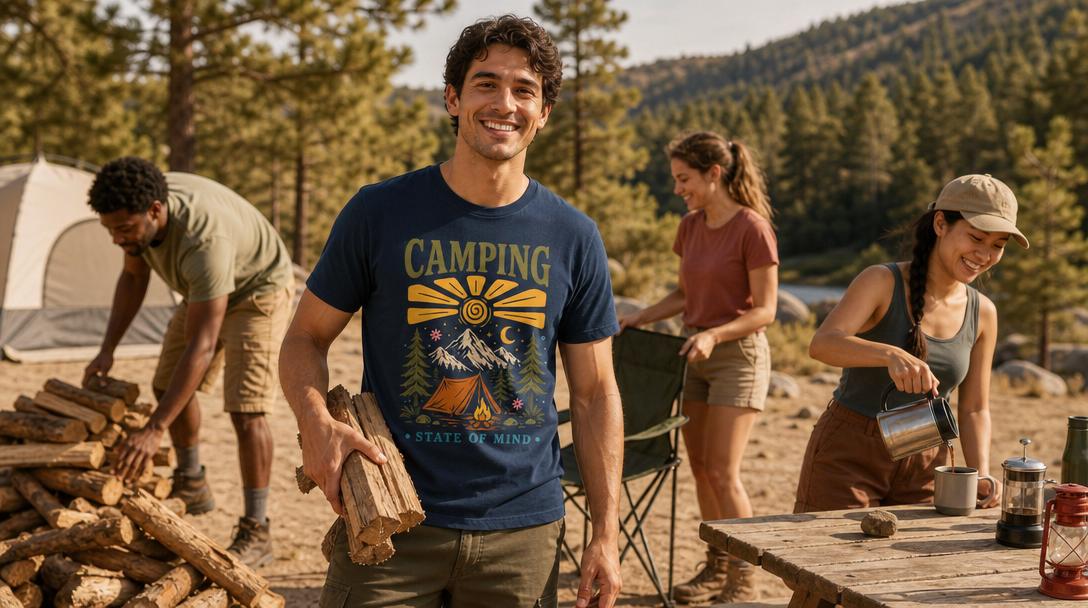
Cotton gets a bad reputation in outdoor circles, and sometimes it deserves it. But I will give cotton its fair shake because I have had days where it felt fantastic.
One dry, breezy summer afternoon, I was doing light-to-moderate trail work: moving tools, clearing brush, not exactly redlining my heart rate. I had on a loose, older cotton long-sleeve, and honestly, it felt great. The breeze moved through it. It did not cling. It had that soft, airy feel that no synthetic shirt I have ever worn has quite matched.
That is cotton at its best: warm air, low humidity, moderate effort, and enough breeze to keep the fabric from becoming a wet towel.
Cotton feels good before it gets soaked
Cotton is comfortable because it is soft, breathable, familiar, and easy on the skin. If you are setting up a campsite, walking around a trailhead, stacking firewood, cooking outside, or doing casual camp chores, cotton can feel more natural than a slick synthetic.
This is also where casual outdoor tees earn their place. If I am hanging around camp after the real work is done, I am perfectly happy in a relaxed cotton tee like our Camping Summer Shirt or something fun for the fire ring like the Life is better Campfire Shirt. Not every shirt has to be a lab-engineered moisture machine. Sometimes you just want to drink coffee, poke at a campfire, and look like you belong somewhere with trees.
If you want a deeper breakdown of when cotton does and does not make sense on the trail, I wrote more about that here: Are Cotton Shirts Good for Hiking?
Best conditions for cotton outdoor work
Cotton can be a reasonable choice when:
- The weather is hot and dry
- Your effort level is light to moderate
- You are not carrying a heavy pack
- You have shade or airflow
- You are close to a dry change of clothes
- The day is unlikely to turn cold, wet, or windy
Think campsite chores, easy trail walking, dry-climate landscaping, picnic-area cleanup, or light brush clearing on a stable summer day.
Where cotton goes wrong: sweat, wind, and weight
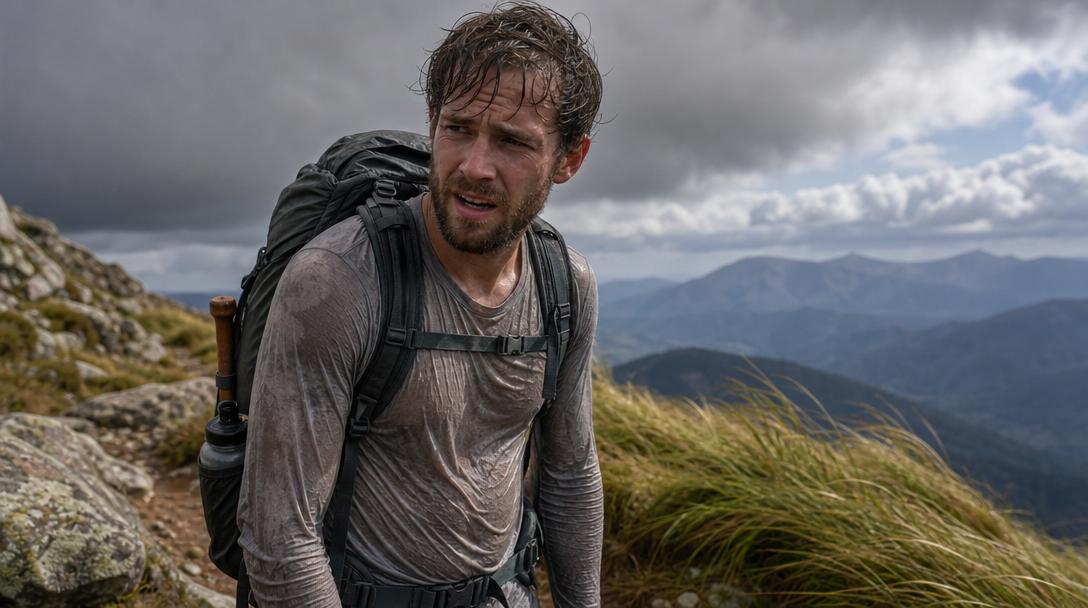
The problem with cotton is not that it gets wet. Every shirt gets wet when you work hard enough. The problem is that cotton absorbs moisture and holds onto it.
That means once you soak it through, you are wearing that sweat. It gets heavy. It clings. It cools quickly when the wind hits. Under pack straps, it can rub and bunch. Over a full day, that is not just uncomfortable; it adds fatigue.
The ridgeline lesson I still remember
One spring trail day still sticks with me. I started the morning in a cotton shirt because it was cool and I grabbed it without thinking. By midday, I had soaked it through climbing a steep section with a loaded pack. Then we stopped for a break on a ridgeline, and the wind came through.
That shirt instantly turned into a cold, heavy, clingy mess sitting right against my skin. My shoulders started aching from the wet fabric under my pack straps, and I spent the second half of the day genuinely uncomfortable.
That was the day “cotton kills” stopped being just a phrase and became a real memory.
To be clear, I do not use that phrase to scare people out of wearing cotton on every outdoor outing. But in cold, wet, windy, or changing conditions, wet cotton can drain heat fast. If you are far from shelter, tired, and still have hours of work left, that matters.
For more on the risk side of cotton, this piece goes into detail: Why Is Cotton Bad for Hiking?
Synthetic hiking shirts: why they usually win for work
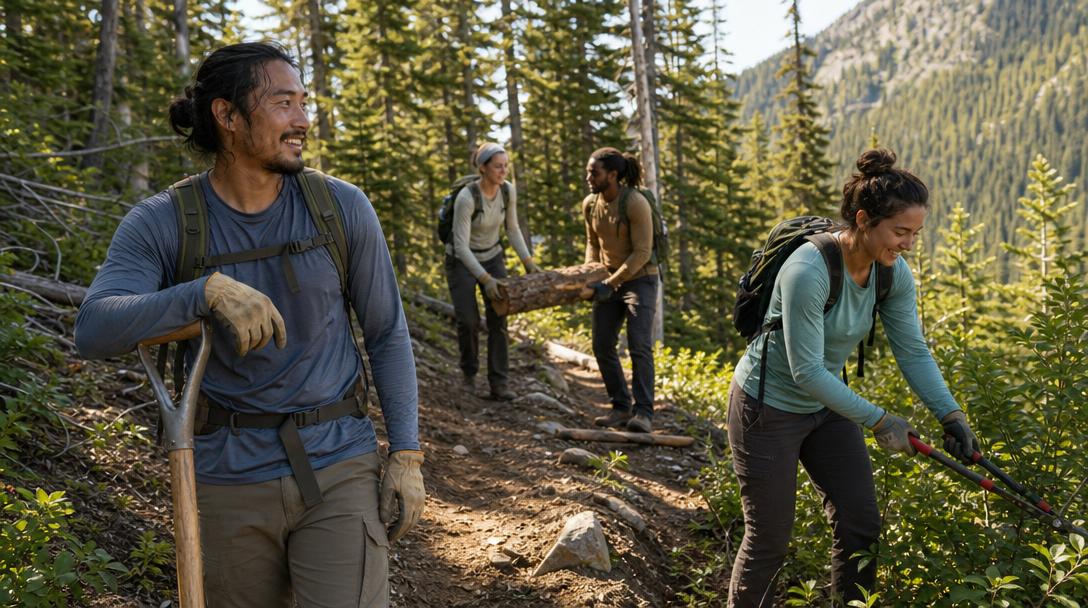
A good synthetic hiking shirt, usually polyester, nylon, or a blend, is built around moisture movement. It does not absorb sweat the same way cotton does. Instead, it pulls moisture away from your skin and spreads it through the fabric so it can evaporate faster.
That sounds like marketing copy until you experience the difference on a long day.
The shoulder-season ridge day that sold me
My most memorable synthetic win was a long ridge day in shoulder season: overcast, cool, a climb hard enough to make me sweat, then a descent into wind. I was wearing a lightweight polyester-blend hiking shirt.
What stood out was how fast it recovered.
I stopped sweating, the wind hit me, and within minutes the shirt felt almost dry against my skin instead of cold and clammy. I have done that same kind of day in cotton, and the contrast is not subtle. With a good synthetic, you stop feeling like your shirt is working against you. That sounds simple, but across eight hours outside, it is huge.
Sweat management during hard labor
This is where synthetic shirts separate themselves.
At a casual pace, cotton can manage light sweat reasonably well. But once you cross into sustained hard-output work—uphill with weight, hauling tools, cutting brush, digging drainage, carrying lumber, or climbing in humidity—cotton starts losing badly.
You are not just wet. You are carrying extra water weight. Your shirt gets heavier, colder, and slower to recover.
A synthetic shirt dries faster and keeps moisture moving off your skin. On a full workday, that is not just about comfort. It affects energy, chafing, temperature regulation, and how beat-up you feel by the time you get back to the truck.
Synthetic shirts are not perfect
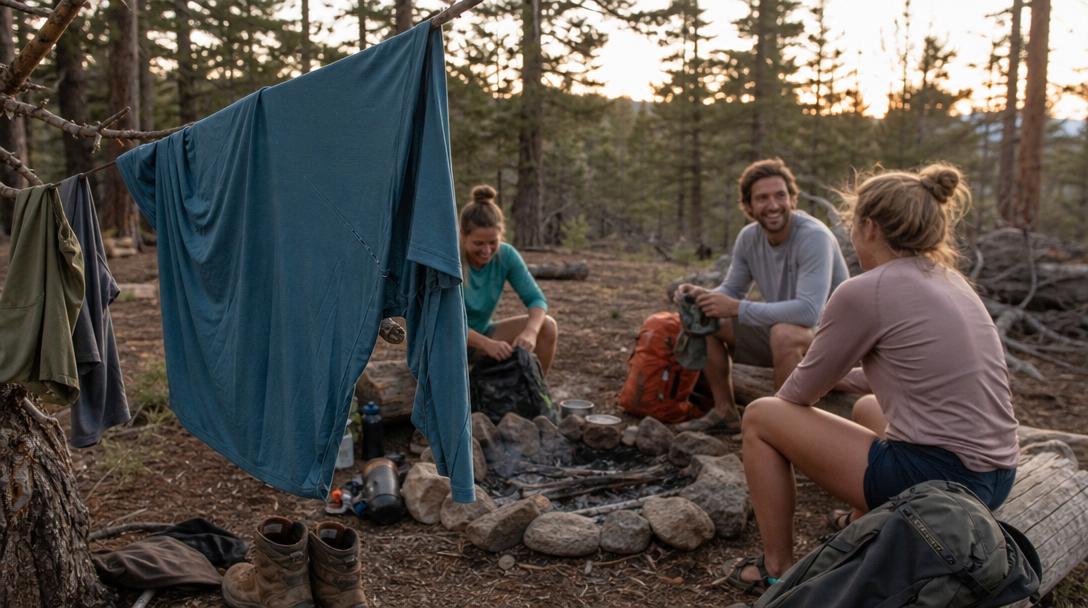
I like synthetic hiking shirts, but I am not here to pretend every one is magical. I have had synthetics fail in ways that matter.
The smell problem is real
The biggest issue is odor. I have had synthetic shirts become unwearable by day two of a trip. Not just “I have been hiking” smell. I mean the kind of smell that feels unfair to other people at the campfire.
Some newer fabrics use odor-control treatments, and merino blends can help, but cheap polyester can get funky fast. If you are doing multi-day outdoor work or camping between shifts, odor resistance matters.
Durability can be hit or miss
I once had a lightweight synthetic shirt snag badly on a brush pile and tear along a seam in a way a heavier cotton or canvas shirt probably would not have. That is the tradeoff with very light fabrics. They breathe well and dry fast, but they are not always built for abrasion.
For work-heavy days, pay attention to seams, collar construction, fabric weight, and whether the shirt feels like it can survive contact with branches, straps, bark, tools, and the occasional mystery nail sticking out of something it should not be sticking out of.
Some synthetics feel clammy in humidity
Not all synthetics feel good in hot, humid weather. Some have that plasticky, clammy feel that defeats the point. If a synthetic shirt traps heat or sticks to your skin, it may be technically “moisture-wicking” but still miserable in real life.
For hot-weather hiking shirt choices, this guide may help: Best Hiking Shirts for Hot Weather: Sun Shirts, Breathable, and UPF Protection
Weather changes the answer fast
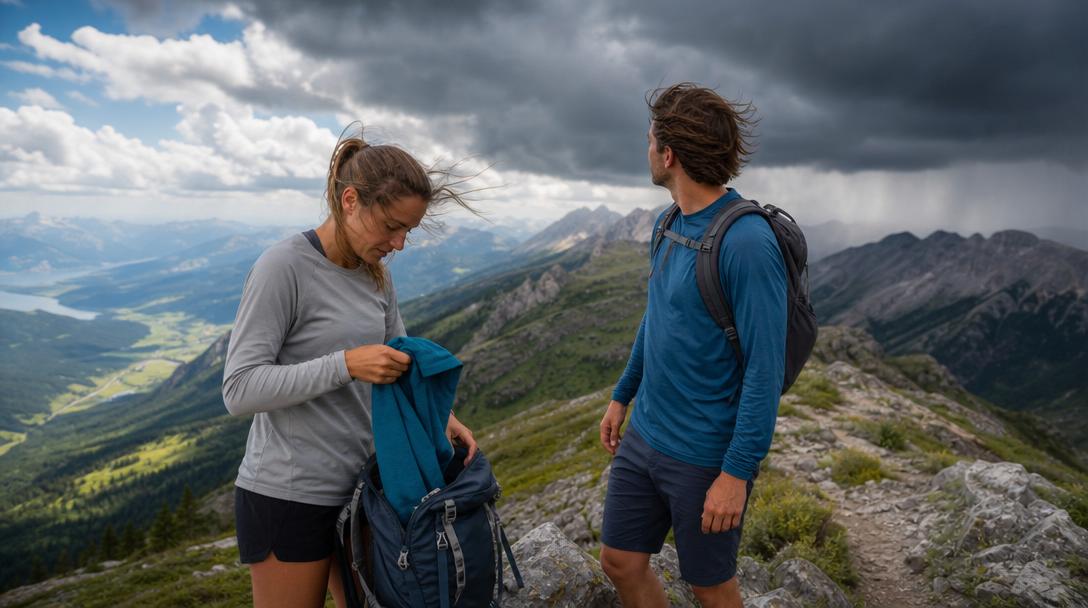
If I had to boil this whole cotton vs synthetic hiking shirts debate down to one rule, it would be this:
If there is any real chance the day gets cool, windy, or wet after you have been sweating, wear synthetic.
Hot and dry: cotton gets an argument
In hot, dry conditions with moderate effort, cotton can genuinely feel better. It breathes naturally, feels soft, and does not have that slick synthetic feel some people dislike.
This is especially true if you are not carrying much weight and you can dry out easily. In desert-like conditions, a damp cotton shirt can even feel cooling for a while. Just remember that once the sun drops or wind picks up, that cooling effect can become a problem.
Humid: synthetic usually wins, but choose carefully
In humid conditions, sweat evaporates more slowly no matter what you wear. Cotton gets saturated and stays that way. A good synthetic still has the advantage, but fabric choice matters. Look for breathable weaves, venting, and a fit that does not cling.
Cool, windy, or variable: synthetic wins clearly
Variable mountain weather is where I would never gamble on cotton. You might be sweating on a climb at noon and standing in wind at elevation an hour later. A damp cotton shirt in that scenario is genuinely miserable.
If the day involves layering, changing temperatures, or shoulder-season weather, think in terms of a full system. This guide is useful for that: What to Wear Hiking in Cold Weather: The 3-Layer Rule Explained
Features that matter for outdoor work shirts
Fabric gets the attention, but design matters too. A great hiking shirt for outdoor work is not just “synthetic” or “cotton.” It has to function while you are bending, lifting, sweating, reaching, and wearing a pack.
Long sleeves are underrated
Long sleeves protect against sun, brush, bugs, and abrasion. A good lightweight long-sleeve synthetic shirt does not feel as hot as people expect, especially if it breathes well. I usually prefer long sleeves for trail work because my forearms have lost enough arguments with branches.
UPF protection matters
If you are working on exposed ridges, open campsites, gravel lots, alpine terrain, or anywhere without shade, UPF protection is not just a nice bonus. Thin shirts can let more sun through than people realize.
Ventilation makes or breaks comfort
Back vents, mesh panels, and breathable fabric zones are huge in humid conditions. They help dump heat when you are wearing a pack or working in still air.
Seams and collar durability matter
Outdoor work is harder on shirts than casual hiking. Pack straps, tool belts, sawdust, bark, sweat, and repeated washing all beat up fabric. I pay attention to seam quality and collar structure because those are often the first places lightweight shirts start looking sad.
Pocket placement is not minor
A chest pocket sounds harmless until it catches under a pack strap all day. If you are wearing a harness, backpack, or tool belt, pocket placement can go from “nice feature” to “tiny daily annoyance.”
Cotton vs synthetic by task
Trail maintenance
For most trail maintenance days, I would choose synthetic. You are usually sweating, stopping, starting, carrying tools, and dealing with changing weather. Long sleeves are a bonus for brush and sun.
Camp setup and campsite chores
For easy camp setup in warm, dry weather, cotton can be great. This is where comfort and casual wear matter more than technical performance. If the work is mellow and you have dry layers nearby, cotton is fine.
Landscaping-style outdoor work
If it is hot, dry, and moderate effort, cotton can work. If it is humid, intense, or all-day labor, synthetic is better. If there is abrasion from brush or equipment, consider a tougher work shirt rather than an ultralight hiking top.
Ridge hikes with work mixed in
Synthetic, no question. Climb-sweat-wind-repeat days are exactly where cotton punishes you.
Sparks, grinding, and chainsaw work
This is important: thin synthetics are not the right choice around sparks, grinding, welding, or chainsaw work. They can melt or fail in dangerous ways. For that kind of work, use proper protective workwear and safety gear. That is not a comfort decision; it is a safety decision.
My simple shirt system for full-day outdoor work
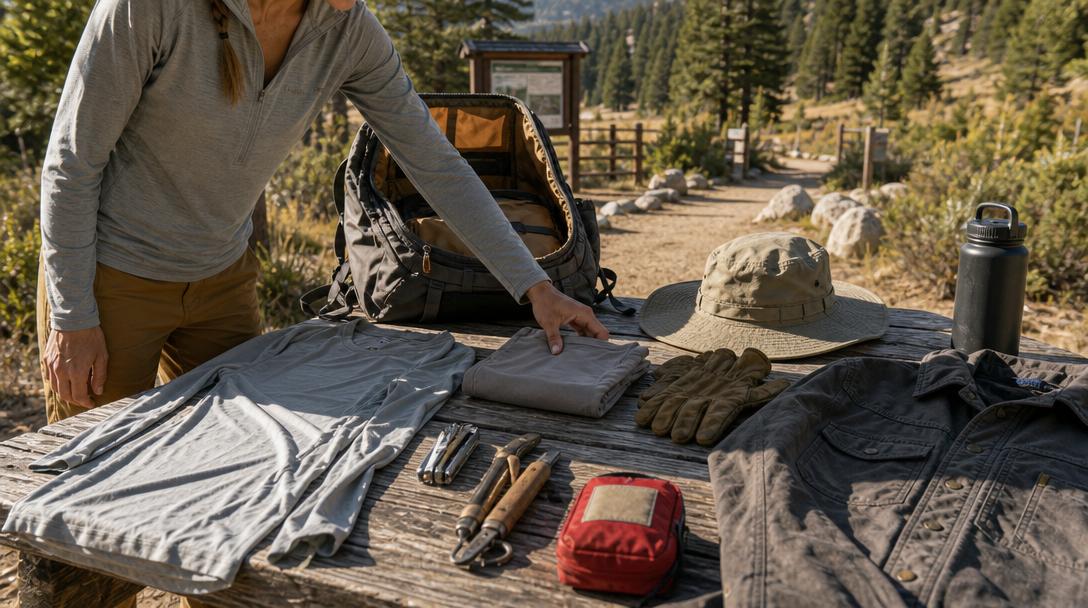
If someone asked me to build a simple shirt setup for outdoor work, I would keep it practical:
- Primary shirt: lightweight synthetic long-sleeve for any day involving climbing, hauling, hard sweating, or unpredictable weather.
- Fabric choice: polyester-nylon blend with decent UPF and enough durability for pack straps and brush.
- Backup shirt: always pack a dry spare if it is a long day or the weather looks variable.
- Cotton option: light cotton or cotton-blend shirt for genuinely hot, dry, moderate-effort days.
- Safety layer: proper protective work fabric for sparks, grinding, chainsaw work, or anything where melting fabric is a risk.
The backup shirt is the easiest win people ignore. Changing out of a soaked shirt at midday takes two minutes and can completely reset how the second half of the day feels.
Beginner mistakes to avoid
The biggest mistake is treating “cotton kills” as an absolute rule. Cotton is genuinely dangerous when wet in cold conditions, but that does not mean cotton is always wrong outdoors.
The second mistake is assuming any synthetic hiking shirt is automatically better. Cheap synthetics can smell awful, snag easily, feel clammy, or fall apart at the seams.
The real mistake is ignoring the specific day in front of you. Ask:
- How hard will I be working?
- Will I be sweating heavily?
- Could the weather turn cool, wet, or windy?
- Am I carrying a pack?
- Will I be brushing against branches or tools?
- Can I change into a dry shirt?
That matters more than the label.
FAQ: Cotton vs synthetic hiking shirts
Is cotton ever good for outdoor work?
Yes. Cotton can work well for light-to-moderate outdoor work in hot, dry, breezy conditions. It feels soft, breathable, and comfortable when you are not soaking it with sweat. It is not ideal for cold, wet, windy, or high-output days.
Why are synthetic shirts better for hard labor?
Synthetic shirts dry faster and move sweat away from your skin better than cotton. During hard labor, that helps reduce wet cling, water weight, chafing, and the chill that comes when you stop moving.
Are synthetic hiking shirts always better than cotton?
No. A bad synthetic shirt can smell terrible, snag easily, or feel plasticky in humid heat. A decent cotton shirt can be more comfortable in the right conditions. The best choice depends on effort level, weather, and the type of work.
What shirt should I wear for trail maintenance?
For most trail maintenance, choose a durable synthetic long-sleeve with good breathability and UPF protection. Trail work often involves sweat, brush, sun, pack straps, and weather changes, so synthetic usually performs better.
Should I pack an extra shirt for outdoor work?
Yes, especially for long days or variable weather. A dry backup shirt can make a huge difference after a sweaty climb, rain shower, or cold break. It is one of the simplest comfort upgrades you can carry.
What should I avoid wearing around sparks or chainsaws?
Avoid thin synthetic hiking shirts around sparks, grinding, welding, or chainsaw work. Use proper protective workwear designed for that hazard. Comfort does not matter if the fabric is unsafe for the job.
Final verdict: choose by conditions, not slogans
For serious outdoor work, synthetic hiking shirts are usually better. They manage sweat, dry quickly, and handle changing weather far better than cotton.
But cotton still has a place. On hot, dry, moderate-effort days, a loose cotton shirt can feel fantastic. For camp chores, easy walks, and relaxed outdoor time, it may be the shirt you actually want to wear.
My rule is simple: if I expect hard sweating or changing weather, I wear synthetic. If it is hot, dry, mellow, and low-risk, cotton gets a chance.
That is not as catchy as “cotton kills,” but it is a lot more useful when you are staring at your shirt drawer at 6 a.m. trying to decide what will still feel good eight hours later.


