


UPF Hiking Shirts: Ratings Explained
Dominic PalmowskiI learned the hard way: three hours above treeline, no shade, and a sunburned neck that complained for a week. Now a UPF-rated hiking shirt is as non-negotiable in my pack as water, snacks, and a map.
UPF rated hiking shirts indicate how well the fabric blocks the sun’s ultraviolet rays, and the number tells me what percentage of UV penetrates to my skin. A UPF 50 shirt, for example, allows approximately one-fiftieth of UV, or around 2%. I use these ratings to plan long days on the trail, match shirts to sun levels, and balance comfort with protection. Let me break that down.
Key Takeaways
- I know that a UPF rating indicates how much UV radiation my hiking shirt blocks, so I seek UPF 40 to 50 plus when I anticipate being in intense sun for extended periods. I also remember that UPF is for clothes, SPF is for sunscreen, and both count for complete protection.
- I opt for hiking shirts in tightly woven technical fabrics such as polyester or nylon, in deeper or brighter colors, with long sleeves and high collars, so I don’t bake in the sun but still cover more skin. I also look for features like vents, breathable panels, and thumbholes to thread the needle between comfort and protection.
- I inspect my UPF shirts prior to each hike by scanning for thinning, stretching or fading, snags, and worn areas, especially on the shoulders and back. If the fabric appears worn or more limp than it once was, I take it as a sign to retire the shirt from high-UV duty and keep my sun shield dependable.
- I wear UPF shirts for my long-term skin health, not just to prevent one painful hike from turning into a sunburn story. By pairing UPF clothing with other gear such as wide-brimmed hats, UV-blocking shades, neck gaiters, and sun gloves, I’m lowering my lifetime UV load.
- I trust my UPF clothing for consistent, all-day coverage and layer broad-spectrum SPF 50+ on uncovered skin like my face, hands, ears, and neck. This pairing helps me avoid missed spots, lowers reapplication anxiety, and still protects areas my clothing doesn’t cover.
- I follow the garment’s care instructions, wash mine gently, skip bleach and harsh detergents, and air dry or low tumble dry so the protective treatments last as long as possible. By looking after my kit, I help keep my sun protection dependable from one hiking season to the next.
What is a UPF Rating?
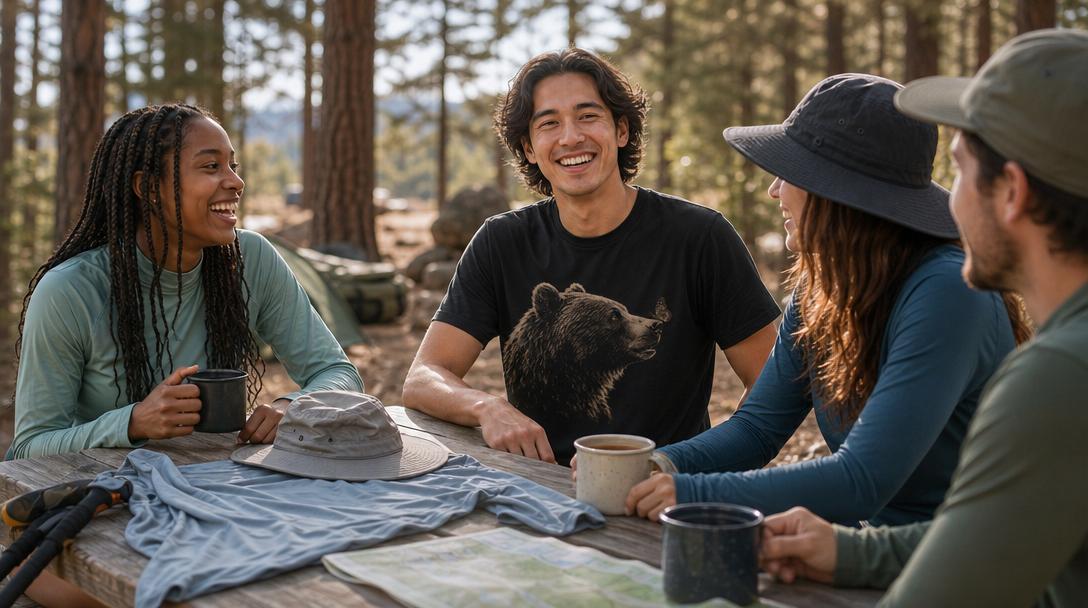
UPF, or Ultraviolet Protection Factor, is my way of measuring how much of the sun’s UV radiation a fabric transmits to my skin. It’s a lab-tested number for apparel, not a guess. If a shirt is UPF 30, it means the fabric allows one-thirtieth of UV through, which is approximately 3.3%, and blocks roughly 96%. The bigger the number, the less UV reaches my skin.
When I select a UPF hiking shirt, I check how much it blocks, not just the label. UPF 15 allows one-fifteenth of UV to pass, or approximately 6.6%, so it blocks around 93%. UPF 50+ allows just one-fiftieth to pass through, or approximately 2%, so it blocks 98% or more. For long days on open trails, that jump from 93% to 98% is significant, particularly on high UV days or at higher altitudes. The Skin Cancer Foundation recommends something that is at least UPF 30, which strikes a good balance between comfort and protection.
UPF is not SPF. UPF is for fabric. It gauges how much UV penetrates the fabric as I wear it. SPF, or Sun Protection Factor, is for sunscreen on bare skin and is tested differently. My shirt’s UPF doesn’t replace sunscreen on my face, hands, or gaps. I still need both. An average cotton T-shirt with no rating may be just UPF 5 to 8, hardly better than weak sunscreen; for a deeper comparison, I like this guide to hiking shirts vs regular T-shirts.
Here is how UPF levels break down:
- UPF 15–24: good, blocks about 93.3–95.9%
- UPF 25–39: very good, blocks about 96–97.4%
- UPF 40–50: excellent, blocks about 97.5–98%
- UPF 50+: excellent, blocks 98%+
UPF is for fabric only. I can and should combine it with hats, shade, and sunscreen. I monitor wear and wash cycles because fibers can thin and lose a bit of protection. I steer clear of harsh detergents and high heat to help the shirt retain its rating longer.
Anatomy of a UPF Shirt
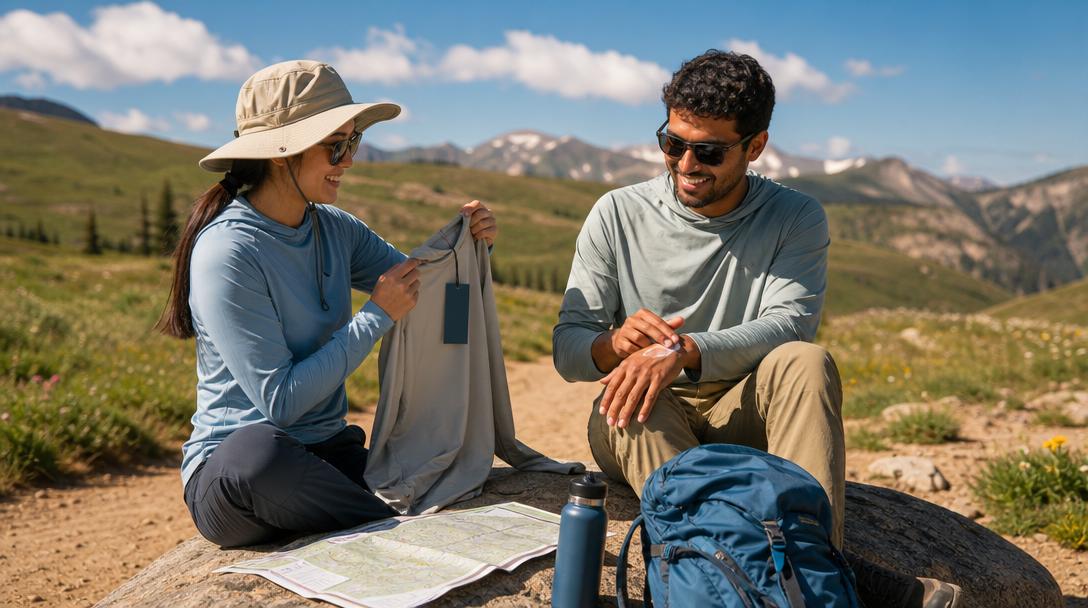
When I’m eyeballing a hiking shirt for actual sun protection, I begin with the fabric, then move to the structure, design details, and how it feels when I move and sweat all day.
For high-sun hikes, I go for technical fabrics — polyester, nylon, or blends — because they tend to maintain a consistent UPF. A good UPF 50+ shirt blocks more than 98% of UV compared with a simple cotton tee blocking only about 80 to 85%, which has a UPF of roughly 5 to 7. That difference is enormous on a long day above treeline. On steep climbs, cotton can hold a lot of sweat, while a technical shirt usually stays lighter, dries faster, and keeps its claimed UPF more reliably when I’m soaked. If you’re weighing cotton for easy trails or camp days, this breakdown on whether cotton shirts are good for hiking is worth a look.
That said, cotton and cotton-polyester blends still have a place in my outdoor life: campgrounds, coffee runs, road trips, and low-output walks where comfort and personality matter more than performance. That’s where casual graphic tees like the One More Trail Shirt, Hike More, Worry Less Bigfoot Shirt, Sunshine Summer Shirt, and Moonlight Mountain Shirt make sense. I just don’t treat casual tees as a replacement for a tested UPF sun shirt on exposed, high-UV hikes.
The weave and color matter more than a lot of people realize. I’m looking for a tight, even weave and I stay away from thin, see-through patches that suggest weak zones in UV blocking. Dark or bright colors generally absorb more UV than light ones, so a navy or tomato-red shirt will often test higher than a light khaki in the same style. A lot of shirts have specialty chemical finishes that enhance and lock in the UPF. Good ones hold their rating and color for many wash cycles, while cheaper shirts can fade and lose structure after a hard, salty season.
Coverage is the unsung workhorse. I’m a fan of long sleeves, stand or flip-up collars, and sometimes thumbholes so the material stays over the backs of my hands when I’m using trekking poles. A shirt that covers more skin reduces the amount of sunscreen I need and lowers the odds of missing a patch. If you’re unsure how much arm coverage you really want, this guide to sleeve length for hiking by season helps make that call.
I stick with lightweight fabrics, around 135 to 170 grams per square meter, because they breathe well but can still register UPF 50+. Heavier shirts above approximately 200 to 240 grams per square meter can trap heat, so hikers peel them off exactly when the sunlight is most intense. For hot-weather hiking, breathability matters almost as much as coverage; I’ll often compare options against a guide like Best Hiking Shirts for Hot Weather before choosing what to wear.
Real-World UPF Performance
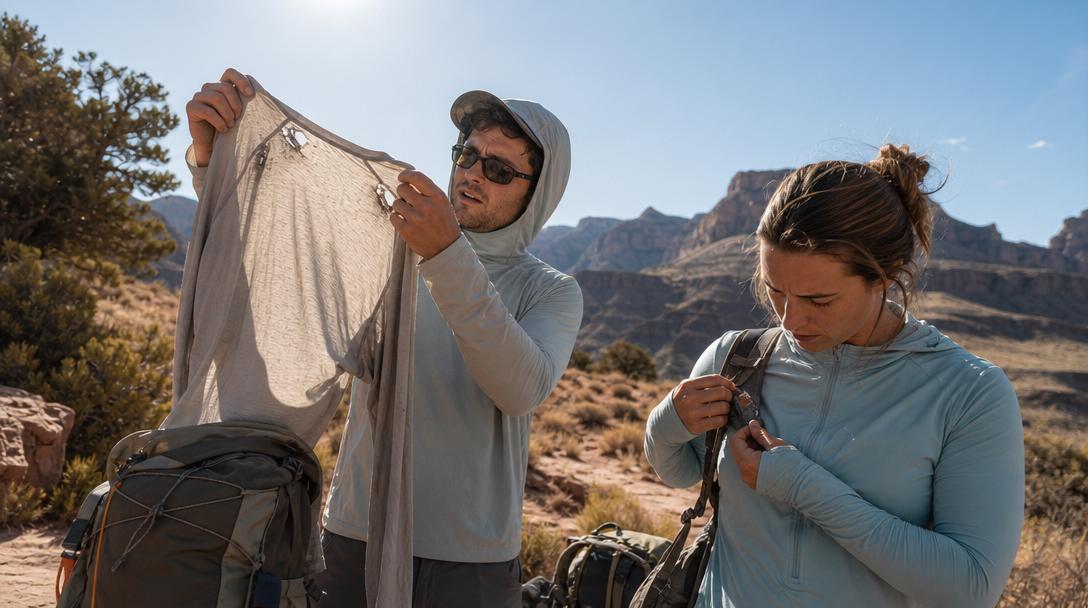
UPF on the tag is the lab number. What I care about is how close that number holds up in real trail conditions, hour after hour in scorching sun.
True protection can drop when the shirt is stretched, wet, or worn. When fabric stretches across shoulders, chest, or elbows, the knit opens and more UV seeps through. I notice this most with tight sleeves and packs that tug fabric across my back. Water matters too. A light drizzle, sweat-drenched back panel, or river crossing can all reduce the UPF of some shirts, particularly thin styles in pale colors. Through repeated washes, sun exposure, and backpack abrasion, the fibers slowly thin and any added UV treatments can break down.
That’s why I look for transparent, reliable UPF testing from brands that test entire garments, not just swatches. I verify that the hang tag, sewn-in label, and online product page all match, such as “UPF 50+” in all three places. If the brand specifies whether protection comes from the weave, fiber, or a chemical finish, even better, because woven-in protection tends to last longer than a surface coating.
Before each hike, I run through a simple UPF shirt checklist: I hold the shirt to bright light and see if more light shows through high-wear spots like shoulders and upper back. I look for thinning, pilling, or shiny spots where my pack rubs because that can indicate lost density. I inspect for tiny holes, loose seams, or stretched cuffs that could expose more skin on the go. I also make sure it still fits loose enough that it does not cling when I sweat. If it looks tired, transparent, or stretched out, I switch it to casual use and choose a fresher shirt for long sun days.
Beyond Sunburn Prevention
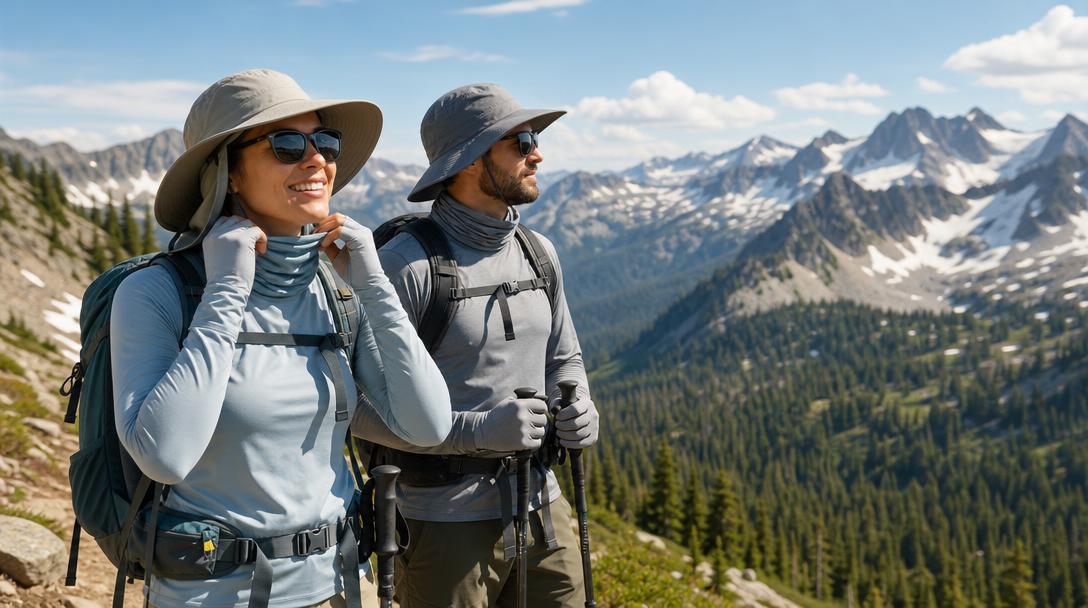
When I look at UPF-rated hiking shirts, I’m thinking beyond avoiding a red, burning neck. A good UPF shirt provides high coverage by cutting up to 98% of UV radiation, which means it reduces the slow, hidden damage that adds up over years: early wrinkles, age spots, and a higher chance of skin cancers like melanoma. That long-game protection is what counts most for repeat days on the trail.
UPF shirts deliver broad spectrum protection from both UVA, the “aging” rays that penetrate deeper, and UVB, the “burning” rays that you feel sooner. A UPF 50+ shirt allows less than 1/50th of UV rays through as long as I keep it on and the fabric is still in good condition. That consistency is the reason I reach for UPF clothing before a long, exposed hike.
That protection is especially critical when UV exposure accumulates. At higher elevations, UV can increase by 10 to 12 percent for every 1,000 meters I ascend. Even tree shade can still let 20 to 40 percent of harmful UV rays reach my skin. Fresh snow can reflect up to 90 percent of UV back at me from underneath. In those conditions, a long-sleeve UPF shirt helps keep my overall exposure lower, minimizing the impact of extra hits from elevation, shade gaps, and glare.
I round it out with these companions on every high-UV day:
- Wide-brim hat or cap with neck flap
- UV-blocking sunglasses
- Lightweight UPF neck gaiter
- Fingerless UPF sun gloves
- Long UPF hiking pants or gaiters
That full sun kit gives me layered protection, and then sunscreen fills the gaps where fabric cannot.
UPF Clothing vs. Sunscreen
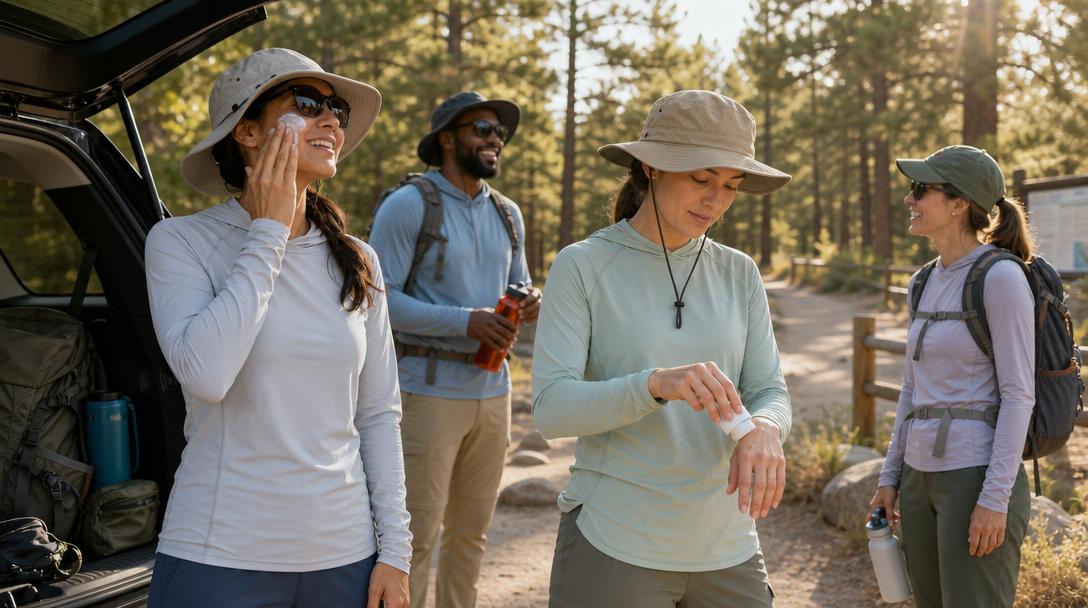
I view UPF clothing and sunscreen as teammates in my outdoor activities. They serve different roles in providing sun protection. UPF-rated shirts, such as sun shirts, give me an immediate, built-in level of protection that doesn’t need to be reapplied every two hours. A UPF 30 shirt blocks about 96.7 percent of UV rays, while UPF 40 blocks about 97.5 percent, and UPF 50+ blocks over 98 percent of UVA and UVB rays, ensuring that less than one-fiftieth of the sun’s rays reach my skin. This level of protection stays useful at noon, after a steep ascent, or during the last leg of a hike.
Sunscreen, on the other hand, is more delicate and can break down with sweat, water, and friction from pack straps. Dermatology research shows that many people apply only 25 to 50 percent of the recommended amount. As a result, an SPF 50 sunscreen may act more like SPF 8 to 12 in real-life use. On a hot day, I can use 60 to 120 milliliters, or 2 to 4 ounces, of sunscreen to protect exposed skin and reapply as needed. Over a 30-day hiking season, that can get expensive fast and still leave me vulnerable in overlooked areas like my ears, neck, or the backs of my hands.
With a UPF 50+ shirt, I protect my torso, shoulders, and most of my arms in one decision. That reduces the amount of sunscreen I require and minimizes the chance of streaks or coverage holes. It also removes ingredient concerns on covered skin, which helps if my skin reacts to certain filters or I hate the greasy, sticky feel under a pack. I don’t have sand stuck to my arms, and I don’t have to stop mid-navigation just to reapply lotion everywhere.
I still use both forms of protection. My baseline is a breathable UPF long-sleeve shirt. I supplement this with high-SPF sunscreen on my face, neck, ears, and hands to ensure comprehensive coverage against UV exposure throughout the day.
How to Maintain Your Shield
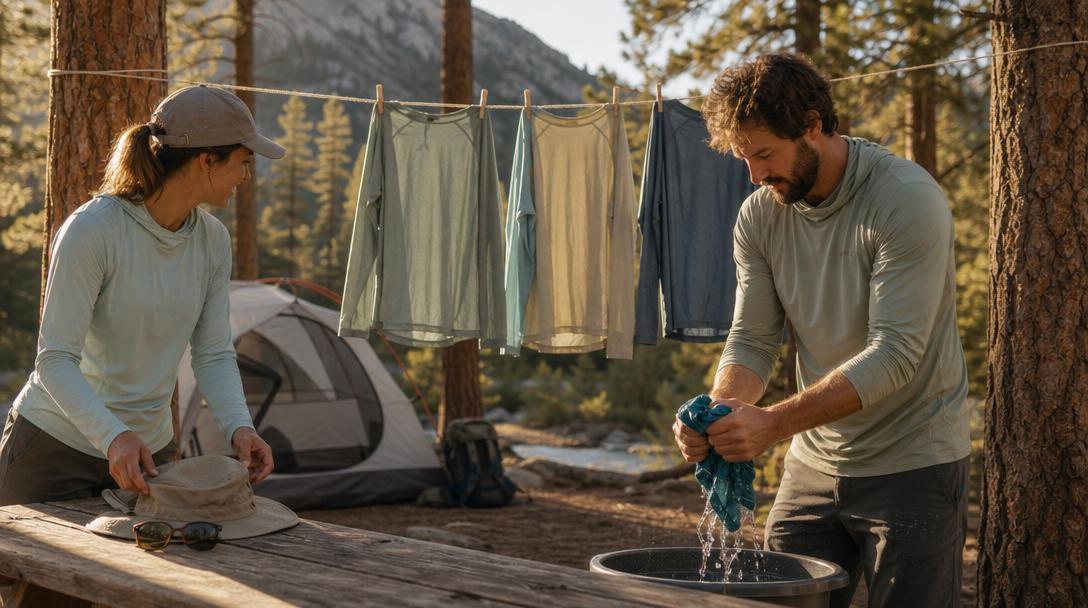
I handle my UPF hiking shirts like they’re part of my safety arsenal, not random laundry. The fabric, weave, and any UV treatment all contribute. How I wash, dry, and store them determines how long they maintain their advertised UPF rating.
I always check the care tag first. If a shirt says “machine wash cold, gentle cycle,” I do that. I use gentle liquid detergent, no fabric softener, and no stain removers with optical brighteners. I steer clear of bleach and heavy detergents because they can strip surface treatments and rough up fibers, which reduces the effective UPF even if the shirt still looks fine. A premium UPF 50+ shirt can maintain that rating for many wash cycles when I treat it properly, while a cheaper shirt may drop after one tough season and a handful of rough washes.
Heat is the other quiet enemy. I either let my shirt air-dry or tumble it on low. High heat can shrink, warp, or damage synthetic fibers, which loosens the tight weave that blocks UV. For multi-day trips, I usually rinse a shirt in the evening and hang it to air-dry overnight. For day hikes, that little routine keeps it fresh without adding unnecessary wash cycles. This matters in big temperature swings, such as cool 4°C mornings and 38°C+ afternoons, when I depend on one shirt to layer well and still protect my exposed skin.
I watch for slow damage. I inspect for thinning spots on the shoulders where my pack rests, stretched cuffs, and severe fading on the back. Synthetic shirts tend to last longer than cotton with normal trail wear, but no shirt lasts forever. Once a shirt becomes limp, transparent, or badly stretched, I retire it from high-UV days. I keep shirts on hangers or folded loose in a drawer. A little tight packing in a travel bag is fine, but months in an overloaded bin can leave hard creases and bent fibers that damage both appearance and protection.
Conclusion
UPF ratings seem like a tiny number on a tag, but they hold enormous value on the trail. A straightforward number like 30 or 50 can sound dull, but it tells me how much sun reaches my skin, and that matters on extended treks.
A good UPF shirt helps reduce burn potential, protect skin over time, and lower future skin cancer risk. It also lets me skip some sticky sunscreen on covered areas, which feels like a small victory on blistering days.
I treat my sun gear as seriously as any core piece in my kit. If you’ve got a go-to hiking shirt right now, check the tag and see what kind of protection you’re actually working with.
Frequently Asked Questions
What does a UPF number on a hiking shirt actually mean?
A UPF rating indicates how much UV radiation the fabric prevents from passing through, with UPF 50 allowing only one-fiftieth of UV rays to reach your skin. In my outdoor activities, I consider anything with a high UPF rating, from sun shirts to protective clothing, to be strong everyday sun protection.
Is UPF 50 really that much better than UPF 30?
Yes, both are good. UPF 30 blocks approximately 97 percent of UV rays, while UPF 50 provides maximum protection by blocking about 98 percent. I select UPF 50 for long, high-sun outdoor activities and UPF 30 for shorter hikes.
How is UPF different from SPF in sunscreen?
UPF tests how much UV a fabric blocks, making UPF shirts an essential part of my sun protection system. I use these protective garments as my top layer of defense and supplement with a high SPF sunscreen, like SPF 30+, on exposed skin such as my face, neck, and hands.
Do UPF hiking shirts still work when they get wet or stretched?
Protection often drops when fabric is wet, worn out, or very stretched. The weave can open and allow in more UV. My preference is for high-quality, tightly woven UPF garments, such as hiking shirts, and I don’t over-stretch them if I want the rating to stay trustworthy.
Can a regular long-sleeve shirt protect me like a UPF shirt?
Most regular shirts, especially those made from light colors or thin materials, provide limited UV protection. I’m a fan of sun shirts with tested UPF ratings because I know exactly how much exposure they’re blocking on the trail.
How long does the UPF rating on a shirt last?
UPF protection can diminish with age, laundering, and abrasion, making it important to choose high UPF rating clothing and care for it well. Good sun shirts hold reliable protection for seasons, so I heed the care label and avoid strong detergents.
Do I still need sunscreen if I wear a UPF hiking shirt?
Yes. A UPF shirt protects only what it covers, so I combine it with a good sun hat and broad-spectrum sunscreen on my face, neck, ears, and hands for more complete sun protection throughout the day.


