


Lightest Sleeping Bag Guide for Ultralight Hikes
You're standing beside a trailhead with a pack that looked perfectly reasonable on the living-room floor. Now it's stuffed, the first climb is already visible, and your sleeping bag seems to be occupying the space of a small, very sleepy animal. You start wondering whether a lighter model would make the miles kinder.
That question sounds simple, but “lightest sleeping bag” can mean several different things. It might mean the lowest number on a scale, the smallest packed bundle, or the lightest sleep system that still keeps you warm on your actual trip. Those answers aren't always the same.
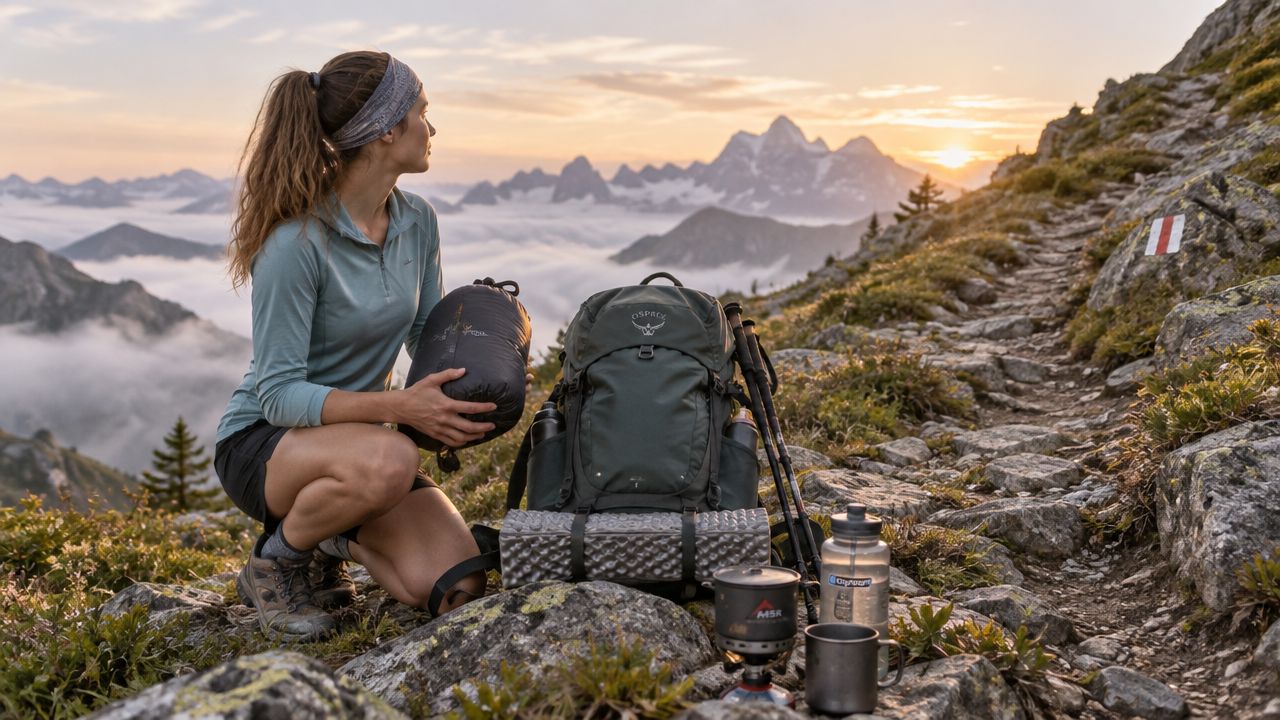
This guide takes the practical route. We'll look at what creates weight, how to compare specifications without getting dazzled by a single fill-power number, and why quilts, sleeping pads, and temperature ratings can change the winner. You'll also get packing and care habits that protect the warmth you paid to carry.
The aim isn't to crown one magical bag. It's to help you choose the lightest usable sleep system, because a featherweight bag that leaves you shivering at 2 a.m. isn't ultralight. It's just a very expensive blanket-shaped lesson.
Table of Contents
- Introduction Why Chasing the Lightest Sleeping Bag Feels So Tempting
- What Actually Makes a Sleeping Bag Light or Heavy
- How to Read Specs Without Getting Fooled
- The Real Tradeoffs of Going Ultralight
- Quilts Liners and Other Lighter Alternatives Worth Considering
- Pack Smaller and Carry Lighter With Smart Care and Packing
- Choosing the Lightest Sleeping Bag for Your Trip and Temperature
Introduction Why Chasing the Lightest Sleeping Bag Feels So Tempting
A lighter pack has an immediate appeal. Every step uphill feels a little less like you're negotiating with gravity, and the reward is especially obvious during long traverses, fastpacking days, bikepacking routes, and alpine approaches. Sleeping bags attract attention because they're often one of the bulkier, more substantial items in a backpack, so trimming weight there can feel more meaningful than removing a spare spoon.
Experienced hikers know the temptation well. Beginners feel it too, usually after lifting a fully loaded pack and discovering that the “base weight” on paper has developed a personality. The scale gives you a clean answer, while the trail gives you a more complicated one involving cold feet, damp fabric, a poorly insulated pad, and the regrettable decision to save weight by removing the hood.
The lightest credible option depends on the conditions you're preparing for. A warm-weather bag can be dramatically lighter than a bag designed for cold nights, but that doesn't make it a universal choice. A quilt may beat a mummy bag on grams, yet it can require more careful pad attachment and sleep habits. Even the shape of your body and whether you sleep warm or cold can matter more than a tiny difference between product weights.
The useful question isn't “Which bag weighs the least?” It's “Which system gives me enough warmth, comfort, and protection for the least practical weight?”
Historical products show how aggressively designers have pursued the low end. The Yeti Fever Zero was reported at 280 g, while its predecessor, the Yeti Passion One, was listed at 320 g, a reduction of 40 g, or 12.5%, from one generation to the next, according to Outdoors Magic's historical timeline. That small-looking change matters when manufacturers are already working near the edge of what materials and insulation can deliver.
By the end, you'll be able to read a specification sheet with a more skeptical eye, match warmth to the rest of your sleep kit, and decide whether the lightest bag is the lightest sensible choice for your route.
What Actually Makes a Sleeping Bag Light or Heavy
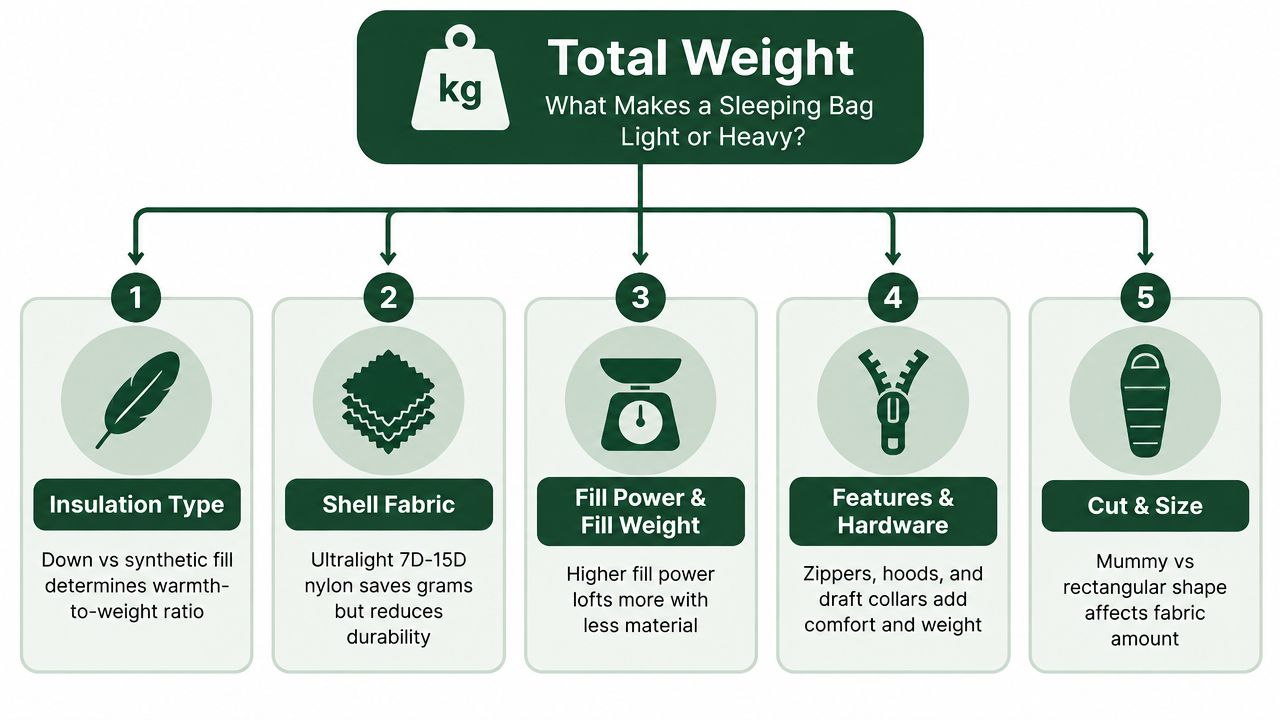
A sleeping bag is a layered system, not a single blob of insulation. It's a puffy jacket stretched into a bed. The insulation creates loft, the shell keeps that loft contained, and the construction makes sure warm air stays where your body needs it.
Insulation carries the main warmth burden
Down and synthetic fill behave differently. Down can provide excellent warmth for its mass because clusters trap air efficiently, while synthetic insulation tends to tolerate moisture better but often needs more material to provide comparable warmth. The exact result depends on the design, not just the label.
Fill power describes how much loft a given amount of down can produce. Higher fill power can help a manufacturer reach a target warmth with less down, but the bag still needs enough actual fill to create useful insulation across the torso, footbox, and sides. A lofty jacket with barely any insulation would be a poor jacket. The same logic applies here.
Fabric and hardware add the quiet grams
Shell fabric is the bag's outer envelope. Very light nylon can reduce total weight and pack size, but delicate fabric demands more care around sharp rocks, thorny vegetation, and enthusiastic tent exits. A tougher shell adds a little more mass while offering a larger margin against snags and campsite abuse.
Zippers, draft collars, hoods, cord locks, stitching, and baffles all contribute. Removing a hood may save weight, but it also removes a useful way to retain heat. Shortening a zipper can cut grams and reduce ventilation. Narrower baffles can limit material use, while poor construction can create cold spots that make the whole design less effective.
The category has repeatedly pushed below the practical ultralight threshold. The historical examples of the Yeti Fever Zero and Yeti Passion One show that fabric, baffling, and insulation refinements can shift a product's position even when the savings look modest on a kitchen scale.
Cut changes more than the label suggests
A slim mummy cut uses less fabric and reduces the air volume your body must warm. That can make a bag lighter and thermally efficient, but it may feel restrictive if you move around at night. A roomier cut gives your knees and shoulders more freedom, though extra fabric and empty air add weight and can reduce efficiency.
The same principle explains why lightest is a collection of small efficiencies. A shorter zipper, a smaller hood, a tighter pattern, a lighter shell, and carefully placed insulation can each remove a little. None is a free upgrade.
How to Read Specs Without Getting Fooled
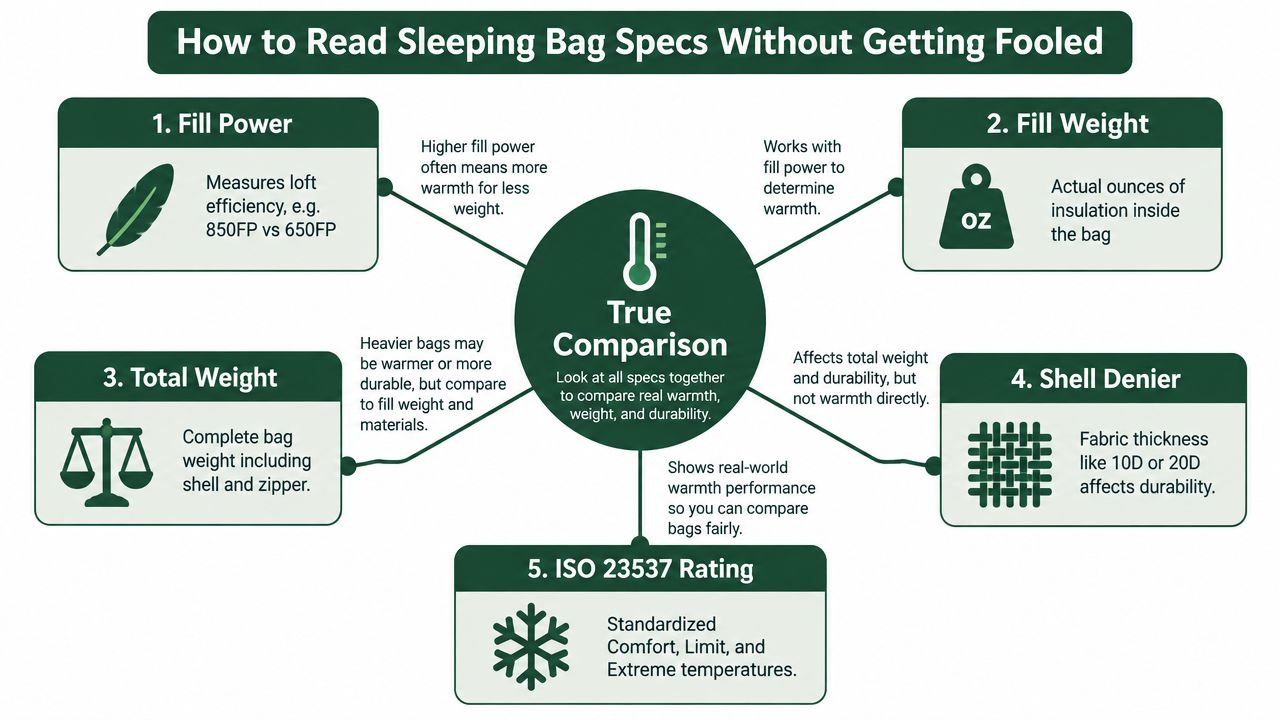
The most common specification mistake is treating one impressive number as the whole story. Fill power is useful, but it doesn't tell you how much insulation is inside the bag. A manufacturer can use high-loft down and still create a sparse design if the fill weight is low.
Read the five numbers together
Start with total weight, which should include the complete bag, including the shell, zipper, hood, and other attached components. Check whether the listed weight applies to your size, because a longer or wider version can weigh more than the sample used in a review.
Then look for fill weight. This tells you how much down or synthetic insulation the manufacturer put inside. Fill power describes the efficiency of the insulation, while fill weight tells you the quantity. You need both to understand the warmth-to-weight equation.
Shell denier describes fabric weight and construction class in a way that helps you estimate durability. A very light shell may pack beautifully, but it can require more cautious campsite selection. Denier alone doesn't reveal the entire fabric story, yet it's a useful warning sign when comparing a delicate race-oriented bag with a more forgiving backpacking model.
Temperature ratings need even more care. A summer bag and a shoulder-season bag shouldn't be compared solely because both are marketed as ultralight. Their intended warmth range is different, and the lighter product may contain less insulation.
Use ISO ratings as the comparison anchor
ISO 23537-1:2022 establishes a formal benchmark for adult sleeping-bag labelling in sports and leisure use. It covers thermal characteristics, dimensions, and mass for bags rated to a limit temperature of at least −20 °C, as described by the International Organization for Standardization.
That standard matters because it gives buyers a common testing framework. Comfort and lower-limit ratings are not interchangeable, and a number printed on a product page means more when you know how it was tested. Personal factors still matter, especially whether you sleep cold, but standardized testing makes the starting comparison less slippery.
Use this quick inspection:
- Match the rating first. Compare bags intended for the same conditions, not a warm-season model against a cold-weather model.
- Check total weight next. Confirm that the weight covers the full bag and your chosen size.
- Inspect fill weight. High fill power with modest fill weight may indicate an aggressively minimal design.
- Look at construction. Baffles, hood design, zipper length, and draft control explain where the mass went.
- Consider your pad. A bag can't compensate fully for a pad that lets ground heat escape.
This short video can help you visualize the specification language before you start comparing product pages.
Practical rule: Compare temperature rating, total weight, and fill weight as a group. Fill power by itself is a headline, not a conclusion.
The Real Tradeoffs of Going Ultralight
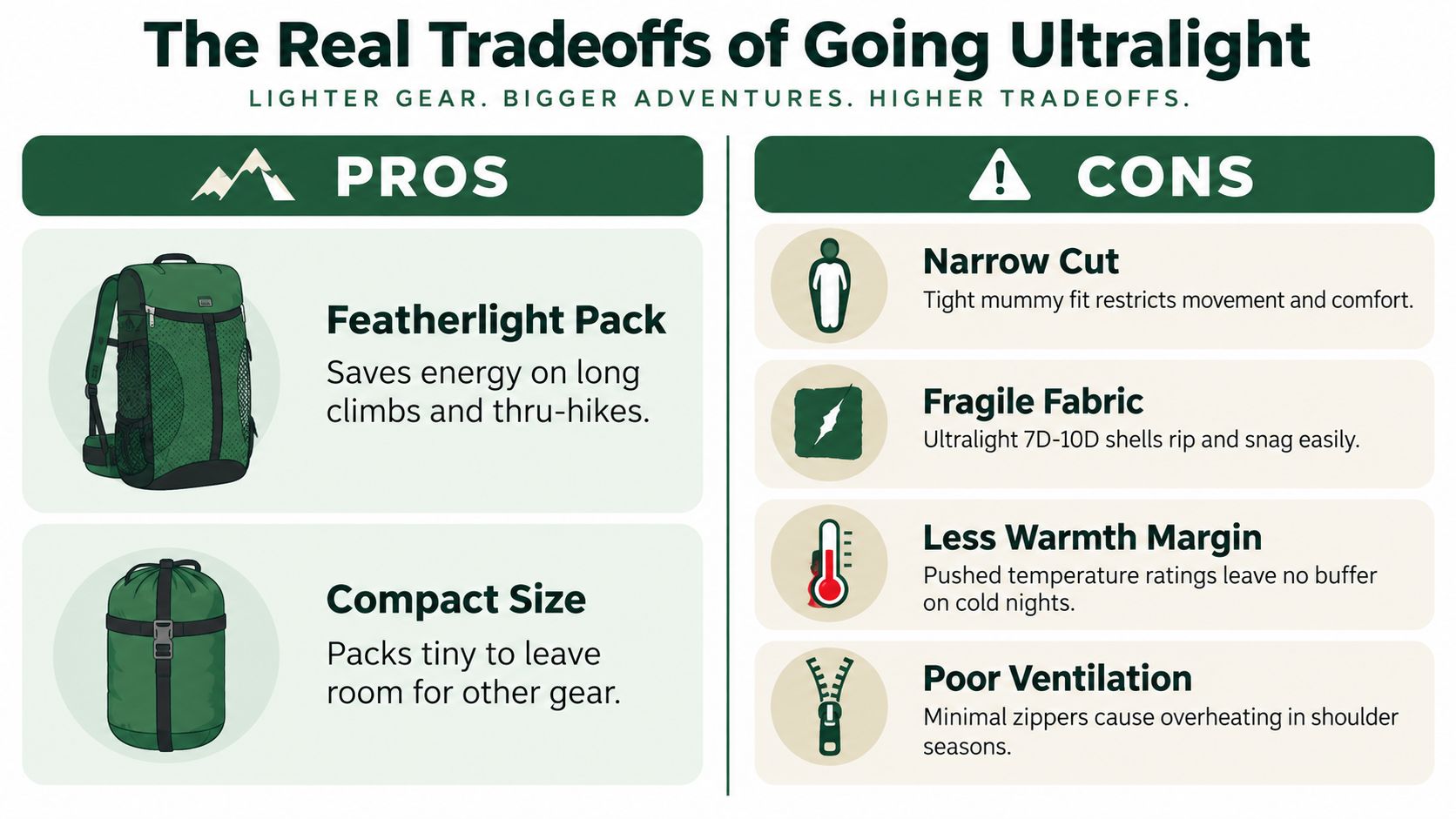
Sea to Summit describes 1 lb 2 oz, or 500 g, as a reasonable maximum for an ultralight sleeping bag intended for summer through early autumn, according to its ultralight sleeping-bag guide. Going below that threshold often means a narrower shape and more fragile materials.
That trade can be excellent on a settled summer trip. You may appreciate the tiny packed size, especially when your route involves long climbs or when a bikepacking bag has no spare room. On a colder night, though, a narrow cut can make it harder to wear extra layers inside, and a thin shell can demand a cleaner, calmer campsite.
The same gram savings feel different by trip
A warm sleeper on a dry summer route may happily choose a minimal bag or quilt. A cold sleeper heading into damp shoulder-season weather needs more margin. If you toss and turn, a restrictive mummy cut can also cost sleep, and poor sleep has a way of making every gram feel heavier.
Ventilation creates another compromise. A shorter zipper or minimal opening trims hardware, but you may overheat when evening temperatures stay mild. A fuller zipper adds weight while giving you more control over airflow.
| Feature | Ultralight Under 500g | Standard Light 600-900g |
|---|---|---|
| Warmth margin | Tighter target, less buffer on unexpectedly cold nights | More room for insulation and comfort |
| Durability | Lighter shell needs careful handling | More forgiving around rough campsites |
| Comfort | Often narrower, with fewer adjustable features | Usually more space and ventilation options |
| Packed size | Smaller and easier to fit into a compact pack | Takes more room, though still backpacking-friendly |
| Best fit | Warm-weather trips, fastpacking, and gram-focused kits | Mixed conditions and hikers who value flexibility |
A light bag isn't automatically fragile, and a heavier bag isn't automatically warm. The point is that designers usually remove something to reach the lower number. You should know whether they removed fabric, insulation, zipper length, room, or margin before deciding that the scale has delivered a bargain.
For cold-night techniques that complement a sensible sleeping system, keep a set of cold-weather camping tips for warmer nights nearby. The right habits can improve comfort, but they shouldn't be used to justify a temperature rating that doesn't fit the trip.
Quilts Liners and Other Lighter Alternatives Worth Considering
The lightest sleep system may not include a traditional sleeping bag at all. Quilts remove material where it contributes less, especially underneath the body, where compressed insulation provides limited loft. They often skip a full hood and may use a shorter or simpler closure system, then rely on a sleeping pad and attachment straps to block drafts.
That design can work beautifully for hikers who sleep on their backs or sides and don't mind managing a few straps. It can also feel wonderfully unrestrictive. Roll around too much, leave a gap near your shoulder, or choose a pad that doesn't match the quilt's attachment system, and the same design can become a draft-management exam at midnight.
Bags, quilts, and liners solve different problems
A mummy bag gives you integrated coverage. The hood, footbox, zipper, and enclosed shape make it straightforward to climb inside and stop thinking about thermal engineering. That convenience costs weight, but it can be valuable for restless sleepers, cold sleepers, or trips where wind and damp conditions make exposed edges less appealing.
A quilt is more adaptable in mild weather. You can open it like a blanket, tuck it around your sides, and use the pad straps to keep the edges close. The lightest mainstream options are sometimes quilts rather than conventional mummy bags, and recent gear coverage places very light warm-season or three-season options at about 340 g to 391 g, according to Hike Load's 2026 ultralight sleeping-bag guide. That coverage also cautions that very light systems can be too specific to warm weather for many hikers.
A liner is different again. It's a supplement, not a replacement for insulation. It can add a small layer of comfort, help keep the inside of a bag cleaner, or make a familiar system more flexible. It won't turn an under-rated summer bag into a dependable cold-weather shelter.
Your pad is part of the answer
The bag traps warmth above and around you. The pad protects the underside from the ground, where compressed insulation can't loft effectively. A high-R-value pad can make a lightweight top layer more useful, while a poorly matched pad can leave you cold despite carrying a technically impressive bag.
If you're comparing options for warm nights, a guide to lightweight summer quilts can help clarify the blanket-style approach. For a first quilt, check the attachment method, footbox design, width, and temperature rating rather than shopping by weight alone.
Pack Smaller and Carry Lighter With Smart Care and Packing
A light sleeping bag only stays light if it keeps its loft. Down or synthetic insulation that's damp, crushed, or contaminated won't perform like the clean, fluffy sample described on the product page. Care is therefore part of weight management, because preserving warmth can prevent you from adding backup layers or replacing a damaged bag.
Pack for protection, not just compression
Use a waterproof liner or a reliable dry bag inside your backpack, especially when carrying down. A stuff sack helps organize the load, but aggressive compression can create unnecessary stress and reduce loft while the bag is stored for long periods. On trail, stuff the bag loosely into the bottom of its protected compartment so it fills dead space instead of becoming a rigid cylinder.
Packing technique matters too:
- Use the bag as a soft foundation. Put it low in the pack where it can occupy gaps without sharp edges pressing against the shell.
- Keep hard objects away. Stove parts, tent stakes, and buckles can snag delicate fabric.
- Protect it from moisture twice. A pack liner and a dry interior sack give you a better barrier than trusting an outer pocket.
- Avoid unnecessary compression. Compress only enough to fit the pack, then let the insulation expand at camp.
A good packing sequence should also protect your back. Place dense items where the pack carries them comfortably, and keep soft sleeping insulation away from abrasion. The HikeTee guide on how to pack a backpack offers a broader arrangement strategy if your load still feels like it's arguing with your shoulders.
Air it out before the next adventure
At camp, open the bag when you can and let moisture from your body escape. Don't cook inside it, and don't leave it spread on wet ground. After the trip, dry it completely before storage, then keep it loose in a large storage sack or another uncompressed setup at home.
Wash only when the care label calls for it, using a cleaner appropriate to the insulation. A gentle wash and thorough drying help preserve loft, while careless heat or rough handling can damage fabric and fill. The exact routine varies by material, but the principle is universal: loft is warmth, and warmth lets you carry less backup gear.
Choosing the Lightest Sleeping Bag for Your Trip and Temperature
Start with the trip, not the product page. For a warm summer overnight, a compact bag or quilt can make excellent sense, especially if your pad provides suitable insulation and the forecast is stable. For three-season backpacking, prioritize a tested rating with enough margin for your personal sleep style instead of chasing the lowest scale reading.
Fastpackers and bikepackers often value packed size as much as total weight. A bag that fits cleanly into a small compartment can simplify the whole load, even if another option is marginally lighter but awkward to pack. A quilt may be compelling here, provided you're comfortable controlling drafts and using its pad attachments.
Chilly shoulder-season outings call for more restraint. Look at the comfort and lower-limit information, inspect fill weight, and account for wind, dampness, and the insulation of your pad. If you sleep cold, treat the rating as a starting point rather than a guarantee. Your sleep system should leave enough room for an imperfect night, not just a perfect forecast.
Current review lists show how close mainstream ultralight contenders can be. One 2026 ranking identified the Feathered Friends Vireo UL at 16.1 ounces, about 457 g, while another list placed the Western Mountaineering HighLite at 16.2 ounces, about 460 g, as its lightest shortlisted bag, according to OutdoorGearLab's ultralight sleeping-bag review. Those figures sit in a practical sub-1 lb class, but they don't erase differences in design, warmth, fit, or intended conditions.
Before you head out, compare your shelter and sleeping space too. A broader 3 room tent buying guide can be useful when comfort and shared space matter more than shaving every last gram. For product-specific comparisons, HikeTee's guide to the best sleeping bags for camping and backpacking can help you organize the shortlist.
A warm night under the stars deserves a little camp personality too. The 5 Billion Star Hotel Shirt fits that mood without pretending your campsite has room service. Wear it around the fire, then choose the sleeping bag by temperature, pad, fit, and conditions.
Pick the lightest option that keeps you warm enough, dry enough, and comfortable enough to sleep. Your legs will appreciate the lighter pack, but your future 2 a.m. self will appreciate the warmth margin even more.
HikeTee offers humorous hiking and camping apparel, including the 5 Billion Star Hotel Shirt and national-park and wildlife designs for camp life and everyday trail wear. Visit HikeTee to browse outdoor-themed shirts and sweatshirts before your next adventure.


