


Yellowstone Packing List | Hike Tee
Yellowstone Packing List: Quick Printable Checklist
Use this as your grab-and-go checklist before you zip the suitcase, load the RV, or panic-pack at midnight.
Clothing Essentials
- Moisture-wicking short-sleeve shirts
- Moisture-wicking long-sleeve shirts
- Lightweight hiking pants or leggings
- Shorts or zip-off pants for summer
- Fleece jacket or wool mid-layer
- Lightweight insulated jacket or puffy
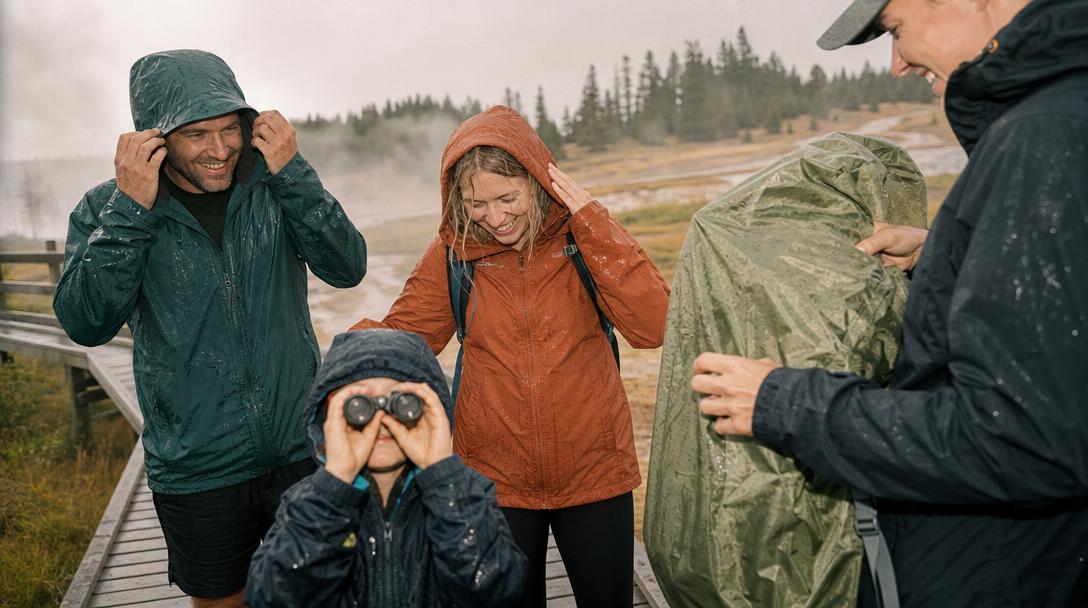
- Waterproof rain jacket with hood
- Rain pants, especially for hiking or shoulder season
- Warm beanie or knit hat
- Sun hat or baseball cap
- Lightweight gloves
- Wool or synthetic hiking socks
- Comfortable camp or lodge clothes
- Sleepwear suitable for cool nights
- Swimsuit if your lodging has a pool or hot tub
Footwear
- Broken-in hiking shoes or hiking boots
- Casual shoes for driving, boardwalks, or lodging
- Camp sandals or slip-ons
- Extra socks for wet or sweaty days
Day Hiking Gear
- Small daypack
- Reusable water bottles or hydration bladder
- Trail snacks
- Bear spray and holster
- Sunscreen
- SPF lip balm
- Sunglasses
- Bug spray
- Small first aid kit with blister care
- Map or offline park app
- Power bank
- Headlamp or small flashlight
- Binoculars
- Camera or phone with extra storage
Car, RV, or Family Extras
- Cooler
- Picnic blanket
- Wet wipes
- Trash bags
- Extra layers kept in the car
- Motion sickness supplies for winding roads
- Kid snacks — more than you think
- Laundry bag for dusty or muddy clothes
What to Pack for Yellowstone
Pack for Yellowstone like you are preparing for three mini-seasons in one day. Even in July and August, mornings and evenings can be chilly, afternoon thunderstorms are common, and higher elevations can feel much cooler than nearby towns.
A smart Yellowstone packing strategy includes:
- A moisture-wicking base layer
- A warm insulating layer
- A waterproof outer layer
- Comfortable hiking footwear
- Sun and wildlife safety essentials
The National Park Service and Yellowstone-area outfitters consistently recommend dressing in layers, carrying rain protection, wearing sturdy footwear, and bringing bear spray when hiking in bear habitat.
Your goal is flexibility. You want to peel off a layer when the sun pops out near Old Faithful, then add it back when wind rolls across Hayden Valley or a storm sneaks in halfway through a hike.
What Clothes Should I Wear in Yellowstone?
If you are wondering what clothes should I wear in Yellowstone, the short answer is: comfortable, layered, quick-drying clothing that can handle sun, wind, rain, and temperature swings.
The longer answer? Skip the cute-but-useless outfit planning and build around function first. Yellowstone is full of boardwalks, overlooks, trails, picnic areas, geyser basins, muddy pullouts, and wildlife-watching stops. You will likely get in and out of the car often, walk more than expected, and deal with changing weather throughout the day.
Yellowstone Clothing Essentials
Your Yellowstone clothing essentials should include:
- Quick-dry shirts: Synthetic or merino wool shirts are ideal because they wick sweat and dry faster than cotton. If you want the fabric science before you shop, this guide to what moisture-wicking fabric does explains why it matters on changing-weather hikes.
- Long-sleeve sun shirts: Great for sun protection, bug protection, and cool mornings.
- Hiking pants or leggings: Choose breathable, stretchy fabrics that dry quickly.
- Fleece or wool layer: This is your comfort layer for chilly mornings and evenings.
- Light insulated jacket: A packable puffy jacket is useful in spring, fall, and even summer nights.
- Waterproof shell: A rain jacket protects against storms, wind, and geyser-area spray.
- Warm hat and gloves: Small but mighty, especially in May, June, September, and October.
Cotton is fine for casual evenings at the cabin or campground, but it is not ideal for hiking. Once cotton gets wet from sweat or rain, it stays wet and can make you cold quickly.
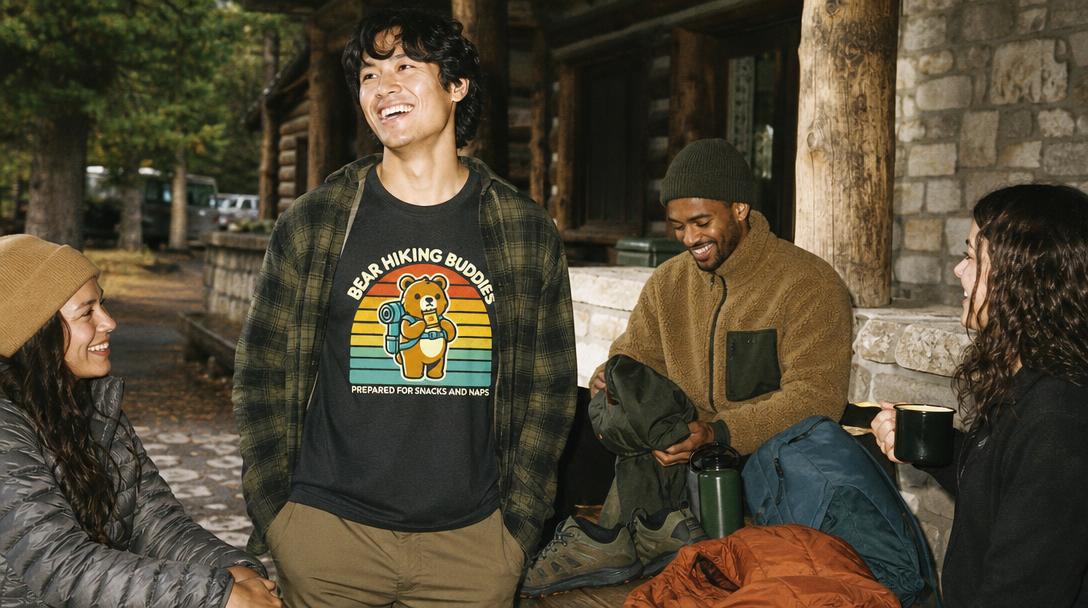
That said, a comfortable outdoor-themed tee is perfect for relaxed sightseeing days, campfire evenings, or road-tripping between geyser basins. A playful Bear Hiking Buddies shirt fits right in for lodge hangs, and an America's Best Idea National Park shirt is an easy casual pick for travel days. Yellowstone takes itself seriously enough — your shirt does not have to.
Layering Clothes for Yellowstone Weather
The key to layering clothes for Yellowstone weather is thinking in systems, not outfits.
Instead of packing one bulky jacket and hoping it works, pack several lighter layers you can combine depending on the day.
Layer 1: Base Layer
This is the layer closest to your skin.
Best options:
- Merino wool T-shirt
- Synthetic hiking shirt
- Lightweight thermal top for cold mornings
- Moisture-wicking underwear and sports bras
Avoid:
- Heavy cotton shirts for hiking
- Thick sweatshirts as your only layer
- Anything that takes forever to dry
Layer 2: Mid-Layer
This layer keeps you warm.
Best options:
- Fleece pullover
- Wool sweater
- Lightweight synthetic jacket
- Down or synthetic vest
A fleece is one of the most useful items you can pack for Yellowstone. It works for sunrise wildlife watching, cool picnic stops, and evenings around camp.
Layer 3: Insulating Jacket
This is your extra warmth layer.
Best options:
- Packable down jacket
- Synthetic puffy jacket
- Light insulated hoodie
In summer, you may only need this early or late in the day. In spring and fall, it can become your daily best friend.
Layer 4: Rain and Wind Shell
This is your weather armor.
Best options:
- Waterproof rain jacket with hood
- Waterproof rain pants
- Windproof outer shell
Yellowstone's open valleys and higher elevations can get breezy, and afternoon thunderstorms are common in summer. A shell blocks both wind and rain, making it far more useful than a regular hoodie.
What Clothes to Pack for Yellowstone by Season
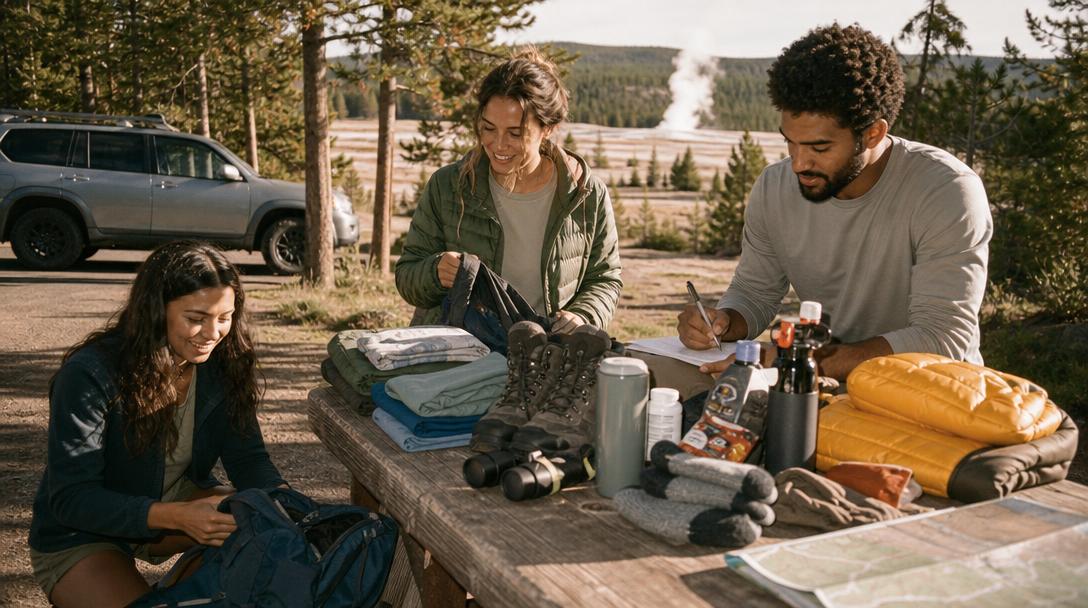
Yellowstone packing changes depending on the month, but layers matter year-round.
Spring: April, May, and Early June
Spring in Yellowstone can still feel like winter. Snow, mud, closed roads, cold mornings, and unpredictable weather are all possible.
Pack:
- Long-sleeve base layers
- Fleece or wool mid-layer
- Insulated jacket
- Waterproof rain jacket
- Rain pants
- Warm hat
- Gloves
- Waterproof hiking boots
- Wool socks
Spring is not the time to gamble on just a hoodie. Bring real warmth.
Summer: Late June, July, and August
Summer is the most popular time to visit Yellowstone, but that does not mean it is always hot. Days can be warm, but mornings and evenings are often cool, and storms can roll through quickly.
Pack:
- Short-sleeve moisture-wicking shirts
- Long-sleeve sun shirts
- Lightweight hiking pants
- Shorts or zip-off pants
- Fleece jacket
- Packable rain jacket
- Sun hat
- Sunglasses
- Hiking shoes or trail runners
- Extra socks
If you are trying to decide what clothes to pack for Yellowstone in summer, think warm afternoons, cool mornings, and surprise rain.
Fall: September and October
Fall is stunning in Yellowstone, with golden grasses, active wildlife, and fewer crowds — but temperatures drop fast.
Pack:
- Thermal base layers
- Hiking pants
- Fleece or wool sweater
- Puffy jacket
- Rain jacket
- Warm hat and gloves
- Wool socks
- Waterproof boots
Fall visitors should be ready for frost, wind, rain, and even snow.
Winter: November Through March
Winter Yellowstone is magical, quiet, snowy, and very cold. This is serious cold-weather packing territory.
Pack:
- Heavyweight base layers
- Insulated pants or snow pants
- Thick fleece or wool mid-layers
- Winter parka
- Waterproof outer shell
- Insulated waterproof boots
- Warm gloves or mittens
- Glove liners
- Neck gaiter
- Wool socks
- Warm hat that covers your ears
If you are visiting by snowcoach, skiing, snowshoeing, or wildlife watching, warmth and wind protection are non-negotiable.
Do I Need a Rain Jacket for Yellowstone?
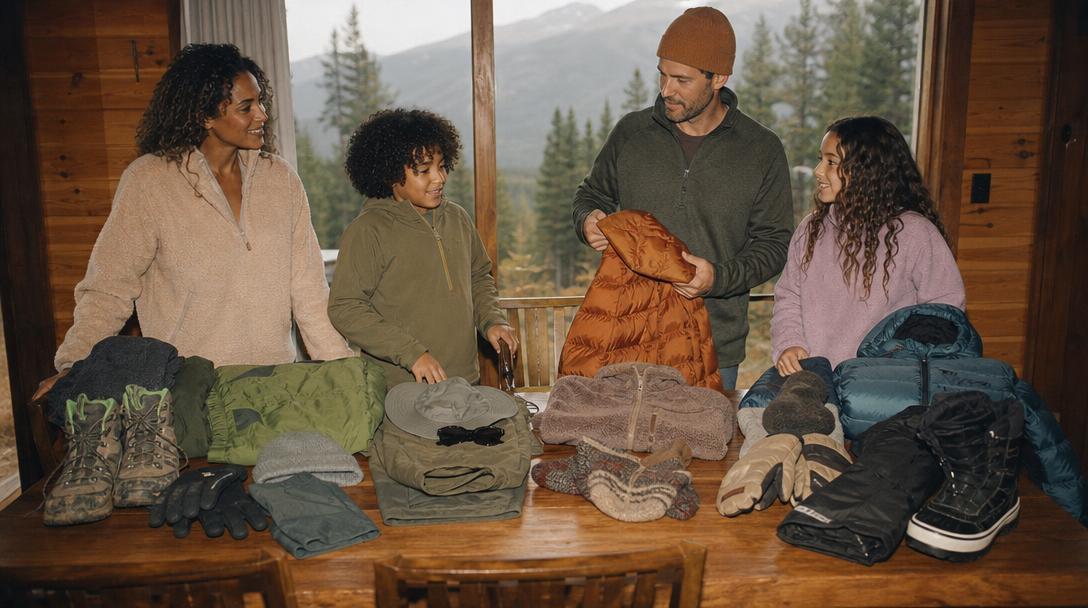
Yes, you absolutely need a rain jacket for Yellowstone.
Even if the forecast looks friendly. Even if you are visiting in summer. Even if someone in your group says they do not think you will need it. That person will be damp by 2 p.m.
Yellowstone commonly sees afternoon showers and thunderstorms in summer, and rain or snow can happen in spring and fall. A good rain jacket also acts as a windbreaker, which is helpful in open areas like Lamar Valley, Hayden Valley, and around Yellowstone Lake.
Best Rain Jacket for Yellowstone: What to Look For
The best rain jacket for Yellowstone is not necessarily the most expensive one. Look for these features:
- Waterproof, not just water-resistant: Water-resistant jackets are fine for a drizzle, but not sustained rain.
- Adjustable hood: Essential for keeping rain off your face and neck.
- Pit zips or ventilation: Helpful when hiking.
- Packable design: You will actually carry it if it fits easily in your daypack.
- Room for layers: Make sure it fits over a fleece or light puffy.
Budget Options
A basic waterproof rain shell works well for casual sightseeing, boardwalks, and short walks. Pair it with a fleece underneath for warmth.
Mid-Range Options
A breathable waterproof jacket with ventilation is better if you plan to hike, travel in shoulder season, or spend full days outside.
Premium Options
Higher-end rain jackets often offer better breathability, lighter weight, and improved durability. They are worth it if you hike often beyond this trip.
What About Ponchos?
Ponchos are cheap, lightweight, and better than nothing. They are useful for families or emergency car kits. But for hiking, a real rain jacket is usually better because it handles wind and movement more comfortably.
What Shoes Should I Wear for Hiking in Yellowstone?
If you are asking what shoes should I wear for hiking in Yellowstone, choose broken-in hiking shoes, trail runners, or hiking boots with good traction.
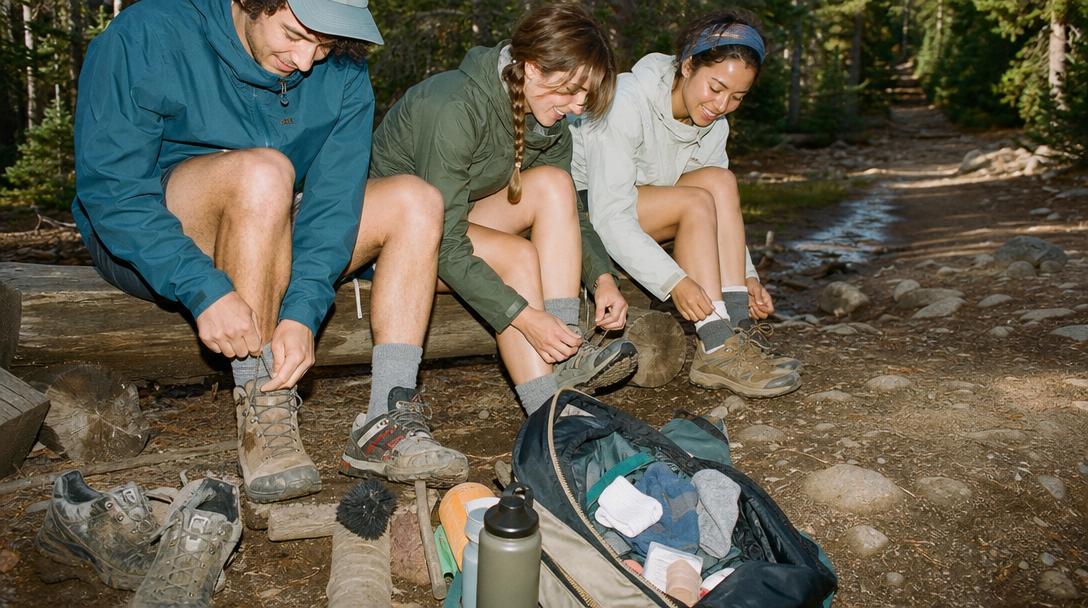
Yellowstone trails can be dusty, rocky, muddy, wet, or uneven. Boardwalks can also be slippery near thermal areas. Your footwear should be comfortable enough for all-day wear and sturdy enough for trails.
What Shoes to Wear in Yellowstone for Hiking
Good options include:
- Trail runners: Lightweight, breathable, and comfortable for many day hikes.
- Low hiking shoes: More supportive than sneakers but less bulky than boots.
- Mid-height hiking boots: Better ankle support and protection on rocky or muddy trails.
- Waterproof hiking boots: Helpful in spring, fall, or after rain.
If wet trails are likely, this honest guide to water resistant hiking shoes can help you understand what that label does — and does not — mean.
Avoid:
- Brand-new boots
- Flip-flops on trails
- Smooth-soled fashion sneakers
- Heavy mountaineering boots unless conditions require them
Hiking Boots vs. Trail Runners
Choose hiking boots if:
- You want ankle support
- You are hiking longer or rougher trails
- You are visiting in muddy, cold, or wet conditions
- You carry a heavier pack
Choose trail runners if:
- You prefer lightweight shoes
- You are mostly doing day hikes
- You are visiting in summer
- Your feet get hot easily
Most visitors doing a mix of boardwalks, overlooks, and moderate hikes will be happy with either trail runners or lightweight hiking shoes.
Do Not Forget Socks
Socks matter more than people think. Bring wool or synthetic hiking socks and avoid cotton socks for long walks. If you are blister-prone, pack blister bandages or consider liner socks.
What to Pack for Yellowstone if You Are Camping
Camping in Yellowstone means you will want extra warmth, even in summer. Nights can get cold, and campground comfort depends heavily on staying dry and layered.
Camping Clothing
Pack:
- Warm sleep layers
- Fleece pants or joggers
- Wool socks for sleeping
- Beanie for cold nights
- Camp sandals or slip-on shoes
- Extra dry shirt and socks
- Puffy jacket for mornings and evenings
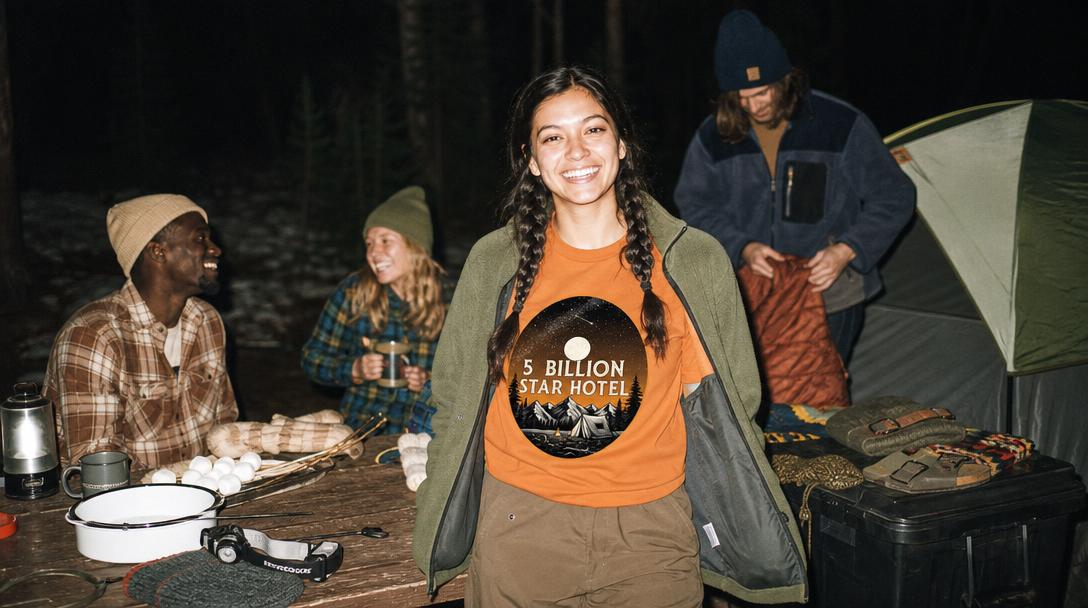
For downtime at camp, a soft cotton-blend graphic tee can be more comfortable than your trail layers. The 5 Billion Star Hotel shirt makes sense for campground evenings, starry-sky lounging, and post-hike marshmallow management.
Camp Comfort Extras
- Laundry bag for smoky or dirty clothes
- Quick-dry towel
- Shower shoes
- Extra blanket
- Headlamp
- Gloves for chilly mornings
If you are tent camping, avoid sleeping in the clothes you hiked in. Sweat makes clothing damp, and damp clothing makes sleeping colder.


