


Love Peace T Shirts Meaning Style and Trail Tips
You're standing in a park gift shop, still carrying a little trail dust on your shoes, when a love peace T-shirt catches your eye. Maybe the graphic is a bright sun, a heart, and the familiar peace symbol. Maybe it's quieter, with a small chest emblem that would look just as natural at a café as it would beside a campfire. Either way, you're wondering the practical questions: What does the design really say? Will the fabric feel good on a warm walk? Will the print survive the wash?
Love peace t shirts sit at an interesting meeting point between history, casual fashion, outdoor life, and thoughtful gifting. They can be festival shirts, park souvenirs, family-trip uniforms, or everyday layers. The right choice depends on more than whether the graphic looks cheerful on a product page.
This guide starts with the symbolism, then moves through modern design, fabric behavior, print durability, styling, gifting, sourcing, and care. By the end, you'll have a simple way to judge whether a tee belongs only in a festival photo or deserves regular rotation on the trail and around town.
Table of Contents
- Introduction to Love Peace Tees on and off the Trail
- What Love Peace Really Means on a T Shirt
- Design Trends That Make Love Peace Tees Wearable Today
- Fabric and Print Durability for Sunny Trails and Everyday Wear
- How to Style and Gift Love Peace T Shirts for Any Occasion
- Responsible Sourcing and Care That Keeps Your Tee Loved Longer
- Your Next Love Peace Tee Made Simple
Introduction to Love Peace Tees on and off the Trail
A love peace tee often earns attention before the wearer says a word. At a trailhead, it can signal an easygoing attitude. In a festival crowd, it may feel like a nod to counterculture history. In a gift shop, it offers a compact souvenir that says more than the name of a place.
That flexibility explains why the design keeps resurfacing. The shirt can carry a bold, colorful message, or it can use a small symbol and restrained lettering that works with jeans, hiking shorts, or a fleece. The meaning stays recognizable while the styling changes around it.
For a first-time hiker, the decision may be simple: choose something soft and comfortable for a sunny day. An experienced walker may look more closely at moisture management, breathability, UV coverage, and print care. A park collector may care about the design's connection to a place, while a gift buyer may be balancing size uncertainty with the recipient's personal style.
Trail-buddy rule: A shirt's message gets attention, but its fabric and care routine decide whether you'll reach for it again.
The useful way to evaluate love peace t shirts is to move in order. First, understand the symbol and the emotional tone of the graphic. Next, compare loud slogan designs with quieter, more versatile interpretations. Then check fabric performance and the way the print was made. Finally, match the shirt to an outfit, recipient, and care routine.
That approach keeps the choice grounded. You're not buying a rectangle of cotton with a cheerful graphic and hoping for the best. You're choosing a garment that should feel right, wear comfortably, keep its message legible, and fit naturally into life beyond the day you bought it.
What Love Peace Really Means on a T Shirt
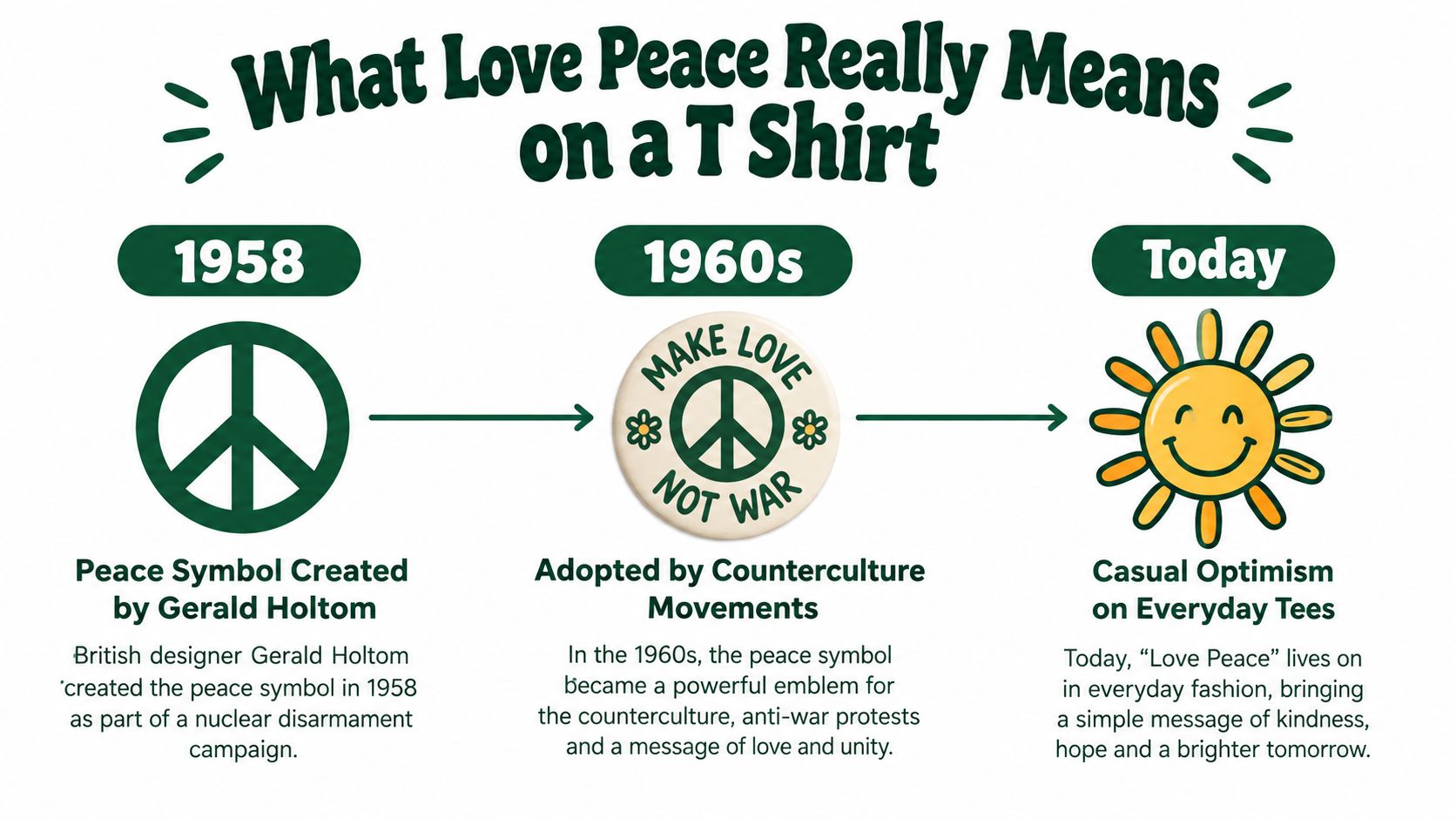
The peace symbol has a specific history, even though modern shirts often use it in relaxed, colorful ways. British designer Gerald Holtom created the symbol in 1958 for the Campaign for Nuclear Disarmament. It was first used at a London peace march, then adopted by anti-war protesters in the 1960s. By the Vietnam era, it had become a familiar graphic on clothing and merchandise, helping shape the counterculture look that still influences peace-themed apparel today, as documented by CNN's history of the peace symbol.
Think of the symbol as a small visual sentence. The circle gives it a clear boundary, while the internal lines make it recognizable at a glance. Add the word “love,” and the shirt shifts toward warmth and connection. Add “peace,” and it points toward harmony, nonviolence, or a hopeful social ideal. The final meaning depends on the combination.
Read the design in three layers
Start with the icon. A large central peace symbol feels like a statement. A small symbol near the chest feels more like a personal signal. Neither is automatically better. The question is whether you want the graphic to lead the outfit or support it.
Then look at the words. Heavy block lettering can feel direct and activist-inspired. Rounded type, handwritten lettering, and soft curves often make the message more playful. A shirt with only an icon leaves more room for interpretation, while a slogan tells the viewer exactly where to look.
Finally, notice color and placement. Saturated rainbow shades, warm sunset tones, and tie-dye effects create a nostalgic festival mood. Forest green, cream, faded blue, or a single dark print can make the same idea feel more current and easier to layer. Front-and-center artwork is expressive. A small chest print with a larger back graphic gives you two different moments, depending on whether someone is approaching or walking behind you.
The symbol's history matters because it adds depth to an otherwise simple garment. At the same time, wearing one today doesn't require a particular political identity or wardrobe. For many people, it's a friendly expression of optimism. For others, it's a connection to protest history. The design gives you room to decide how loudly you want that meaning to speak.
Design Trends That Make Love Peace Tees Wearable Today
A love peace T-shirt can look timeless or stuck in a costume box, and the difference usually comes down to scale, typography, color, and visual breathing room. A huge slogan surrounded by dense graphics creates a strong festival statement. A small heart, simple peace symbol, or nature-based illustration can travel more easily from trail to town.
Current graphic apparel coverage points toward minimalist graphics, niche humor, and sustainability-forward themes, while custom tees have been attracting stronger search interest during 2025 and 2026, according to Accio's T-shirt trend analysis. That doesn't make bold designs obsolete. It suggests that shoppers are increasingly asking whether a shirt can express an idea without taking over every outfit.
Match the graphic to how you'll wear it
A minimalist dresser may prefer a single-line heart and peace symbol on a neutral shirt. A festival shopper might want saturated color, oversized artwork, or lettering with a vintage poster feel. A gift buyer can split the difference with a nature-inspired graphic that carries the message but doesn't depend on a specific trend.
Nature imagery helps the design feel at home outdoors. A sun, mountain outline, wildflower, or bird can connect “peace” to the setting without turning the shirt into a billboard. For more ideas in that direction, browse nature graphic tees and compare how the imagery changes the shirt's everyday feel.
| Design Approach | Best For | Wearability | Style Longevity |
|---|---|---|---|
| Large slogan and peace symbol | Festivals and statement outfits | Eye-catching, less subtle | Strongly tied to its era or color treatment |
| Minimal heart and icon | Everyday wardrobes and simple layers | Easy with denim, shorts, and overshirts | Usually adaptable as trends shift |
| Nature-inspired peace graphic | Hikers, campers, and park visitors | Bridges outdoor and casual settings | Holds interest when the illustration stays clean |
| Light humor with love and peace language | Friends, gifts, and group trips | Relaxed and conversational | Depends on whether the joke feels specific or overworked |
A useful test is the three-outfit check. Before buying, picture the tee with hiking shorts, casual trousers, and an overshirt or fleece. If the design works in all three settings, you'll probably wear it more often. If it only makes sense with one pair of festival pants, that can still be a good purchase, but you'll know you're choosing a statement piece rather than a daily favorite.
Market estimates also show why this category has staying power. One independent estimate values the global graphic-designed T-shirt market at $10 billion in 2024, with a projection of $13 billion by 2029, while another estimates $2.506 billion in 2023 and projects $4.023 billion by 2030, as reported by Market Report Analytics. Those estimates use different market definitions, so they shouldn't be treated as one combined total. Together, they point to sustained demand for graphic clothing, including message-led designs.
Fabric and Print Durability for Sunny Trails and Everyday Wear
A graphic can be meaningful and still feel miserable in humid weather. Fabric choice controls how quickly sweat moves away, how the shirt hangs against your skin, and how comfortable it remains when a walk turns warmer than expected.
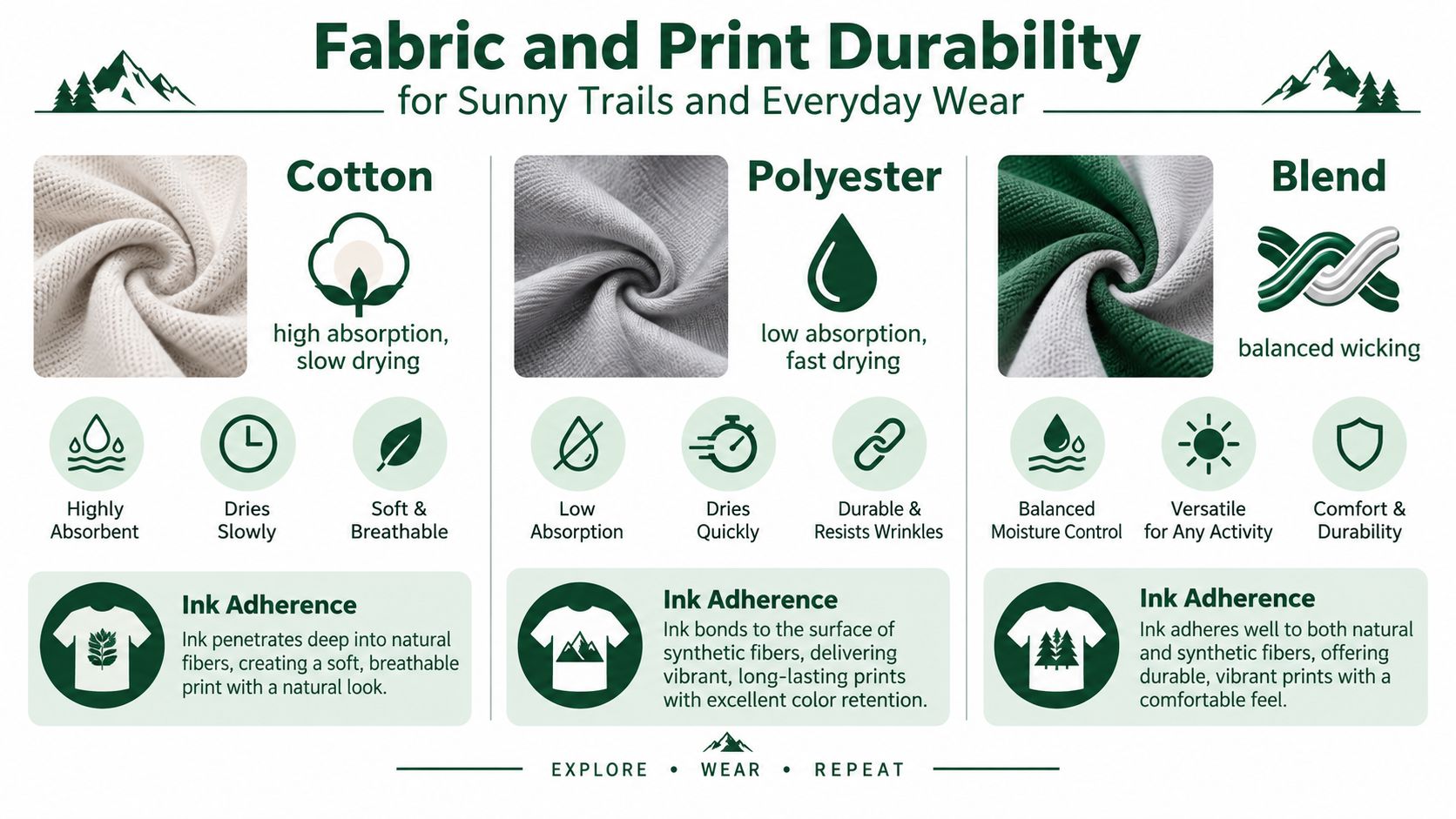
Cotton absorbs more moisture but dries more slowly. That often makes it pleasant for casual wear, especially when you're strolling through town or relaxing at camp. During a sweaty climb, though, damp cotton can feel clingy and heavy. Polyester absorbs less water, dries faster, and wicks moisture more effectively, which makes polyester or polyester-rich blends more useful for heat, humidity, and active movement. These differences are detailed in the independent textile comparison of cotton and polyester behavior.
Choose by activity, not by label alone
For a relaxed park visit, soft cotton may be exactly right. For a hot-weather hike, look for a lightweight shirt with a breathable weave, moisture-wicking construction, quick-dry behavior, and UV protection. An outdoor guide recommends UPF 30 to 50+ for sunny trails and notes that long sleeves, hoods, collars, and thumbholes can add useful coverage, as explained in HikeTee's hot-weather hiking shirt guide.
Blends can offer a middle path. They may combine some of cotton's familiar softness with better drying and wicking than a fully cotton tee. The exact result depends on the fiber mix, knit, weight, and finishing, so read the garment description rather than assuming every blend behaves identically.
Print quality has its own set of moving parts. Ink chemistry, pretreatment, curing, and fabric compatibility all influence whether a graphic remains crisp. Pretreatment prepares the surface, while curing uses controlled heat to help the ink bond properly. If either step is weak, the design may fade, crack, or lose sharp edges sooner than expected.
Independent textile studies offer a reassuring but practical lesson. One screen-printing study found no significant change in wash fastness across different mesh counts. Another cotton-printing study reported excellent color stability after 10 laundering cycles, with very small color differences of approximately ΔE 0.14 after one wash, 1.06 after five washes, and 1.36 after ten washes, as described in the textile printing study. The takeaway isn't that every printed tee will perform identically. It's that a suitable fabric and well-cured print can remain legible through repeated home laundering.
If you're ordering coordinated apparel for a gathering, a resource on branded shirts for events can help you think through fabric selection, artwork placement, and the practical demands of group wear. For an individual shirt, use the same questions: Where will you wear it, how much heat will it face, and does the print look bonded and intentional rather than thick, brittle, or poorly aligned?
For laundering details, keep a graphic tee washing guide nearby. A great print still benefits from a gentle routine.
How to Style and Gift Love Peace T Shirts for Any Occasion
The easiest styling formula starts with the shirt's visual volume. If the graphic is large or colorful, keep the rest of the outfit calm. If the print is small and simple, you can add a brighter layer, patterned socks, or a favorite cap without creating visual traffic.
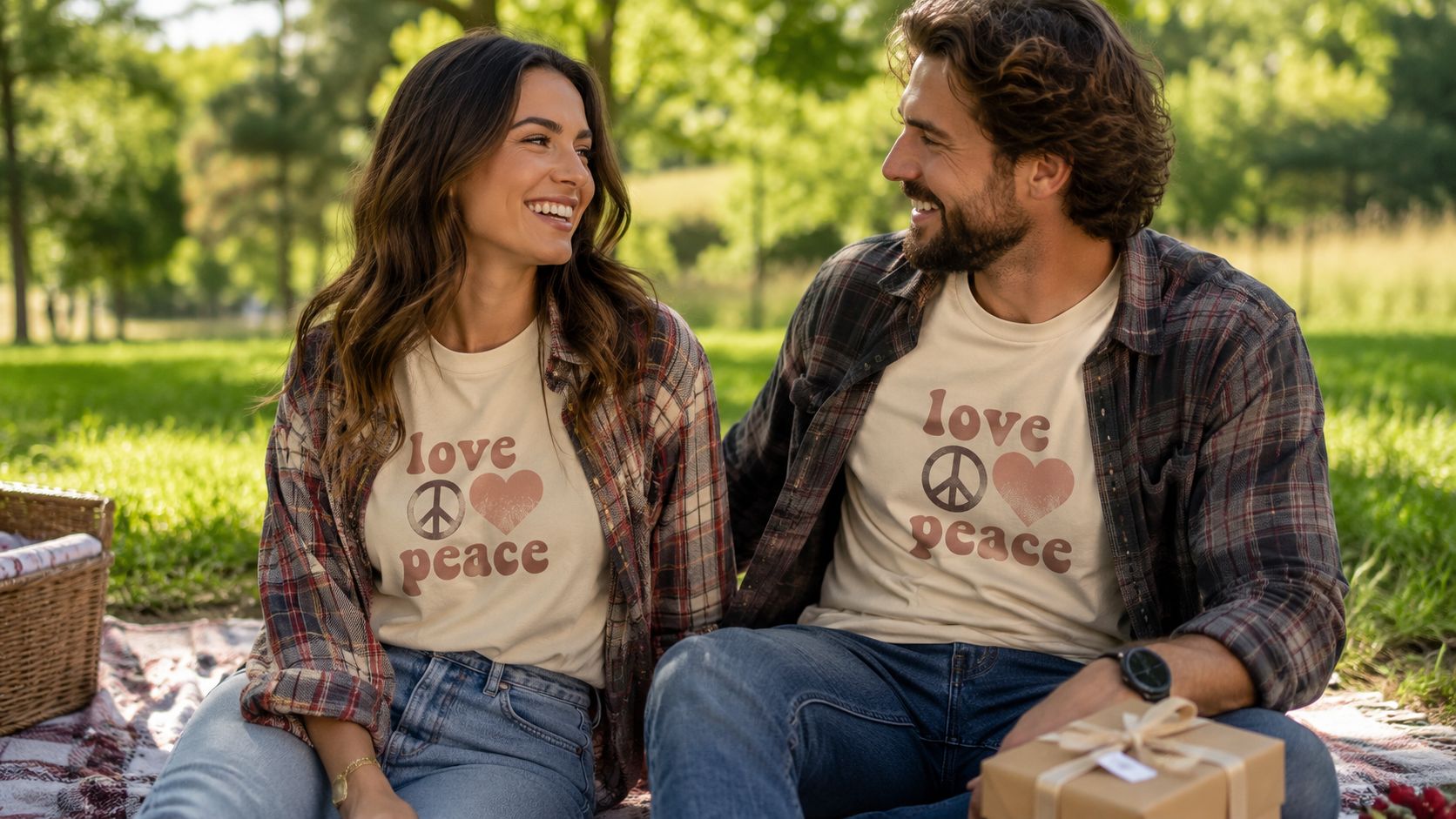
For a trail day, pair a breathable tee with hiking shorts or lightweight trousers, then carry a sun layer for exposed sections. A relaxed cotton love peace shirt suits a picnic, campsite, or town stop, while a quicker-drying blend is more sensible for a humid route. Neutral bottoms let a colorful peace graphic do its cheerful little job without competing for the microphone.
Make matching shirts feel coordinated
Matching doesn't have to mean identical. Friends can choose the same artwork in different shirt colors. Couples can wear related heart and peace designs. Families can use one shared theme, such as a park, animal, or nature motif, while letting each person choose a different fit.
A few details keep the result from looking overly staged:
- Use one shared visual idea: Repeat the symbol, color family, or phrase rather than every garment detail.
- Vary the silhouettes: A classic cut, relaxed fit, or women's style can make the group look coordinated without becoming a uniform.
- Keep the occasion in mind: A campsite photo allows more color and humor, while a casual group dinner may suit smaller graphics.
For gifting, start with the recipient's habits. A national park visitor may appreciate a park-related design. A camper may prefer a durable everyday tee. A wildlife lover might connect more with an animal graphic carrying a subtle peace message than with a large slogan.
Sizing is the tricky part, so check the recipient's preferred fit if you can. If that isn't possible, choose a style where a slightly relaxed fit still looks intentional. Fold the shirt with a handwritten note about the trip, park, or shared memory. For another category of thoughtful gift ideas, Smokey Rebel's guide to perfect presents for food lovers can help when your recipient enjoys camp cooking or good food as much as trail time.
Bundles can also make sense for a group. One consumer-behavior study found 75% of respondents reacted positively to bundle offers such as Buy 2 Get 1 Free, with shoppers aged 18 to 35 reporting stronger perceptions of value and savings, according to the cited bundle-offer study. Use bundles when everyone will wear the shirts, not just because the checkout page makes the pile look attractive.
The video below offers another visual reference for outdoor styling and shared wear.
Responsible Sourcing and Care That Keeps Your Tee Loved Longer
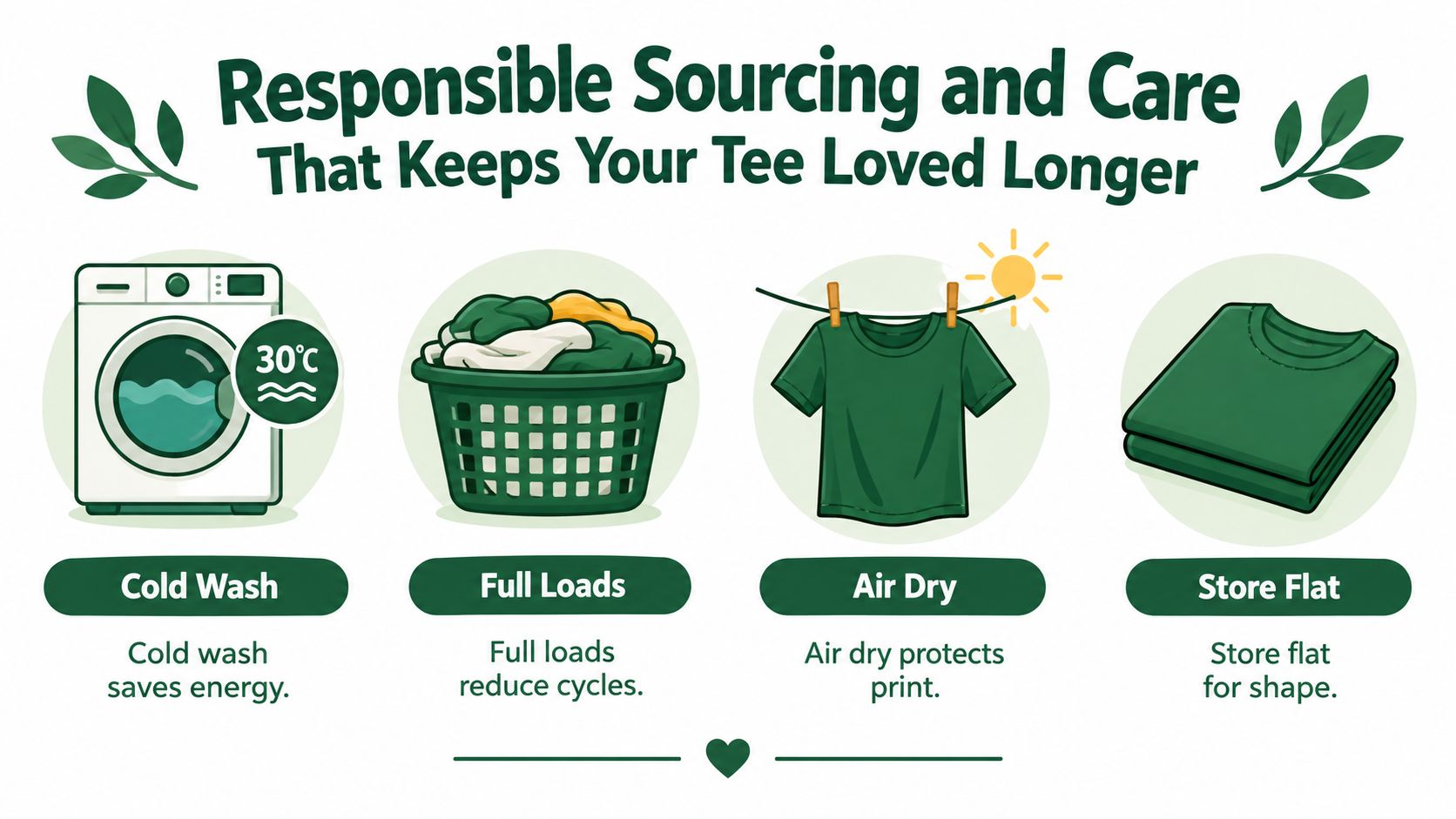
A peace message feels more convincing when the garment's aftercare reflects it. The consumer-use phase is one of the resource-intensive parts of a T-shirt's lifecycle, so what happens in your laundry room matters alongside fabric choice and sourcing. Independent lifecycle research highlights three practical levers: wash colder, wash full loads, and air-dry instead of tumble-drying, as discussed in the lifecycle and sustainability research.
Turn values into repeatable habits
Wash the shirt inside out to reduce direct friction on the graphic. Use a colder cycle, wait until you have a full load, and skip high heat when air-drying is practical. A hanger or drying rack also avoids the extra stress that a hot tumble cycle can place on print and fabric.
Wear-longer principle: The most responsible shirt is often the one you keep comfortable, recognizable, and in regular use for a long time.
Storage helps, too. Fold heavier printed tees rather than leaving them stretched on a hanger for extended periods. Keep them dry and away from rough hardware that can snag the surface. If a design begins to look tired, gentle washing and lower heat are better first responses than aggressive scrubbing.
Sustainability claims deserve the same attention as print claims. A simple “eco” graphic or love-and-peace slogan communicates an appealing value, but it doesn't prove how the shirt was made. Look for concrete information about materials, production, care, and any giveback program. Sustainability research also indicates that consumers may respond more strongly to graphic environmental labels than to percentage-based sustainability labels, which makes clear supporting detail especially useful when a brand wants its message to be verifiable.
A conservation contribution is easier to understand when the brand names both the amount and the beneficiary. HikeTee's HIGH 5 with Nature initiative states that 5% of proceeds go to organizations protecting public lands, national parks, and wild places. That kind of precise description gives shoppers something more useful than a vague promise.
For print-specific instructions, consult a guide on how to machine wash DTF prints safely, especially if you're unsure whether a design uses direct-to-film transfer. HikeTee also presents its outdoor apparel and conservation approach through Gear for Good. The larger lesson is simple: responsible buying isn't finished at checkout. It continues every time you wash, dry, fold, and wear the shirt again.
Your Next Love Peace Tee Made Simple
Choosing among love peace t shirts gets easier when you reduce the decision to a few honest questions.
- Meaning: Do you want a historically recognizable peace symbol, a warm love message, or a quieter combination of both?
- Design: Will the graphic work with at least a few outfits, or is it intentionally a bold festival piece?
- Fabric: Are you buying for relaxed comfort, humid activity, or sunny trail coverage?
- Print: Does the product information suggest proper pretreatment and curing, and does the artwork look clean?
- Fit: Would you rather layer a relaxed tee or wear a closer, lighter style during movement?
- Care: Can you wash it cold, run full loads, and air-dry it often enough to protect both the print and its wider footprint?
- Use: Is it for a park visit, a gift, a group trip, or regular everyday wear?
The best choice isn't the shirt with the loudest message or the trendiest illustration. It's the one you'll wear comfortably and proudly, whether you're walking a ridge, sitting around camp, meeting friends, or grabbing coffee after a short local trail.
HikeTee offers outdoor-themed T-shirts featuring hiking, camping, wildlife, national parks, and nature-inspired designs, with bundle options and a conservation giveback connected to public lands. Visit HikeTee to find a love peace style that fits your wardrobe, your trail habits, and the values you want to carry with you.


