


Grand Canyon Hiking Guide for First-Timers | Hike Tee
Dominic PalmowskiGrand Canyon Hiking: What First-Time Visitors Need to Know
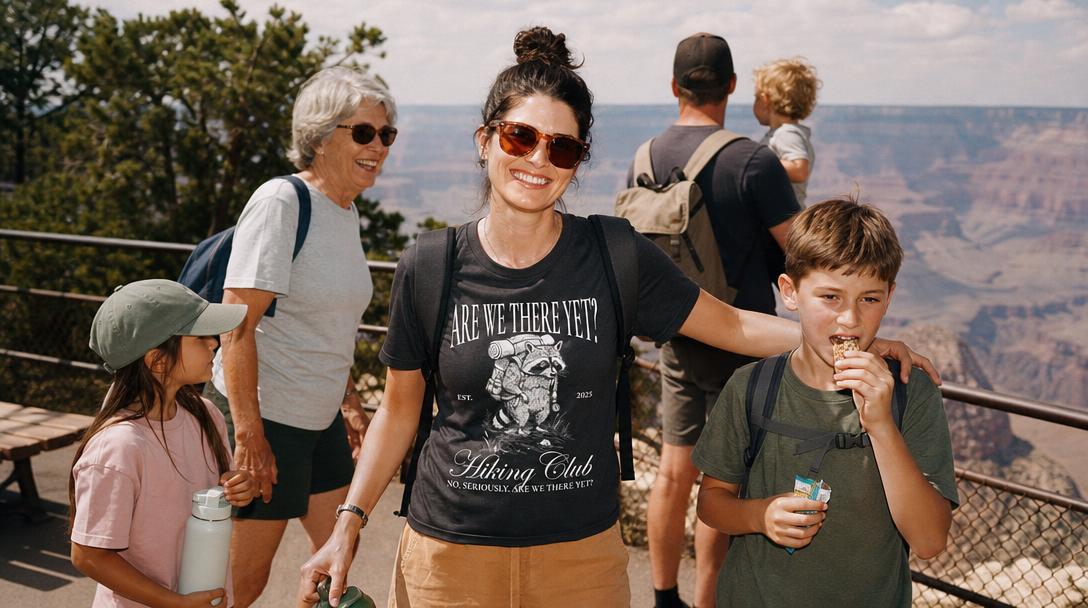
The Grand Canyon is not like hiking a typical mountain trail. Most hikes begin by descending into the canyon, which feels easy at first. Then you turn around and climb back out—often in hotter conditions, with tired legs, and a freshly earned respect for switchbacks.
According to the National Park Service, visitors should not attempt to hike from the rim to the river and back in one day, especially from May through September, when extreme heat can become life-threatening. The NPS also emphasizes staying on designated trails, never shortcutting switchbacks, and planning around water, heat, and turnaround times.
A few beginner-friendly rules will keep your day fun instead of “why did we do this?”:
- Start early, especially in spring, summer, and early fall.
- Pick a conservative turnaround point before you start.
- Expect the hike up to take about twice as long as the hike down.
- Carry water, electrolytes, salty snacks, and sun protection.
- Stay at least six feet from unprotected rim edges, per NPS safety guidance.
- Use the free South Rim shuttle system where available.
If you remember only one thing: hiking down is optional; hiking back up is mandatory.
Can Beginners Hike the Grand Canyon?
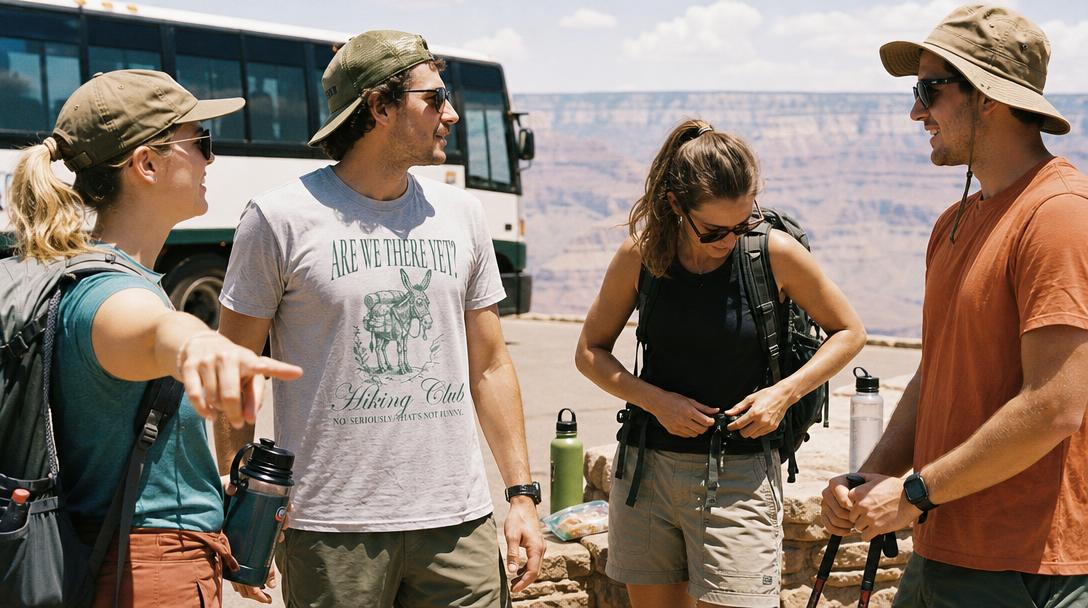
Yes—beginners can absolutely hike the Grand Canyon, as long as they choose the right route and avoid biting off a canyon-sized chunk.
For first-time visitors, the safest beginner options are usually:
- Rim Trail for easy views with minimal elevation change
- Bright Angel Trail to a short turnaround point
- South Kaibab Trail to Ooh Aah Point, if you’re comfortable with a steeper trail and no water access
The biggest beginner mistake is underestimating the climb back out. A one-mile descent into the canyon is not the same as a one-mile walk around your neighborhood. The elevation, sun exposure, dry air, and steep grades can sneak up on you faster than a squirrel near an unattended granola bar.
Best Grand Canyon Day Hike for Beginners
For most beginners, the best Grand Canyon day hike for beginners is either:
-
Rim Trail from Mather Point to Yavapai Point, or
2. Bright Angel Trail to the first tunnel or 1.5 Mile Resthouse, depending on fitness and weather.
If you want the easiest experience with huge views, choose the Rim Trail. If you want to step below the rim and feel like you’re truly “in” the canyon, choose a short section of Bright Angel.
South Kaibab to Ooh Aah Point is also spectacular, but it is steeper, more exposed, and has no water on trail, so it’s best for beginners who are prepared and starting early.
Grand Canyon Trails Compared: Rim Trail vs. Bright Angel vs. South Kaibab
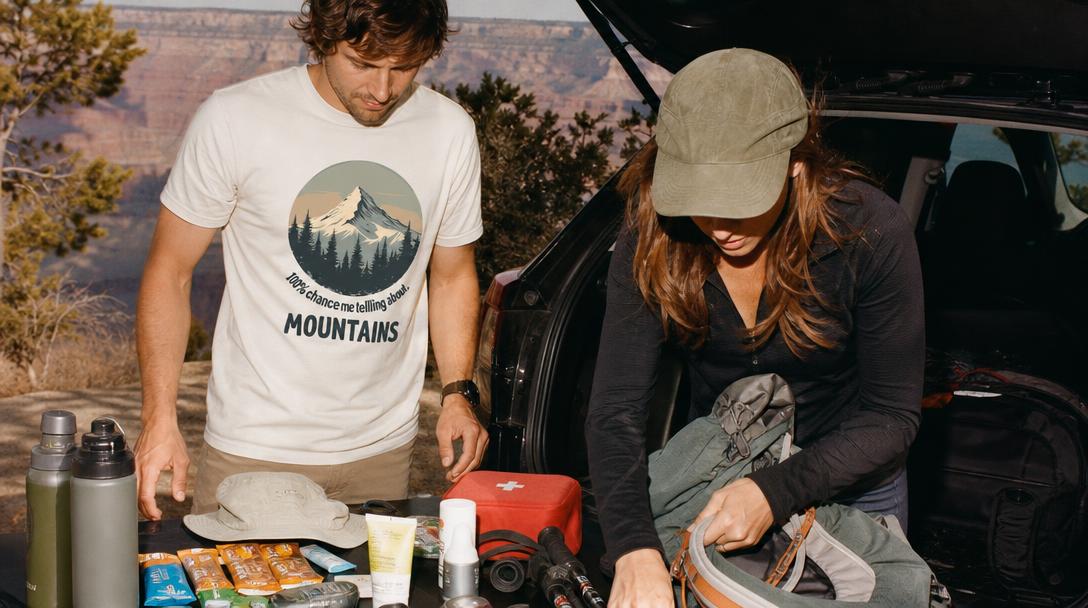
First-timers usually hear about three main South Rim routes: Rim Trail, Bright Angel Trail, and South Kaibab Trail. Each one delivers a very different experience.
Trail-Choice Matrix for First-Time Visitors
| Trail | Best For | Difficulty | Water Available? | Shade? | Beginner Recommendation |
|---|---|---|---|---|---|
| Rim Trail | Easy views, families, older visitors, low-fitness hikers | Easy to moderate | Yes, in developed areas | Some | Best overall beginner option |
| Bright Angel Trail | Classic below-rim experience | Moderate to strenuous | Seasonal at resthouses; check NPS status | Some | Great if you turn around early |
| South Kaibab Trail | Big views fast, sunrise hikes | Moderate to strenuous | No | Very little | Best for prepared beginners only |
Rim Trail: Best for Easy Grand Canyon Hikes from the South Rim
If you’re looking for easy Grand Canyon hikes from the South Rim, start with the Rim Trail.
The Rim Trail follows the canyon edge for roughly 13 miles from the South Kaibab Trailhead area to Hermits Rest, but you do not need to hike the whole thing. Many sections are paved or relatively flat, and the shuttle system makes it easy to walk a short segment and ride back.
Great beginner sections include:
- Mather Point to Yavapai Point
- Trail of Time near Grand Canyon Village
- Powell Point to Hopi Point
- Mohave Point to The Abyss for bigger views and fewer crowds
The Rim Trail is ideal for:
- Families with kids
- Older visitors
- Travelers with limited fitness
- Anyone short on time
- Sunset walkers
- First-time visitors adjusting to elevation
Just don’t let the “easy” label make you careless. The NPS advises staying on designated walkways and keeping at least six feet from unprotected edges. No photo is worth becoming a cautionary pamphlet.
Bright Angel Trail: The Classic First Below-Rim Hike
Bright Angel is one of the most popular Grand Canyon trails for a reason. It begins near Grand Canyon Village, has iconic switchbacks, and offers a true below-rim experience without requiring a huge commitment—if you turn around early.
Common beginner turnaround points include:
- First Tunnel: very short taste of the trail
- Second Tunnel: still short, but more immersive
- 1.5 Mile Resthouse: moderate effort, popular goal
- 3 Mile Resthouse: strenuous for many first-timers
The NPS notes that water availability on corridor trails can vary by season and maintenance, so always check current water status before hiking.
Bright Angel is often more forgiving than South Kaibab because it has some shade and seasonal water stops. But it’s still steep, hot, and demanding. Hiking to 1.5 Mile Resthouse means a 3-mile round trip with a meaningful climb back up. That may sound casual on paper. Your calves may submit a formal complaint.
South Kaibab Trail: Big Views, Big Effort
South Kaibab is famous for wide-open views. Unlike Bright Angel, which follows a side canyon for part of its descent, South Kaibab puts you right out on ridgelines with dramatic scenery almost immediately.
Popular day-hike turnaround points:
- Ooh Aah Point: about 1.8 miles round trip
- Cedar Ridge: about 3 miles round trip
- Skeleton Point: about 6 miles round trip and too ambitious for many first-timers
For beginners, Ooh Aah Point is the sweet spot. You get a real below-rim adventure and one of the most memorable viewpoints in the park without committing to an all-day sufferfest.
Important: there is no water on South Kaibab Trail, and there’s very little shade. Start early, bring more water than you think you need, and don’t push farther just because the views keep showing off.
What to Pack for a Grand Canyon Day Hike
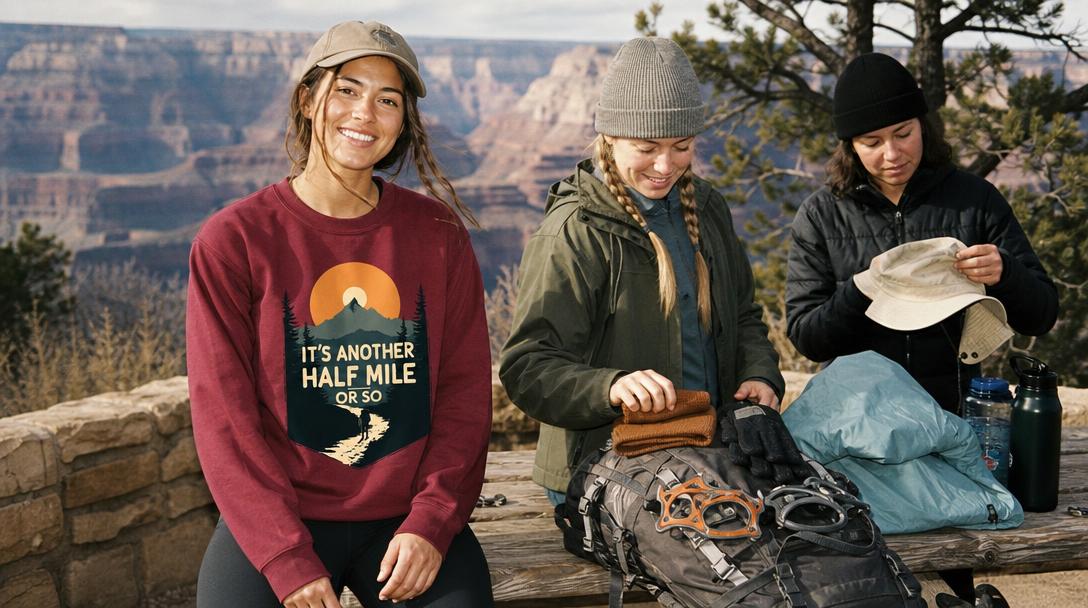
Knowing what to pack for a Grand Canyon day hike can make the difference between “best day ever” and “we made several preventable errors.” If you like checklist-style planning, this day hiking essentials guide is a helpful companion before you finalize your bag.
Essentials for Every Day Hike
Bring these even for shorter hikes:
- Water: more than you think you need
- Electrolytes: tablets, powder, or sports drink mix
- Salty snacks: pretzels, trail mix, jerky, nuts
- Sun hat
- Sunglasses
- Sunscreen
- Sturdy shoes with good traction
- Light layers
- Trail map or downloaded offline map
- Basic first aid kit
- Phone and backup battery
- ID, credit card, and park pass
- Headlamp, especially for sunrise or late-day hikes
The NPS recommends carrying plain water plus electrolyte replacement for summer hiking and avoiding hiking in direct sun during the hottest part of the day. Footwear also matters on steep, dusty corridor trails; for more detail, see this guide to choosing the best Grand Canyon hiking shoes.
Nice-to-Have Extras
These aren’t always mandatory, but they’re helpful:
- Trekking poles
- Cooling towel or bandana
- Lightweight rain jacket during monsoon season
- Small blister kit
- Sit pad
- Camera
- Binoculars
- Reusable snack bag
- Extra socks
Clothing Tips for Desert Hiking and Casual Park Days
Dress for sun, sweat, and temperature swings. The rim can be chilly in the morning, while the inner canyon may feel dramatically warmer.
Good choices include:
- Breathable hiking shirt or sun hoodie
- Lightweight travel pants or shorts
- Comfortable socks
- Brimmed hat
- Layer you can remove easily
For active hiking in heat, prioritize breathable, sun-protective layers. For relaxed park days, scenic drives, campsite coffee, and post-hike burrito missions, a soft outdoor-themed tee works perfectly. A casual graphic tee like the Adventure Awaits Shirt fits naturally into a Grand Canyon road-trip wardrobe, while the Are We There Yet Hiking Club Shirt is painfully accurate for anyone traveling with switchback-weary friends or kids.
Seasonal Grand Canyon Hiking Advice
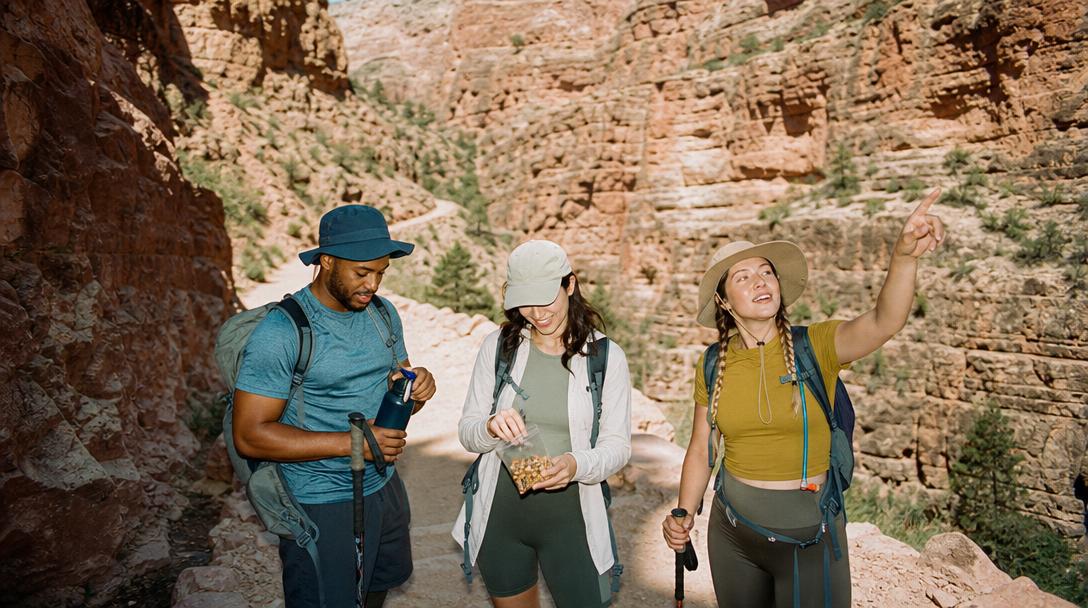
The best hike can change completely depending on the season.
Spring
Spring is one of the best times for Grand Canyon hikes. Temperatures are milder, but weather can vary wildly. Snow or ice may linger on upper trail sections early in the season, while lower canyon areas can already feel warm.
Bring traction if icy conditions are reported, and check current trail conditions.
Summer
Summer is serious desert hiking season. The inner canyon can be dangerously hot, and heat illness is one of the biggest risks for hikers.
Summer tips:
- Start before sunrise.
- Avoid hiking between 10 a.m. and 4 p.m.
- Choose short routes.
- Carry electrolytes.
- Wet your shirt or bandana to cool down.
- Turn around early.
For many first-timers, summer is better suited to Rim Trail walks, sunrise viewpoints, and very short below-rim hikes.
Fall
Fall is another excellent season. Temperatures cool, crowds thin somewhat, and longer day hikes become more realistic. Still, early fall can be hot below the rim, so don’t abandon your heat plan just because the calendar says pumpkin spice.
Winter
Winter can be beautiful and peaceful, but icy trails are common near the rim. Bright Angel and South Kaibab may require traction devices after snow or freeze-thaw conditions. For more cold-weather inspiration beyond the canyon, these fun things to do outside when it’s cold can help keep your winter adventure mood alive.
Winter hikers should bring:
- Microspikes or traction devices
- Warm layers
- Gloves and hat
- Extra daylight planning
- Conservative turnaround times
Road Trip and Van Life Packing Tips for Grand Canyon Visitors
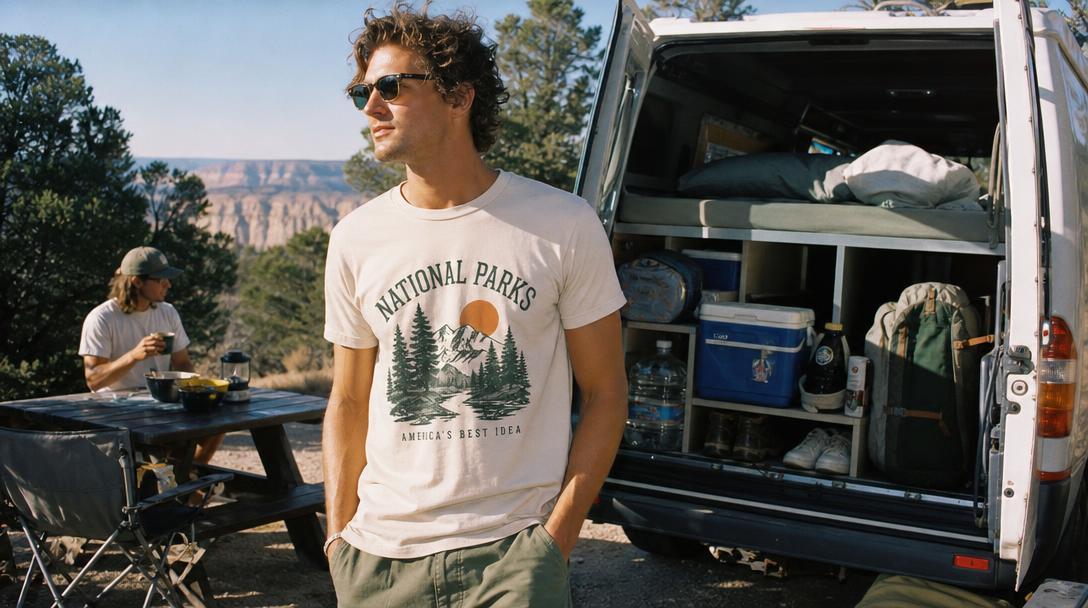
If the Grand Canyon is part of a larger Southwest road trip, your packing list needs to cover both hiking and long hours in the car. If you’re planning a wider park loop, this solo road trip national parks guide has extra planning tips for routes, safety, and flexible travel days.
Helpful road trip extras:
- Refillable water jug
- Cooler with salty snacks and fruit
- Extra sunscreen
- Lip balm with SPF
- Comfortable travel shirt
- Lightweight sweatshirt for sunrise and sunset
- Camp towel
- Wet wipes
- Trash bags
- Portable phone charger
- Sandals or camp shoes for after hiking
- Printed reservation details if cell service gets spotty
Grand Canyon mornings can be cold, afternoons can be hot, and restaurants can be crowded. Keep a “grab-and-go hike bag” ready so you’re not digging through the trunk at 5:12 a.m. while everyone silently questions your leadership. For casual viewpoint stops or campsite lounging, the America’s Best Idea National Park Shirt is an easy national-park-themed layer to toss in the duffel.
Related read: Camping with Kids: Family Guide | Hike Tee


