


Sustainable Outdoor Clothing Guide | Hike Tee
Dominic PalmowskiSustainable outdoor clothing sounds simple until you’re staring at 47 tabs wondering whether recycled polyester is better than merino wool, if sustainable hiking apparel actually performs, and why every eco-friendly hiking apparel product suddenly has a chemistry degree.
Here’s the trail-tested truth: the most sustainable hiking clothes are the ones that perform well, last a long time, fit your actual adventures, and come from brands that back up their claims. A hemp camp shirt that sits in your drawer is less “green” than a recycled hiking layer you wear for five years. A PFAS-free hiking jacket that keeps you dry on a soggy national park trip? That’s the good stuff.
Eco-friendly hiking apparel has come a long way. You can now find recycled hiking clothes, organic outdoor clothing, wool base layers, hemp tees, PFAS-free rain shells, and recycled polyester hiking pants that don’t feel like you’re wearing a crinkly grocery bag. But the marketing can get muddy fast, so let’s sort the real trail snacks from the granola dust.
What Makes Sustainable Outdoor Clothing Actually Sustainable?
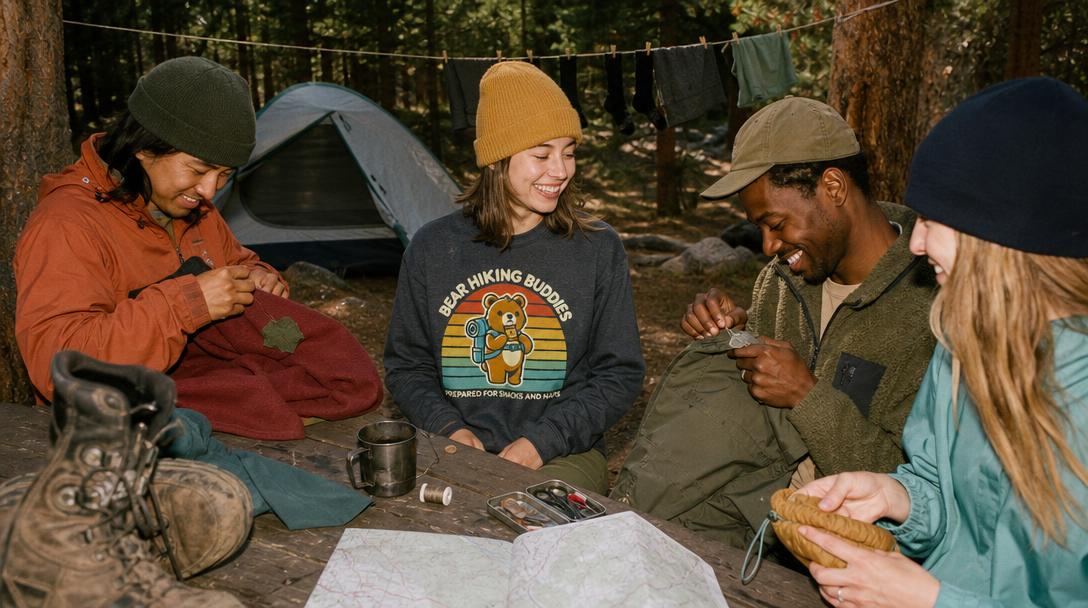
Sustainable outdoor clothing isn’t just about using one “good” fabric. It’s a mix of materials, manufacturing, durability, repairability, labor practices, chemical safety, and end-of-life impact.
A truly better hiking garment usually checks several of these boxes:
- Made with recycled, organic, renewable, or responsibly sourced materials
- Uses safer chemistry, especially in waterproof gear
- Built to last through real hiking, camping, washing, sweating, and snack-spilling
- Made by a brand with transparent sourcing and labor standards
- Certified by credible third parties
- Repairable, resellable, recyclable, or at least durable enough to avoid fast-fashion turnover
According to the United Nations Environment Programme, the fashion industry is responsible for significant environmental impacts, including greenhouse gas emissions, water use, and waste. Outdoor clothing has its own challenge: it often needs technical performance, which can mean synthetics, chemical finishes, waterproof membranes, and complex blended fabrics.
That doesn’t mean you have to hike in a burlap sack and call it “minimalist.” It means buying smarter.
Best Eco-Friendly Hiking Apparel by Category
Hiking Shirts, Organic Outdoor Clothing, and Trail Tees
For warm-weather hikes, camping weekends, road trips, and national park wandering, your shirt should breathe, feel good, and survive repeated washing.
Best materials:
- Merino wool: Great odor control, temperature regulation, and multi-day wear
- Hemp blends: Durable, breathable, and lower-input than conventional cotton
- Organic cotton: Comfortable for casual hikes, camping, and dry climates
- Recycled polyester: Quick-drying and lightweight, but can hold odor
- TENCEL/Lyocell: Soft, breathable, often made from wood pulp in closed-loop systems
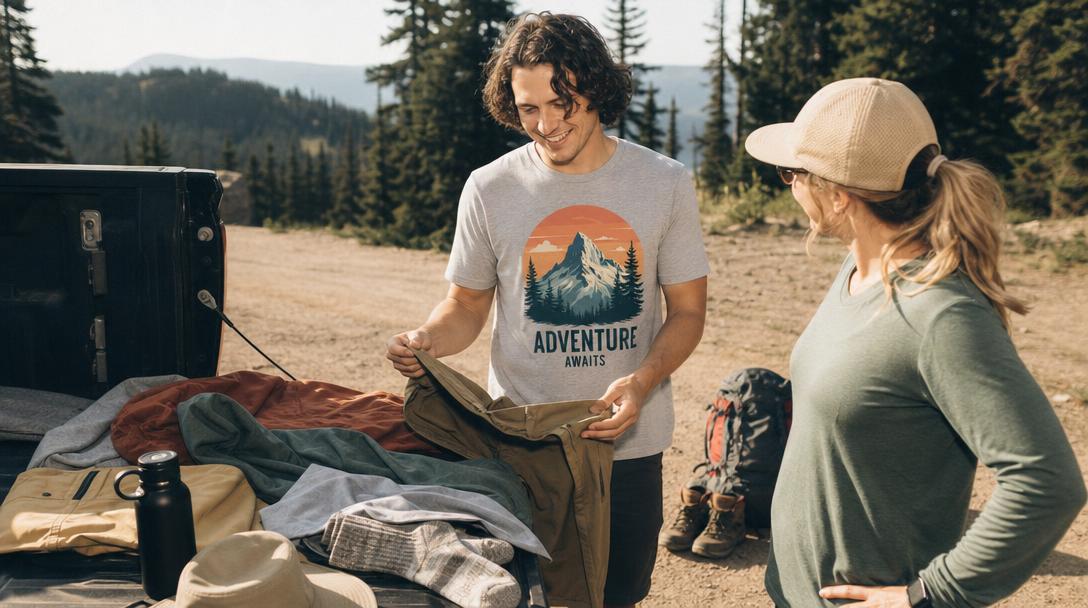
Organic outdoor clothing is especially nice for casual trail days, campground lounging, and travel outfits. Just remember: cotton, even organic cotton, dries slowly. For sweaty climbs, cold weather, or wet hikes, merino or recycled synthetics usually perform better. If you want a soft casual layer for campground coffee or post-hike errands, Hike Tee’s Adventure Awaits hiking shirt fits the trail-to-town graphic tee lane without pretending to be technical gear.
Best for: day hikes, camping, van life, desert trips, family hikes, casual national park outfits.
For a deeper look at trail shirt materials and sleeve choices, see our guide to hiking shirts for different trail conditions.
Base Layers
Base layers sit against your skin, so comfort and moisture management matter. This is where natural fibers like merino wool shine.
Material ranking for base layers:
- Merino wool — best odor control and temperature regulation
- Recycled polyester — best quick-dry performance and affordability
- TENCEL blends — soft and breathable, good for low-output activities
- Organic cotton — comfy, but not ideal for cold or wet hiking
If you’re building a small but mighty hiking wardrobe, start with one quality base layer you can wear across seasons. Bonus points if it makes you feel less like a sweaty raccoon after mile six.
Recycled Polyester Hiking Pants and Shorts
Recycled polyester hiking pants and recycled nylon pants are popular because they’re tough, stretchy, and quick-drying. For most hikers, this is one category where recycled synthetics make practical sense.
Look for:
- Recycled nylon or recycled polyester content
- Durable water repellent finish that is PFAS-free or PFC-free
- Reinforced knees or seat if you scramble, kneel, or sit on rocks like a lizard
- Stretch for climbing steps, logs, and suspiciously steep “moderate” trails
- Adjustable waist or inclusive sizing
Recycled hiking clothes aren’t perfect — synthetics can shed microfibers — but choosing recycled content reduces demand for virgin petroleum-based fibers. Washing less often, using a microfiber-catching laundry bag, and buying durable pieces also helps.
Fleece and Midlayers
Fleece is cozy, lightweight, and practical, but most fleece is polyester. The better option is often recycled polyester fleece, ideally from a brand that designs for durability.
Best choices:
- Recycled polyester fleece
- Wool or wool-blend sweaters
- Repairable midlayers with strong stitching
- Grid fleece for high-output hiking because it breathes better
If you mostly camp, road trip, or sit around the fire pit pretending you helped set up the tent, recycled fleece is a solid pick. For multi-day hiking where odor matters, wool blends may be better. To keep fleece and sweatshirts lasting longer, read our tips on removing fuzz balls from clothes without ruining them.
PFAS-Free Hiking Jacket and Rain Shells
Rain gear is where sustainability gets spicy. Waterproof clothing has historically used PFAS chemicals — also called “forever chemicals” — in durable water repellent finishes. Many outdoor brands are now shifting toward PFAS-free or PFC-free alternatives.
A good PFAS-free hiking jacket should include:
- PFAS-free or PFC-free DWR
- Recycled nylon or recycled polyester face fabric, if possible
- Repair-friendly construction
- Pit zips or ventilation
- A waterproof rating suited to your climate
For occasional hikers, a simple PFAS-free rain shell may be enough. For backpackers, stormy national park trips, or Pacific Northwest adventures, prioritize weather protection and durability first. A jacket that fails in one season is not sustainable — it’s just landfill with zippers.
Sustainable Hiking Clothes for Women: Fit Matters More Than Marketing
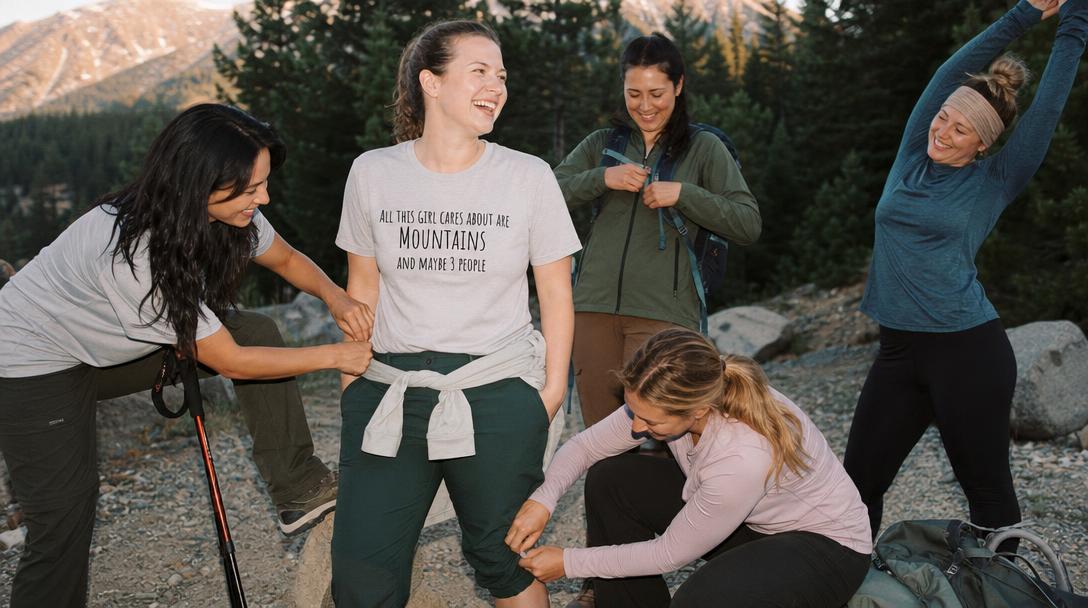
Sustainable hiking clothes for women should not just mean “same pants, smaller waist, pink zipper.” Fit affects comfort, safety, and whether you’ll actually wear the item.
When shopping, check for:
- Curved, straight, petite, tall, and plus sizing options
- Adjustable waistbands
- Thigh room for steep climbs
- Sports bras or base layers made with breathable, lower-impact materials
- Inseam options for hiking pants
- Reviews from people with similar body types
A sustainable garment only works if it fits your body and your life. If you spend half the hike yanking up your waistband, that’s not a hike — that’s a fabric negotiation. For more fit-focused brand ideas, compare options in our guide to women’s outdoor apparel brands worth knowing.
Materials Compared: Performance vs. Sustainability
| Material | Best For | Strengths | Watch Outs |
|---|---|---|---|
| Recycled polyester | Shirts, fleece, pants | Quick-drying, affordable, durable | Odor retention, microfiber shedding |
| Recycled nylon | Pants, jackets, shorts | Strong, abrasion-resistant, lighter impact than virgin nylon | Still synthetic, not biodegradable |
| Merino wool | Base layers, socks, tees | Odor control, temperature regulation, multi-day wear | Can be pricey, check animal welfare certifications |
| Organic cotton | Casual shirts, camp wear | Soft, lower pesticide use than conventional cotton | Slow drying, not ideal for wet/cold hikes |
| Hemp | Shirts, pants, casual layers | Durable, breathable, lower-input crop | Can feel stiff unless blended |
| TENCEL/Lyocell | Shirts, underwear, soft layers | Breathable, smooth, often lower-impact processing | Less rugged than nylon/polyester |
| Alpaca | Sweaters, socks, layers | Warm, odor-resistant, soft | Cost, sourcing transparency varies |
Certifications can help. Look for GOTS for organic textiles, bluesign for safer chemical and production standards, Fair Trade Certified for worker-focused standards, Responsible Wool Standard for wool, and B Corp for broader company accountability.
How to Verify Sustainability Claims Before You Buy
Greenwashing is everywhere. If a product page says “earth-conscious adventure fabric” and nothing else, your skepticism should lace up its boots.
Use this checklist before buying sustainable hiking apparel:
- Does the brand list exact fiber percentages? “Made with recycled materials” is vague. “87% recycled polyester, 13% spandex” is better.
- Are certifications named clearly? Look for GOTS, bluesign, Fair Trade Certified, OEKO-TEX, RWS, or B Corp.
- Is the waterproofing PFAS-free? For jackets and pants, search the product page for “PFAS-free,” “PFC-free,” or “non-fluorinated DWR.”
- Does the company discuss repair or resale? Repair programs, replacement parts, used gear shops, and take-back programs are strong signals.
- Are labor practices addressed? Sustainable clothing should consider people, not just plants.
- Does the item match your actual use? Don’t buy a mountaineering shell for dog walks unless your dog is secretly training for Denali.
- Do reviews mention durability? A garment that pills, rips, or loses waterproofing quickly is rarely the greener choice.
What Is the Most Sustainable Clothing Brand?
There isn’t one single “most sustainable clothing brand” for everyone, because sustainability depends on the product category, materials, labor standards, durability, repair options, and your personal use.
That said, several outdoor and activewear brands are commonly recognized for stronger sustainability efforts:
- Patagonia — known for recycled materials, repair programs, used gear resale, activism, and transparency
- prAna — uses organic cotton, hemp, recycled fibers, and Fair Trade Certified products
- VAUDE — strong European sustainability reputation, climate and material initiatives
- Icebreaker — focuses heavily on merino wool and natural fiber performance
- Cotopaxi — uses repurposed and recycled materials in many products and emphasizes social impact
- Tentree — focuses on lower-impact materials and tree planting, good for casual outdoor clothing
- Outerknown — sustainability-focused casual and outdoor-adjacent clothing
For rugged technical gear, Patagonia and VAUDE are often strong places to start. For organic outdoor clothing and trail-to-town style, prAna, Tentree, and Outerknown may fit better. For odor-resistant natural performance, Icebreaker or other merino-focused brands are worth comparing.
What’s Like Shein But Ethical?
If you like Shein because it’s affordable, trend-driven, and easy to shop, the most ethical alternative is not a one-to-one replacement — because ultra-fast fashion is part of the problem.
Better options include:
- ThredUp for secondhand clothing online
- Poshmark for used outdoor and activewear brands
- REI Re/Supply for used outdoor gear and apparel
- Patagonia Worn Wear for secondhand Patagonia items
- Tentree for casual basics with lower-impact materials
- Pact for organic cotton basics
- Girlfriend Collective for activewear made with recycled materials
The closest “ethical Shein” approach is buying secondhand first, then filling gaps with durable basics from transparent brands. It may not deliver 12 new outfits for the price of a pizza, but it also won’t make your closet feel like a raccoon broke into a textile factory.
Is Lululemon Ethical?
Lululemon has made some sustainability commitments, including goals related to preferred materials, circularity, and reducing environmental impact. However, whether Lululemon is “ethical” depends on what standard you’re using.
If you’re comparing it to ultra-fast fashion, Lululemon generally offers longer-lasting products and more transparency. If you’re comparing it to leading sustainability-focused outdoor brands, shoppers may want to look closely at material choices, supply chain reporting, labor policies, and product-specific details.
For hiking, Lululemon can work well for leggings, sports bras, and active layers, especially if you already own them. The most sustainable option is often wearing what’s already in your closet. But if you’re buying new specifically for eco-friendly hiking apparel, compare Lululemon product pages against brands that clearly list recycled content, certifications, repair options, and PFAS-free finishes.
Where to Buy Sustainable Hiking Clothes Online
If you’re wondering where to buy sustainable hiking clothes, start with retailers and brand sites that give you enough product detail to compare materials and certifications.
Good online places to shop include:
- REI — useful filters, outdoor-specific reviews, and used gear through REI Re/Supply
- Patagonia and Worn Wear — new and used sustainable outdoor clothing options
- prAna — hiking pants, casual layers, organic cotton, hemp, and recycled materials
- Backcountry — wide selection, but verify sustainability claims product by product
- Moosejaw — outdoor brands with frequent sales
- Tentree — casual eco-conscious basics
- Icebreaker — merino wool base layers and hiking apparel
- Cotopaxi — colorful recycled and repurposed outdoor gear
- ThredUp, eBay, and Poshmark — secondhand outdoor apparel if you know your sizes
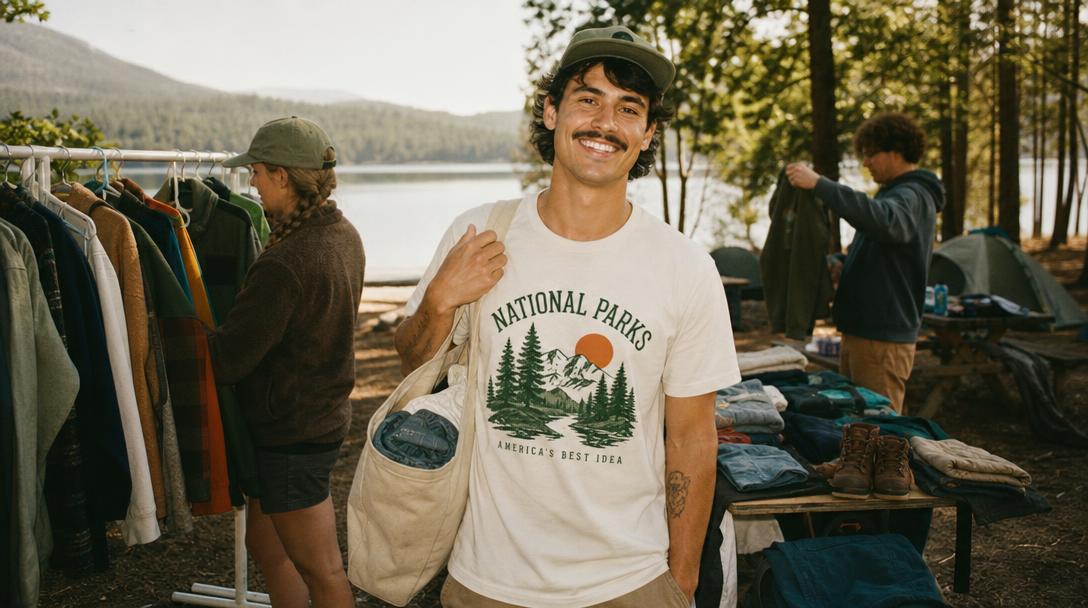
For fun trail-day layers and casual outdoorsy outfits, you can pair technical hiking pieces with personality-driven basics — like Hike Tee’s America’s Best Idea National Park shirt for campground coffee, road trips, or post-hike burger missions.
Buyer Filters: How to Choose by Budget, Climate, and Activity
If You’re on a Budget
Prioritize secondhand first. Look for used hiking pants, fleece, and jackets from reputable brands. Spend new money on socks, base layers, and rain gear if needed.
Best budget strategy:
- Buy secondhand midlayers and pants
- Choose one versatile recycled fleece
- Get a durable rain shell on sale
- Avoid trendy “outdoor aesthetic” pieces that don’t perform
If You Hike in Hot, Dry Climates
Choose breathable, sun-protective clothing.
Look for:
- Hemp or organic cotton blends for casual desert hikes
- Lightweight recycled polyester sun hoodies
- UPF-rated shirts
- Loose-fitting pants
- Wide-brim hats
If You Hike in Wet or Cold Climates
Performance matters more than purity. Avoid cotton for serious cold or wet hikes.
Look for:
- Merino wool base layers
- Recycled fleece midlayers
- PFAS-free hiking jacket
- Recycled nylon rain pants
- Wool hiking socks
If You Mostly Camp, Road Trip, or Visit National Parks
You need comfort, versatility, and layers that handle changing weather.
A simple national park outfit formula:
- Merino or recycled tee
- Recycled polyester hiking pants or shorts
- Lightweight fleece
- PFAS-free rain shell
- Wool socks
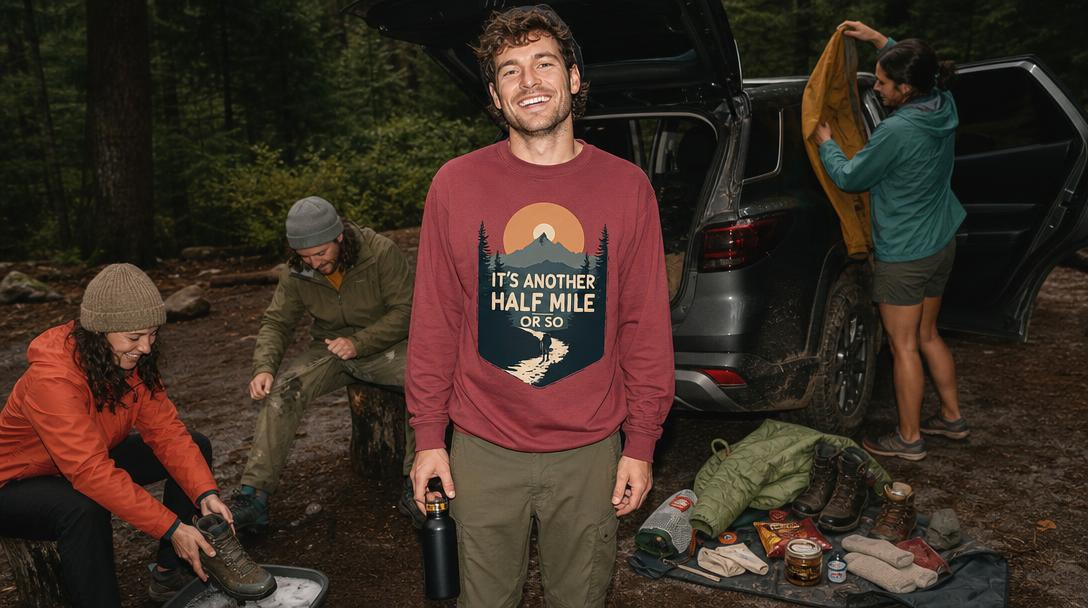
- Camp-friendly graphic tee or sweatshirt for evenings
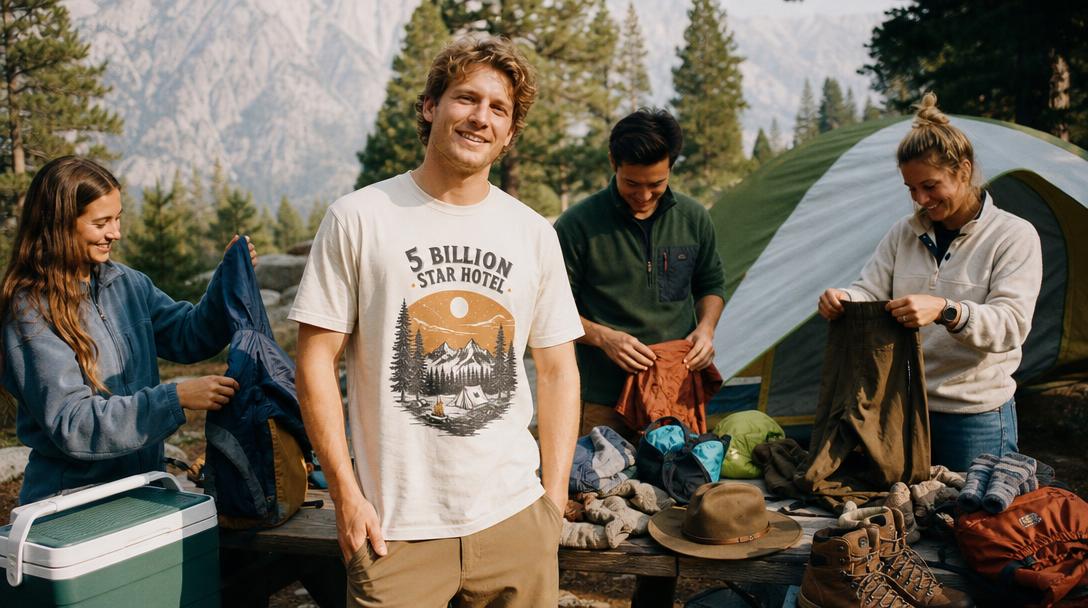
For evening campfires and laid-back road trip days, the 5 Billion Star Hotel camping shirt is an easy casual layer to rotate with your technical hiking gear.
If You’re Backpacking or Hiking Hard
Choose durability and low odor over cute-but-fragile pieces.
Pack:
- One merino base layer
- One recycled synthetic hiking shirt
- One durable pant or short
- One insulating midlayer
- One reliable rain shell
- Two pairs of wool socks
Frequently Asked Questions
What is the most sustainable clothing brand?
There’s no single most sustainable clothing brand for every person or activity. Patagonia, VAUDE, prAna, Icebreaker, Cotopaxi, and Tentree are often strong options depending on whether you need technical hiking gear, organic outdoor clothing, or casual outdoor layers.
What’s like Shein but ethical?
Secondhand platforms like ThredUp, Poshmark, eBay, REI Re/Supply, and Patagonia Worn Wear are the best ethical alternatives to Shein-style shopping. For new clothing, try brands like Pact, Tentree, Girlfriend Collective, and prAna for more responsible basics and activewear.
Is Lululemon ethical?
Lululemon has sustainability goals and some durable products, but shoppers should still evaluate product materials, labor transparency, and environmental reporting. If you already own Lululemon gear, wearing it longer is often more sustainable than replacing it immediately.
Where can I buy sustainable clothing online?
You can buy sustainable outdoor clothing online from REI, Patagonia, Patagonia Worn Wear, prAna, Icebreaker, Cotopaxi, Tentree, and secondhand sites like ThredUp or Poshmark. Always check fiber content, certifications, and whether technical items like rain shells are PFAS-free.
Are recycled hiking clothes actually better?
Recycled hiking clothes can reduce demand for virgin petroleum-based fibers and give waste materials a second use. They are still synthetic, though, so durability, washing habits, and microfiber reduction matter.
What should I look for in the best eco-friendly hiking apparel?
The best eco-friendly hiking apparel balances performance, durability, responsible materials, and transparent brand claims. Look for recycled or organic fibers, certifications like bluesign or Fair Trade Certified, repair options, and product details that match your hiking climate.
The Smartest Sustainable Hiking Wardrobe Is Small, Useful, and Worn Often
Sustainable hiking apparel does not require replacing your whole closet with beige linen and moral superiority. Start with what you already own, repair what still works, and buy only what fills a real gap.
If you’re shopping now, focus on the big wins:
- Choose durable pieces you’ll wear for years
- Buy secondhand when possible
- Pick recycled polyester or nylon for technical pants, fleece, and shells
- Choose merino, hemp, TENCEL, or organic cotton for comfort-focused layers
- Look for PFAS-free rainwear
- Verify certifications and material percentages
- Match clothing to your real hikes, not your fantasy expedition personality
The greenest hiking outfit is the one that gets you outside comfortably, lasts through muddy switchbacks and snack breaks, and doesn’t need replacing every season. Bonus points if it makes you smile when you catch your reflection in a trailhead bathroom mirror — because saving the planet is serious work, but your hiking shirt doesn’t have to be.


