


Reflective Hiking Shirt: Night Hike Visibility
Dominic PalmowskiReflective Hiking Shirt Basics: What It Actually Does
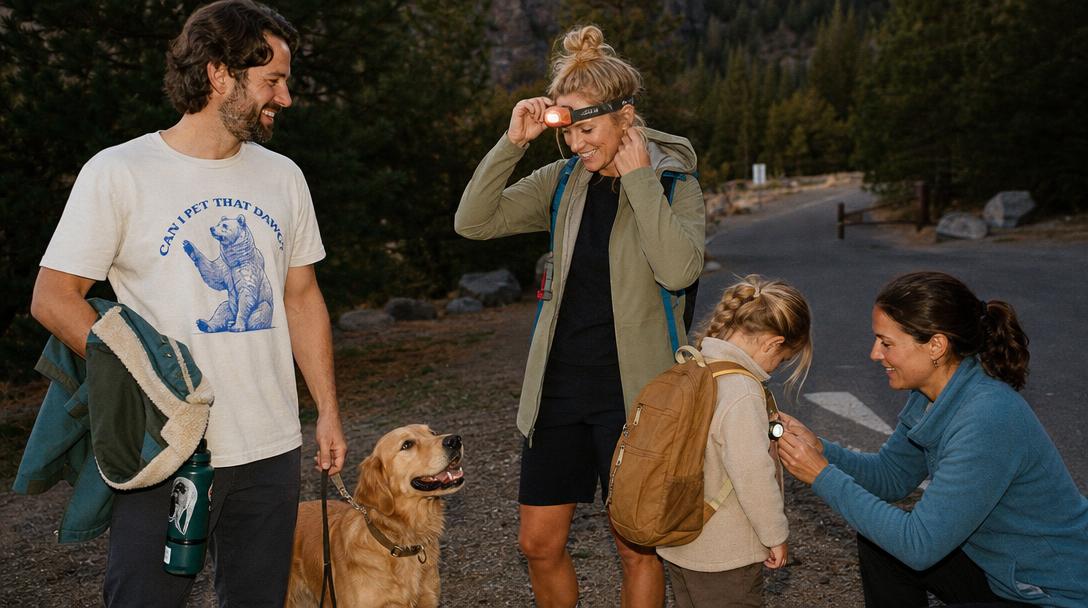
A reflective hiking shirt uses retroreflective material—usually small strips, logos, dots, or panels—that bounce light back toward its source.
According to 3M’s explanation of retroreflection, retroreflective materials help the eye perceive objects in low-light conditions when they are illuminated by a light source. In plain trail language: if a driver’s headlights hit your shirt, the reflective parts bounce light back toward the driver. If your hiking buddy’s headlamp hits your sleeve, it flashes back toward them.
That makes reflective details useful for:
- Walking near roads before or after a hike
- Returning to the trailhead after sunset
- Hiking in winter when daylight is short
- Moving around camp after dark
- Being easier for your group to spot on low-light trails
- Making your backpack-covered silhouette more noticeable from the front or sides
But reflective shirts also have limitations.
Most hiking shirts have small reflective accents, not full high-vis coverage. If your backpack covers the back logo, your rain shell covers the sleeves, or your reflective detail is only on the chest, you may not be visible from every angle.
So yes, a night hiking shirt with reflective details is helpful. No, it should not be your entire night-hiking safety plan.
Do You Need Reflective Hiking Clothes for Night Hikes?
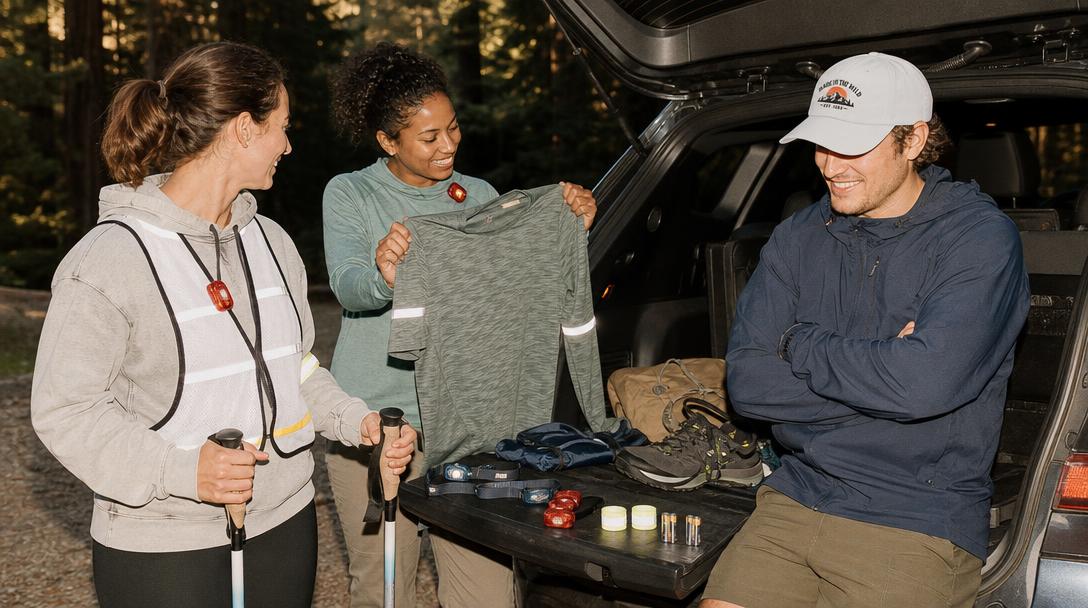
You don’t need reflective clothing for every night hike, but you should strongly consider it whenever other people, bikes, or vehicles might need to see you.
The National Park Service recommends wearing brightly colored clothing and reflectors if you’ll be walking along roadways or near cars, bikes, or other motor vehicles. NPS also recommends bringing a light source—ideally two or three—so you can see and be seen.
That’s the practical answer: reflective gear becomes more important as your exposure to traffic, crowds, or confusing low-light conditions increases.
A reflective shirt makes the most sense when:
- Your hike may end around sunset
- You have to walk along a park road, campground loop, shoulder, or roadside trail connector
- You hike in shoulder seasons or winter, when darkness sneaks up early
- You hike with kids, dogs, or a group and want easier visibility
- You’re camping or doing van-life evenings around trailheads and campgrounds
- You want a lightweight layer that adds visibility without wearing a full vest all day
You can usually skip reflective clothing when:
- You’re hiking fully in daylight
- You’re on a remote trail with no road crossings or bike traffic
- You already have strong lights, bright outerwear, and reflective pack accessories
- Your reflective shirt will be completely covered by a jacket or backpack
Even then, reflective details don’t weigh much. If you’re choosing between two otherwise equal shirts, a little reflectivity is rarely a bad thing—like finding an extra granola bar in your pack, but less crumbly.
Is a Reflective Shirt for Hiking in the Dark Enough?
A reflective shirt for hiking in the dark is not enough by itself.
That’s the big safety takeaway.
Reflective material helps others see you when light hits it, but it does not help you see roots, rocks, ice, wildlife, trail junctions, or that one suspicious shadow that is definitely just a bush. Probably.
For actual night hiking, your base visibility setup should include:
- A headlamp
- Backup light or spare batteries
- Reflective or bright outer clothing
- A way to stay visible from multiple angles
- Navigation tools you can use in the dark
The Great Smoky Mountains National Park hiking safety page warns that hiking after dark increases the risk of falls and wildlife encounters, and it recommends carrying a headlamp rather than relying on a phone flashlight.
That’s important because many people treat visibility as “Will cars see me?” But on trails, visibility also means:
- Can your group find you if you stop?
- Can you see the trail surface?
- Can cyclists or runners see you around bends?
- Can searchers identify reflective gear if something goes wrong?
- Can you signal your location?
A reflective shirt helps answer some of those questions. A headlamp answers more of them. For a broader safety baseline, pair your visibility plan with the Ten Essentials for hiking, especially if there’s any chance your “quick hike” becomes a low-light exit.
Does Reflective Clothing Work Without a Light Source?
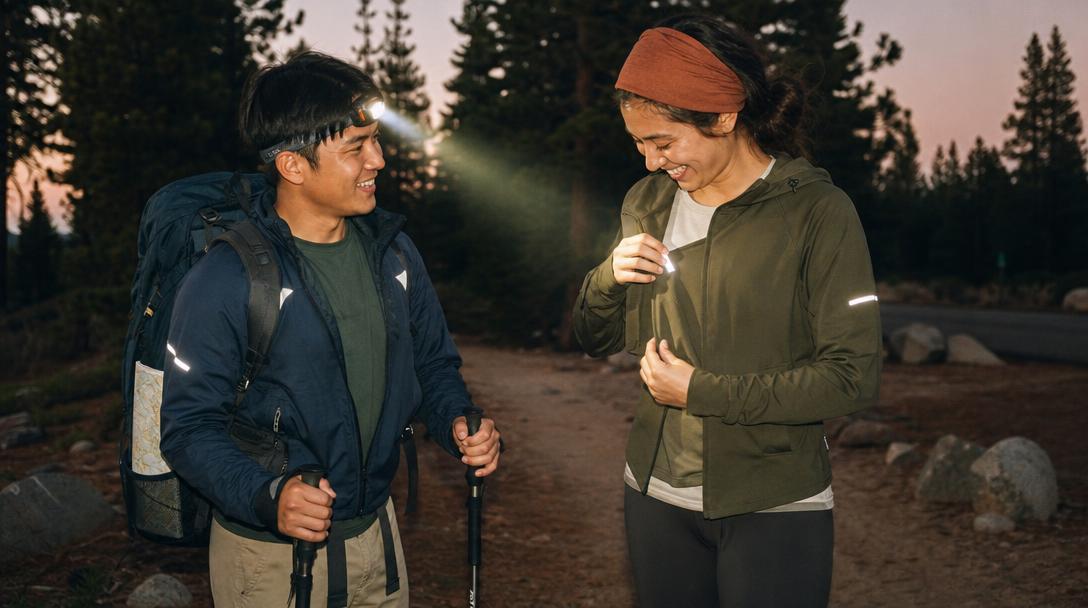
No—reflective clothing does not work well without a light source.
This is one of the biggest misunderstandings about reflective hiking clothes. Reflective material is not the same as glow-in-the-dark material, and it’s not the same as an LED.
Reflective details need light from something like:
- Vehicle headlights
- A headlamp
- A flashlight
- A bike light
- Campground lighting
- Another hiker’s lantern
Without light, reflective details are just dark strips on fabric. They may still have some contrast if the shirt itself is bright, but the reflective effect won’t activate.
That’s why a high-visibility hiking shirt for low light is most useful during transitional conditions: dusk, dawn, twilight, foggy campground roads, or road-adjacent trail sections where headlights and headlamps are present.
In deep forest darkness with no light source, your shirt is not doing much. Your headlamp is doing the heavy lifting.
Reflective Shirt vs Vest for Night Hikes: Which Is Better?
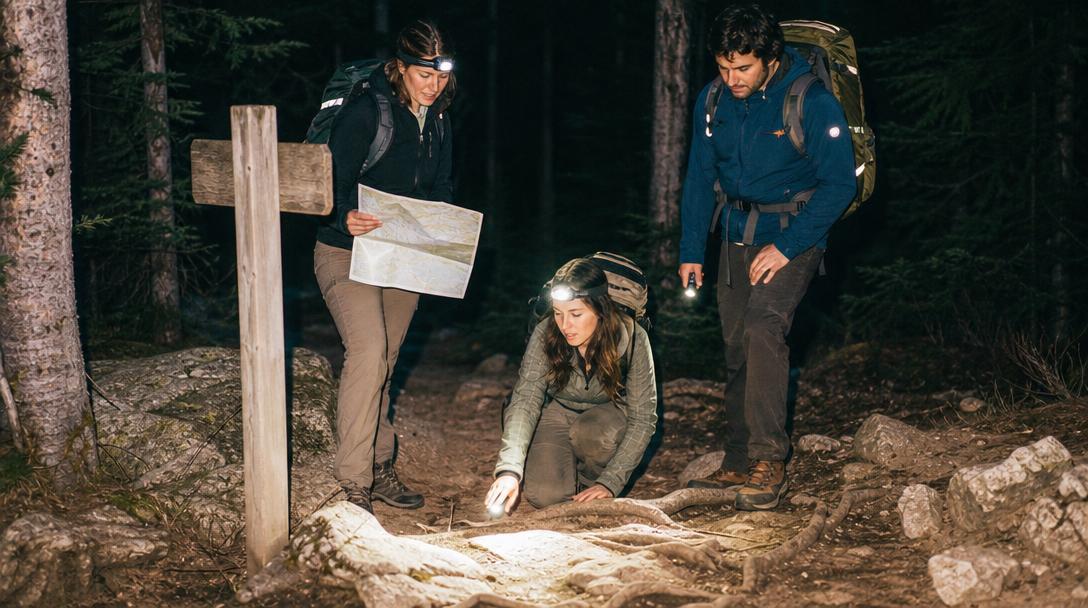
When comparing a reflective shirt vs vest for night hikes, the vest is usually better for pure visibility—but the shirt is more comfortable and natural for casual hiking.
They solve slightly different problems.
Reflective Hiking Shirt
A reflective hiking shirt is best when you want low-effort visibility built into clothing you’d wear anyway.
Pros:
- Comfortable for hiking
- Breathable if made from good trail fabric
- No extra layer to pack or remember
- Good for dusk returns and winter afternoon hikes
- Can be worn around camp, in town, or while traveling
- Less “crossing guard chic” than a vest
Cons:
- Reflective details may be small
- Backpack straps can cover reflective areas
- Outer layers can hide it
- Often not visible from all sides
- Less noticeable near vehicle traffic than a full vest
A reflective shirt is a nice “always-on” visibility upgrade, especially for hikers who don’t want another piece of gear dangling from the pack like a confused trail octopus.
Reflective Vest
A reflective vest is best when you need maximum visibility, especially near roads.
Pros:
- Usually offers more reflective surface area
- Often visible from front, back, and sides
- Can be worn over a jacket, hoodie, or rain shell
- Easy to add or remove
- Strong choice for road walks, trailhead access, and group hikes
Cons:
- Extra item to carry
- Can flap or feel annoying if poorly fitted
- Adds another layer in warm weather
- Less versatile for everyday wear
REI’s reflective gear category commonly highlights vests with 360-degree visibility, meaning reflective material is placed on the front, back, and sides. That all-around visibility is hard for most shirts to match.
Reflective Jacket
A reflective jacket can be excellent if it’s your outermost layer.
Best for:
- Cold-weather night hikes
- Windy ridgelines
- Rainy campground walks
- Winter dusk returns
Watch out for:
- Reflective details hidden by your backpack
- Ventilation and overheating
- Taking it off when you warm up, which removes your visibility layer
Pack Reflectors and Clip-On Lights
Backpack reflectors are great supplements, not replacements.
Good options include:
- Reflective zipper pulls
- Reflective cord
- Clip-on red rear lights
- Reflective patches on the pack
- Reflective rain cover
- Reflective trekking pole tape
These are especially useful because your shirt may be covered from behind by your pack. A rear-facing reflector or small light can make a big difference when walking along campground roads or returning to a trailhead parking area.
Reflective Armbands or Ankle Bands
Reflective bands can be surprisingly effective because movement catches attention.
Armbands, wristbands, and ankle bands are useful when:
- You’re walking near roads
- You want visibility without changing shirts
- Your jacket covers your reflective shirt
- You hike in a group and want simple add-ons for everyone
- You want something small enough to live in your pack
If you’re choosing between a reflective shirt and a reflective armband for a short dusk walk, the shirt is more comfortable. If you’re choosing for roadside visibility, the armband or vest may stand out more—especially if it moves with your stride.
When a High-Visibility Hiking Shirt Is Enough—and When It Isn’t
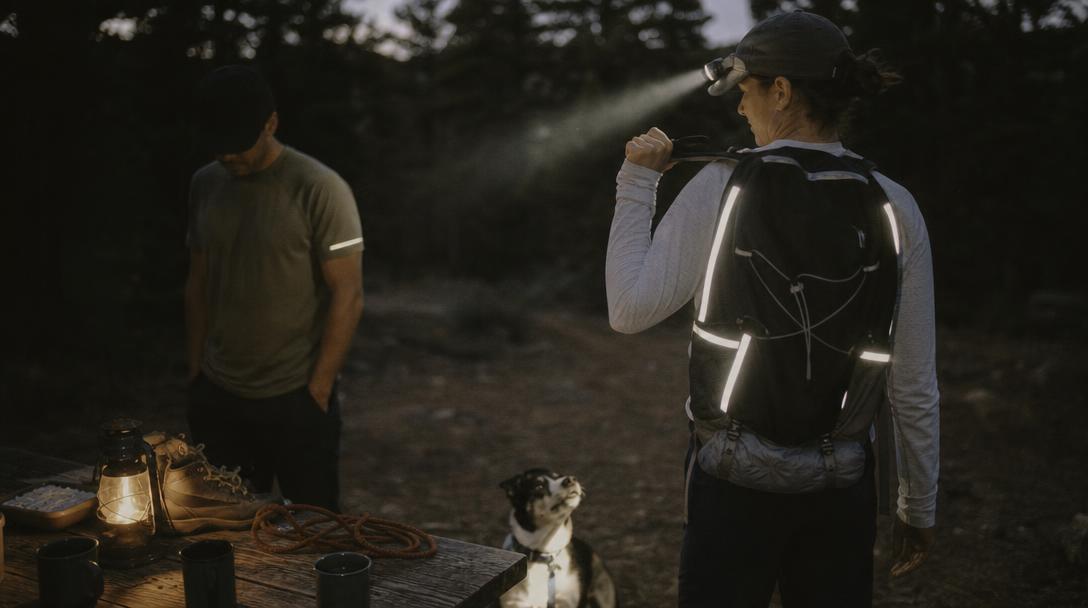
A high-visibility hiking shirt for low light can be enough in mild situations. It is not enough in higher-risk situations.
Here’s the simple breakdown.
A Reflective Shirt Is Probably Enough For:
Dusk-only trail returns
If you’re finishing a familiar trail around sunset and only need a little extra visibility for your group, reflective shirt details are useful.
Pair with:
- Headlamp in your pack
- Bright shirt color
- Reflective pack detail
Campground and van-life evenings
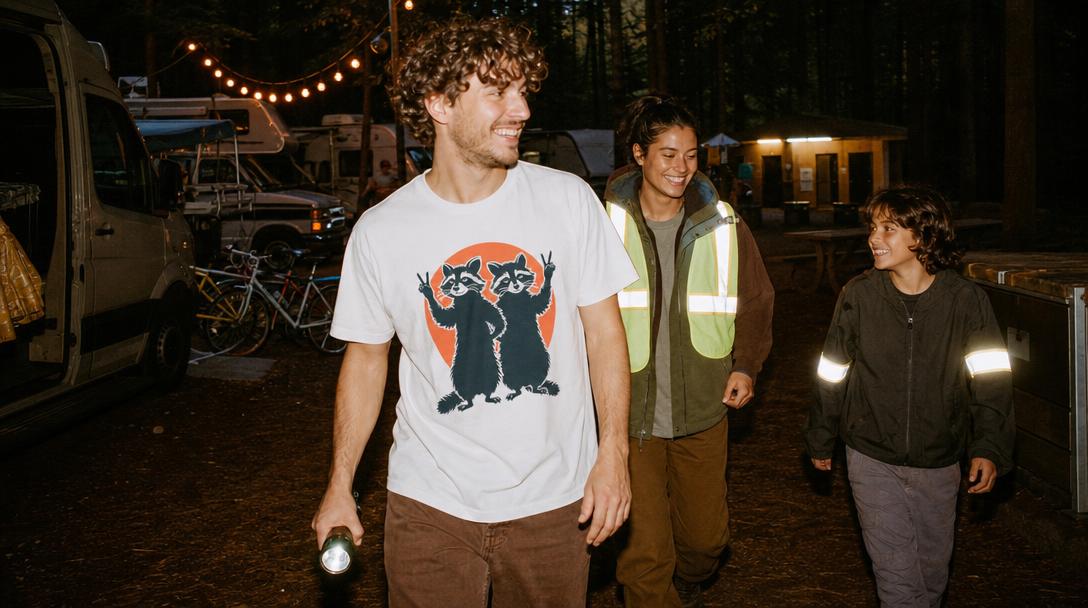
Walking from campsite to bathroom, van to picnic table, or trailhead to overlook? A reflective shirt is handy because you’re often near cars, RVs, bikes, and low lighting.
For relaxed campground time, a casual cotton or cotton-blend graphic tee can be comfortable once the hiking is done—just don’t treat it as technical night-hiking safety gear. If you like wildlife-themed camp shirts, the Vintage Moose Shirt fits the low-key trailhead vibe, while the Trash Day Raccoon Shirt is basically campground personality in tee form.
Pair with:
- Small flashlight or headlamp
- Reflective sandals/shoes or pack clip
- Bright hoodie or outer layer if cold
Short winter afternoon walks
Winter light disappears fast. A shirt with reflective details helps if you misjudge timing and finish in blue-hour gloom.
Pair with:
- Headlamp
- Warm outer layer with reflective detail if possible
- Gloves and hat that don’t block your light use
Add a Vest, Bands, or Lights For:
Road-adjacent night hikes
If your route includes road shoulders, park roads, bridge crossings, or trailhead access along traffic, upgrade.
Wear:
- Reflective vest or sash over everything
- Headlamp
- Rear red light or pack reflector
- Bright outer layer
Hunting-season trails
Reflectivity helps in low light, but during hunting season you should also think about high-visibility color during daylight. Blaze orange or other locally recommended high-vis colors may be more important than small reflective details, depending on the area and regulations.
Wear:
- Bright outer layer
- Reflective accents
- Headlamp
- Check local hunting seasons and trail guidance
Group hikes with kids
Kids are basically woodland gremlins with snacks—adorable, fast, and occasionally hard to track in dim light.
Use:
- Reflective bands
- Bright shirts or jackets
- Small clip lights
- Headlamps adjusted to avoid blinding everyone
Fog, rain, or snow
Low visibility weather reduces contrast and can hide small reflective strips. If conditions are messy, go bigger.
Wear:
- Reflective vest over rain shell
- Headlamp
- Pack light
- Bright waterproof outer layer


