


Hiking T-Shirts Online: Hike Tee Shopping Guide
Dominic PalmowskiIf you want to buy hiking t-shirts online without guessing, the short answer is this: shop trusted outdoor retailers like REI or Patagonia for technical performance, merino specialists like Smartwool or Icebreaker for multi-day trips, and casual spots like Hike Tee when you want a comfy graphic shirt for family trail days instead of a lab-tested piece of gear.
Hiking t-shirts seem simple—until you’re three miles uphill, sweating like a raccoon in a sauna, and realizing your regular cotton tee has become a damp emotional support blanket.
A great hiking shirt should feel comfortable, dry fast, survive backpack straps, and—bonus points—still look good when you stop for tacos after the trail. The smarter move is knowing what makes a shirt trail-worthy before you click Add to Cart.
Let’s sort the gear closet.
Best places to buy hiking t-shirts online
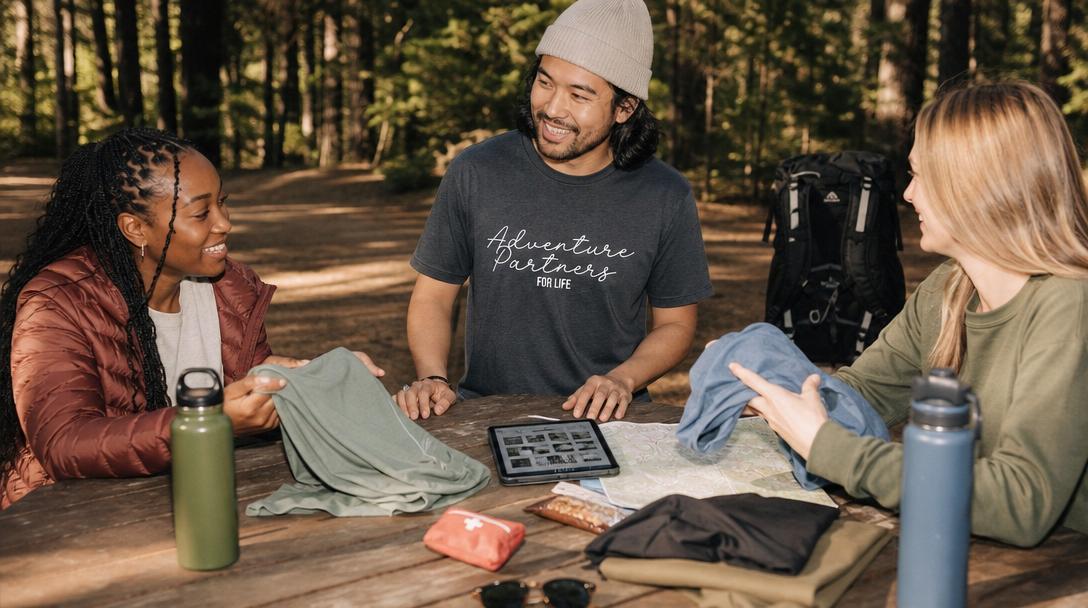
There isn’t one perfect store for everyone. The best place depends on whether you want a technical moisture-wicking tee, a funny outdoor graphic shirt, a merino hiking shirt for multi-day trips, or a budget-friendly option that won’t fall apart after two washes.
Here are the best online shopping categories to start with.
1. REI Co-op: Best overall hiking shirt marketplace
REI Co-op is one of the easiest places to compare hiking shirts because you can filter by gender, brand, fabric, sleeve length, UPF rating, sustainability features, and price.
REI is especially useful if you want to compare:
- Men’s hiking shirts
- Women’s hiking t-shirts
- Long-sleeve sun shirts
- Lightweight hiking shirts
- Merino wool and synthetic options
- Budget-friendly house-brand gear
REI’s own Sahara line is popular for sun protection and value, while the site also carries brands like Patagonia, Smartwool, Icebreaker, Columbia, Outdoor Research, and Black Diamond.
Best for: One-stop comparison shopping, generous return policies, trusted outdoor brands.
2. Patagonia: Best for recycled synthetic hiking tees
Patagonia is a strong choice if you want a reliable synthetic hiking tee that works for hiking, travel, running errands, and pretending your laundry pile is minimalist living.
The Patagonia Capilene Cool Daily Shirt is frequently recommended by outdoor reviewers. Backpacker has praised modern hiking tops like Patagonia’s Capilene Cool Daily for soft, sweat-wicking polyester that dries quickly. Depending on style and season, Patagonia often uses recycled polyester in many Capilene pieces.
Best for: Lightweight hiking shirts, recycled synthetic fabrics, everyday trail-to-town wear.
3. Smartwool: Best for merino-blend hiking t-shirts
If odor control matters—and if you camp, road trip, backpack, or live out of a van, it absolutely does—Smartwool is one of the best places to buy merino hiking shirts.
Merino wool naturally resists odor better than most synthetics, which means you can often wear it more than once between washes. TreeLine Review named the Smartwool Active Ultralite Short Sleeve a top women’s hiking t-shirt, noting its wool and lyocell blend.
Best for: Merino blends, odor control, multi-day hiking, travel.
4. Icebreaker: Best place to buy merino hiking shirts
If your search is specifically best place to buy merino hiking shirts, Icebreaker belongs on your list. Icebreaker specializes in merino wool layers, including lightweight tees and Cool-Lite blends designed for warm-weather activity.
BikeHikeSafari has highlighted Icebreaker’s Merino 125 Cool-Lite Sphere III as a strong merino wool hiking shirt option. Merino is pricier than polyester, but it shines when laundry access is limited.
Best for: Premium merino hiking shirts, natural fiber performance, travel capsule wardrobes.
5. Backcountry and Steep & Cheap: Best for deals on premium brands
Backcountry carries a wide range of outdoor apparel brands, including many premium hiking shirts. Its sister site, Steep & Cheap, is useful for discounted past-season gear.
These are good places to check when you know what you want but don’t want to pay full price. Sizes and colors can be limited, but the savings can be excellent.
Best for: Discounted technical hiking shirts, premium brands, clearance finds.
6. Columbia: Best for affordable sun-protective hiking shirts
Columbia is a dependable option for budget-conscious hikers who still want real outdoor features. Columbia’s Silver Ridge line is commonly recommended for sun protection, ventilation, and durability.
BikeHikeSafari named the Columbia Silver Ridge Utility II among the best hiking shirts in recent gear coverage, especially for people who want practical trail performance without boutique pricing.
Best for: UPF shirts, budget technical apparel, hot-weather hiking.
7. Outdoor Research: Best for hot, exposed, and sweaty trails
Outdoor Research makes excellent sun hoodies, button-down hiking shirts, and technical tops built for exposed conditions.
Backpacker has noted that Outdoor Research’s Astroman Air shirt uses recycled nylon and spandex, resists pilling under pack straps, and offers UPF protection depending on color and model. That’s exactly the kind of construction detail worth looking for when buying online.
Best for: Sun protection, backpack durability, desert and alpine hikes.
8. Hike Tee and outdoor graphic shops: Best casual hiking t-shirts
Not every hike requires a hyper-technical shirt with more features than your car. For casual hikes, campground hangs, national park trips, and family adventures, a soft, well-made outdoor graphic tee can be exactly right.
That’s where stores like Hike Tee fit in: funny outdoor lifestyle shirts and sweatshirts for hikers, campers, animal lovers, and people who believe feral but hydrated is a personality type. A graphic tee like the Adventure Awaits hiking shirt works well for easy trail days, camp coffee, and town stops after a hike.
If you want more inspiration for trail-ready designs, browse our guide to top nature graphic tees for outdoor adventures.
Best for: Casual hiking, camping trips, outdoor gifts, national park vibes, funny nature designs.
9. Secondhand and outlet sites: Best budget alternatives
If you want quality without full-price pain, shop:
- REI Used
- Geartrade
- Patagonia Worn Wear
- eBay, Poshmark, or Mercari
- Local outdoor consignment shops with online inventory
- Brand clearance sections
TreeLine Review recommends secondhand hiking shirts as a smart way to save money and reduce environmental impact. Many technical shirts last for years, so buying used can be a genuine win—especially for backup layers or van-life wardrobes.
Best for: Budget shoppers, sustainability-minded buyers, backup shirts.
What fabric is best for hiking t-shirts?
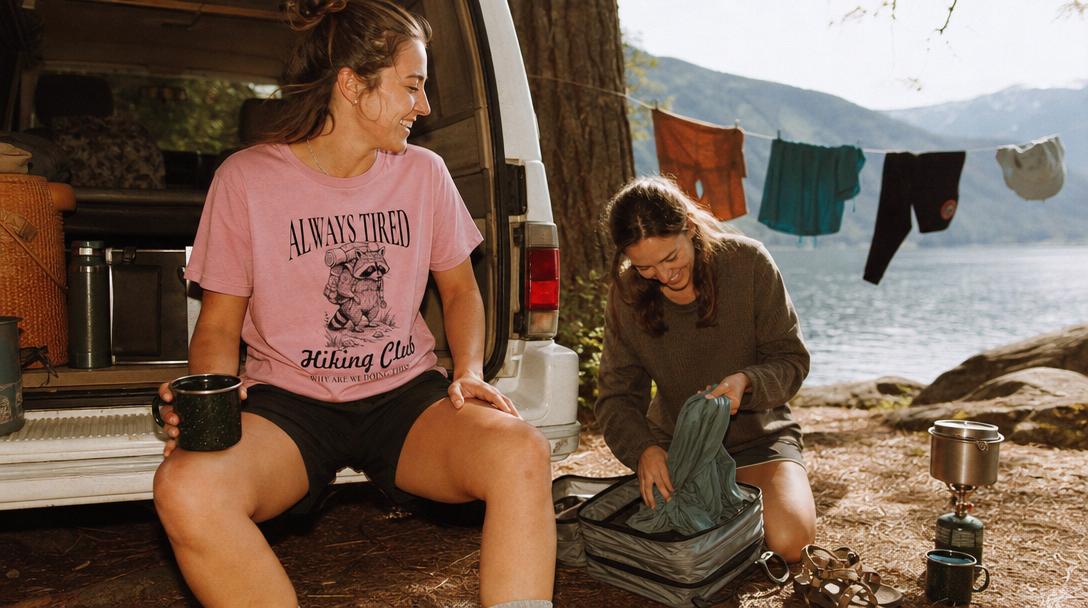
The best fabric for hiking t-shirts depends on your hiking style, climate, sweat level, and laundry reality. Cotton is comfy at home, but for most hikes, performance fabrics are better because they dry faster and manage moisture more effectively.
For a deeper fabric breakdown, see our guide to cotton vs synthetic hiking shirts.
Polyester: Best all-around option to buy moisture-wicking hiking shirts online
Polyester is the most common fabric in performance hiking tees. It’s lightweight, quick-drying, durable, and usually more affordable than merino.
Choose polyester if you want to:
- Buy moisture-wicking hiking shirts online
- Hike in hot or humid conditions
- Wash shirts frequently
- Pack light
- Save money
The downside? Polyester can hold odor more than merino, especially after repeated sweaty use. Some brands add odor-control treatments, but those can wear down over time.
Merino wool: Best for odor control and multi-day wear
A merino hiking shirt is ideal for backpacking, travel, camping, and van life because merino naturally resists odor. It also regulates temperature surprisingly well, keeping you comfortable in both cool mornings and warm afternoons.
Choose merino if you:
- Rewear shirts between washes
- Hate synthetic stink
- Want a softer natural fiber
- Take multi-day trips
- Prefer minimalist packing
The trade-offs: merino costs more and can be less durable than synthetics, especially in ultralight weights. Blends with nylon, polyester, or lyocell can improve durability and dry time.
Nylon blends: Best for durability and sun shirts
Nylon is often used in button-down hiking shirts and sun shirts because it’s tough, abrasion-resistant, and good under backpack straps.
Choose nylon blends if you:
- Hike with a pack often
- Scramble or brush against rocks and branches
- Want a long-lasting shirt
- Need UPF-rated sun protection
A little spandex or elastane adds stretch, which makes shirts more comfortable when climbing, reaching, or wrestling snacks out of the bottom of your pack.
Cotton and cotton-poly blends: Fine for casual walks, not sweaty hikes
Cotton absorbs moisture and dries slowly. That can make you feel clammy in warm weather and cold in cooler conditions.
Cotton and cotton-poly blends are fine for:
- Short neighborhood walks
- Campground lounging
- Easy dry-weather strolls
- Casual outdoor graphic tees
For low-key trail days, a comfortable graphic option like the Are We There Yet Hiking Club shirt can be a fun fit. Just avoid cotton for long hikes, cold weather, backpacking, or situations where getting wet could become unsafe.
Do I need a UPF-rated hiking shirt?
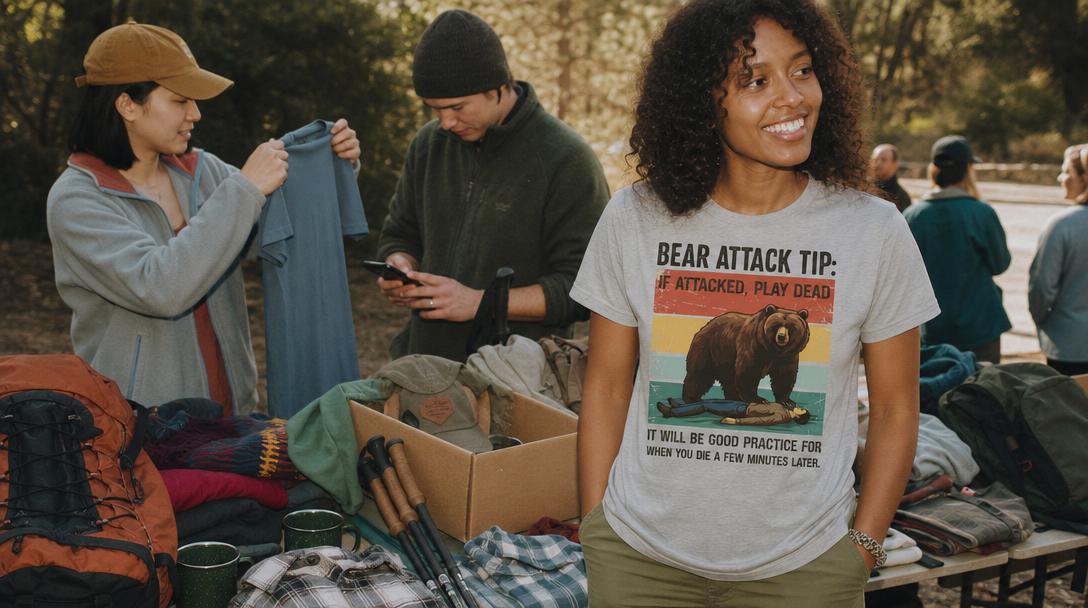
You don’t always need a UPF-rated hiking shirt, but it’s a smart choice if you spend long hours in direct sun.
UPF stands for Ultraviolet Protection Factor. A UPF 50 shirt blocks about 98% of UV rays, according to the Skin Cancer Foundation’s explanation of sun-protective clothing. That’s especially helpful because sunscreen can sweat off, rub off under pack straps, or get forgotten during snack breaks. We’ve all been personally victimized by a quick little hike that became four hours of solar roasting.
Consider a UPF-rated shirt if you hike in:
- Desert terrain
- Alpine areas
- Open ridgelines
- Snowfields
- Beaches or coastal trails
- High-elevation national parks
- Places with limited shade
Long-sleeve UPF shirts and sun hoodies are especially useful for people with sensitive skin or anyone who doesn’t want to reapply sunscreen every 90 minutes.
When shopping online, look for specific ratings like UPF 30, UPF 40, or UPF 50+. If a product only says sun protection but gives no rating, treat that as vague marketing.
What is the difference between a hiking shirt and a regular t-shirt?
The difference between a hiking shirt and a regular t-shirt comes down to fabric, construction, and trail-specific features.
A regular t-shirt is usually designed for everyday comfort. A hiking shirt is designed to handle sweat, sun, movement, and repeated wear.
Hiking shirts usually have:
- Moisture-wicking fabric
- Faster dry times
- Breathable construction
- Odor-control properties
- UPF sun protection
- Backpack-friendly seams
- Stretch for movement
- Longer hems for coverage
- Lighter weight for packing
Regular t-shirts usually have:
- Cotton or cotton-blend fabric
- Slower dry times
- Less odor control
- Less sun protection information
- Seams that may rub under a pack
- Casual fit rather than performance fit
That doesn’t mean regular tees are useless outdoors. A funny bear shirt or national park tee is perfect for easy trails, road trips, campfires, and low-sweat adventures. But for longer hikes, hot days, or backpacking trips, technical hiking t-shirts are worth it.
Can I wear gym clothes for hiking?
Yes, you can wear gym clothes for hiking—especially if they’re made from moisture-wicking synthetic fabric. Running shirts, training tees, and athletic tops often work well on day hikes.
But gym clothes aren’t always perfect for trail use.
Gym shirts work well when they are:
- Polyester or nylon-based
- Lightweight and breathable
- Quick-drying
- Comfortable under a backpack
- Not too tight or restrictive
Gym shirts may fall short when they lack:
- UPF ratings
- Durability under pack straps
- Odor resistance for multi-day use
- Longer hems for coverage
- Bug or brush protection
For short day hikes, your favorite workout shirt might be totally fine. For long hikes, exposed trails, or backpacking, a purpose-built hiking shirt is usually more comfortable.
How to verify quality when buying hiking shirts online
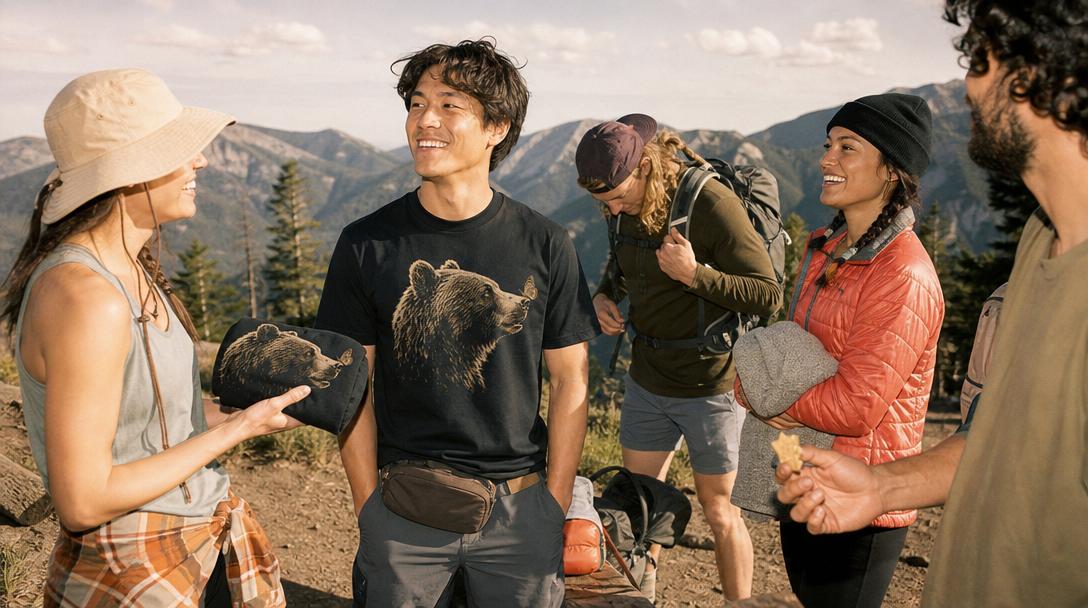
Online listings can be sneaky. A shirt may look rugged in photos while being about as durable as a tortilla. Here’s how to evaluate quality before buying.
Check the fabric content
Look for actual material percentages, not vague phrases like performance blend.
Good signs include:
- 100% polyester or recycled polyester for lightweight wicking
- Merino wool blended with nylon, polyester, or lyocell for durability
- Nylon/spandex blends for stretch and abrasion resistance
- TENCEL™/lyocell blends for softness and breathability
Be cautious if the listing doesn’t disclose fabric content at all.
Look for weight if you search ultralight hiking t-shirt buy online
If you’re searching ultralight hiking t-shirt buy online, pay attention to fabric weight. Ultralight shirts are great for hot weather and fast drying, but they may be more fragile.
For everyday hiking, a midweight shirt can be a better balance of comfort and durability. If you’re comparing airy trail layers, our guide to lightweight hiking shirts explains when light is useful—and when it gets too delicate.
Read reviews from hikers, not just casual buyers
Look for reviews that mention:
- Backpack strap wear
- Odor after sweaty use
- Drying time
- Fit after washing
- Pilling
- Chafing
- Transparency or thinness
- Performance in heat
A five-star review that says cute color is nice. A review that says wore it for four days in Utah and my friends still spoke to me is more useful.
Inspect seam and fit details
Quality hiking shirts often include:
- Flat seams or low-profile stitching
- Raglan sleeves or shoulder seams placed away from pack straps
- Tagless collars
- Gussets or stretch panels
- Longer back hems
- Reinforced stitching
If the product photos don’t show seams clearly, zoom in. Your future armpits deserve due diligence.
Verify sustainability claims
Sustainability language can be fuzzy. Look for specific claims, not nature-themed poetry.
Better signs include:
- Recycled polyester or recycled nylon percentages
- Responsible Wool Standard certification
- bluesign-approved materials
- Fair Trade Certified sewing
- OEKO-TEX certification
- Brand repair, resale, or take-back programs
- Transparent supply chain information
If a brand says eco-friendly but gives no details, consider that a yellow flag wearing hiking boots.
Van life and road trip tips: How many hiking shirts should you pack?
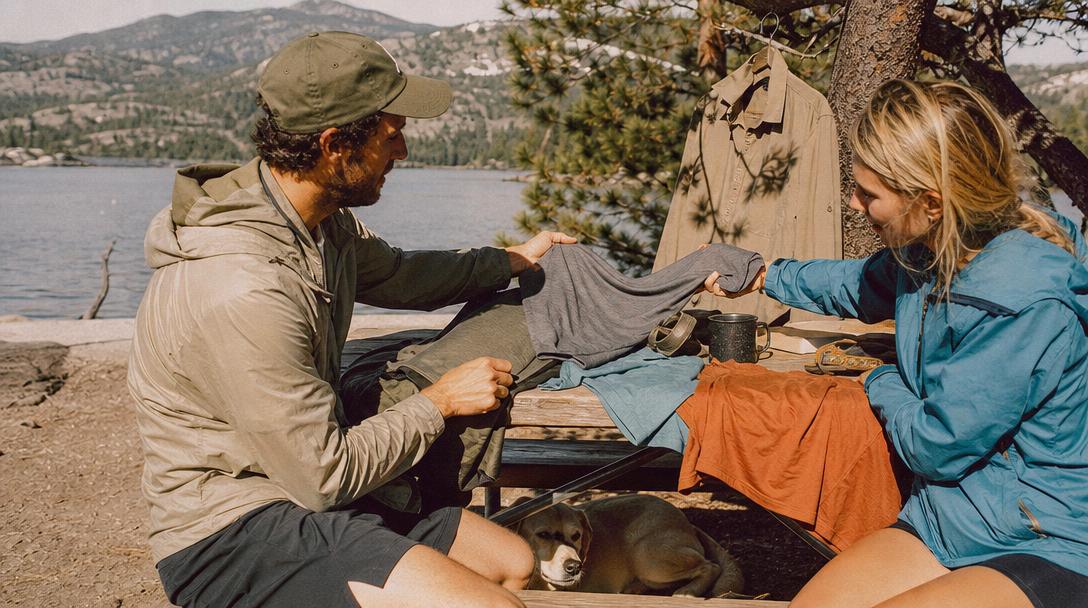
Van life, car camping, and long road trips change the math. Laundry gets weird. Drying space is limited. Everything eventually smells like campfire, sunscreen, and optimism.
For a one-week hiking road trip, a practical shirt setup might be:
- 2 synthetic lightweight hiking shirts
- 1 merino hiking shirt
- 1 UPF long-sleeve shirt or sun hoodie
- 1 casual graphic tee for town/camp
- 1 warmer layer or sweatshirt
For full-time van life or extended travel, aim for:
- 3–4 technical hiking shirts
- 1–2 merino shirts
- 1–2 casual tees
- 1 sun hoodie
- 1 cozy sweatshirt
For more packing math, read how many hiking shirts you actually need.
Best fabrics for limited laundry
If you can’t wash often, prioritize:
- Merino wool for odor resistance
- Polyester for quick sink-washing and fast drying
- Nylon blends for durability
- Darker colors that hide dirt better
Avoid packing only cotton unless your itinerary is mostly coffee shops, scenic overlooks, and pretending you’re about to hike later.
Budget guide: How to buy good hiking shirts without overspending
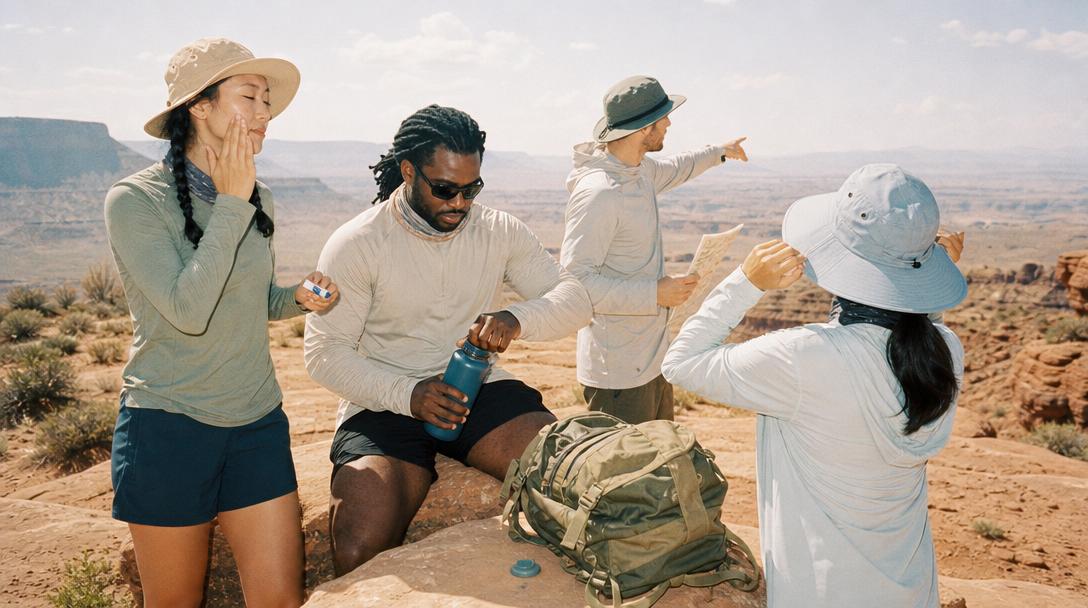
High-quality hiking shirts can cost anywhere from $25 to $100+. You don’t always need the most expensive option.
Spend more when you need:
- Merino wool
- UPF 50+ protection
- Backpacking durability
- Multi-day odor resistance
- Hot-weather technical performance
- Better sustainability standards
Save money when you need:
- A basic synthetic tee
- Casual day hiking shirts
- Backup layers
- Camp shirts
- Past-season colors
- Used gear
Budget-friendly places to check include Columbia, REI house brands, Decathlon, Steep & Cheap, Sierra, and secondhand gear sites. Some Amazon brands like Baleaf are also popular among hikers looking for inexpensive synthetic shirts, though quality can vary by model—read recent reviews carefully.
Quick buying recommendations by hiker type
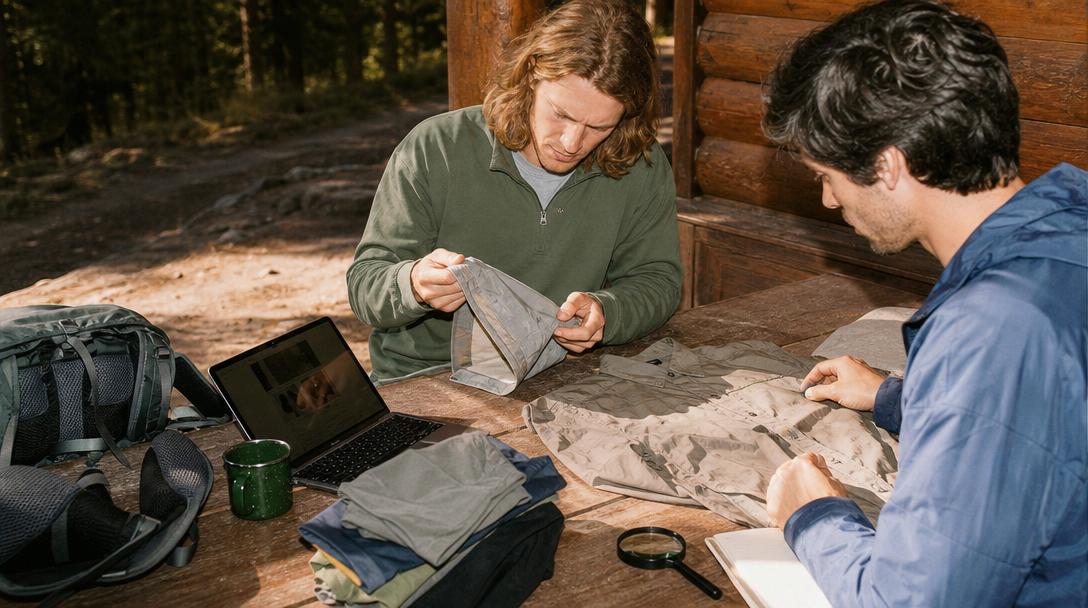
Best for casual day hikers
Look for soft polyester blends, cotton-poly blends, or comfortable outdoor graphic tees. If the hike is short and weather is mild, comfort matters most.
Best for sweaty hikers
Choose polyester or nylon shirts labeled moisture-wicking and quick-drying. Avoid cotton for longer efforts.
Best for backpackers
Choose merino blends, durable synthetics, or UPF long sleeves. Prioritize odor control, pack-strap comfort, and fast drying.
Best for hot-weather hikers
Choose lightweight hiking shirts with high breathability, light colors, and UPF protection. Sun hoodies can be surprisingly cooler than exposed skin in harsh sun.
Best for cold-weather layering
Choose merino or synthetic base layers. Avoid cotton because it holds moisture and can chill you quickly.
Best for funny outdoor gifts
Choose a soft graphic hiking tee or sweatshirt with a design that matches the person’s trail personality: bear enthusiast, national park nerd, raccoon gremlin, sloth-speed hiker, or I came for snacks legend. A camp-friendly pick like the 5 Billion Star Hotel shirt makes sense for campground hangs, road trips, and post-hike lounging.
Frequently Asked Questions
What fabric is best for hiking t-shirts?
Polyester is the best all-around fabric for most hiking t-shirts because it’s lightweight, moisture-wicking, quick-drying, and affordable. Merino wool is better for odor control and multi-day wear, while nylon blends are excellent for durability and sun shirts.
Do I need a UPF-rated hiking shirt?
You need a UPF-rated hiking shirt if you spend long hours in direct sun, especially in deserts, alpine terrain, or exposed national park trails. A UPF 30 to UPF 50+ shirt adds reliable protection and reduces how much sunscreen you need to reapply.
What is the difference between a hiking shirt and a regular t-shirt?
A hiking shirt is designed to wick sweat, dry quickly, reduce chafing, and often provide sun protection. A regular t-shirt is usually made for casual comfort and may be cotton, which dries slowly and can feel clammy during longer hikes.
Can I wear gym clothes for hiking?
Yes, gym clothes can work for hiking if they’re made from synthetic, moisture-wicking fabric. For longer hikes, though, dedicated hiking shirts usually offer better durability, UPF protection, odor control, and backpack-friendly construction.
Where can I buy high-quality hiking t-shirts online?
You can buy high-quality hiking t-shirts online from REI, Patagonia, Smartwool, Icebreaker, Columbia, Outdoor Research, Backcountry, Steep & Cheap, and specialty outdoor graphic shops like Hike Tee. Choose the retailer based on whether you want technical performance, merino wool, budget deals, or casual trail style.
What is the best place to buy merino hiking shirts?
The best place to buy merino hiking shirts is usually Smartwool, Icebreaker, REI, or Backcountry because they offer detailed fabric information and trusted outdoor-specific designs. Look for merino blends if you want better durability and faster drying.
Final trail notes before you buy
The best hiking t-shirt isn’t just the one with the coolest mountain photo on the product page. It’s the one that matches how you actually hike.
If you want one do-it-all shirt, start with a lightweight polyester tee from a trusted outdoor brand. If you take multi-day trips or hate laundry, add a merino hiking shirt. If you hike in exposed sun, buy a UPF-rated long sleeve or sun hoodie. And if your adventures are more family trail walks, campfire hangs, and national park snack missions, a comfortable outdoor graphic tee absolutely earns its spot in the pack.
Before buying, check the fabric content, read reviews from hikers, verify sustainability claims, and make sure the fit works under a backpack. Your future self—less sweaty, less chafed, and possibly wearing a shirt with a possum on it—will thank you.


