


How Many Hiking Shirts Do I Need? | Hike Tee
Dominic PalmowskiHow many hiking shirts do I need for a week-long hike? Probably fewer than your nervous packing brain wants to bring. For most 7-day hikes, the sweet spot is 2–3 hiking shirts or backpacking shirts total: one shirt to hike in, one long-sleeve UPF or layering shirt, and one clean camp/sleep shirt. If you are going ultralight and do not mind smelling like a raccoon who found a gym bag, you can get by with 1–2. If you are hiking somewhere hot, humid, buggy, or laundry-free, 3–4 may feel much better.
The big secret: you do not need seven shirts for seven days.
Backpacking clothing is less about having a fresh outfit every morning and more about building a tiny, useful shirt system that handles sweat, sun, stink, rain, chilly mornings, and the emotional journey of wearing the same shirt three days in a row.
According to REI’s backpacking clothing guidance, a typical backpacking setup includes one to two T-shirts and one long-sleeve shirt, with one tee often reserved for sleeping. Backpacker takes an even more minimalist approach, noting that ultralight hikers often bring just one hiking shirt and focus on packing for conditions, not trip length.
So let’s turn that into practical packing math.
The Clear Answer: How Many Shirts for a Week-Long Hike?
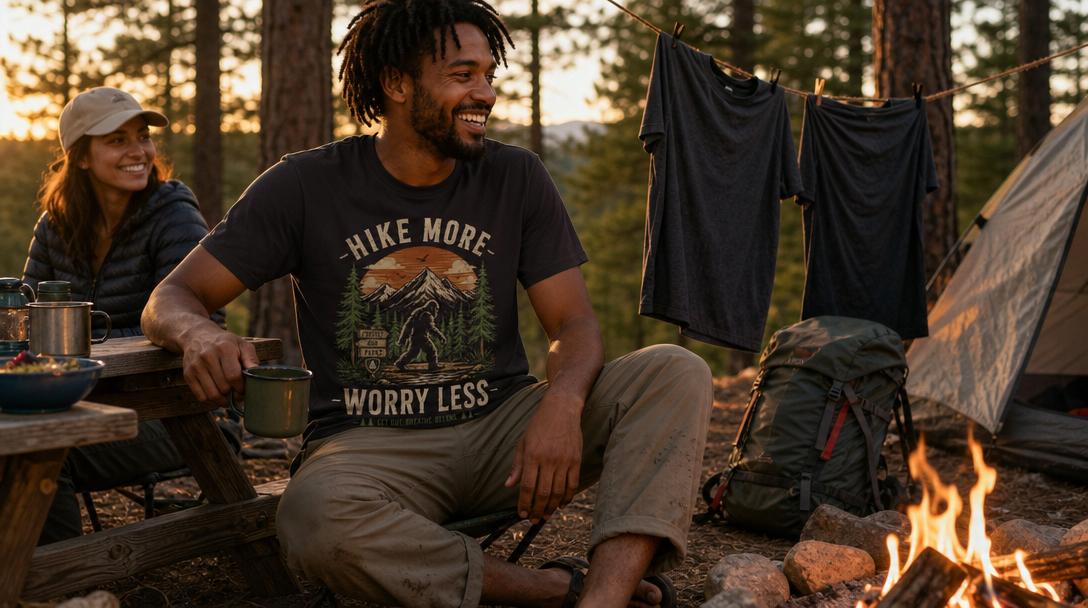
For a standard 7-day backpacking trip, pack:
| Hiking Style | Shirt Count | What to Pack |
|---|---|---|
| Ultralight/minimalist | 1–2 shirts | 1 hiking shirt + optional sleep shirt or sun hoodie |
| Most hikers | 3 shirts | 1 short-sleeve hiking shirt, 1 long-sleeve UPF hiking shirt, 1 camp/sleep shirt |
| Hot, humid, or high-sweat trips | 3–4 shirts | 2 hiking shirts, 1 long-sleeve sun/bug shirt, 1 sleep shirt |
| Cold or alpine trips | 2–3 base shirts | 1 hiking base layer, 1 dry sleep base layer, 1 long-sleeve layer |
| Hut-to-hut, van-life, or town-access trips | 2–3 shirts | Fewer shirts if you can wash and dry clothes easily |
If you want the simplest answer: pack 3 shirts for a 7-day hike.
That gives you:
- One active hiking shirt that gets sweaty and dirty
- One long-sleeve shirt for sun, bugs, wind, or cooler temps
- One dry sleep/camp shirt that stays sacred, like the last clean spoon in camp
This setup works for most three-season backpacking trips in the U.S., including national park routes, weekend-to-weeklong section hikes, and family hiking trips where comfort matters but nobody wants to carry a closet uphill. For the rest of your kit, pair this shirt system with a complete multi-day hiking packing list so your clothing, shelter, food, and safety gear all work together.
How Many Shirts Should I Pack for 7 Days? Use This Packing Math
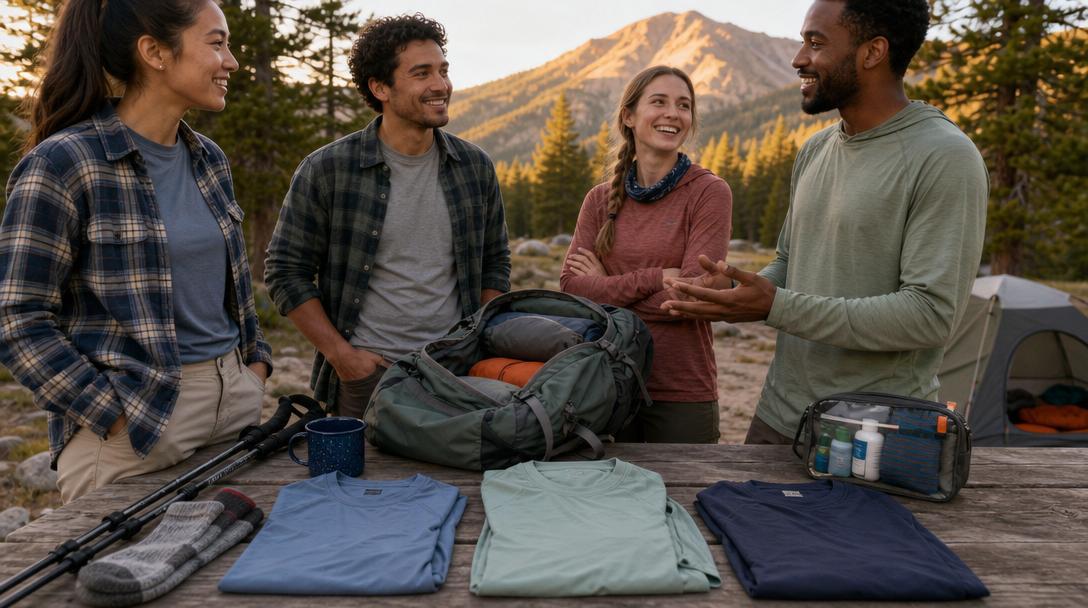
Instead of thinking, one shirt per day, use this formula:
Shirt count = hiking conditions + sweat level + laundry access + comfort tolerance
Very official. Possibly trail-certified by squirrels.
1. Start with your base number: 2 backpacking shirts
At minimum, bring:
- 1 hiking shirt
- 1 dry camp/sleep shirt
This works if:
- Temperatures are mild
- You do not sweat heavily
- You are using odor-resistant fabric like merino wool
- You are okay rinsing or re-wearing
- You have a rain shell and insulation layers for bad weather
2. Add 1 UPF hiking shirt for sun, bugs, or shoulder-season weather
Add a long-sleeve UPF hiking shirt or sun hoodie if:
- You will be hiking above treeline
- You are in desert, alpine, or exposed terrain
- Mosquitoes are auditioning for a horror movie
- You burn easily
- You want less sunscreen maintenance
This is why 3 shirts total is the best answer for most hikers.
3. Add 1 extra quick-dry hiking shirt for hot and humid trips
Pack a second active shirt if:
- You sweat heavily
- It is humid and clothes will not dry overnight
- You are hiking in the Southeast, Midwest summer, rainforest-like trails, or muggy national parks
- You are doing high-mileage days with lots of climbing
- You strongly dislike putting on a damp shirt in the morning
Now you are at 4 shirts, which is still reasonable for comfort-focused backpackers.
4. Subtract shirts if you have laundry access
You can pack fewer shirts if:
- You are doing a hut-to-hut route
- You will pass through towns
- You are traveling by van or car between national parks
- You have campground sinks, laundromats, or sunny dry time
For van-life or national park road trips, 2–3 technical shirts can go surprisingly far because you can rinse, rotate, and dry between hikes.
What Shirts to Pack for a 7 Day Trek by Climate
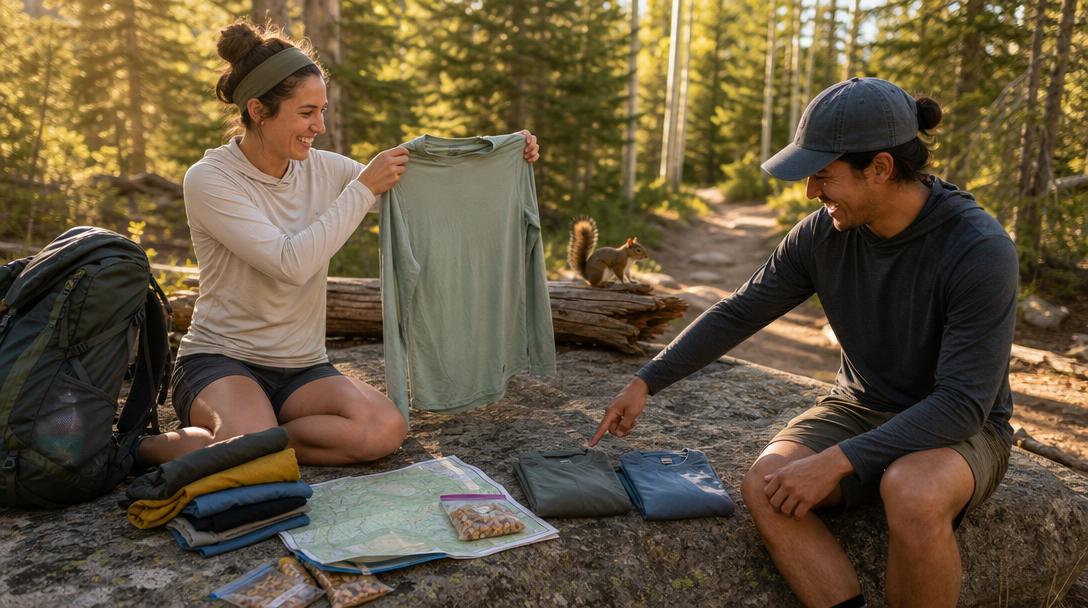
Different trips need different shirt strategies. A week in the Utah desert is not the same as a week in the Smokies, and your shirt drawer should respect that.
Hot and Dry Desert or High-Sun Routes
Best for: Grand Canyon, Zion, Arches, Canyonlands, Joshua Tree, exposed alpine trails
Pack:
- 1 lightweight UPF hiking shirt or sun hoodie
- 1 quick-dry hiking shirt
- 1 camp/sleep shirt
- Optional: 1 extra short-sleeve shirt if you sweat heavily
Prioritize:
- UPF 30–50+ rating
- Light colors
- Breathable weave
- Hood or collar for neck protection
- Long sleeves for sun coverage
A long-sleeve sun shirt may sound hotter, but in exposed desert terrain it can help keep sun off your skin and reduce how much sunscreen you need to reapply. If your route is mostly heat and sun, this guide to the best hiking shirts for hot weather goes deeper on breathable fabrics, sun shirts, and UPF protection.
Hot and Humid Routes
Best for: Appalachian Trail sections, Great Smoky Mountains, Ozarks, summer Midwest hikes, swampy bug zones
Pack:
- 2 quick-dry hiking shirts
- 1 long-sleeve bug/sun shirt
- 1 dry sleep shirt
Prioritize:
- Fast-drying polyester or nylon
- Mesh panels or venting
- Loose fit
- Anti-odor treatment if synthetic
- A dedicated dry camp shirt
Humidity is where minimalist packing gets harder. A merino hiking shirt may resist odor better, but a thin synthetic shirt usually dries faster. If nothing dries overnight, having a second active shirt can seriously boost morale.
Cold, Dry, or Alpine Routes
Best for: Rocky Mountain National Park, Sierra Nevada, high-elevation summer trips, shoulder-season backpacking
Pack:
- 1 merino hiking shirt or synthetic base layer
- 1 long-sleeve base layer for sleeping
- 1 sun shirt or lightweight long sleeve
- Add fleece, puffy, and shell layers separately
Prioritize:
- Moisture management
- Warmth when damp
- Layer compatibility
- Long sleeves
- A dry sleep layer
In cold conditions, the shirt you sleep in matters. Keeping one top dry is not luxury; it is smart risk management. For layering beyond shirts, use the 3-layer rule for cold-weather hiking to balance base layers, insulation, and weather protection.
Do I Need a UPF Hiking Shirt or Long Sleeves?
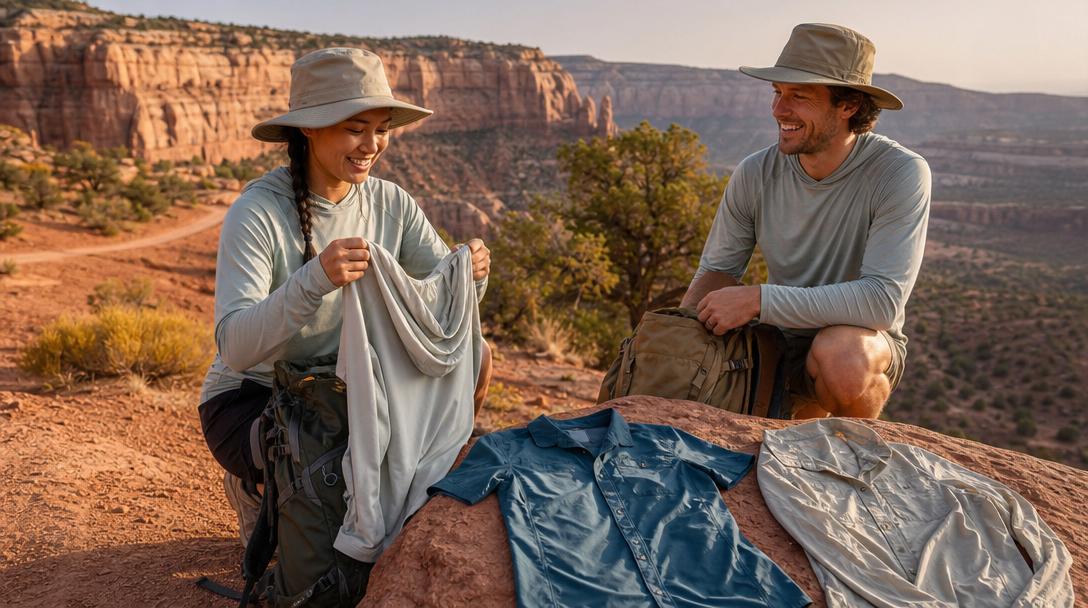
Yes, many hikers should pack at least one long-sleeve shirt, especially for a week-long trek.
A UPF hiking shirt protects you from ultraviolet rays. UPF stands for Ultraviolet Protection Factor, and clothing rated UPF 30–50+ blocks much more UV than a thin everyday cotton tee. REI recommends UPF-rated long sleeves for sun-exposed regions, especially where shade is limited.
Long sleeves help with:
- Sun protection
- Bug protection
- Wind protection
- Cooler mornings
- Scratchy brush
- Reducing sunscreen use
You do not always need to hike in long sleeves all day, but having one long-sleeve option is smart. For week-long trips, a lightweight sun hoodie or button-up UPF shirt is one of the most versatile pieces you can pack.
Can I Wear Cotton Hiking Shirts on a Week-Long Trek?
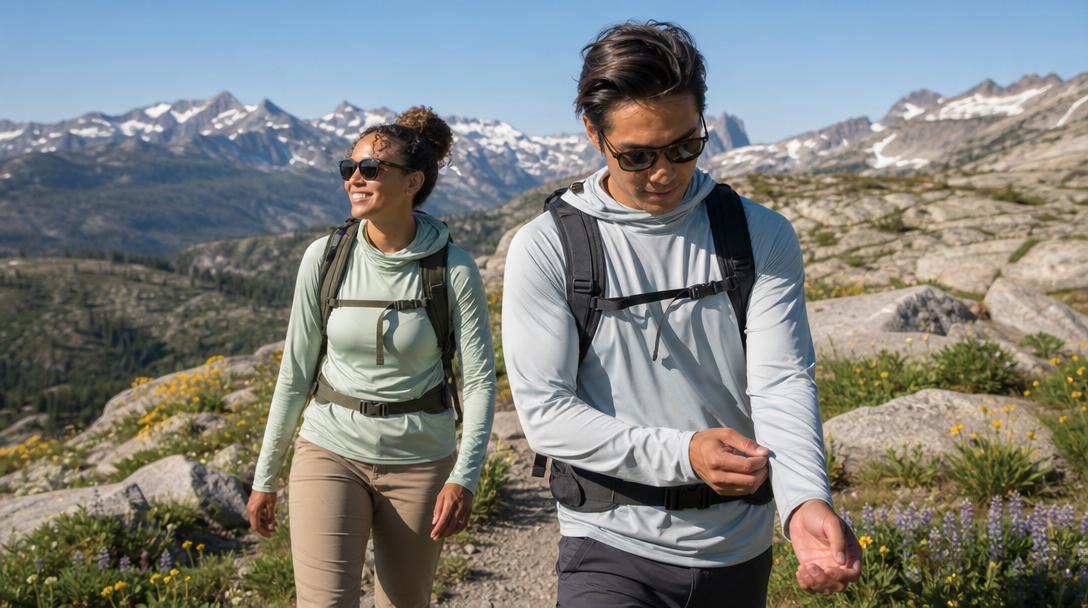
For serious hiking and backpacking, avoid cotton as your main hiking shirt.
Cotton absorbs moisture, dries slowly, and loses insulating value when wet. That is why hikers repeat the dramatic but useful phrase: cotton kills. It is not that your cotton tee is waiting behind a tree with a tiny villain mustache. It is that wet cotton can chill you fast when temperatures drop, wind picks up, or you stop moving.
Cotton is risky because it:
- Holds sweat
- Takes a long time to dry
- Feels heavy when wet
- Can cause chafing
- Can contribute to hypothermia in cool or wet conditions
Can you wear cotton on a short, easy day hike in warm, stable weather? Sure, if the stakes are low and you are close to the car. For a deeper breakdown, read why cotton is bad for hiking.
For a 7-day trek? Choose merino, polyester, nylon, or blends instead.
That said, a soft casual cotton tee is still great for campgrounds, travel days, cabin hangs, and the drive home. Save technical fabrics for the sweaty miles, then change into something like the Hike More, Worry Less Bigfoot Shirt when the boots come off and dinner becomes the main adventure.
Simple Sink-Wash Routine for Backpacking Shirts
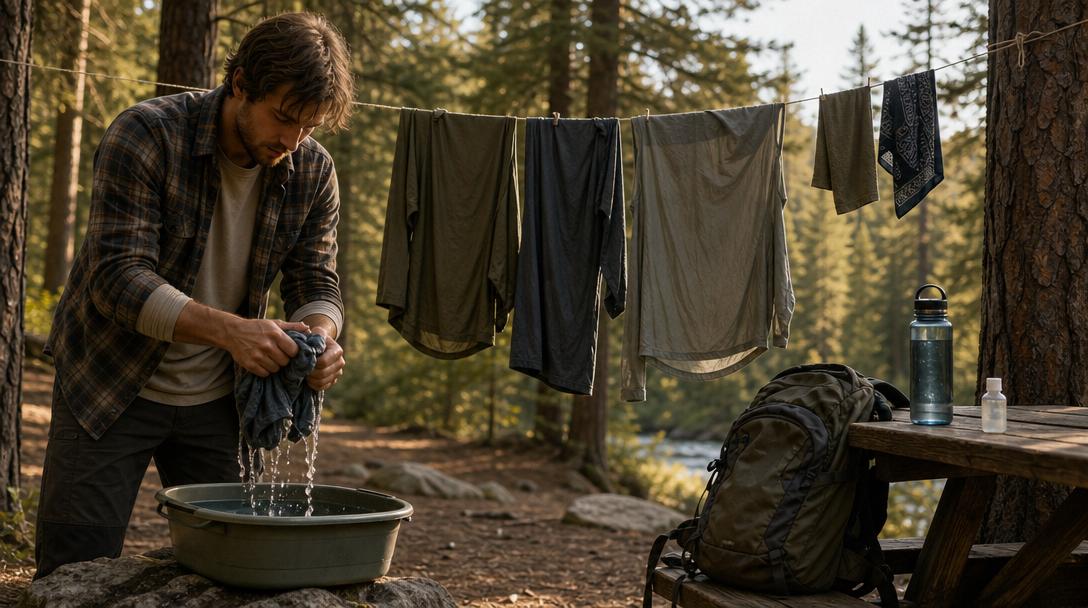
A good wash routine can save you from packing extra shirts.
Use this trail-friendly process:
-
Rinse first when possible
Often, water alone removes enough sweat and salt. -
Wash away from water sources
If using soap, carry water at least 200 feet away from lakes, streams, and rivers. Use a tiny amount of biodegradable soap. -
Wring gently
Do not twist delicate merino aggressively. Press water out instead. -
Roll in a towel or bandana
Lay the shirt on a camp towel, roll it up, and squeeze. This removes a surprising amount of water. -
Hang in airflow
Sun helps, but wind helps even more. -
Rotate shirts
Wear one while the other dries on your pack if conditions allow. -
Keep sleep clothes dry
Your camp shirt should not become your emergency swamp rag unless absolutely necessary.
For van-life or national park travel, bring a small clothesline, a few clips, and a travel-size detergent. Wash shirts at campground sinks or laundromats between hikes, and you can easily stretch 2–3 shirts across a full week.
Two Real Trips, Two Different Lessons
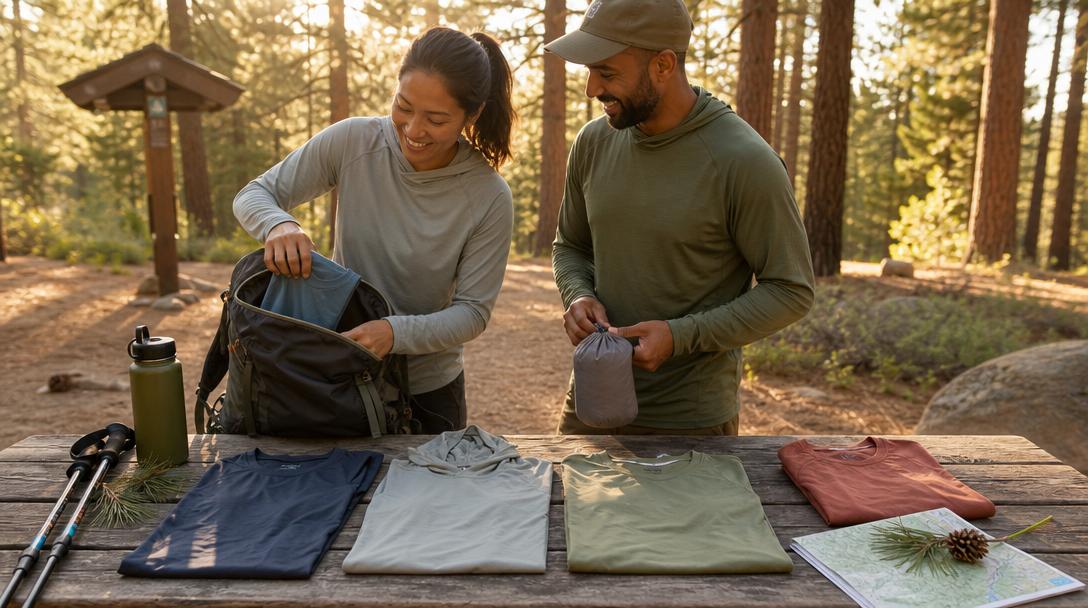
Math and packing lists only get you so far. Here is what the 3-shirt system actually looked like in practice, on two very different weeks.
The trip where 3 shirts felt like plenty
On a week-long trek through cooler mountain terrain, two hiking shirts and one long-sleeve sun hoodie covered everything: sweaty climbs, windy ridgelines, and chilly mornings that made coffee feel underdressed. One shirt handled the hard uphill sweating, the sun hoodie covered exposed sections and bugs, and a dedicated sleep shirt gave a dry option every night. One shirt dried on the pack while another was in use, and that rotation was the whole trick. The real shift was mental: once the goal became "functional" instead of "fresh," the system made sense.
The trip where too few shirts backfired
A humid summer trek told the opposite story. Packing light on shirts felt smart on paper, but by day three everything was still damp, the air was too saturated for anything to dry overnight, and the bigger problem was not odor — it was chafing. The same damp fabric kept rubbing under pack straps around the neck and shoulders, and a shirt that felt fine at the trailhead turned into a genuine problem by the third day. The fix was simple in hindsight: pack one extra shirt for humid trails. A few extra ounces are a lot cheaper than a week of raw shoulders.
Test Your Shirts Before the Trip — The Mistake Almost Everyone Makes
A shirt can feel perfect in your living room — soft, comfortable, trail-ready — and then behave completely differently once it is wet, salty, and trapped under a loaded pack for six hours. Do not judge a hiking shirt by how it feels on a hanger. Judge it by how it performs when things get sideways.
Before a week-long trek, test every shirt on a long day hike with a loaded pack and pay attention to:
- Neck rubbing
- Shoulder seam placement under the straps
- How fast it actually dries once you stop moving
- Odor after one hard, sweaty day
- How it feels under a hip belt and sternum strap
- Whether the fabric clings, stretches, or sags when wet
The trail will always reveal the truth eventually — usually right around the point where you are too far from the car to do anything about it. Better to find out on a Saturday loop near home than on day one of a seven-day trek.


