


Camping Blanket Buying Guide | Hike Tee
Dominic PalmowskiA camping blanket sounds simple until it’s 9:47 p.m., the wind shifts, your knees go cold, and your cute couch throw reveals the outdoor performance of a damp tortilla.
The right camping blanket turns shoulder-season campfires, chilly National Park evenings, van-life coffee mornings, and “just one more s’more” nights from mildly heroic into actually cozy. But warmth isn’t magic. It comes from insulation, loft, wind resistance, moisture management, and choosing a fabric that won’t betray you the second dew, dog paws, or campfire sparks enter the chat.
Here’s the quick material map before we get into the details:
| Material | Price | Best For | Warmth-to-Weight | Wet Weather | Campfire Notes |
|---|---|---|---|---|---|
| Down | $$$ | Backpacking, dry cold nights, compact packing | Excellent | Poor if soaked unless protected | Shell fabric can melt or get ember holes |
| Synthetic insulation | $$ | General camping, damp climates, families, car camping | Good | Good; keeps some warmth when damp | Polyester shells can melt near sparks |
| Wool | $$–$$$ | Campfires, damp cool weather, durability | Moderate | Good; insulates when damp | Naturally more spark-tolerant, not fireproof |
| Fleece | $–$$ | Mild weather, layering, budget camping | Moderate | Dries fast but can soak through | Melts/scorches easily near embers |
| Sherpa-backed throw | $$ | Car camping, cabins, van life, evenings around camp | Moderate; cozy but not packable | Keep dry; not a ground tarp | Fleece-style fabric; keep well back from flames |
| Waterproof-backed utility blanket | $$–$$$ | Wet grass, dogs, picnics, car camping, van life | Varies | Excellent ground protection | Usually synthetic; keep away from flames |
How a Camping Blanket Actually Keeps You Warm

Warmth comes from trapped still air. Your body produces heat; insulation holds that heat close instead of letting wind and cold ground steal it. That’s why a puffy insulated camping blanket usually feels warmer than a thin fleece throw, even if both look equally cozy in the campsite photo.
The key parts are:
- Insulation: The fill or fiber that traps warm air.
- Loft: The puffiness or thickness that creates air space.
- Shell fabric: The outer layer that blocks wind, dew, dirt, and abrasion.
- Moisture resistance: How well the blanket handles condensation, light rain, wet grass, or spilled cocoa.
- Coverage: A blanket that doesn’t cover your shoulders and legs is basically a napkin with ambition.
A warm camping blanket doesn’t need to be the thickest thing in the campsite. It needs the right balance of loft, coverage, and weather protection for how you’ll actually use it.
If you’re sitting upright by a fire, wind resistance matters a lot. If you’re lying on cold ground, compression matters because insulation squished under your body traps less air. If you’re camping somewhere damp — hello, Pacific Northwest, Appalachians, foggy lakeside mornings — moisture performance becomes the difference between cozy and clammy. For more wet-weather setup help, pair this guide with Hike Tee’s camping in the rain tips.
Insulation Types: Down, Synthetic, Wool, and Fleece
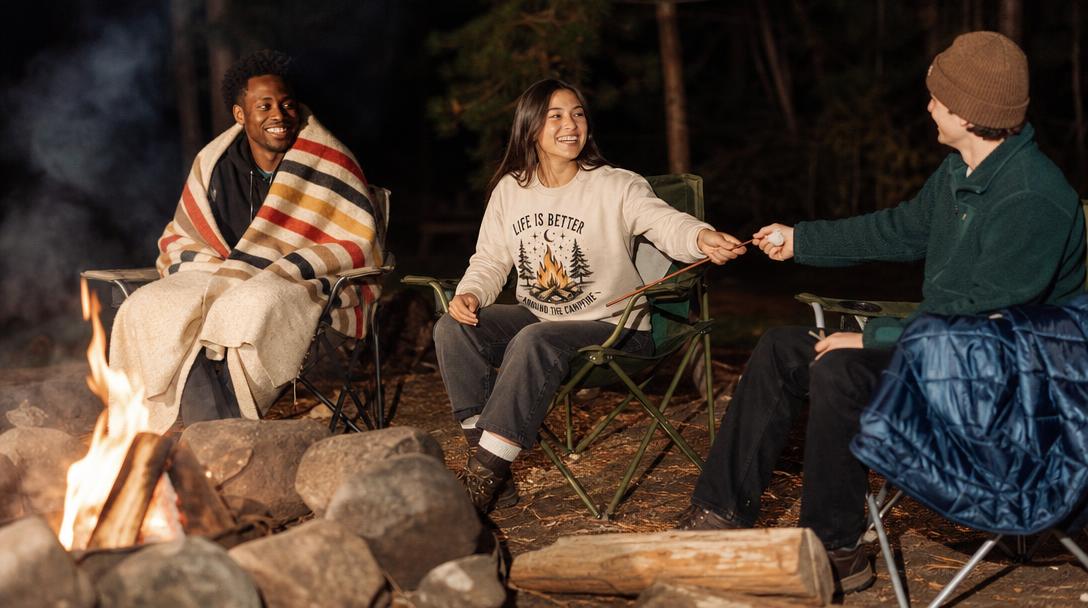
Different materials solve different problems. The “best” choice depends on whether you care most about packability, damp-weather performance, fire-adjacent durability, or budget.
Down Blankets: Best Warmth for the Smallest Pack Size
Down is the fluffy under-feather insulation from ducks or geese. It has an excellent warmth-to-weight ratio and compresses smaller than most other options, which is why backpackers love it.
Choose down if you want:
- A packable camping blanket for hiking, backpacking, or minimalist car camping
- Maximum warmth with minimum weight
- A blanket that compresses easily into a stuff sack
- Dry-weather performance
Skip down if you expect:
- Heavy condensation
- Rainy campsites
- Wet dogs
- Kids using the blanket as a ground tarp
- Frequent campfire ember exposure
Traditional down loses loft when soaked, which means it loses much of its ability to trap heat. Some down products use water-resistant treatments and protective shells, but a soaked down blanket is still not your best friend.
Synthetic Insulation: The Best All-Around Camping Choice
Synthetic insulation is usually polyester-based. It’s often heavier and bulkier than down for the same warmth, but it handles moisture better, costs less, and is easier to wash.
A synthetic insulated camping blanket is a strong pick for most campers because it works well in real-life campsite chaos:
- Damp mornings
- Spilled drinks
- Wet picnic tables
- Dog hair
- Kids
- Dewy grass
- “Oops, we left it outside overnight”
According to REI’s general insulation guidance, synthetic insulation tends to retain more insulating ability when damp compared with untreated down, making it a practical choice for wetter conditions. That doesn’t mean you should soak it for fun — this is camping, not a laundry experiment — but synthetic gives you more forgiveness.
Wool Blankets: Heavy, Durable, and Better Around Campfires
Wool is old-school for a reason. It’s naturally breathable, odor-resistant, and able to insulate even when damp. It’s also more tolerant of small sparks than many synthetic fabrics.
That makes wool a great option for a warm camping blanket for around the fire, especially for car camping, cabin trips, and chilly evenings where pack weight doesn’t matter much.
Wool’s downsides:
- Heavier than down or synthetic
- Bulkier to pack
- Can feel scratchy unless blended or finished softly
- Slower to dry than thin synthetics
- Often more expensive for high-quality versions
Important note: wool is not fireproof. It can scorch, burn, or be damaged by direct flame. It’s simply more spark-resistant than common polyester fleece or nylon-shelled puffy blankets.
Fleece Blankets: Soft, Affordable, and Best for Mild Weather
Fleece is comfortable, easy to find, and budget-friendly. It dries quickly and feels cozy against skin, but it has limits.
Fleece works well for:
- Summer camping
- Extra layering in the car
- Kids’ blankets
- Picnics
- Mild evenings
- Backup warmth
Fleece struggles with:
- Strong wind
- Very cold temperatures
- Wet ground
- Campfire sparks
- Compression under body weight
A fleece blanket is nice to have, but it’s usually not the best camping blanket for cold nights unless you’re layering it with something more protective.
What Is a Good Small Camping Blanket?
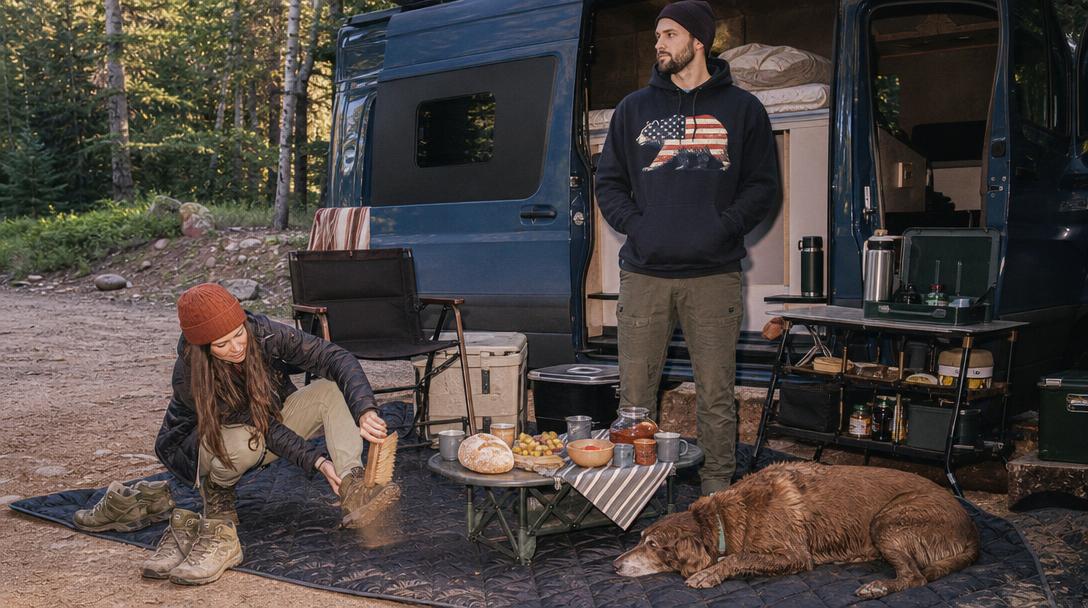
A good small camping blanket is compact, light enough to carry easily, and warm enough for short breaks, chilly mornings, or an extra lap layer. Look for a down or lightweight insulated camping blanket if packability matters, or a fleece blanket if you only need inexpensive mild-weather comfort.
For hiking breaks, kids, stadium seats, hammock lounging, and national park overlooks, size and packed volume matter more than maximum warmth.
Look for:
- Weight under 1–2 pounds for hiking or day trips
- Stuff sack included for easier packing
- Wind-resistant shell if using above treeline or near water
- DWR finish for light dew or mist
- Machine-washable fabric if it will see snacks, pets, or mud
- Snap loops or poncho mode if you want wearable warmth
A small outdoor blanket is especially handy for scenic stops. Think sunset at Bryce Canyon, foggy overlook in the Smokies, or waiting for coffee to boil while pretending you’re not freezing because you “packed light.” If your blanket is part of a day-hike kit, Hike Tee’s hiking gear checklist can help you round out the rest of your pack.
If you want a small blanket that still feels cozy, a lap-size sherpa throw is a good fit for camp chairs, short stops, and chilly mornings in the van. Our national park sherpa blankets come in a 30" × 40" size that is easy to toss in the car. And when your hands are busy cooking or tending the fire, a layer you can wear still beats any blanket: a casual camp hoodie like the Adventure Awaits Hoodie keeps your core warm while you move.
Moisture Resistance: Camping Blanket That Doesn’t Soak Up Moisture
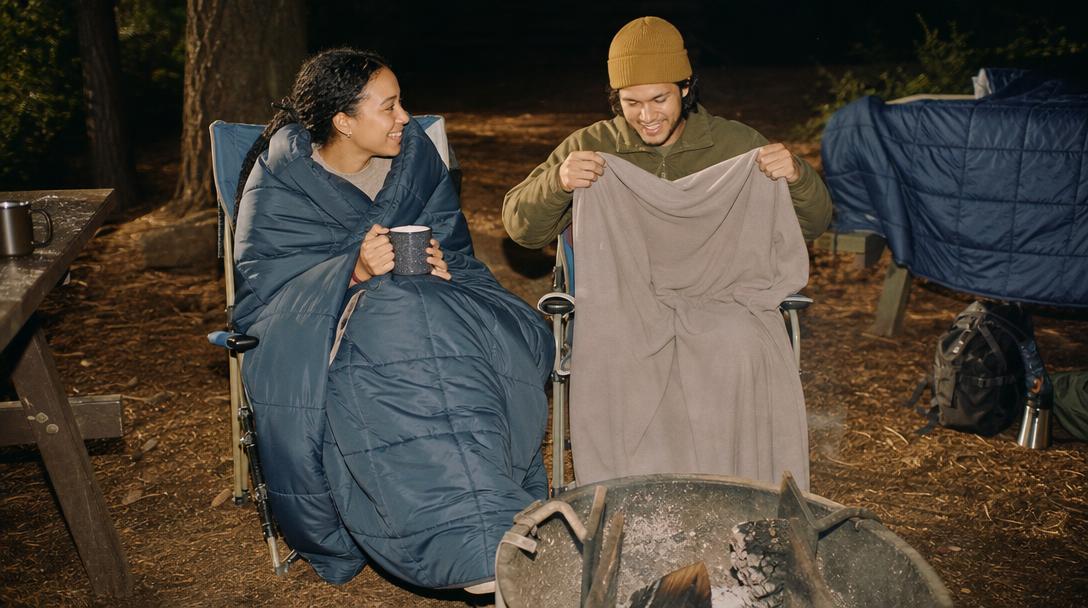
A camping blanket that doesn’t soak up moisture usually has either a synthetic shell with a DWR finish or a waterproof backing. Those are different things.
Water-Resistant vs. Waterproof Outdoor Blanket Designs
Water-resistant means the blanket can shed light moisture for a while. Dew may bead up. A little mist may roll off. But pressure, time, and heavier rain can push water through.
Waterproof usually means a coated or laminated layer blocks water. This is common on the underside of heavy-duty ground blankets.
Choose water-resistant if:
- You mainly wrap up in it
- You camp in mostly dry weather
- You want lower weight and better packability
Choose waterproof-backed if:
- You sit on wet grass
- You camp with dogs
- You use it as a picnic blanket
- You’re car camping
- You want a ground layer under kids
- You frequent beaches, tailgates, festivals, or muddy campsites
A waterproof-backed blanket can be amazing for comfort, but it may be bulky and less breathable. Great for the ground; less ideal if you want something airy and compressible.
Campfire Safety: What Fabrics Handle Sparks Best?
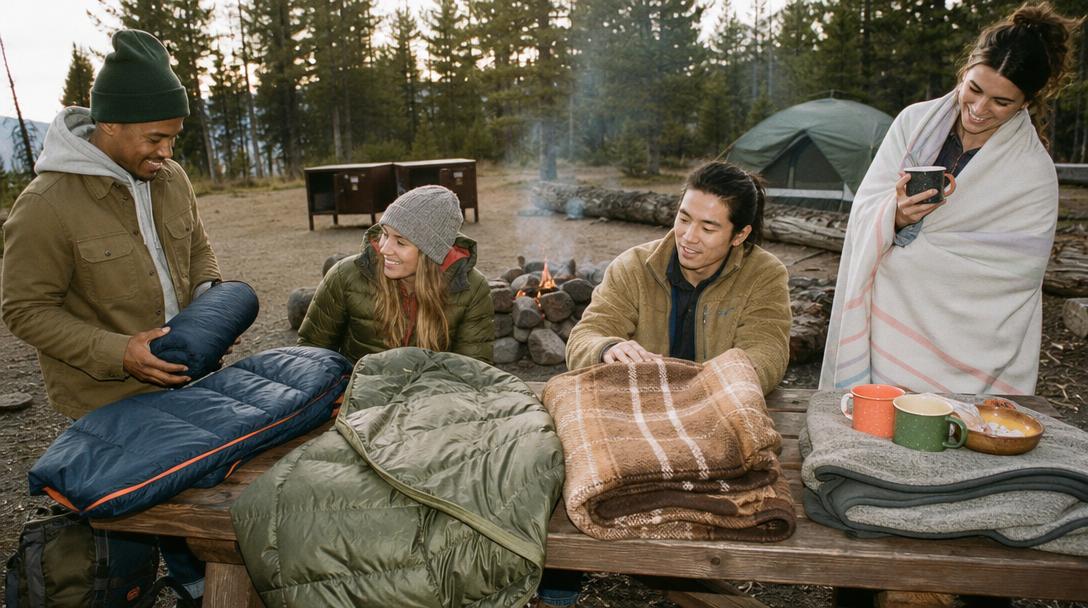
No common camping blanket should be treated as fireproof. Wool generally handles stray sparks better than fleece, polyester, nylon, or down-filled blankets with synthetic shells, but any blanket can scorch, melt, ignite, or develop holes if it gets too close to flame.
Campfire safety matters, especially because many popular puffy blankets use nylon or polyester shells. Those materials are light and weather-resistant, but they can melt from embers. Fleece can also melt or shrink away from heat. Down itself is inside the blanket, but the outer shell is usually the vulnerable part.
The U.S. Consumer Product Safety Commission notes that certain textiles can be dangerously flammable depending on fiber, construction, and surface texture. Outdoor blankets are not all tested or marketed as flame-resistant, so assume they need distance.
Use these campfire rules:
- Keep blankets several feet from open flame.
- Don’t wear a synthetic blanket like a cape while tending the fire.
- Don’t drape blankets over camp chairs that are close to the fire ring.
- Shake out blankets before packing to remove hidden embers or ash.
- Avoid loose dangling corners near flames.
- Choose wool when sparks are likely, but still keep it away from direct heat.
- Check manufacturer warnings before using any blanket near fire.
If your camping personality is “one with the smoke,” wool is your safer bet. If your blanket is puffy, shiny, ultralight, or fleece, treat sparks like tiny flying villains.
Cozy Camp and Cabin Throws: Where Woven and Sherpa Blankets Fit

Not every camping blanket has to be technical gear. If you car camp, rent cabins, travel in a van, or mostly want something warm for evenings around camp, a printed throw is often the blanket you actually reach for, and the one you keep using at home between trips.
Sherpa Blankets: The Cozy Pick for Chilly Evenings
A sherpa blanket pairs a soft printed front with a thick, fluffy sherpa back. That plush side holds warm air close to you, which makes it great for wrapping up at a lakeside campsite, in a camp chair after sunset, or on the van bed. It is not a packable backpacking blanket, and like any fleece-style fabric it should stay well back from the fire ring.
Our national park sherpa blankets come in three sizes: 30" × 40", 50" × 60", and 60" × 80". A few favorites: the Great Smoky Mountains Cabin Sherpa Blanket, the Yellowstone Falls Bison Sherpa Blanket, and the Grand Teton Barn Sherpa Blanket.
Woven Blankets: National Park Scenes for the Cabin, Van, and Couch

A woven blanket is the lighter, more decorative option, finished with fringed edges. Drape it over a camp chair, use it as a throw on the cabin couch or van bed, or hang it on the wall between trips. Our woven blankets come in 52" × 37", 60" × 50", and 80" × 60".
Popular scenes include the Great Smoky Mountains Cabin Woven Blanket, the Yellowstone Falls Bison Woven Blanket, and the Grand Teton Barn Woven Blanket. Many designs can be personalized with a family name, so check each product page for the options.
Woven or Sherpa: Which One Should You Bring?
- Choose sherpa if you want the coziest wrap for sitting around camp on cool evenings.
- Choose woven if you want a lighter throw that doubles as cabin or van decor.
- Choose either for car camping and cabin trips, and pair it with an insulated or wool blanket when the forecast turns cold.
Browse the full sherpa blanket collection and woven blanket collection.
What Is a Good Heavy-Duty Camping Blanket?
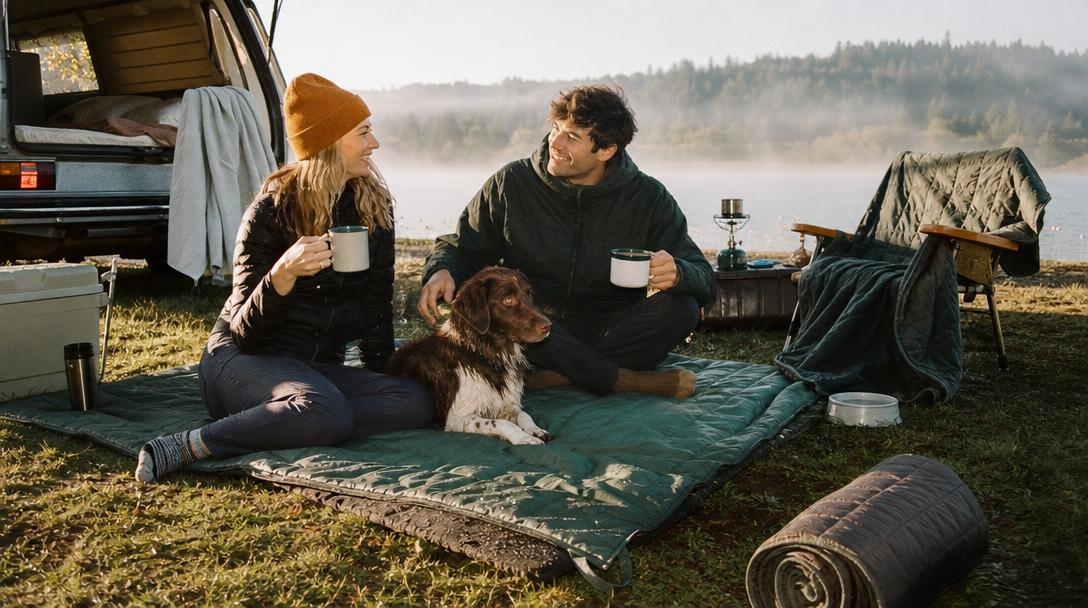
A good heavy-duty camping blanket has a durable outer fabric, reinforced edges, water-resistant or waterproof backing, washable materials, and enough weight to stay put in wind. It’s best for car camping, van life, pets, picnics, wet grass, and rough campsite use rather than backpacking.
Heavy-duty blankets are less about ultralight warmth and more about utility. They protect you from the ground, shrug off dirt, and survive campsite life.
Look for:
- Waterproof bottom layer
- Abrasion-resistant fabric
- Reinforced stitching
- Machine-washable construction
- Pet-hair-resistant surface
- Stake loops or corner loops
- Large dimensions
- Synthetic insulation or padding
A camping blanket for car camping can be heavier because you’re not carrying it 8 miles uphill. That opens the door to more durable materials, thicker padding, and waterproof undersides.
This type is ideal for:
- Families with kids
- Dog owners
- Van lifers
- Picnic-heavy campers
- Festival camping
- Beach bonfires
- Tailgating
- National Park scenic pullouts
The tradeoff is bulk. A heavy-duty blanket may be too large for backpacking and too stiff for wrapping around your shoulders comfortably.
Camping Blanket FAQ
What is the best blanket to take camping?
For most campers, a synthetic insulated blanket is the best all-around choice because it stays warm when damp and is easy to wash. Pick down for backpacking, wool for sitting near the fire, and a waterproof-backed blanket for wet ground.
Is a sherpa blanket good for camping?
Yes, for car camping, cabins, van trips, and evenings around camp. A sherpa blanket is soft and cozy, but it is bulky, not waterproof, and should be kept well away from flames.
Woven or sherpa: which blanket is better for camping?
Sherpa is the warmer, cozier choice for wrapping up. Woven is lighter and more decorative, so it works well as a camp chair throw or cabin blanket. Neither replaces a technical insulated blanket on a truly cold night.


