


Acadia National Park Dogs: Trails, Rules & Tips
Dominic PalmowskiAcadia National Park dogs hit a rare national park jackpot: roughly 100 miles of pet-friendly hiking trails, 45 miles of historic carriage roads, and three dog-friendly park campgrounds, according to the National Park Service. Your pup can do more than nap in the car while you hike, as long as you plan around leash rules, closed areas, summer crowds, ticks, hot granite, and those absolutely-not-for-paws ladder trails.
Acadia is one of the most dog-friendly national parks in the U.S., but it is not a free-for-all. Dogs must stay on a leash no longer than 6 feet, pet waste has to be packed out, and several famous spots, including Beehive, Precipice, Sand Beach in peak season, Echo Lake Beach in peak season, park buildings, and public water supply areas, are off-limits to pets.
If you are visiting with a trail-loving lab, a tiny adventure gremlin, a senior dog, a reactive pup, or a van-life copilot who believes your passenger seat is legally theirs, this guide will help you build a dog-friendly Acadia trip that is fun, safe, and ranger-approved.
Quick-Filter Acadia Dog-Friendly Trails Table
| Trail / Route | Distance | Difficulty | Surface | Dog Suitability | Best For |
|---|---|---|---|---|---|
| Ocean Path | 2.2 mi one way | Easy | Packed gravel / rocky sections | Excellent for most dogs; keep away from cliff edges | First-time visitors, sunrise walks |
| Jordan Pond Path | 3.3 mi loop | Easy–Moderate | Gravel, boardwalk, rocky shoreline | Good for steady dogs; boardwalks can be narrow | Scenic loop, moderate stamina pups |
| Eagle Lake carriage roads | Variable | Easy–Moderate | Crushed stone | Excellent for low-impact mileage | Reactive dogs, seniors, dog carts |
| Witch Hole Pond carriage road loop | About 3.3 mi | Easy | Crushed stone | Excellent for beginners and seniors | Calm walks, birding, shade |
| Jesup Path + Hemlock Path | About 1.5 mi | Easy | Boardwalk / forest path | Great for calm dogs; passing can be tight | Short morning walks, senior dogs |
| Great Head Trail | 1.4–1.9 mi | Moderate | Granite, dirt, roots | Good for agile dogs; avoid hot afternoons | Coastal views without ladders |
| Ship Harbor Trail | About 1.3 mi | Easy | Forest path, rocky coast | Great for most dogs | Quieter west-side outing |
| Wonderland Trail | About 1.4 mi | Easy | Old roadbed / gravel / shoreline rocks | Great for easy walks | Families, puppies, low-impact strolls |
| Bar Island Trail | About 1.9 mi | Easy | Gravel bar, island trail | Good if timed carefully with tides | Bar Harbor add-on |
| Cadillac North Ridge Trail | About 4.4 mi | Moderate–Strenuous | Granite, forest, exposed rock | Fit dogs only; watch heat and paws | Big views, sunrise alternatives |
| Gorham Mountain Trail | 1.8–3 mi | Moderate | Granite steps, rock, dirt | Athletic dogs in cool weather | Classic views without iron rungs |
| Schoodic Head / Anvil routes | Variable | Moderate | Forest path, granite | Good for dogs who need fewer crowds | Quieter Acadia experience |
Avoid with dogs: Beehive Trail, Precipice Trail, Jordan Cliffs sections with ladders, Beech Cliffs Trail, Ladder Trail to Dorr Mountain, Perpendicular Trail, and any other ladder or iron-rung routes listed by NPS. These are not my dog is athletic situations. These are your dog did not sign the waiver situations.
Acadia Dog Rules: What Owners Need to Know
Acadia dog rules are straightforward: pets must be leashed on a leash no longer than 6 feet, attended at all times, cleaned up after, and kept out of closed areas including ladder trails, public buildings, ranger-led programs, certain beaches during restricted seasons, Wild Gardens of Acadia, Duck Harbor Campground, and public drinking water supply areas.
Dogs are generally allowed on:
- Most hiking trails without ladders or iron rungs
- All carriage roads
- Blackwoods Campground
- Seawall Campground
- Schoodic Woods Campground
- Isle au Haut for day hiking only
- Many paved roads and parking areas, on leash
Dogs are not allowed in:
- Public buildings, including visitor centers
- Ranger-led programs
- Wild Gardens of Acadia
- Duck Harbor Campground on Isle au Haut
- Lakes and ponds that are public drinking water supplies
- Sand Beach and Echo Lake Beach during restricted seasons
- Ladder trails and iron-rung routes, including Beehive and Precipice
The 6-foot leash rule is not optional
NPS federal rules require pets to be on a leash no longer than 6 feet. Retractable leashes only comply if they are locked at 6 feet or shorter.
That matters in Acadia because trails can be narrow, cliffs are real, porcupines are rude, and not every hiker or dog wants a surprise nose-to-nose meeting on a boardwalk. For a refresher on passing, yielding, and keeping trails pleasant for everyone, read our guide to hiking etiquette and trail rules.
Are Dogs Allowed on Acadia Beaches?
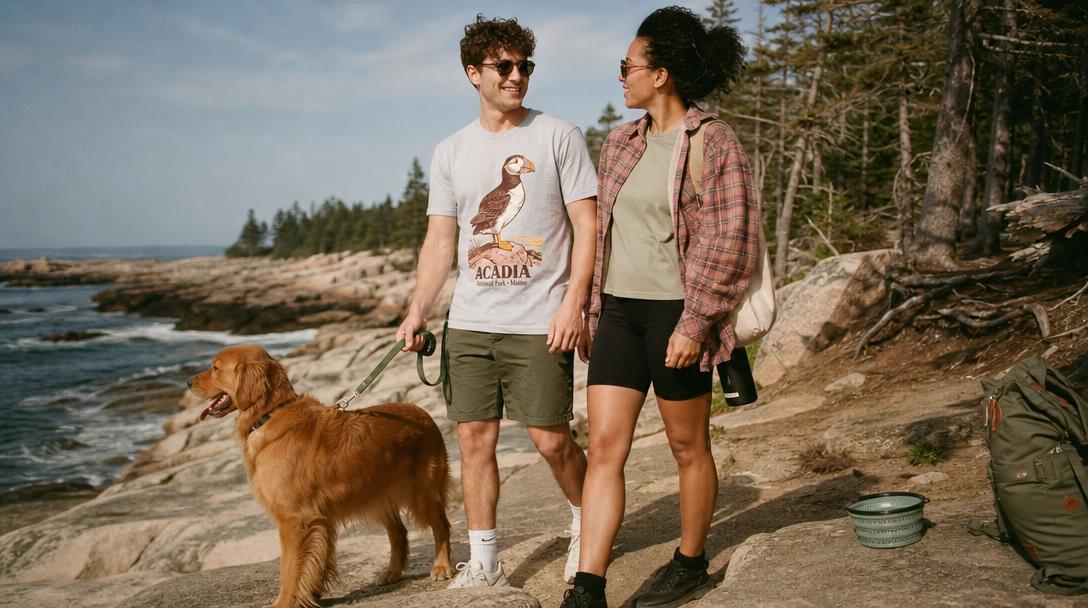
Dogs are allowed on some Acadia beach areas seasonally, but they are restricted from Sand Beach and Echo Lake Beach during the busy swimming season. Outside restricted dates, leashed dogs may be permitted in certain beach areas, but you should always check the current NPS pet page before planning a beach day.
Beach rules are one of the easiest places to mess up your dog-friendly Acadia trip because the answer changes by season.
In general:
- Sand Beach: pets are restricted during the main visitor season.
- Echo Lake Beach: pets are restricted during the main visitor season.
- Rocky shoreline areas: many are accessible on leash, but use caution around waves, slippery rocks, and tidepools.
- Public water supplies: no pets, swimming, or wading.
A good alternative to a beach hangout is a coastal walk like Ocean Path, Ship Harbor, or Wonderland Trail, where your dog still gets the salty-sniff experience without breaking beach rules.
Best Dog-Friendly Hikes in Acadia National Park by Dog Type
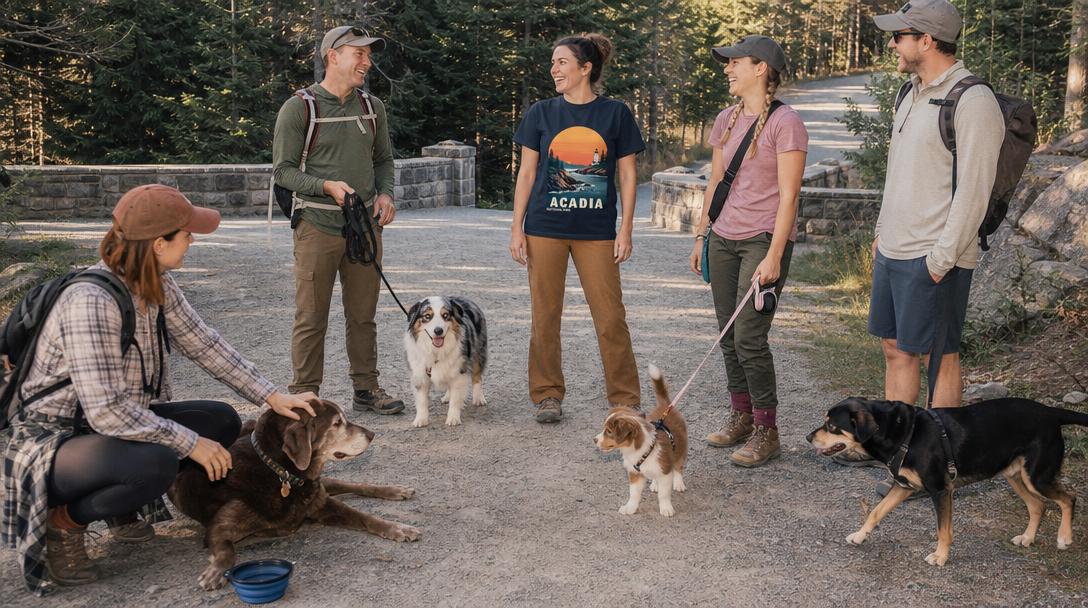
The best dog-friendly hikes in Acadia National Park depend on your dog’s fitness, paw toughness, heat tolerance, reactivity, and comfort with crowds. Ocean Path, Witch Hole Pond, Jesup Path, Wonderland, Ship Harbor, and selected carriage roads are the safest all-around choices for most leashed dogs.
For first-time Acadia dogs
- Ocean Path for iconic views and flexible turnaround points
- Wonderland Trail for a gentle, short walk
- Ship Harbor Trail for a quieter coastal outing
- Witch Hole Pond carriage road loop for smooth footing and a calmer vibe
For senior dogs or mobility-limited dogs
- Carriage roads near Eagle Lake
- Witch Hole Pond carriage roads
- Jesup Path and Hemlock Path
- Short sections of Ocean Path
Bring a harness with a handle if your dog needs help over rocks or into the car. A collapsible water bowl and cooling bandana can also save the day.
For puppies
Puppies need short distances, soft expectations, and plenty of rest. Avoid long exposed granite hikes, crowded boardwalks, and hot midday pavement.
- A short out-and-back on Wonderland Trail
- A partial walk on Ocean Path
- A quiet carriage road stroll
- A low-stimulation sniff walk near your campground
Also: do not overdo it. Puppy joints are still developing, and Acadia’s granite can be tougher than it looks.
For reactive dogs
Acadia can be crowded, especially from late spring through fall. Choose wide carriage roads, early mornings, weekdays, and less-trafficked areas.
- Schoodic Peninsula trails
- Carriage roads at sunrise
- Wonderland or Ship Harbor early in the day
- Non-peak weekdays
Avoid narrow boardwalks and famous midday routes where passing space is limited.
Easy Acadia Hikes With Dogs for Low-Stress Days
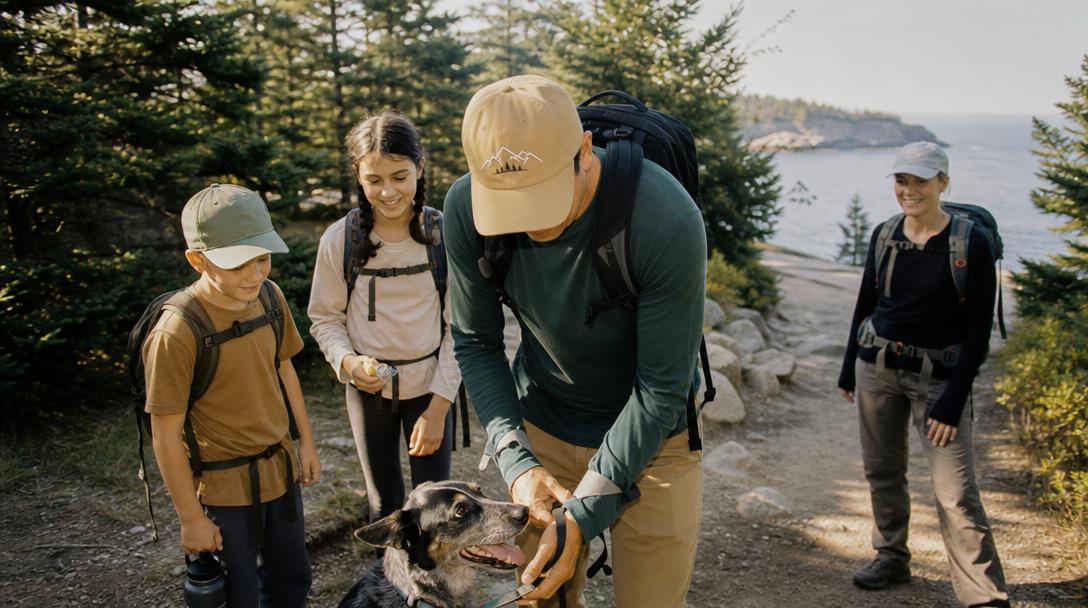
Easy Acadia hikes with dogs include Ocean Path, Wonderland Trail, Ship Harbor Trail, Witch Hole Pond carriage roads, and Jesup Path. These routes offer manageable mileage, scenic views, and fewer technical obstacles than Acadia’s steep granite summit trails, making them better for beginners, seniors, puppies, and casual hikers.
A few notes from the your dog cannot read the map department:
- Easy does not mean hazard-free. Ocean Path has cliffy sections nearby.
- Boardwalks can be stressful. Keep your dog close and yield when needed.
- Granite gets hot. If you cannot hold your hand on the rock comfortably, paws may not love it either.
- Water views do not mean dog water access. Many lakes and ponds are drinking water supplies.
If your family is already juggling snacks, kids, parking, and one dog who just discovered squirrels, choose shorter hikes and build in downtime. Nobody wins when the itinerary becomes a forced march with better scenery.
Seasonal Planning for Dog-Friendly Acadia

Acadia’s dog experience changes a lot by season. Spring brings mud and ticks, summer brings heat and crowds, fall brings cooler hiking and peak foliage traffic, and winter brings quiet trails but limited road access. Dog owners should plan around beach restrictions, campground seasons, paw safety, and parking pressure.
Spring: April to May
Spring can be beautiful, but trails may be wet, muddy, or still recovering. Tick checks become important as temperatures rise, carriage roads may temporarily close during mud season, and campground availability varies by date.
Best for: quieter hikes, cool-weather dogs, flexible travelers.
Summer: June to August
Summer is peak Acadia. It is also peak why is every parking lot full before breakfast season.
Dog planning notes:
- Start hikes very early.
- Avoid exposed granite in midday heat.
- Beach restrictions are in effect at popular swim beaches.
- Never leave your dog in a parked vehicle.
- Carry more water than you think you need.
Best for: sunrise walks, shaded carriage roads, campground-based exploring.
Fall: September to October
Fall may be the sweet spot for Acadia National Park dogs: cooler temps, fewer bugs, and spectacular color. But foliage season can still be extremely busy.
Dog planning notes:
- Book lodging or campsites early.
- Expect crowds at Jordan Pond, Cadillac, and Ocean Path.
- Watch for hunting seasons outside park boundaries if exploring nearby lands.
- Ticks can still be active.
Best for: longer hikes, senior dogs who dislike heat, scenic road trips.
Winter: November to March
Winter is quiet and gorgeous, but services and road access are limited. Sections of Park Loop Road usually close to vehicles in winter, so check current NPS conditions before you go.
Dog planning notes:
- Bring paw protection for ice, salt, and crusty snow.
- Check road and trail closures.
- Expect limited bathrooms and services.
- Use extra caution near icy cliffs and shoreline rocks.
Best for: solitude, experienced winter walkers, dogs with good cold-weather gear.
Acadia Camping With Dogs: Where to Stay Inside the Park
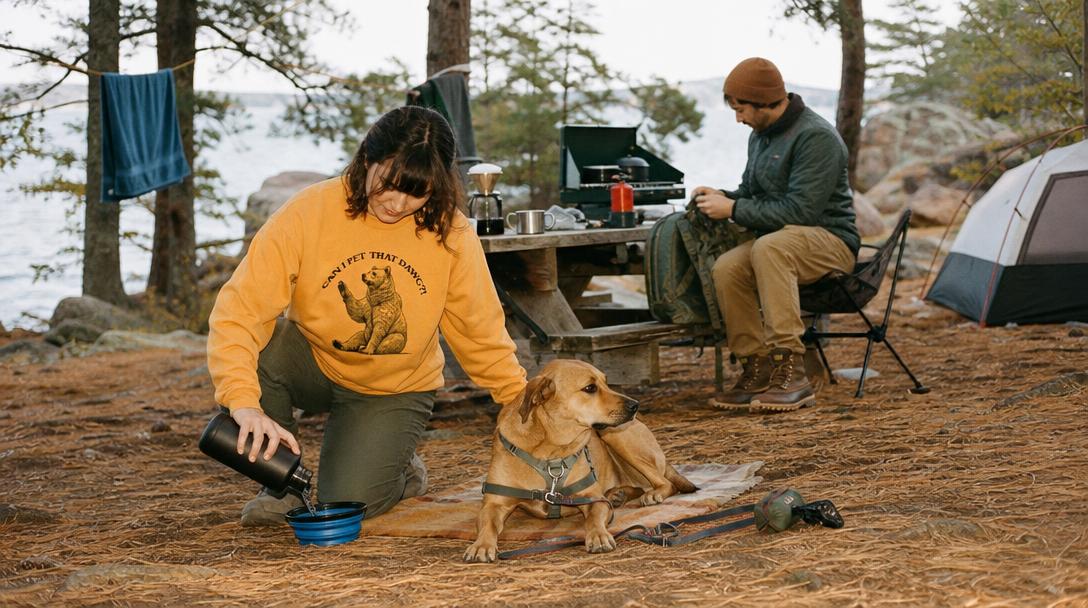
Acadia camping with dogs is allowed at Blackwoods, Seawall, and Schoodic Woods campgrounds, according to the National Park Service. Pets must remain leashed, attended, and under control, and owners must clean up waste. Duck Harbor Campground on Isle au Haut does not allow pets.
For broader planning beyond Acadia, our dog-friendly camping guide covers campsite manners, packing, and comfort tips for camping with pups.
Blackwoods Campground
Best for first-time visitors who want to be close to Bar Harbor, Park Loop Road, and classic Acadia sights.
Good for short trips, early Ocean Path starts, families, and dogs who handle campground activity well. Watch for crowds, less solitude, and no showers inside the campground.
Seawall Campground
Best for a quieter Mount Desert Island base near Southwest Harbor and the less hectic but still gorgeous side of Acadia.
Good for dogs who need calmer surroundings, Ship Harbor, Wonderland Trail, slower-paced trips, and families avoiding Bar Harbor congestion. Watch for longer drives to some east-side sights.
Schoodic Woods Campground
Best for solitude seekers and dogs who prefer fewer crowds.
Good for reactive dogs, RV and van travelers, quiet hiking, and exploring the Schoodic Peninsula. Just remember that it is about an hour from the main Mount Desert Island section by car.
Van-Life and RV Tips for Visiting Dog-Friendly Acadia
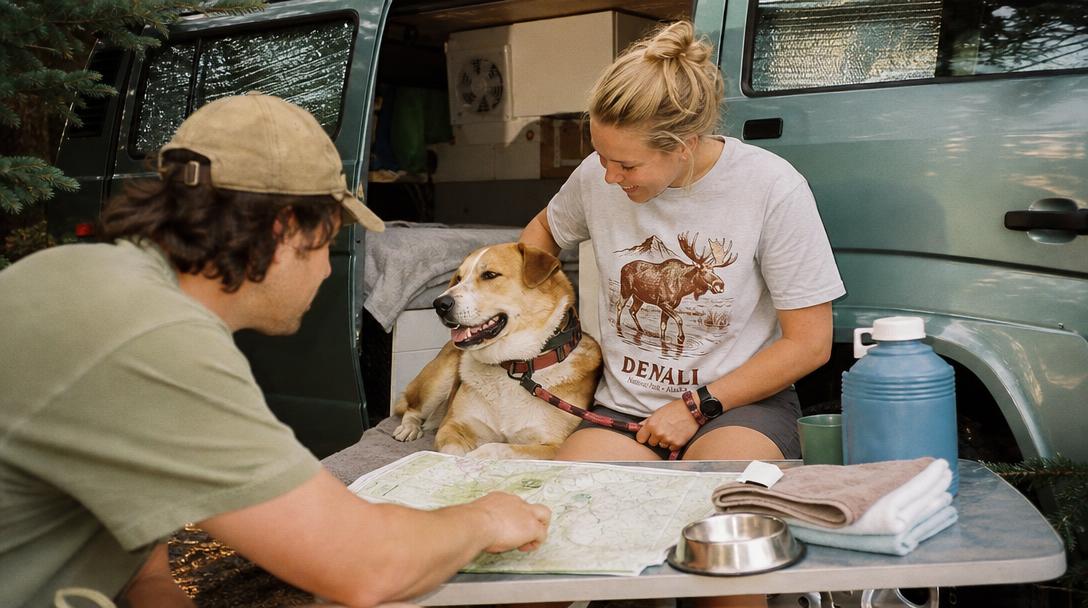
Van-life and RV travelers with dogs should reserve legal campsites, avoid overnight parking outside campgrounds, use dump stations at park campgrounds where available, and plan carefully for heat. Acadia does not allow random overnight parking, and larger vehicles face restrictions on roads such as Cadillac Summit Road.
NPS rules do not allow backcountry camping or overnight parking outside designated campgrounds. If you are sleeping in your vehicle, you need a legal campsite.
Dog-safe heat strategies:
- Book shaded campsites when possible.
- Hike at sunrise and near sunset.
- Use reflective window covers and ventilation fans.
- Never rely on I will only be gone five minutes.
- Have a human stay with the dog if you need to enter a no-pets building.
- Consider dog daycare or pet-friendly local services for non-dog activities.
Cadillac Summit Road requires seasonal vehicle reservations, and vehicles over 21 feet, including attachments, are prohibited according to Recreation.gov. If your rig is larger, enjoy Cadillac another way or leave the RV at camp and drive a smaller vehicle.
Are Dogs Allowed in Bar Harbor?
Yes, dogs are allowed in Bar Harbor public areas as long as they are leashed and well managed, but individual shops, restaurants, inns, patios, and tours set their own pet policies. Bar Harbor is a convenient dog-friendly base for Acadia, especially if you plan walks, outdoor dining, and pet-friendly lodging ahead.
Tips for Bar Harbor with dogs:
- Walk early before sidewalks get crowded.
- Confirm hotel pet fees and size limits before booking.
- Ask restaurants before assuming patio dogs are welcome.
- Bring a settle mat for outdoor meals.
- Skip crowded downtown blocks if your dog is reactive.
If you are building a full park plan around dog-friendly stops and human-only sights, pair this guide with our list of what to do at Acadia National Park.
What Is the Most Dog-Friendly National Park?
Acadia is often considered one of the most dog-friendly national parks because it allows leashed dogs on about 100 miles of hiking trails and 45 miles of carriage roads. Other famously dog-friendly national parks include Shenandoah and Petrified Forest, but Acadia stands out for scenic trail access, coastal variety, and campground options.
Many national parks restrict dogs to roads, parking lots, campgrounds, and a few paved paths. Acadia is different because your dog can join you on many real hikes, not just the scenic overlook shuffle.
That said, most dog-friendly depends on what your dog enjoys:
- Best for hiking access: Acadia and Shenandoah
- Best for wide-open desert walks: Petrified Forest
- Best for paved scenic access: Cuyahoga Valley
- Best for coastal variety: Acadia
Do You Need Bear Spray in Acadia?
You generally do not need bear spray for a typical Acadia visit. Black bears are not a common concern for most park visitors, and Acadia’s safety guidance focuses more on keeping distance from wildlife, leashing pets, avoiding cliff hazards, preparing for weather, and preventing tick bites.
Your bigger dog-related safety concerns are usually:
- Ticks
- Porcupines
- Heat stress
- Paw injuries on granite
- Cliffs and steep drop-offs
- Crowded trails
- Dehydration
- Slippery rocks and tide zones
For most Acadia dog hikers, a short leash, route awareness, and avoiding wildlife encounters in the first place matter more than extra deterrents.
Are Ticks Common in Acadia?
Yes, ticks are common in coastal Maine, including the Acadia region, especially in grassy, brushy, and wooded areas from spring through fall. Dog owners should use veterinarian-approved tick prevention, stay on trail, check dogs after every hike, and remove ticks promptly with a proper tick tool.
After each hike:
- Check your dog’s ears, neck, collar area, armpits, belly, groin, and between toes.
- Check yourself too, especially socks, waistline, and hairline.
- Use a fine-tipped tick remover.
- Save or photograph the tick if you may need identification.
- Ask your vet about Lyme disease prevention before the trip.
Light-colored casual layers make ticks easier to spot during campground downtime and cool Maine mornings. If you want an easy cotton or cotton-blend graphic tee for rest days, town walks, and post-hike photos, Hike Tee’s Acadia National Park Shirt and Acadia Maine Vintage Shirt fit the park mood without pretending to be technical performance gear.
Acadia National Park With Dog Itinerary: 1–3 Days
A good Acadia National Park with dog itinerary should combine early starts, easy-to-moderate trails, rest breaks, shaded routes, and crowd avoidance. Build your days around your dog’s stamina and your campground or lodging location rather than trying to cram every famous viewpoint into one overexcited schedule.
One-day dog-friendly Acadia itinerary
Best for first-timers, families, and moderate-energy dogs.
- Early morning: Walk Ocean Path from the Sand Beach area toward Otter Point. Start at sunrise to avoid crowds and heat.
- Late morning: Drive scenic portions of Park Loop Road, stopping only where parking is safe and legal.
- Midday: Rest at your lodging or campground. Let your dog nap. You should nap too. Vacation law.
- Afternoon: Explore Witch Hole Pond carriage road loop or a short carriage road section.
- Evening: Dog-friendly dinner in Bar Harbor or a quiet picnic outside the busiest areas.
Two-day itinerary: Mount Desert Island balance
- Day 1: East side classics
- Ocean Path early
- Jordan Pond Path if your dog handles narrow passing areas
- Carriage road stroll near Eagle Lake
- Day 2: Quiet west side
- Wonderland Trail
- Ship Harbor Trail
- Seawall picnic area
- Sunset from a dog-allowed roadside viewpoint
Three-day itinerary: lower crowds and better pacing
Best for reactive dogs, senior dogs, RV travelers, or anyone who hates rushing.
- Day 1: Bar Harbor and Park Loop Road
- Ocean Path sunrise
- Midday rest
- Bar Harbor leash walk during quieter hours
- Day 2: Southwest Harbor side
- Wonderland Trail
- Ship Harbor Trail
- Relaxed campground or picnic time
- Day 3: Schoodic Peninsula
- Drive to Schoodic early
- Explore dog-friendly trails and overlooks
- Enjoy fewer crowds and more breathing room
If your dog gets overstimulated, swap one hiking block for a sniffy campground walk. Dogs do not care if you maximize the itinerary. Dogs care about smells, snacks, and whether you remembered the good water bowl.
Dog-Friendly Acadia Packing List
A smart dog packing list for Acadia should cover leash compliance, hydration, ticks, paw protection, heat, waste cleanup, and downtime. Bring a 6-foot leash, extra water, collapsible bowl, waste bags, tick remover, dog first-aid basics, and a towel for mud, rain, and surprise ocean enthusiasm.
Pack these before you go:
- 6-foot leash, plus backup leash
- Harness with ID tags
- Updated microchip information
- Proof of rabies vaccination
- Collapsible water bowl
- More water than usual
- High-value treats
- Waste bags
- Tick remover
- Vet-approved tick prevention
- Paw balm or booties
- Dog towel
- Cooling bandana for summer
- Insulating layer for cold-weather dogs
- Settle mat for patios and campsites
- First-aid kit
For humans, bring comfortable layers for shifting coastal weather. A casual graphic tee is great for campground mornings, Bar Harbor strolls, and easy non-technical walks; the Acadia National Park Puffin Shirt is an easy choice if your trip style is more coastal wildlife energy than summit-race energy.
Frequently Asked Questions
What is the most dog-friendly National Park?
Acadia is one of the most dog-friendly national parks because it allows leashed dogs on about 100 miles of trails and 45 miles of carriage roads. Shenandoah and Petrified Forest are also strong contenders, but Acadia’s mix of coastal scenery, carriage roads, campgrounds, and nearby dog-friendly towns makes it especially useful for trip planning.
Are dogs allowed in Bar Harbor?
Yes, dogs are allowed in Bar Harbor public areas when leashed, but businesses, lodging, patios, and tours set their own rules. Book pet-friendly lodging early and confirm fees, size limits, and patio policies before you arrive.
Do you need bear spray in Acadia?
Most visitors do not need bear spray in Acadia. Your bigger safety concerns with dogs are ticks, heat, cliffs, slippery rocks, porcupines, and crowded trails.
Are ticks common in Acadia?
Yes, ticks are common in the Acadia region, especially from spring through fall. Use vet-approved tick prevention, stay on trail, and check your dog thoroughly after every hike.
What are the best dog-friendly hikes in Acadia National Park?
The best dog-friendly hikes in Acadia National Park for most visitors are Ocean Path, Wonderland Trail, Ship Harbor Trail, Witch Hole Pond carriage roads, Jesup Path, and selected Eagle Lake carriage roads. Fit, experienced dogs may enjoy moderate routes like Great Head or Gorham Mountain in cool weather.
Is Acadia camping with dogs allowed?
Yes, Acadia camping with dogs is allowed at Blackwoods, Seawall, and Schoodic Woods campgrounds. Dogs must be leashed, attended, cleaned up after, and kept out of restricted areas; Duck Harbor Campground on Isle au Haut does not allow pets.
Final Trail Notes for a Paw-Friendly Acadia Trip
Acadia is unusually generous to dogs by national park standards, but the best trips happen when you plan around your actual dog, not your fantasy itinerary.
Key takeaways:
- Dogs are allowed on many Acadia trails and all carriage roads.
- A 6-foot leash is required.
- Avoid ladder trails, restricted beaches, park buildings, public water supplies, and Duck Harbor Campground.
- Choose easy Acadia hikes with dogs if you are visiting in summer, traveling with kids, or managing a senior, puppy, or reactive pup.
- Book dog-friendly camping or lodging early.
- Check for ticks after every hike.
- Never leave your dog in a hot vehicle.
- Use early mornings to beat crowds, heat, and parking chaos.
For your next step, choose your home base first, then build hikes within a short drive instead of zigzagging all over Mount Desert Island. Your dog will get more trail time, you will spend less time hunting for parking, and everyone will have a better chance of ending the day pleasantly tired instead of feral.
Which, honestly, is the whole point of going outside.


