


Dog Friendly Camping Guide | Hike Tee
Dominic PalmowskiDog Friendly Camping Starts With Knowing Your Dog
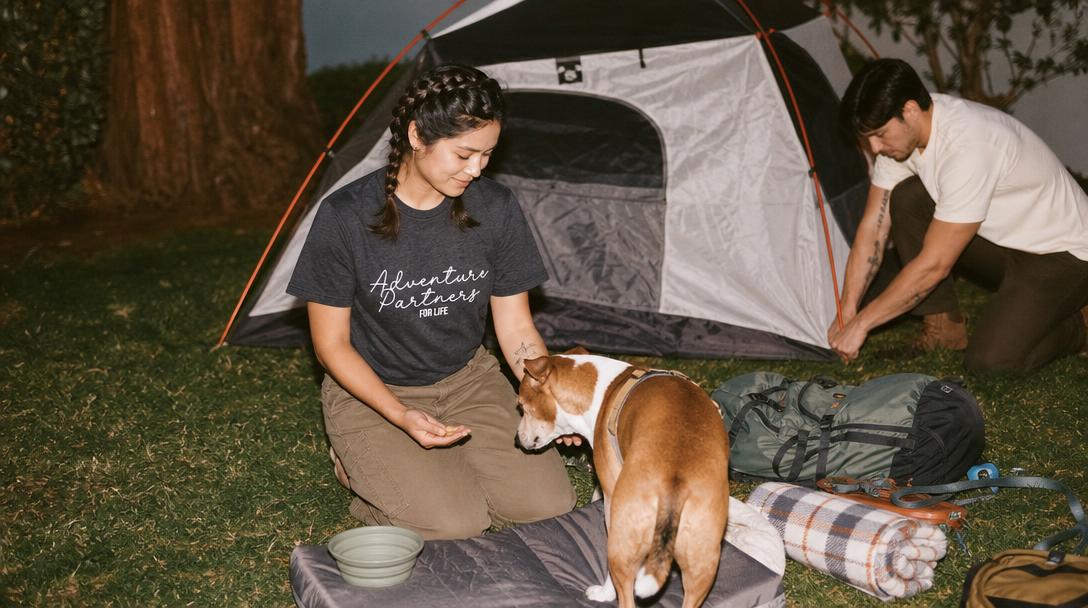
Before booking a campsite, ask the honest question: is your dog ready for camping?
Some dogs are born trail buddies. Others hear one raccoon in the bushes and decide the entire forest must be notified immediately.
Your dog is probably a good fit for camping if they:
- Settle down reasonably well in new places
- Respond to basic cues like come, leave it, and quiet
- Can be calm around people, dogs, bikes, kids, and wildlife smells
- Are comfortable sleeping in a tent, car, crate, or camper
- Are healthy enough for the planned weather and activity level
Camping may be stressful if your dog has severe reactivity, uncontrolled barking, intense separation anxiety, poor recall, or fear of new environments. That does not mean never. It just means you may want to start with a backyard campout, a one-night trip close to home, or a quiet private campground before attempting a busy national park weekend.
According to PetMD, dogs should be vaccinated, microchipped, and current on parasite prevention before camping, especially when traveling away from home or into tick-heavy areas.
Is It a Good Idea to Take Your Dog Camping?
Yes — taking your dog camping can be a great idea if your dog is healthy, comfortable outdoors, and welcome where you are going.
Dogs benefit from fresh air, movement, new smells, and time with their favorite humans. You benefit from having the world’s most enthusiastic hiking partner along for the adventure. That said, camping is not automatically relaxing for every dog.
It is a good idea when:
- The campground allows dogs
- The weather is safe
- Your dog can be supervised at all times
- You bring the right dog camping essentials
- You have a backup plan if your dog gets stressed, injured, or overheated
It is not a good idea when:
- Temperatures are dangerously hot or cold
- The campground has strict pet restrictions that do not fit your plans
- Your dog cannot settle around other campers
- You plan activities where dogs are not allowed
- You will need to leave your dog unattended for long stretches
A quick trial run helps. Set up your tent at home or in the backyard. Let your dog sniff the sleeping area, try the portable bed, eat from the travel bowl, and practice being tethered while supervised. This turns camp gear from suspicious nylon cave into snack zone.
Dog Camping Checklist: What to Pack Before You Go
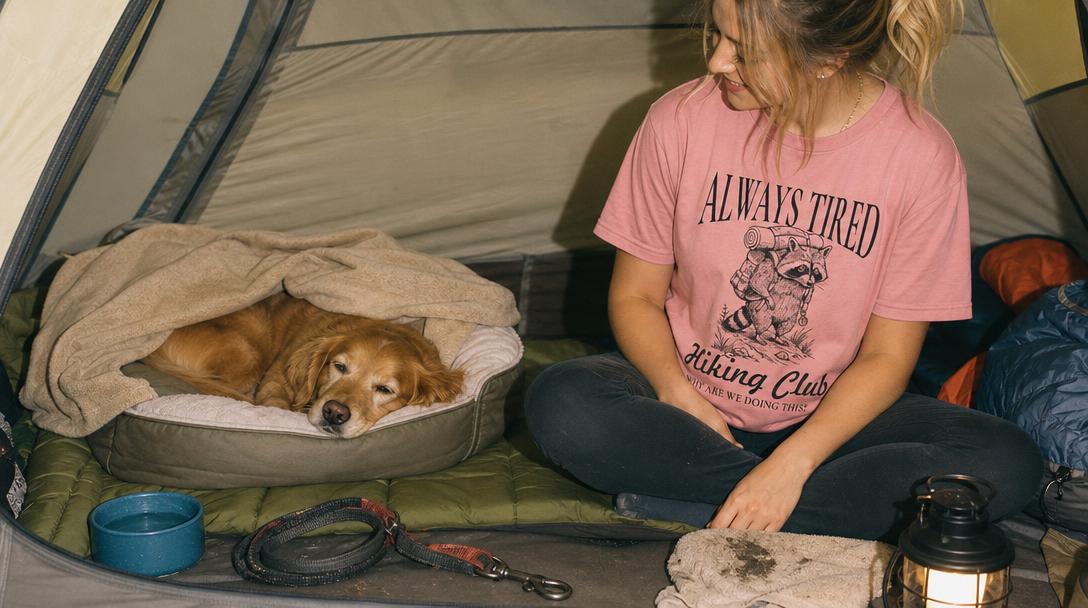
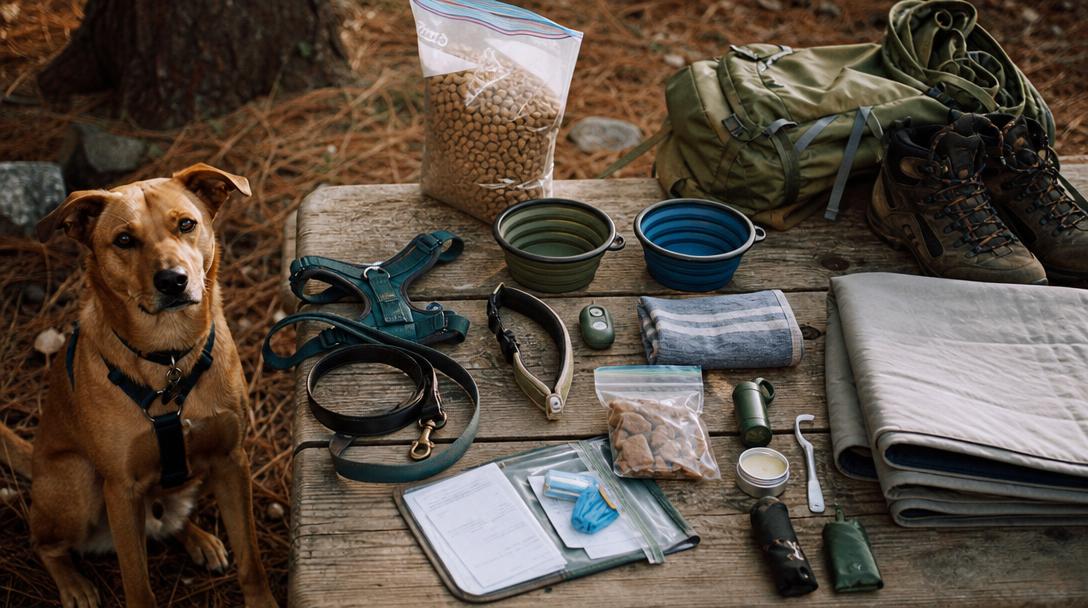
A practical dog camping checklist keeps your pup safe and keeps you from muttering about the forgotten leash at a trailhead two hours from home. If you want a broader human-and-dog packing framework, pair this list with our ultimate camping trip checklist.
Core Dog Camping Essentials
- Collar with current ID tags
- Updated microchip information
- Six-foot leash or shorter, depending on campground rules
- Backup leash
- Well-fitted harness
- Long line or tie-out for supervised campsite use
- Collapsible food and water bowls
- Regular food, plus extra in case of delays
- Treats for training and recall rewards
- Fresh water or a water filter suitable for backcountry use
- Poop bags — more than you think you will need
- Towel for mud, rain, lake splashes, and mysterious dog decisions
- Copy of vaccination records, digital or printed
- Any medications your dog takes
- Tick, flea, and heartworm prevention as recommended by your vet
Camping Gear for Dogs That Makes Life Easier
- Portable dog bed for camping
- Insulated sleeping pad or blanket
- Dog sleeping bag for cold nights
- Cooling mat or cooling vest for warm-weather trips
- Dog boots for hot rock, sharp terrain, snow, or rough trails
- Reflective collar, harness, or clip-on LED light
- Dog backpack for experienced dogs on moderate hikes
- Crate or soft-sided kennel if your dog is crate-trained
- Car seat cover or crash-tested travel harness
- Paw balm for dry, icy, or abrasive ground
- Dog-safe wipes for cleaning paws before entering the tent
Buyer tip: the best camping gear for dogs is usually lightweight, washable, quick-drying, and boringly reliable. This is not the moment for fancy gear that looks cute online but fails when your dog rolls in wet pine needles.
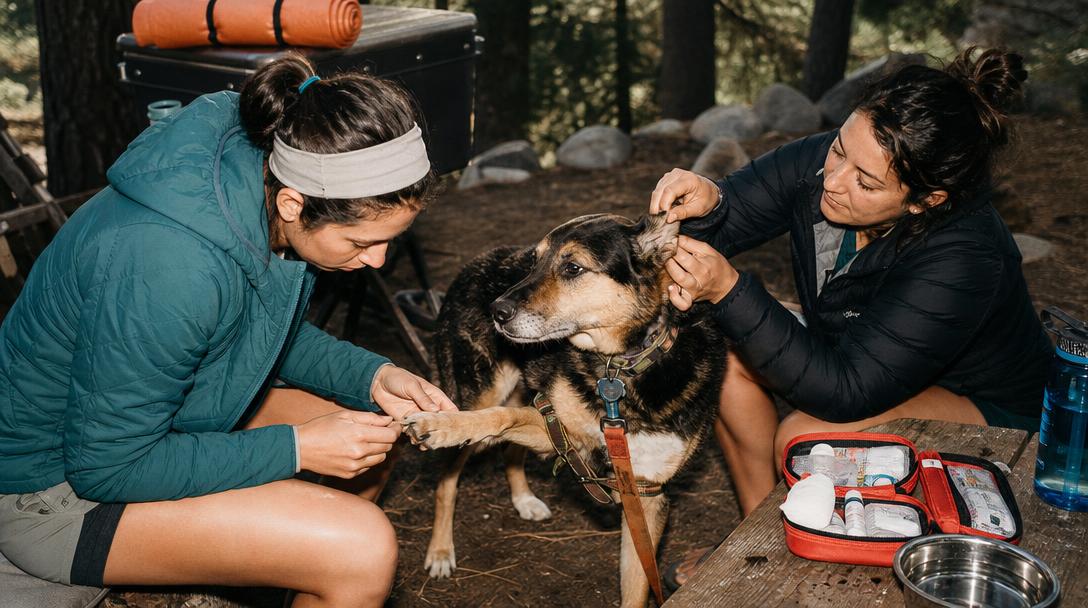
Dog First-Aid Kit
- Gauze pads and roll gauze
- Self-adhering bandage wrap
- Antiseptic wipes
- Tweezers or tick remover
- Saline rinse
- Styptic powder for minor nail bleeding
- Digital thermometer
- Benadryl only if your vet has approved dosage
- Emergency blanket
- Muzzle or soft wrap, because even sweet dogs may bite when hurt
- Your vet’s number and the nearest emergency vet near your campsite
Before traveling, save the closest 24-hour veterinary clinic in your phone. If cell service is sketchy, write it down too. Paper is still undefeated when batteries give up.
Best Camping Gear for Dogs by Situation
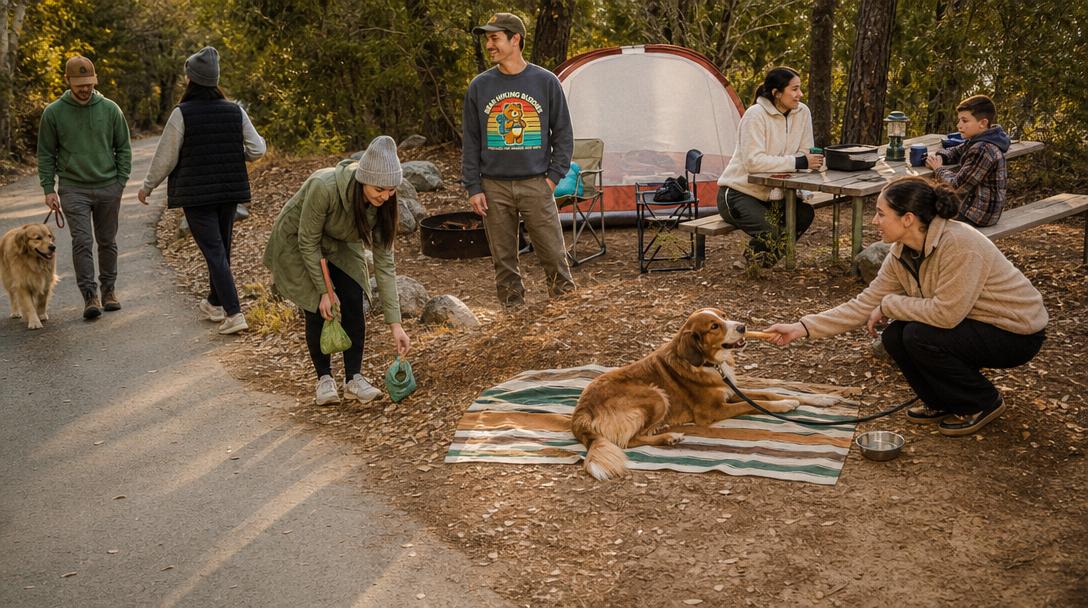
Best Camping Gear for Dogs for Tent Camping
- A portable dog bed for camping
- A blanket or insulated pad
- Clip-on light for nighttime visibility
- Towel for wet paws
- A designated sleeping spot inside the tent
Dogs can puncture inflatable sleeping pads with their claws, so trim nails before the trip and consider a durable foam pad or washable dog mat. For a more comfortable site layout, use these camp setup ideas for outdoor adventures to plan shade, storage, sleeping zones, and dog-safe traffic flow.
Best Camping Gear for Dogs for Hot-Weather Camping
- Shade tarp or canopy
- Cooling vest or cooling mat
- Extra water
- Electrolyte guidance from your vet if needed
- Early morning and evening hike plans
Watch for heat stress: heavy panting, drooling, weakness, vomiting, confusion, or collapse. If you see these signs, move your dog to shade, offer cool water, wet their body with cool — not ice-cold — water, and seek veterinary help.
Best Camping Gear for Dogs for Cold-Weather Camping
- Insulated dog bed or sleeping pad
- Dog jacket or fleece
- Dry towel
- Paw protection
- Extra calories if your vet recommends it for active cold-weather trips
Small dogs, short-haired breeds, senior dogs, and puppies lose heat faster. If you are cold in your sleeping bag, your dog may be cold too — especially if they are lying directly on the ground.
Camping With Dogs on Hikes From Camp
- Leash and harness
- Water and bowl
- Poop bags
- Tick remover
- Paw protection
- Snacks
- Trail map
- Light or reflective gear if hiking near dusk
If your dog wears a pack, start light. Many outdoor sources recommend dogs carry no more than about 25% of their body weight, and less is better for beginners, seniors, or hot weather.
Where Should My Dog Sleep While Camping?
Your dog should sleep somewhere secure, warm, dry, and close to you — usually inside your tent, camper, vehicle setup, or crate.
For most tent campers, the best option is inside the tent on a portable dog bed or insulated pad. This keeps your dog protected from wildlife, weather, insects, and late-night wandering. It also helps prevent barking because your dog can see and smell you nearby.
Good sleeping options include:
- Inside the tent on a dog bed
- In a crate inside a tent or camper, if crate-trained
- In an RV or camper with proper ventilation and temperature control
- In your vehicle only if it is safe, ventilated, temperature-controlled, and allowed by the campground
Avoid having your dog sleep outside tied to a tree. Even if your dog is calm, nighttime wildlife encounters, weather changes, tangled lines, and campground rules can turn that into a bad situation quickly.
Can You Leave Your Dog Unattended at a Campsite?
No, you generally should not leave your dog unattended at a campsite.
Many campgrounds prohibit unattended pets, and for good reason. A dog left alone can bark, escape, chew through gear, become tangled in a tether, overheat in a tent or vehicle, or attract wildlife. Even friendly dogs can panic when their people disappear in an unfamiliar place.
If you need to shower, use the restroom, or run to the camp store:
- Have another person stay with your dog
- Bring your dog if allowed
- Ask campground staff about specific pet rules
- Keep outings short and planned
- Never leave your dog in a hot car, closed tent, or unsafe weather
A tent can heat up surprisingly fast in the sun. Treat it like a car: not a safe unattended holding area.
Safety Protocols for Camping With Dogs
Hydration and Water Safety
Dogs need steady access to clean water at camp and on the trail. A common baseline is about one ounce of water per pound of body weight per day, but active dogs, hot weather, dry climates, and long hikes can increase that need.
Do not rely on streams or lakes without treating the water. Natural water can contain giardia, bacteria, algae, or pollutants. Blue-green algae, in particular, can be extremely dangerous to dogs.
Tick Checks and Paw Checks
Do a quick dog inspection after hikes and before bed:
- Check ears
- Look between toes
- Feel under the collar and harness
- Inspect armpits and belly
- Look for burrs, cuts, swelling, or limping
Ticks love hidden spots. Your dog loves charging through exactly those spots. Nature has a sense of humor, apparently.
Wildlife Encounters While Camping With Dogs
Keep your dog leashed in wildlife areas. Dogs can provoke defensive behavior from bears, moose, coyotes, snakes, porcupines, skunks, and other animals.
Safety basics:
- Store dog food like human food
- Use bear boxes where required
- Never keep dog food in your tent
- Keep your dog close at dawn, dusk, and nighttime
- Practice leave it before the trip
- Do not let your dog chase wildlife
The National Park Service encourages pet owners to follow B.A.R.K. principles: Bag your pet’s waste, Always leash your pet, Respect wildlife, and Know where you can go.
Campsite Etiquette for Pet Friendly Camping
Good campsite etiquette is what keeps pet friendly camping available for everyone. One chaotic weekend from a few campers can lead to stricter rules for all dog owners.
Keep Your Dog Leashed and Under Control
Most developed campgrounds require dogs to be leashed, often with a maximum leash length of six feet. Retractable leashes are not ideal in campgrounds because they can wrap around picnic tables, trip neighbors, or let dogs rush into another site.
Use a short leash when walking through campground loops. Use a supervised tether only within your own site, and make sure your dog cannot reach roads, neighboring sites, fire rings, cooking areas, or passing dogs.
Manage Barking Before It Becomes a Campground Soundtrack
A little barking happens. Your dog is in a forest full of smells, kids on scooters, other dogs, and chipmunks living rent-free in their head.
But constant barking is not fair to other campers.
Try:
- Feeding dinner before peak evening activity
- Bringing a chew or lick mat for calm time
- Covering a crate partially to reduce visual triggers
- Rewarding quiet behavior
- Choosing a site away from restrooms, dumpsters, or busy paths
- Camping midweek if your dog is easily overstimulated
Quiet hours apply to dogs too. Sadly, the song of his people is not usually accepted by campground hosts.
Pick Up Waste Every Time
Always bag dog poop and dispose of it in designated trash. Do not leave bags on the trail to grab later unless you are truly grabbing them on the way back. Forgotten poop bags are basically sad little plastic trail ornaments.
Leave No Trace principles apply to pets, too. Dog waste can contaminate water, spread disease, and affect wildlife.
Respect Other Campers’ Space
Not everyone wants to meet your dog. Some people are afraid of dogs. Some dogs are reactive. Some campers are eating breakfast and do not want a surprise nose in their pancakes.
Ask before allowing greetings. Keep your dog out of neighboring campsites. Give other dogs space on trails and campground roads.
Understanding National Park and Campground Pet Rules
National parks are not all equally dog friendly. Many allow dogs in campgrounds, parking areas, roads, and some paved paths, but restrict dogs on hiking trails, in buildings, beaches, shuttle buses, or backcountry areas. If your trip is park-focused, start with our national park camping guide, then confirm the current pet rules on the official park page.
Rules vary because parks protect wildlife, fragile habitats, geothermal areas, cultural sites, and visitor safety. Before booking, verify:
- Are dogs allowed in the campground?
- Are dogs allowed on trails nearby?
- Is there a leash length rule?
- Are pets allowed on shuttle buses?
- Can dogs be left in RVs, and under what conditions?
- Are there breed, size, or number limits?
- Are there extra pet fees?
- Are there seasonal wildlife restrictions?
Use official sources first: the campground website, state park website, National Park Service park page, recreation.gov listing, or a direct phone call to the ranger station or campground host.
Can I Take My 50 Pound Dog on Amtrak?
Usually, no — a 50 pound dog cannot ride Amtrak as a regular pet under Amtrak’s standard pet policy.
Amtrak’s pet rules typically allow small dogs and cats only, with a combined pet-and-carrier weight limit of 20 pounds on approved routes. Pets must remain in a carrier, reservations are limited, and trip length restrictions apply. Trained service animals are handled under a separate policy.
Because transportation rules can change, check Amtrak’s official Pets on Amtrak policy before planning your trip. If your dog is 50 pounds, you will likely need to drive, rent a pet-friendly vehicle, fly under airline-specific rules, or look for another travel option.
Quick Tips for Finding Pet Friendly Camping
To find genuinely pet friendly camping — not just dogs technically allowed but nowhere fun to walk — search smarter.
Try searching:
- dog friendly camping near me
- pet friendly camping with dog trails
- dog friendly campground near national forest
- state park dog friendly campground
- campgrounds that allow dogs near your destination
Then check:
- Recent reviews from dog owners
- Nearby dog-friendly trails
- Shade at campsites
- Water access
- Leash rules
- Noise level
- Space between sites
- Nearby emergency vet
- Whether dogs are allowed at beaches, overlooks, or picnic areas
If you are camping with family, look for campgrounds with short loop walks, low traffic, and easy access to dog-friendly activities. Bonus points if there is enough downtime for everyone to sit around in comfy casual layers, drink camp coffee, and wear something outdoorsy and ridiculous — the 5 Billion Star Hotel Shirt and Bear Hiking Buddies Shirt both understand the assignment.
Frequently Asked Questions
Where should my dog sleep while camping?
Your dog should sleep in a secure, protected spot near you, such as inside the tent, camper, RV, or a crate if they are crate-trained. A portable dog bed for camping or insulated pad helps keep them warm, dry, and comfortable.
Is it a good idea to take your dog camping?
Yes, camping with dogs can be wonderful if your dog is healthy, well-managed, and allowed at your destination. Start with a short trip if your dog is new to camping, and make sure your dog camping essentials are packed before you leave.
Can I take my 50 pound dog on Amtrak?
In most cases, no. Amtrak’s standard pet policy generally applies to small pets within a 20-pound combined pet-and-carrier limit, so a 50 pound dog usually cannot travel as a regular pet. Always verify current rules on Amtrak’s official website.
Can you leave your dog unattended at a campsite?
No, you generally should not leave your dog unattended at a campsite. Many campgrounds prohibit it, and unattended dogs can bark, escape, overheat, get tangled, or attract wildlife.
What is the most important camping gear for dogs?
The most important camping gear for dogs includes a secure leash and harness, ID tags, water and bowls, food, waste bags, bedding, a first-aid kit, and tick prevention. For longer trips, add lighting, paw protection, and weather-specific gear.
How do I know if a campground is dog friendly?
Check the campground’s official pet policy before booking. Confirm leash rules, trail access, pet fees, number-of-dog limits, restricted areas, and whether dogs can be left in RVs or tents.
Your Next Best Trip Starts With a Calmer Plan
Dog friendly camping works best when you plan for three things: comfort, safety, and courtesy.
Pack the essentials. Keep your dog leashed and supervised. Bring clean water, a real sleeping setup, and a first-aid kit. Check for ticks, manage barking, pick up waste, and verify campground or national park rules before you arrive.
A little preparation turns your dog from adorable chaos goblin in the woods into a happy camp companion who naps by the fire, hikes politely, and only mildly judges your marshmallow-roasting technique. And if your post-hike uniform includes a soft graphic tee like the Adventure Awaits Shirt, even better.
Before your next trip, make a simple dog camping checklist, call the campground if anything is unclear, and do a mini gear test at home. Your future self — and your muddy, sleepy, deeply satisfied dog — will thank you.


