


Why Leaves Change Color: Hiker’s Fall Guide
Dominic PalmowskiWhy leaves change color is one of fall’s best trail mysteries, especially when autumn leaves turn every ridge, campground, and overlook into a full forest parade. For hikers, campers, and weekend leaf peepers, the first crisp days of autumn are more than pumpkin-spice weather; they’re the opening bell for cooler trails, quieter campgrounds, golden ridgelines, and peak fall foliage.
The short answer: leaves change color because trees stop making as much chlorophyll, the green pigment that helps them turn sunlight into food. As chlorophyll fades, yellow and orange pigments that were already there become visible, while some trees create red and purple pigments when sugars get trapped in the leaf.
The hiker answer: if you understand why leaves change color, you can better predict when and where to catch peak fall foliage—and avoid showing up to a famous overlook two weeks too early, staring at a very enthusiastic wall of green.
Let’s wander into the science, the timing, the best places to go, and what to pack so your fall hike feels magical instead of “why are my fingers numb?”
The Science of Autumn Leaves: Why Green Turns Gold, Orange, and Red

During spring and summer, leaves act like tiny solar-powered snack factories. They use sunlight, water, and carbon dioxide to produce sugars through photosynthesis. The key ingredient in that process is chlorophyll, which also gives leaves their green color.
According to NOAA’s National Environmental Satellite, Data, and Information Service, leaves begin changing color as days grow shorter and temperatures cool. Trees respond by slowing chlorophyll production. Once the green fades, other pigments finally get their big trailhead debut.
The 3 Main Leaf Pigments
Chlorophyll — green
This is the summer workhorse. It captures sunlight and powers photosynthesis. When daylight decreases, chlorophyll breaks down and is not replaced as quickly.
Carotenoids — yellow and orange
These pigments are present in leaves all season, but chlorophyll usually hides them. When the green fades, carotenoids show up as yellow, gold, and orange. Think birch, aspen, hickory, and some maples.
Anthocyanins — red and purple
Unlike carotenoids, anthocyanins are often produced in autumn. The Smithsonian explains that red leaves are caused by sugars trapped in leaves, especially when bright sunny days are followed by cool nights. These pigments give us the fiery reds of sugar maples, red maples, dogwoods, and sourwoods.
So if you’re wondering why one hillside looks like honey and another looks like it caught fire—in a good way—it comes down to tree species, weather, elevation, sunlight, and moisture.
Why Leaves Change Color Differently from Year to Year
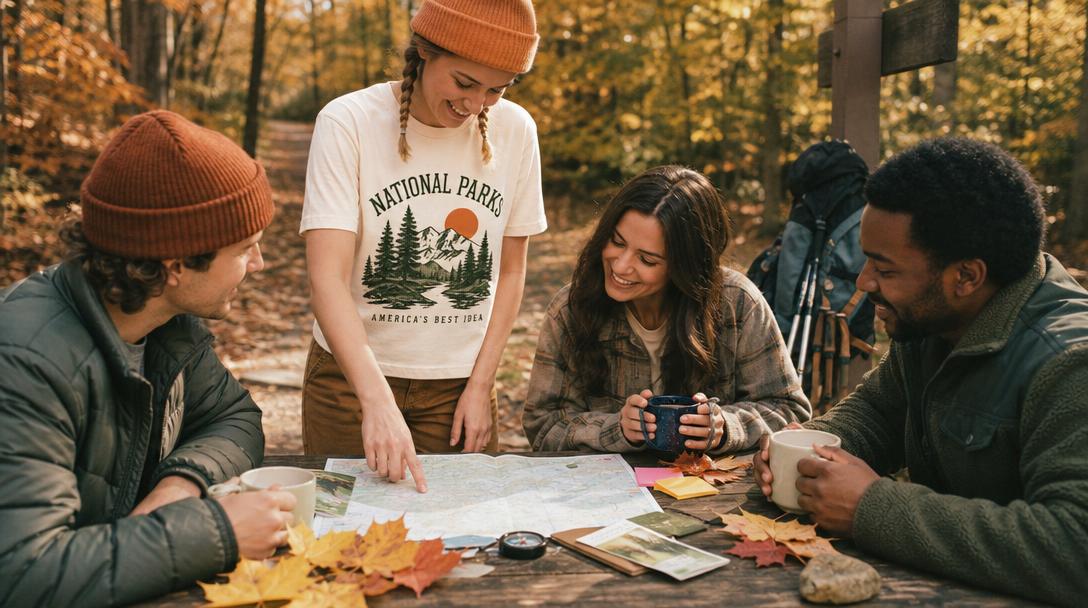
Fall color is reliable, but it’s not copy-paste. The same trail can look wildly different from one autumn to the next.
The U.S. Forest Service notes that the brightest fall color usually comes from a combination of:
- Warm, sunny days
- Cool but not freezing nights
- Adequate rainfall earlier in the growing season
- Calm, dry autumn weather
- Healthy trees with limited drought stress
A hard freeze too early can dull the color show. So can drought, heavy rain, high winds, or weirdly warm fall weather that keeps trees hanging onto chlorophyll longer than usual.
For hikers, the practical takeaway is simple: peak color is a moving target. Don’t just rely on last year’s Instagram post. Check current foliage reports, park updates, webcams, and recent trail photos before driving six hours with a thermos and big maple-leaf dreams. For a simple planning system, use this fall foliage hiking formula to match timing, elevation, and trail choice.
Fall Foliage Timing: When to Go by U.S. Region

If you’re planning a fall hike, timing matters almost as much as the destination. Fall color generally starts in the north and at higher elevations, then moves south and downhill as the season progresses.
Here’s a broad U.S. timing guide. Weather can shift things by a week or two, so use this as a starting point—not a sacred leaf-peeping prophecy.
Late September to Early October: Northern Mountains and High Elevations
This is prime time for many high-elevation areas and northern states.
Good bets include:
- Rocky Mountain National Park, Colorado
- Grand Teton National Park, Wyoming
- Glacier National Park, Montana
- Northern New England high elevations
- Michigan’s Upper Peninsula
- Northern Minnesota and Wisconsin
In the Rockies and Tetons, aspens often turn bright gold in September. The show can be quick, especially if wind or snow arrives early.
Early to Mid-October: New England, Upper Midwest, and Parts of the Appalachians
This is classic leaf peeping season.
Look at:
- Acadia National Park, Maine
- Vermont’s Green Mountains
- New Hampshire’s White Mountains
- Adirondacks, New York
- Upper Great Lakes
- Higher elevations of Shenandoah and Great Smoky Mountains
Acadia is especially gorgeous because you get forest color, granite ridges, ocean views, and lakes that reflect the foliage like nature installed a screensaver.
Mid- to Late October: Mid-Atlantic, Lower Appalachians, and Midwest
As color moves south and downhill, mid-to-late October becomes prime time for many accessible hiking areas.
Strong choices include:
- Shenandoah National Park, Virginia
- Great Smoky Mountains National Park, Tennessee/North Carolina
- Cuyahoga Valley National Park, Ohio
- Ozark Mountains, Arkansas and Missouri
- Brown County State Park, Indiana
- Blue Ridge Parkway sections in Virginia and North Carolina
Shenandoah and the Smokies are especially useful because elevation gives you flexibility. If color has passed at the ridge, hike lower. If the valleys are still green, go higher.
Late October to Mid-November: Southeast, Lower Elevations, and Southwest Pockets
If October got away from you because life turned into a raccoon rummaging through your calendar, don’t panic. There’s still color later in the season.
Try:
- Lower elevations of Great Smoky Mountains
- North Georgia mountains
- Western North Carolina valleys
- Arkansas and Oklahoma
- Guadalupe Mountains National Park, Texas
- Parts of the Southwest with cottonwoods and maples
The National Park Service notes that Guadalupe Mountains can be a later fall-color destination, often changing from mid-October through mid-November.
Best National Parks for Fall Colors

Great Smoky Mountains National Park
Best window: Mid-October to early November
Why go: Huge elevation range, diverse hardwood forests, long color season
The Smokies are one of the most dependable fall foliage destinations in the U.S. Higher elevations turn first, then color rolls down toward the valleys.
Good hikes and routes:
- Alum Cave Trail
- Charlies Bunion
- Andrews Bald
- Little River Trail
- Roaring Fork Motor Nature Trail area
Expect crowds in October, especially around Cades Cove and Newfound Gap Road. Start early or choose less famous trailheads.
Shenandoah National Park
Best window: Mid- to late October
Why go: Skyline Drive overlooks, ridge hikes, easy access from D.C. and Virginia
Shenandoah is practically built for leaf peeping. You can hike, drive, picnic, and repeatedly say, “Okay, one more overlook,” until your camera roll gives up.
Good hikes:
- Stony Man Trail
- Hawksbill Summit
- Dark Hollow Falls
- Marys Rock
- Old Rag, if you’re ready for a bigger adventure
Acadia National Park
Best window: Early to mid-October
Why go: Coastal foliage, granite peaks, pond reflections
Acadia is one of the rare places where you can watch sunrise over the Atlantic and hike through fiery fall color before lunch. If you’re planning extra time around the park, this guide to towns near Acadia can help you choose a home base.
Good hikes:
- Jordan Pond Path
- South Bubble
- Gorham Mountain
- Cadillac Mountain trails
- Beech Mountain
Book lodging or campsites early. Acadia in October is popular for a reason.
Grand Teton National Park
Best window: Late September to early October
Why go: Golden aspens, cottonwoods, mountain backdrops
The Tetons don’t have the same red-orange hardwood show as the East, but golden aspens against snowy peaks? That’s not a consolation prize. That’s a postcard trying to show off.
Good hikes:
- Taggart Lake
- Jenny Lake Loop
- Leigh Lake
- Signal Mountain trails
Rocky Mountain National Park
Best window: Mid- to late September
Why go: Aspen groves, elk rut season, alpine views
Fall comes early in Rocky Mountain National Park. Go prepared for sudden weather shifts and possible snow at higher elevations.
Good hikes:
- Bear Lake
- Emerald Lake
- Bierstadt Lake
- Cub Lake
- Glacier Gorge
Best Hiking Trails for Fall Foliage Beyond the Big Parks
National parks are wonderful, but they’re not the only places to find a jaw-dropping color show. Sometimes the best hiking trails for fall foliage are closer to home and less crowded.
Consider these regional ideas:
Northeast
- Mount Willard, New Hampshire
- Sterling Pond Trail, Vermont
- Cascade Mountain, New York
- Gulf Hagas, Maine
Midwest
- Pictured Rocks National Lakeshore, Michigan
- Devil’s Lake State Park, Wisconsin
- Hocking Hills, Ohio
- Starved Rock State Park, Illinois
South
- Max Patch, North Carolina
- Blood Mountain, Georgia
- Buffalo National River trails, Arkansas
- Red River Gorge, Kentucky
West
- Maroon Bells area, Colorado
- June Lake Loop, California
- McKenzie River Trail, Oregon
- Alpine Lakes Wilderness, Washington
If you’re building leaf peeping road trip ideas, connect scenic drives with short hikes instead of trying to do one mega-trail every day. Your knees, snack supply, and passengers will thank you.
Leaf Peeping Road Trip Ideas for Hikers and Campers
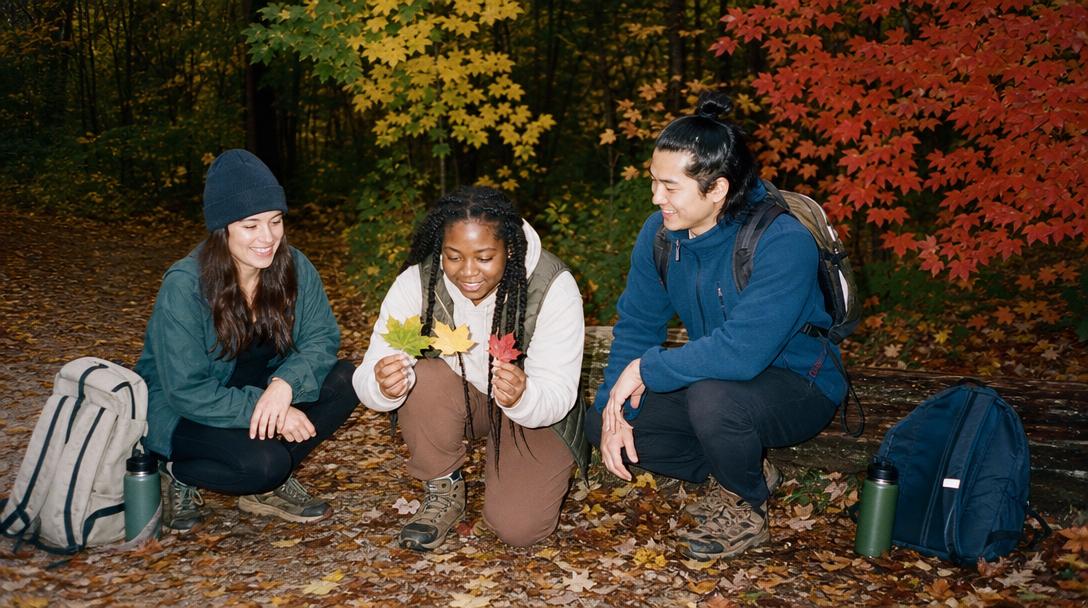
A good fall road trip is part hiking plan, part weather chase, part snack logistics.
Here are a few easy-to-customize routes.
New England Classic Loop
Route idea: Boston → White Mountains → Vermont → Adirondacks → Berkshires
Best time: Late September to mid-October
Mix summit hikes, covered bridges, maple creemees, and small-town wandering. For camping, check state parks and national forest campgrounds, but confirm seasonal closing dates.
Blue Ridge Color Chase
Route idea: Shenandoah National Park → Blue Ridge Parkway → Asheville → Great Smoky Mountains
Best time: Mid-October to early November
This is one of the best routes for flexible foliage timing because you can adjust by elevation. If the ridge is past peak, head lower. If lower valleys are still green, drive or hike higher.
Rocky Mountain Aspen Trip
Route idea: Denver → Rocky Mountain National Park → Leadville → Aspen/Maroon Bells → Crested Butte
Best time: Mid-September to early October
This one is all about golden aspens. Pack warm layers and keep an eye on early snow.
Great Lakes Color Ramble
Route idea: Northern Wisconsin → Michigan Upper Peninsula → Pictured Rocks → Porcupine Mountains
Best time: Late September to early October
Expect lake-effect weather, moody skies, and forests that look like someone spilled a box of crayons into Lake Superior.
What to Pack for a Fall Hike

Clothing Layers for a Fall Hike
Bring:
- Moisture-wicking base layer
- Fleece or insulated midlayer
- Waterproof or windproof shell
- Warm hat or beanie
- Lightweight gloves
- Extra socks
Avoid cotton for longer hikes, especially in cool or wet weather. Wet cotton holds moisture and can chill you fast.
Trail Essentials
Pack:
- Map and offline navigation
- Headlamp, even for daytime hikes
- First aid kit
- Extra food
- More water than you think you need
- Emergency blanket or bivy
- Fire starter where permitted
- Trekking poles for slick leaves and muddy descents
Shorter daylight is one of fall’s biggest safety traps. A hike that felt casual in July may end in darkness in October. If you’re upgrading your navigation setup, this guide to choosing a GPS tracker for hiking is a helpful place to start.
Campsite Extras and Casual Fall Layers
For fall camping, add:
- Sleeping bag rated for colder-than-forecast temperatures
- Insulated sleeping pad
- Dry sleep clothes
- Camp shoes
- Extra fuel for warm meals and drinks
- Bear-safe food storage where required
And yes, this is the season when a cozy sweatshirt or casual graphic tee actually earns its trail cred around camp. For relaxed leaf-peeping weekends, cotton and cotton-poly blends are better saved for town, the cabin, or the campfire—not as your main hiking layer. A soft Adventure Awaits hiking shirt fits the post-hike mood, while the 5 Billion Star Sweatshirt is made for chilly evenings under clear autumn skies.
If your fall route includes Maine, an Acadia National Park Shirt is an easy casual layer for coffee runs, campground lounging, and “yes, I absolutely did wake up for sunrise” photos.
Fall Hiking Safety: Pretty Leaves, Slippery Trails
Fall trails are beautiful, but they come with seasonal hazards.
Watch for:
- Wet leaves hiding rocks and roots
- Mud under fresh leaf litter
- Earlier sunsets
- Rapid temperature drops
- Hunting seasons in some areas
- Closed roads, seasonal campgrounds, or limited park services
- Wildlife preparing for winter
Wear blaze orange if hiking in areas where hunting is allowed. Check local regulations and trail alerts before you go.
Also, don’t count on cell service. Download maps ahead of time and tell someone your route, especially if you’re chasing color in remote areas.
Wait—Why Are Search Results About the Song “Autumn Leaves”?
If you’ve searched “autumn leaves,” you may have noticed something funny: many top results are about the famous song, not trees. That’s because “Autumn Leaves” is also a beloved jazz standard with a long history. Since hikers deserve both foliage facts and cocktail-hour trivia, here’s the quick version.
Who Originally Did “Autumn Leaves”?
“Autumn Leaves” began as the French song “Les Feuilles mortes”, meaning “The Dead Leaves.” It was composed by Joseph Kosma with lyrics by Jacques Prévert in 1945. The song was introduced onscreen by Yves Montand in the 1946 French film Les Portes de la Nuit, according to JazzStandards.com.
What Is the Most Popular Version of “Autumn Leaves”?
The English lyrics were written by Johnny Mercer. Many famous artists recorded it, including Nat King Cole, Frank Sinatra, and Eva Cassidy. Nat King Cole’s version is one of the most widely recognized vocal recordings, while jazz musicians often know it as one of the most recorded standards in the repertoire.
Is Autumn Leaves a Good Movie?
Autumn Leaves is also a 1956 melodrama starring Joan Crawford and Cliff Robertson. It was generally well received in its time and is still of interest to classic film fans, especially those who enjoy dramatic, emotionally intense mid-century cinema.
What Is the Meaning Behind the Song “Autumn Leaves”?
The song uses falling leaves as a metaphor for lost love, memory, and the passing of time. It’s wistful, romantic, and a little melancholy—basically the musical equivalent of watching one perfect red maple leaf drift into a puddle while you pretend you’re not emotional about it.
Frequently Asked Questions
Why Do Leaves Change Color in Autumn?
Leaves change color because trees slow chlorophyll production as days get shorter and temperatures cool. When green chlorophyll fades, yellow and orange pigments become visible, and some trees produce red pigments called anthocyanins.
When Is the Best Time to See Fall Foliage?
In the U.S., peak fall foliage generally starts in late September in northern and high-elevation areas, then moves south and downhill through October and into November. For the best timing, check current foliage maps, park webcams, and local reports before your trip.
What Are the Best National Parks for Fall Colors?
Some of the best national parks for fall colors include Great Smoky Mountains, Shenandoah, Acadia, Grand Teton, Rocky Mountain, Glacier, and Guadalupe Mountains. Timing varies by region and elevation, so plan around the park’s usual peak window.
What Should I Pack for a Fall Hike?
For fall hiking, pack layers, a rain shell, warm hat, gloves, extra socks, water, snacks, a headlamp, navigation, and emergency warmth. If you’re wondering what to pack for a fall hike, plan for colder, wetter, and darker conditions than the forecast suggests.
Who Originally Did “Autumn Leaves”?
The original song was the French “Les Feuilles mortes,” composed by Joseph Kosma with lyrics by Jacques Prévert. Yves Montand introduced it in the 1946 film Les Portes de la Nuit.
What Is the Meaning Behind the Song “Autumn Leaves”?
The song is about lost love, memory, and the passage of time. Its falling leaves symbolize things that have slipped away, which is why the song feels nostalgic and bittersweet.
Make the Most of the First Day of Autumn
The first day of autumn is your reminder to slow down, look up, and maybe let the forest handle the drama for once. Leaves change color because trees are preparing for winter, but for hikers, that change becomes an invitation: choose a trail, follow the color, pack smart, and enjoy the short, spectacular season while it lasts.
Key takeaways:
- Chlorophyll fades as daylight shortens, revealing yellow and orange pigments.
- Red leaves often come from sugars trapped in leaves during sunny days and cool nights.
- Peak color moves from north to south and high elevation to low elevation.
- The best fall hikes require layers, early starts, and flexible planning.
- National parks are fantastic, but local trails can be just as magical—and less crowded.
Check your local foliage reports, pick a trail that matches your energy level, and give yourself permission to wander a little. Autumn doesn’t last long, which is exactly why it feels so special.


