


Mens Hiking Outfit: Trail-Ready Guide for Men
Dominic PalmowskiA mens hiking outfit should keep you dry, comfortable, protected from weather, and moving freely—not make you look like you dressed for an Everest documentary just to enjoy a Saturday trail with your family. If you’re wondering what to wear hiking for men, the answer starts with a simple system: moisture-wicking shirt, flexible bottoms, smart layers, grippy footwear, wool or synthetic socks, and a hat.
The tricky part? Hiking clothes men actually need vary wildly by heat, rain, wind, bugs, elevation, and whether the day ends at a campsite, a national park overlook, or a brewery with suspiciously good fries. But the basic formula stays simple.
According to REI’s hiking clothing guidance, trail clothes should prioritize moisture management, comfort, durability, and protection from changing conditions. The National Park Service also recommends carrying the Ten Essentials for safer adventures, including extra clothing and sun protection. Translation: your outfit is part comfort, part safety gear, and part “please don’t let these shorts chafe me into another dimension.”
Let’s keep it practical.
In This Article
- The Simple Mens Hiking Outfit Formula for Most Day Hikes
- What to Wear Hiking for Men: The Core Clothing System
- Hiking Clothes Men Need for Bottoms: Pants, Shorts, or Joggers?
- What Is the 3 Layer Rule for Hiking?
- Season-by-Season Hiking Outfit Men Can Use Anywhere
- What Shoes to Wear Hiking Men: Trail Runners vs Hiking Boots
- Best Hiking Clothes for Men: Fit and Sizing Tips
- Are Jeans Okay for Hiking?
- What Not to Bring on a Hike?
- Beginner Budget Capsule: Best Hiking Clothes for Men Without Buying Everything
- Lifestyle Hiking Outfits: Camp, Van Life, and National Parks
- Frequently Asked Questions
- Final Trail Notes: Keep It Simple, Comfortable, and Ready for Weather
The Simple Mens Hiking Outfit Formula for Most Day Hikes
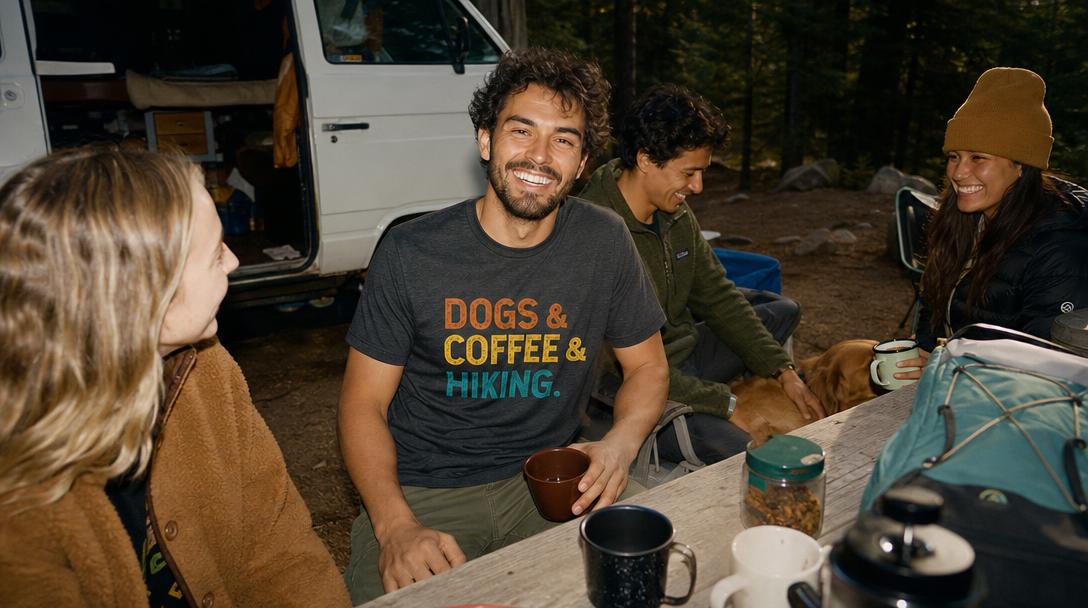
For most day hikes, the best mens hiking outfit is a moisture-wicking shirt, flexible hiking pants or shorts, wool or synthetic socks, trail runners or hiking shoes, a brimmed hat, and a packable rain or wind shell. Add a fleece or puffy layer when temperatures drop, especially at higher elevations.
Here’s the quick formula:
- Top: Synthetic or merino wool T-shirt or long-sleeve hiking shirt
- Bottoms: Stretch hiking pants, shorts, or convertible pants
- Feet: Wool or synthetic socks with trail runners, hiking shoes, or boots
- Layer: Lightweight fleece, puffy, or rain shell depending on forecast
- Sun/weather: Hat, sunglasses, sunscreen, and optional neck gaiter
- Camp/casual: Comfortable graphic tee or sweatshirt after the hike
If you’re building your first hiking outfit for men, don’t start with the most expensive technical gear. Start with the pieces that touch sweat and friction first: shirt, socks, underwear, and footwear. For a broader beginner breakdown, see Hike Tee’s what to wear hiking guide.
Cotton gym socks and jeans are usually where beginner comfort goes to die.
What to Wear Hiking for Men: The Core Clothing System
Men should wear moisture-wicking hiking clothes, flexible pants or shorts, supportive footwear with good traction, non-cotton socks, sun protection, and weather-appropriate layers. A simple hiking outfit men can rely on includes a synthetic or merino shirt, hiking bottoms, trail shoes, a hat, and a rain shell.
Think of your hiking outfit as a system, not a costume. You don’t need to look like you were sponsored by a gear catalog. You just need each piece to solve a problem.
Base Layer: Your Sweat Manager
Your base layer is the shirt or long underwear closest to your skin. Its job is to move sweat away so you don’t feel clammy when you stop moving.
Good options:
- Synthetic polyester or nylon blends: Affordable, quick-drying, durable
- Merino wool: Odor-resistant, comfortable across temperatures, pricier
- Sun hoodies: Great for exposed trails, desert hikes, fishing-adjacent adventures
Avoid:
- Heavy cotton T-shirts
- Thick cotton hoodies as active layers
- Anything that stays wet for hours
Cotton can feel fine at the trailhead, then turn into a cold, clingy swamp cape once you sweat. The American Hiking Society and REI both commonly recommend wool or synthetic layers over cotton for moisture control. If you want the fabric science without the gear-store fog machine, read this guide to moisture-wicking fabric.
That said, a soft cotton or cotton-blend graphic tee is totally fair game after the hike. This is where something like the Just Another Half Mile Or So Shirt makes sense around camp, in the van, or during that sacred post-hike snack ceremony.
Hiking Shirt: Short Sleeve, Long Sleeve, or Sun Hoodie?
Pick based on heat, bugs, and sun exposure.
- Short-sleeve synthetic tee: Best for warm, shaded trails
- Long-sleeve hiking shirt: Best for sun, bugs, and brushy routes
- Sun hoodie: Best for desert, alpine, or exposed national park hikes
- Button-up hiking shirt: Best if you want airflow, collar coverage, and town-to-trail style
For summer hiking, lighter colors help reflect sun and show fewer salt stains. Dark shirts look cool until they become tiny personal saunas.
Hiking Clothes Men Need for Bottoms: Pants, Shorts, or Joggers?
The best hiking bottoms for men are flexible, quick-drying, and comfortable under a pack hip belt. Choose shorts for hot, easy trails; hiking pants for brush, bugs, sun, and cooler weather; and convertible pants if you want one piece that adapts during changing conditions.
Hiking Shorts
Best for:
- Hot summer hikes
- Well-maintained trails
- Stream crossings
- Casual family hikes
Look for:
- 7–9 inch inseam for most men
- Stretch fabric
- Zippered or secure pockets
- Liner-free design if you prefer your own hiking underwear
Shorts are great until the trail turns into a mosquito buffet or overgrown scratch-fest. If you’re hiking in tick-prone areas, pants may be smarter even in warm weather.
Hiking Pants
Best for:
- National parks with sun exposure
- Buggy trails
- Cooler weather
- Scrambling or rocky routes
- Trails with brush, thorns, or poison ivy
Look for:
- Gusseted crotch for mobility
- Articulated knees
- Slim-but-not-tight fit
- Ankle openings that work over shoes or boots
- Pockets that don’t sit directly under your pack hip belt
A good pair of hiking pants should let you step over logs, squat to tie shoes, and climb big rock steps without doing that awkward “pants are fighting me” dance.
Joggers and Athletic Pants
Joggers can work well for casual hikes if they’re synthetic and stretchy. Avoid heavy cotton sweatpants. They absorb sweat, dry slowly, and can feel miserable in rain or cold wind.
What Is the 3 Layer Rule for Hiking?
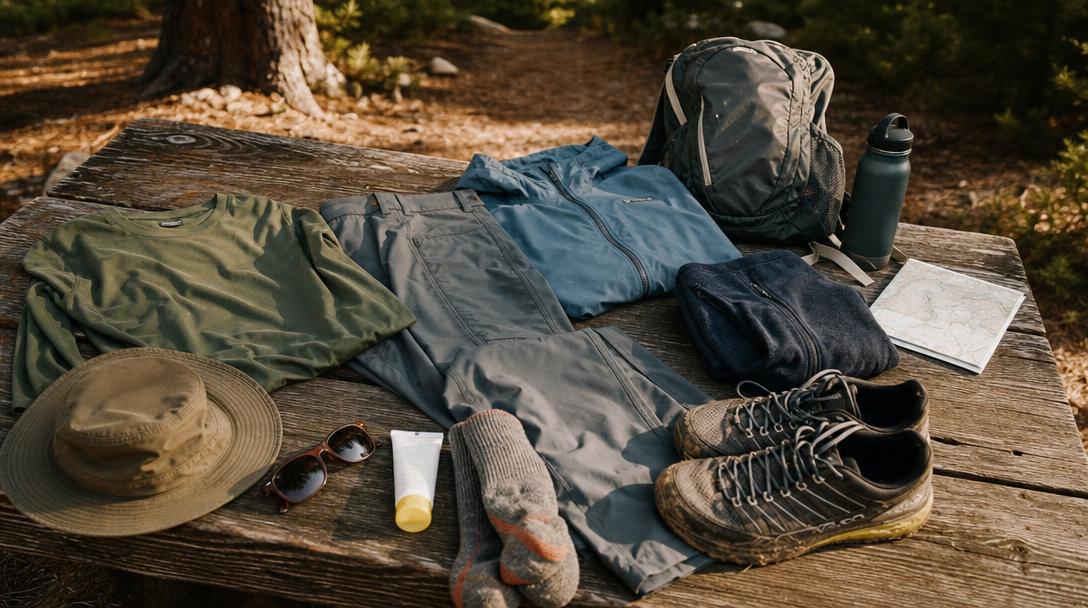
The 3 layer rule for hiking uses a base layer to manage sweat, a mid layer to hold warmth, and an outer shell to block wind and rain. This system lets hikers adjust clothing as effort, temperature, elevation, and weather change throughout the day.
REI describes the three basic layers as:
- Base layer: Moisture management
- Middle layer: Insulation
- Outer layer: Weather protection
Here’s how that looks in real life.
Layer 1: Base Layer
This is your hiking shirt or long underwear. It should fit close enough to wick sweat but not so tight that it restricts movement.
Best fabrics:
- Merino wool
- Polyester
- Nylon blends
- Synthetic sun fabrics
Layer 2: Mid Layer
This keeps you warm when your body temperature drops.
Common options:
- Lightweight fleece
- Grid fleece hoodie
- Synthetic puffy jacket
- Down jacket for dry cold conditions
A fleece is usually the most beginner-friendly mid layer because it’s affordable, breathable, and works for everything from fall hikes to campground coffee duty.
Layer 3: Outer Shell
Your shell protects against wind and rain.
Good options:
- Lightweight rain jacket
- Windbreaker
- Waterproof-breathable shell
- Softshell for cool, dry conditions
Even on sunny days, a packable shell can save the hike when weather changes. Mountain forecasts are famously dramatic. One minute: birds singing. Next minute: sideways rain and everyone pretending they’re “fine.”
Season-by-Season Hiking Outfit Men Can Use Anywhere
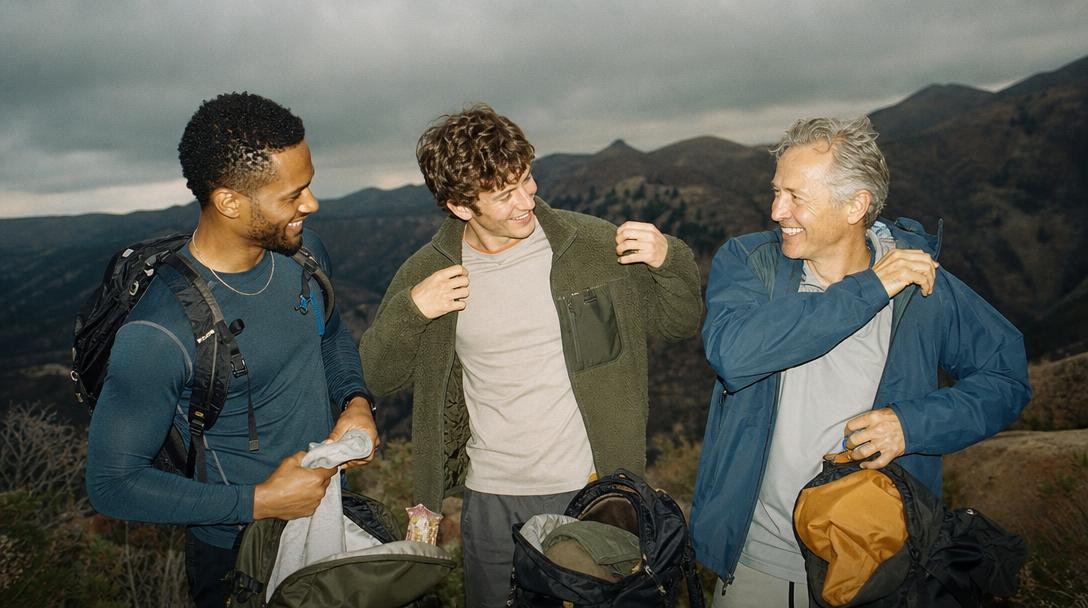
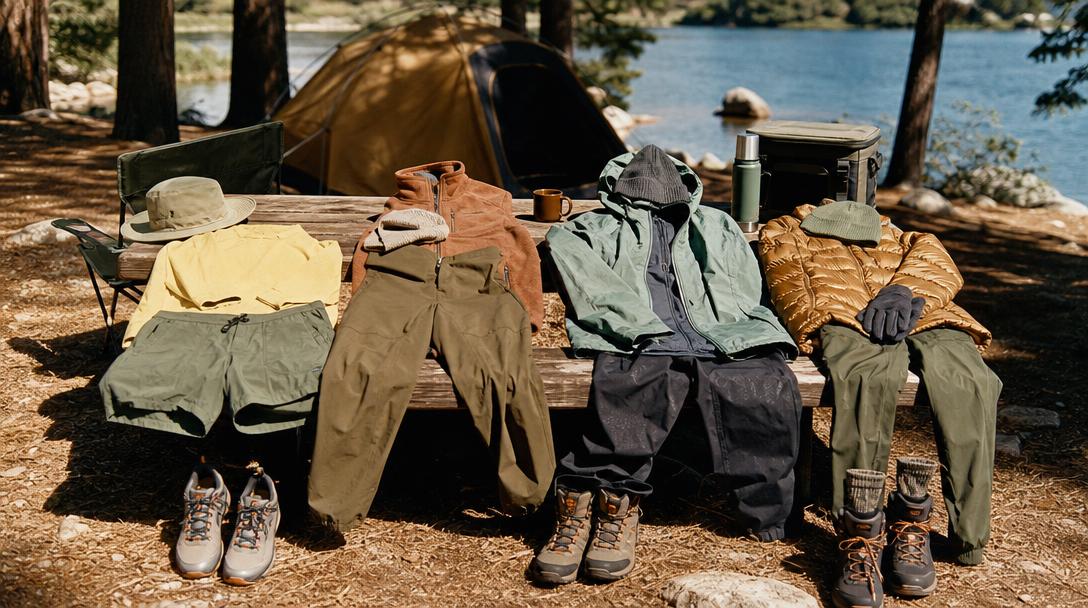
Here’s the easy seasonal cheat sheet.
Hiking Outfit for Men Summer
For a hiking outfit for men summer conditions, wear a lightweight synthetic or merino T-shirt, breathable hiking shorts or lightweight pants, wool socks, trail runners or ventilated hiking shoes, sunglasses, sunscreen, and a brimmed hat. Carry a light rain shell if storms or wind are possible.
Best summer setup:
- Lightweight synthetic tee or sun hoodie
- Hiking shorts or lightweight pants
- Thin wool or synthetic socks
- Trail runners or breathable hiking shoes
- Cap or wide-brim hat
- Sunglasses
- Sunscreen
- Optional bug protection
For hot national park hikes like Zion, Grand Canyon, Arches, or Joshua Tree, sun protection matters as much as style. The CDC recommends protective clothing, sunscreen, sunglasses, and hats to reduce UV exposure. A long-sleeve sun hoodie may actually feel better than a bare-arm T-shirt when the sun is relentless.
Mild Weather: Spring and Fall
Best mild-weather setup:
- Synthetic or merino T-shirt
- Lightweight fleece
- Hiking pants
- Wool socks
- Trail runners or light hiking shoes
- Rain shell
- Beanie or cap depending on temperature
Spring and fall are layering seasons. Start slightly cool at the trailhead because you’ll warm up once you move. If you’re perfectly cozy standing next to the car, you may be sweaty 15 minutes later.
Cold Weather Hiking
Best cold-weather setup:
- Merino or synthetic long-sleeve base layer
- Fleece or active insulation
- Puffy jacket for breaks
- Windproof or waterproof shell
- Softshell or insulated hiking pants
- Warm wool socks
- Hiking boots or insulated boots
- Beanie and gloves
Cold-weather hiking is less about one giant jacket and more about smart layering. You want to avoid sweating heavily, because moisture makes you colder when you stop. For a deeper seasonal breakdown, Hike Tee’s guide to what to wear hiking in cold weather explains the 3-layer system in more detail.
Pro tip: Pack an extra dry base layer or warm top if you’ll be out long, hiking with kids, or stopping for lunch. Nothing humbles a man faster than shivering while eating a crushed granola bar in a scenic parking lot.
What Shoes to Wear Hiking Men: Trail Runners vs Hiking Boots
For what shoes to wear hiking men should choose based on terrain, pack weight, weather, and ankle needs. Trail runners are best for light day hikes and maintained trails, while hiking boots are better for rough terrain, heavy packs, wet conditions, snow, and extra foot protection.
Here’s a practical decision chart:
| Footwear | Best For | Pros | Tradeoffs |
|---|---|---|---|
| Trail runners | Day hikes, warm weather, maintained trails, fast hiking | Lightweight, breathable, comfortable, flexible | Less ankle support, less protection, wear out faster |
| Low hiking shoes | General day hikes, rocky trails, travel | More durable than runners, good traction, stable | Heavier than trail runners, less ankle coverage |
| Mid hiking boots | Rough trails, backpacking, wet routes, heavier packs | More support, better protection, often more durable | Heavier, warmer, may require break-in |
| Insulated boots | Snow, winter hikes, very cold conditions | Warmth, protection, weather resistance | Too hot for normal day hikes |
REI notes that hikers do not need heavy leather boots for every hike. For many men, modern trail runners or hiking shoes are the sweet spot.
Choose Trail Runners If:
- You hike mostly maintained trails
- You carry a light daypack
- Your ankles feel stable
- You prioritize comfort and speed
- You hike in warm or dry climates
Choose Hiking Boots If:
- You carry a heavy backpack
- You hike rocky or rooty trails
- You need more ankle support
- You often hike in mud, snow, or cold rain
- You want extra protection from sharp rocks
About Hiking Shoes Men Actually Like Wearing
The best hiking shoes men will actually use are the ones that fit well, grip the trail, and don’t cause hot spots. Try them on with hiking socks, walk down an incline if the store has one, and make sure your toes don’t slam the front.
Fit tips:
- Leave about a thumb’s width in front of your longest toe
- Heel should stay secure without slipping
- Toes should spread naturally
- No pinching across the forefoot
- Test with the socks you’ll hike in
If you’re between sizes, hiking footwear often feels better slightly roomy than slightly tight, especially on downhill sections when feet swell.
Best Hiking Clothes for Men: Fit and Sizing Tips
The best hiking clothes for men should fit close enough to function but loose enough to move. Base layers should skim the body, pants should allow full steps and squats, sleeves should cover wrists when reaching, and pockets should remain usable with a backpack.
This is one area many generic guides skip, but fit can make or break the day.
Shirt Fit
Your hiking shirt should:
- Sit comfortably under backpack straps
- Avoid bulky seams on shoulders
- Be long enough to stay tucked or overlap your waistband
- Allow overhead reach without riding up too much
- Not cling tightly when sweaty
For sun hoodies, check that the hood fits over a cap and turns with your head.
Pants and Shorts Fit
Look for:
- Inseam: Shorts around 7–9 inches work for many men; pants should not drag under shoes
- Waist: Comfortable under a hip belt
- Thigh room: Enough space for climbing steps and scrambling
- Stretch: Especially helpful for bigger strides
- Pocket placement: Avoid bulky cargo pockets under pack straps or hip belts
If your pants look great standing still but restrict your knees on stairs, they are not hiking pants. They are trail-themed office pants.
Jacket Fit
A hiking jacket should fit over your base and mid layer without compressing insulation. Sleeves should cover your wrists when using trekking poles. The hem should overlap your pants or pack belt enough to keep rain out.
Are Jeans Okay for Hiking?
Jeans are not ideal for hiking because denim is heavy, restrictive, slow to dry, and uncomfortable when wet. They may be okay for very short, dry, casual walks, but hiking pants, synthetic joggers, or athletic shorts are better for comfort, movement, and safety.
This doesn’t mean jeans explode upon contact with a trail. Plenty of people have hiked in denim and lived to tell the tale.
But jeans are a poor choice when:
- Rain is possible
- You’ll sweat heavily
- Temperatures are cold
- The hike is long
- You’ll cross water
- You need full mobility
Wet jeans are basically leg prisons. Choose quick-drying pants instead.
What Not to Bring on a Hike?
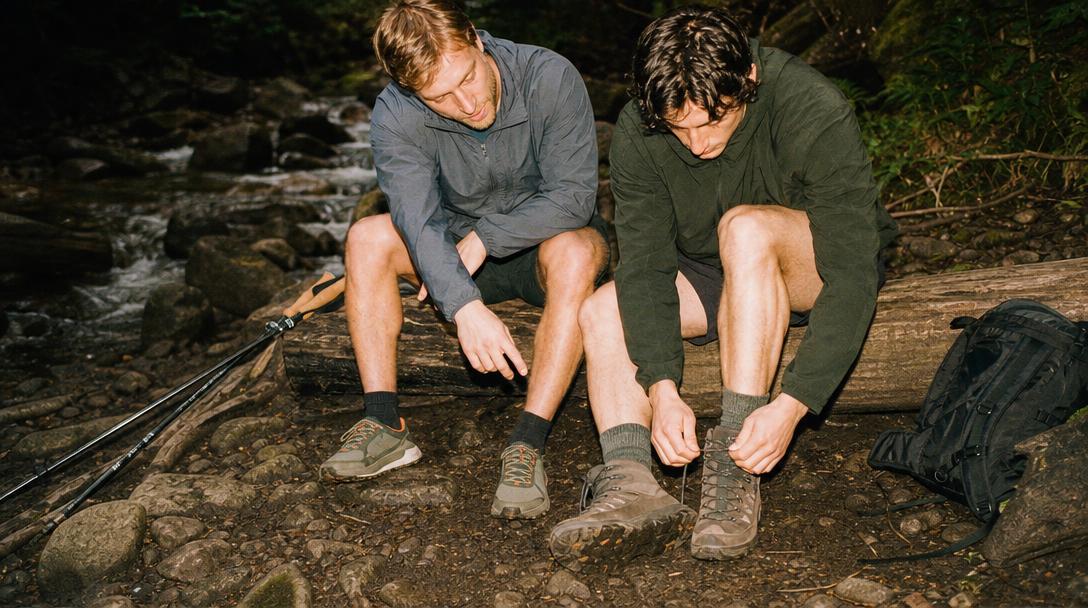
Do not bring heavy cotton layers, brand-new untested shoes, unnecessary valuables, glass bottles, excessive gear, or anything you are not prepared to carry back out. Hikers should also avoid packing too little water, skipping weather layers, or relying only on a phone for navigation.
Here’s the “leave it at home” list:
- Brand-new boots or shoes: Break them in first
- Jeans for serious hikes: Too slow to dry
- Cotton socks: Blister city, population: your feet
- Heavy cotton hoodie as your only warm layer: Bulky and moisture-loving
- Glass containers: Breakable and heavy
- Too much duplicate clothing: Pack smart, not like you’re moving to the woods
- Speakers: Let everyone enjoy the birds, wind, and distant child asking for snacks
- Unnecessary valuables: Dirt and granite are not gentle
What should you bring instead? The National Park Service recommends the Ten Essentials, including navigation, sun protection, insulation, illumination, first aid, fire, repair kit, nutrition, hydration, and emergency shelter.
Beginner Budget Capsule: Best Hiking Clothes for Men Without Buying Everything
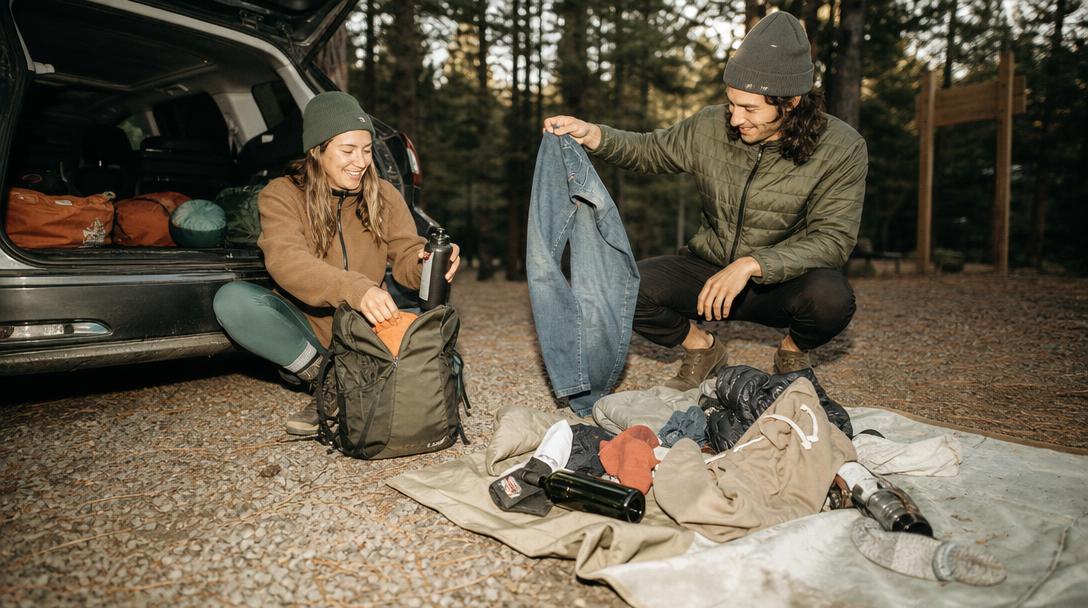
You don’t need a closet full of technical gear to start. Build a small capsule of hiking clothes men can mix and match.
Starter Kit for Warm and Mild Weather
- 2 synthetic or merino hiking shirts
- 1 pair hiking shorts
- 1 pair hiking pants
- 2 pairs wool or synthetic hiking socks
- 1 lightweight fleece
- 1 rain shell
- 1 hat
- 1 pair trail runners or hiking shoes
Add for Cold Weather
- Long-sleeve base layer
- Base layer bottoms
- Warmer fleece or puffy jacket
- Gloves
- Beanie
- Warmer socks
- Weather-appropriate boots
Where to Spend First
- Footwear
- Socks
- Rain shell
- Base layer shirt
- Pants or shorts
You can often save money on fleece layers, hats, and casual camp clothes. A basic fleece from a budget outdoor brand can perform surprisingly well.
Lifestyle Hiking Outfits: Camp, Van Life, and National Parks
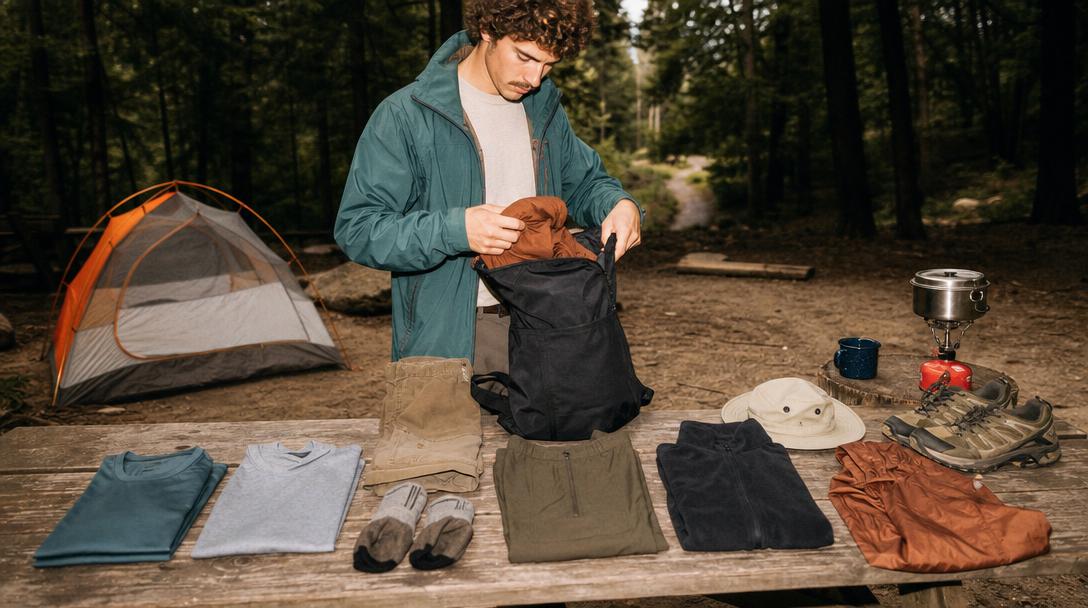
A good men hiking clothes setup should work beyond the trail, especially if your adventure includes a campground, road trip, or national park town where everyone is either sunburned, dusty, or holding a coffee.
National Park Day Outfit
Best for: Yosemite, Rocky Mountain, Great Smoky Mountains, Acadia, Zion
Wear:
- Sun hoodie or lightweight hiking tee
- Stretch hiking pants or shorts
- Trail runners or hiking shoes
- Wool socks
- Cap or wide-brim hat
- Packable shell
National parks often mean mixed conditions: exposed overlooks, shaded forests, shuttle rides, sudden wind, and lots of walking on dirt, rock, and pavement.
Camping Outfit
Best for: Post-hike campfires, family campgrounds, cabin weekends
Wear:
- Comfortable graphic tee or sweatshirt
- Fleece or hoodie
- Durable camp pants or joggers
- Wool socks
- Camp sandals or easy slip-on shoes
This is the perfect time for a funny outdoor graphic tee — maybe a bear who looks like he also forgot where he parked, or a raccoon giving “camp snack security” energy. A cotton or cotton-blend casual tee such as the Dogs & Coffee & Hiking Shirt works well after the miles are done. Keep the technical stuff for the trail and let camp clothes be comfortable.
Van Life or Road Trip Outfit
Best for: Trail-to-town days, scenic pullouts, national park loops
Wear:
- Merino or synthetic tee
- Overshirt or fleece
- Stretch pants or shorts
- Trail runners
- Cap
- Packable rain layer
Merino is especially handy here because it resists odor better than many synthetic fabrics. Your travel companions will appreciate this. Deeply.
Frequently Asked Questions
What should men wear to hike?
Men should wear a moisture-wicking shirt, flexible hiking pants or shorts, wool or synthetic socks, supportive hiking shoes or trail runners, a hat, and weather-appropriate layers. For most day hikes, this simple mens hiking outfit is enough: technical tee, hiking bottoms, trail shoes, socks, and a rain shell.
What is the 3 layer rule for hiking?
The 3 layer rule is a clothing system made of a base layer, mid layer, and outer shell. The base layer manages sweat, the mid layer adds warmth, and the shell blocks wind and rain. It helps you adjust your hiking outfit men can use across changing weather.
What not to bring on a hike?
Avoid bringing heavy cotton layers, jeans on serious hikes, cotton socks, brand-new shoes, glass bottles, valuables, and unnecessary bulky gear. Also avoid bringing too little water or relying only on your phone for navigation, especially on unfamiliar trails.
Are jeans okay for hiking?
Jeans are okay only for very short, dry, easy walks. For real hikes, jeans are uncomfortable because denim is heavy, restrictive, and slow to dry. Hiking pants, synthetic joggers, or athletic shorts are much better hiking clothes men can wear for comfort and safety.
What shoes to wear hiking men should choose?
Men should choose trail runners for light day hikes, hiking shoes for general trail use, and hiking boots for rough terrain, heavy packs, wet trails, or cold weather. The best choice depends on terrain, pack weight, weather, and how much support your feet and ankles need.
What is the best hiking outfit for men summer conditions?
The best hiking outfit for men summer conditions is a lightweight synthetic or merino shirt, breathable shorts or light hiking pants, thin wool socks, trail runners, sunglasses, sunscreen, and a hat. For exposed trails, a long-sleeve sun hoodie can be cooler and more protective than bare skin.
Final Trail Notes: Keep It Simple, Comfortable, and Ready for Weather
The best mens hiking outfit is not the most expensive one. It’s the one that helps you move comfortably, manage sweat, stay protected from weather, and enjoy the trail without constantly adjusting, overheating, freezing, or wondering why your socks have betrayed you.
Start with this easy formula:
- Moisture-wicking shirt
- Stretch hiking pants or shorts
- Wool or synthetic socks
- Trail runners, hiking shoes, or boots based on terrain
- Hat and sun protection
- Fleece or puffy when cool
- Rain shell when weather might shift
If you already have outdoor basics, upgrade slowly. If you’re brand new, focus first on footwear, socks, and a good non-cotton shirt.
And when the hike is done? Change into something soft, funny, and camp-ready, like a cotton-blend Sloth Hiking Team Shirt. The mountain may not care what your T-shirt says, but the people around the fire definitely might.


