


Hiking Shirt Collars: Double-Fold Guide
Dominic PalmowskiA hiking shirt with a double-fold collar can make a big difference on sunny trails, especially when your neck is getting blasted by UV rays for hours. This feature is not just a style detail on a collared hiking shirt. It adds practical sun coverage, comfort, and versatility for exposed hikes, road trips, national parks, and camp days.
If you are comparing a trail shirt, button-up hiking shirt, sun hoodie, or lightweight sun shirt, the collar is one of those small design choices that matters more after mile five than it does in a dressing room. Here is what a double-fold collar does, when it helps, and how to choose the best hiking shirt with collar for your kind of adventure.
What Is a Double-Fold Collar on a Collared Hiking Shirt?
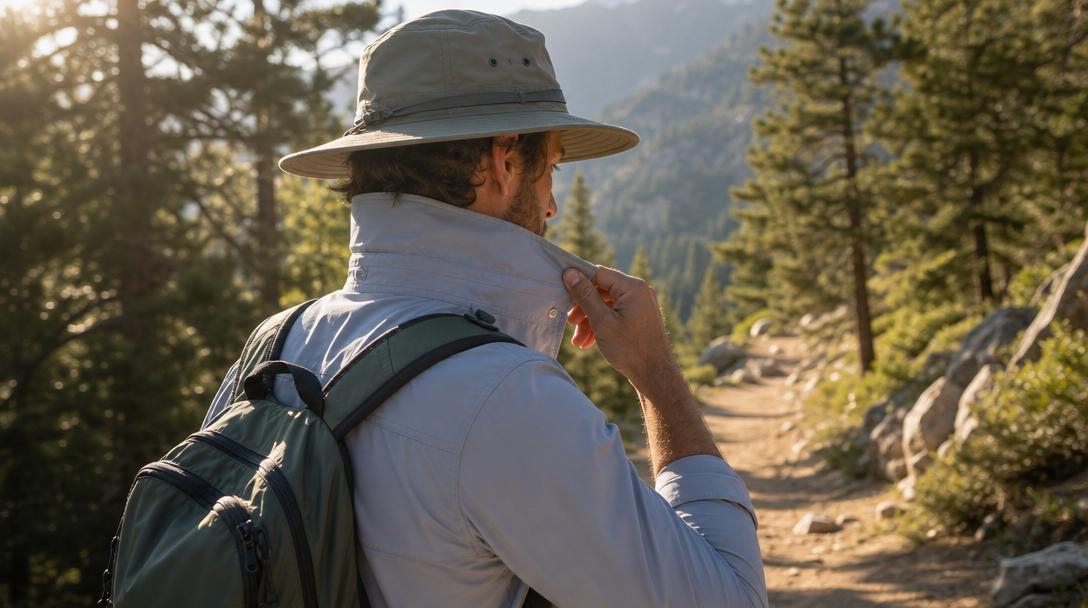
A double-fold collar is an extended collar design that gives you more fabric coverage around the back and sides of your neck than a standard button-up collar.
Think of it like this:
- A regular collar flips up once.
- A double-fold collar has extra height, structure, or an additional fold of fabric.
- When popped up, it covers more of the back of your neck.
- When folded down, it still looks like a normal collared shirt.
OutdoorGearLab has praised sun shirts with a unique double-fold collar because the collar can be popped up to better cover the back of the neck, especially when paired with a wide-brimmed hat. That pairing is key: shirt collar plus hat brim equals much better neck shade.
A good double-fold collar is not just taller. It should also stay put in wind, under a backpack, and after being crammed into a gear bin next to snacks, socks, and one mystery carabiner.
Why a Trail Shirt with Sun Protection Needs Neck Coverage
It Protects the Back of Your Neck
The back of your neck is one of the easiest places to forget sunscreen and one of the fastest places to burn.
A double-fold collar helps create a fabric shield where hats often miss. Baseball caps protect your face but leave your neck exposed. Even some wide-brim hats do not fully cover the lower neck when the sun is low or behind you.
According to The Skin Cancer Foundation, UPF 50 fabric blocks about 98% of the sun’s rays, allowing only about 2% to pass through. That is why a trail shirt with sun protection can be more reliable than sunscreen alone, especially when you are sweating, wiping your face, or forgetting to reapply.
It Adds Coverage Without Adding a Hood
Sun hoodies are excellent for coverage, but not everyone wants fabric over their head all day.
A button-up hiking shirt with a double-fold collar gives you a middle ground:
- More neck protection than a standard collar
- Better airflow than many hooded styles
- Easy front ventilation
- A casual trail-to-town look
- Less bulk around your head and ears
For hikers who do not love hoods, the double-fold collar is a quieter, cooler-feeling solution.
It Works Well with Backpacks
A flimsy collar can get crushed by shoulder straps, pack movement, and sweat. A double-fold collar usually has more structure, so it holds its shape better while hiking.
That matters when you are:
- Carrying a daypack in a national park
- Backpacking with a loaded pack
- Wearing a hydration vest
- Spending long hours outside at camp
- Driving between trailheads on a road trip
The collar should not rub, poke, or trap heat. Ideally, it sits comfortably around your pack line while still shielding your neck.
It Makes the Shirt More Versatile
A double-fold collar can go from sun armor mode to normal shirt mode in two seconds.
Flip it up on exposed ridgelines. Fold it down at the brewery after the hike. Pop it up again while cooking dinner at camp because the sun is coming in sideways and your neck has filed a formal complaint.
That versatility is why many hikers like a collared hiking shirt for travel-heavy outdoor trips. It can handle hiking, camping, scenic drives, grocery runs, and casual dinners without looking too technical indoors.
Collar Types Compared: Standard vs Double-Fold vs Stand Collar
| Collar Type | Best For | Pros | Cons |
|---|---|---|---|
| Standard Collar | Casual hikes, mild sun, travel | Familiar look, easy to wear, light | Often too short for serious neck coverage |
| Double-Fold Collar | Sunny hikes, exposed trails, national parks, desert trips | Better rear-neck coverage, more stable, versatile | Slightly more fabric, not as protective as a hood |
| Stand Collar | Breezy hikes, minimalist sun coverage, layering | Simple, low bulk, protects lower neck | Usually less rear-neck coverage than a double-fold collar |
| Hooded Sun Shirt | Maximum sun protection, alpine or desert routes | Covers head, ears, neck, and sides of face | Can feel warmer, less button-up ventilation |
| Collar with Neck Flap | Fishing, desert, extreme sun | Excellent coverage | Bulkier and less casual |
If you are shopping for the best collared hiking shirt, a double-fold collar is often the sweet spot: more protective than a standard collar, less bulky than a full neck flap, and more breathable than many hooded options.
Are Collared Shirts Good for Hiking?
Yes, collared shirts can be excellent for hiking if they are designed for the trail, not the office.
A true trail shirt should be lightweight, quick-drying, breathable, and comfortable under a pack. The collar adds sun protection and can reduce irritation from pack straps or camera straps. It also gives you more coverage options as conditions change.
Collared hiking shirts are especially useful for:
- Desert hikes
- High-elevation trails
- National park trips
- Long road trips with short hikes mixed in
- Camping weekends
- Travel where one shirt needs to do multiple jobs
A cotton button-down from your closet is not ideal for sweaty hiking. A technical button-up with UPF fabric, vents, and a functional collar is much better. For a broader comparison, see our guide to the best shirts for hiking.
Do Hiking Shirts Help with Sun Protection?
Yes, hiking shirts can help a lot with sun protection, especially if they have a UPF rating.
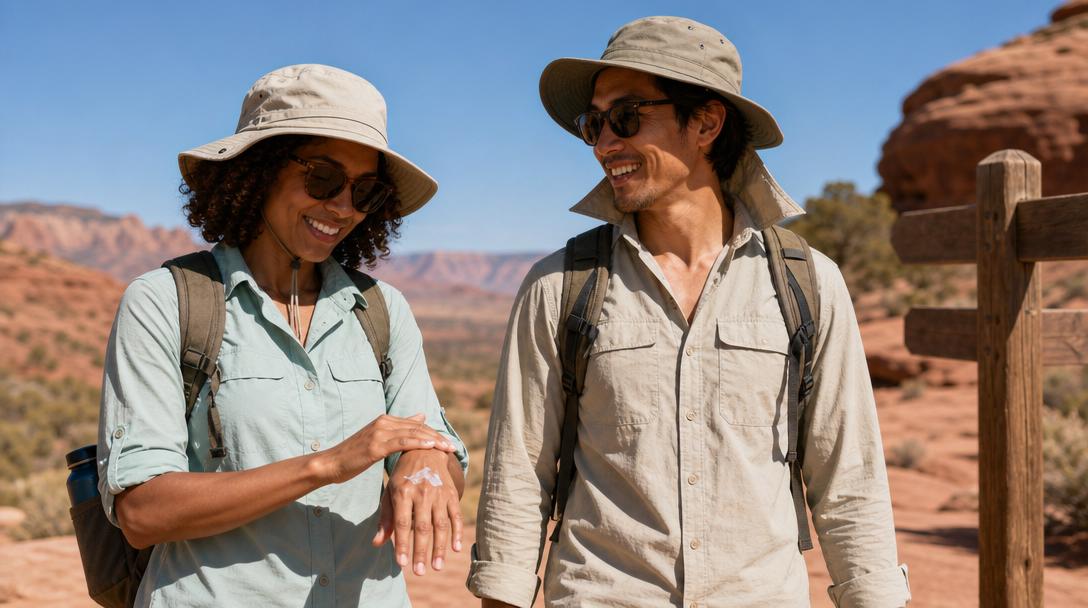
UPF stands for Ultraviolet Protection Factor. It measures how much UV radiation can pass through fabric. A UPF 50 shirt allows only about 1/50th of UV rays through. That is why many outdoor brands design sun shirt options with UPF 30, UPF 40, or UPF 50+ ratings.
The National Park Service commonly recommends protective clothing, hats, sunglasses, and sunscreen for outdoor sun safety. Clothing is especially helpful because it does not wash off or require reapplication the way sunscreen does.
Look for:
- UPF 30 or higher
- UPF 50 or 50+ for intense sun
- Long sleeves
- A collar with real neck coverage
- Lightweight fabric that will not make you overheat
A trail shirt with sun protection is not a magic force field. You still need sunscreen on your face, hands, and exposed skin. But a good shirt can reduce how much skin needs constant reapplication.
Why Wear a Button-Up Hiking Shirt?
A button-up hiking shirt gives you something pullovers and tees do not: adjustable ventilation.
When you are hot, you can open a few buttons and dump heat fast. When the sun gets intense, you button up, flip the collar, and roll your sleeves down. That control is useful when trail conditions keep changing.
Button-up hiking shirts are great when you want:
- More airflow than a tight base layer
- Easy on and off over a tank or tee
- Chest pockets for small items
- Better trail-to-town style
- Collar-based sun protection
- Less clingy fabric in humid weather
A hiking shirt with chest pockets and collar can also be practical for road trips and camping. Chest pockets are handy for sunglasses, permits, a folded map, lip balm, or the snack you are absolutely going to eat in seven minutes.
Best Hiking Shirt with Collar: Features to Look For
The collar matters, but it is only one part of the shirt. Use this checklist when comparing options.
1. UPF-Rated Fabric
Choose UPF 30+ at minimum if sun protection is a priority. UPF 50+ is better for desert, alpine, beach, or open terrain.
2. Lightweight, Breathable Material
Most technical hiking shirts use nylon, polyester, or performance blends. These dry faster than cotton and usually handle sweat better.
Avoid heavy cotton for active hiking. Cotton absorbs moisture and dries slowly, which can make you chilly when temperatures drop or uncomfortable when humidity rises. If you want the deeper breakdown, read why cotton can be bad for hiking.
3. Where Cotton and Casual Graphic Tees Fit
Cotton and cotton-blend graphic tees still have a place outdoors. They are just better for campfire lounging, post-hike pizza, easy campground walks, and casual travel days than for sweaty climbs.
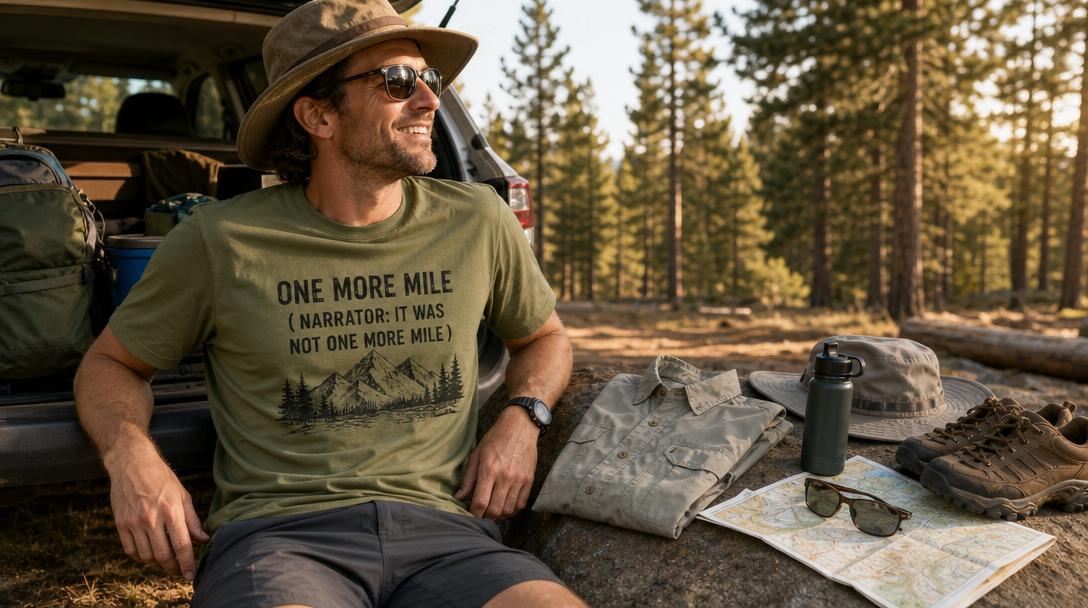
For off-trail comfort, a soft graphic tee like the One More Mile Shirt fits the post-hike mood. If your campsite personality leans more nocturnal woodland chaos, the Raccoon Moon Shirt is an easy camp-and-town layer.
4. Collar That Actually Covers Your Neck
Do not assume every collar helps equally. Look for:
- Double-fold collar
- Extended sun collar
- Collar tab or button
- Stiffer fabric that stays up
- Product photos showing the collar flipped
If you are specifically searching for the best hiking shirt with collar, focus on real coverage, not just whether the shirt technically has a collar.
5. Long Sleeves with Roll Tabs
Long sleeves protect your arms from sun, brush, bugs, and wind. Roll tabs let you secure sleeves when you want airflow.
6. Ventilation
Back vents, mesh panels, and a relaxed fit help air move. This is especially important for hot-weather hiking.
7. Useful Pockets
A hiking shirt with chest pockets and collar is especially nice for travel, fishing, birding, photography, and national park wandering. Zippered pockets are more secure; flap pockets are easier to access.
8. Pack-Friendly Seams
Avoid bulky seams directly under backpack straps. Smooth shoulder construction can reduce rubbing on longer hikes.
Button-Up Hiking Shirt for Hot Weather: What Works Best
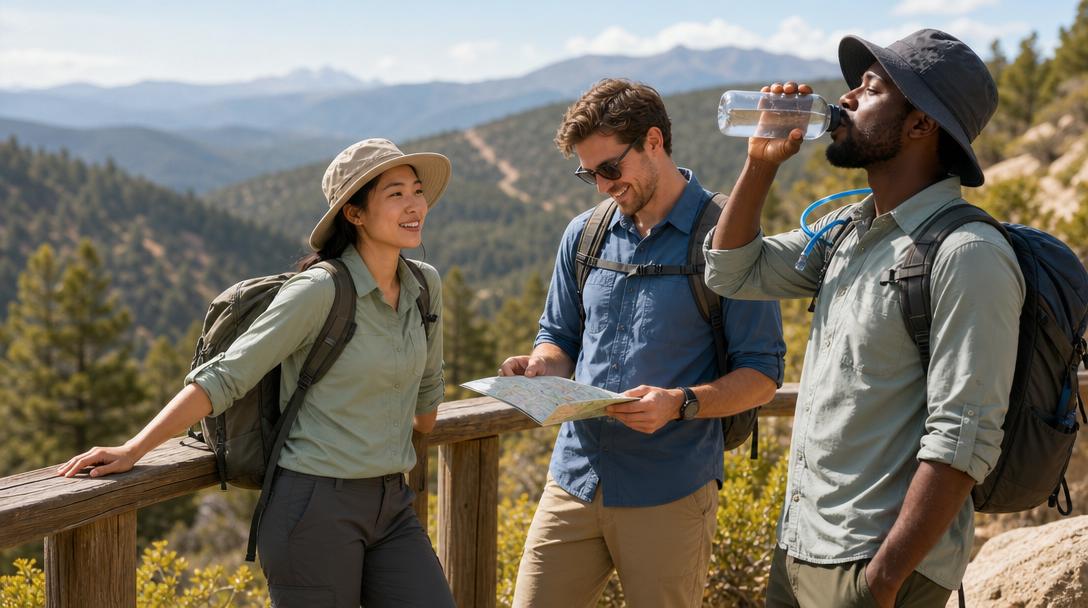
The best hiking shirt for hot weather is lightweight, breathable, loose-fitting, UPF-rated, and easy to ventilate.
For many hikers, that means either:
- A UPF sun hoodie for maximum coverage
- A lightweight button-up with vents and a strong collar for maximum airflow control
If you prefer collars, look for a button-up hiking shirt for hot weather with:
- UPF 50 or 50+
- Long sleeves
- Mesh or back vents
- Quick-dry nylon or polyester
- A relaxed fit
- A double-fold or extended collar
- Light colors like white, tan, pale blue, or sage
Light colors generally reflect more sunlight and can feel cooler in exposed conditions. Darker colors may offer strong UV protection too, but they often absorb more heat.
For humid trails, airflow matters most. For dry desert trails, coverage becomes king. For mixed national park trips, a button-up with a double-fold collar is one of the most adaptable choices. For more hot-weather picks, check our guide to the best hiking shirts for hot weather.
Best Use Cases for a Double-Fold Collar Hiking Shirt
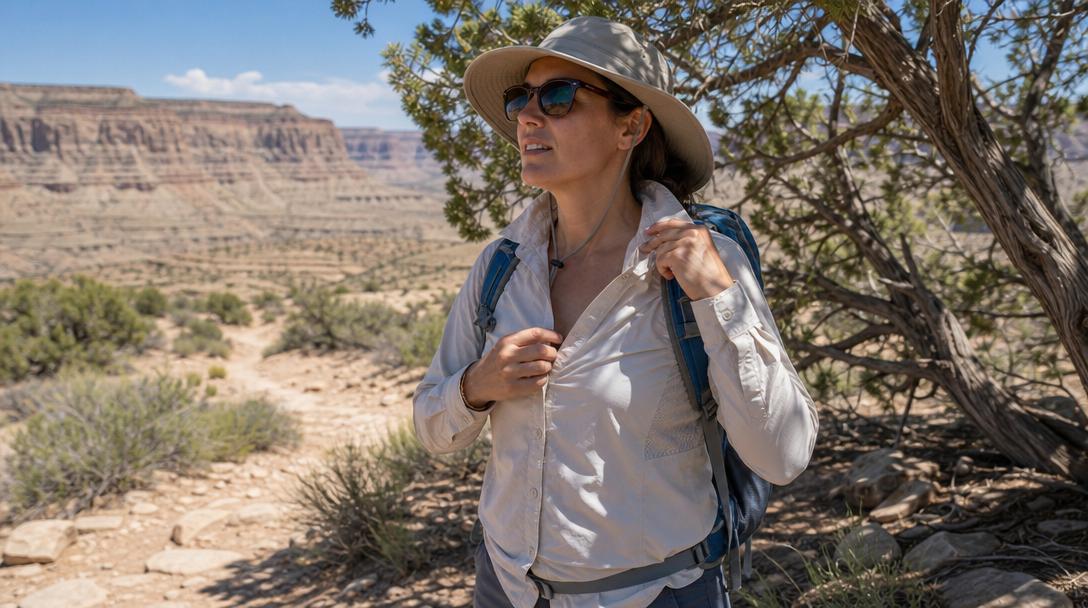
National Parks with Big Sun Exposure
Parks like Grand Canyon, Arches, Canyonlands, Zion, Badlands, and Joshua Tree are basically sun protection final exams.
A double-fold collar helps when you are:
- Standing in overlook lines
- Hiking exposed sandstone trails
- Taking shuttle buses between trailheads
- Waiting for sunset photos
- Forgetting sunscreen reapplication because the view is too good
Pair it with a wide-brim hat and sunglasses for a solid sun strategy. If you are building a bigger itinerary, our US national parks road trip planning guide can help you map the miles between trailheads.
Van Life and Road Trips
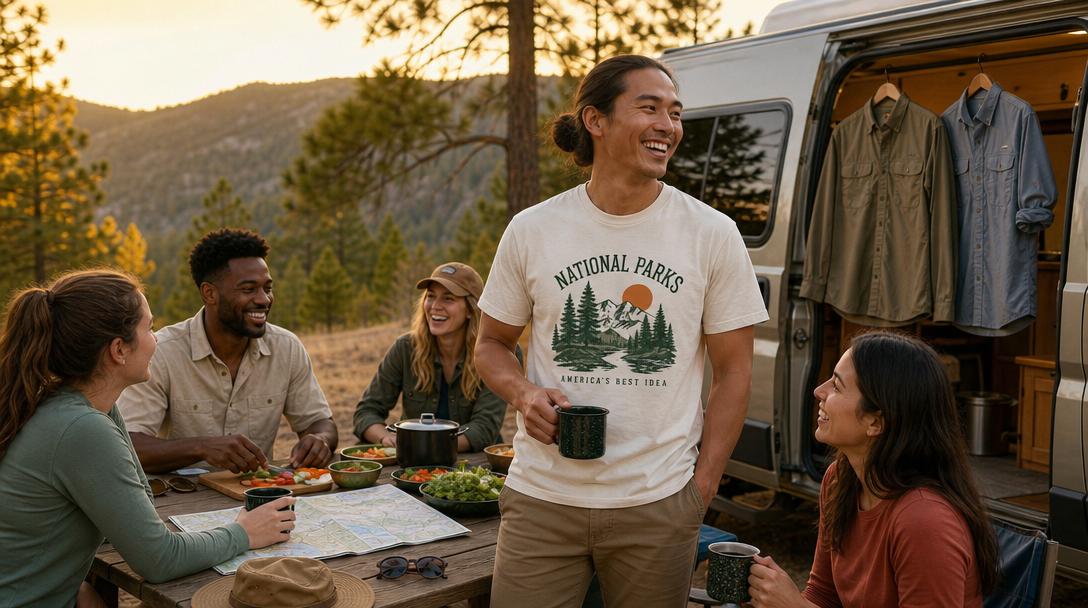
Van life means your clothes need to multitask. You might hike in the morning, drive for four hours, cook outside, nap in a hammock, and walk into a tiny-town grocery store looking only mildly feral.
A collared button-up works because it is:
- Packable
- Quick-drying
- More polished than a base layer
- Protective during driving and roadside stops
- Easy to layer over a tee
The double-fold collar adds function without making the shirt look overly technical.
Camping Weekends
At camp, a collar helps with more than sun. It can give a little extra coverage from wind, bugs, and cool evening air. It also layers nicely under a fleece, vest, or sweatshirt.
For shoulder-season camping, the collar can reduce drafts around your neck without needing a buff or neck gaiter.
Casual Graphic Tees for Camp and Town
After the technical shirt comes off, a casual graphic tee is the move for campground dinners, visitor center stops, and relaxed rest days. National park fans may like the America’s Best Idea National Park Shirt as an easy cotton-blend style for non-technical wear.
Family Hiking
If you are hiking with kids, dogs, relatives, or that friend who treats every trail like a snack parade, convenience matters. A button-up lets you adapt quickly without stopping to fully change layers.
Hot? Unbutton. Sunny? Collar up. Chilly? Button up. Camp store stop? Collar down. Crisis because someone dropped a granola bar in the dirt? Emotionally recover.
Product Recommendations: How to Choose the Right Shirt
Instead of naming one universal best shirt, match the shirt to your hiking style.
Best for Desert and High-Sun Hiking
Choose a UPF 50+ long-sleeve button-up with a double-fold collar, secure cuffs, and a relaxed fit. Prioritize coverage over minimal weight.
Best for Humid Hot Weather
Choose a vented button-up with breathable woven fabric, mesh panels, and a collar that stays up without feeling stiff or scratchy.
Best for Travel and National Parks
Choose a wrinkle-resistant collared hiking shirt that looks casual enough for restaurants but technical enough for trail use. Chest pockets are a bonus.
Best for Backpacking
Choose a lightweight shirt with smooth seams, quick-dry fabric, and a collar that does not rub under pack straps.
Best for Maximum Sun Protection
Consider a sun hoodie. But if you prefer a collar, the best hiking shirt with collar will have UPF 50+, long sleeves, and a double-fold or extended collar that overlaps well with your hat.
Frequently Asked Questions
Are collared shirts good for hiking?
Yes, collared shirts are good for hiking when they are made with technical, breathable, quick-drying fabric. A collared hiking shirt adds useful neck sun protection and can be more versatile than a basic tee.
Do hiking shirts help with sun protection?
Yes, especially if they have a UPF rating. A trail shirt with sun protection can block a significant amount of UV radiation, and UPF 50 fabric blocks about 98% of UV rays according to The Skin Cancer Foundation.
What features should a hiking shirt have?
A good hiking shirt should have UPF-rated fabric, moisture-wicking material, quick-dry performance, breathable ventilation, long sleeves, and a functional collar. If you hike in sunny areas, look for a double-fold collar or extended sun collar.
What is the best hiking shirt for hot weather?
The best hiking shirt for hot weather is lightweight, loose-fitting, breathable, quick-drying, and UPF-rated. A button-up hiking shirt for hot weather is a great choice if it has vents, long sleeves, and a collar that can protect your neck.
Why wear a button-up shirt for hiking?
A button-up gives you adjustable ventilation and flexible coverage. You can open the front when you are hot, button it up when the sun is strong, and flip the collar for extra neck protection.
Is a double-fold collar better than a sun hoodie?
Not always. A sun hoodie usually provides more complete head and neck coverage, but a double-fold collar is cooler, more adjustable, and better for hikers who prefer button-up airflow. The best choice depends on heat, sun exposure, and personal comfort.
The Trail Takeaway: Small Collar, Big Difference
A double-fold collar may look like a tiny detail, but on real hikes, it solves a real problem: your neck needs better protection than a standard collar usually provides.
Choose a double-fold collar if you hike in strong sun, visit national parks, take long road trips, camp often, or want one shirt that works from trailhead to taco stand. Look for UPF 50+, breathable quick-dry fabric, long sleeves, useful vents, and a collar that actually stays up.
Your future neck will thank you. Quietly, because necks do not talk. But still.


