


Vented Hiking Shirt Guide: Are Mesh Backs Worth It?
Dominic PalmowskiA vented hiking shirt promises cooler miles, less swamp-back, and that breezy one-with-the-wind feeling—but are back flaps and mesh actually worth paying for? Short answer: yes, sometimes. The best vented hiking shirt can make hot-weather hiking more comfortable, especially in dry heat, exposed sun, and hikes with less pack contact. But vents are not magic alpine air conditioning. Fabric, fit, sun protection, and backpack coverage matter just as much—sometimes more.
If you have ever finished a summer hike with your shirt glued to your back like a wet tortilla, you already know why this topic matters. The right breathable hiking shirt can help sweat evaporate faster, reduce overheating, protect your skin, and keep you from becoming a walking laundry emergency by mile six.
Let’s break down when mesh backs and vent flaps are worth it, when they are overhyped, and how to choose the best shirt for hiking in the heat without getting lost in marketing fog.
Are Vented Hiking Shirts Worth It? The Clear Verdict
Vented hiking shirts are worth it if you hike in hot, sunny conditions and your vents are placed where air can actually move. They are especially helpful for day hikers, desert hikers, humid-weather hikers who need every bit of airflow, and anyone wearing a small daypack or no pack.
They are less worth it if you mostly hike with a large backpack that covers your entire back, because your pack blocks airflow through many rear vents. In that case, a lightweight, moisture-wicking fabric and a smart fit will usually matter more than a fancy back flap.
Think of vents as a bonus feature—not the whole shirt. If you are comparing price tags, our guide to whether expensive hiking shirts are worth it can help you decide when premium features actually matter.
A premium vented hiking shirt is most worth the money when it combines:
- Lightweight nylon or polyester fabric
- UPF-rated sun protection
- Mesh or vents in high-heat zones
- A relaxed fit that lets air circulate
- Quick-drying performance
- Durable construction around pack straps
If a shirt has a big dramatic cape vent but is made from thick, clammy fabric? That is like putting a screen door on a sauna. Technically ventilated, spiritually questionable.
How a Breathable Hiking Shirt Actually Works
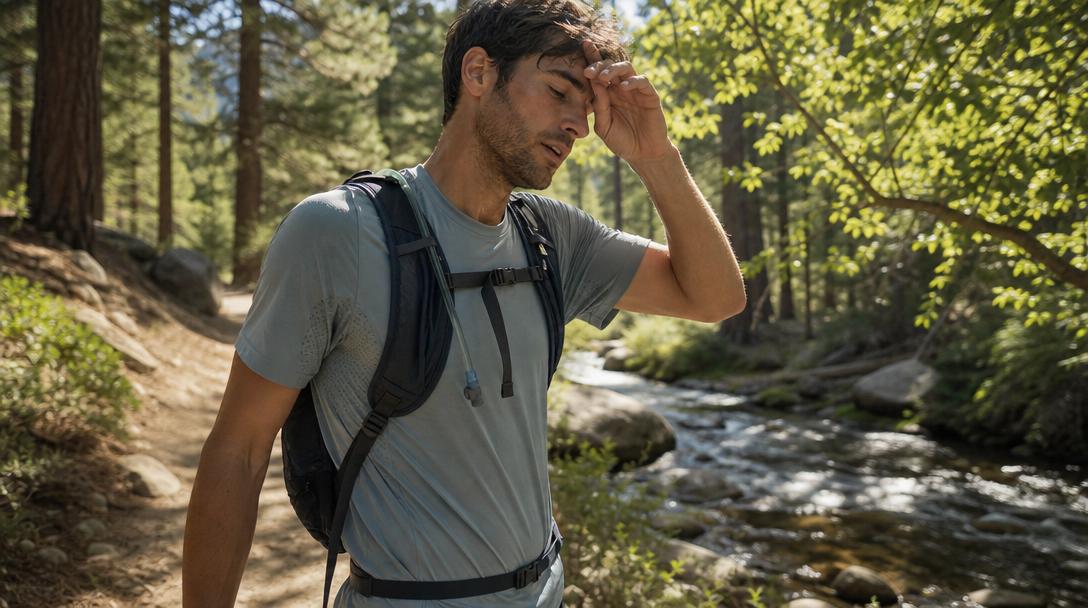
Vented shirts cool you in two main ways: airflow and evaporation.
When you sweat, your body is trying to cool itself. For sweat to do its job, it needs to evaporate. A moisture-wicking hiking shirt pulls sweat away from your skin and spreads it across the fabric so it can dry faster. Vents and mesh panels help by letting more air reach sweaty areas.
According to REI’s hiking clothing guidance, polyester and nylon are popular hiking fabrics because they dry quickly, wick moisture, and hold up well to trail use. REI also recommends avoiding cotton for active hiking because it absorbs moisture and dries slowly.
So yes, ventilation helps—but only when the rest of the shirt is built for heat.
The Backpack Problem
The biggest issue with back vents is simple: backpacks sit on your back.
A hiking shirt with mesh back panels may breathe beautifully when you are walking without a pack. Add a 25-pound backpack pressed against your shoulder blades, and airflow drops fast.
That does not make back vents useless. Air can still move around the sides, upper back, shoulder areas, and under a loose back yoke. But if your pack covers the entire vented area, the cooling benefit is reduced.
SectionHiker has noted in testing of ventilated backpack systems that creating airflow between the pack and back can reduce sweat buildup, but even dedicated suspended-mesh backpack designs do not eliminate sweat completely. The same idea applies to hiking shirts: airflow helps, but pressure and coverage limit the effect.
Vent Types Compared: Mesh Panels, Back Yokes, and Breathable Fabric
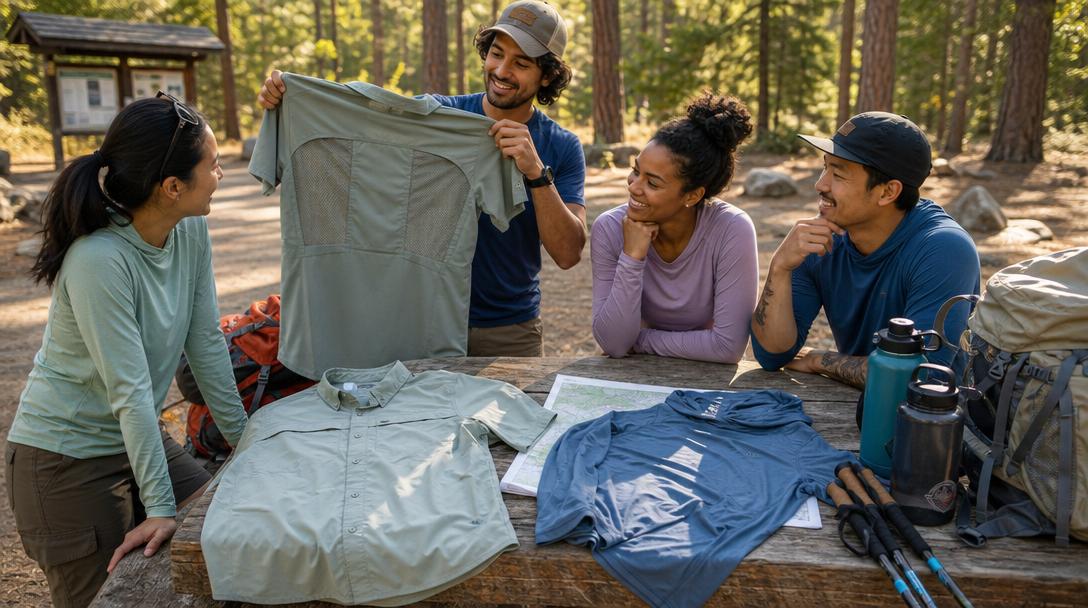
Not all vents are created equal. Some are genuinely useful. Others are mostly there to make the shirt look like it belongs on a rugged person holding a topographic map.
| Vent Type | How It Works | Best For | Downsides |
|---|---|---|---|
| Mesh back panels | Replaces part of the shirt fabric with mesh for direct airflow | Hot weather, high-output hiking, light packs | Less sun protection, can snag, may feel clammy under packs |
| Cape back / back yoke vent | A loose flap covers an opening across the upper back | Sun shirts, fishing-style hiking shirts, breezy conditions | Pack can block airflow; flap may trap heat if fabric is heavy |
| Underarm or side vents | Mesh or openings in sweat-heavy zones | Humid hikes, steep climbs, backpacking | Less common; can reduce durability |
| Mechanical venting | Shirt design allows airflow through gaps, buttons, loose cuffs, and collars | Adjustable comfort in changing conditions | Requires active management |
| Breathable fabric only | Lightweight weave or knit lets heat and moisture escape | Minimalist hikers, backpackers, high-UV routes | No targeted cooling zones |
Hiking Shirt With Mesh Back
A hiking shirt with mesh back gives the most direct airflow. It can feel noticeably cooler when you are moving without a large pack. Mesh is especially useful in:
- Upper back zones
- Underarms
- Side torso panels
- Shoulder blade areas not fully covered by your pack
But mesh has trade-offs. Open mesh may provide less UV protection than solid UPF fabric. It can also snag more easily on branches, Velcro, or rough backpack materials.
Back Yoke or Cape Vents
Back yoke vents are common on fishing-style hiking shirts. They usually include a loose flap across the upper back with mesh underneath. These can work well because they allow warm air to escape while keeping the sun off your back.
This style is often a good pick for hot, sunny trails where you want airflow and coverage. But again, a large pack can squash the whole system like a sad trail pancake.
Underarm and Side Vents
These are underrated. Your underarms and sides often remain less covered by a backpack, so vents here can keep working even when your back panel is blocked.
If you hike with a pack, side or underarm mesh may be more useful than a giant center-back mesh panel.
Fabric Breathability
This is the sleeper feature. A shirt does not need giant vents to perform well if the fabric is light, breathable, and quick drying.
A quick dry hiking shirt for backpacking made from thin polyester or nylon may outperform a poorly designed vented shirt made from heavier fabric. Fabric first, vents second. Trail wisdom, not wizardry.
Do Mesh Panels Help Keep You Cool While Hiking?
Yes, mesh panels can help keep you cool while hiking, but their effectiveness depends on placement, pack coverage, humidity, and sun exposure.
Mesh works best when:
- Air can actually reach the mesh
- The shirt fits loosely enough to create airflow
- You are hiking in dry or breezy conditions
- Mesh is placed in underarms, sides, or uncovered back areas
- You are carrying a small daypack or no pack
Mesh works less well when:
- Your backpack presses directly against it
- The air is extremely humid and sweat evaporates slowly
- The mesh is covered by a rain shell or wind layer
- You need maximum sun protection
In hot, dry climates, mesh can feel fantastic because sweat evaporates quickly. In hot, humid climates, mesh still helps, but the effect is more limited because the air is already loaded with moisture. Basically, your shirt is trying its best, but the atmosphere is being dramatic.
Best Hot Weather Hiking Shirt by Climate
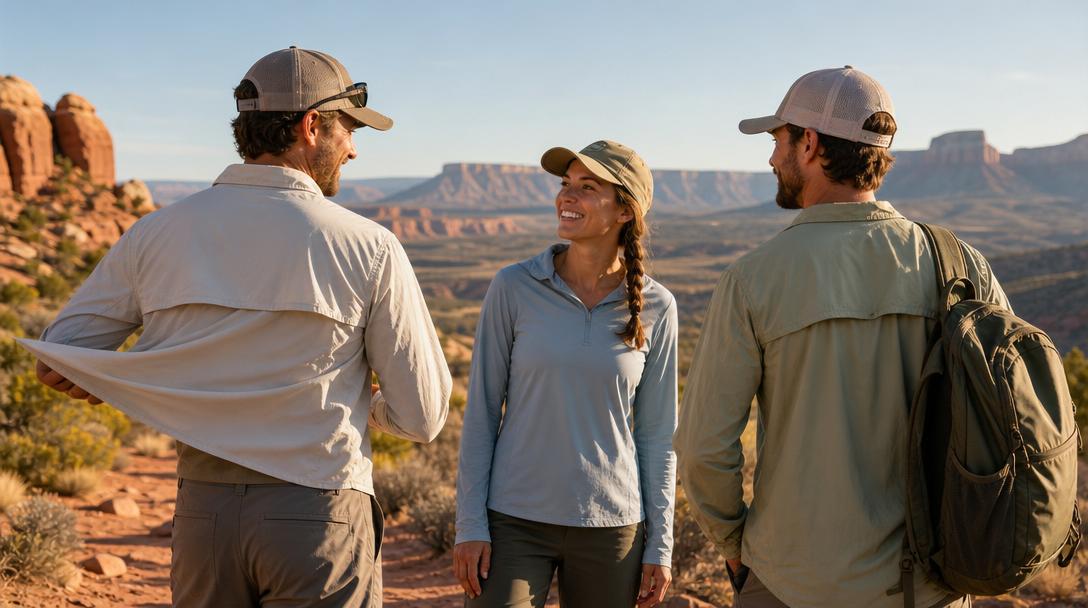
The best hot weather hiking shirt depends heavily on where you hike. Arizona heat is not the same beast as a July trail in Georgia. One is an oven. The other is soup with mosquitoes.
For a broader breakdown of sun shirts, UPF protection, and summer trail layers, see our guide to the best hiking shirts for hot weather.
Hot-Dry Conditions
For desert hikes, exposed ridgelines, and low-humidity summer trails, prioritize sun protection and evaporation.
Look for:
- Long sleeves
- UPF 30–50+
- Lightweight nylon or polyester
- Light colors
- Back yoke vents or side vents
- Relaxed fit
- Collar or hood for neck protection
A woven button-up sun shirt with a cape vent can be excellent here. You get coverage, airflow, and adjustability. Roll the sleeves, open a button, pop the collar, become a slightly dusty lizard person. Perfect.
The Skin Cancer Foundation states that UPF 30–49 offers very good protection and UPF 50+ offers excellent protection. UPF 50 blocks about 98% of UV rays, which matters a lot when shade is basically a rumor.
Hot-Humid Conditions
For humid forests, muggy mountain trails, and summer hikes where the air feels like wet laundry, prioritize maximum breathability and fast drying.
Look for:
- Lightweight polyester knit
- Mesh underarm or side panels
- Odor-control treatment
- Loose but not baggy fit
- Short sleeves or long sleeves depending on bug and sun exposure
- Minimal thick seams under pack straps
In humid conditions, sweat evaporates more slowly, so even the best vented hiking shirt will not keep you perfectly dry. But it can reduce that sealed-in, sticky feeling.
High-UV Conditions
For alpine hikes, desert trails, snowfields, and long exposed routes, sun protection may matter more than maximum ventilation.
Look for:
- UPF 50 or UPF 50+
- Long sleeves
- Hood or high collar
- Thumb loops if desired
- Tightly woven breathable fabric
- Minimal open mesh in high-exposure areas
- Light or bright colors
Be careful with large open mesh panels in high-UV areas. If you can see lots of light through a fabric, UV may also be getting through unless the material is specifically UPF rated.
Backpacking in Mixed Conditions
For multi-day trips, the best choice is usually a quick dry hiking shirt for backpacking that balances breathability, durability, odor control, and sun protection.
Look for:
- Polyester or nylon for fastest drying
- Merino blend if odor control matters
- Reinforced shoulders
- Flat seams
- Moderate vents on sides or upper back
- UPF rating
- A fit that works under a loaded pack
If you are carrying a heavy pack, do not pay extra only for a giant mesh back panel. Prioritize fabric, shoulder durability, drying speed, and odor resistance.
What Is the Best Shirt for Hiking in the Heat?
The best shirt for hiking in the heat is usually a lightweight, moisture-wicking, quick-drying polyester or nylon shirt with UPF protection and a relaxed fit.
For most hikers, the best all-around hot-weather choice is:
- Long-sleeve polyester or nylon sun shirt
- UPF 30–50+
- Light color
- Breathable weave or knit
- Optional side, underarm, or back vents
- Relaxed fit
- Minimal bulky seams
Short sleeves can feel cooler, but long sleeves protect against sun, bugs, brush, and sunscreen reapplication fatigue. A lightweight long-sleeve shirt often feels better over a full day than bare arms slowly roasting like trail snacks.
When a Button-Up Is Better
Choose a vented button-up hiking shirt if you want:
- Adjustable airflow
- Chest pockets
- A collar for sun protection
- Better airflow around the torso
- A looser fit
These are great for desert hikes, travel, fishing, camping, and casual trail days.
When a Knit Sun Hoodie Is Better
Choose a knit sun hoodie if you want:
- Better neck and ear coverage
- Fewer gaps in sun protection
- Stretch and comfort
- Simpler layering
- Less flapping in wind
Sun hoodies may not always have obvious vents, but the best ones use highly breathable, lightweight fabric.
When a Mesh Tee Is Better
Choose a mesh-panel tee if you want:
- Maximum airflow
- High-output hiking
- Trail running
- Shorter hikes
- Less fabric coverage
Just be mindful of sun exposure and pack abrasion.
What Fabric Is Best for Hiking Shirts?
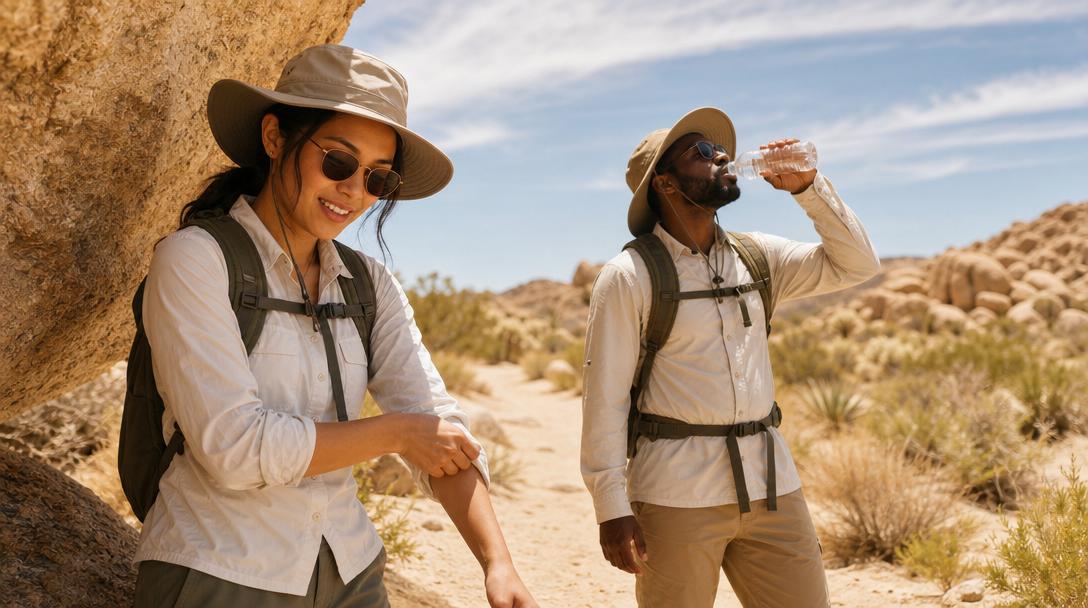
The best fabric for hiking shirts depends on your priorities, but for heat, polyester and nylon are the top performers.
Polyester
Polyester is common in performance hiking shirts because it:
- Wicks moisture well
- Dries quickly
- Feels light
- Holds shape
- Is often affordable
- Works well in knit sun shirts and tees
The downside? Odor. Polyester can hold onto stink more than merino wool. If your shirt smells like it has developed a personality after one hike, blame the fibers, not your soul.
Nylon
Nylon is often used in woven hiking shirts because it:
- Is durable
- Dries quickly
- Resists abrasion better than many lightweight fabrics
- Works well for button-up sun shirts
- Blocks wind slightly better than thin knits
Nylon can feel a little less soft than polyester but often performs well under pack straps.
Merino Wool
Merino wool is excellent for:
- Odor resistance
- Comfort
- Temperature regulation
- Multi-day wear
But merino generally dries more slowly than polyester or nylon and may be less durable under heavy pack abrasion. A merino-synthetic blend can be a great compromise.
Cotton Hiking Shirts and Casual Graphic Tees
Cotton is comfortable around camp, but it is usually a poor choice for sweaty hiking. It absorbs moisture and dries slowly, which can lead to chafing, discomfort, and chilling if temperatures drop. For a deeper dive, read why cotton is bad for hiking.
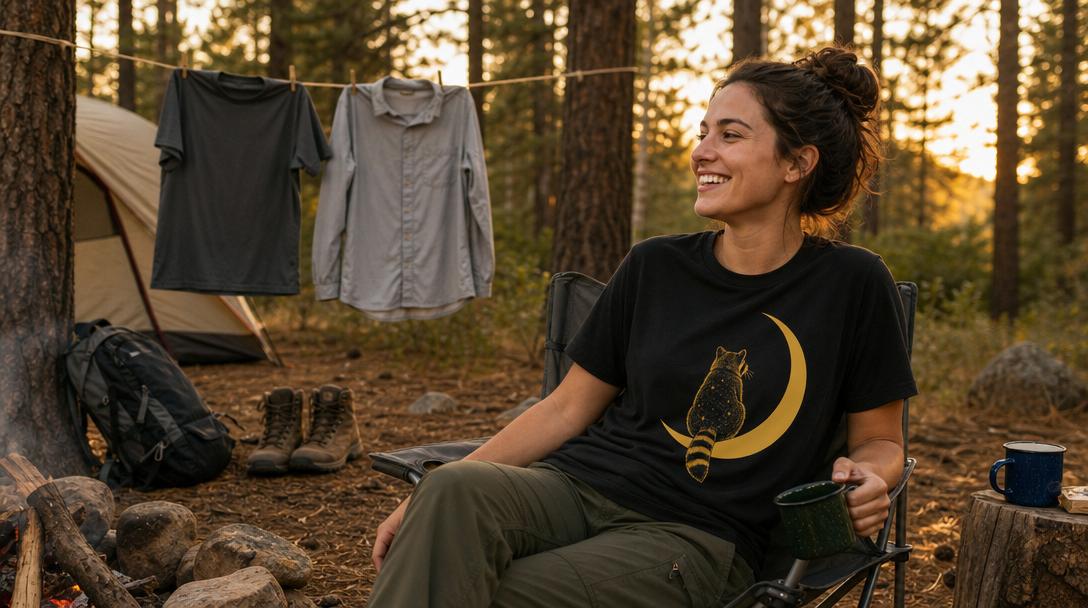
That said, once the hike is done and the camp chair is calling? That is where a soft, funny outdoor tee absolutely shines. Technical shirt for the climb, then campfire comfort in a casual graphic tee like the Raccoon Moon Shirt or a trail-day favorite such as the One More Mile Shirt.
Should Hiking Shirts Be Loose or Fitted?
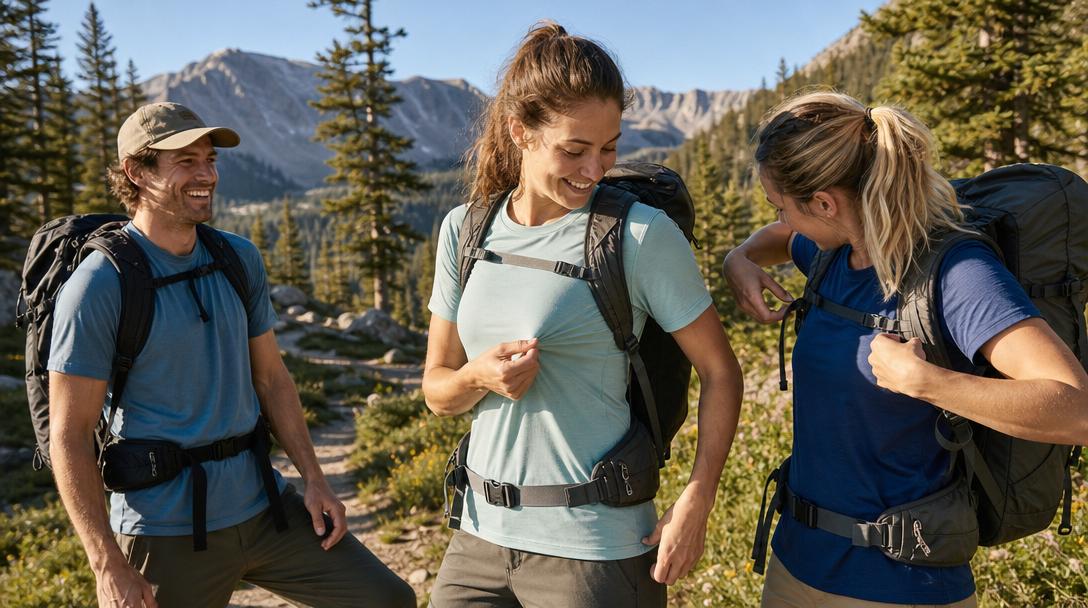
Hiking shirts should usually be slightly loose, not tight and not oversized.
A good hot-weather hiking fit allows air to move between your skin and the fabric. If the shirt is too tight, it can trap heat, reduce airflow, and make mesh panels less effective. If it is too baggy, it can bunch under your backpack, flap in wind, or cause chafing.
Fit Checklist for Ventilation
When trying on a breathable hiking shirt, check:
- Can you pinch a little fabric at the chest and back?
- Can you raise your arms without the hem riding way up?
- Do shoulder seams sit comfortably under pack straps?
- Does the back vent open slightly when you move?
- Does the shirt avoid tight pulling across the upper back?
- Can air enter through the hem, cuffs, collar, or vents?
Fit With a Backpack
Always test fit with your actual pack if possible. A vent that looks amazing in the mirror may disappear under shoulder straps and a back panel.
For backpacking, avoid:
- Bulky seams under straps
- Mesh directly under high-friction areas
- Tight shoulders
- Excess fabric bunching at the lower back
- Shirts that ride up under a hip belt
A relaxed athletic fit is usually the sweet spot.
Trade-Offs: What Brands Do Not Always Tell You
Vents and mesh can be great, but they come with compromises.
Durability
Mesh can snag more easily than solid fabric. If you bushwhack, scramble, hike through overgrown trails, or regularly wrestle your backpack like it owes you money, mesh may wear faster.
Look for reinforced shoulders and avoid delicate mesh under pack straps.
Sun Protection
Solid UPF-rated fabric usually protects better than open mesh. Some mesh panels are UPF rated, but not all. If sun exposure is your main concern, choose a shirt with documented UPF protection and keep mesh zones limited or covered.
Odor Retention
Synthetic shirts dry fast, but they can hold odor. Merino resists odor better but may dry slower and wear faster. For multi-day trips, consider:
- Merino blends
- Polyester with odor-control treatment
- Bringing a spare shirt
- Rinsing shirts when possible
Drying Speed
Thin polyester usually dries fastest. Nylon is also quick drying. Merino dries slower. Cotton dries slowest and is best left for town, camp, or pretending you were not just destroyed by a 900-foot climb.
Pack Compatibility
Back flaps and rear mesh are less effective under full-contact backpacks. If you hike with a large pack, prioritize side vents, underarm vents, quick-dry fabric, and shoulder durability.
Best Vented Hiking Shirt: What to Buy Based on Your Hiking Style
There is not one single best vented hiking shirt for everyone. The best choice depends on your climate, pack, and sweat level.
Best for Desert Day Hiking
Choose a lightweight nylon or polyester button-up with:
- UPF 50
- Cape back vent
- Long sleeves
- Collar
- Light color
- Relaxed fit
Great for exposed trails, high sun, and dry air.
Best for Humid Hiking
Choose a lightweight polyester knit shirt with:
- Mesh side or underarm panels
- Odor-control treatment
- Fast-drying fabric
- Athletic-relaxed fit
Great for sweaty climbs and forest trails.
Best for Backpacking
Choose a durable synthetic or merino-blend shirt with:
- Reinforced shoulders
- Flat seams
- Quick-dry fabric
- UPF protection
- Minimal mesh under pack contact points
Great for multi-day trips where durability matters.
Best for High-UV Routes
Choose a UPF 50+ sun hoodie or long-sleeve shirt with:
- Hood or high collar
- Thumb loops
- Tightly woven or rated fabric
- Minimal open mesh
- Light color
Great for alpine, desert, and all-day exposed hikes.
Best Budget Pick
Choose a simple polyester or nylon hiking shirt with:
- UPF rating
- Lightweight fabric
- Basic venting if available
- Comfortable fit
Skip premium vents if the fabric is already breathable and your budget is tight.
Who Should Buy a Hiking Shirt With Mesh Back?
A hiking shirt with mesh back is a smart buy if you:
- Hike in hot weather often
- Use a small daypack or hydration vest
- Sweat heavily
- Hike in dry or breezy climates
- Want airflow during breaks and camp chores
- Prefer button-up hiking shirts
- Do not bushwhack often
You might skip it if you:
- Mostly backpack with a large pack
- Need maximum UPF protection
- Hike through brushy trails
- Want the most durable shirt possible
- Are sensitive to synthetic odor
- Already have a lightweight breathable hiking shirt that works well
Frequently Asked Questions
Are vented hiking shirts worth it?
Yes, vented hiking shirts are worth it for hot-weather hiking when the vents are placed where air can move. They are most useful with light packs, in dry or breezy conditions, and during high-output hikes. With a large backpack, the benefit is smaller because the pack blocks airflow.
Do mesh panels help keep you cool while hiking?
Mesh panels can help keep you cool by improving airflow and speeding evaporation. They work best on the sides, underarms, or upper back areas not fully covered by your pack. In humid weather, they still help, but the cooling effect is less dramatic.
What is the best shirt to wear hiking in hot weather?
The best shirt for hiking in the heat is usually a lightweight polyester or nylon shirt with moisture-wicking performance, quick-drying fabric, UPF protection, and a relaxed fit. Long sleeves are often better for exposed sun, while short sleeves or mesh panels may feel cooler on shaded, humid trails.
Should hiking shirts be loose or fitted?
Hiking shirts should be slightly loose, especially in hot weather. A relaxed fit improves ventilation and helps sweat evaporate, while a too-tight shirt can trap heat. Avoid overly baggy shirts that bunch under backpack straps or a hip belt.
What fabric is best for hiking shirts?
Polyester and nylon are the best fabrics for most hiking shirts because they wick moisture, dry quickly, and handle trail wear well. Merino wool is better for odor resistance but usually dries slower. Cotton is not ideal for sweaty hiking because it absorbs moisture and dries slowly.
Is a quick dry hiking shirt for backpacking better than a vented shirt?
For backpacking, quick-drying fabric is usually more important than large back vents. A quick dry hiking shirt for backpacking will stay more comfortable after sweat, rain, or rinsing, especially when a pack blocks rear ventilation. The best option combines quick-dry fabric with smart vents that are not crushed by your pack.
Final Trail Verdict: Buy the Vents, But Do Not Ignore the Basics
Back flaps and mesh are worth it when they are part of a well-designed hot-weather hiking shirt—not when they are used to distract from mediocre fabric.
The smartest buying formula is:
- Hot and dry: UPF long-sleeve shirt with back yoke or side vents
- Hot and humid: lightweight polyester with mesh underarms or side panels
- High UV: UPF 50+ sun hoodie or long-sleeve shirt with limited open mesh
- Backpacking: quick-dry, durable fabric first; vents second
- Heavy sweaters: breathable synthetic shirt with odor control
- Odor-sensitive hikers: merino blend or treated synthetic
If you are still wondering, are vented hiking shirts worth it? The honest answer is: yes, if you hike hot and choose the right design for your climate and pack setup. But do not pay a premium for vents alone. Pay for the full system: fabric, fit, sun protection, drying speed, durability, and ventilation that actually works once your backpack is on.
Your future less-sweaty self will thank you. Probably while eating trail mix in the shade like a victorious little squirrel.


