


Sleeve Length for Hiking by Season
Dominic PalmowskiThe short answer: your sleeves should match the trail, not just the temperature
If I had to give one piece of sleeve-length advice to hikers, it would be this: stop letting the morning temperature at the trailhead make the whole decision for you.
I learned that the uncomfortable way.
Most of my hiking happens around the mid-Atlantic and Appalachian region: forested trails, rolling ridgelines, humid summers, muddy spring mornings, windy fall overlooks, and weather that will absolutely lie to your face before lunch. For years, I treated hiking shirts like an afterthought. Whatever was clean went on my body. Usually that meant a cotton tee, because I had not yet learned that cotton and sweat are not exactly trail buddies.
Over time, I started noticing that temperature was rarely the only thing making me miserable. It was the sun baking my forearms. It was bugs finding every exposed inch of skin. It was wind hitting me on an overlook after I had just sweat my way up a climb. Now I think about sleeve length almost as seriously as footwear, which ten-years-ago me would have found deeply dramatic.
But trail miles have a way of humbling you.
Short sleeves vs long sleeves for hiking: what really matters
Short sleeves are not bad. Long sleeves are not automatically better. The right choice depends on the combination of sun, wind, bugs, elevation, humidity, terrain, and how long you will be out there.
Temperature matters, but for me it is only about 40% of the decision. The rest is the stuff that does not always show up clearly in a weather app.
Short sleeves are best when conditions are simple
I reach for short sleeves when the hike is:
- Warm but not dangerously sunny
- Mostly shaded
- Low elevation
- Short or moderate in length
- Calm, with little wind exposure
- Not brushy or tick-heavy
- Predictable weather-wise
A warm, shaded summer trail through deep forest? Short sleeves can be perfect. You get airflow, comfort, and less fabric sticking to you in humid conditions.
But short sleeves become a gamble when you add exposure, bugs, changing weather, or elevation.
Long sleeves are best when conditions are variable
Long sleeves shine when the trail throws more than one thing at you. Sun plus bugs. Wind plus sweat. Cool morning plus warm afternoon. Overgrown trail plus humidity. That is where a good long-sleeve hiking shirt earns its place.
I used to think long sleeves were only for cold weather. Then I started hiking exposed ridgelines and tick country in summer, and that opinion changed fast.
A breathable long-sleeve shirt can protect your arms from UV, insects, brush, poison ivy, and wind without necessarily making you hotter. The key is choosing the right fabric and fit.
Summer hiking: short sleeves feel good, long sleeves often work better
Summer is where most hikers assume short sleeves are the obvious answer. And sometimes they are. But hot weather is also when sun exposure, bugs, and ticks are at their worst.
The Pennsylvania ridge hike that changed my mind
A few years back, I did a mid-June ridge hike in central Pennsylvania. At the trailhead, it was maybe 68 degrees with a light breeze. It felt like a perfect short-sleeve morning.
What I did not account for was the long exposed ridgeline ahead: about four miles with basically no tree cover and a UV index already climbing before 9 a.m.
By the time I got back to the car, my forearms looked like they had been lightly toasted on both sides. I also had three or four bug bites I did not even notice happening because the sunburn discomfort was louder.
The temperature had been completely fine. The exposure and bugs were the problem.
That hike taught me that a summer hiking shirt is not just about staying cool. It is about managing everything summer throws at you.
For more hot-weather shirt guidance, I’d pair this decision with the ideas in Best Hiking Shirts for Hot Weather: Sun Shirts, Breathable, and UPF Protection.
When I wear long sleeves in summer
In summer, I lean long if:
- The UV index is above 3
- The trail is exposed for more than an hour
- I am hiking at higher elevation
- The trail is brushy or overgrown
- Ticks or mosquitoes are active
- I will be out through midday sun
A lightweight UPF sun shirt in a light color can be more comfortable than repeatedly slathering sunscreen onto sweaty arms. Sunscreen has its place, but on trail it sweats off, gets missed in spots, and needs reapplying when you are busy trying not to trip over roots.
A UPF long sleeve just keeps doing its job.
When short sleeves are fine in summer
Short sleeves still make sense for warm, shaded, low-elevation hikes with a clear forecast and low bug pressure. If I am taking a casual local loop through dense tree cover, I am not going to pretend long sleeves are always mandatory.
That said, I usually still pack a light layer if the hike is longer than expected. Appalachian weather enjoys plot twists.
Spring hiking: prepare for lies from the forecast
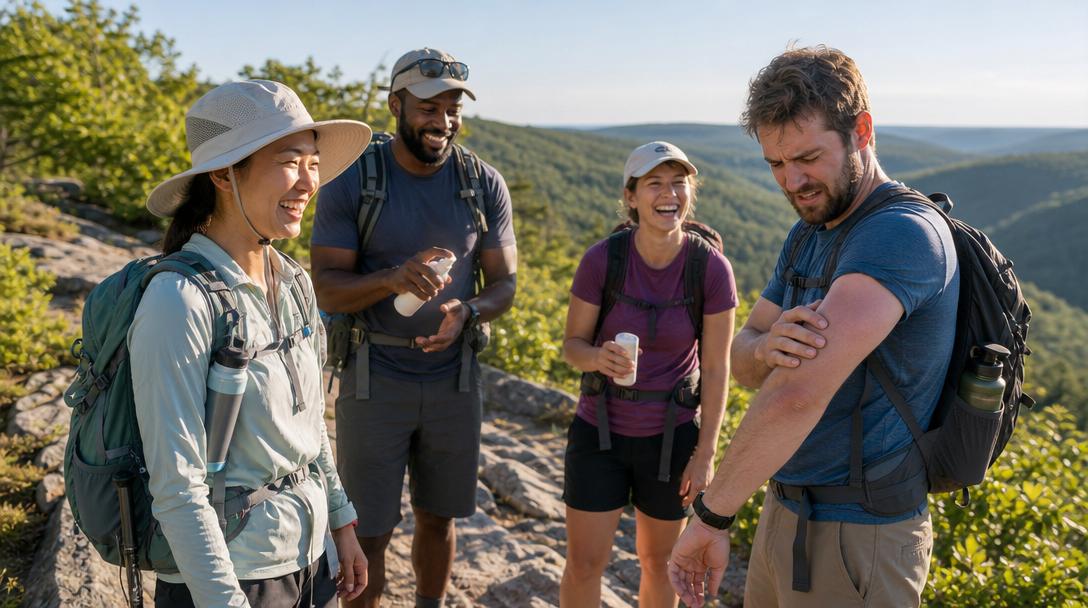
Spring hiking in the mid-Atlantic can be beautiful, muddy, buggy, chilly, warm, windy, and confusing — sometimes within the same three miles.
This is one of the seasons where I almost always lean long sleeves or at least pack a long-sleeve layer. A short-sleeve shirt might feel right at the trailhead, but spring has a way of changing the rules once you gain elevation or step onto an open ridge.
Spring sleeve strategy
For spring, I ask:
- Will the trail be wet or muddy?
- Is there wind on the forecast?
- Am I gaining elevation?
- Are ticks waking up?
- Is the weather changing through the day?
If the answer is yes to more than one of those, I am wearing long sleeves or carrying them.
Spring is also when poison ivy starts becoming a concern on overgrown trails. If I know I will be brushing against vegetation, I want fabric between my skin and the trail. I have done the itchy, regretful week after a poison ivy encounter. I do not need a sequel.
Fall hiking: long sleeves are the comfort move
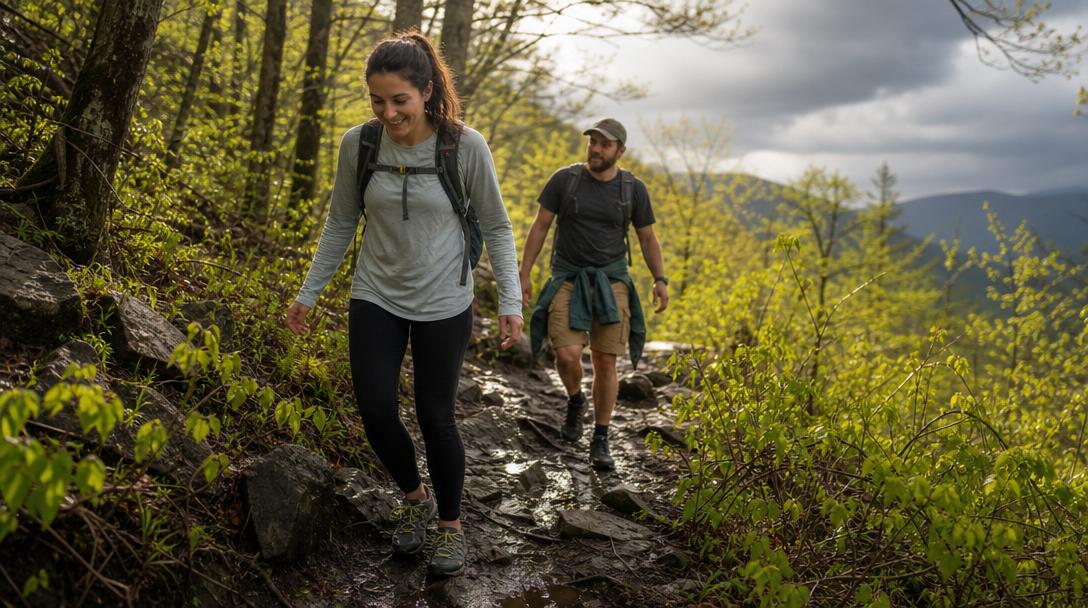
Fall is my favorite season for hiking, but it is also when sleeve length can make or break your comfort.
One hike near the Blue Ridge Parkway in late September really converted me. We started under overcast skies at moderate elevation, and every open overlook had that classic fall wind that cuts right through you.
I was wearing a lightweight merino long-sleeve shirt — not heavy, not fancy, just a solid midweight merino layer. Every time we stepped out of the trees, the short-sleeve folks in the group were immediately huddling and rushing the view. I was comfortable enough to stop, breathe, and actually enjoy the overlook.
Then, when we dropped back into sheltered forest and picked up the pace, the merino breathed well enough that I never overheated.
That was the hike that changed my thinking from “long sleeves are for cold weather” to “long sleeves are for variable conditions.” Big difference.
Why merino works well in fall
Merino wool is excellent when temperatures shift because it helps regulate warmth, breathes decently, and does not get offensively smelly after one hard climb. For day hikes, that is nice. For overnight trips, it is a gift to everyone sharing camp with you.
Fall is also a great time to think in layers. If you are dialing in a full cold-weather system, this guide on What to Wear Hiking in Cold Weather: The 3-Layer Rule Explained is worth reading.
Winter hiking: long sleeves are the base layer default
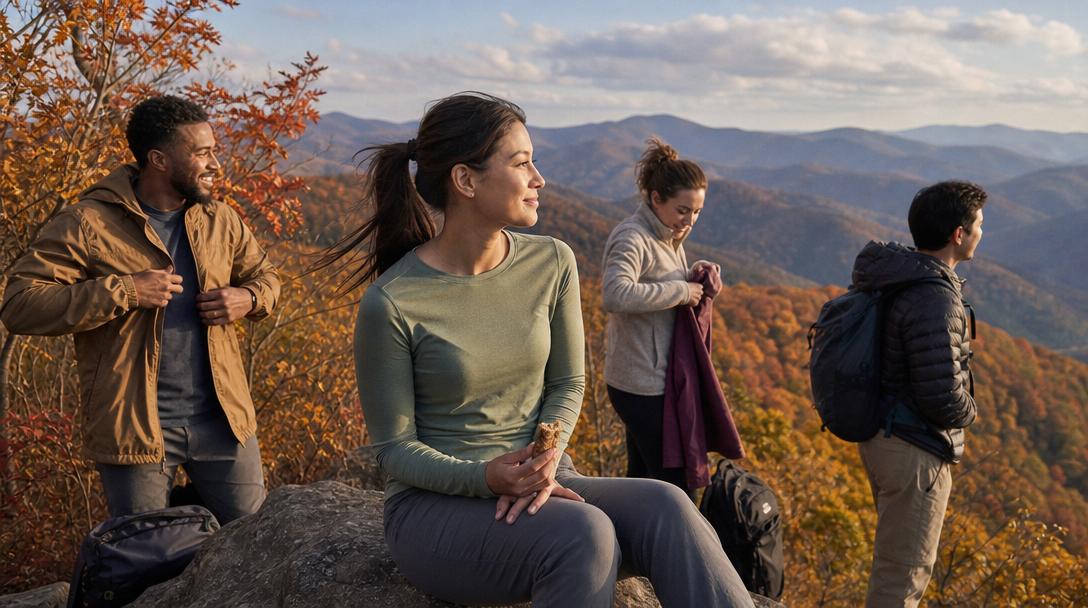
In winter, I almost never debate short sleeves. Long sleeves are the starting point.
A winter hiking shirt should act as a base layer: moving moisture away from your skin while helping you stay warm under your insulating and shell layers. The real danger in winter is not just being cold; it is getting sweaty, stopping, and then getting chilled fast.
This is where cotton becomes a problem. A cotton tee can hold sweat and stay wet, which feels miserable once your pace slows or the wind picks up. If you want the deeper breakdown, I wrote more about that in Why Is Cotton Bad for Hiking?
Bugs, ticks, and overgrown trails: long sleeves win
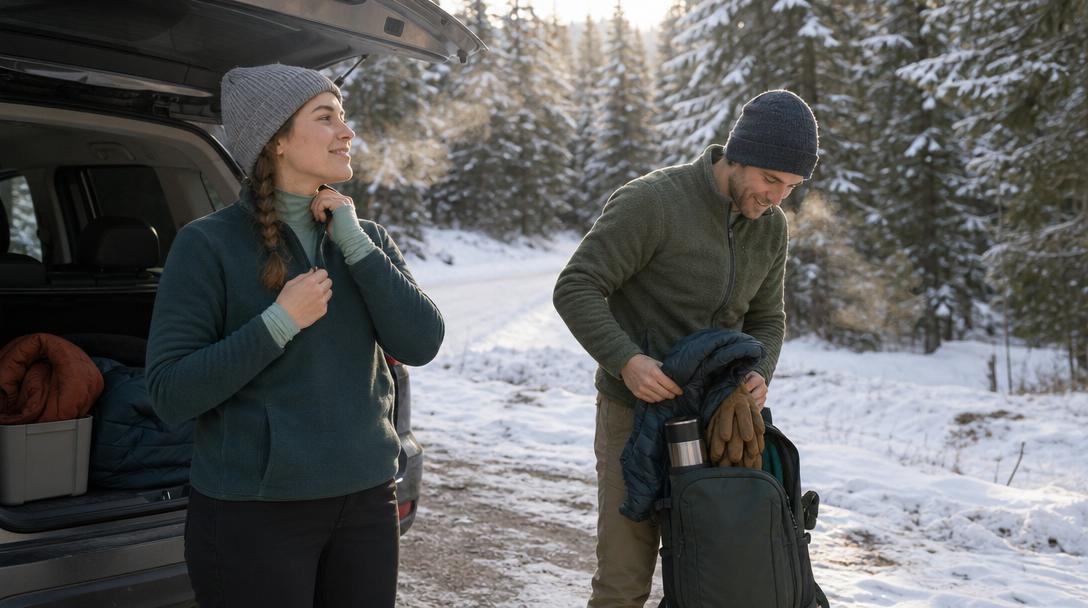
In the mid-Atlantic and Northeast from late spring through early fall, my rule is simple: if the trail is brushy, forest-edge, or tick-heavy, I wear long sleeves regardless of temperature.
Tick country is tick country. Warm weather does not change the math.
I have pulled ticks off myself after hikes where I thought I was being careful, and every time it reminded me that clothing is one of the easiest barriers we have. Long sleeves are not a full tick-prevention plan by themselves, but they help.
The same goes for mosquitoes, biting flies, scratchy brush, and poison ivy. If you are pushing through vegetation, bare forearms are an invitation for regret.
Fabric matters more than sleeve length
This is where beginners often get tripped up. They say, “I get too hot in long sleeves,” but they are usually picturing a heavy cotton flannel or a clingy old sweatshirt.
A breathable technical long-sleeve hiking shirt is a completely different thing.
Fabrics I like for hiking
For variable conditions, cooler temperatures, and multi-day trips, I like merino wool. It regulates temperature well and resists odor better than most synthetic shirts.
For hot, exposed summer hiking, I like lightweight synthetic or UPF-rated sun shirts. They move sweat fast, dry quickly, and provide dependable sun protection.
I also prefer a looser fit in warm weather. That bit of airflow between the fabric and your arm makes a much bigger difference than people expect.
Fabrics I avoid on serious hikes
I avoid 100% cotton as a hiking shirt when I know I will be working hard, sweating, or dealing with wind. Cotton is fine for camp, errands, patios, and post-hike food runs. It is not my first choice for a sweaty climb followed by a breezy overlook.
If you want a broader shirt-selection breakdown, check out Best Shirts for Hiking: How to Pick the Right One for Your Kind of Adventure.
Where casual cotton tees still belong
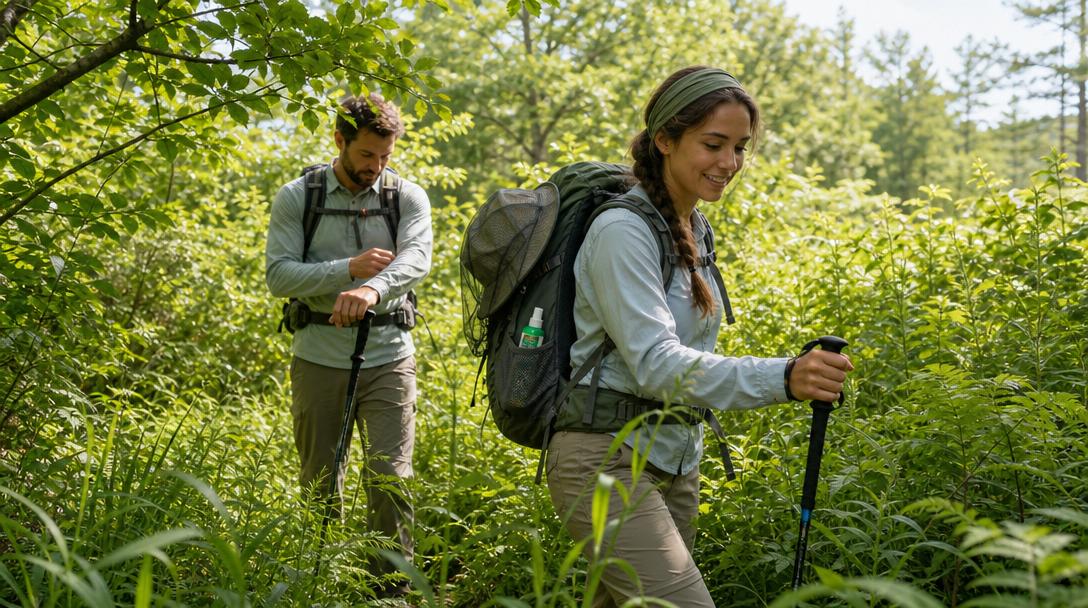
I am not anti-cotton. I am anti-being-cold-and-damp-on-a-ridgeline-because-I-made-a-bad-choice.
Cotton tees absolutely have a place in the outdoor life. I just use them for the right moments: driving to the trailhead, hanging around camp, easy campground mornings, backyard fire pit nights, or that glorious post-hike burger stop when everyone smells like effort.
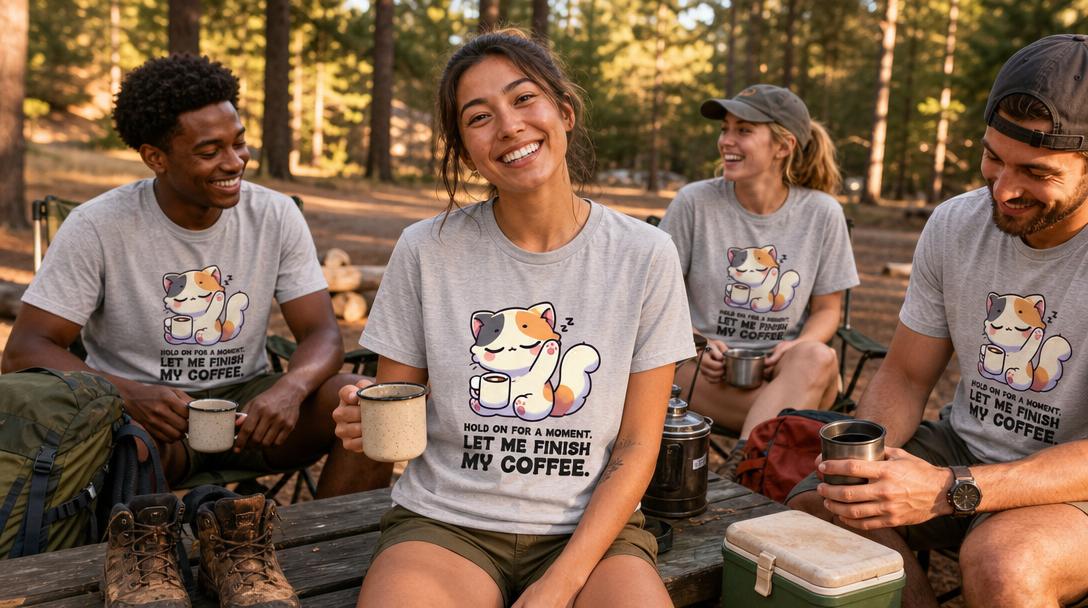
That is where fun casual shirts fit perfectly. Something like the One More Mile Shirt makes sense for relaxed trail-town mode, while the Camping Summer Shirt is more of a camp-chair-and-coffee kind of vibe.
Technical layers for the hike. Soft cotton for the reward afterward. Everybody wins.
How to avoid overheating in long sleeves
Long sleeves in warm weather only work if you manage heat properly.
Here is what helps me:
- Choose light colors
- Pick breathable, quick-drying fabric
- Avoid tight fits in hot weather
- Roll sleeves when shade returns
- Wet the fabric at safe water crossings
- Adjust pace in direct sun
- Take breaks before you overheat
On high-sun hikes, wetting a lightweight long-sleeve shirt can create real evaporative cooling. It sounds too simple, but it works. The first time you feel a breeze hit damp fabric on a hot climb, you will understand.
Also, pacing matters. Charging uphill at noon in direct sun is a very different experience than moving steadily, taking shade breaks, and letting the shirt do its job.
The trail teaches you if you listen. Sometimes it teaches gently. Sometimes it teaches with sunburn.
My simple sleeve-length decision framework
Before I pack, I run through five quick questions.
1. Is the trail exposed for more than an hour?
If yes, I lean long. Sun exposure adds up quickly, even when the air feels cool.
2. Is the UV index above 3 or am I going above 4,000 feet?
If yes, I wear long sleeves with UPF protection. Cool air does not mean low UV risk.
3. Is it tick or bug season?
If yes, long sleeves become my default, especially on brushy trails.
4. Is the weather variable?
If the forecast looks unstable, windy, or likely to change, I wear long sleeves or pack a layer.
5. Is it shaded, low elevation, short, and calm?
If yes, short sleeves are probably fine.
That is the whole system. Nothing fancy. Just enough structure to keep me from repeating old mistakes.
FAQ: Sleeve length for hiking
Are long sleeves too hot for summer hiking?
Not if you choose the right shirt. A lightweight, breathable, light-colored UPF long sleeve can be surprisingly comfortable in hot weather, especially on exposed trails. If long sleeves feel unbearable, the problem is often heavy fabric, dark color, or a too-tight fit.
Is it better to hike in short sleeves or long sleeves?
It depends on the conditions. Short sleeves are great for warm, shaded, low-elevation hikes. Long sleeves are better for sun exposure, bugs, ticks, wind, brush, variable weather, and higher elevation.
Do long sleeves really help with sun protection?
Yes. A UPF-rated long-sleeve shirt provides consistent coverage that does not sweat off or require reapplication. I still use sunscreen on my face, neck, and hands, but I prefer fabric protection for my arms on exposed hikes.
Should I wear long sleeves for ticks?
In tick country, yes. Long sleeves create a physical barrier and make it easier to spot ticks before they reach your skin. Pair them with long pants, tick checks, and other prevention methods.
What sleeve length is best for spring and fall hiking?
Long sleeves are usually the safer call in spring and fall because temperatures and wind can shift quickly. A breathable merino or lightweight synthetic layer gives you more flexibility than a short-sleeve-only setup.
Are cotton short-sleeve shirts okay for hiking?
For easy, dry, low-effort hikes, cotton can be okay. For sweaty climbs, cold weather, wind, or longer hikes, I avoid it because it holds moisture and dries slowly. Cotton is better for camp, casual wear, and post-hike relaxing.
Final trail-tested take
If the hike is shaded, short, calm, low elevation, and bug pressure is low, short sleeves can be the right call.
If the trail is exposed, windy, buggy, brushy, variable, high elevation, or long enough for conditions to change, long sleeves are usually the smarter move.
The trick is not choosing one side forever. It is learning what the trail is likely to ask of you before you step onto it.
After enough sunburned forearms, windy overlooks, surprise ticks, and “why did I wear cotton?” moments, the checklist becomes instinct. And that is the real goal: less time regretting your shirt, more time enjoying the view.


