


Best Button-Up Hiking Shirts for Outdoor Workers
Dominic PalmowskiThe best button-up hiking shirts for outdoor workers need to do more than look trail-ready. They have to handle sweat, sun, backpack straps, tool belts, brush, ladders, jobsite dust, repeated washing, and those I’ll just do one more thing days that somehow turn into ten hours outside.
A regular cotton work shirt can feel fine at 7 a.m. By noon, it may be damp, heavy, clingy, and about as breathable as a wet paper bag. That is where button-up hiking shirts, collared hiking shirts, and technical sun shirts shine: they are built to dry quickly, protect your skin, move with your body, and still look presentable enough for customer-facing work, field crews, site visits, or a post-shift trail walk.
According to OutdoorGearLab’s sun shirt testing, the best sun-protective shirts balance UPF protection, breathability, mobility, and durability. For outdoor workers, that balance matters even more because you are not wearing the shirt for a cute two-mile nature stroll. You are wearing it while lifting, bending, sweating, driving, hauling, and possibly arguing with a roll of tangled rope.
Let’s break down what actually matters before you buy.
Quick Picks: Best Button-Up Hiking Shirts for Outdoor Work
Here is the no-nonsense shortlist if you are comparing shirts right now.
| Best For | Shirt Type to Look For | Why It Works |
|---|---|---|
| Best overall work-to-trail shirt | Nylon or nylon-blend long-sleeve button-up with UPF 30–50+ | Durable, quick-drying, sun-protective, and professional-looking |
| Best hot-weather outdoor work | Lightweight vented button-up sun shirt | Better airflow, easy sleeve rolling, good collar coverage |
| Best desert or high-sun work | UPF 50+ long-sleeve collared hiking shirt | Maximum sun coverage without constant sunscreen reapplication |
| Best humid climate | Polyester/nylon blend with vents and odor control | Dries fast and manages sweat better |
| Best rugged field use | Ripstop nylon button-up hiking shirt | Better snag and abrasion resistance |
| Best uniform-friendly option | Solid-color collared hiking shirt with chest pockets | Looks cleaner for crews, guides, inspectors, and public-facing jobs |
A few specific models often recommended by outdoor reviewers include the Outdoor Research Astroman, Patagonia Sol Patrol, Columbia Silver Ridge Utility, REI Sahara, Mountain Hardwear Canyon, and KÜHL Airspeed. Availability, UPF ratings, and fabric specs can change by season, so always check the current product label before buying. If heat is your main problem, compare this guide with our breakdown of best hiking shirts for hot weather.
What Makes Good Hiking Shirts for Outdoor Work?
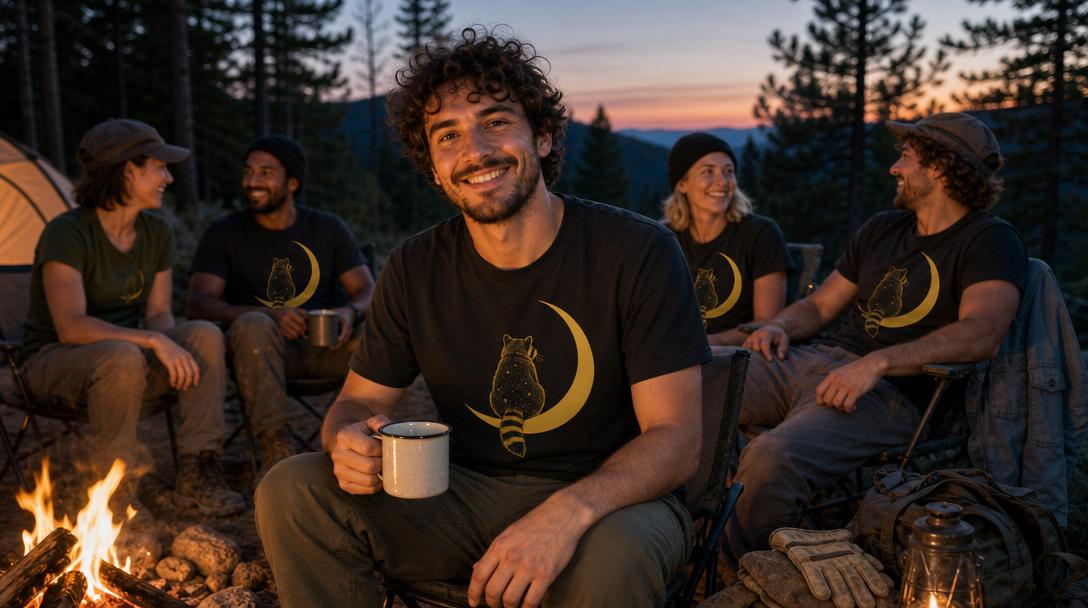
Good hiking shirts should keep you comfortable, protected, and mobile over long hours. Good hiking shirts for outdoor work have to do all that while taking a beating.
For outdoor workers, look at these features first.
Durable Fabric That Can Handle Abrasion
Trail shirts are often designed for backpacks and brush. Outdoor work adds more friction from tool belts, safety vests, harnesses, truck seats, backpack sprayers, lumber, stone, fencing, and repeated washing.
For jobsite durability, nylon usually beats lightweight polyester in abrasion resistance. A tight-weave nylon or nylon-spandex blend is often a smart choice when you need a performance hiking shirt that will not shred after one encounter with rough bark, rock, or Velcro.
Ripstop fabric is also worth considering. It uses a reinforced grid pattern that helps prevent small tears from spreading. It may not make you invincible — sadly, no shirt grants bear-level armor — but it can improve long-term durability.
UPF Sun Protection
If you work outside, sun protection is not optional. The Skin Cancer Foundation explains that UPF 50 fabric blocks about 98% of UV radiation, allowing only about 2% through. That is a big deal when you are exposed for hours at a time.
For outdoor workers, choose UPF 30+ for moderate sun exposure and UPF 50 or 50+ for full-day sun, desert work, high elevation, water reflection, snow reflection, or open jobsites.
Long sleeves plus a collar offer better coverage than a short-sleeve tee. If you prefer tees for off-duty trail days, a casual hiking graphic tee like the One More Mile Shirt can be a fun campfire layer — but for all-day exposed labor, technical UPF fabric wins.
Quick-Dry Performance
A quick dry button up hiking shirt is useful for more than creek crossings. For outdoor workers, quick-dry fabric helps when you are sweating hard, caught in rain, washing shirts overnight, or moving between hot sun and air-conditioned trucks.
Cotton absorbs moisture and dries slowly. That can leave you clammy in cool weather and swampy in heat. Synthetic fabrics like nylon and polyester dry much faster.
Breathability and Ventilation
Button-up hiking shirts often have features that pullover shirts do not: back vents, mesh-lined yokes, roll-up sleeve tabs, looser collars, and snap or button fronts for adjustable airflow.
That adjustability is huge for labor-intensive work. Button the shirt up for sun coverage. Open the top buttons when you need airflow. Roll sleeves when safe and appropriate.
Mobility for Real Work
A shirt can look great standing still and still fail the reach-overhead-while-holding-a-drill test.
For labor-intensive movement, pay attention to shoulder gussets, articulated sleeves, stretch fabric, hem length, adjustable cuffs, sleeve length, and chest fit. If your work involves climbing, lifting, landscaping, guiding, surveying, trail maintenance, farming, or field inspection, mobility is not a luxury feature. It is the difference between nice shirt and why do I feel trapped in a fabric burrito?
Are Button-Up Hiking Shirts Good for Hiking?
Yes, button-up shirts are excellent for hiking — and they can be even better for outdoor workers who need work-to-trail versatility.
The biggest advantages of button-up hiking shirts are adjustable ventilation, collar-based sun coverage, a more professional appearance, useful chest pockets, and flexible layering. Wear one open over a base layer or buttoned up as your main sun layer.
Compared to hooded sun shirts, button-ups usually look more jobsite-appropriate and uniform-friendly. Compared to traditional work shirts, technical hiking button-ups usually dry faster and breathe better.
The tradeoff? Some lightweight hiking shirts are not as rugged as true workwear. If your day includes heavy abrasion, sparks, chainsaws, welding, or rough industrial hazards, choose job-rated protective clothing instead. Hiking shirts are great for outdoor work, but they are not flame-resistant PPE unless specifically labeled.
Best Collared Shirts for Hiking and Outdoor Work
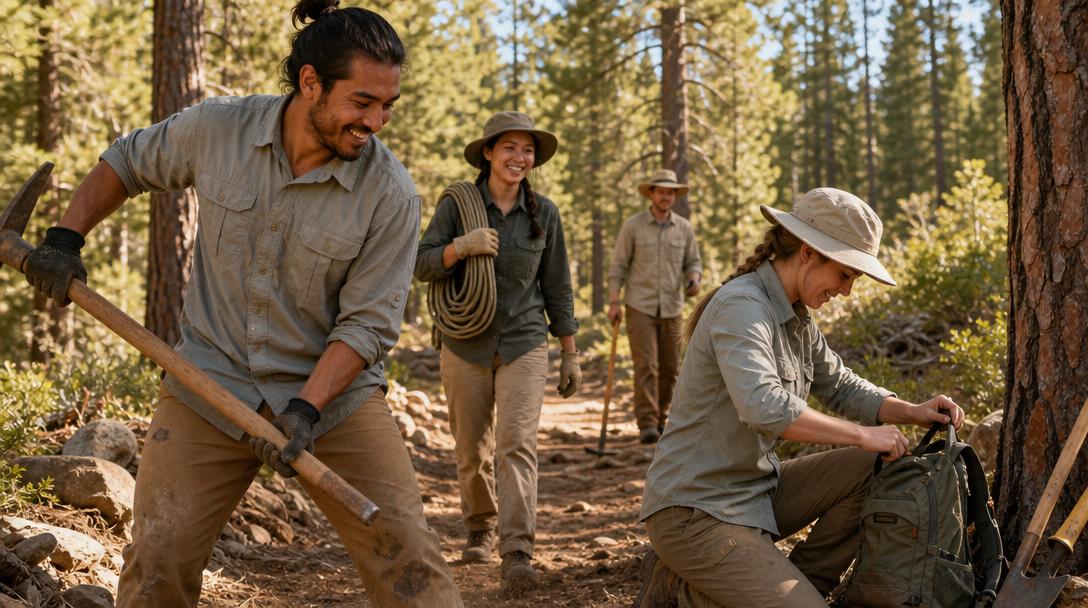
The best collared shirts for hiking share a few traits: sun protection, breathable fabric, smart pockets, and a collar that actually stays useful. For outdoor workers, the collar deserves extra attention.
Collar Design
A good collar should stand up enough to shade your neck, fit comfortably under a safety vest or pack, resist curling after washing, and work with a neck gaiter or wide-brim hat.
Some sun shirts have hidden collar snaps to keep the collar from flapping in wind. That is especially useful for boating, desert work, open ridgelines, and exposed jobsites.
Pocket Utility
Chest pockets are underrated until you need them. Look for button or zip closure, a pen slot, a sunglasses loop, low-profile construction that does not interfere with backpack straps, and drainage or mesh lining if you work around water.
If you need a uniform-style shirt, choose solid colors and simple pocket layouts. Neutral colors like khaki, gray, olive, navy, and light blue tend to look professional and hide dust better than bright white.
Cuff Design
Good outdoor work cuffs should adjust securely, roll easily and stay rolled, fit over lightweight gloves, avoid bunching under work gloves, and provide wrist coverage when arms are extended. For high-sun environments, long sleeves worn down are usually better than rolled sleeves.
What Is the Best Shirt Material for Hiking?
The best shirt material for hiking depends on your climate, workload, and durability needs. For outdoor workers, fabric tradeoffs matter more than marketing buzzwords.
Nylon: Best for Durability
Nylon is often the best choice for abrasion resistance. It is strong, handles rough contact well, and is common in durable hiking shirts. Choose nylon if you deal with brush, rock, tool belts, pack straps, field gear, or frequent kneeling, reaching, and hauling.
Downside: some nylon shirts can feel warmer or less soft than polyester, depending on weave and weight.
Polyester: Best for Quick Drying and Lightweight Comfort
Polyester is common in hiking shirts and sun shirts because it wicks moisture well and dries quickly. Choose polyester if you prioritize hot-weather comfort, fast drying, lower weight, frequent washing, and sweat management.
Downside: polyester can hold odor more than nylon or merino unless treated with odor-control technology.
Merino Wool: Best for Odor Control
Merino wool is naturally odor-resistant and comfortable across a range of temperatures. It is great for hiking, travel, and multi-day wear. For outdoor work, though, pure merino may not be durable enough for constant abrasion. If you like merino, consider a merino-synthetic blend.
Spandex or Elastane: Best for Mobility
A small amount of stretch — usually 2% to 10% — can make a big difference when bending, reaching, lifting, or climbing. Stretch is especially useful for trail crews, landscapers, guides, surveyors, field techs, outdoor educators, and anyone who spends the day moving instead of standing still.
Downside: stretch fibers can reduce long-term durability and may be more sensitive to dryer heat, so follow care instructions.
Cotton and Cotton-Poly Blends: Best for Casual Use, Not Long Wet Days
Cotton and cotton-polyester blends can be comfortable for campgrounds, road trips, errands, and relaxed post-hike hangs. They are also common in casual graphic tees, which is where Hike Tee lives.
But cotton is not ideal for sweaty, rainy, or cold hiking conditions because it absorbs moisture and dries slowly. For a deeper breakdown, read our guide to why cotton is bad for hiking. For downtime after the shift, a soft graphic tee like the Hike More, Worry Less Bigfoot Shirt is great. For full-day field labor, stick with technical fabrics.
Best UPF Button-Up Shirt for Outdoor Work
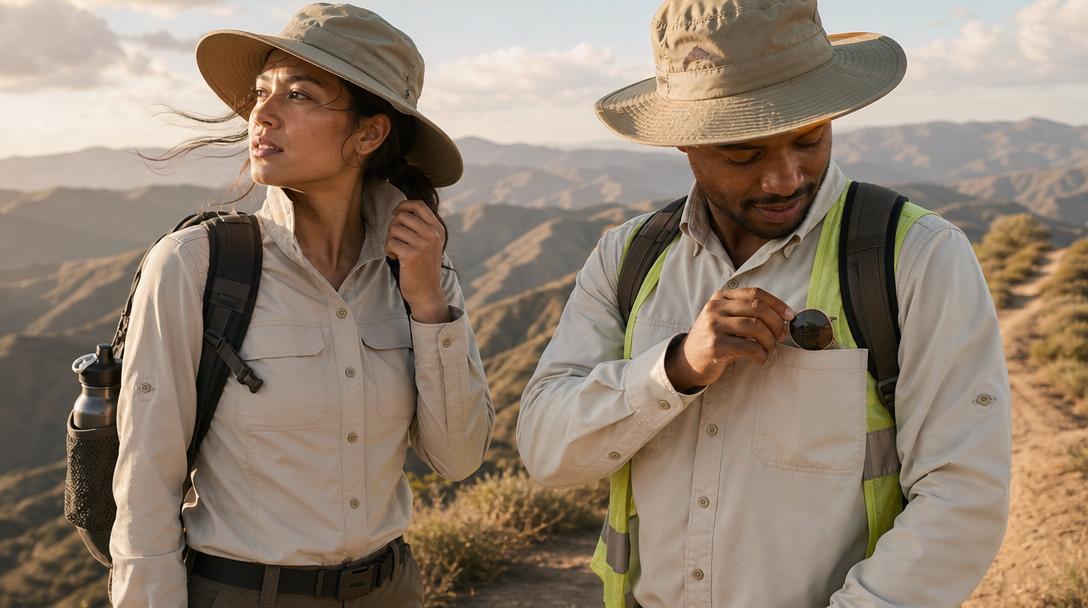
For outdoor workers, UPF protection is strongly recommended. Not every hiking shirt has a UPF rating, and not every long-sleeve shirt blocks UV equally. Fabric type, weave density, color, stretch, moisture, and wear can all affect sun protection.
A best UPF button-up shirt for outdoor work should ideally have UPF 30, 40, or 50+, long sleeves, a usable collar, enough breathability to keep wearing it all day, and a color that manages heat without becoming too thin for protection.
UPF-rated clothing is especially helpful because sunscreen can wear off with sweat, dirt, water, and time. You should still use sunscreen on exposed skin, but a UPF shirt reduces the amount of skin you need to constantly reapply.
Quick Dry Button Up Hiking Shirt Fit Guide
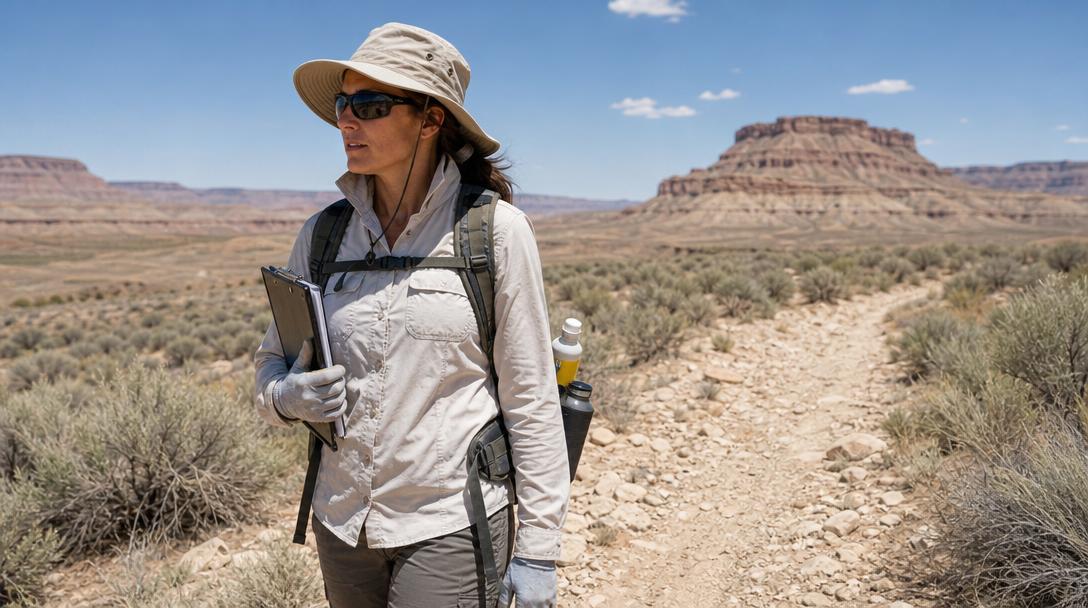
A quick dry button up hiking shirt should be relaxed but not sloppy. For outdoor work, aim for a fit that allows full movement without catching on everything around you.
The best fit is loose enough for airflow, roomy enough across the shoulders, long enough to cover your lower back when bending, trim enough to avoid snagging on tools or branches, and comfortable under a vest, harness, or backpack.
Fit Test Before You Commit
Try these movements before removing tags:
- Reach both arms overhead.
- Cross your arms like you are hugging a friendly fictional bear.
- Bend forward as if picking up gear.
- Twist side to side.
- Tuck and untuck the shirt.
- Put on your pack, vest, or tool belt.
If the shoulders pull, cuffs ride halfway up your forearms, or the hem exposes your back every time you bend, try a different size or cut.
Best Durable Hiking Shirts for Men and Outdoor Crews
If you are searching for the best durable hiking shirts for men, do not just look at the word men’s in the product title. Look at construction.
Prioritize nylon or nylon-rich blends, ripstop weave, reinforced stitching, UPF 30–50+, secure chest pockets, a vented back panel, stretch for movement, and easy-care washing.
For crews, uniform-friendly features matter too: consistent color availability, logo embroidery compatibility, a professional-looking collar, broad size availability, long and short sleeve options, and women’s equivalents if outfitting mixed teams.
A shirt that works for one weekend hiker may not work for a five-person landscaping crew wearing it 40 hours a week. If buying for a team, test one or two shirts for a month before ordering in bulk. If you are weighing premium options, our guide to whether expensive hiking shirts are worth it can help you compare value beyond the logo.
Climate-Specific Recommendations for Outdoor Workers
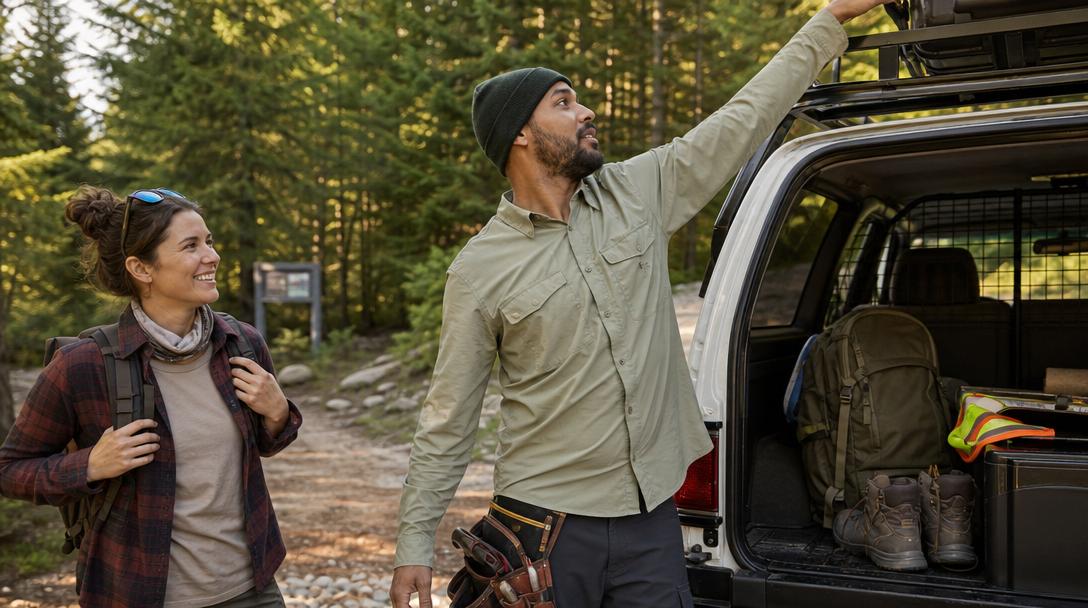
A shirt that feels amazing in dry Colorado air might feel like cling wrap in coastal humidity. Match your shirt to your working climate.
Hot and Humid Conditions
Look for lightweight polyester or nylon-poly blends, vented back panels, odor-control treatment, a looser fit, light colors, and fast-drying fabric. Avoid heavy canvas-style shirts unless durability is more important than comfort.
Best use cases: landscaping, guiding, park work, field inspections, summer trail maintenance, and outdoor education.
Desert and High-Sun Conditions
Look for UPF 50+, long sleeves, a structured collar, light colors, secure cuffs, and breathable but tightly woven fabric. In desert sun, maximum coverage usually beats maximum airflow. A loose, long-sleeve UPF button-up can keep you cooler than exposing more skin.
Best use cases: archaeology, solar fields, desert guiding, road crews, range work, and open construction sites.
Cool Mountain Mornings
Look for a nylon blend button-up over a light base layer, a slightly roomier fit for layering, a wind-resistant weave, and quick-dry fabric for sweat during climbs. Button-ups are great in variable mountain weather because you can vent quickly during climbs and button up when the wind kicks in.
Best use cases: forestry, mountain guiding, wildlife work, alpine trail crews, and high-elevation surveys.
Brushy, Abrasive, or Rugged Terrain
Look for ripstop nylon, heavier fabric weight, reinforced seams, snag-resistant weave, and minimal mesh in high-wear areas. Ventilation is nice, but durability should lead here. Super-light shirts can snag quickly in thorny or brush-heavy environments.
Best use cases: trail building, habitat restoration, ranch work, forestry, and field biology.
Button-Up Hiking Shirts vs. Sun Hoodies vs. Work Shirts
| Shirt Type | Pros | Cons | Best For |
|---|---|---|---|
| Button-up hiking shirt | Professional look, collar, pockets, ventilation | Buttons can gap; some are less stretchy | Work-to-trail use, field jobs, guiding |
| Sun hoodie | Great neck and head coverage, simple layering | Less professional, fewer pockets | Hiking, paddling, exposed recreation |
| Traditional cotton work shirt | Tough, familiar, affordable | Slow drying, heavy when wet | Dry work with low sweat demands |
| Performance polo | Uniform-friendly, breathable | Less sun coverage, fewer pockets | Customer-facing outdoor jobs |
| Merino hiking shirt | Odor-resistant, temperature regulating | Less abrasion-resistant | Travel, hiking, lower-abrasion work |
For most outdoor workers, a long-sleeve button-up hiking shirt is the most versatile middle ground.
Where Casual Graphic Tees Fit
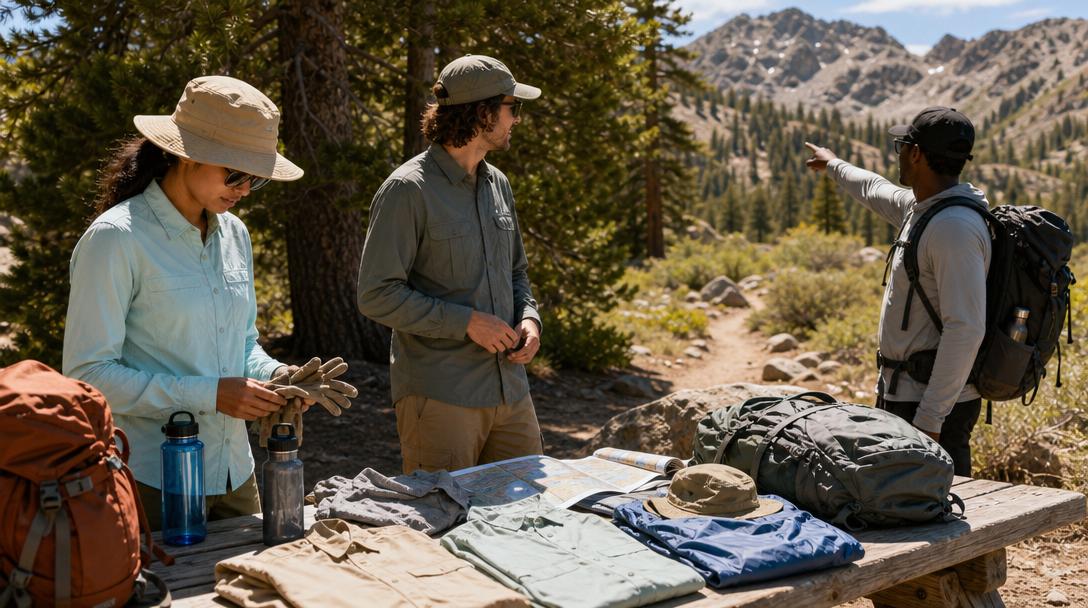
Technical button-ups are the right tool for long sun exposure, sweaty fieldwork, and rough outdoor shifts. Casual graphic tees are better for the parts of outdoor life that happen after the work is done: campfires, coffee runs, travel days, campground lounging, and easy walks.
That is the sweet spot for Hike Tee. A cotton or cotton-poly graphic tee like the Raccoon Moon Shirt is a soft, funny, outdoorsy layer for off-duty hours — not a replacement for a UPF-rated performance hiking shirt on a full-sun jobsite.
What to Avoid When Buying Button-Up Hiking Shirts
A few red flags: no UPF rating if you work in direct sun, cotton-heavy fabric for hot or wet conditions, too tight in the shoulders, tiny fashion pockets, dark colors only for summer desert work, thin fabric with poor snag resistance, non-adjustable cuffs, and shirts that require delicate care if you will wash them constantly.
Also be careful with ultra-light travel shirts. They may be fantastic for airports and cafés but not durable enough for outdoor labor.
How Many Hiking Shirts Do Outdoor Workers Need?
If you work outside full-time, a practical rotation is 3–5 shirts for regular weekly use, 1–2 high-UPF shirts for extreme sun days, 1 tougher ripstop shirt for brush-heavy or abrasive work, and 1 cleaner collared shirt for client meetings or public-facing days.
Rotating shirts helps them last longer. It also keeps you from becoming that person in the truck who smells like a damp raccoon discovered espresso. No judgment. We have all had a long week.
Care Tips to Make Performance Hiking Shirts Last Longer
Technical shirts last longer when you treat them right. Wash in cold or warm water, avoid fabric softener, hang dry when possible, use low heat if machine drying, close buttons and zippers before washing, and wash heavily soiled shirts separately.
Fabric softener can reduce wicking performance, and harsh washing can wear down odor-control treatments over time. If your shirt has insect-repellent treatment, reapply only according to the label directions.
Frequently Asked Questions
What makes a good hiking shirt?
A good hiking shirt is breathable, quick-drying, comfortable, and protective. For outdoor workers, the best options also include UPF protection, durable fabric, useful pockets, and enough shoulder mobility for lifting, reaching, and bending.
Are button-up shirts good for hiking?
Yes, button-up shirts are great for hiking because they offer adjustable ventilation, collar-based sun protection, and practical pockets. A technical button-up can also work well as a uniform-friendly outdoor work shirt.
What is the best shirt material for hiking?
Nylon is usually best for durability and abrasion resistance, while polyester is excellent for lightweight quick-dry performance. Merino wool is best for odor control but may not be as durable for rugged outdoor labor unless blended with synthetic fibers.
Do hiking shirts need UPF protection?
If you spend long hours outside, UPF protection is highly recommended. The best UPF button-up shirt for outdoor work should have long sleeves, a functional collar, and ideally a UPF rating of 30 to 50+.
Should hiking shirts be loose or fitted?
Hiking shirts should be relaxed enough for airflow and movement but not so baggy that they snag on tools, brush, or equipment. Outdoor workers should prioritize shoulder mobility, sleeve length, and hem coverage when choosing a fit.
What is the best quick dry button up hiking shirt for hot weather?
The best quick dry button up hiking shirt for hot weather is usually a lightweight nylon or polyester blend with vents, UPF protection, and a relaxed fit. Look for roll-up sleeves, mesh-backed ventilation, and light colors for better heat management.
Final Trail Notes: Choose the Shirt That Matches the Work
The best button-up hiking shirts for outdoor workers are the ones that match your real day — not your fantasy day where you simply stroll through wildflowers holding a stainless-steel coffee mug.
If you work in full sun, prioritize UPF 50+, long sleeves, and a sturdy collar. If your job involves brush, tools, or rough surfaces, choose ripstop nylon or a durable nylon blend. If you sweat through long humid shifts, look for a quick-dry button-up hiking shirt with vents and odor control. If you need one shirt that can go from jobsite to trail, choose a clean-looking collared hiking shirt in a neutral color with practical pockets and good stretch.
A good outdoor work shirt should help you stay cooler, safer, and more comfortable — without making you look like you accidentally wandered away from a safari-themed restaurant.
And when the workday is done? Swap the technical field shirt for something softer, funnier, and more campfire raccoon philosopher. You have earned it.


