


Hiking in Jeans: When Denim Works on Trails
Dominic PalmowskiHiking in jeans can work — but only for short, easy, dry walks where the weather is mild and you’re close to your car, trailhead, or a warm backup plan.
Push denim beyond that, and things can get soggy fast. Jeans aren’t automatically forbidden by the Hiking Council of Serious Pants People, but they do have real downsides once sweat, rain, cold, long mileage, steep climbs, or surprise creek crossings enter the chat.
Jeans are usually made mostly from cotton, and cotton loves water a little too much. It absorbs moisture, dries slowly, gets heavy, and can feel cold and clammy against your skin. According to Advnture, cotton denim soaks up sweat and rain instead of wicking it away like wool, nylon, or polyester, which can leave hikers stuck in cold, damp fabric for a long time. For a deeper fabric breakdown, see Hike Tee’s guide to why cotton is bad for hiking.
So, can you hike in jeans? Yes — sometimes. Should you choose jeans hiking pants for every trail? Nope. Let’s break down exactly when denim hiking works, when it doesn’t, and what to wear instead if your closet is more weekend errands than REI catalog.
Hiking in Jeans: The Quick Yes-or-No Checklist
If you’re standing in front of your closet wondering whether denim hiking is a terrible idea, run through this checklist.
Jeans are probably fine if:
- The hike is short — think 1–3 miles
- The trail is easy, flat, and familiar
- The weather is dry and mild
- There’s no rain in the forecast
- You’re not crossing streams or walking through wet brush
- You’ll be close to your car, house, campground, or visitor center
- You’re moving at a casual pace, not chasing a personal speed record
- Your jeans fit comfortably and allow you to step up, squat, and move freely
Skip the jeans if:
- Rain, snow, sleet, or mountain weather being mountain weather is possible
- Temperatures are cold or could drop quickly
- The hike is long, remote, steep, or strenuous
- You’ll be sweating heavily
- You’re backpacking or hiking all day
- You’re hiking through brush, mud, wet grass, or creek crossings
- Your jeans are tight, stiff, heavy, or already uncomfortable at brunch
A simple rule: if getting wet would make the hike unsafe or miserable, don’t wear jeans.
Can You Hike in Jeans?
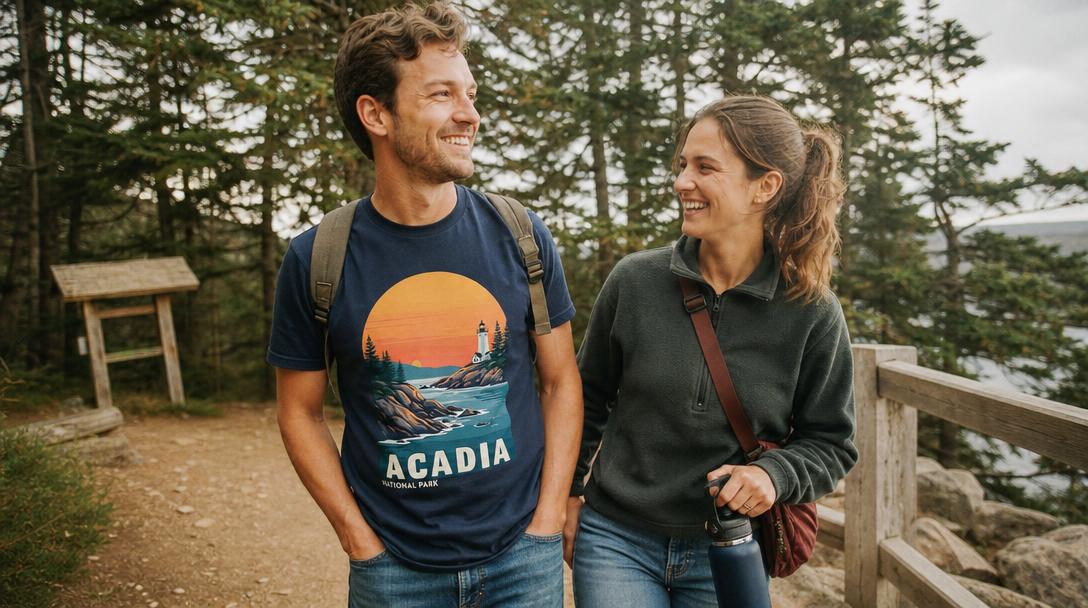
Yes, you can hike in jeans if the hike is more of a casual nature walk than a serious backcountry adventure.
For example, jeans can be totally workable for:
- A paved national park viewpoint trail
- A dry campground loop
- A short walk to a waterfall overlook
- A family stroll on a local greenway
- A mild-weather hike where you’re never far from shelter
This is where jeans are less survival mistake and more not the most technical choice, but you’ll live.
The problem starts when conditions change. Denim absorbs water from sweat, rain, wet leaves, snow, or creek splashes. Once wet, jeans can become heavy, stiff, and chilly. Backpacking Mastery notes that cotton holds onto moisture from rain, streams, and sweat, which can cause rapid heat loss in cold weather.
That’s why experienced hikers tend to side-eye jeans. It’s not because denim looks too casual. It’s because wet cotton can turn a fun hike into a soggy thigh-themed regret parade.
Hiking Pants vs Jeans: What’s Actually Better?
Here’s the clear comparison most can-you-hike-in-jeans answers skip.
| Option | Best For | Pros | Cons |
|---|---|---|---|
| Jeans | Short, dry, casual hikes | Durable, familiar, easy to wear before/after trail | Slow-drying, heavy when wet, can chafe, limited stretch |
| Hiking pants | Most trail conditions | Quick-drying, flexible, breathable, often water-resistant | Can look more gear-ish, costs more than everyday pants |
| Leggings/tights | Mild to cool weather, active hikes | Stretchy, comfortable, easy movement | Less abrasion protection, pockets vary, can be cold in wind |
| Shorts | Hot, dry trails | Cool, lightweight, great airflow | Less protection from sun, bugs, brush, rocks |
| Sweats/joggers | Easy walks, lounging at camp | Comfortable, warm when dry | Often cotton, slow-drying, poor in wet conditions |
For most real hiking, hiking pants vs jeans is an easy win for hiking pants. They’re usually made from nylon, polyester, spandex, or blends that dry faster and move better than denim. If you’re building a full trail outfit from scratch, Hike Tee’s what to wear hiking guide walks through beginner-friendly layers from head to toe.
That doesn’t mean everyone needs fancy trail pants for a 30-minute loop behind the visitor center. But if you’re planning a longer hike, investing in proper hiking pants is one of those upgrades you’ll appreciate by mile three — especially if mile three includes sweat, wind, or a suspiciously muddy shortcut.
Is It Better to Hike in Jeans or Sweats?
Usually, neither jeans nor sweats are ideal for hiking — but the better choice depends on the fabric and conditions.
If your sweats are cotton, they share the same big problem as jeans: they absorb moisture and dry slowly. Cotton sweatpants can also get heavy, saggy, and cold when wet. Very glamorous. Very lost gym sock energy.
Jeans may be better than sweats when:
- The trail has brush, rocks, or rough surfaces
- You want more abrasion resistance
- The weather is dry and mild
- Your jeans have some stretch
Sweats may be better than jeans when:
- You need more freedom of movement
- You’re doing a very easy walk
- They’re synthetic joggers, not cotton sweatpants
- The weather is cool but dry
Best answer? If you have synthetic joggers, hiking pants, or athletic leggings, choose those over both jeans and cotton sweats.
When Denim Hiking Is Acceptable on the Trail
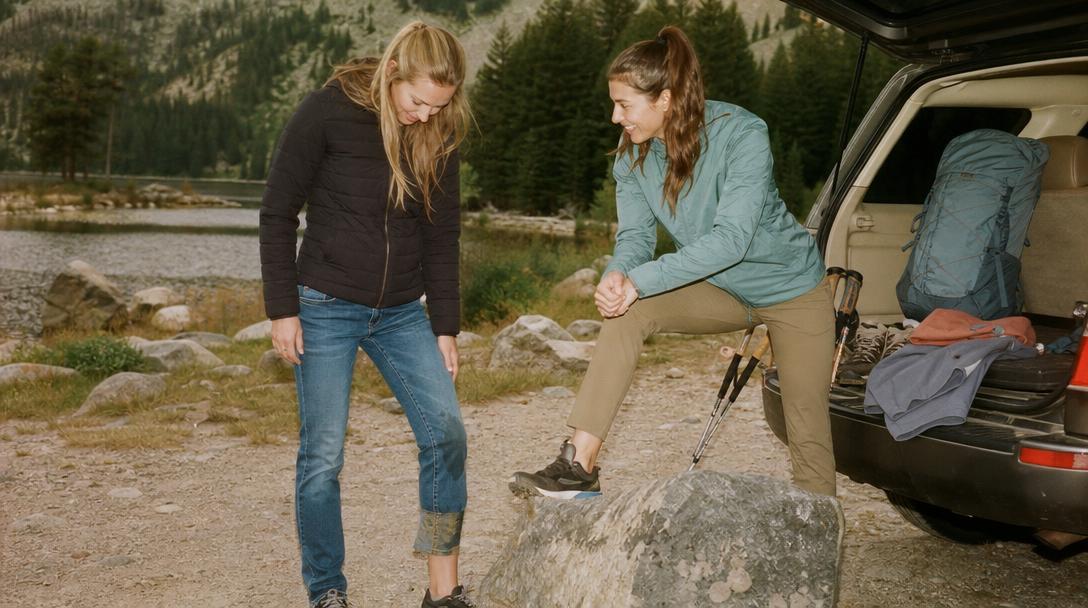
Short Dry Walks
A one-mile loop through a city park? Jeans are fine.
A dry nature trail after lunch with the kids? Also fine.
If the trail is low-stakes, the weather is stable, and you’re close to shelter, jeans are unlikely to cause drama.
National Park Viewpoints and Visitor Center Trails
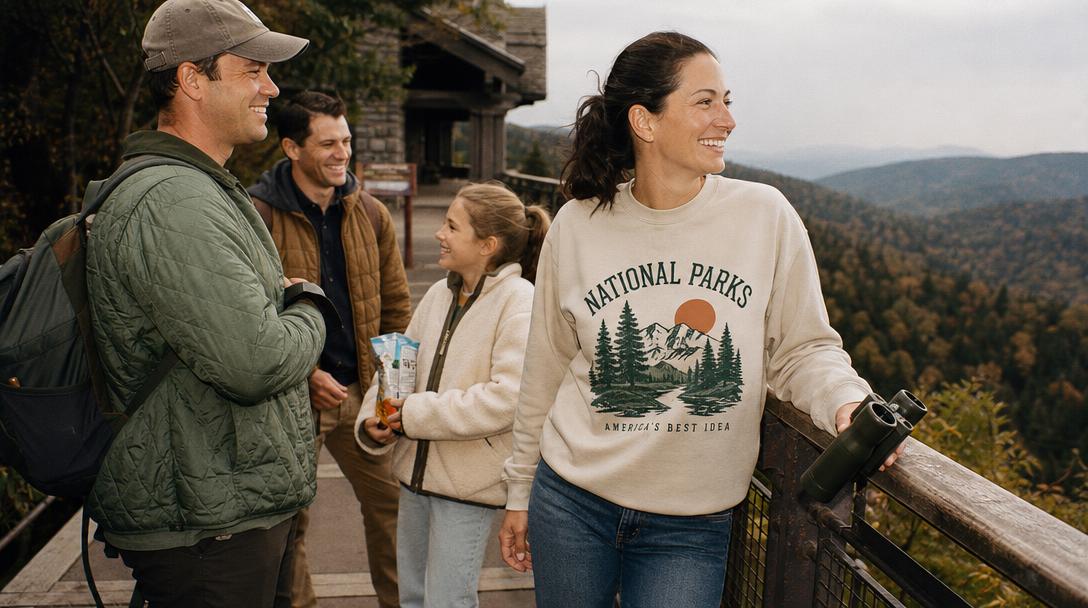
Many national parks have short, maintained paths to overlooks, historic sites, boardwalks, and educational loops. For these, jeans can work — especially if you’re mixing sightseeing, snack stops, and scenic photos.
This is where a comfy pair of jeans, sturdy shoes, and a funny outdoor tee can feel more natural than full expedition gear. For an easy casual look, something like the Adventure Awaits hiking shirt fits the low-key viewpoint vibe without pretending you’re summiting Everest with a raccoon as your trail guide.
Cool but Dry Weather
Jeans can feel comfortable in cool, dry conditions when you’re not sweating heavily. Just remember: if rain rolls in or temps drop, cotton denim becomes much less friendly.
When You Should Not Wear Jeans Hiking
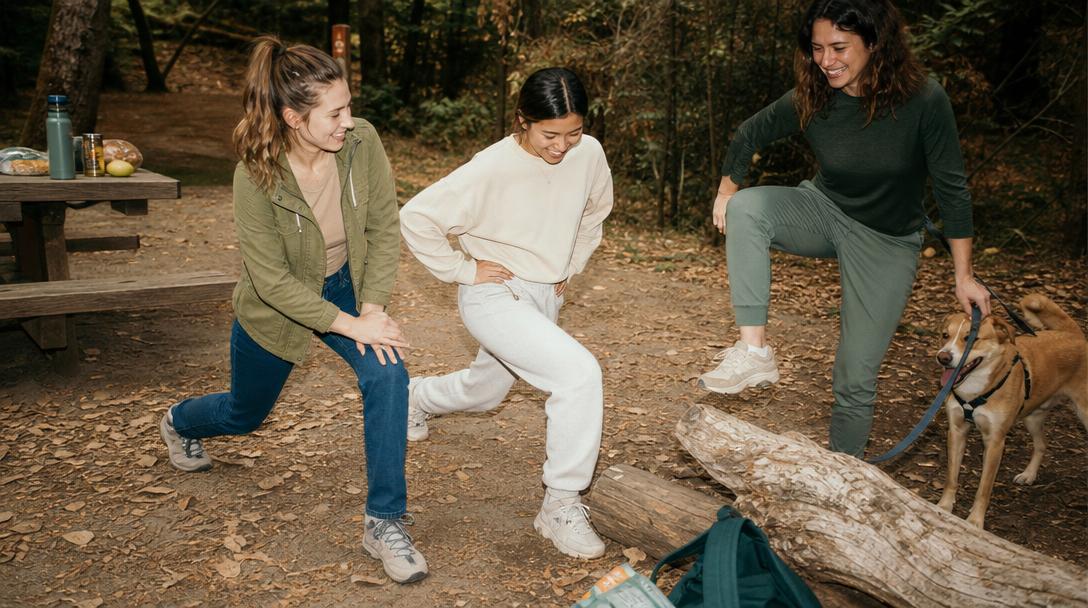
Rainy or Wet Conditions
Wet denim is the main villain here.
According to several hiking gear guides, including Outforia and Advnture, jeans can become heavy, cold, and chafe-prone when wet. If you’re hiking in rain, through dew-soaked grass, or across muddy terrain, leave denim at home.
Cold Weather
Cold plus wet cotton is a bad combo. When denim gets damp, it loses comfort quickly and does very little to help you stay warm.
In cold conditions, choose synthetic base layers, wool layers, fleece, insulated pants, or weather-resistant hiking pants instead.
Long Hikes
The longer the hike, the more small discomforts become big problems.
A stiff waistband, damp seams, or limited mobility might be mildly annoying for 20 minutes. After six miles? That tiny rub spot may start writing its villain origin story.
Steep Trails and Scrambling
If the trail requires big steps, climbing over rocks, scrambling, or high-knee movement, stiff jeans can restrict your stride. That can make hiking less efficient and increase your risk of slipping or moving awkwardly.
Lifestyle Outfit Ideas: Function Meets Trail Style
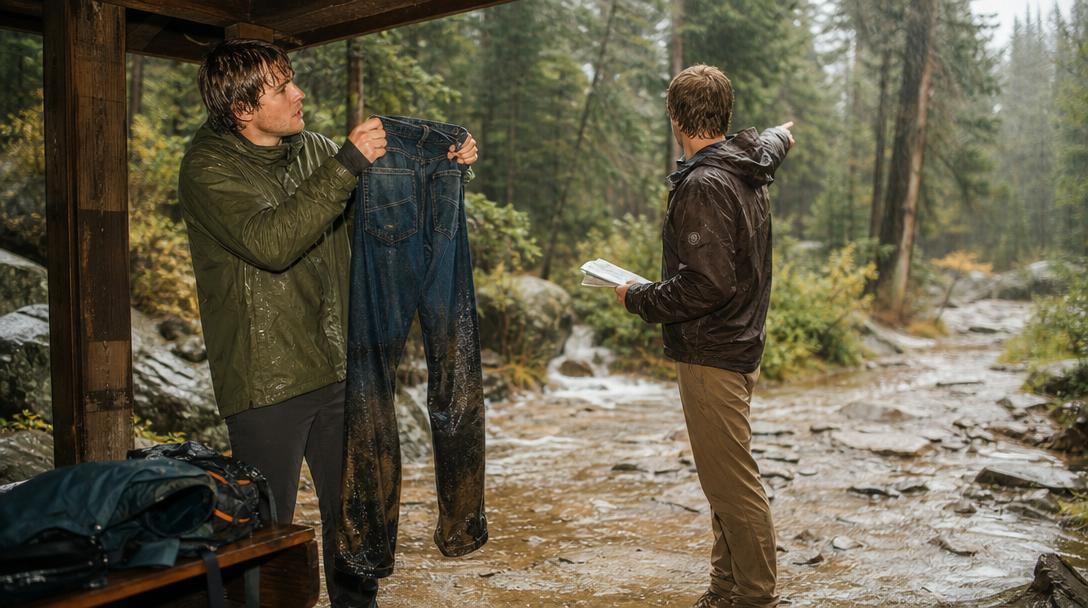
1. Easy Day Hike Outfit
Best for: local park trails, dry weather, short loops
- Stretch jeans or synthetic joggers
- Moisture-wicking tee
- Lightweight fleece or flannel
- Trail runners or hiking shoes
- Small daypack with water and snacks
This is the “I have responsibilities at 3 but trees at noon” outfit.
2. National Park Casual Outfit
Best for: viewpoints, boardwalks, visitor centers, short scenic walks
- Comfortable jeans or hiking pants
- Graphic outdoor tee or sweatshirt
- Sun hat
- Supportive walking shoes
- Packable rain shell
Good for photos, overlooks, and pretending you didn’t just eat trail mix for breakfast. If your route is more scenic stroll than strenuous climb, a casual tee like the Acadia National Park shirt pairs naturally with jeans for visitor centers and overlook stops.
3. Van-Life Town-to-Trail Outfit
Best for: coffee shop, campground, easy trail combo
- Lightweight hiking jeans or stretchy jeans
- Breathable base tee
- Overshirt or hoodie
- Trail sneakers
- Beanie or cap
- Crossbody bag or daypack
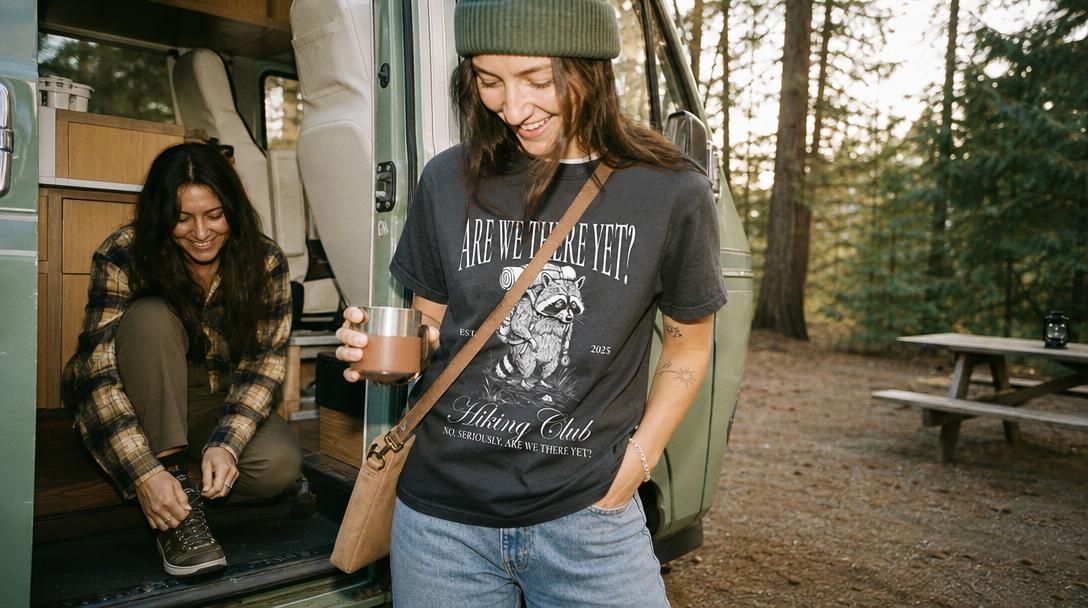
This one says, “I may sleep near a forest tonight, but I still know where the good burritos are.” For a casual campground-to-coffee look, the Are We There Yet hiking shirt fits the mood without trying too hard.


