


Half Dome Hike & Yosemite Trails Guide
Dominic PalmowskiHalf Dome Hike: What You Need to Know Before You Go

The Half Dome hike is one of the most iconic Yosemite trails, but it is not a casual “let’s see how we feel after brunch” walk. According to the National Park Service, most day hikers begin near Happy Isles in Yosemite Valley and complete a route of roughly 14 to 16 miles round-trip, depending on whether they use the Mist Trail or John Muir Trail portions.
The classic route usually includes:
- Happy Isles trailhead
- Vernal Fall Footbridge
- Mist Trail Yosemite section past Vernal Fall
- Nevada Fall
- Little Yosemite Valley area
- Sub Dome
- Half Dome cables
- Summit
- Return via Mist Trail or John Muir Trail
Half Dome permits
Permits are required to hike beyond the base of Sub Dome and up the cables whenever the cables are up. The National Park Service states that Half Dome permits are required seven days per week during cable season.
Typical cable season runs from late May through mid-October, usually from the Friday before Memorial Day through the day after the second Monday in October, but weather and trail conditions can change that. Always check the official NPS Yosemite Half Dome page before your trip.
Day-use permits are available through a lottery on Recreation.gov:
- Preseason lottery: Usually open March 1–31
- Daily lottery: Opens two days before the hiking date
- No walk-up Half Dome permits: You cannot show up at a ranger station and sweet-talk your way onto the cables
The daily cap is designed to reduce crowding and improve safety. NPS planning materials commonly cite a limit of about 300 hikers per day beyond Sub Dome, including day hikers and backpackers.
Can Beginners Climb Half Dome?
Beginners can technically climb Half Dome if they are fit, prepared, calm with heights, lucky with weather, and honest about turning around. But should a true beginner attempt it as their first major hike? Usually, no.
Half Dome is better treated as a goal hike, not a starter hike.
You should already be comfortable with:
- Hiking 10+ miles in a day
- Climbing 3,000+ feet of elevation gain
- Managing food, water, and layers for a long day
- Starting before sunrise
- Hiking in heat, sun, and changing mountain weather
- Exposure and steep drop-offs
- Turning around even when the summit is “right there”
The cable section is the mental crux. The final 400 vertical feet are climbed using two steel cables mounted into steep granite. Wooden slats provide footing, but the rock is polished and can become dangerously slick when wet.
If you are newer to hiking, train first on other Yosemite hikes:
- Mist Trail to Vernal Fall Footbridge
- Mist Trail to Vernal and Nevada Falls
- Yosemite Falls trail to Columbia Rock
- Sentinel Dome
- Four Mile Trail, if you are ready for more climbing
- Long local hikes with a loaded daypack before your Yosemite trip
A good rule: if a 10-mile hike with 3,000 feet of gain sounds like a wild punishment from a raccoon court, Half Dome should wait.
Is Half Dome a Hard Climb?
Yes. Half Dome is a very hard climb for most hikers.
The difficulty comes from the combination of distance, elevation, exposure, and endurance. The hiking itself is non-technical until Sub Dome and the cables, but the overall day is strenuous.
Why Half Dome is difficult
- Distance: Around 14–16 miles round-trip
- Elevation gain: About 4,800 feet
- Time: Often 10–14 hours
- Heat: Yosemite Valley can be hot in summer
- Altitude: The summit is 8,800+ feet above sea level
- Cables: Steep, exposed, physically and mentally demanding
- Weather risk: Afternoon thunderstorms can build quickly in the Sierra
YosemiteHikes.com describes Half Dome as one of Yosemite’s most difficult day hikes and rates it as “extreme.” That tracks with the lived experience: many strong hikers finish proud, tired, dusty, and suddenly very emotionally attached to pizza.
How Long Does It Take to Walk Up Half Dome?
Most hikers take 10 to 14 hours round-trip to complete the Half Dome hike.
Your exact time depends on:
- Fitness level
- Crowds on the cables
- Weather
- Route choice
- How often you stop
- Whether you descend via Mist Trail or John Muir Trail
- How well you manage food and water
A common plan looks like this:
- 4:00–5:30 a.m.: Start from Yosemite Valley
- 6:00–7:00 a.m.: Reach Vernal Fall area
- 8:00–9:00 a.m.: Reach Nevada Fall / Little Yosemite Valley area
- 10:30 a.m.–12:30 p.m.: Reach Sub Dome and cables
- Midday: Summit if conditions are safe
- Afternoon/evening: Descend carefully back to Yosemite Valley
Start early. Very early. The kind of early where your headlamp becomes your best friend and breakfast is mostly optimism.
The goal is to avoid peak afternoon heat and storms. The National Park Service strongly warns hikers not to be on Half Dome during thunderstorms or when the rock is wet.
How Many Hikers Have Fallen Off Half Dome?
There is no single simple public number for “how many hikers have fallen off Half Dome,” because sources count incidents differently: cables only, summit area, climbing accidents, approach trails, and Mist Trail-related fatalities may be separated or combined.
Here is the most useful safety context:
- The San Francisco Chronicle reported in 2024 that at least 15 people have died on the cables and top of Half Dome since 1948.
- YosemiteHikes.com notes that there have been more than 20 deaths on Half Dome itself, and more than 60 if the trail leading to Half Dome is included.
- Many serious and fatal incidents involve wet granite, storms, slips, or falls near the cable route.
The takeaway is not “don’t hike Half Dome.” Thousands of people complete it safely. The takeaway is: take the risk seriously.
Do not go up the cables if:
- It is raining
- Rain is forecast soon
- The granite is wet
- Thunderstorms are building
- You feel shaky, exhausted, or panicked
- The cables are overcrowded and movement feels unsafe
The mountain will still be there. Your knees and nervous system would like to be there too.
Mist Trail Yosemite: The Classic Waterfall Route
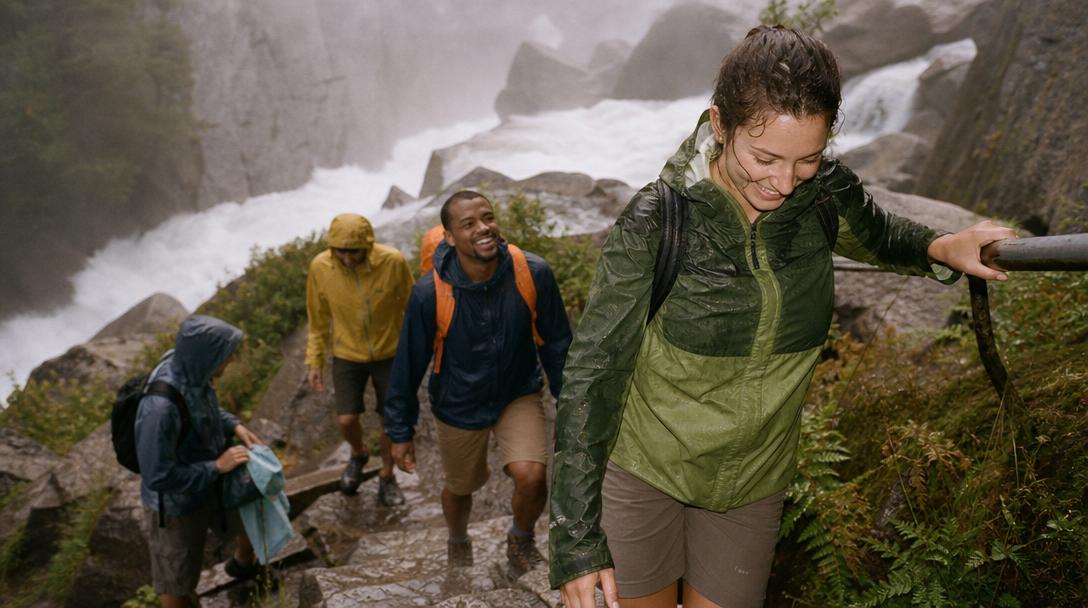
The Mist Trail Yosemite route is one of the most popular hikes in the park, and for good reason. It climbs alongside the Merced River past Vernal Fall and Nevada Fall, delivering huge waterfall views and, in spring, a free soaking from the trail mist. Nature’s car wash, basically.
Mist Trail options
Vernal Fall Footbridge
- Distance: About 1.6 miles round-trip
- Difficulty: Moderate for beginners because it climbs steadily
- Best for: A shorter waterfall taste without committing to the full climb
Top of Vernal Fall
- Distance: About 2.4–3 miles round-trip
- Difficulty: Strenuous for many casual hikers
- Watch for: Wet granite steps, slick footing, crowds
Nevada Fall Loop via Mist Trail and John Muir Trail
- Distance: About 6–7 miles round-trip
- Difficulty: Strenuous
- Best for: Strong hikers who want Half Dome-style scenery without the cables
Seasonal Mist Trail notes
- Spring: Huge waterfall flow, very wet trail, slippery steps
- Summer: Still beautiful, but hot and crowded
- Fall: Lower water flow, cooler temperatures
- Winter: Ice and closures are possible; sections may be rerouted
Always check NPS current trail conditions. Temporary closures and maintenance reroutes happen, especially around wet or icy sections.
Yosemite Falls Trail: Big Climb, Huge Valley Views
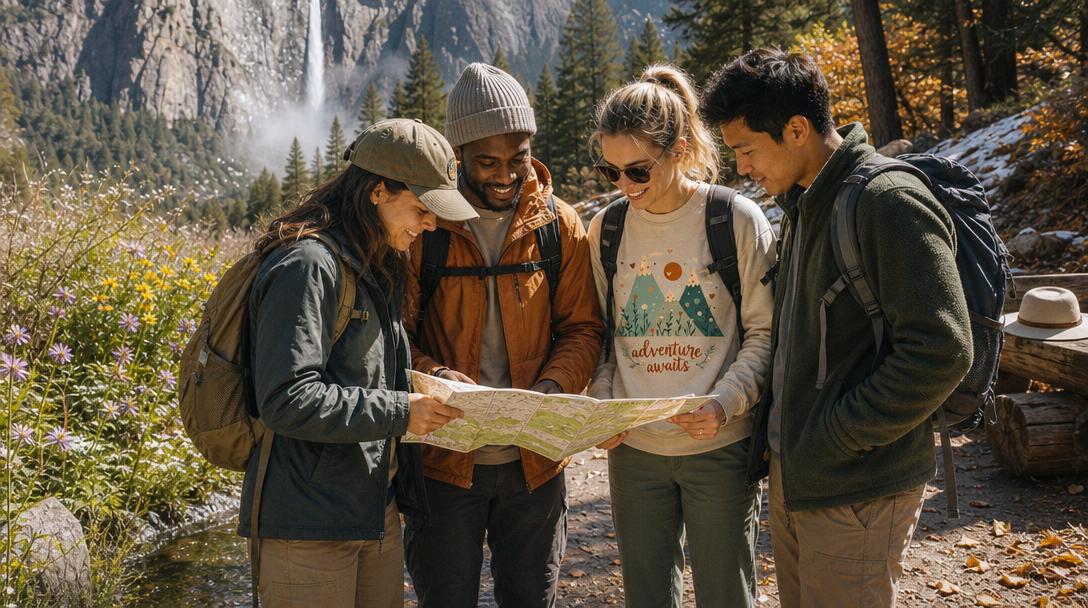
The Yosemite Falls trail is another classic, and it is a great alternative if you do not have a Half Dome permit.
The full hike to the top of Upper Yosemite Fall is strenuous, with around 7.2 miles round-trip and roughly 2,700 feet of elevation gain. It is steep, exposed, and hot in warmer months.
Yosemite Falls trail options
Lower Yosemite Fall Loop
- Distance: About 1 mile
- Difficulty: Easy
- Accessibility: Paved and one of the best accessible Yosemite trails
- Best for: Families, beginners, wheelchair users, stroller walks
Columbia Rock
- Distance: About 2 miles round-trip
- Difficulty: Moderate to strenuous
- Best for: A shorter climb with a big Yosemite Valley view
Top of Yosemite Falls
- Distance: About 7.2 miles
- Difficulty: Strenuous
- Best for: Fit hikers who want a big day without Half Dome cables
Best season for Yosemite Falls
Yosemite Falls is usually strongest in spring and early summer due to snowmelt. By late summer or early fall, it can slow dramatically or even dry up. The hike still has views, but if your dream is roaring waterfall drama, aim for April through June.
Best Day Hikes in Yosemite for Beginners
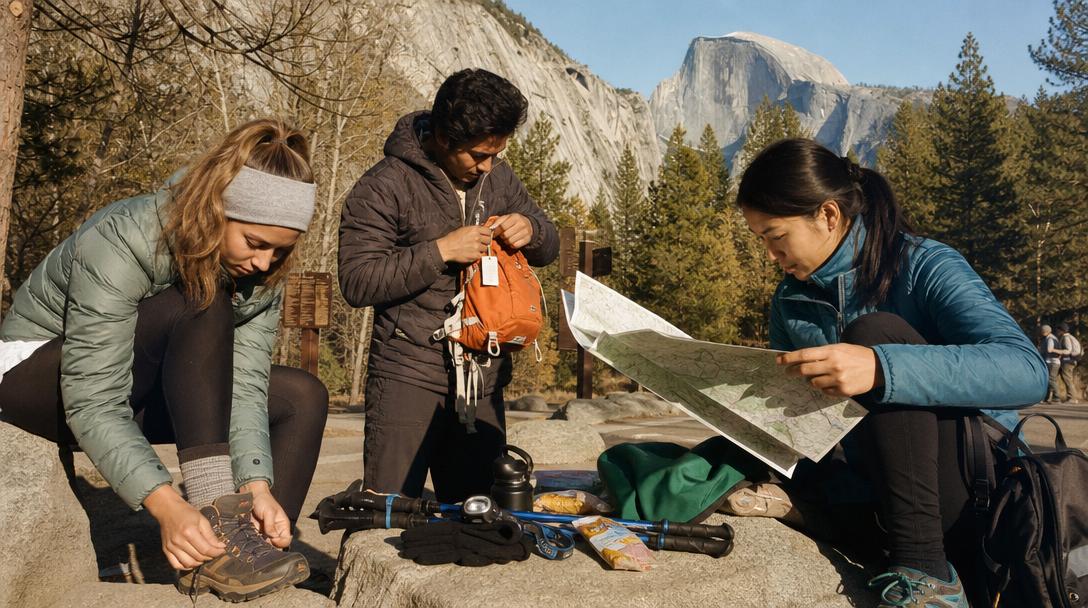
Not every Yosemite adventure needs to involve sore calves and existential questions. These are some of the best day hikes in Yosemite for beginners, families, and anyone who wants high reward without a survival documentary vibe.
Lower Yosemite Fall Loop
- Distance: 1 mile loop
- Difficulty: Easy
- Surface: Paved
- Good for: Kids, strollers, wheelchairs, first-time visitors
This is one of the easiest ways to experience Yosemite’s waterfall magic.
Cook’s Meadow Loop
- Distance: About 1 mile
- Difficulty: Easy
- Good for: Sunset strolls, photos, families
- Views: Half Dome, Yosemite Falls, Sentinel Rock
This is a gentle Yosemite Valley classic and a great “we just got here” trail.
Mirror Lake
- Distance: About 2 miles round-trip to the lake area; longer if doing the full loop
- Difficulty: Easy to moderate
- Accessibility: First paved section is suitable for many strollers and wheelchairs
- Best season: Spring and early summer for water reflections
By late summer, Mirror Lake may be more “Mirror Meadow,” but the views under Half Dome are still worth it.
Bridalveil Fall Trail
- Distance: About 0.5 miles round-trip
- Difficulty: Easy
- Good for: Quick waterfall stop
- Note: Mist can make the area slick
Sentinel Dome
- Distance: About 2 miles round-trip
- Difficulty: Moderate
- Access: Glacier Point Road, when open
- Best for: Big views without a huge hike
Not stroller-friendly, but great for kids who can handle uneven terrain.
Camping and Van-Life Logistics for Yosemite Trails
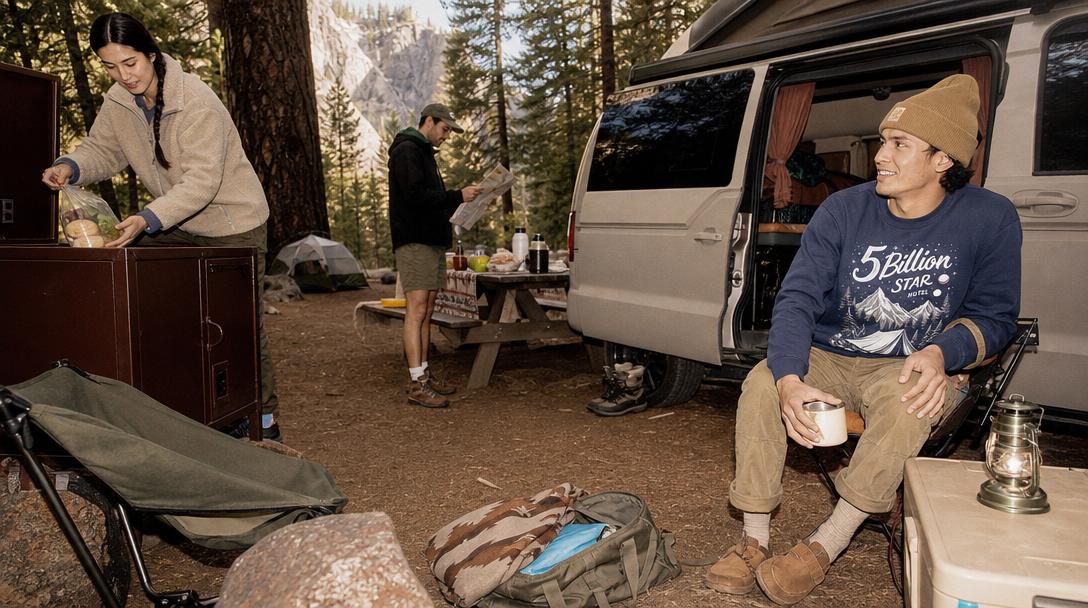
Yosemite is amazing for campers and van travelers, but it is not a “just park anywhere and sleep” kind of park.
The National Park Service allows sleeping in vehicles only in designated campsites. You cannot legally sleep overnight in trailhead lots, pullouts, or day-use parking areas.
Best camping bases for Yosemite hikes
Yosemite Valley campgrounds
Great for Half Dome, Mist Trail, Mirror Lake, Lower Yosemite Fall, and valley shuttle access.
Popular options include:
- Upper Pines
- Lower Pines
- North Pines
- Camp 4
These are extremely competitive in peak season. Book early.
Outside-the-park options
If Valley sites are full, look near:
- El Portal
- Wawona
- Groveland / Highway 120
- Fish Camp
- Lee Vining, if Tioga Road is open
You will drive farther, but you may have better availability.
Van-life tips
- Arrive early for day parking
- Use the Yosemite Valley shuttle once parked
- Store food properly in bear boxes where required
- Bring layers for chilly nights
- Do not rely on cell service
- Check road openings for Tioga Road and Glacier Point Road
- Have a backup campsite outside the park
If you are building a full overnight setup, Hike Tee’s camping trip checklist can help with the non-hiking gear you do not want to forget.
Seasonal Yosemite Trails Guide
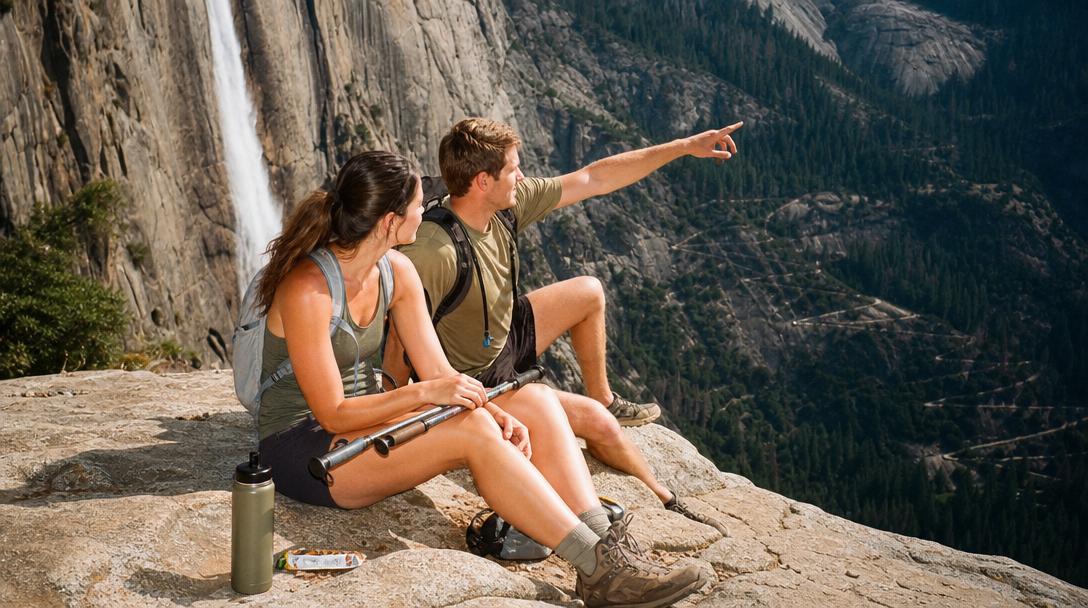
Yosemite changes dramatically by season, so trail planning should too.
Spring
Best for waterfalls. Expect high water, wet trails, and possible snow at higher elevations.
Great choices:
- Lower Yosemite Fall
- Mist Trail, with caution
- Cook’s Meadow
- Mirror Lake
- Bridalveil Fall
Summer
Best for high-country access, Half Dome, Glacier Point Road, and Tioga Road if open. Also the busiest season.
Great choices:
- Half Dome, with permit
- Sentinel Dome
- Taft Point
- Tuolumne Meadows hikes
- Yosemite Falls trail early in the day
Fall
Cooler temperatures, fewer crowds, lower waterfall flow. Great hiking weather.
Great choices:
- Yosemite Falls trail
- Four Mile Trail
- Sentinel Dome
- Valley Loop Trail
- Mist Trail to Nevada Fall
Winter
Quiet and beautiful, but ice and snow can affect trails. Some roads close seasonally.
Great choices:
- Lower Yosemite Fall
- Cook’s Meadow
- Valley Loop sections
- Mirror Lake, conditions permitting
Always check NPS alerts before hiking. Yosemite trails can close or change due to snow, ice, rockfall, fire, construction, or weather.


