


Glacier National Park trails Hiking Guide
Dominic PalmowskiGlacier National Park trails can make you feel like you accidentally walked into a nature documentary, except your calves are burning, your bear spray is clipped to your hip, and a mountain goat is blocking the boardwalk like it pays rent at Logan Pass.
Glacier is at its best in the mid-July through early September window, when Going-to-the-Sun Road is open, the alpine trails finally wake up, and the park feels fully alive. That is when classics like the Highline Trail, Avalanche Lake, Grinnell Glacier, Iceberg Lake and Trail of the Cedars are usually in their prime, along with a handful of shorter routes around Logan Pass and Many Glacier.
Glacier is beautiful in a way that feels almost unreasonable. But it is also not a place to wing it. The weather changes fast, parking fills early, snow lingers longer than first-timers expect, and the wildlife is very much not decorative.
This Glacier National Park hiking guide is the honest version: best trails, difficulty breakdowns, reservation strategy, itinerary ideas, and the mistakes first-time visitors most often learn the hard way. For what to bring, season by season, see the Glacier National Park packing list.
Glacier National Park trails by difficulty
Short mileage in Glacier does not always mean easy. Hidden Lake Overlook is the classic example. On paper, 2.7 miles sounds like a casual leg-stretcher. In reality, it packs in serious gain, exposed alpine terrain, boardwalk sections, rocky footing, lingering snow some years, and mountain goats with main-character energy.
Use this breakdown as a realistic starting point, then check current trail conditions before you commit.
| Trail | Distance | Elevation Gain | Difficulty | Realistic effort level |
|---|---|---|---|---|
| Trail of the Cedars | 0.9-mile loop | Minimal | Easy | Great first walk, wheelchair-accessible boardwalk in many sections |
| St. Mary and Virginia Falls | 3.6 miles round trip | 525 ft | Easy to moderate | Big waterfall payoff without a huge climb |
| Hidden Lake Overlook | 2.7 miles round trip | 500-600 ft depending source and route conditions | Moderate | Short but alpine, crowded, and more tiring than it looks |
| Avalanche Lake | 5.9 miles round trip | 730 ft | Moderate | Best first real Glacier hike for many visitors |
| Iceberg Lake | 9.6 miles round trip | 1,200-1,500 ft | Moderate to hard | Long, steady, wild-feeling Many Glacier classic |
| Grinnell Glacier | 10.3 miles round trip | 1,600+ ft | Hard | Big views, big effort, one of the best hikes in Glacier National Park |
| Highline Trail | 11.4 miles one way to The Loop | Around 1,950 ft | Hard | Iconic, exposed, shuttle-dependent, not casual |
| Gunsight Lake | Around 10 miles round trip | Nearly 2,000 ft | Hard | Underrated, quieter, big scenery, serious day |
| Ptarmigan Tunnel | 10.6 miles round trip | 2,300 ft | Hard | Big climb, dramatic pass, best for prepared hikers |
Easy Glacier hikes for beginners
Trail of the Cedars is the easiest first recommendation. It is short, lush, shaded, and ridiculously pretty for the effort. It also pairs perfectly with Avalanche Lake because the Avalanche trail starts from the same area.
St. Mary and Virginia Falls is another strong beginner-friendly option. You get lakeshore views, forest, burned-area recovery, and two excellent waterfalls without committing to an all-day sufferfest.
Moderate hikes with huge payoff
Avalanche Lake is probably the best answer for many first-timers who want a real mountain hike without biting off Highline or Grinnell on day one. It is 5.9 miles round trip with about 730 feet of gain, and the lake at the end looks like Glacier decided to show off just because it could.
Hidden Lake Overlook is also worth doing if Logan Pass conditions are good, but do not underestimate it. The trail is short, but elevation, sun exposure, wind, crowds, and snowfields can make it feel much bigger.
Hard hikes worth training for
Grinnell Glacier and Iceberg Lake are the Many Glacier heavy hitters. Both sit around 9-10 miles, both feel wild and open, and both deliver the kind of scenery that makes you forget how tired your legs are until you stand up after lunch.
Highline Trail is the iconic alpine traverse. It is stunning, exposed, and logistically more complicated because most hikers do it one way from Logan Pass to The Loop and use the shuttle. If you are nervous with heights, underprepared, or trying to squeeze it in after a late start, pick a different trail.
Best hikes in Glacier National Park for first timers
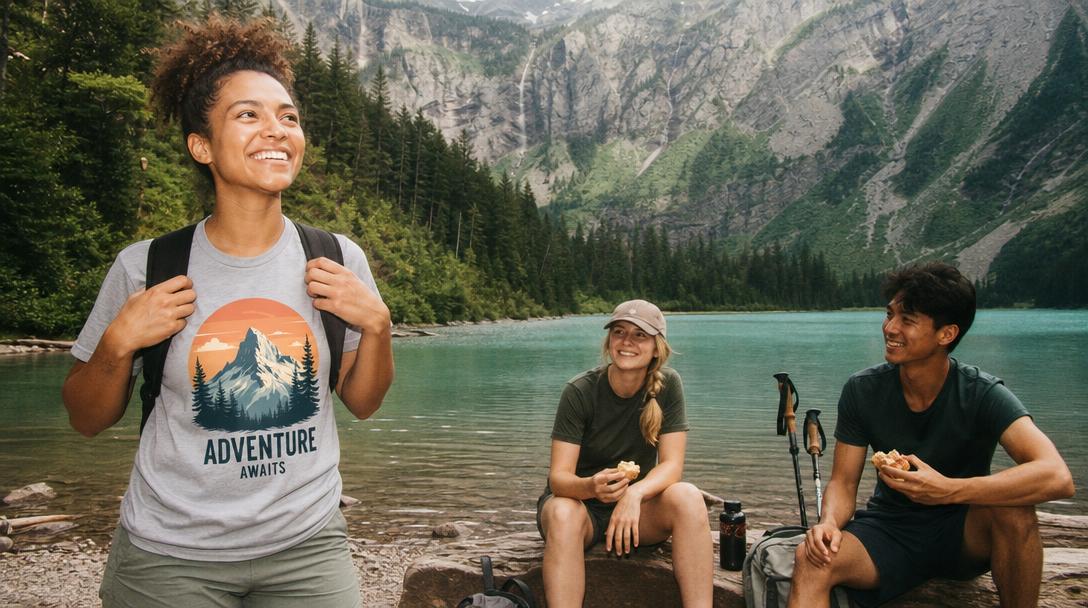
If it is your first trip, do not build your whole plan around the hardest trails. Glacier rewards pacing. The best hikes in Glacier National Park for first timers are the ones that give you huge scenery while leaving enough energy to enjoy the drive, wildlife, and post-hike snacks.
Here is a first-timer shortlist:
- Trail of the Cedars - easiest beauty-per-mile trail in the park.
- Avalanche Lake - best moderate intro hike.
- Hidden Lake Overlook - best Logan Pass sampler if conditions are good.
- St. Mary and Virginia Falls - best easy waterfall hike.
- Iceberg Lake - best first hard hike if you are fit and prepared.
- Grinnell Glacier - best big goal hike for strong hikers.
For a first Glacier trip with room for only one moderate hike, Avalanche Lake is the safest pick. Fit hikers who are comfortable with distance and staying near Many Glacier should look at Grinnell Glacier or Iceberg Lake.
What is the best trail in Glacier National Park?
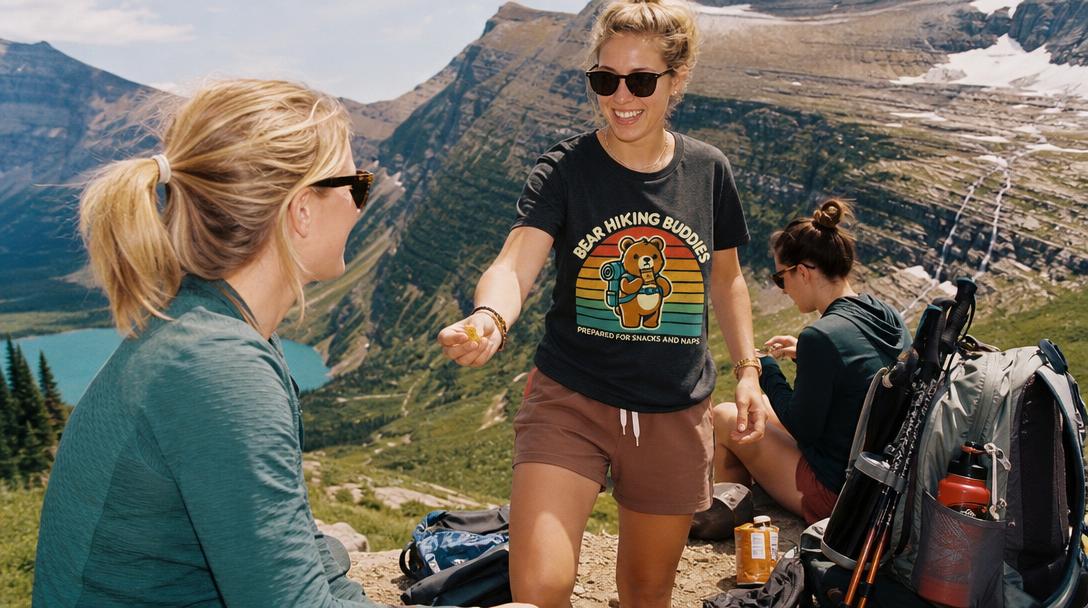
The best trail in Glacier National Park depends on your fitness, comfort with exposure, and logistics, but for an all-around best trail, Grinnell Glacier is hard to beat.
Highline gets the fame, and it deserves a lot of it. But Grinnell Glacier feels like Glacier National Park distilled into one hike: turquoise lakes, cliffs, waterfalls, open slopes, wildlife potential, and a glacier basin finish that makes the miles feel earned.
That said, here is the practical answer:
- Best overall big hike: Grinnell Glacier
- Best iconic alpine hike: Highline Trail
- Best moderate hike: Avalanche Lake
- Best easy hike: Trail of the Cedars
- Best quieter hard hike: Gunsight Lake
- Best Many Glacier classic: Iceberg Lake
What is the prettiest part of Glacier National Park?
The prettiest part of Glacier National Park is hard to crown because the whole park is basically unfair, but Many Glacier makes the strongest case.
Many Glacier feels wilder than the Going-to-the-Sun Road corridor. The peaks stack up dramatically, the valleys feel enormous, and trails like Iceberg Lake and Grinnell Glacier make you feel farther from everything in the best way. Even on a busy summer day, the east side can feel more spacious once you are a few miles down the trail.
Logan Pass is probably the most instantly dramatic area, especially at sunrise or late afternoon. If you only have one day, driving Going-to-the-Sun Road and stopping at Logan Pass is the classic move. But with three days or more, make time for Many Glacier. That is where the park feels at its wildest.
What's the most breathtaking glacier hike?
The most breathtaking glacier hike is Grinnell Glacier. It is not just the glacier at the end, either. The whole route builds like a movie: lakes below you, cliffs above you, waterfalls crossing the trail, and then that final approach into the glacier basin.
It is a hard hike, though. Expect around 10 miles round trip and more than 1,600 feet of elevation gain depending on route variations and whether boat shuttles are operating. Start early, carry layers, bring enough water, and do not treat it like a casual scenic stroll.
If you want something equally jaw-dropping but different, Highline Trail is the alpine ridge answer. For actual glacier-basin drama, Grinnell wins.
Going-to-the-Sun Road reservation hiking guide

Here is the part that blindsides people: your park entrance pass is not the same thing as a Going-to-the-Sun Road vehicle reservation.
During peak season, Glacier often uses a separate vehicle reservation system for popular corridors, including Going-to-the-Sun Road. Details can change by year, entrance, date, and time of day, so always check the official Glacier National Park website before your trip. But the big idea is simple: if you need a vehicle reservation and do not have one, you are not driving that corridor during restricted hours. Full stop.
Parking strategy that actually works
If your plan involves Logan Pass, Avalanche, Hidden Lake Overlook, or the Highline Trail, do not roll up at 10am expecting a spot. In summer, that is wishful thinking wearing hiking boots.
The rule of thumb: for popular trailheads, arrive embarrassingly early. Think 5:30-6:30am, especially for Logan Pass. Avalanche can also fill very early. If you are not an early person, Glacier will either convert you or punish you.
Shuttle timing for Highline and point-to-point hikes
The park shuttle is genuinely useful, especially for the Highline Trail. Many hikers start at Logan Pass, hike to The Loop, then use the shuttle to return. That works well only if you understand the shuttle schedule, how long the hike will take you, and how crowded the system may be.
Do not start Highline late in the day assuming the shuttle will magically solve everything. Build in a buffer. Glacier miles take longer than normal miles because you will stop constantly for photos, snacks, wildlife jams, snow patches, and existential staring.
If you miss a reservation
You may still have options: enter before restricted hours, enter after restricted hours, use a qualifying service reservation if allowed under that year's rules, explore non-restricted areas, or focus on other park entrances. But do not plan around loopholes. Plan around current rules.
Common first-timer mistakes in Glacier
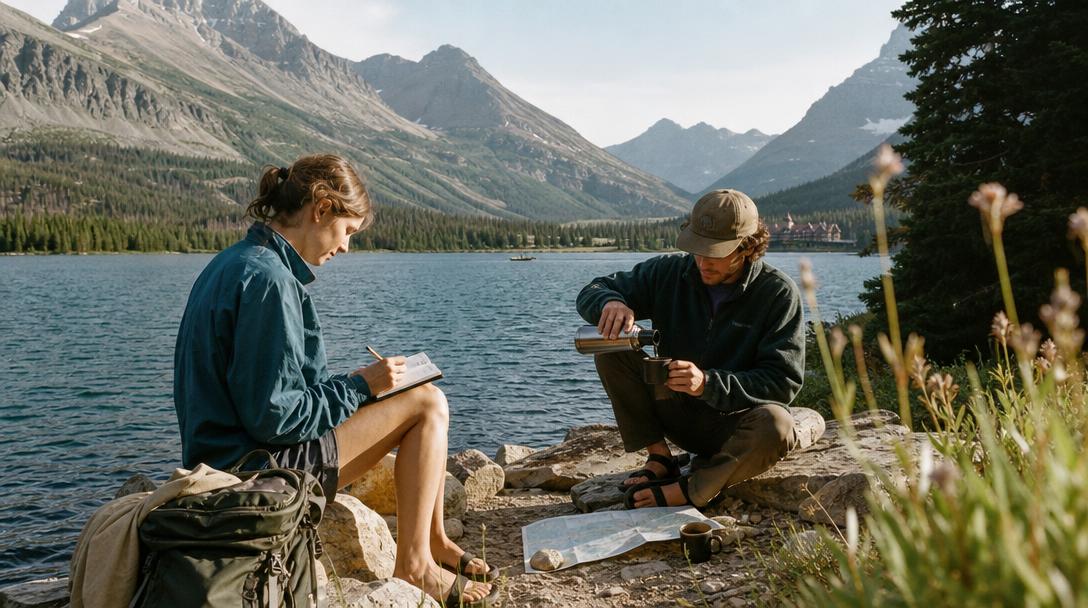
Mistake 1: Assuming early season means clear trails
Showing up early in summer can look like a clever crowd strategy, but Glacier often answers with snowfields across popular trails. Mid-July through early September is usually the most reliable hiking window, but every year is different.
Mistake 2: Treating weather like background decoration
A bluebird morning does not guarantee a bluebird afternoon. Exposed alpine routes like Highline can turn serious fast if thunderheads build. Always carry rain gear and warm layers.
Mistake 3: Parking late at Logan Pass
Logan Pass parking fills brutally early in summer. If your dream hike starts there, your alarm clock is part of the itinerary.
Mistake 4: Hiking with headphones in bear country
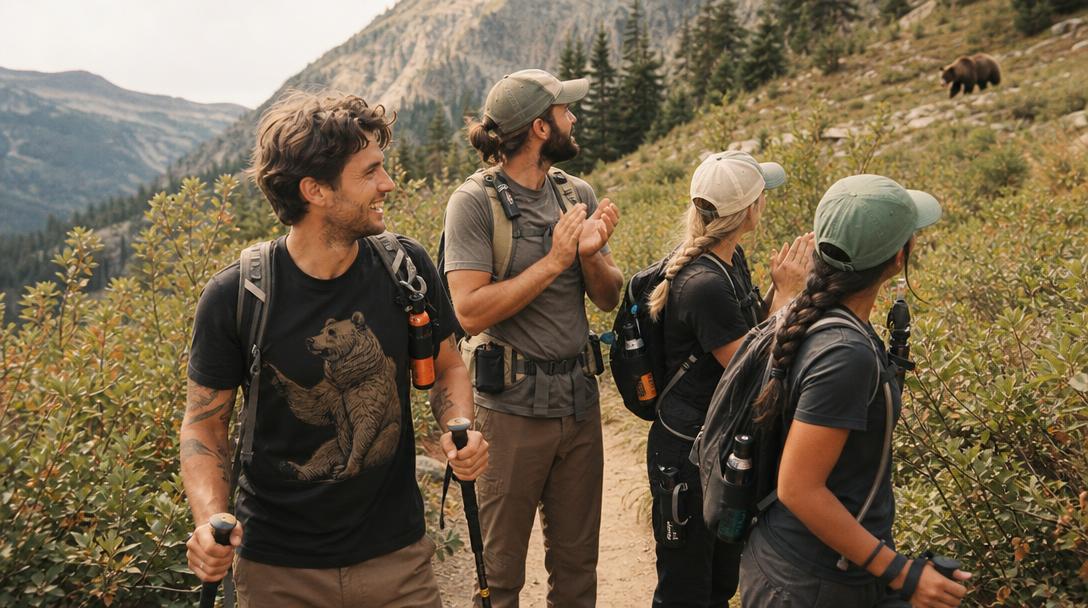
Grizzlies are a real part of hiking in the Many Glacier area. If a bear shows up on a hillside above the trail, stay calm, keep the group together, make noise, keep moving, and know exactly where your bear spray is, not buried at the bottom of the pack.
Hike alert. Make noise in brushy areas. Travel in a group when you can. Give wildlife space. Mountain goats, bighorn sheep, moose, bears, and marmots are not park employees in costume.
Mistake 5: Trying to do everything
Glacier is not a checklist. The people who try to cram Avalanche, Highline, Grinnell, Iceberg, and every scenic overlook into three days usually spend more time stressed than amazed. Build space into the trip.
Glacier hiking itinerary ideas
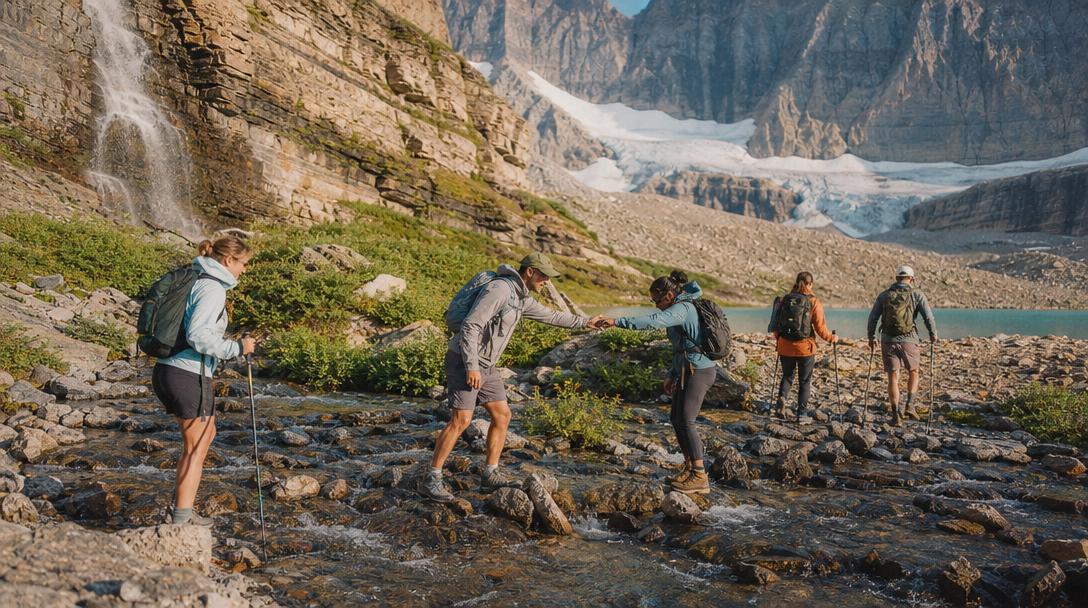
One-day Glacier hiking itinerary
If you only have one day, get up early. Very early. Secure any needed vehicle reservation in advance, drive Going-to-the-Sun Road, and choose one main hike.
Best options:
- Moderate day: Trail of the Cedars plus Avalanche Lake.
- Hard day: Highline Trail if conditions, fitness, and shuttle timing all line up.
- Scenic sampler: Logan Pass, Hidden Lake Overlook, and roadside stops.
Do not try to do Avalanche and Highline in the same day unless you enjoy turning beauty into a spreadsheet.
Glacier National Park 3 day hiking itinerary
This is the sweet spot for many visitors.
Day 1: West side
Hike Trail of the Cedars and Avalanche Lake. Take your time. This is your warm-up day and a great introduction to Glacier terrain.
Day 2: Logan Pass
Choose Highline Trail if you are fit, prepared, and comfortable with exposure. Choose Hidden Lake Overlook if you want something shorter with massive alpine views.
Day 3: Many Glacier
Drive to Many Glacier and hike either Iceberg Lake or Grinnell Glacier. These east-side trails feel like a different park in the best possible way.
Weeklong Glacier hiking itinerary
With a full week, slow down and go deeper.
- Day 1: Trail of the Cedars and Avalanche Lake
- Day 2: Hidden Lake Overlook or Logan Pass exploring
- Day 3: Highline Trail
- Day 4: Rest morning, scenic drive, lake time
- Day 5: Grinnell Glacier
- Day 6: Iceberg Lake or Ptarmigan Tunnel
- Day 7: Gunsight Lake or a quieter trail plus sunset overlook
Build in at least one morning where the only plan is coffee with a view. Glacier deserves that.


