


Matching Family Camping Shirts That Work
Dominic PalmowskiOne kid is already sticky from s'mores, someone forgot the tent stakes, and the dog is trying to steal a hot dog. That is exactly the kind of trip that needs one thing to go perfectly — and matching family camping shirts are it. They bring a little extra fun to the chaos, make group photos look instantly better, and turn an ordinary weekend outside into something that feels like a real family tradition.
The best part is that they do not need to feel cheesy or overplanned. A good set of camping shirts can be funny, relaxed, and easy to wear long after the trip is over. When the design feels true to your crew, the shirts stop being a costume and start becoming part of the memory.
Why matching family camping shirts are worth it
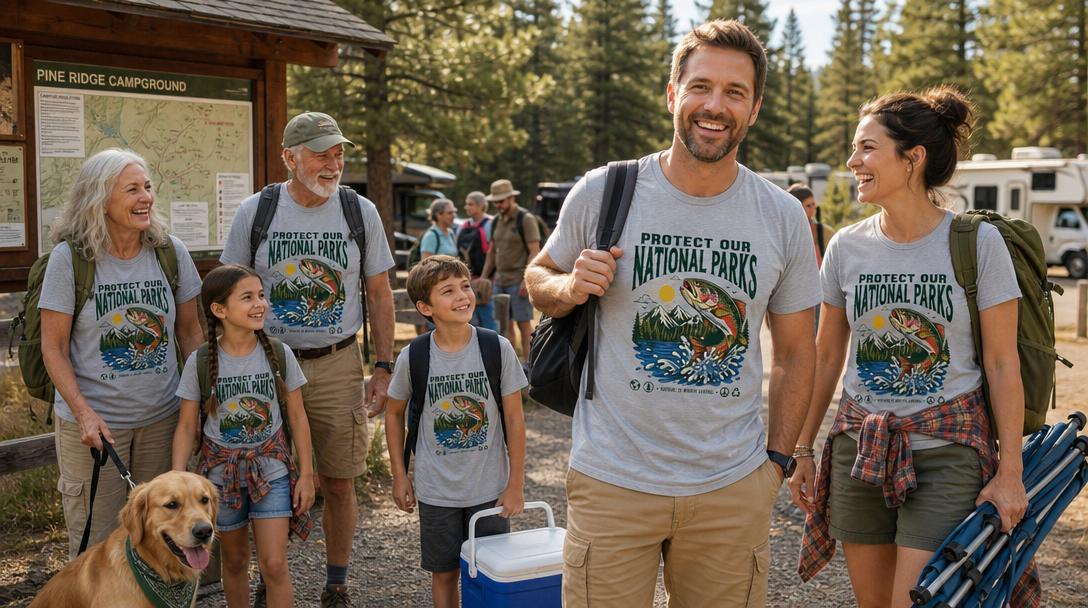
There is a practical side to matching shirts, sure. They make it easier to spot your group at a busy campground, trailhead, visitor center, or lodge. If you are wrangling kids, grandparents, cousins, or a full family reunion around picnic tables and campfire rings, that little bit of visual unity helps more than people expect.
But the bigger reason is emotional. Family camping trips already have a built-in magic to them. Pancakes on a camp stove taste better. Card games feel funnier under lantern light. Even the mishaps become stories you retell for years. Matching shirts give those moments a shape. They say this was our trip, our people, our inside joke.
That is why families keep coming back to them. Not because everyone suddenly wants a formal group uniform, but because a shared design makes the trip feel more intentional, more festive, and a lot more photo-friendly. If you are still choosing where to take the crew next, this guide to family fun campgrounds and kid-friendly campsites is a good place to start planning.
What Makes a Great Family Camping Shirt Design
Not every matching set gets worn twice. The difference usually comes down to whether the design feels wearable in real life.
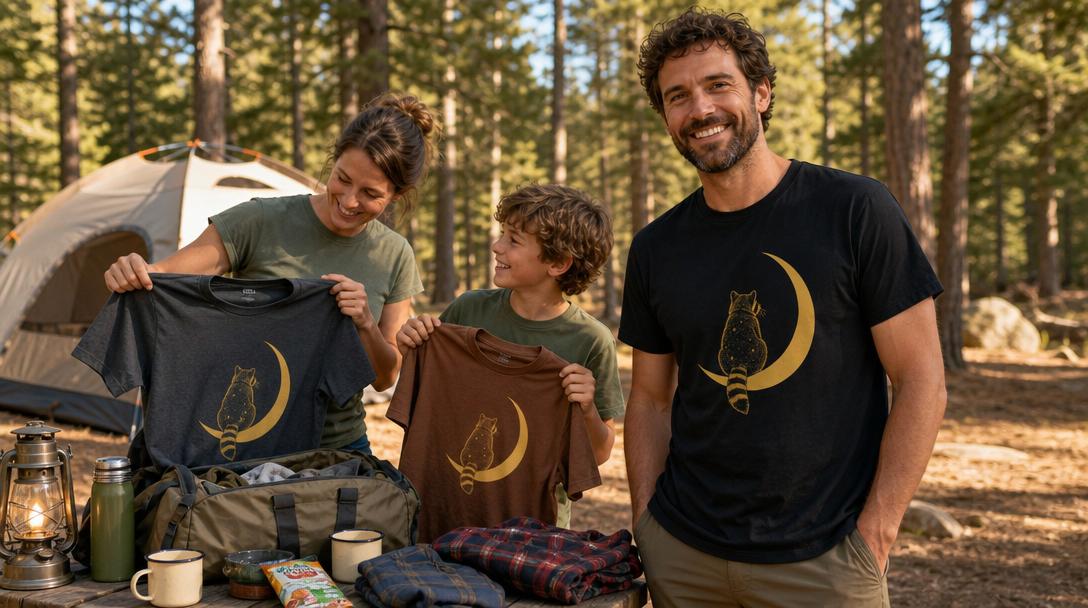
A great camping shirt for families should strike a balance. It needs enough personality to feel fun, but not so much that everyone peels it off the second the photo is done. Funny sayings, wildlife graphics, retro camp art, mountain themes, and national park-inspired designs like the Protect Our National Parks Fish Shirt tend to work well because they tap into why people are there in the first place. They feel outdoorsy without taking themselves too seriously.
Comfort matters just as much as the graphic. Soft fabric, relaxed fits, and easy movement go a long way when the day includes hauling coolers, setting up camp, cooking dinner, and chasing kids through a field with glow sticks. If a shirt feels stiff, scratchy, or too precious, it will stay buried in the duffel bag.
The sweet spot is a design that gets a laugh at the campsite and still looks good on a grocery run back home.
Humor usually wins
Camping is full of material. Early wakeups, questionable coffee, mosquito complaints, campground cooking, and the universal family debate over who forgot what. Shirts that nod to those little truths tend to land better than generic matching graphics.
A playful shirt gives everyone permission to keep the trip light. It says yes, we are outdoorsy, but we also know someone is absolutely going to overtoast a marshmallow. If your crew loves the funny side of camp life, a casual graphic tee like the Camping Peace Shirt can hit that easy, wearable middle ground.
That said, humor is not the only path — the design just needs to feel true to your family.
The design should fit the family, not the trend
Some families want bold matching graphics. Others want a more low-key set where the colors coordinate and the artwork is shared, but each shirt has a slightly different phrase or role. Parents might go for a classic camp design while kids wear versions with funnier text or animal prints.
That flexibility matters. The best sets feel coordinated, not forced. If your family is more sarcastic than sentimental, lean funny. If your trips are built around national parks and trail traditions, a scenic or park-inspired look may fit better. If the whole point is annual campground photos, a timeless design will probably age better than a trend-heavy one.
How to choose shirts everyone will actually wear
This is where a lot of family sets go sideways. One person loves the idea, one person does not care, and one teenager acts like matching apparel is a personal attack. Fair enough.
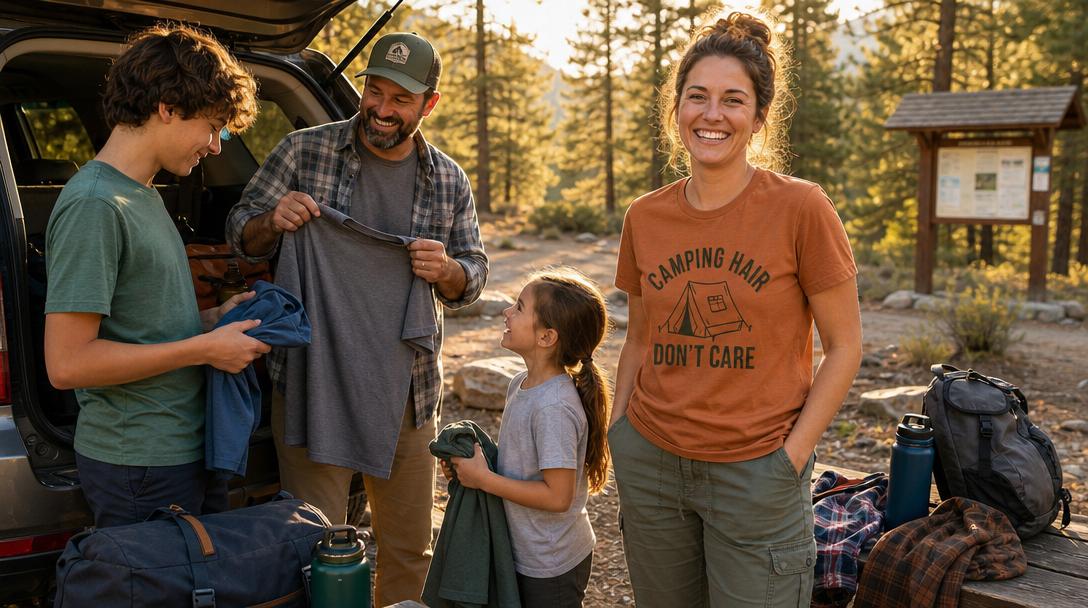
The easiest fix is to choose shirts with broad appeal. Keep the colors wearable. Think forest green, heather gray, faded blue, earthy neutrals, or sun-washed tones that look right at home around a fire ring. These shades also hide campground dust better than bright white, which is not a small detail.
Fit matters too. If you are buying for a whole group, unisex or relaxed cuts usually make the process easier. Kids need room to move. Adults want something that works with shorts, jeans, leggings, or layered flannels. Nobody wants a shirt that only looks good in a staged photo and weird everywhere else.
If your group includes different ages, think about how the design reads across generations. Grandparents may be all in for a classic outdoors graphic. Little kids usually love animals, tents, and anything a little silly. Parents often want something that does not scream novelty. The good news is that camping-themed graphics are one of the few categories where all of those tastes can overlap pretty nicely.
If you want more ideas for choosing tees that feel fun without going overboard, this guide to funny camping shirts for families is worth a look.
Matching does not have to mean identical
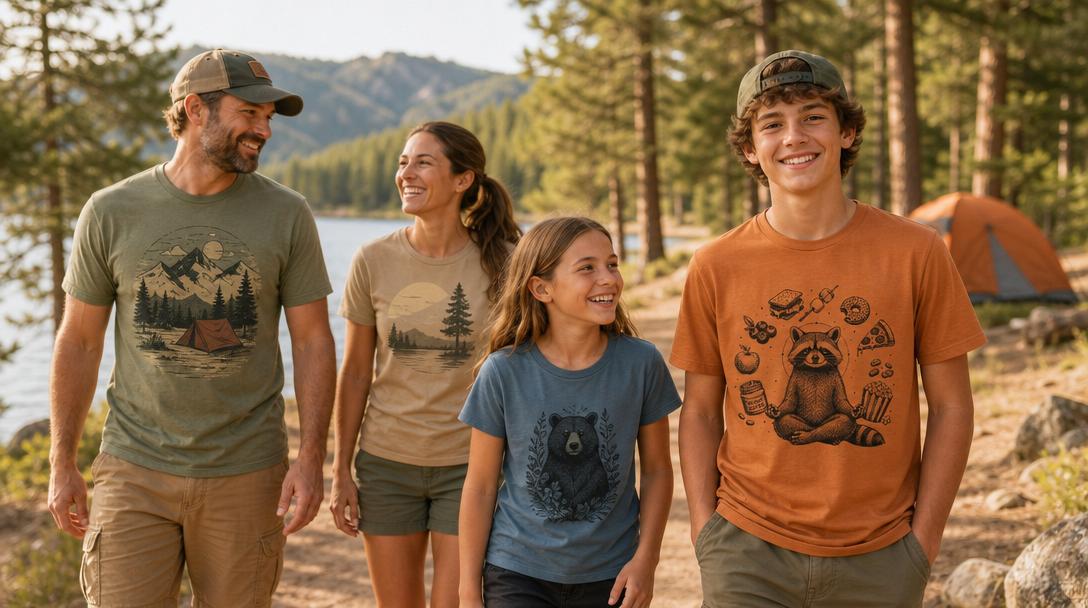
This is the best news for families who like the idea of coordinated shirts but do not want to look like a summer league team.
A matching set can mean the same graphic in different shirt colors. It can mean one shared camping theme across multiple sayings. It can mean adults wear a mountain design while kids wear the Raccoon Moon Shirt, a bear tee, or a campfire version from the same general vibe. The overall look still feels pulled together, but each person gets a little room for personality.
That approach often leads to more repeat wear too. People are more likely to wear a shirt again if it feels like their style, not just the family assignment for one weekend.
For families who camp more than once a year, this is especially smart. You can build a tradition without repeating the exact same look every trip. One year the theme is camp humor. The next year it is wildlife. The year after that, maybe a national park road trip theme. Same spirit, fresh memory.
When to wear matching family camping shirts
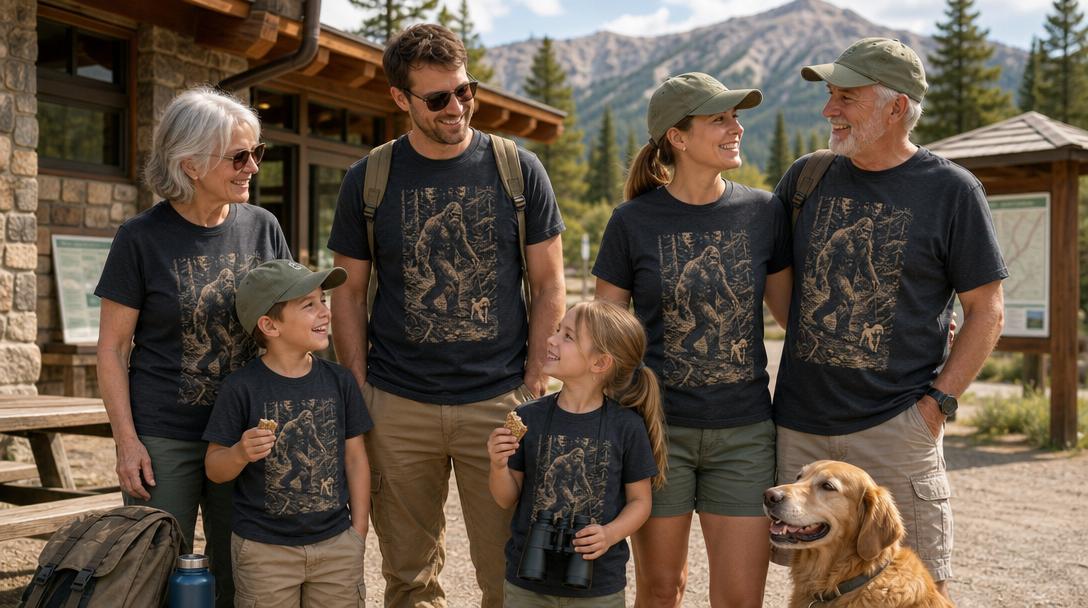
The obvious answer is at the campsite, but they pull their weight in more places than that. They are great for the drive out, especially if the trip starts with breakfast stops and gas station snack runs. They work for campground check-in, group hikes, visitor centers, lake days, and family reunion weekends that mix cabins, campfires, and easy outdoor time.
They are also surprisingly useful for travel days in crowded places. If you are moving through a rest stop, camp store, visitor center, or busy national park area with kids, coordinated shirts make the whole group easier to spot.
Then there are the photos. Matching shirts make even the most spur-of-the-moment snapshots look more put together. You do not need a professional setup. A picnic table, a trail sign, a tent in the background, and a little evening light are enough. Years later, those photos feel less random and more like part of a story.
If your camping trip includes easy trails, nature walks, or national park exploring, these family hiking tips for kids can help keep the day smooth for everyone.
Cotton or synthetic for a camping weekend?
Fabric decides more than the graphic does. Cotton is the right call for campfire lounging, cool dry evenings, and the souvenir shirt everyone keeps wearing at home. It gets heavy and dries slowly once the weather turns, so it is the wrong pick for a sweaty afternoon hike or a surprise rain shower.
Polyester and poly blends do the opposite. They are light, breathable, and quick-drying, so they pull sweat away instead of holding it against your skin. That matters most on active days: the hike between campsites, the kayak morning, the long walk back from the swimming hole.
For most families the easy answer is both. Pack soft cotton tees for camp and photos, and one performance shirt per person for the day you actually move. If your crew leans active, our guide to cotton vs synthetic hiking shirts breaks the trade-off down in more detail.
Sizing the whole crew, from kids to grandparents
Sizing is where family shirt orders usually go sideways. The set looks great at checkout, then one kid gets a collar that twists, one adult gets sleeves built for a wrestling singlet, and somebody changes back into the old camp tee before lunch.
What kids actually need
Kids are honest test pilots. If a shirt itches, rides up, or traps heat, you will hear about it long before the marshmallows come out. Look for room through the shoulders for climbing and crouching, a soft neckline without a thick taped seam, and a length that stays put when arms go overhead. When in doubt between two sizes, size up: a slightly roomy shirt survives a growth spurt and a whole season of campfires.
What adults usually get wrong
Adults tend to buy for the photo instead of the weekend. A fitted tee looks sharp for ten minutes and then fights you while you haul coolers and set up tents. Relaxed unisex cuts are the safer pick for a group order, they layer better under a flannel in the morning, and they keep the whole set looking coordinated even when everyone picked a different size.
Fabric, Fit, and a Few Things Worth Getting Right
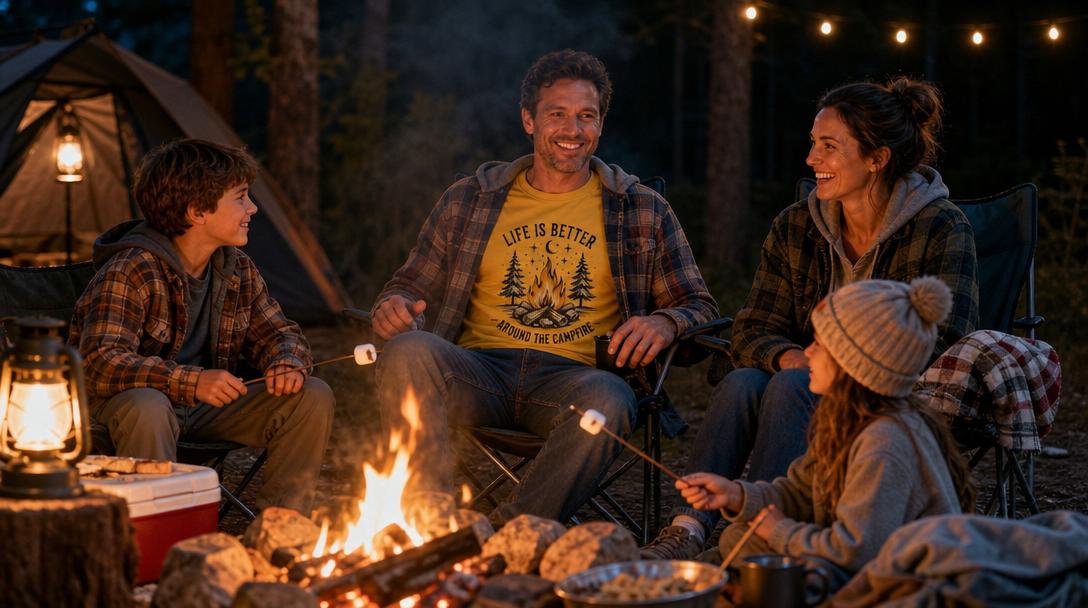
Fabric is a big one. Soft cotton or cotton-blend tees usually win for comfort, especially for casual camping, road trips, and campground lounging. If your family runs hot, lighter-weight shirts can be more versatile for hanging around camp. If your trips lean chilly in the mornings and evenings, choose designs that also work layered under hoodies or flannels.
For casual camp days, a soft graphic tee like the Life is better Campfire Shirt makes sense because it fits the setting without feeling like special-event apparel. The goal is simple: pick shirts people will actually reach for again.
Durability matters too. Camping is not gentle on clothes. Shirts get worn around smoke, dirt, snack spills, sunscreen, bug spray, and whatever mystery smudge ends up on every kid by noon. A shirt should be able to handle regular washing without losing its shape or graphic too quickly.
And if sustainability matters to your family, which for a lot of outdoor-loving shoppers it does, eco-conscious materials and thoughtful production are worth paying attention to. A shirt feels better when it lines up with the same values that got you outside in the first place. If that is on your mind, here is a helpful breakdown on how to choose eco friendly hiking shirts.
Brands like Hike Tee tap into this sweet spot well by pairing adventure-ready comfort with humor, personality, and outdoors-first design. That combination makes the shirt feel less like a novelty purchase and more like something you will keep reaching for.
The real reason families keep buying them
It is not because every family dreams of being perfectly coordinated around a campfire. It is because these shirts make it easier to celebrate the trip while you are in it.
They add a little ceremony to the weekend without making anything fussy. They help shy kids feel included. They give grandparents a keepsake they will actually wear. They turn a regular Saturday pancake breakfast at camp into a memory with a visual stamp on it.
And maybe that is the whole point. Outdoor memories are usually built from small things — the joke that lasted all weekend, the hike everyone nearly skipped but loved, the smoky hoodie smell that hangs around for a day or two after you get home. Matching family camping shirts fit right into that world. They are simple, cheerful, and a little bit silly in the best way.
If you pick the right set, you are not just dressing for the photo. You are giving the trip one more reason to be remembered, laughed about, and worn again on the next adventure.


