


Hiking Shirt Color Guide | Hike Tee
Dominic PalmowskiHiking shirt color tradeoffs: heat, visibility, and UV protection
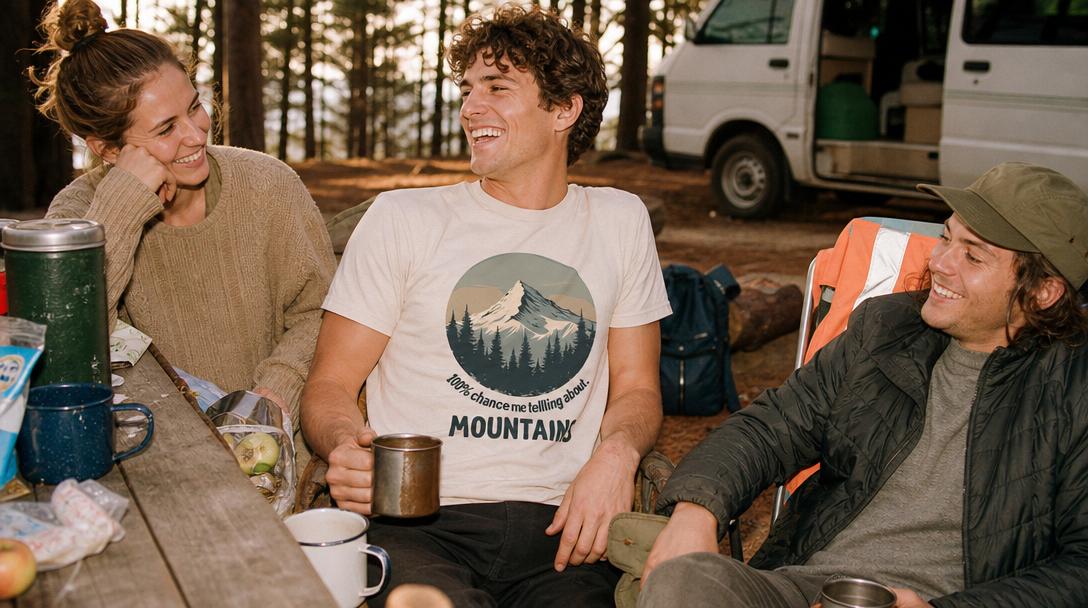
Choosing a hiking shirt color is basically a three-way negotiation between:
- Heat management: How much sunlight the shirt absorbs or reflects
- Visibility: How easy it is for other hikers, cyclists, drivers, hunters, or rescuers to spot you
- UV protection: How much ultraviolet radiation the fabric blocks before it reaches your skin
Unfortunately, one color rarely wins all three categories.
A white or pale gray shirt may feel cooler in exposed sun, but it may provide less UV protection than the same shirt in navy or red. A neon orange shirt may be excellent for visibility but warmer than a pale blue one. A dark green shirt looks great in the forest but can make you disappear into the background—peaceful for introverts, less ideal for safety.
Quick hiking shirt color ranking for hikers
| Shirt Color | Heat Comfort | Trail Visibility | UV Protection Potential | Best Use |
|---|---|---|---|---|
| White | Excellent | Moderate | Lower unless UPF-rated | Hot desert hikes, casual summer walks |
| Light gray | Excellent | Moderate | Moderate | Hot weather, travel, dusty trails |
| Pale blue | Excellent | Good | Moderate | Hot sunny hikes, national parks |
| Tan/khaki | Very good | Low to moderate | Moderate | Desert, safari-style hiking, van life |
| Yellow | Good | Excellent | Moderate | Busy trails, road crossings, group hikes |
| Bright orange | Moderate | Excellent | Good | Hunting season, search visibility |
| Red | Moderate | Good | Good | Photos, cooler days, mixed terrain |
| Dark green | Lower | Low | Good | Forest photography, wildlife watching |
| Navy | Lower | Moderate | Very good | Cool-weather hiking, sun protection |
| Black | Lowest in sun | Moderate | Very good | Cool days, campwear, not peak summer sun |
What color hiking shirt keeps you cool?
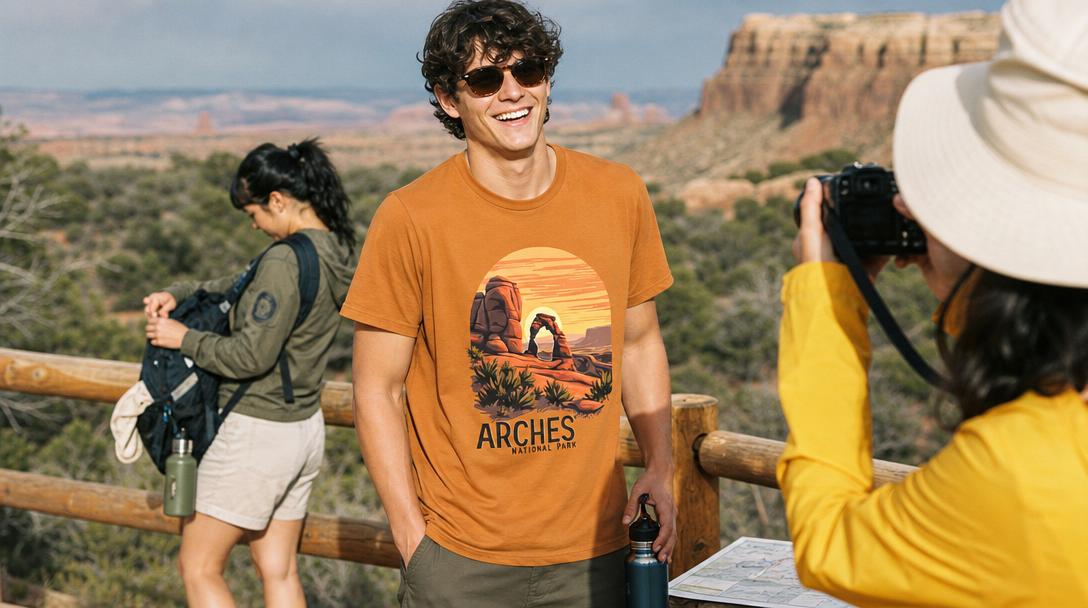
If your main question is what color hiking shirt keeps you cool, start with lighter shades: white, light gray, pale blue, soft yellow, and beige.
Light colors reflect more visible sunlight, while dark colors absorb more solar energy and convert it into heat. That’s why a black shirt can feel dramatically warmer on your shoulders when you’re hiking an exposed ridge at noon.
One frequently cited Japanese field test by the National Institute for Environmental Studies placed different colored polo shirts on mannequin torsos in direct summer sun. After five minutes, the white and yellow shirts hovered around 30°C, while the darkest shirts exceeded 50°C—a difference of about 20°C, according to reporting from Yahoo News Singapore.
That doesn’t mean your skin will be exactly 20°C hotter in a black shirt. Airflow, sweat evaporation, fabric thickness, and shirt looseness all change what your body actually feels. But as a general trail rule, light colors reduce surface heat better than dark colors.
For more detail on weight, airflow, and when a shirt gets too thin, see our guide to lightweight hiking shirts.
Best hiking shirt color for hot weather
The best hiking shirt color for hot weather is usually:
- Light gray — cooler than dark colors, hides dirt better than white
- Pale blue — reflects sunlight well and stands out better than tan
- White — coolest in direct sun, but stains quickly and may be more transparent
- Sand or beige — great for desert hikes, dusty trails, and van-life wardrobes
- Soft yellow — surprisingly cool and more visible than white or tan
For most hikers, light gray or pale blue is the sweet spot. They’re cooler than navy or black, more forgiving than white, and easier to see than khaki.
If you hike in places like Joshua Tree, Arches, Zion, Big Bend, or exposed alpine trails, a loose-fitting light-colored sun hoodie or long-sleeve hiking shirt is usually smarter than a dark short-sleeve tee.
Best shirt color for visibility on trails
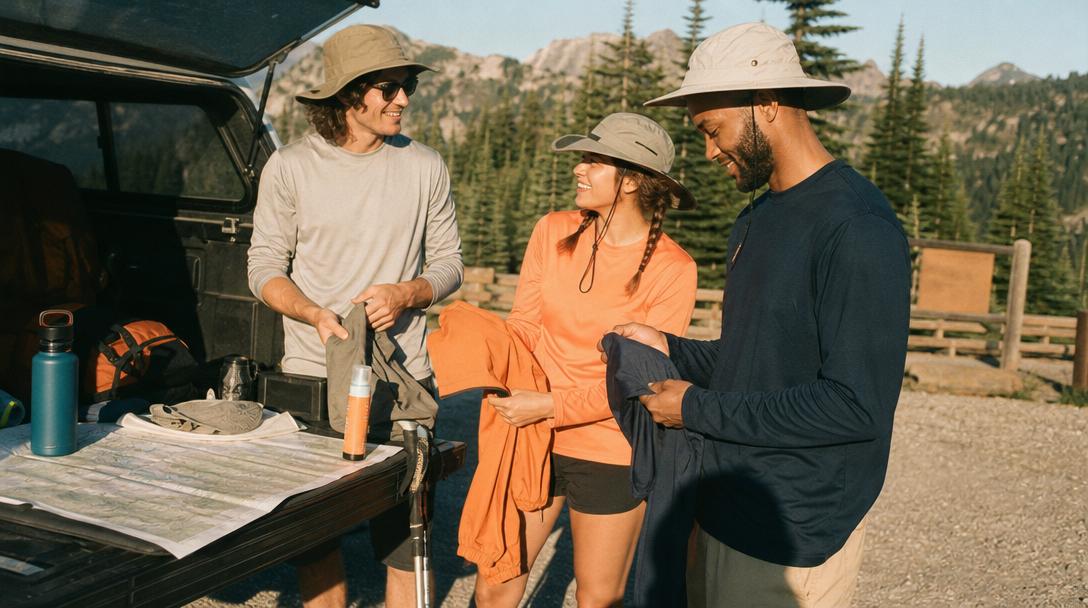
The best shirt color for visibility on trails is usually bright orange, neon yellow, lime green, or vivid blue.
Visibility matters more than people think. On shared-use trails, bright clothing helps:
- Mountain bikers see you earlier
- Group members keep track of each other
- Drivers spot you near trailheads and road walks
- Hunters distinguish you from the landscape
- Search and rescue teams locate you more easily if things go sideways
For maximum safety, blaze orange is the classic high-visibility outdoor color, especially during hunting season. Neon yellow is also excellent, particularly near roads or bike-heavy paths.
The visibility vs. heat problem
High-visibility colors are not always the coolest colors.
A neon yellow shirt can be both bright and relatively reflective, making it a strong warm-weather visibility choice. Bright orange is excellent for safety but may absorb more heat than white, pale gray, or light blue. Red photographs beautifully in green forests and on gray rock, but it can run warmer than pale shades.
If you want one shirt that balances both safety and heat, look for:
- Light bright blue
- Soft yellow
- Light orange or coral
- Bright but not dark green
- Pale gray with reflective accents
The trick is to avoid going too muted. A sage green shirt may look outdoorsy, but on a forested trail it can turn you into a very fashionable shrub.
High visibility hiking shirt: when bright colors are worth it
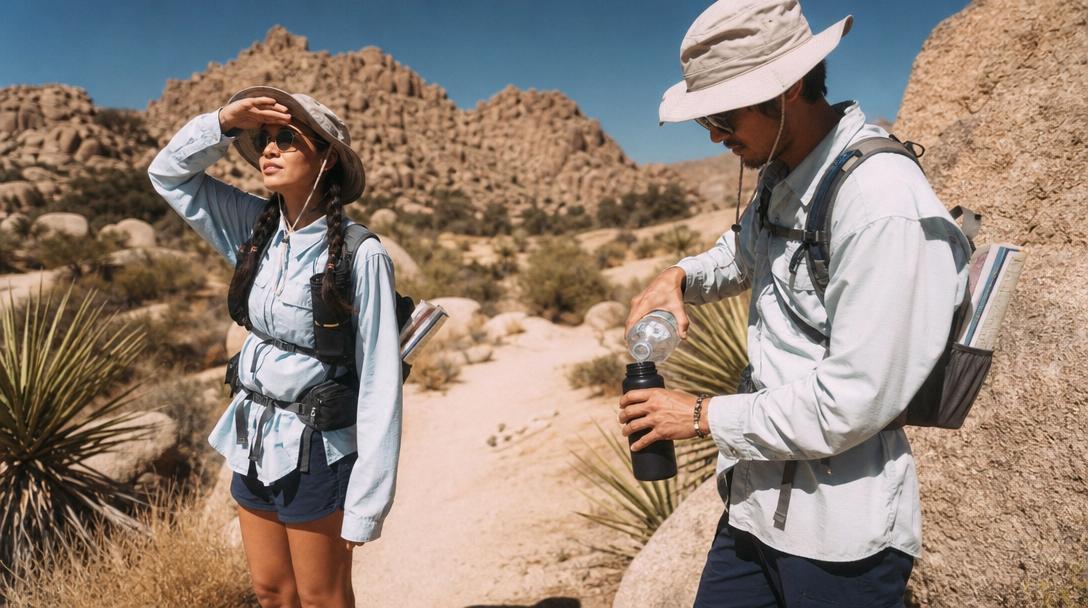
A high visibility hiking shirt is especially useful in situations where being seen is part of staying safe.
Choose high-vis colors when you’re hiking:
- During hunting season
- On trails shared with mountain bikes
- Near roads, trailhead crossings, or gravel access routes
- In large family or scout groups
- In fog, rain, or low light
- In remote areas where rescue visibility matters
- With kids who enjoy sprinting ahead like caffeinated squirrels
For these hikes, prioritize orange, yellow, lime, or bright blue over earthy tones.
If you prefer funny graphic hiking tees or outdoor lifestyle shirts—say, a bear making questionable life choices or a raccoon who looks like he packed your snacks—consider wearing them for casual day hikes, campgrounds, national park overlooks, or post-hike town stops. A playful cotton tee like the 100% Chance Shirt works best for relaxed trail days, not remote routes, intense sun, or hunting season, where a bright technical sun shirt or vest is the safer layer.
Dark colors: hotter, but better for UV protection?
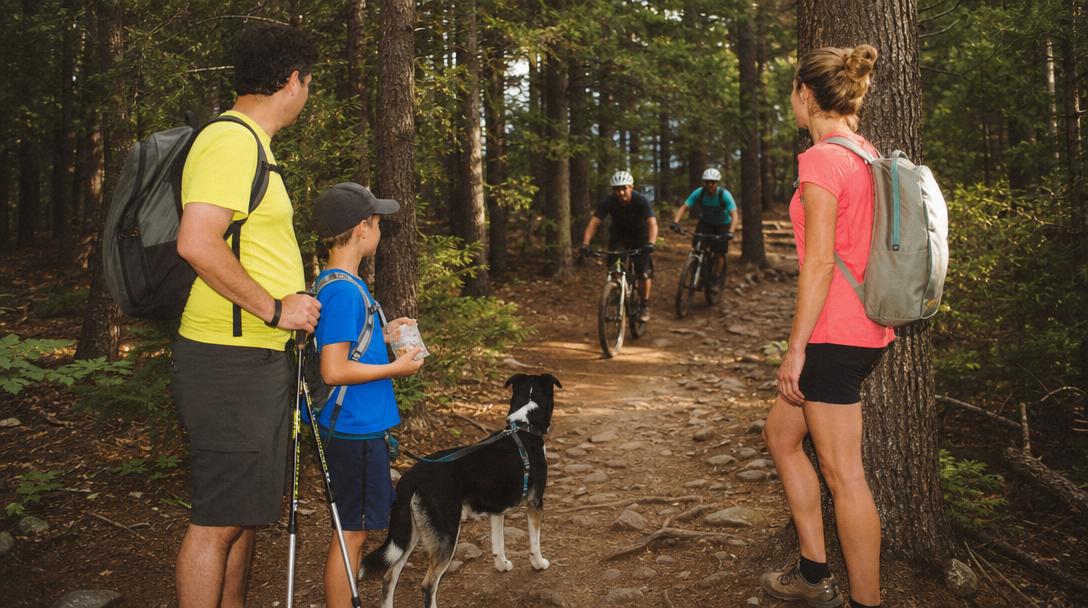
Here’s where the plot thickens like oatmeal in a camp mug: darker colors can feel hotter, but they may protect better from UV.
The Skin Cancer Foundation notes that color affects sun protection. Dark or bright colors such as red, black, and navy absorb more UV rays than lighter colors like white and pastels, preventing more radiation from reaching your skin. They also note that an everyday white cotton T-shirt has a UPF of only about 5, which means it lets a lot of UV through.
OutdoorGearLab has reported similar findings in sun shirt testing: darker versions of the same shirt may offer higher UPF performance than lighter versions. In one example, lighter colors tested closer to UPF 30, while darker colors reached closer to UPF 50+.
So what do you do?
Choose UPF rating over color guessing
If sun protection matters, don’t rely on color alone. Look for:
- UPF 30 or higher for solid protection
- UPF 50+ for long exposed hikes
- Dense weave fabric
- Long sleeves
- A hood or collar for neck protection
- Looser fit, since stretched fabric can reduce protection
A pale shirt with a UPF 50+ rating is better than a random dark cotton tee with no rating. Color helps, but fabric construction and UPF certification matter more.
Color recommendations by hiking style
Day hikes with family
Best colors:
- Pale blue
- Light gray
- Bright yellow
- Coral
- Sky blue
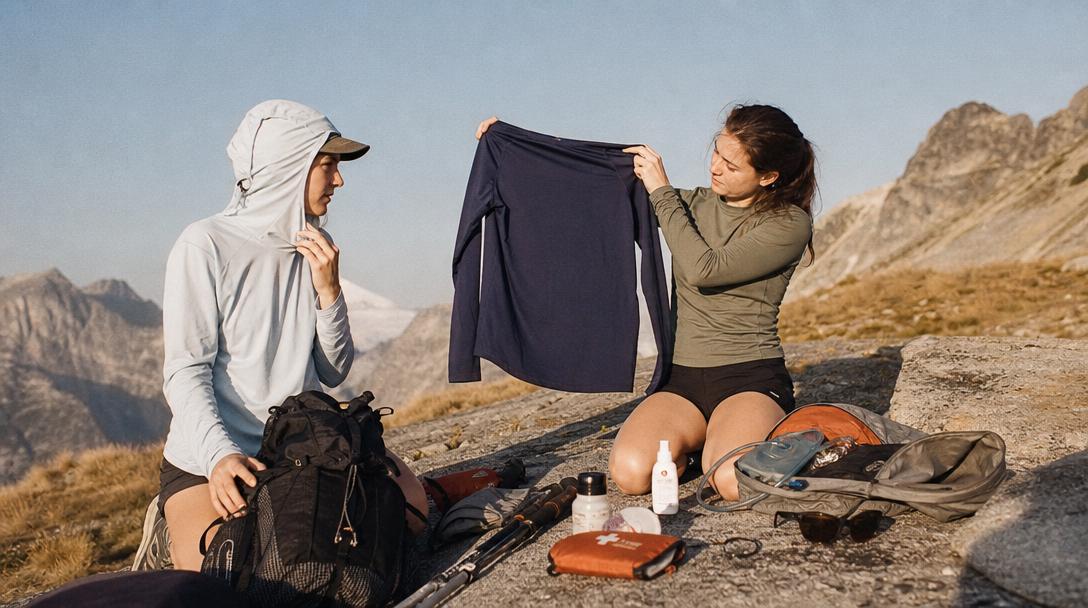
Family hikes benefit from visibility. If you’re hiking with kids, choose colors that are easy to spot from a distance. Bright yellow or blue shirts make it easier to keep everyone in view without yelling “Where did you go?” every 37 seconds.
Good combo: light blue synthetic tee, gray shorts, sun hat, bright daypack.
Hot desert hikes
Best colors:
- White
- Sand
- Light gray
- Pale yellow
- Pale blue
Desert hiking is all about sun management. Choose loose, light-colored, UPF-rated long sleeves. White is cool but gets dirty fast; sand and light gray hide dust better.
Good combo: light gray UPF hoodie, tan hiking pants, wide-brim hat, sunglasses, neck gaiter.
Multi-day backpacking
Best colors:
- Medium blue
- Light gray
- Rust
- Muted orange
- Darker merino for cooler conditions
For backpacking, odor resistance, drying speed, and versatility matter. A medium shade may hide dirt better than white while staying cooler than black. Merino wool in a medium color is a strong choice for repeat wear.
Good combo: medium blue merino tee, lightweight sun hoodie, convertible pants, spare dry sleep shirt.
National park trips
Best colors:
- Red
- Teal
- Golden yellow
- Sky blue
- Light gray
If photos matter, choose colors that contrast with the landscape. Red pops against green forests and gray granite. Teal looks great in desert and lake settings. Yellow works beautifully in alpine meadows and evergreen forests.
Good combo: golden yellow hiking shirt, charcoal shorts, trail runners, camera strap, “I swear this overlook was worth the parking chaos” energy.
Van life and camping
Best colors:
- Heather gray
- Sage
- Dusty blue
- Rust
- Cream
Van-life clothing needs to handle hiking, grocery runs, campground lounging, and mysterious laundry schedules. Mid-tone colors hide dirt and mix easily with layers.
Good combo: dusty blue tee, flannel overshirt, joggers, camp sandals, beanie.
For low-key camp nights, a casual cotton graphic like the 5 Billion Star Hotel Shirt fits the mood without pretending to be a technical sun layer.
Trail photography and wildlife watching
Best colors:
- Earth tones
- Olive
- Tan
- Brown
- Muted blue
If your goal is wildlife watching or photography, low-visibility colors can be useful. Just remember that blending in is not ideal during hunting season or in busy multi-use areas.
Good combo: muted green long sleeve, tan pants, quiet layers, bright orange hat packed just in case.
The trail-tested takeaway
Your hiking shirt color should match the hike, not just your mood—though if your mood says “neon orange possum energy,” we support the journey.
For hot exposed trails, go with light gray, pale blue, white, or sand in a breathable UPF-rated fabric. For safety and visibility, choose bright orange, yellow, lime, or blue. For stronger UV protection, darker colors can help, but a real UPF 30–50+ rating matters more than guessing by shade.
If you only buy one hiking shirt, make it a light gray or pale blue synthetic UPF shirt. If you hike during hunting season or with kids, add a bright orange or yellow layer. And if you’re packing for national parks, van life, or campfire lounging, bring one fun shirt that makes you smile—because the best trail outfit is the one that keeps you comfortable enough to stay outside a little longer.


