


Fall Foliage Hiking Formula | Hike Tee
The Fall Foliage Formula: How to Predict Peak Foliage
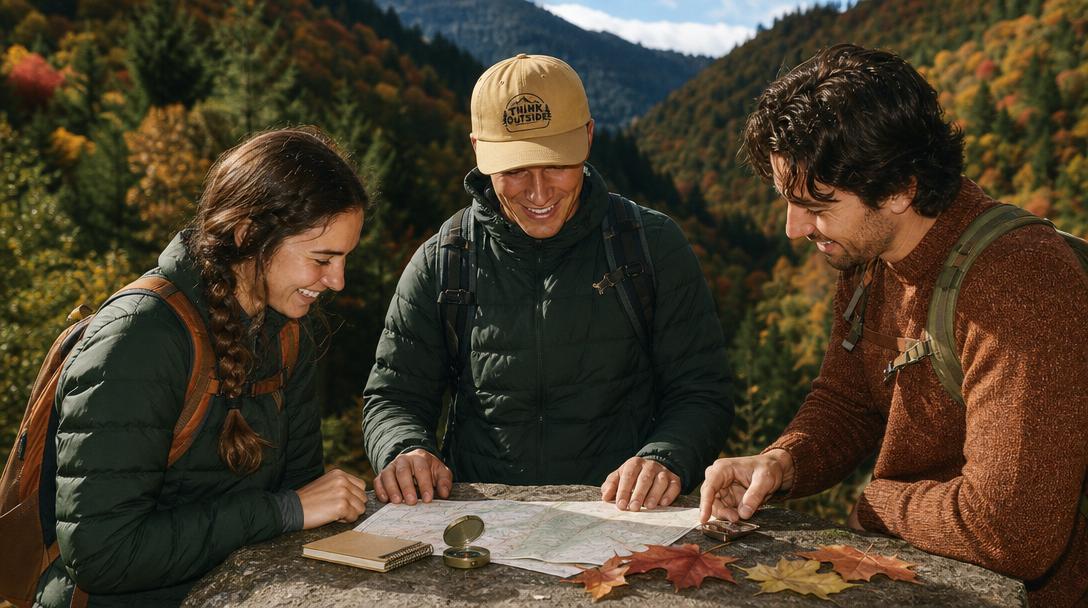
Most fall foliage maps are helpful, but they can make peak color look like a single day. In real life, peak foliage moves like a slow wave: north to south, high elevation to low elevation, colder pockets to warmer valleys.
Here is the hiker-friendly formula:
Peak foliage window = latitude + elevation + dominant tree species + recent weather + local terrain
Let’s break that into something you can actually use before requesting PTO.
1. Start With Latitude: North Peaks First
In the U.S., fall color generally begins in the far north and higher elevations in September, then rolls south through October and into November.
A simple shortcut:
- Far northern U.S. and high mountains: late September to early October
- New England, Upper Midwest, northern Rockies, upstate New York: early to mid-October
- Mid-Atlantic, central Appalachians, southern Rockies: mid to late October
- Southern Appalachians and parts of the Southeast: late October to early November
- Deep South and North Florida: November, where color exists
This is why Acadia National Park may be glowing while lower elevations in Great Smoky Mountains National Park are still mostly green. The trees are not late. They are just operating on a different leafy schedule.
2. Add Elevation: Every 1,000 Feet Can Shift the Season
Elevation is the secret sauce many foliage forecasts do not explain enough.
Higher elevations are cooler, so leaves usually change earlier. Lower valleys often peak later. In mountain regions, this gives hikers a huge advantage: if you arrive slightly early, hike higher. If you arrive slightly late, hike lower.
A useful planning rule:
- For every 1,000 feet of elevation gain, expect color to be roughly several days earlier
- In mountain parks, peak color can spread across two to four weeks depending on elevation range
- Valleys, river corridors, and south-facing slopes often hold color later than exposed ridgelines
Example: In Great Smoky Mountains National Park, high-elevation areas often change first, while lower elevations commonly peak later in October into early November. That means a too-early trip can still work if you target high ridges; a too-late trip can still work if you drop into coves, creek trails, and lower hardwood forests.
3. Add Tree Species: Not All Leaves Bring the Same Drama
Different trees turn different colors at different times. This is where the foliage formula gets extra useful for hikers choosing trails.
According to tree science explanations from sources like Texas A&M Forest Service and Britannica, leaves change color as chlorophyll breaks down when days shorten and temperatures cool. Yellow and orange pigments called carotenoids become visible, while some trees produce red and purple anthocyanins in fall.
Here is what that means on trail:
- Maples: bright reds, oranges, and yellows; often the stars of peak foliage
- Aspens: glowing yellow, especially in the Rockies and West
- Birches: clear yellow, common in northern forests
- Oaks: later-changing russet, bronze, red-brown, and deep red
- Hickories: golden yellow
- Sweetgum: purple, red, orange, and yellow, the overachiever of the leaf world
- Bald cypress: coppery orange-brown in swampy Southern areas
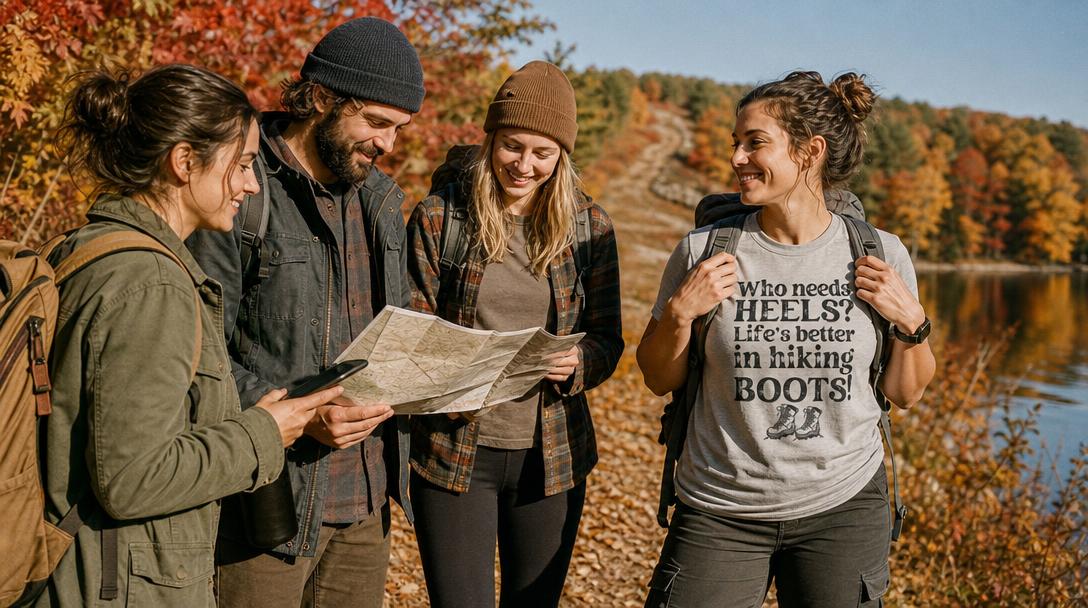
If your trail is mostly maple and birch, aim closer to the classic peak window. If it has lots of oak, you may still get good color after the official peak has passed. If it is mostly evergreens, enjoy your green buddies and maybe wear a casual graphic tee like the Who Needs Heels? hiking shirt so the photos have a little pop.
4. Add Recent Weather: The Wild Card
The best fall colors typically come from:
- Adequate rainfall during the growing season
- Sunny fall days
- Cool, crisp nights
- No hard freeze too early
- Not too much wind or heavy rain during peak week
UF/IFAS Extension notes that ideal autumn color conditions include warm but not hot sunny days, cool but not freezing nights, and adequate but not excessive moisture. Climate Central also notes that drought, extreme heat, heavy rain, wind, and climate change can affect timing and vibrancy.
What hikers should watch in the 2–3 weeks before a trip:
- Drought: can cause leaves to brown or drop early
- Warm fall weather: can delay color
- Hard frost: may dull or shorten peak color
- Wind storms: can strip leaves fast
- Steady rain: can muddy trails and knock down leaves
- Cool nights + sunny days: green light for leaf peeping joy
Translation: do not just check a foliage map. Check recent weather too.
What Are the Best Dates to See Fall Foliage?

The best dates to see fall foliage depend on where you are hiking, how high you are going, and what trees dominate the trail.
Here is an evergreen planning window for U.S. hikers:
| Region | Best General Hiking Window |
|---|---|
| Northern Maine, northern Vermont, New Hampshire highlands | Late September to early October |
| New England, Adirondacks, Catskills, Upper Midwest | Early to mid-October |
| Pennsylvania, Mid-Atlantic, central Appalachians | Mid to late October |
| Shenandoah, Blue Ridge Parkway, West Virginia, Virginia highlands | Mid to late October |
| Great Smoky Mountains, North Georgia, western North Carolina lower elevations | Late October to early November |
| Ozarks and parts of the South | Late October to mid-November |
| North Florida and Panhandle | November |
The trick is to plan a window, not a date.
For a weekend trip, pick a location with elevation variety so you can adjust. For a weeklong fall foliage road trip, move north-to-south or high-to-low as the color wave progresses. If your trip is built around park hopping, Hike Tee’s National Parks by State travel guide can help you compare nearby options before you lock in your route.
The 10-Day Rule for Fall Hiking
If you are booking travel far in advance, use this:
- Pick your target region’s average peak period
- Arrive 3–5 days before predicted peak if you want fresh color and fewer fallen leaves
- Stay through 2–5 days after peak if possible
- Build in one backup hike at higher elevation and one at lower elevation
Peak color is rarely one day. It is usually a stretch, and the best day depends on weather, light, and trail location.
Is There Any Fall Foliage in Florida?

Yes, there is fall foliage in Florida, just not the wall-to-wall maple fireworks you will see in Vermont or the Blue Ridge.
Florida’s best fall color is usually in the Panhandle and North Florida, especially in hardwood forests, river bluffs, and cypress areas. Florida State Parks recommends northern parks such as Torreya State Park, Three Rivers State Park, and Suwannee River State Park for autumn color. Other sources frequently mention Falling Waters State Park and Wekiwa Springs State Park as options, though Central Florida color is more subtle.
Best timing:
- North Florida and Panhandle: late October through November, often strongest in mid-November
- Central Florida: mid to late November, usually lighter color
- South Florida: limited traditional fall color
Trees that can show color in Florida include red maple, Florida maple, sweetgum, blackgum, hickory, persimmon, and bald cypress.
So yes, Floridians can leaf peep. They just do it with fewer scarves and more mosquito awareness.
Best National Parks for Fall Foliage

The best national parks for fall foliage combine colorful tree species, elevation variety, scenic viewpoints, and enough trail options to adjust if you arrive early or late.
Acadia National Park, Maine
Acadia is a classic for coastal fall hiking: ocean views, rocky summits, carriage roads, and brilliant hardwoods. Aim for early to mid-October most years, with higher and inland areas changing before some coastal spots. If you are turning it into a long weekend, use this guide to towns near Acadia for places to stay and explore.
Great hikes and viewpoints:
- Beehive Trail for adventurous hikers
- Jordan Pond Path for easier scenery
- Cadillac Mountain for sunrise, if you can snag a vehicle reservation
- Gorham Mountain for ocean-meets-autumn views
Shenandoah National Park, Virginia
Shenandoah is practically built for fall foliage road trip planning. Skyline Drive gives you quick access to overlooks, while trails drop into hollows or climb to rocky summits.
Best window: usually mid to late October.
Try:
- Hawksbill Summit
- Stony Man
- Dark Hollow Falls
- Marys Rock
Go midweek if possible. Shenandoah in peak foliage can feel like every Subaru east of the Mississippi came home to roost.
Great Smoky Mountains National Park, Tennessee and North Carolina
The Smokies are one of the best late-season foliage bets because of their massive elevation range. High elevations turn first; lower valleys peak later.
Best window: mid-October through early November, depending on elevation.
Try:
- Alum Cave Trail
- Andrews Bald
- Deep Creek Loop
- Little River Trail
- Clingmans Dome area, when conditions allow
Rocky Mountain National Park, Colorado
For golden aspens, Rocky Mountain National Park is a September superstar. The season is earlier than many eastern destinations.
Best window: usually mid to late September.
Look for:
- Bear Lake area
- Bierstadt Lake
- Glacier Gorge
- Kawuneeche Valley
Cuyahoga Valley National Park, Ohio
An underrated Midwest fall color pick with waterfalls, forests, and easy logistics.
Best window: often mid to late October.
Try:
- Ledges Trail
- Brandywine Falls
- Oak Hill Trail
- Towpath Trail sections
Best Fall Foliage Hikes in the US: How to Pick the Right Trail
Instead of chasing a generic best fall foliage hikes in the US list, choose trails using these hiker-specific filters.
Choose Trails With Mixed Hardwood Forest
Look for maples, birches, hickories, oaks, aspens, or sweetgum. Mixed forests create layered color and a longer viewing window because species peak at different times.
Prioritize Viewpoints Facing East or West
For photography and wow-I-live-on-this-planet moments:
- East-facing viewpoints: best around sunrise
- West-facing viewpoints: best near sunset
- Open ridgelines: great color carpets, but wind may strip leaves sooner
- Lakes and ponds: double the color with reflections
Build an Elevation Backup Plan
Pick three hikes:
- High elevation hike if color is late
- Mid-elevation hike if timing is right
- Low valley or river hike if peak has passed up high
This one move can save your trip.
Avoid the Most Crowded Trailheads
Peak foliage crowds are real. To dodge them:
- Start before sunrise
- Hike on weekdays
- Choose longer trails beyond the first overlook
- Use lesser-known side entrances
- Pick state forests near famous national parks
- Have a Plan B parking area
If a trail is famous on Instagram, assume parking will be spicy.
Fall Foliage Road Trip Planning for Hikers and Campers

Book Campsites Early
In popular fall regions, campgrounds and cabins can book months ahead, especially weekends in October.
Planning tips:
- Book national park campgrounds as soon as reservation windows open
- Check nearby national forests for first-come, first-served or dispersed options
- Consider Sunday–Thursday stays for better availability
- Stay 30–60 minutes outside famous parks to reduce cost and crowds
- Have backup private campgrounds or motel options if weather turns ugly
Pack for Cold Mornings and Warm Climbs
Fall hiking loves costume changes. You may start in gloves and end in a T-shirt.
Bring:
- Moisture-wicking base layer
- Fleece or light insulated jacket
- Rain shell or wind shell
- Warm hat and gloves
- Extra socks
- Headlamp with fresh batteries
- Emergency blanket
- Thermos for hot drinks
- Dry sleep layers for camping
For dry campground hangs, roadside overlooks, and post-hike coffee stops, a cotton or cotton-blend graphic tee is a comfortable casual layer, not a technical base layer. A park-inspired option like the Denali National Park shirt fits that easy off-trail part of the trip, while a cozy Another Half Mile sweatshirt can boost camp morale by at least 63%, according to absolutely no peer-reviewed journal but every camper ever.
If your forecast is trending cold, rainy, or windy, pair your foliage plan with these cold weather camping tips for warmer nights.
Plan Around Shorter Daylight
By October and November, daylight disappears quickly, especially in valleys and mountain terrain.
Do this:
- Start earlier than you think
- Download offline maps
- Set a turnaround time
- Keep your headlamp accessible, not buried under snacks
- Save harder hikes for stable weather days
Create a 3-Day Flexible Itinerary
For a long weekend, plan like this:
Day 1: Arrival + low-effort overlook
Drive in, check current color, do a short sunset viewpoint.
Day 2: Main foliage hike
Start at sunrise, hit your best ridge, lake, or summit trail.
Day 3: Backup elevation hike
Go higher if leaves are late; go lower if upper slopes are past peak.
That flexibility is the difference between we missed it and we found the color wave.


