


Breathable Long Sleeve Shirts for Hiking
Dominic PalmowskiDo breathable long sleeve shirts really keep you cool?
Yes — but only when the shirt is built for airflow, not just sun coverage.
That is the part most hikers learn the sweaty way. A long sleeve hiking shirt can absolutely feel cooler than a short sleeve in strong sun because it blocks direct solar radiation from cooking your arms and shoulders. But a poorly built long sleeve can also turn into a damp little greenhouse by mile two.
I have tested this the fun way, the miserable way, and the why-did-I-wear-this way while building Hike Tee and spending real time on hot, exposed trails. The most honest answer is this: breathable long sleeve shirts work when they are light, loose, fast-drying, and designed to let air move. They fail when brands slap the word breathable next to a big UPF number and hope nobody asks what happens once the shirt is soaked with sweat.
The desert tells the truth fast
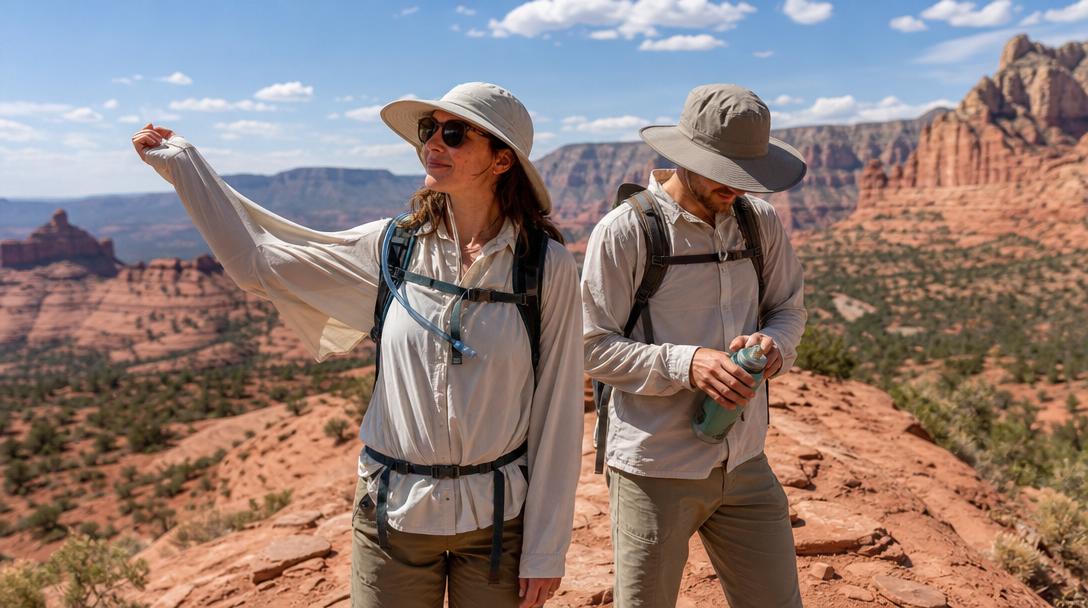
If you want to know whether a long sleeve hiking shirt actually works in heat, take it somewhere with desert sun and no shade cover. Nothing exposes weak gear faster.
A shaded forest trail can make almost any shirt feel fine. Then you step out of the trees onto an exposed ridge in the Southwest at midday, the wind disappears, the climb keeps going, and suddenly the shirt has to prove itself.
The conditions that reveal the truth are usually the same:
- High sun
- Low wind
- Sustained climbing effort
- Little or no shade
- Humidity or repeated sweat loading over several hours
That last one matters. A shirt can feel great dry in your living room and become awful once it is fully saturated. I have had shirts that felt soft and promising at the trailhead, then an hour later felt like I was wearing a damp envelope. Not a vibe. Not a feature. Definitely not a trail memory I needed.
The gap between feels fine in shade and feels like a greenhouse in sun is where I have learned the most about hiking shirts.
Why long sleeves can feel cooler than short sleeves
This is the counterintuitive part: bare skin in direct sun is not automatically cooler.
When your arms are exposed, your skin is absorbing solar radiation directly. You might feel a breeze, sure, but your forearms and shoulders are also taking the full heat load from the sun. A good long sleeve shirt acts like portable shade. It keeps that radiation off your skin, which can lower the overall heat your body has to deal with.
The desert hike that changed my mind
One cloudless desert day, I almost talked myself into wearing a short sleeve and just going heavy on sunscreen. Instead, I chose a loose, light nylon long sleeve. Nothing fancy. No thick hood. No big logo patch. Just a simple, airy shirt.
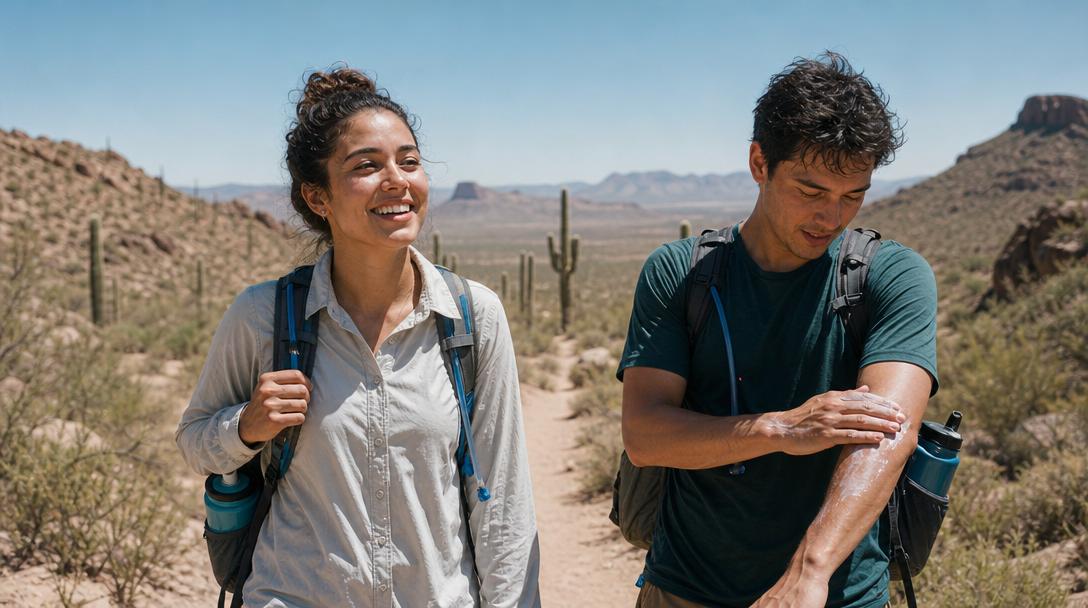
Around mile four, with the sun directly overhead and nowhere to hide, I realized I was more comfortable than I expected. My arms were covered, but they were not roasting. The shirt was blocking direct radiation from hitting my forearms and shoulders, and I could feel the difference.
A friend hiking beside me in a short sleeve was reapplying sunscreen every hour and still said his arms felt hot to the touch. That was the moment the lesson clicked for me: the right long sleeve is not just about avoiding sunburn. It can actually reduce the heat your body absorbs in the first place.
That hike permanently changed how I think about long sleeves in hot weather.
Breathable does not always mean breathable
Here is where outdoor marketing gets a little slippery. Breathable is one of those words that sounds useful but often means almost nothing by itself.
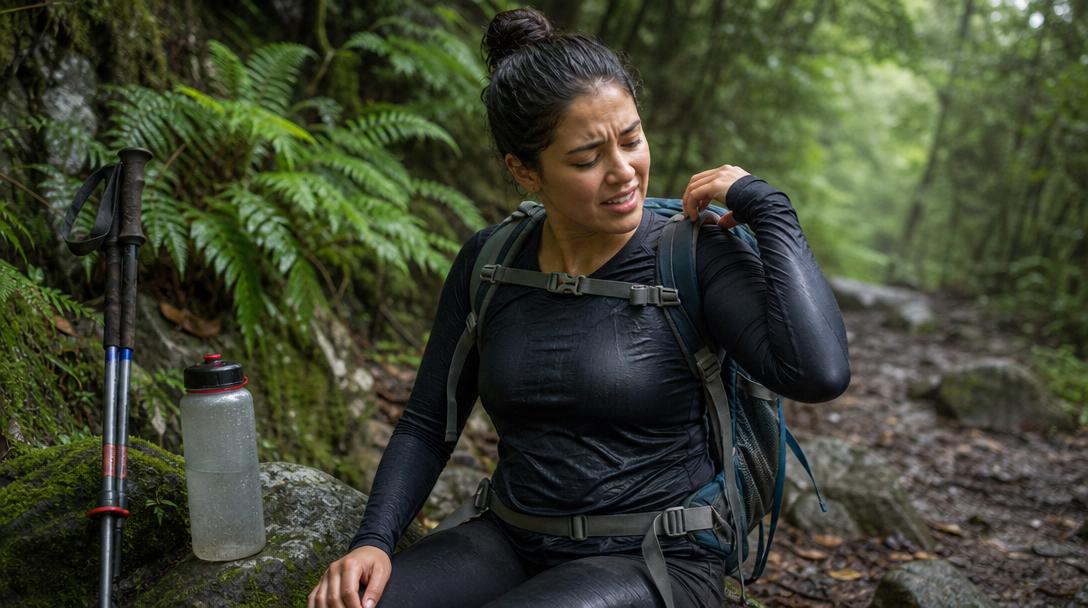
I once wore a long sleeve shirt marketed heavily around its UPF rating. On paper, it looked perfect. In reality, it had a tight weave and a close athletic fit. About an hour into a humid forest section, it was saturated, stuck to my back, and not releasing heat at all.
The problem was not one single thing. It was the whole combination:
- Tight fit pressing wet fabric against my skin
- Dense weave prioritizing sun-blocking over airflow
- Humid air slowing evaporation
- Backpack straps blocking upper-back ventilation
That shirt had a strong sun protection rating, but it felt terrible in real trail heat.
UPF is not a comfort rating
This is one of the biggest mistakes hikers make when shopping for hot-weather shirts: buying only for the UPF number.
UPF tells you how much ultraviolet radiation passes through the fabric. That is useful information. But it does not tell you how much air moves through the shirt, how fast it dries, whether it clings when wet, or whether the cut lets heat escape.
A UPF 50+ shirt can still feel clammy, stiff, and hot if the fabric is dense and the fit is too close. Meanwhile, a simpler, looser shirt with a modest UPF rating may feel much better on a real trail.
Sun protection matters. But airflow matters too.
The fabrics that work best in hot weather
For genuinely hot, exposed hiking, lightweight synthetic fabrics have been the most reliable for me.
Loose nylon and polyester
Loose nylon and loose polyester are usually my first picks for peak heat. They dry fast, do not feel heavy for long, and move well when the construction is simple. I especially like them in desert conditions where sweat can evaporate more easily.
The key word is loose. A lightweight synthetic shirt that hugs your skin can still feel bad once you start sweating. The fabric needs space to breathe.
Merino wool
Merino wool has a place, especially on trips where conditions shift. Cold mornings, warm afternoons, mixed weather, and multi-day trips are where merino shines. It regulates temperature smoothly and handles odor better over several days.
But if I am heading into peak desert heat, a lightweight synthetic usually wins on pure cooling performance.
The hidden trap: dense lightweight fabrics
I have fallen for this more than once. A shirt can be technically lightweight but still have such a dense, structured weave that it blocks air just as effectively as it blocks UV.
That is why I care more about how a shirt feels and moves than the fabric name on the tag. Simple construction and a relaxed cut often beat fancy fabric claims.
If you want a broader breakdown of warm-weather options, I also put together this guide to the best hiking shirts for hot weather.
Fit matters more than most hikers think
If I had to give one beginner tip, it would be this: start with fit before fabric.
A long sleeve hiking shirt should not feel painted on. When you sweat, a tight shirt presses wet fabric against your skin and eliminates the thin channel of moving air that helps you stay comfortable.
A slightly loose shirt creates a small air gap between your body and the fabric. That little space makes a huge difference.
What to look for in fit
A good hot-weather long sleeve should have:
- Room through the shoulders
- Sleeves that are not skin-tight
- A body cut that lifts slightly off your back
- Enough length to stay put under a pack
- No stiff seams in high-friction areas
Sleeve width matters more than people expect. Narrow sleeves trap arm heat and can feel restrictive under pack straps. I also pay close attention to the upper back and shoulders because that is where backpack straps crush airflow and create friction.
What about hoods, collars, and vents?
Hoods can be excellent in serious sun exposure, especially at high elevation or on exposed ridgelines. But a hood needs to be light and shaped well. I have worn hoods that were too heavy or poorly cut, and they became heat collectors on uphill sections.
Collars are underrated. Even a simple collar can shade your neck without adding much warmth.
Vents are useful when they are placed intelligently. Quarter-zips, back yoke vents, and mesh side panels can help — unless your backpack straps cover them completely. Trail design reality check: if the vent lives directly under your pack, it may not do much when you need it most.
Long sleeves vs. short sleeves plus sunscreen
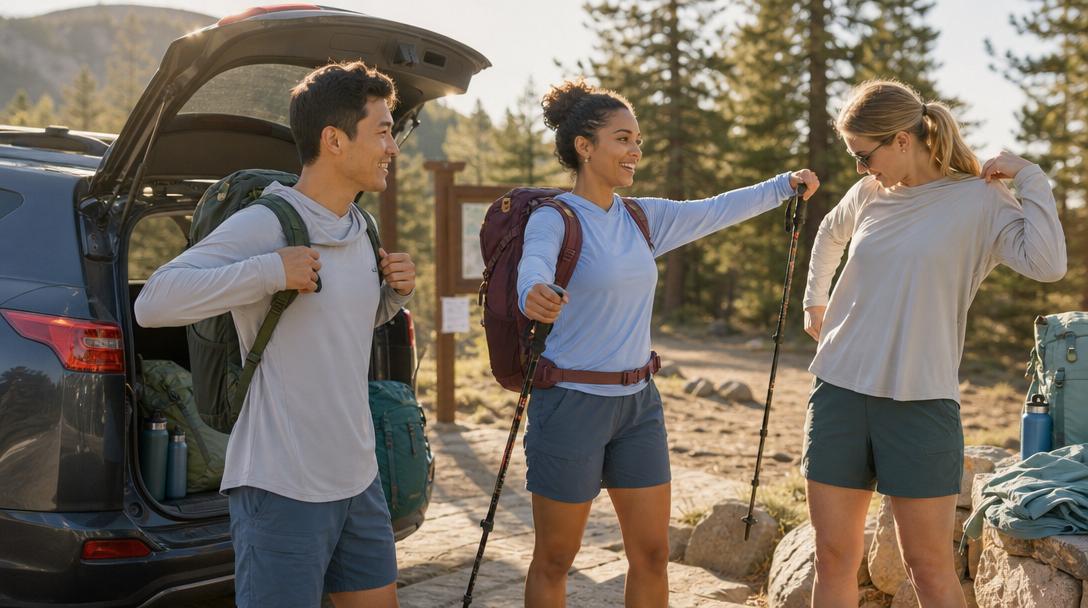
I have gone back and forth on this one over the years. My current answer: in strong exposed sun, the right long sleeve usually wins.
Short sleeves plus sunscreen can work, especially in shade, mild temperatures, or casual hikes. But sunscreen has its own annoyances. You have to reapply it, you miss spots, sweat moves it around, and your skin still absorbs direct heat from the sun.
A loose long sleeve gives you:
- Consistent sun coverage
- Less sunscreen hassle
- Bug protection
- Brush protection
- Reduced solar heat load on your skin
The long sleeve loses quickly, though, if the shirt is too tight, too dense, or too slow to dry. Sleeve length is almost secondary to how the shirt is built.
For a wider look at picking shirts by trail type, this guide on how to choose the best shirts for hiking goes deeper into matching your gear to your adventure.
When I choose long sleeves without thinking twice
There are certain hikes where I do not debate it anymore.
Exposed ridgelines
If I know I will be above tree line or walking an open ridge, I want coverage. Direct sun plus wind can trick you. You may not feel hot right away, but the UV exposure adds up fast.
Desert hikes with no shade
This is the classic long sleeve situation. The right shirt acts like wearable shade and saves you from the constant sunscreen cycle.
Bug-heavy trails
Mosquitoes and biting flies can ruin a hike faster than a wrong turn. Long sleeves are not perfect armor, but they help.
Multi-day trips
This is the one people underestimate. On a single afternoon hike, a little extra sun exposure may not feel like a big deal. On a four-day trip where you are outside from morning to evening, it compounds. By day three, good sun coverage can be the difference between feeling steady and feeling cooked.
High elevation
Higher elevation means stronger UV, thinner air, and fast temperature swings. A breathable long sleeve can work as both sun protection and a light layer when wind picks up.
How to tell if a shirt is breathable before buying
You cannot fully know until you sweat in it, but there are clues.
Good signs
Look for:
- Thin fabric that does not feel fragile
- A relaxed cut
- Some visible openness in the weave
- Lightweight construction
- Quarter-zips or real venting details
- Soft seams that will not rub under a pack
- Fabric that lifts off the skin instead of clinging immediately
If you can try it on, swing your arms like you are using trekking poles. Reach forward like you are adjusting a pack strap. If the shoulders pull or the back sticks tight, it may feel worse on trail.
Claims to question
Be skeptical of:
- Breathable with no explanation
- UPF as the only major selling point
- Slim-fit sun shirts marketed as ultralight
- Thick hoods that feel built for fishing boats, not hiking climbs
- Heavy logo patches or stiff seams in pack zones
A shirt can have a great spec sheet and still feel awful once it is soaked.
The sweat test nobody talks about
A lot of shirts feel fine when dry. The real question is: what happens when they are wet?
A good hiking shirt should not become heavy, clingy, or cold in a gross way once saturated. It should still move with you and start drying as soon as conditions allow.
Humidity changes the whole equation. A shirt that performs beautifully in dry desert heat can feel miserable in humid eastern forest trails because evaporation slows down. That does not mean the shirt is bad. It means climate matters.
If you mostly hike in humid forests, prioritize looseness, venting, and fast drying even more. If you hike in dry heat, sun blocking and evaporative cooling may work more in your favor.
Where casual cotton tees still fit in
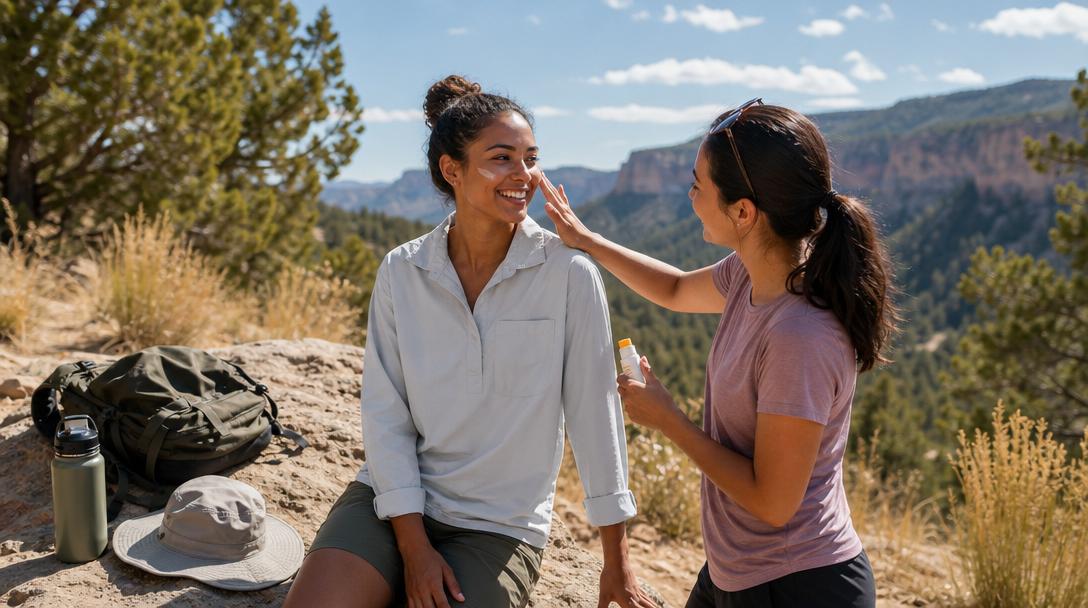
Technical long sleeves are the better choice for hot, exposed hiking. But I still love a good casual tee for camp, travel days, town stops, and easy shaded strolls where performance is not the main event.
Cotton is comfortable, familiar, and perfect when you are not depending on it to manage sweat for hours. It is just not my first choice for exposed heat, long climbs, or backpacking days where staying dry matters. If you are curious about the pros and cons, I wrote more on whether cotton shirts are good for hiking and why cotton can be bad for hiking.
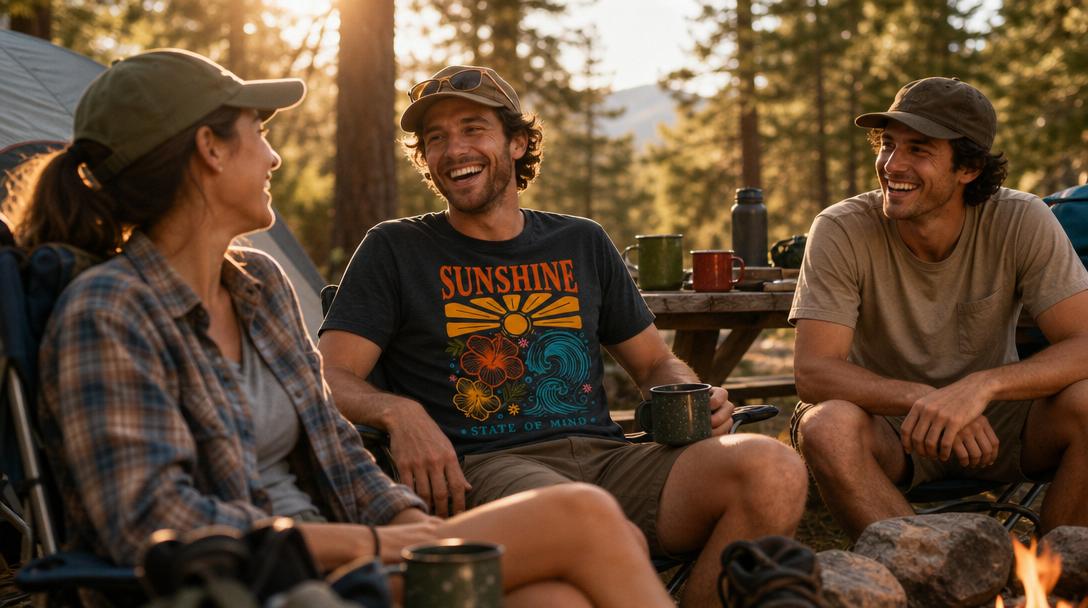
This is where Hike Tee lives comfortably: fun outdoor shirts for the parts of adventure where you are hanging at camp, grabbing post-hike food, or pretending you are only going one more mile. A few easy favorites are the One More Mile Shirt, the Hike More, Worry Less Bigfoot Shirt, and the Sunshine Summer Shirt. Not technical desert armor — just comfy trail-loving personality.
Biggest mistakes hikers make with hot-weather long sleeves
Mistake 1: Buying only for UPF
UPF matters, but it is not the whole story. A high-UPF shirt with poor airflow can feel hotter than a looser, simpler shirt with a lower rating.
Mistake 2: Choosing athletic fit for hot weather
A trim fit might look sharp in product photos, but on a sweaty climb it can trap heat. For hot-weather hiking, a little room is your friend.
Mistake 3: Ignoring backpack interaction
Shoulder seams, back vents, and fabric stretch all behave differently once you add a loaded pack. If a shirt vents beautifully without a backpack but everything gets blocked under straps, that benefit disappears.
Mistake 4: Assuming one climate equals all climates
Dry desert heat and humid forest heat are not the same problem. Buy for where you actually hike, not just what a review praised somewhere else.
Mistake 5: Not testing before a big trip
Do not make your first real test a four-day backpacking trip. Wear the shirt on a local sweaty hike first. Find out if it clings, chafes, or dries slowly before you are committed.
My beginner buying advice
If you are buying your first hot-weather long sleeve hiking shirt, keep it simple.
Prioritize:
- Loose fit
- Lightweight fabric
- Fast drying
- Roomy shoulders
- Comfortable collar or hood
- Minimal seams under pack straps
- Real venting if possible
Avoid:
- Tight performance fits
- Heavy sun hoodies with dense hoods
- Stiff seams and thick logo placements
- Shirts that only talk about UPF
- Fabrics that feel dense, rubbery, or overly structured
If you choose something light, loose, and simply constructed, you will already be ahead of where most people start.
FAQ
Are long sleeve shirts hotter for hiking?
Not always. In strong sun, a breathable long sleeve can feel cooler because it blocks direct solar radiation from hitting your skin. But if the shirt is tight, dense, or slow to dry, it can feel hotter than a short sleeve.
Is UPF 50+ always best for hot-weather hiking?
UPF 50+ offers strong sun protection, but it does not guarantee comfort. UPF measures UV blocking, not airflow. A breathable, loose shirt with good ventilation may feel better than a high-UPF shirt with a tight weave.
What fabric is coolest for hiking in summer?
For peak heat, lightweight nylon or polyester usually performs best because it dries quickly and moves well. Merino wool is great for mixed conditions and multi-day odor control, but synthetics often win in hot, exposed desert conditions.
Should a hiking sun shirt be loose or fitted?
Loose is usually better for hot weather. A relaxed fit creates a small air gap between your skin and the fabric, which helps heat escape. Tight shirts tend to cling when sweaty and reduce airflow.
Are hooded sun shirts good for hiking?
They can be excellent for exposed trails, high elevation, and desert sun. Just make sure the hood is lightweight, comfortable, and not so heavy that it traps heat on climbs.
Can I hike in a cotton long sleeve?
For casual walks, camp, or dry low-effort outings, sure. For sweaty hikes, exposed sun, humid forests, or backpacking, cotton usually holds too much moisture and dries too slowly.
The real answer: yes, if the shirt earns it
Breathable long sleeve shirts can absolutely keep you cooler on hot hikes — but only when the fabric, fit, and construction work together.
The best ones feel like wearable shade. They block sun without trapping heat, dry quickly after sweat, and sit loose enough to let air move. The worst ones hide behind UPF numbers and turn into damp envelopes as soon as the trail gets honest.
So yes, I believe in breathable long sleeves for hiking. I just do not believe every shirt that calls itself breathable. The trail gets the final vote.


