


Best Layering Hiking Shirts: Under and Over
Dominic PalmowskiThe short version: your hiking shirt is the system
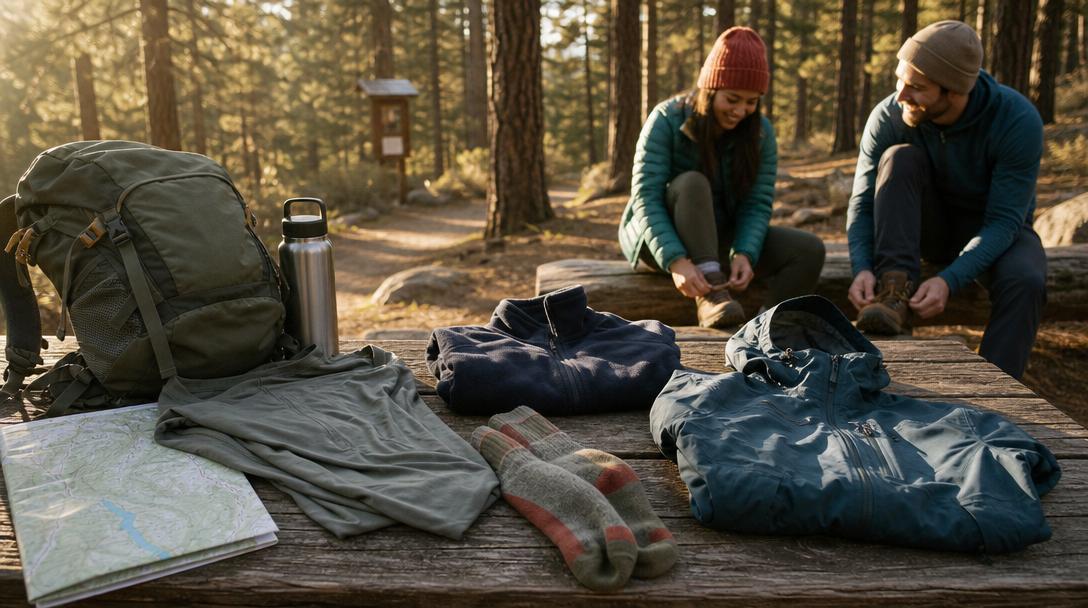
The best layering hiking shirts are not just about the shirt itself. They are about what touches your skin, what you throw over it when the wind gets rude, and what stays dry in your pack until you actually need it.
My default day-hike setup is simple: a lightweight merino or synthetic hiking shirt as my active layer, a packable fleece in my pack, and a rain shell clipped outside or tucked where I can grab it fast. Most of the time, I am hiking in one shirt while moving. The fleece is for summits, snack breaks, cold starts, and those lovely moments when the weather decides to develop a personality.
The trick is not owning ten fancy layers. The trick is knowing when to wear each one.
What goes under a hiking shirt?
Option 1: nothing, because the hiking shirt is the base layer
For most hikes, your hiking shirt should be the layer against your skin. That is especially true in mild or warm conditions. A good hiking shirt should wick sweat, dry reasonably fast, move with you, and not turn into a swampy regret blanket by mile three.
This is why I usually start with either:
- A lightweight merino long-sleeve
- A thin synthetic hiking tee or long-sleeve
- A sun hoodie in warm, exposed terrain
- A nylon button-up when I want airflow and sun coverage
If I am actively climbing, moving fast, or hiking in summer, fewer layers usually means better moisture management. Sweat is the enemy you do not notice until you stop moving. Then suddenly that damp shirt feels like a refrigerated towel someone slapped across your back.
Option 2: thin merino under another shirt
In cooler weather, I like a thin merino crew neck directly against my skin. It handles odor well, feels good across changing temperatures, and keeps me comfortable when I start cold but warm up quickly.
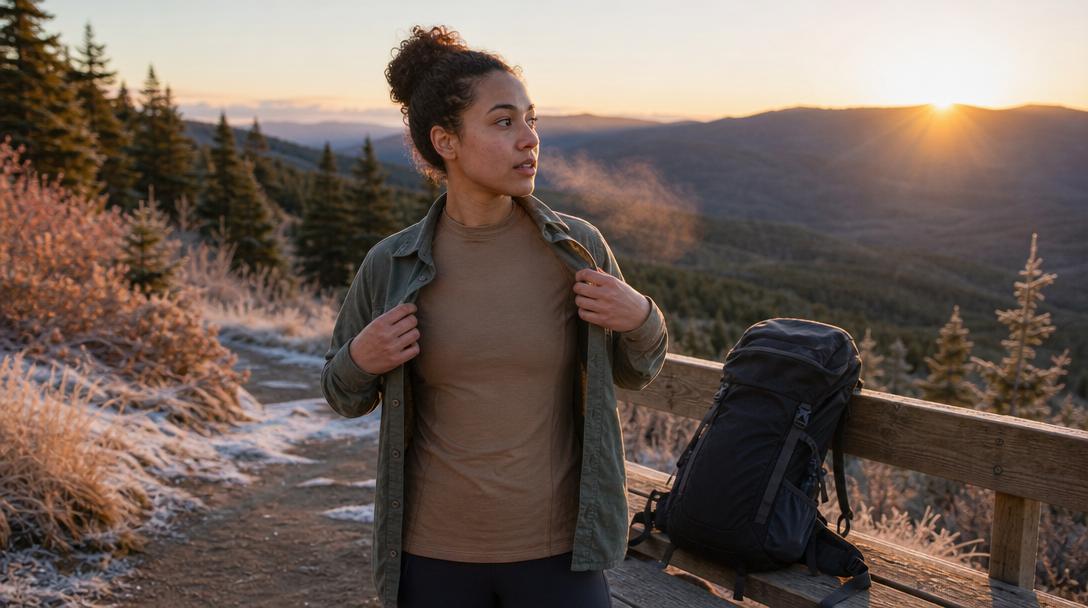
This works especially well for shoulder-season hikes where the trailhead feels like winter at 5:30 AM, but the return hike feels like spring by noon. I had one of those hikes where I started cold enough to see my breath, wearing a lightweight merino base, a thin synthetic fleece, and a wind shell over the top for an exposed ridge. By mile two, the fleece was off. By mile four, the shell was gone too. I finished in just the merino and felt dialed the whole way.
That was the perfect setup because every layer was light and packable. Taking something off took 20 seconds, not a full trail-side garage sale.
Option 3: a merino tank for people who run hot
If you run warm but still want a real base layer, a thin merino tank can be a sneaky-good solution under a hiking shirt. It gives you a little moisture regulation without adding much warmth. Then, when you stop, you can add fleece or a shell without feeling like you are trapped in a personal sauna.
What goes over a hiking shirt?
Packable fleece: the most useful midlayer
A lightweight fleece is probably the best first layer to add over a hiking shirt. It is breathable, forgiving, usually affordable, and useful in more conditions than people give it credit for.
But here is the important part: I do not hike hard in my fleece unless it is truly cold. For normal day hikes, that fleece is for breaks, summits, slow sections, and cold starts.
I learned this the sweaty way. On a summer hike that started at a cool, shaded trailhead, I decided to keep my fleece on because it felt comfortable. Within 45 minutes, I was soaked. The fleece was saturated, my base layer was wet, and then I hit an exposed windy section. Suddenly I was shivering in summer because I had basically built myself a cold sponge suit.
Lesson burned into my brain: never hike in your midlayer when you are working hard if you are starting to sweat. Take it off early.
Rain shell: not just for rain
A good shell is your weather insurance. I bring one on almost every day hike, especially at elevation. Even if the forecast looks perfect, ridgeline wind at 9,000 feet does not care about your weather app.
A rain shell also doubles as a wind layer, which is why I usually do not carry both a wind shirt and a rain jacket for ordinary day hikes. If the forecast calls for real rain, the shell goes on early and the fleece stays dry in the pack. A wet fleece is not a midlayer anymore. It is laundry with sleeves.
Softshell: excellent in cold, dry wind
Softshells are underrated when conditions are cold, dry, and windy. They breathe better than most hard shells and block wind well enough for exposed trails. I like them when rain is unlikely but the air has bite.
The catch: if rain is actually in the forecast, I switch back to a proper waterproof shell. A softshell can handle mist, light snow, and wind, but it is not my first pick for steady rain.
Puffy jacket: great for stops, not hard climbs
A puffy is useful in cold conditions, backpacking, winter hiking, or long summit hangs. But for many day hikes, beginners buy one too early and then leave it in the car.
Also, I avoid putting a heavy puffy over a damp synthetic hiking shirt in rain. If moisture gets into the insulation, you lose warmth and carry useless bulk. Puffy jackets are excellent when used right, but they are not a magic layer that fixes poor sweat management underneath.
Best hiking shirt fabrics for layering
Merino wool
Merino is my favorite for cooler weather, shoulder seasons, and multi-day trips. It regulates temperature well, resists stink better than synthetic, and stays comfortable across a wide range of conditions.
I have one merino long-sleeve that has been on more hikes than I can count. It still holds its shape, has avoided the worst pilling, and does not develop that permanent synthetic funk some cheaper shirts do. Treat merino reasonably and it can earn a permanent place in your hiking drawer.
Best for:
- Cool mornings
- Shoulder season
- Multi-day trips
- Lower-output hikes
- Hikers who care about odor control
Synthetic hiking shirts
Synthetic shirts shine in hot, sweaty conditions where drying time matters most. They usually cost less than merino, dry fast, and handle repeated abuse well.
The downside is odor. Some synthetics get stinky faster, especially cheaper ones. But for summer hikes where I know I will be sweating hard, I often choose synthetic because it dries quickly and does not feel heavy.
Best for:
- Hot weather
- High-output hikes
- Budget setups
- Humid trails
- Fast drying after rain or sweat
Nylon button-ups
Nylon hiking button-ups are excellent for sunny, exposed terrain. The biggest advantage is venting. You can open a few buttons, roll sleeves, pop the collar, and fine-tune airflow in a way pullovers cannot match.
I like them for desert trails, ridgelines, buggy areas, and technical terrain where sun protection matters but I still want options.
Best for:
- Exposed sunny hikes
- Desert or alpine terrain
- Adjustable ventilation
- Bug protection with long sleeves
Sun hoodies
Sun hoodies are the underrated workhorse of warm-weather hiking. They give you sun protection, light wind block, neck coverage, and comfort in one easy piece. If you hate constantly applying sunscreen or hiking with your neck exposed, a sun hoodie can simplify your whole system.
Best for:
- Warm sunny hikes
- Long exposed trails
- High UV conditions
- Minimalist layering
Where cotton and casual tees actually fit
Cotton is not my pick for serious hiking layers. It holds moisture, dries slowly, and can go from comfortable to sketchy fast when weather changes. If you want the deeper breakdown, these explain it well: Are Cotton Shirts Good for Hiking? and Why Is Cotton Bad for Hiking?.
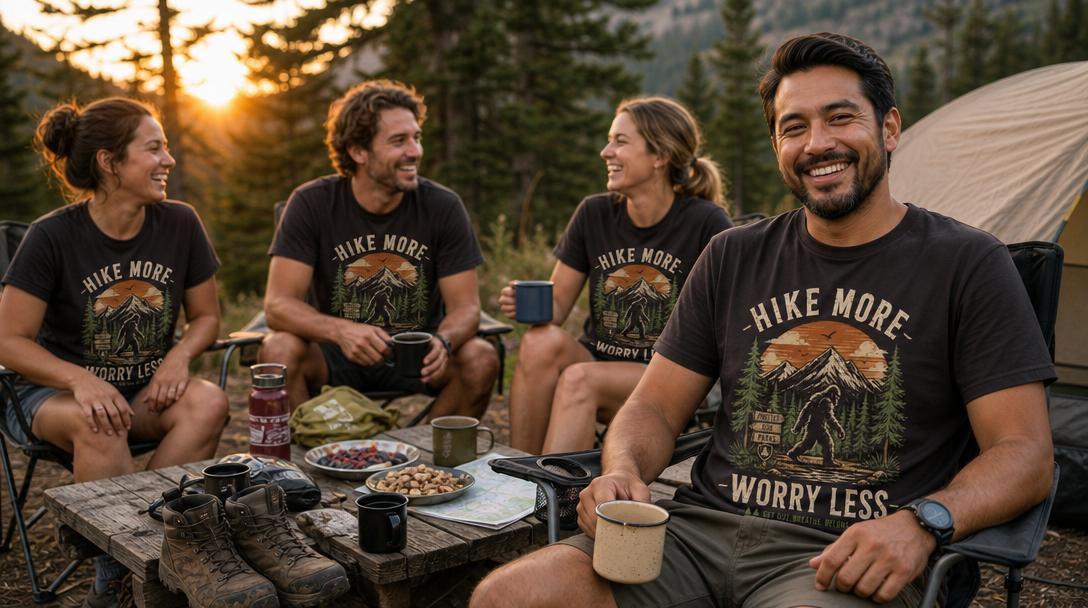
That said, I still love a good casual outdoor tee for camp, travel days, easy campground walks, and post-hike burgers. That is where fun shirts belong: after the sweaty climb, not under a rain shell during a storm.
A shirt like the One More Mile Shirt is perfect for the trailhead coffee stop or relaxing after a hike. Same with the Hike More, Worry Less Bigfoot Shirt, which has strong camp-chair energy in the best way. If you like outdoorsy shirts with personality, you might also enjoy these ideas for funny hiking quotes for shirts or this list of hiking shirt gift ideas.
My rule: technical fabrics for the hike, cotton and graphic tees for the good parts after the hike when snacks are involved.
My go-to layering systems by condition
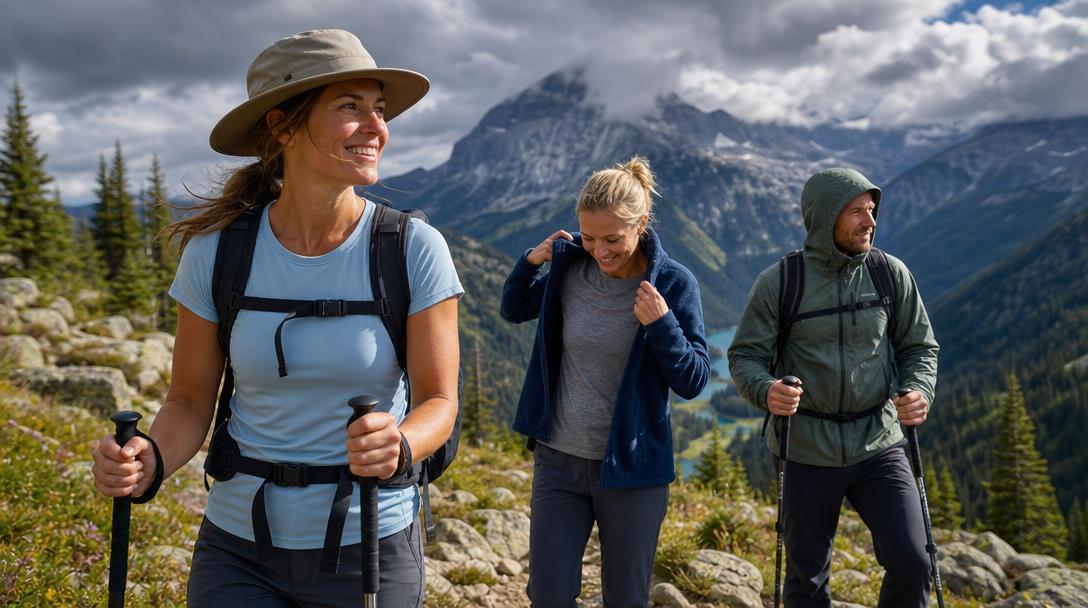
Hot summer day hike
Start with:
- Thin synthetic tee or sun hoodie
- Lightweight hiking pants or shorts
- Hat and sunglasses
Pack:
- Rain shell if storms are possible
- Very light fleece only if elevation or evening temps justify it
On hot days, I care most about sun protection and drying time. A sun hoodie can replace sunscreen on your neck and arms, while a synthetic shirt handles sweat better during steep climbs.
Cool shoulder-season hike
Start with:
- Lightweight merino long-sleeve
- Thin fleece if the morning is cold
Pack:
- Rain shell or wind shell
- Gloves or beanie if exposed
This is my favorite layering weather because small adjustments make a huge difference. Start warm, then shed layers before you sweat.
Cold but dry windy hike
Start with:
- Merino base layer
- Light fleece or grid fleece
- Softshell if wind is constant
Pack:
- Rain shell if conditions could change
- Puffy for long stops if it is truly cold
Softshells are great here because they breathe better than hard shells. Just do not treat them like full rain jackets.
High-elevation hike
Start with:
- Merino or synthetic hiking shirt depending on temperature
Pack:
- Fleece
- Rain shell, always
- Optional puffy if the summit will be cold
At elevation, bring the shell even if the forecast is cheerful. Wind, storms, and temperature swings can show up quickly.
Rainy day hike
Start with:
- Synthetic or merino base layer
- Rain shell early
Pack:
- Dry fleece protected inside your pack
- Extra dry layer if conditions are cold
The goal is to keep insulation dry. Do not let your fleece soak under a leaky shell if you can avoid it.
Fit details that matter more than people think
Shoulder seams
Seam placement can make or break a hiking shirt. A seam sitting directly under a backpack strap for ten miles can ruin your day. Look for flat seams, offset shoulder seams, or designs that do not rub under load.
Sleeve length
Reach forward like you are grabbing trekking poles or scrambling over a rock. If the sleeves ride up and expose your wrists constantly, it will annoy you all day. Same with shirts that lift at the lower back when you move.
Thumb loops
I used to think thumb loops were a tiny feature. Now I appreciate them, especially in cool wind. They keep sleeves in place without fiddling and add a little hand coverage when gloves feel like overkill.
UPF rating
I care about UPF more now than I did when I was younger. Exposed ridgeline sun adds up fast, and a UPF-rated shirt is easier than constantly reapplying sunscreen to your shoulders, neck, and arms.
Packability
If a layer is annoying to remove or too bulky to stash, you will delay using it. That is how people end up sweaty, cold, or both. The best layering pieces disappear into your pack until needed.
How to manage layers while hiking
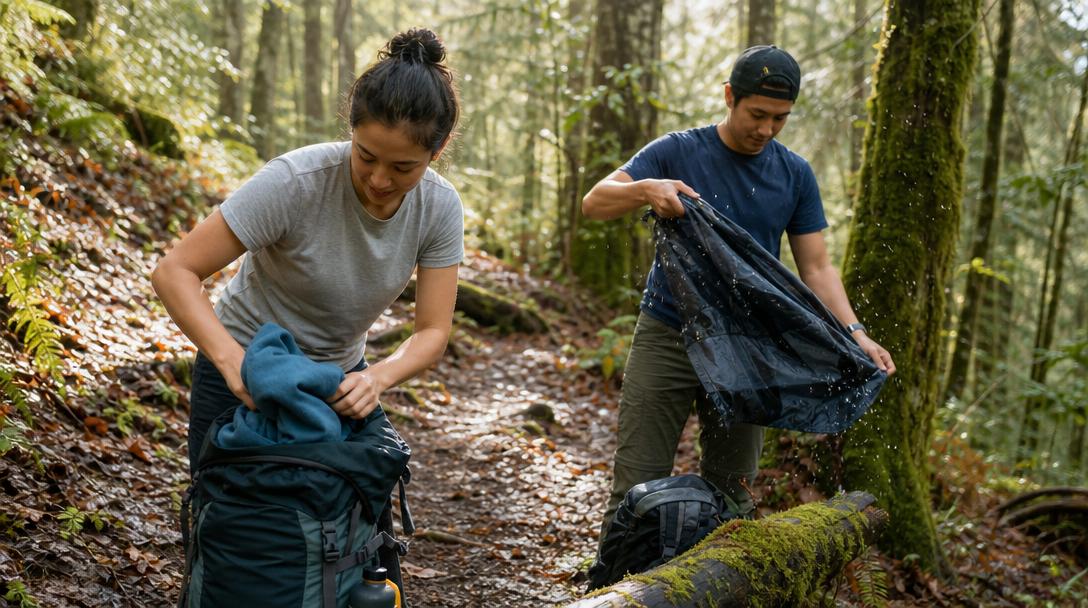
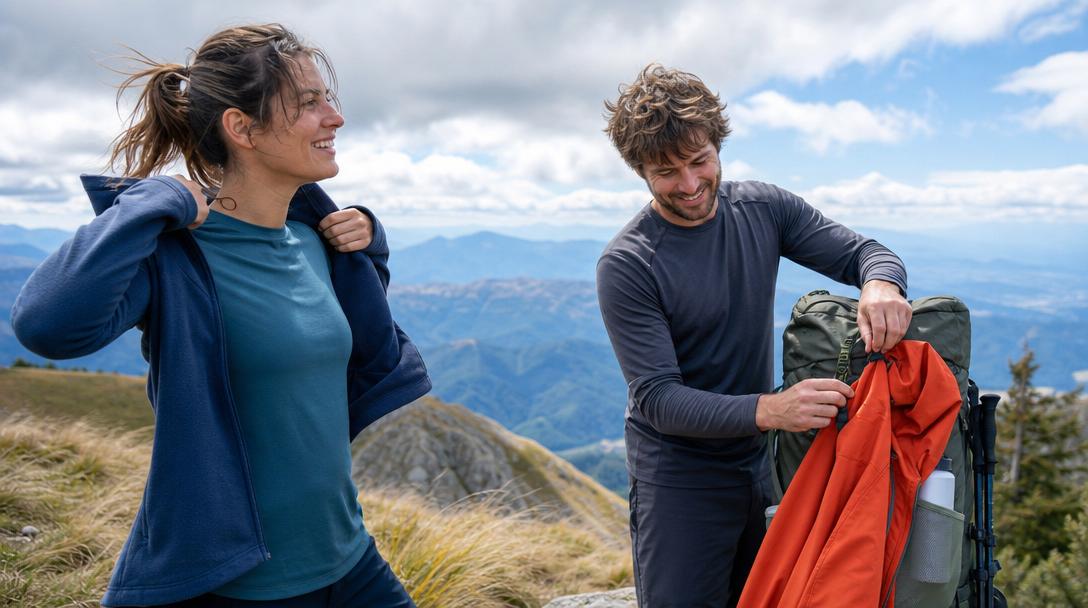
My main rule: if I think I might be getting warm, I take a layer off before I actually feel hot.
Once you are sweating heavily into a layer, the damage is already done. When you stop, that moisture turns cold fast. I would rather pause for 20 seconds to shed a fleece than spend 20 minutes shivering because I was stubborn.
At breaks and summits, I do the opposite. I add a layer immediately, even if I feel fine. Your body cools down faster than expected once you stop generating heat.
After rain, I shake out my shell and let it air while I eat or rest. A wet shell packed against dry layers will slowly make everything damp, and damp gear has a way of spreading misery through your pack.
Budget layering system for beginners
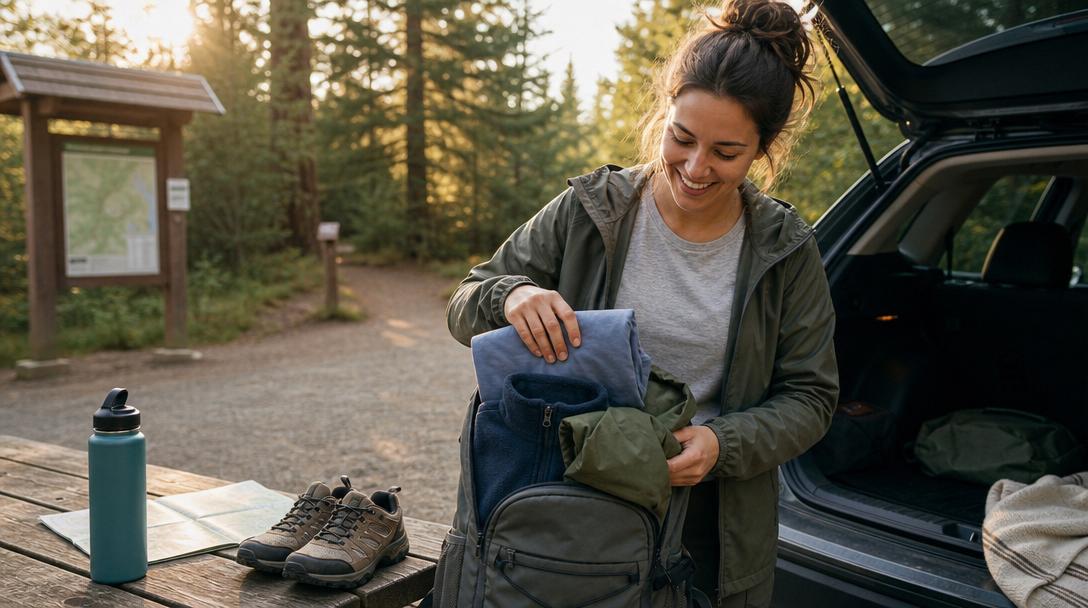
If you are building your first hiking shirt layering system, do not buy everything at once.
Start with:
- One good synthetic hiking shirt
- One cheap fleece
- One reliable rain shell
That setup covers a lot of day hiking. Your synthetic shirt does not need to be expensive. It just needs to not be cotton, fit well under a pack, and dry reasonably fast. There are solid options under forty dollars.
For the midlayer, thrift-store fleece can work surprisingly well. Fleece is forgiving, breathable, and useful almost everywhere.
Skip the expensive puffy until you know what conditions you actually hike in. A lot of beginners spend big money on insulation they rarely use. Build your system piece by piece based on real trails, not a perfect gear list someone wrote from a couch.
Also, be suspicious of gear that promises to do everything. I once bought an insulated softshell that seemed like the perfect all-in-one layer. It was too warm to hike in, too thin to replace a true midlayer in cold, and too bulky to pack well. It did everything badly, which is not the kind of versatility I am after.
FAQ: hiking shirt layering
What is the best shirt to wear as a hiking base layer?
A lightweight merino or synthetic hiking shirt is usually best. Merino is better for odor control and cooler conditions, while synthetic is better for hot, sweaty hikes where fast drying matters.
Should I wear something under my hiking shirt?
Usually, no. Your hiking shirt can be your base layer. In colder weather, a thin merino layer under another shirt or fleece can work well. If you run hot, consider a thin merino tank instead of adding bulky warmth.
Is fleece good over a hiking shirt?
Yes, fleece is one of the best midlayers over a hiking shirt. Just avoid hiking hard in it if you are starting to sweat. Use fleece for cold starts, breaks, summits, and slower sections.
Should a rain shell go over fleece or directly over a shirt?
It depends on the temperature and rain. In steady rain, I often put the shell over my hiking shirt and keep the fleece dry in my pack. If it is cold, fleece under the shell may be necessary, but protect it from soaking.
Are sun hoodies good for layering?
Yes. Sun hoodies are excellent warm-weather base layers. They provide sun protection, light wind coverage, and comfort without needing extra accessories for your neck and arms.
What hiking layer should beginners buy first?
Buy one good non-cotton hiking shirt first, ideally synthetic if you are on a budget. Then add a simple fleece and a rain shell. That basic system covers most day hikes.
Final trail-tested advice
The best layering hiking shirts are the ones you actually adjust during the hike. Light, breathable, packable layers beat bulky do-everything pieces almost every time.
Start cool enough that you will not sweat through everything in the first mile. Add warmth the moment you stop. Keep insulation dry. Respect wind at elevation. And never trust a trailhead temperature to tell you how the whole hike will feel.
Your perfect system might be merino plus fleece plus shell, or synthetic plus sun hoodie plus rain jacket. Either way, the goal is the same: stay dry, stay comfortable, and avoid becoming a shivering lesson in moisture management.


