


Wildlife Sweatshirt Guide: Pick, Wear, and Care for Yours
Dominic PalmowskiYou know the moment. The car door's open, the parking lot's still half asleep, and the morning air bites just enough to make you regret the light layer you grabbed on the way out. A wildlife sweatshirt can be the difference between feeling pleasantly rugged at the trailhead and spending the first mile doing the cold shuffle while everyone else is already drinking in the view.
That's why this category deserves more than gift-shop treatment. A good one has personality, sure, but it also has to work for real life, like damp benches, breezy overlooks, and that awkward in-between weather where a shell feels like too much and a tee feels like a joke. The sweet spot is simple, a sweatshirt that looks like you belong outside and behaves like it, too.
Table of Contents
- What a Wildlife Sweatshirt Actually Is
- How to Choose the Right Materials and Construction
- Matching Sweatshirt Style to Climate and Activity
- Layering and Styling for Trails and Everyday Wear
- Why Wildlife Graphics Matter Beyond the Look
- Reading Between the Lines on Conservation Giveback
- Care, Packing, Gifting, and Ordering Tips
What a Wildlife Sweatshirt Actually Is
The first time I really appreciated a wildlife sweatshirt was on a shoulder-season hike when the overlook wind cut straight through my shirt like it had a personal grudge. I'd thrown on a pullover with a bear graphic because it looked fun. It turned out to be the only reason I stayed comfortable long enough to finish my coffee and enjoy the view instead of retreating to the car.
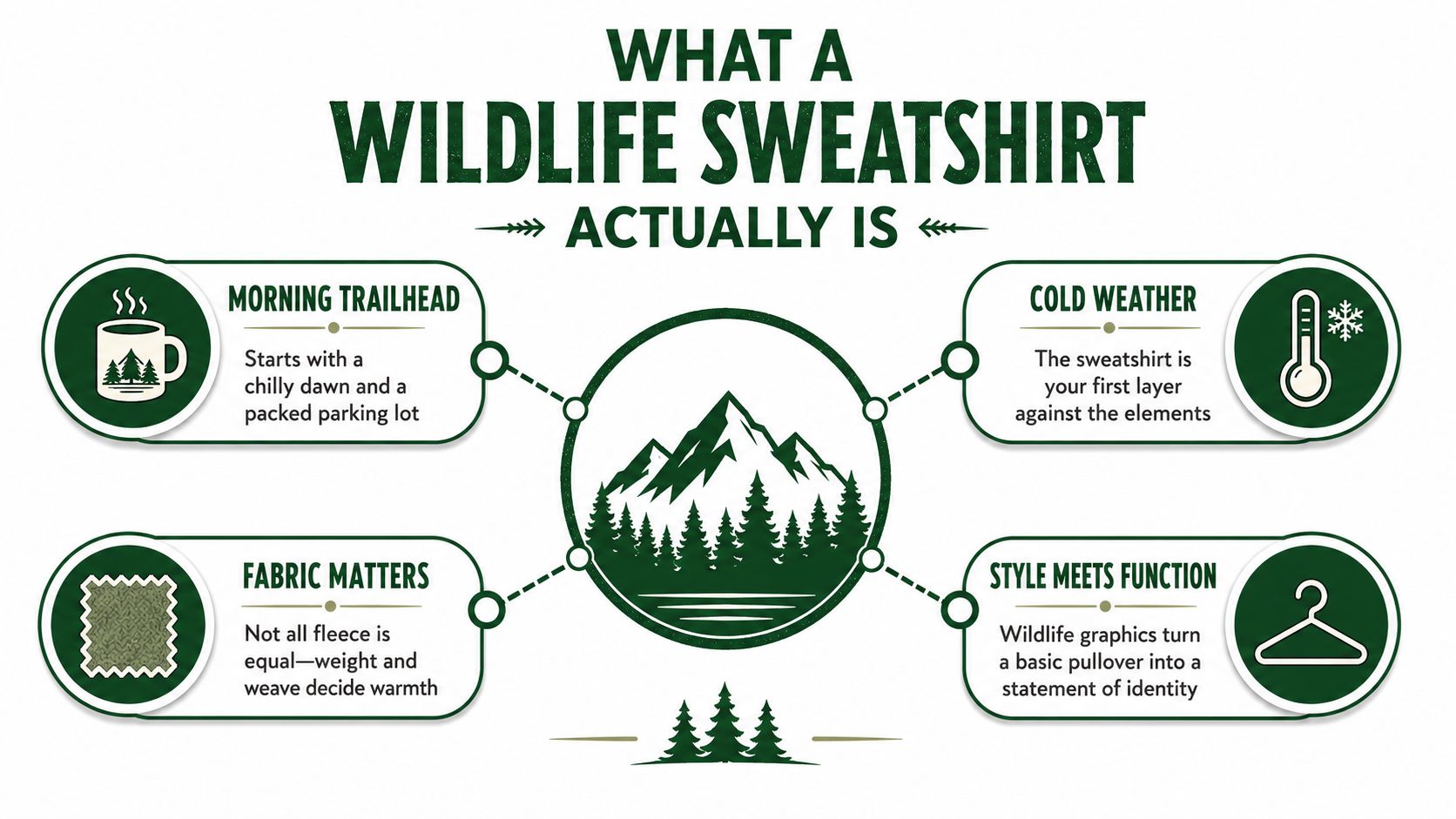
At its simplest, a wildlife sweatshirt is a pullover or hoodie with animal motifs or nature-themed graphics. Think bear, moose, elk, bison, raccoon, deer, bigfoot, and the usual trail-side suspects, plus anything that feels rooted in wild places rather than city streetwear. It sits between a technical mid-layer and a camp cozy, which is exactly why it's become such a useful part of a hiker's off-duty uniform.
Where it fits in real outdoor life
A wildlife sweatshirt usually serves two audiences at once, the person who wants the animal graphic and the person who wants something warm enough for a cool dawn start. That overlap matters. The U.S. Fish and Wildlife Service reported 148.3 million wildlife watchers in 2022, with $250.2 billion in total spending, including $118.6 billion on equipment and $42.1 billion on trip-related spending, and 77% of wildlife watchers spent money on their hobby (U.S. Fish and Wildlife Service survey). In other words, this isn't a tiny novelty crowd, it's a big outdoor audience that already buys gear tied to nature.
Practical rule: if the sweatshirt only looks good on a couch, it's merch. If it still feels right when the wind picks up at the trailhead, it earns its keep.
That's the lane for this category. It's not trying to replace a hard-shell or a fleece that lives in your pack all season. It's the piece you reach for when you want comfort, identity, and enough insulation to stay out a little longer.
How to Choose the Right Materials and Construction
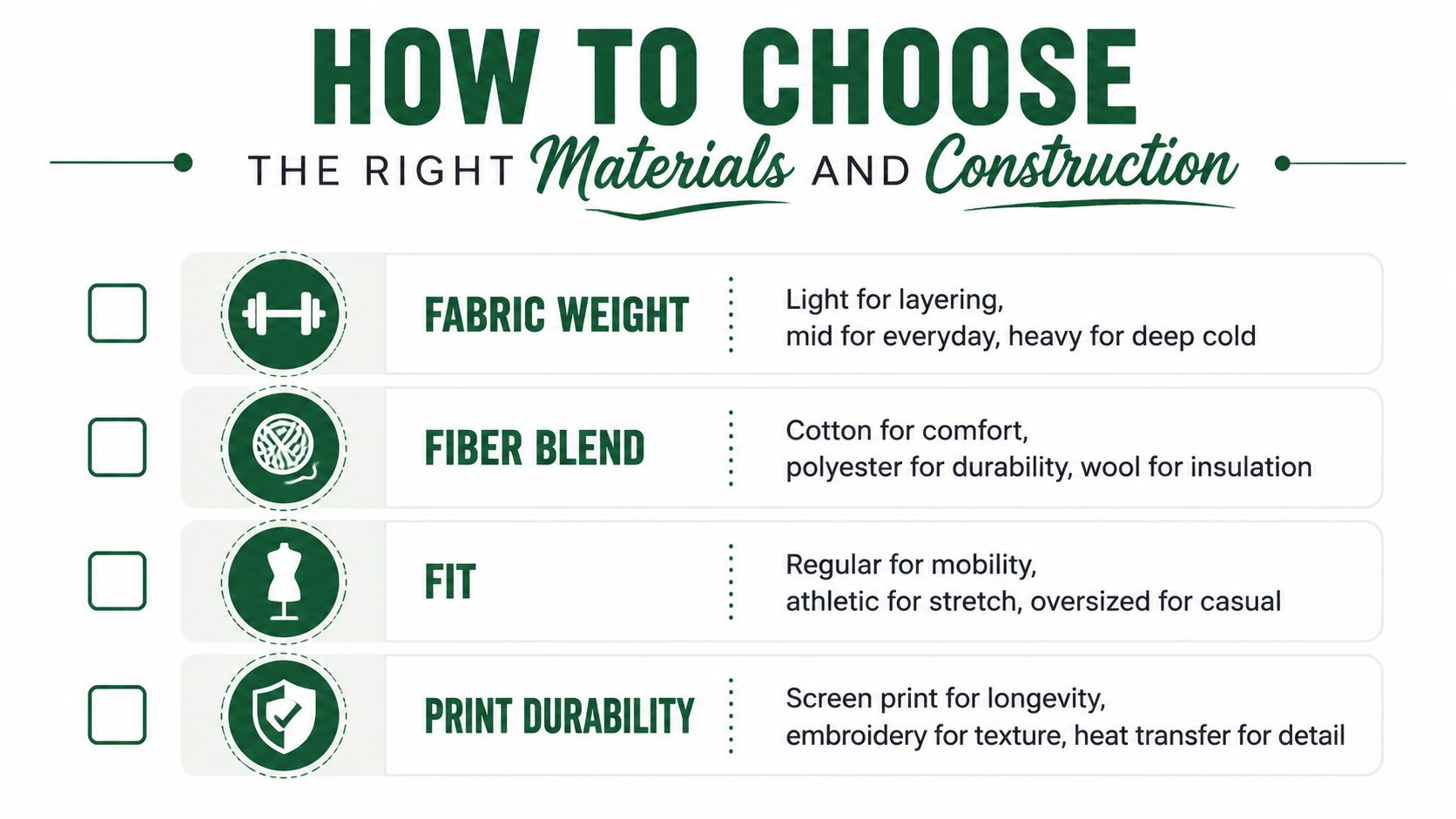
A wildlife sweatshirt can look perfect online and still feel wrong the second you put it on. The fix is to shop with four filters in mind, fabric weight, fiber blend, fit, and print durability. Those are the specs that tell you whether a piece will work for trail-to-town life or just look cute hanging in a closet.
Start with fabric weight and blend
For light outdoor use, a useful benchmark is 8.0 oz/yd² (271 g/m²) 50/50 cotton-poly fleece (product construction reference). The cotton side gives that familiar soft feel, while the polyester helps with stability, warmth retention, and faster drying than all-cotton fleece. That's why this weight works so well for cool mornings, campfire hangs, and travel days when you want warmth without wearing a duvet.
If you see a heavier fleece, expect more insulation and a little more bulk. If the piece is much lighter, it may layer better but won't have the same cozy punch when the temperature drops. The right answer depends on your climate, not the marketing photo.
Check fit details that affect wearability
Classic fit sounds boring until you've worn a sweatshirt that bunches under a backpack strap. A cleaner fit keeps the torso from ballooning, and a tear-away label matters more than people think when you're wearing the same layer all day. Add a double-lined hood, and you get a bit more structure plus less floppiness when the wind comes through.
If you're also comparing quality blanks, the roundup on finding premium hoodie blanks is a useful reference point because it helps you think beyond the print and into the actual garment underneath.
Good fleece should feel easy on the body, not precious. If you're thinking about it every ten minutes, it's probably the wrong cut or weight.
Don't ignore print durability
A good wildlife graphic should survive repeated wear without turning into a cracked souvenir. Screen print usually holds up well for bold art, embroidery adds texture, and heat transfer can give detail, but the best choice depends on how much rough use the sweatshirt will see. If you'll wear it under a pack or stuff it in a duffel often, aim for a print that's made to handle abrasion, not just one that photographs nicely.
Matching Sweatshirt Style to Climate and Activity
Style choices look cosmetic until weather and effort level enter the chat. A crewneck, hoodie, and quarter-zip all handle different jobs, and the wrong one can make a simple walk feel fussy. The right one disappears into the day, which is exactly what good layering is supposed to do.
Crewneck, hoodie, or quarter-zip
| Sweatshirt Style | Best For | Layering Strength | Trade-off |
|---|---|---|---|
| Crewneck | Trailheads, travel, casual town stops | Slides cleanly under a shell and doesn't bunch at the neck | Less built-in warmth around the head and ears |
| Hoodie | Cold summits, campfires, lazy mornings | Gives extra warmth and a built-in hood when the wind turns rude | Adds bulk and can feel crowded under some outer layers |
| Quarter-zip | Variable-effort hikes, stop-and-go days | Lets you vent fast without fully shedding a layer | Zipper hardware can feel a little fussy under a pack |
That table is the easiest way to sort the question. If your days swing between movement and standing around, a quarter-zip earns attention. If you want the least complicated option, a crewneck is usually the cleanest layer for shoulder-season hikes.
Match the sweatshirt to the outing
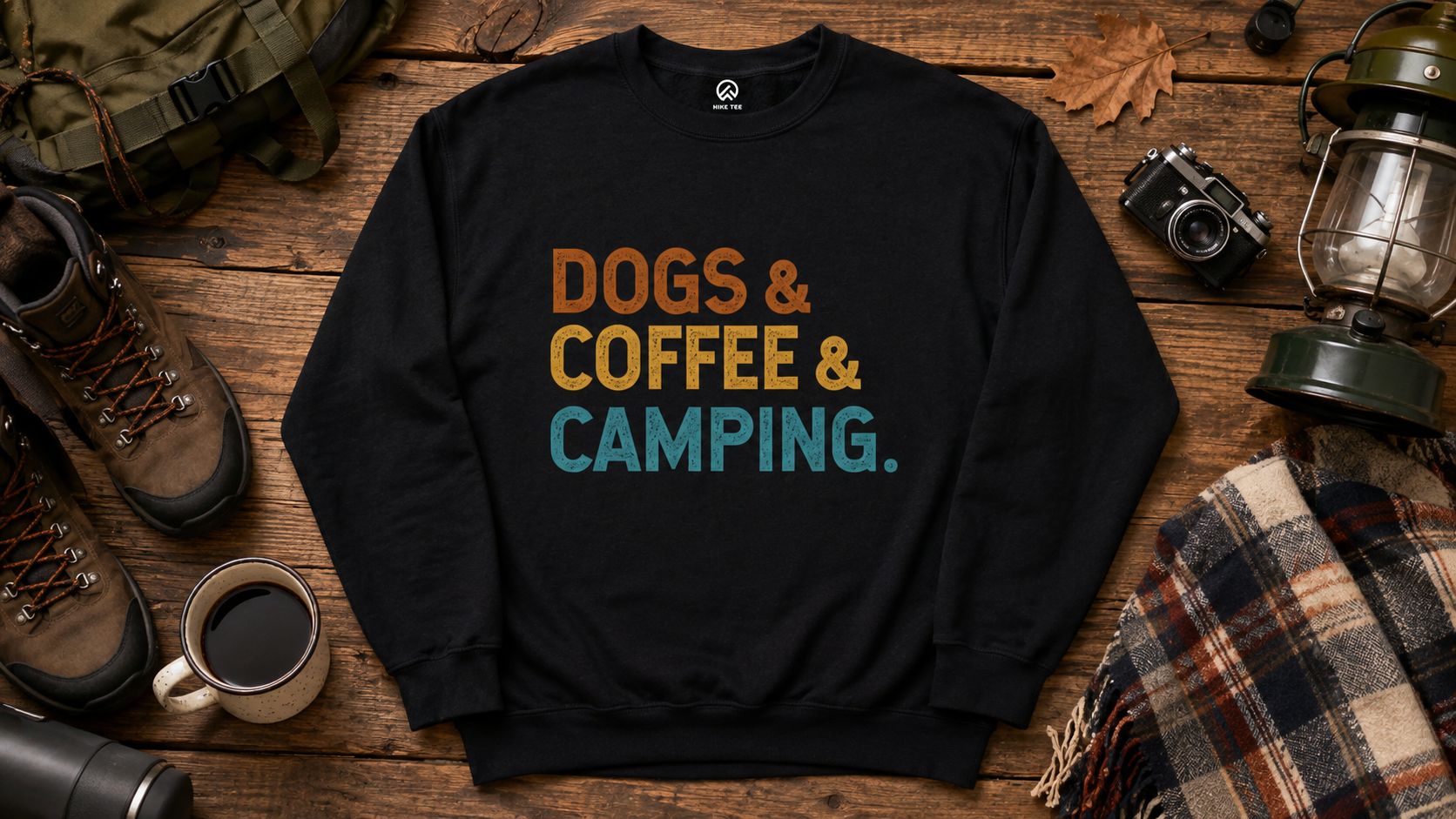
For cool campfires and travel days, the hoodie wins on pure comfort. It's the layer you keep on when the chairs are damp, the coffee's hot, and nobody wants to think too hard. A piece like the Dog & Coffee Camping Sweatshirt fits that lane because it reads as relaxed, cozy, and camp-friendly without pretending to be technical gear.
For general trail use, especially when you're wearing a shell later, crewneck usually packs better and feels less bulky at the collar. Quarter-zips are the compromise pick for people who overheat easily or tend to start cold and finish warm. That's not a flaw, it's just the reality of moving through weather instead of sitting in it.
Layering and Styling for Trails and Everyday Wear
A wildlife sweatshirt works best when it's part of a simple three-layer system. Start with a moisture-managing base, add the sweatshirt as the mid-layer, then reach for a shell only when rain or wind show up. That setup keeps you from sweating yourself into a soggy mess at the first climb.
Trail rule: dress for the first mile, but pack for the last mile. The weather at the parking lot is rarely the weather at the ridge.
Build the layer stack with purpose
A merino or synthetic base layer gives you the first layer of comfort, especially on chilly mornings when your skin wants a little buffer. The sweatshirt does the middle work, holding warmth without acting like a sealed plastic bag. If the forecast stays calm, that may be all you need.
When weather turns, a shell goes over the top. That pairing is cleaner with a crewneck than with an oversized hoodie, which can get crowded around the neck and shoulders. If you're carrying a daypack, the less fabric flapping around under the straps, the better.
For race-day or fast-movement layering ideas, the guidance in Swift Running race day advice is a useful parallel because it shows how much difference a well-chosen middle layer makes when effort changes fast.
Make the graphic work in daily life
Wildlife graphics read differently depending on where you wear them. On the trail, they're part of the setting. Around town, they say you're the kind of person who probably knows how to pack snacks and read a map, which isn't the worst reputation to have.
Matching family or group sweatshirts can be fun for trips, too, especially if everyone wants a shared visual without wearing identical technical kit. The trick is to keep the fit flexible enough that nobody spends the whole day tugging at sleeves or complaining about the collar. A sweatshirt should add personality, not logistics.
Why Wildlife Graphics Matter Beyond the Look
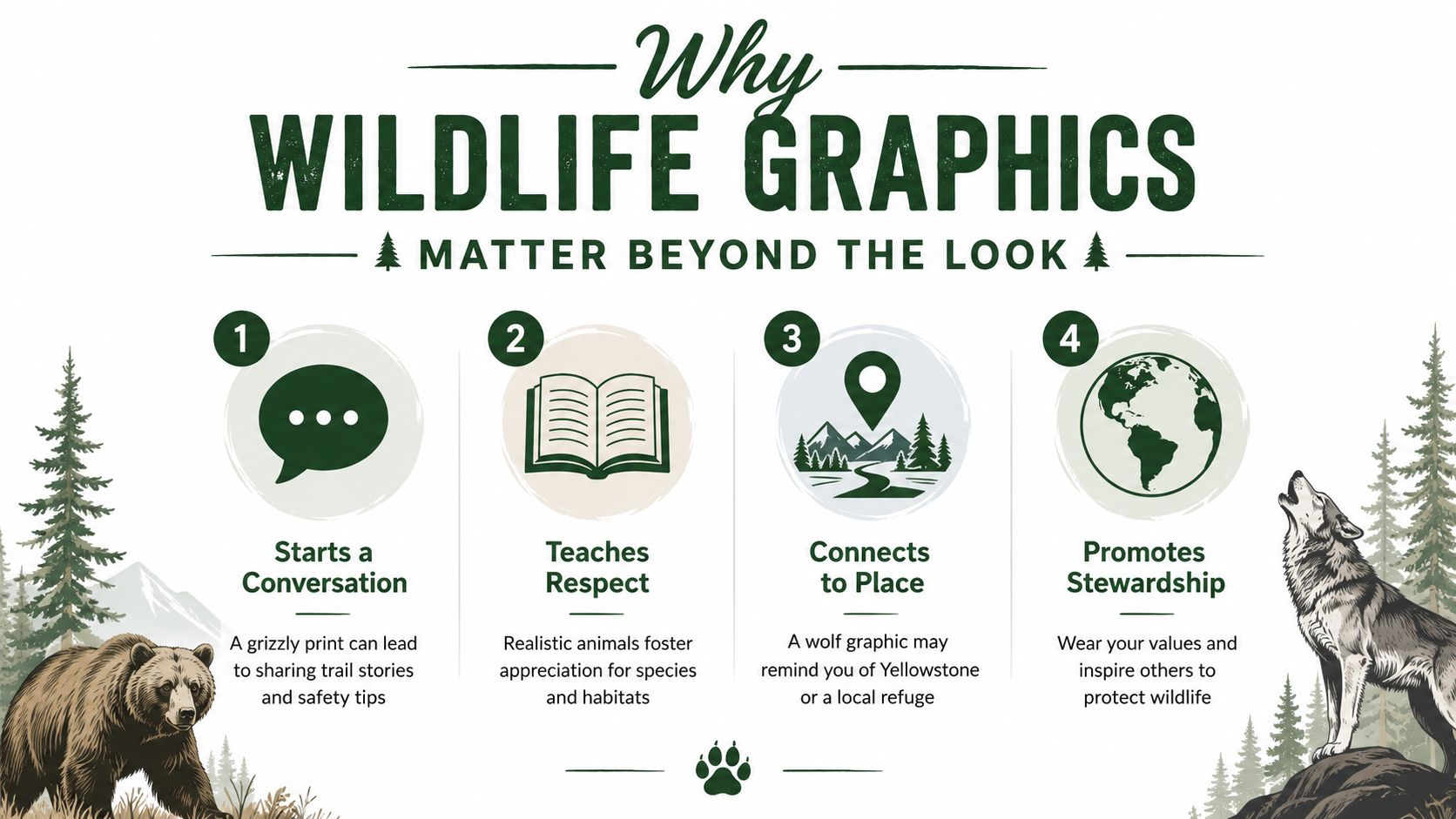
A bear graphic can be just a graphic, but it can also be a doorway into better trail habits. That matters because the audience for wildlife-themed apparel is already large and engaged, not random impulse buyers. The numbers from the U.S. Fish and Wildlife Service make that clear, and the same curiosity that drives wildlife watching also makes people receptive to a sweatshirt that says something about the places they love (U.S. Fish and Wildlife Service survey).
Turn the print into a conversation starter
A well-chosen wildlife graphic invites questions. People ask where you got it, what animal it is, or whether you've seen one in the wild, which is a pretty decent excuse to talk about the trail instead of the parking fees. The best designs feel specific enough to start that exchange without screaming for attention.
Tie the design to real trail respect
Wildlife art carries more weight when it points back to real behavior. The Park Service says visitors in Yellowstone must stay at least 100 yards from bears and wolves and 25 yards from all other wildlife (Park Service wildlife guidance). That's not trivia for trivia's sake, it's the kind of concrete rule that reminds you a sweatshirt graphic can be an opening to safe, respectful public-lands habits.
Let the animal mean something
WWF's shark fact page is a good example of why animal imagery lands better when it's grounded in real biology, not vague “love nature” fluff. WWF says sharks can have 3,000 teeth at one time and may shed about 30,000 over a lifetime, which is the sort of memorable detail that gives wildlife-themed apparel some teeth and figuratively (WWF animal facts).
If you like this angle, the internal read on why wildlife graphic T-shirts always work fits right alongside it. The point is the same, design becomes more interesting when it carries a place, a species, or a rule you'll use outside.
Reading Between the Lines on Conservation Giveback
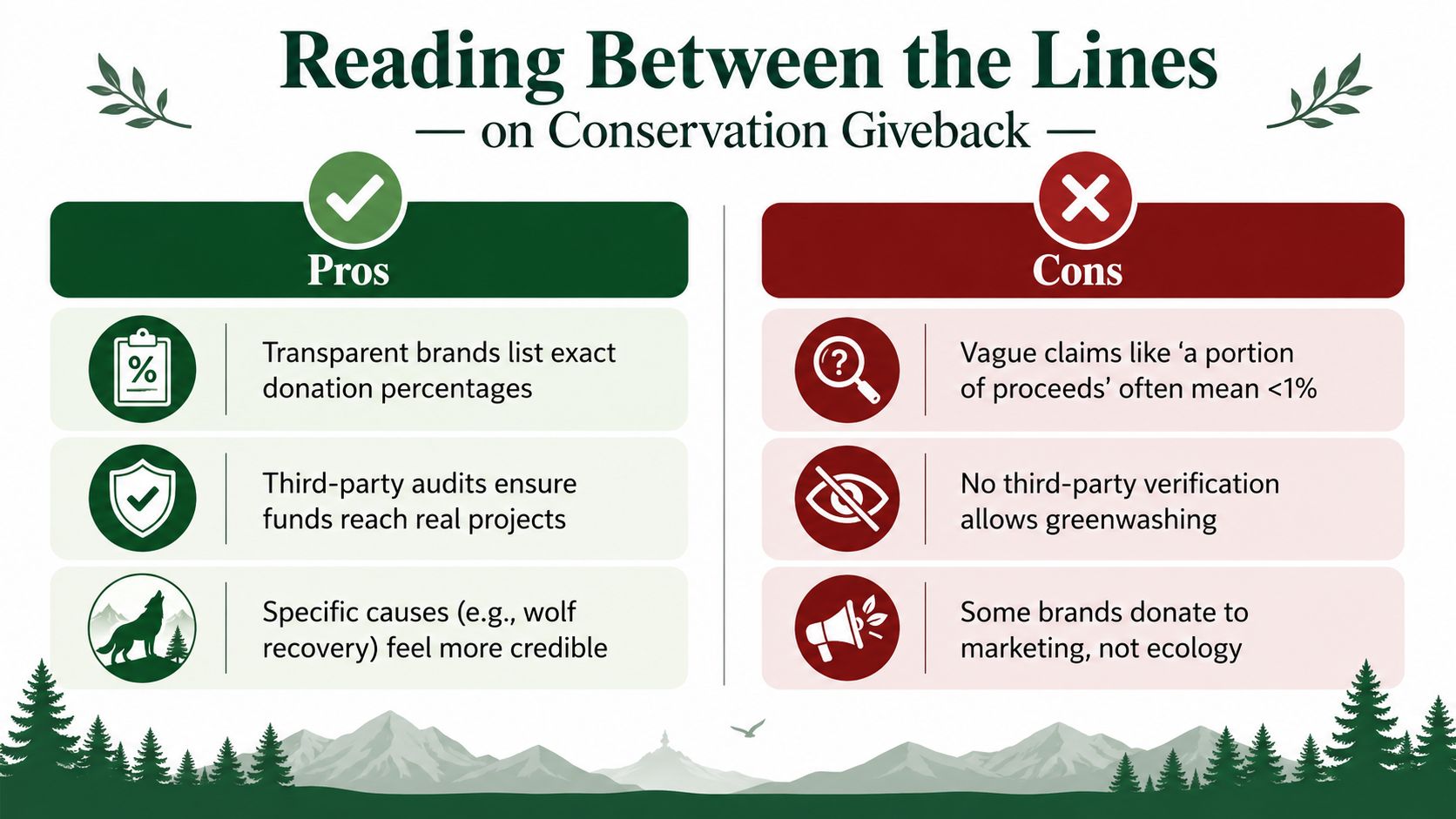
Cause-linked apparel sounds easy to trust until you start reading the fine print. A sweatshirt that says “save the wild” might feel good in the cart, but the question is whether the brand names a beneficiary, states a percentage, and makes the program easy to verify. Without those pieces, you're mostly buying a mood.
What credible giveback looks like
The easiest check is blunt. If a brand says exactly how much of a purchase goes to conservation, that's a good sign. If it names the organization receiving support, that's better. If it also points to an audited or otherwise verifiable program, you're in much safer territory.
WWF Canada's branded apparel tied to its holiday gift guide and adoptable-species program is a useful example of how merchandise can be paired with fundraising and awareness rather than just novelty (WWF Canada apparel release). That's the kind of structure buyers should look for, specific cause, specific program, clear connection.
Spot the soft claims
Vague phrases are where buyers get stretched. “A portion of proceeds” sounds charitable, but it doesn't tell you much by itself. If there's no named beneficiary and no way to confirm the program, the claim is mostly branding.
The internal guide on Gear for Good is worth a look if you want to compare what transparent conservation messaging can look like in practice. A measurable model is easier to evaluate, easier to explain, and usually more honest about what your purchase does.
Use the checklist at checkout
- Ask who gets the money: A named conservation group beats a vague promise every time.
- Look for the share: Specific percentages are easier to trust than fuzzy language.
- Check for proof: Audited programs, public reporting, or visible beneficiary details all help.
- Separate cause from colorway: A beautiful animal graphic doesn't prove impact.
That checklist keeps you from confusing sentiment with support. If a wildlife sweatshirt gives back, great. If it only borrows conservation language, you deserve to know that before you hit buy.
Care, Packing, Gifting, and Ordering Tips
A good wildlife sweatshirt lasts longer when you treat it like a regular layer, not a museum piece. Wash it cold, skip fabric softener, and dry it low or let it air dry. Fabric softener can gum up fleece fibers and make the garment behave worse over time, which is a silly way to sabotage something you like wearing.
![Inline image not used in this section.]
Keep it in shape between trips
Fold it instead of hanging it for long stretches. Hanging stretches the shoulders, especially on heavier fleece, and nobody wants a sweatshirt that starts looking like it borrowed a bad posture. For packing, roll it and put the print face-out from rougher gear so zippers and buckles don't rub it down.
The wash routine on how to wash graphic tees translates well here because the same basic idea holds, protect the print, reduce heat stress, and don't overcomplicate the laundry. Simple care keeps the graphic readable and the fabric comfortable.
Make gifting and ordering less annoying
Bundle options can make sense if you're buying for family or a trip group, especially when you want everyone in the same visual lane without hunting size by size. HikeTee also offers multi-currency browsing, free shipping on orders of $75+ USD, and support at support@hiketee.com during 9AM to 6PM MST, Monday through Friday. Those details matter because they remove friction before the sweatshirt even lands on the porch.
A few quick ordering habits help too. Check sizing against the style you want, especially if you're deciding between a closer fit and a roomier camp layer. If the sweatshirt is for trail use, comfort in motion beats a perfect flat-lay photo every time.
Buy the layer you'll actually wear, not the one that only looks right on a product page.
If you want a wildlife sweatshirt that feels at home on a trail, around a campfire, or on the way to brunch after a muddy hike, HikeTee makes that kind of apparel with outdoor themes, wildlife graphics, and light outdoor wear in mind. Take a look at HikeTee and pick the piece that matches your weather, your pace, and your favorite trail story.


