


Hiking Shirt vs Regular T-Shirt
Dominic PalmowskiHalfway up a ridge in July, soaked through your cotton tee, with a cold wind rolling in — that is when the shirt you grabbed off the chair starts to matter.
I do not think this is an all-or-nothing debate. Both hiking shirts and regular t-shirts work. They just shine on different hikes, in different weather, and at different effort levels.
In my own outings, fabric, fit, and sweat control matter more than the label. On hot, long climbs, I reach for light, quick-dry shirts. On brief, mellow strolls, a soft regular tee can still feel perfect.
Here is what actually makes a difference out there.
The Hiking Shirt Difference
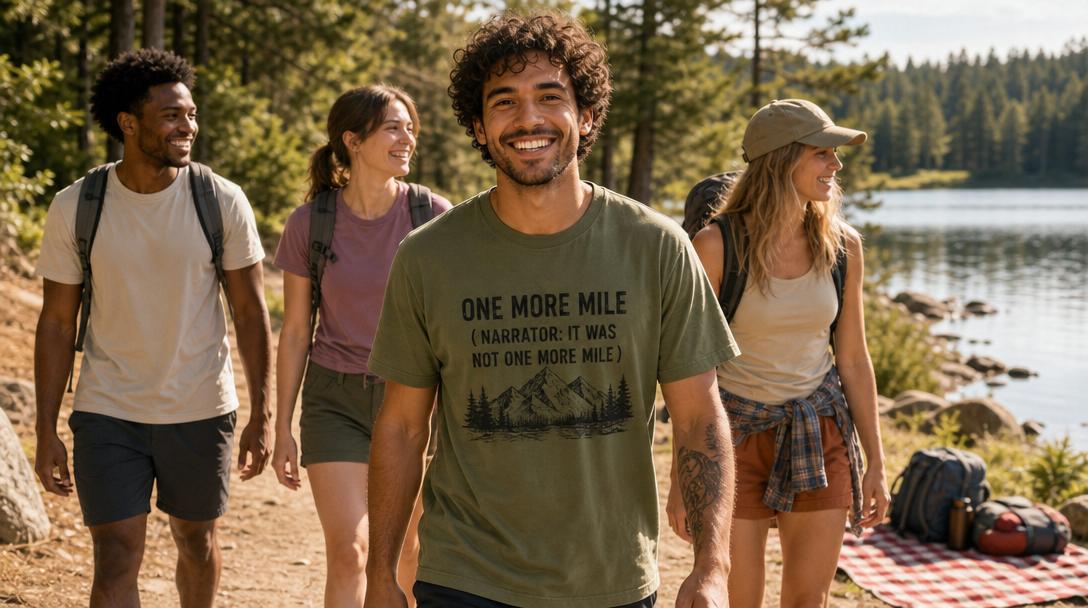
When I compare hiking shirts with my normal tees, I care about what they do on an actual trail, not how they feel while I am lounging on the couch.
- Fabric basics: Most regular t-shirts are high-cotton. They feel soft, but they hold sweat, dry slowly, and can make me cold when I stop moving. Most hiking shirts use polyester, nylon, merino wool, or a performance blend. These fabrics move sweat off my skin, spread it out, and dry much faster.
- Breathability and drying: On a humid 10 km hike, a cotton shirt can stay damp for hours. A lightweight polyester hiking shirt may dry within 20 to 40 minutes once I slow down. That quick drying helps reduce chill, chafing, and those stiff salt patches that show up after a sweaty climb.
- Smart blends and temperature control: I like cotton-poly blends around 50/50 for moderate days. They keep some of that soft cotton feel but handle sweat and temperature changes better than pure cotton. If you want a deeper breakdown, I like comparing the trade-offs in Are Cotton Shirts Good for Hiking?
- Trail-specific features: A true hiking shirt can add things my regular tee does not have: UPF sun protection, an adjustable hood, a zip chest pocket, offset shoulder seams, and smoother fabric under backpack straps. Those details may sound small until you are five miles in and your shoulder seam starts rubbing.
The big difference is simple: regular cotton tees are comfortable when dry, while technical shirts are built to manage sweat, sun, wind, and repeated wear.
When Regular Shirts Work
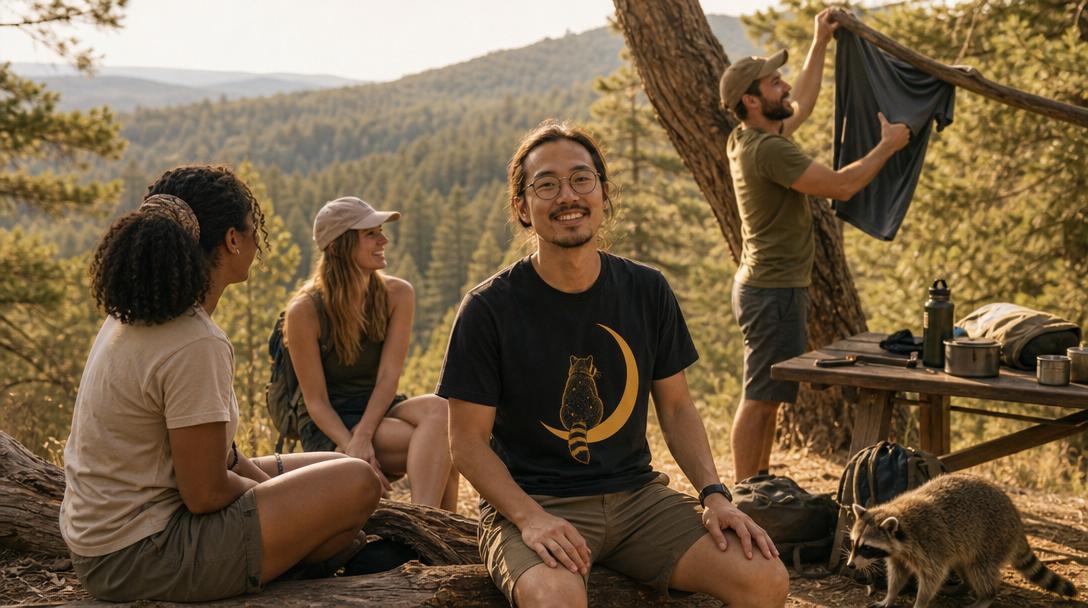
Regular tees work fine for low-risk days on the trail. I reach for them on quick hikes under 5 km, casual strolls through urban parks, campground walks, or easy paths where the forecast is steady and I do not expect to sweat heavily.
If the plan is a relaxed pace, good views, and time with friends or family, a regular tee can honestly feel better than a slick technical fabric. A casual graphic tee like the One More Mile Shirt is exactly the kind of thing I would wear for a mellow trail day, a campsite loop, or post-hike food.
| Situation / activity | Regular t-shirt | Hiking shirt |
|---|---|---|
| Short walk under 5 km on easy path | Usually enough | Nice but not needed |
| Half-day summer hike at a steady pace | Works if weather is stable | Safer for mixed weather |
| Hot weather hike with strong sun | Cotton blend can work | Better for all-day sun |
| High-output hike with steep climbs | Often too damp | Built for sweat and fast drying |
| Uncertain forecast or mountain weather | Risky if it gets wet | Better choice because it dries fast |
| Multi-day trip or travel trekking | Only if you carry spares | Easier to rinse, dry, and re-wear |
One thing I always watch is fabric. High-percentage cotton feels great at first, but once it gets wet, it stays wet. On a windy ridge or a long snack break, that damp fabric can pull heat from my skin and make me chilly even on a mild day.
A cotton-poly blend handles those shifts better. For low-key summer walks, something casual like the Camping Summer Shirt makes sense when the route is easy and the weather is friendly. If the forecast looks iffy, I bring a lightweight spare shirt or thin jacket so I am not stuck in a soggy top.
Choosing Your Hiking Shirt
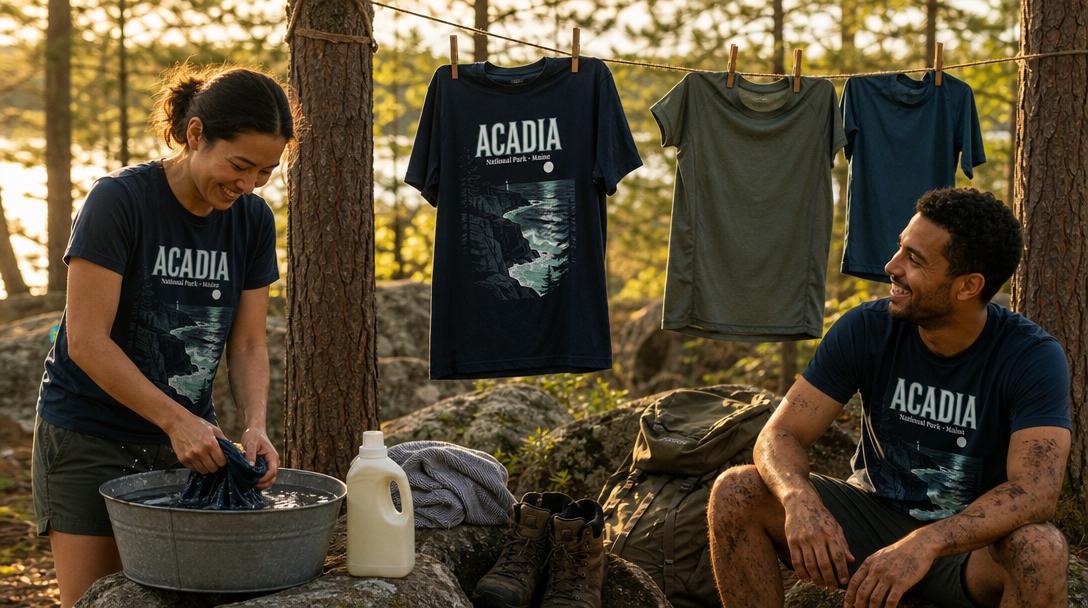
I treat my trail top like core gear. It has to help me stay dry, manage body heat, and hold up over time. That is what determines whether I bring a technical hiking shirt or a normal t-shirt.
For many hikes, I start by checking the fabric tag. I avoid shirts that are 95% to 100% cotton for anything beyond a flat stroll in mild conditions. Cotton is comfortable at the trailhead, but once it is wet, it dries slowly and can cool me down fast when I stop.
I usually go for blends or synthetics, like a 52% cotton and 48% polyester mix, or 100% polyester. Blends keep that familiar t-shirt feel while drying faster and breathing better. Pure synthetic shirts take it further: they wick sweat away from my skin, dump heat on steep climbs, and still layer well when I pause.
I focus on a few simple features:
- Light, breathable fabric
- Quick-dry or moisture-wicking performance
- Soft feel with flat or low-bulk seams
- Relaxed fit that moves well with a pack
- Durable knit or weave that resists wear
- Simple, low-flake print or no print at all
- UPF sun protection if I hike in strong sun
For hot, exposed trails, I prefer a light short-sleeve technical top or a thin sun hoodie with a hood and thumb loops. If you hike in heat often, the guide to Best Hiking Shirts for Hot Weather is worth a look.
For cooler or longer days, merino wool can be excellent because it controls odor and stays comfortable across a wider temperature range. Before I trust any shirt on a multi-day trip, I test it on an easy 5 to 10 kilometer walk. If I forget I am wearing it, it passes.
The Unspoken Trade-Offs
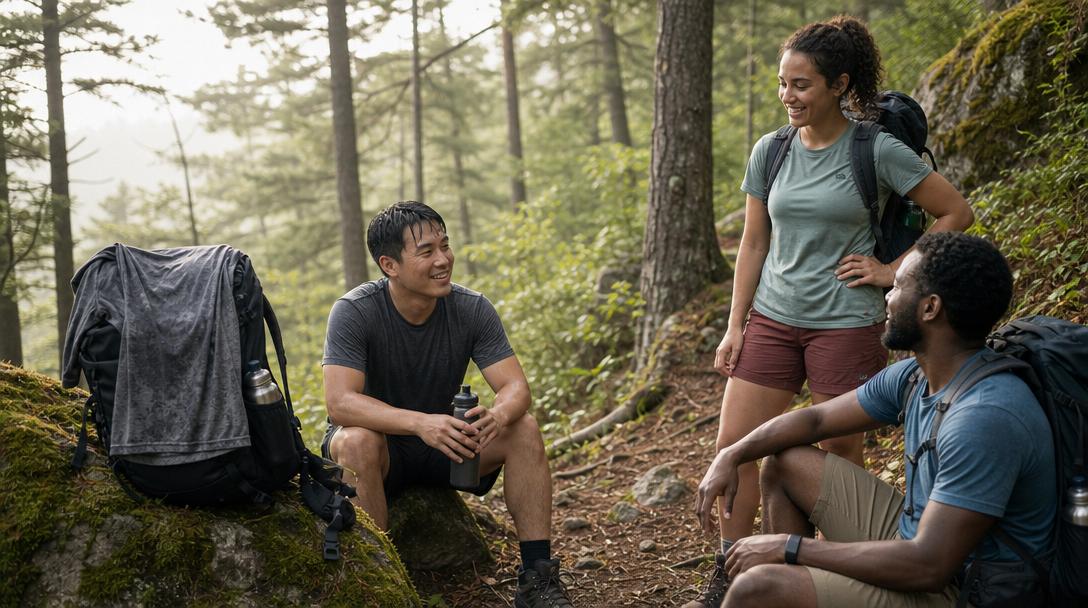
When I decide between a standard t-shirt and a hiking shirt, I am really deciding which small annoyance I would rather deal with later.
Technical hiking shirts are great when I am moving. They wick sweat, dry quickly, and reduce rubbing under pack straps. But some of them feel less cozy when I stop for 20 minutes to eat, check the map, or sit in the shade.
Some synthetic fabrics feel slick or a little plastic against my skin. I notice that more on slow, hot days than on fast hikes. Low-quality polyester can also trap odor, especially if the shirt has been through a lot of sweaty miles.
The upside is that many good synthetic, merino, or wool-blend shirts need fewer washes. On a 2 to 3 day trip, I can often bring one reliable shirt, rinse it when possible, and let it air out overnight. Fewer washes, less water, less wear — it quietly adds up.
For me, the main downsides of technical hiking shirts are:
- Less cozy feel in daily life
- Can trap odor if the fabric is low quality
- Higher price than basic cotton tees
- Less normal look for town, travel, or office use
- Needs more care with heat when washed or dried
That is why I still keep regular tees in the rotation. For a campsite morning, road trip stop, or easy overlook walk, a soft graphic tee like the Hike More, Worry Less Bigfoot Shirt feels more natural than a full-on technical top.
Layering Your Upper Body
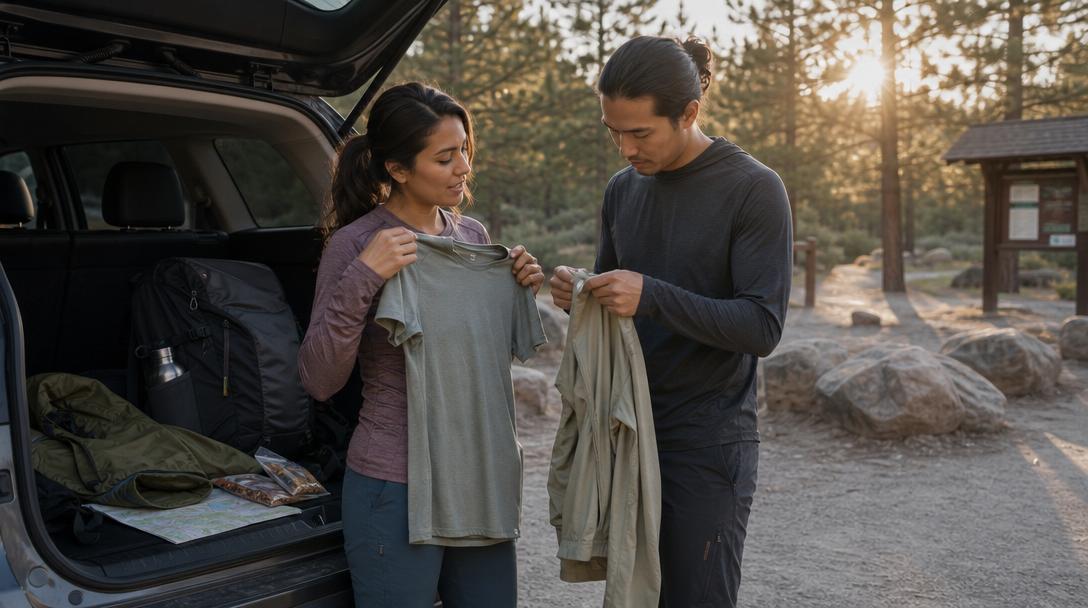
I think of my upper body as a simple system: stay dry enough, stay warm enough, and stay out of the sun. Whether I am wearing a true hiking shirt or a regular t-shirt, it has to work inside that system.
- Base layer: thin, breathable t-shirt or hiking shirt, usually merino or synthetic
- Sun layer: long-sleeve hiking shirt or sun hoodie with hood
- Mid-layer: light fleece or thin active sweatshirt
- Outer layer: windproof or waterproof shell
- Spare: extra t-shirt in a dry bag
For the base, I choose material first. A light merino wool shirt or blend feels good, resists odor, and keeps my temperature more even. On wet or super sweaty trips, I usually go full synthetic because it dries fast and moves sweat away from my skin.
A cotton-poly blend around 52/48 is nice for mellow hikes in mild weather because it wears like an old favorite but dries faster than straight cotton.
On hot, exposed trails, a long-sleeve shirt or sun hoodie with a hood and high neck beats most short-sleeve tees. The material is lightweight but protective, so I can keep my arms and neck covered instead of reapplying sunscreen all day.
On warm days, one light shirt is usually enough while I am moving. Then I throw on a thin fleece or light hoodie when I slow down or when the wind picks up. For colder trips, I follow the same basic system explained in What to Wear Hiking in Cold Weather: The 3-Layer Rule Explained.
I always check how sleeves, cuffs, hoods, and pockets sit under pack straps, hip belts, and jacket zippers. If something rubs during a short walk, it will absolutely annoy me on a big day.
Proper Hiking Shirt Care
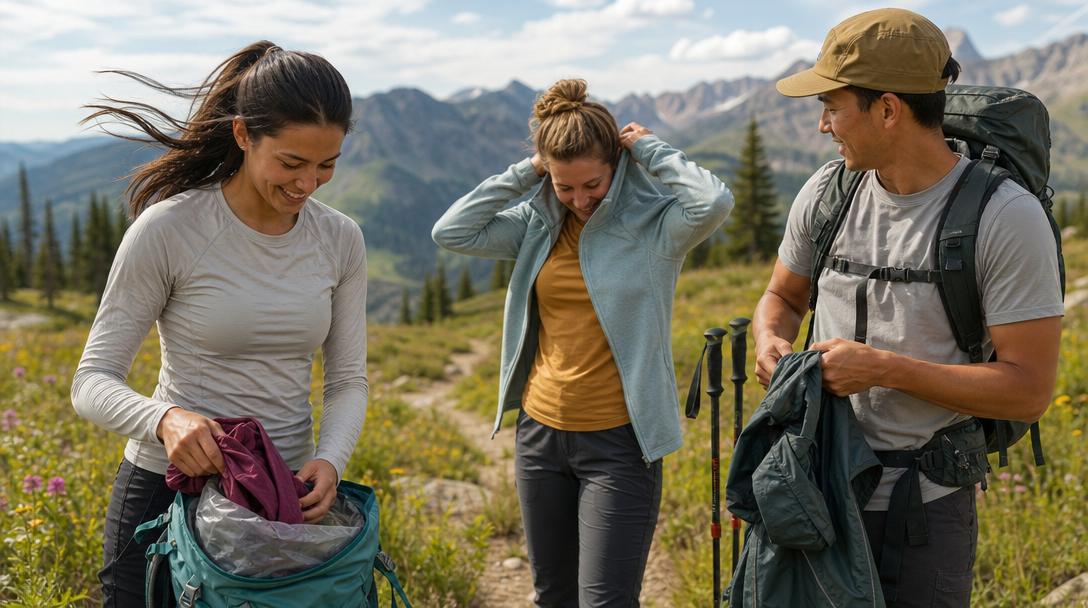
I handle hiking shirts a little differently than my regular tees because proper care keeps them breathing well and helps control funk.
After a sweaty or muddy hike, I wash them as soon as I can. Lingering sweat and dirt make odor harder to remove and can slowly clog the fibers, so the shirt feels heavier and traps heat.
I flip the shirt inside out, rinse off caked mud with cool water, then machine wash at 40 degrees Celsius or lower on a short, gentle cycle with mild detergent. I skip bleach, fabric softener, and heavy fragrance because they can coat the fibers and interfere with wicking.
Drying is where I am extra careful. High heat can warp polyester or damage elastane, so I air-dry on a hanger or use low dryer heat. I do not dry technical shirts on hot radiators or leave them baking in harsh sun for hours. If I iron, I use medium heat and a quick pass. I never dry-clean technical shirts.
For quick reference:
| Shirt type | Wash | Drying method | Extra notes |
|---|---|---|---|
| Synthetic / blend | Gentle cycle, mild detergent | Air-dry or low tumble | No bleach or fabric softener |
| Merino wool | Wool or gentle cycle | Flat or line air-dry | Avoid high spin, reshape while damp |
| Cotton t-shirt | Standard gentle cycle | Air-dry or low tumble | Turn inside out to limit fading |
On longer trips, I rotate two or three shirts, wash one while wearing another, and store everything completely dry so mildew does not sneak in. If reducing waste and extending shirt life matters to you, I also like the tips in How to Choose Eco Friendly Hiking Shirts.
Conclusion
I look at it this way: a simple cotton tee is fine for short park walks, shady campground loops, or a lazy stroll where the weather is calm. No drama there.
But hot sun, steep climbs, sweat, rain, or mountain wind change the story fast. That is when I grab a quick-dry hiking shirt that vents well and does not rub. My skin feels better, my mood stays steadier, and the whole day is more fun.
I do not treat it like a strict rule. I mix regular tees and trail shirts depending on the route, weather, and pack weight. A soft casual shirt like the Sunshine Summer Shirt is perfect for easy outdoor days, while technical layers earn their place when the hike gets longer, hotter, wetter, or colder.
Have a trip in mind? Plan your route, check the forecast, and pick the shirt that fits the day.
Quick Summary
- You do not always need a technical hiking shirt, but it makes a big difference on sweaty, humid, or long hikes because it breathes better, wicks moisture, and dries much faster than a regular cotton t-shirt.
- For short, leisurely strolls or easy hikes in steady weather, a normal t-shirt can do just fine. If you wear cotton, pack a backup shirt or light jacket so you are not stuck in a damp top.
- When shopping, look for synthetic or blended fabrics, moisture-wicking performance, quick-dry comfort, UPF sun protection, offset shoulder seams, and pockets that work with your backpack.
- Think of your shirt as part of your layering system. Pair a breathable base layer with a sun hoodie, long sleeve, fleece, or shell depending on the day.
- Pure cotton is soft at first, but it absorbs moisture, stays wet, can chill you, and may chafe. Test blends, merino wool, and technical fabrics on shorter hikes before trusting them on multi-day trips.
- Wash hiking shirts soon after sweaty hikes, avoid high heat, and rotate a few shirts on longer trips. This keeps them breathable, stink-resistant, and longer-lasting.
Frequently Asked Questions
Do I really need a special hiking shirt, or can I just wear a regular T-shirt?
You can hike in a regular t-shirt, especially on brief, easy paths in mild conditions. For longer hikes, heat, humidity, rain, or cold, I choose a hiking shirt because it wicks sweat, dries faster, and helps prevent chafing and overheating.
What is the main difference between a hiking shirt and a regular T-shirt?
For me, the key difference is fabric performance. Hiking shirts use breathable, quick-dry fabrics that move moisture away from my skin. Many also add UPF sun protection and better odor control. Regular cotton t-shirts feel soft when dry but become heavier, wetter, and colder once I start sweating.
When is it okay to hike in a normal cotton T-shirt?
I use a normal cotton t-shirt for short, low-intensity walks in cool, dry weather. If I expect rain, heavy sweat, wind, or a long hike, I avoid cotton because it stays wet, cools my body too quickly, and can cause chafing.
How do I choose the right hiking shirt for my needs?
I look at fabric, fit, and conditions. I like synthetic or merino fabrics for tougher hikes, a close but not tight fit, and sleeves that suit the climate. For sun and heat, I choose long sleeves with UPF. For cold, I use the shirt as a wicking base layer.
Are long-sleeve hiking shirts better than short-sleeve ones?
Most days, yes. Long sleeves protect my skin from sun, brush, and bugs while breathable fabrics still keep me cool. I choose short sleeves when sun exposure is low, temperatures are high, or I want a lighter, simpler setup.
How should I layer my hiking shirt with other clothing?
I treat my hiking shirt as my base layer. In cold weather, I add an insulating mid-layer and a weatherproof shell. In warm weather, I usually hike in just the shirt and keep a lightweight shell in my pack for wind or quick rain.


