


Ten Essentials Hiking: Day Hike Guide
Dominic PalmowskiSearching for the 10 essentials for hiking usually turns up slightly different lists, but the short answer is navigation, light, sun protection, first aid, a knife, fire, shelter, extra food, extra water, and extra insulation. The modern Ten Essentials are taught as systems rather than one exact item per category, which makes sense because gear for a flat two-mile family trail should not look like gear for a remote winter ridge.
Here is the practical day-hiker version:
- Navigation
- Headlamp or light
- Sun protection
- First aid
- Knife and repair kit
- Fire starter
- Emergency shelter
- Extra food
- Extra water
- Extra insulation
That is the short answer to what are the 10 essentials for hiking. But the useful answer is not just naming the gear. It is understanding why each item matters and how to actually use it when your calm little walk turns into a longer story.
What are the 10 essentials for day hiking?
The 10 essentials for day hiking are the same core systems used by backpackers, but lighter, simpler, and adjusted for the kind of hike you are actually doing. For normal day hiking essentials, you do not need to carry a giant expedition pack. You do need a small kit that handles the most common problems: getting turned around, staying out later than planned, weather changes, minor injuries, thirst, hunger, and getting cold.
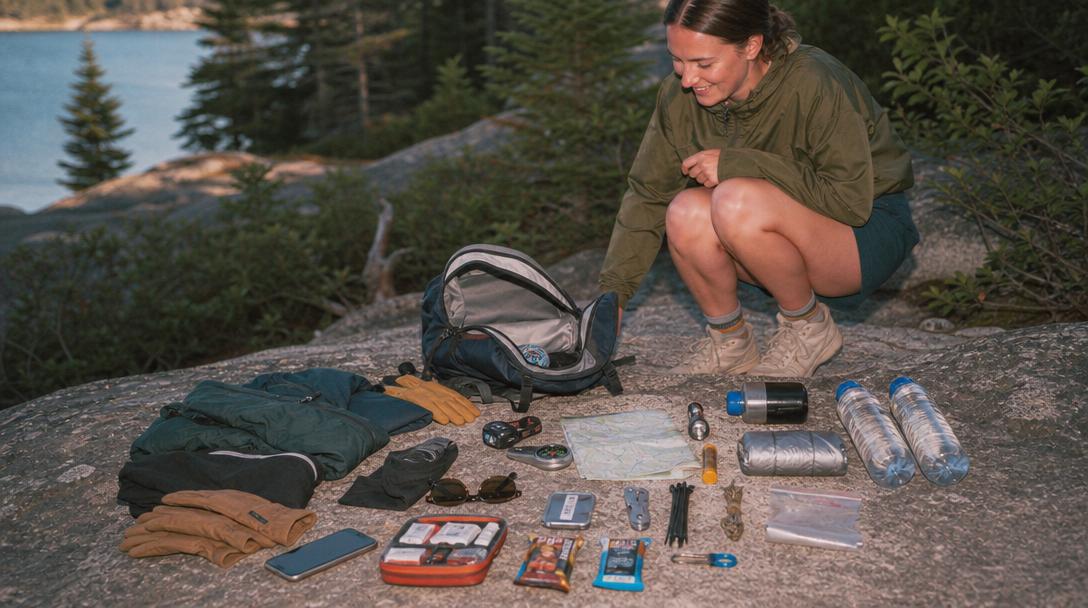
Here is how I pack mine.
1. Navigation: Do not outsource your brain to your phone
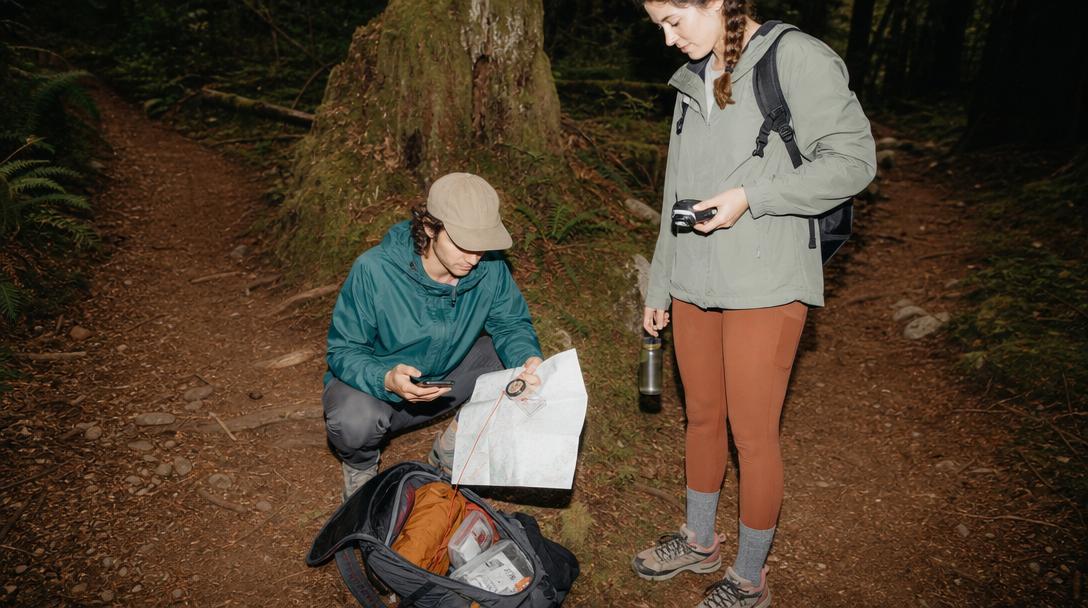
My current setup is Gaia GPS on my phone with topo maps downloaded offline, a Brunton baseplate compass, and a paper map for anything beyond a short, obvious, well-marked trail.
A few years back, I was on a summer day hike where the trail looked clear going out and somehow vanished on the way back. Fading light, tired legs, and one missed junction can humble you fast. Because I had downloaded maps and had practiced using a compass with them, an anxious twenty minutes became a manageable course correction instead of a family panic episode with two hungry kids asking about dinner.
Navigation gear only counts if you know how to use it. A compass you have never practiced with is not a navigation tool. It is a souvenir.
If you are learning how to organize your kit, this guide on how to pack a hiking backpack is a good next read.
2. Headlamp: Because sunset is undefeated
A headlamp belongs in your pack even if you plan to be home by lunch. Trails take longer than expected. Kids slow down. Ankles roll. Views demand extra minutes. Then suddenly the forest gets dim and every root becomes a tiny wooden trap.
I carry a Black Diamond Astro 400 and one spare set of batteries in a small zip-lock bag. A phone flashlight is better than nothing, but it drains the same device you may need for navigation or emergency communication. A real headlamp keeps both hands free and makes the walk out safer.
If you want a deeper dive into trail lighting, check out this guide to a green light headlamp.
3. Sun protection: Not just for desert hikes
Sun protection means sunscreen, sunglasses, and clothing that protects your skin. I usually carry Badger SPF 50 mineral sunscreen, polarized sunglasses, and a lightweight sun shirt on exposed trails.
People remember sun protection in the desert and forget it on cloudy mountain days, lake trails, snowfields, and breezy ridgelines. UV exposure does not care that you felt comfortable. If you are hiking with kids, reapply sunscreen before anyone gets crispy and cranky.
4. First aid: Pack for boring injuries first
A first aid kit does not need to look like an ambulance drawer. Mine starts with an Adventure Medical Kits Ultralight/Watertight kit, then I add extra blister pads.
Blisters are not dramatic. Nobody makes survival documentaries about one hot spot under your heel. But blisters ruin hikes constantly. Add bandages, gauze, antiseptic wipes, medical tape, pain reliever, allergy meds if needed, and nitrile gloves.
For families, add kid-friendly bandages. Yes, the dinosaur bandage may medically perform the same as the boring one, but emotionally it is not even close.
5. Knife and repair tools: Small fixes save big headaches
My repair setup is simple: a Leatherman Micra multitool, duct tape wrapped around my water bottle, and a few zip ties.
That little combination has fixed loose straps, patched gear, handled splinters, repaired kids’ items, and generally saved the day without looking impressive. Do not overthink this category. A small multitool plus tape and zip ties solves more trail problems than most fancy gadgets.
6. Fire: Useful, but not magic
I carry a reliable lighter and Tinder-Quik tabs. They are light, simple, and they work better than wishful thinking when things are damp.
But here is the honest context: fire is often overhyped. In many areas, fire restrictions are real. In dry summers, building a fire may be unsafe or illegal. Fire is not always your emergency plan.
Shelter and insulation are often more reliable because they work everywhere. You should still carry a fire starter, but do not treat it like a universal survival button.
7. Emergency shelter: The essential people skip most
Emergency shelter is the one I underestimated for years. I told myself the same thing everyone says: It is just a short hike. The weather looks fine. We will be back before dark.
Then one afternoon a fast-moving storm rolled in, the temperature dropped hard, and we were standing exposed in wet cotton layers with nothing to cut the wind. We were fine, but it was the kind of fine that teaches you a lesson.
Now I carry an SOL emergency bivy. It weighs almost nothing and fits in a jacket pocket, which means I have no excuse to leave it behind.
A space blanket is better than nothing, but an emergency bivy is usually more useful if things go seriously sideways. It blocks wind, helps retain heat, and gives you a real way to manage exposure while you wait, rest, or slowly work your way out.
8. Extra food: Snacks are safety gear with better branding
I always carry at least one extra day of snacks beyond what I expect to eat. Usually that means trail mix, jerky, and a couple of real bars like RXBARs.
For hiking essentials for families with kids, extra food is not optional. Snacks can reset a child’s emotional state in a way no motivational speech ever will. If you know, you know.
Pack food that does not melt easily, does not require cooking, and still sounds edible when you are tired.
9. Extra water: Carry it, and know where more could come from
For a normal day hike, I usually carry two to three liters in Nalgene bottles. For remote trails or anything longer than a few hours, I add a Sawyer Squeeze filter.
How much water you need depends on heat, elevation, distance, effort, and the people in your group. Kids may need reminders to drink. Dogs need water too. If you are hiking in hot or dry country, water planning deserves more attention than almost anything else in your pack.
10. Extra insulation: Plan for the weather you might get
Extra clothing does not mean tossing in a spare cotton T-shirt and calling it good. It means a real insulating layer and weather protection.
My go-to setup is a Patagonia Nano Puff packable jacket and a rain shell. Together, those two layers have handled conditions that had no business surprising me on what started as a pleasant afternoon.
Beginners often underpack insulation because they judge the whole hike by the trailhead. The trail has zero interest in your trailhead forecast.
For more clothing basics, this what to wear hiking guide is worth bookmarking.
What to bring on a hike without overpacking
If you are wondering what to bring on a hike, start with five questions before you pack a single item:
- How long is the trip?
- How remote is the terrain?
- How fast can the weather change there?
- What happens if you cannot get back before dark?
- Who knows where you are?
Those questions do more work than any checklist because they force you to think in scenarios.
For a short local trail, your kit can be lean: navigation, water, headlamp, emergency layer, small first aid, snacks, and a compact shelter item. If you are asking what to pack for a short hike, do not think less carefully; just pack lighter and smarter.
For a remote hike, increase water capacity, add a filter, bring a paper map, carry more food, and take emergency shelter seriously.
For a solo hike, I add a personal locator beacon and leave a detailed plan with someone who will actually check in. Not someone who says, “Cool, have fun,” and forgets I exist for eight hours.
Day hike packing list for beginners
Here is a beginner-friendly day hike packing list for beginners that covers the Ten Essentials without turning your pack into a garage sale:
- Downloaded offline map plus compass
- Paper map for unfamiliar or remote trails
- Headlamp with spare batteries
- Sunscreen, sunglasses, and hat
- Small first aid kit with blister care
- Multitool or small knife
- Duct tape and zip ties
- Lighter and tinder tabs
- Emergency bivy or quality emergency blanket
- Extra snacks
- Two liters of water minimum for many moderate hikes
- Water filter for longer or remote trails
- Packable insulating jacket
- Rain shell
- Whistle
- Zip-lock bag
- Nitrile gloves
- Fully charged phone
That is also my practical version of the ten essentials for day hiking beginners. You can scale it up or down, but do not skip the categories just because the trail looks friendly on Instagram.
Hiking essentials for families with kids
Family hikes need the same Ten Essentials, plus a little emotional engineering.
Add more snacks than seems reasonable. Add blister care. Add simple first aid for scrapes. Add an extra layer for the kid who swore they were not cold and then became cold twelve minutes later. Bring a whistle and teach kids the three-blast emergency signal. Give everyone a tiny job: carrying their water, spotting trail markers, or being the official snack morale officer.
Also, set turnaround times. Not every hike has to end at the summit or waterfall. Sometimes the win is everyone getting back to the car happy enough to want another trail next weekend.
If your family trips often turn into camping weekends, this ultimate camping trip checklist pairs well with your hiking kit.
A quick note on casual cotton tees and trail comfort
Cotton is comfortable for camp, road trips, easy nature walks, and hanging around after the hike. It is not my first choice for cold, wet, or remote hikes because wet cotton can chill you fast. That storm lesson I mentioned earlier made that point very clearly.
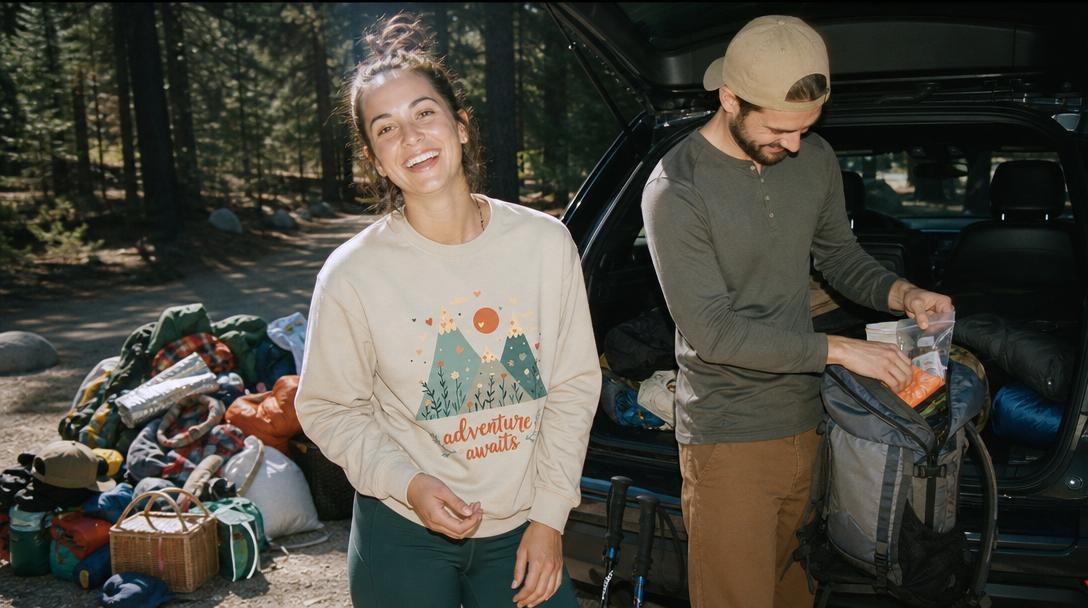
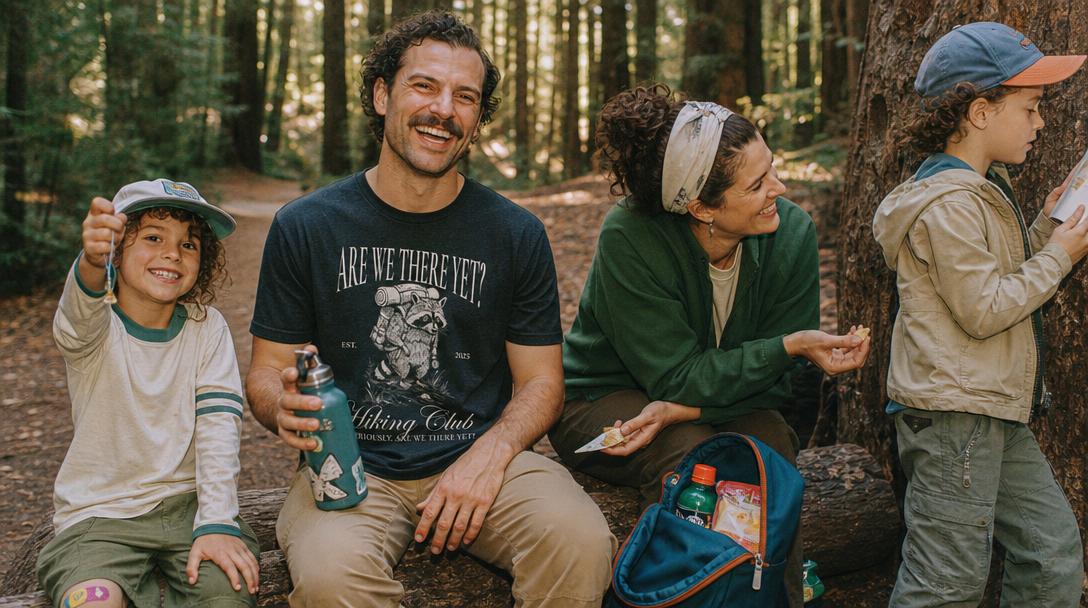
For mellow local trails, campground evenings, or post-hike burgers, a casual tee is perfect. Hike Tee has fun options like the Adventure Awaits Shirt or the very family-hike-accurate Are We There Yet Hiking Club Shirt. Just pair cotton with smart layers when conditions might change.
What are the 10 essentials of winter hiking?
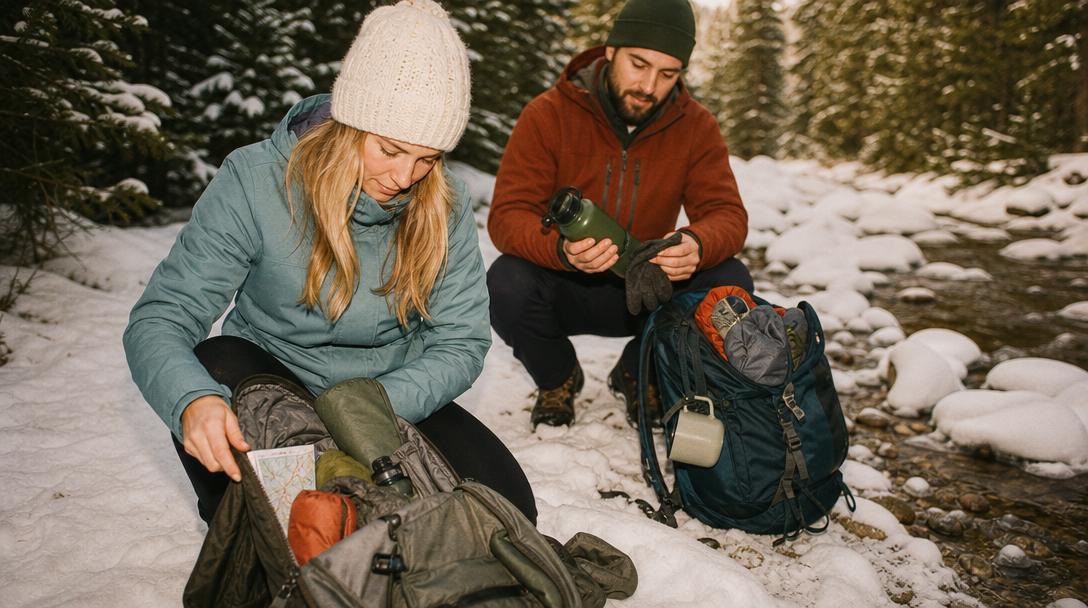
The 10 essentials of winter hiking are the same categories, but the stakes are higher and insulation becomes much more important.
For winter hiking, adjust your kit like this:
- Navigation: map, compass, offline GPS, and awareness of avalanche terrain where relevant
- Headlamp: brighter light, fresh batteries, and spares kept warm
- Sun protection: sunglasses or goggles, sunscreen, and lip balm because snow reflects UV
- First aid: include blister care and supplies you can use with cold hands
- Knife and repair: multitool, tape, zip ties, and gear repair basics
- Fire: lighter and tinder, stored where they stay dry
- Emergency shelter: emergency bivy becomes non-negotiable
- Extra food: more calories than summer hiking
- Extra water: insulated bottles or bottle sleeves to prevent freezing
- Extra insulation: puffy jacket, warm hat, gloves, spare socks, rain or snow shell, and hand warmers
Winter is not the season to gamble on being fast. Cold turns small delays into serious problems. If you are new to winter trails, start short, go with experienced friends, and choose terrain that matches your skill level.
FAQ
What are the 10 essentials for hiking?
The 10 essentials for hiking are navigation, a headlamp or light, sun protection, first aid supplies, a knife or repair kit, a fire starter, emergency shelter, extra food, extra water, and extra insulation. They are grouped as systems rather than single items, so you can scale each category up or down depending on the trail.
Do you need all 10 essentials for a short day hike?
Yes, but in a lighter version. Even a short, familiar trail can turn into a longer outing if weather shifts or someone gets hurt, so a compact kit covering all ten categories is still worth carrying.


