


First Time Camping: What Nobody Tells Beginners
Dominic PalmowskiYour first time camping gets a lot easier when someone tells you the honest stuff before you arrive: it may feel awkward at first, the woods get loud at night, simple food beats fancy food, and setting up a brand-new tent in the dark is a character-building activity nobody asked for.
I learned that last one the hard way.
My first real camping trip was at a state park about an hour and a half from home. I showed up like I was preparing for a wilderness documentary: brand-new tent still in the box, too many cooking ideas, and about forty minutes of daylight left. What followed was twenty-five minutes of panic, a broken pole sleeve, duct tape surgery, and my friend holding a phone flashlight like we were defusing a bomb.
Dinner was not much better. I had ingredients for a real meal and exactly zero experience using my camp stove. Cooking outside, in the dark, while hungry, with gear you have never tested? That is not a recipe. That is a stress test.
So this beginner camping guide is not just another packing list. It is the stuff I wish someone had told me before my first camping trip: how to plan your first camping trip without overcomplicating it, what to know before camping at night, the beginner camping mistakes to avoid, and how to make the first night outdoors feel actually doable.
first time camping tips for nervous beginners
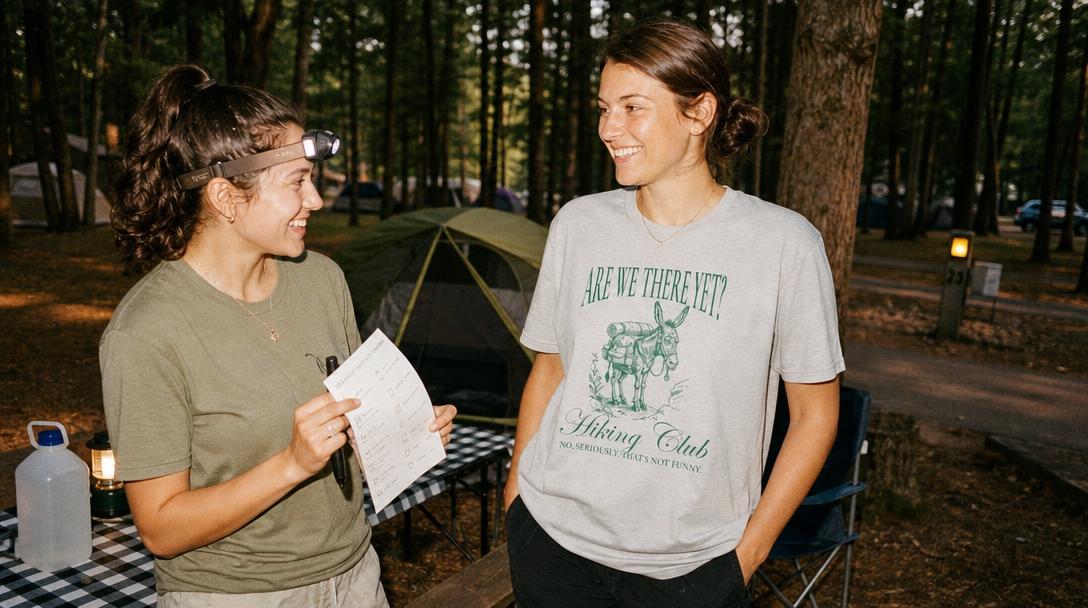
If you are nervous, good. That means you are paying attention.
The goal of your first trip is not to become a rugged wilderness legend. The goal is to spend one night outside, learn the basic rhythm, and prove to yourself that camping is something you can do again.
Here is the easiest possible setup:
- Go for one night, not a full weekend.
- Choose a developed car campground with flush toilets and running water.
- Stay within 90 minutes of home.
- Pick a site close enough to the bathroom that you can find it at 2 a.m.
- Camp with someone patient, not someone trying to turn you into a survivalist by sunset.
- Keep food painfully simple.
- Build in a backup plan and feel zero shame if you use it.
A nearby campground with other humans around changes everything. Your nervous system knows the difference between remote backcountry and a state park loop with families, RVs, and someone named Gary grilling hot dogs three sites over.
The first night outside is usually the hardest. Almost everyone I know relaxes more on the second night or the second trip because the unknown has a name now. That scary rustling? Probably a raccoon. That snapping twig? Could be a squirrel with dramatic timing. The more familiar the sounds become, the less your brain turns every leaf into Bigfoot.
How to start camping as a beginner
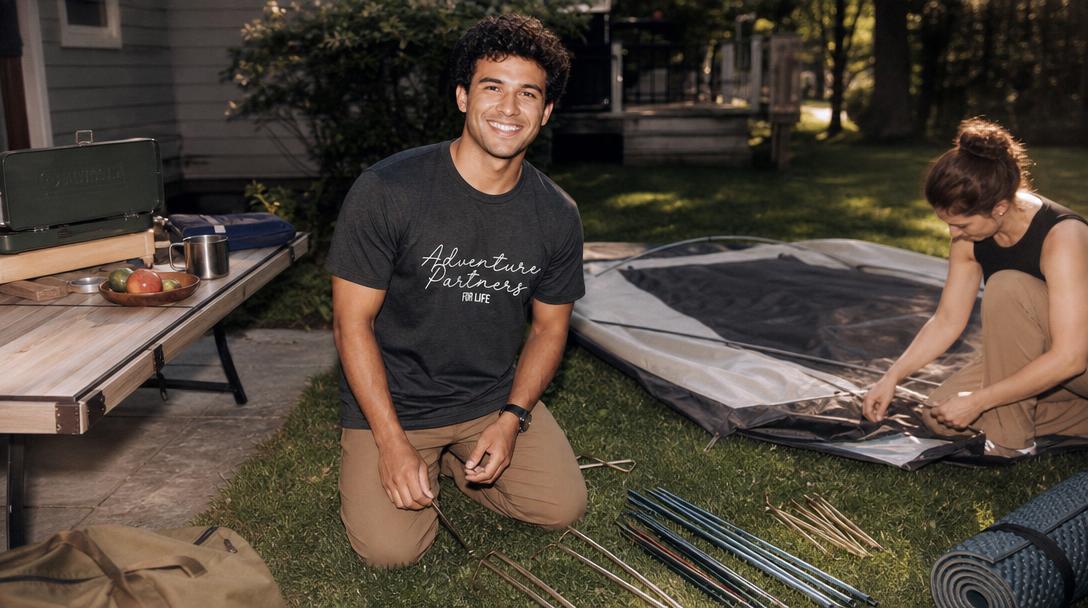
Start small, close, and boring on purpose.
I mean that as a compliment. Boring is underrated when you are learning. Your first camping trip does not need a huge hike, a remote campsite, a complicated campfire meal, or a gear setup that looks like a small outdoor store exploded.
Here is how to start camping as a beginner without turning it into a production:
1. Book a simple campground
Look for a developed campground with:
- Reservable car campsites
- Drinking water
- Bathrooms
- Picnic tables
- Fire rings, if fires are allowed
- Clear check-in details
- Recent reviews
State parks, county parks, and national forest campgrounds are great beginner options. If you are dreaming of bigger park trips later, our National Parks by State guide is a handy place to start collecting ideas.
2. Practice at home before you leave
Set up your tent in your backyard, driveway, or living room if you have space. Yes, really.
Open every bag. Count the poles. Find the rainfly. Learn which side is the door. Make sure nothing is broken. I once arrived at camp and discovered a main tent pole had been snapped in two and quietly shoved back into the bag after the last trip. We patched things together with tarp and paracord, and it became a funny story only because it did not rain.
Ten minutes at home can save your entire night.
3. Arrive early
Arrive with at least two hours of daylight left. Three is better.
Late arrival is one of the most common beginner camping mistakes to avoid because it makes every small problem feel huge. Tent setup in daylight? A learning experience. Tent setup in the dark while hungry? A tiny outdoor meltdown with stakes.
4. Keep the schedule light
Do not stack the day with hikes, scenic drives, camp cooking experiments, and sunset plans. Camping has a setup cost. You have to unload, pitch the tent, organize sleeping gear, figure out food, locate the bathroom, and learn the layout.
Leave room to wander, sit, snack, and be a beginner.
What nobody tells you about camping for the first time
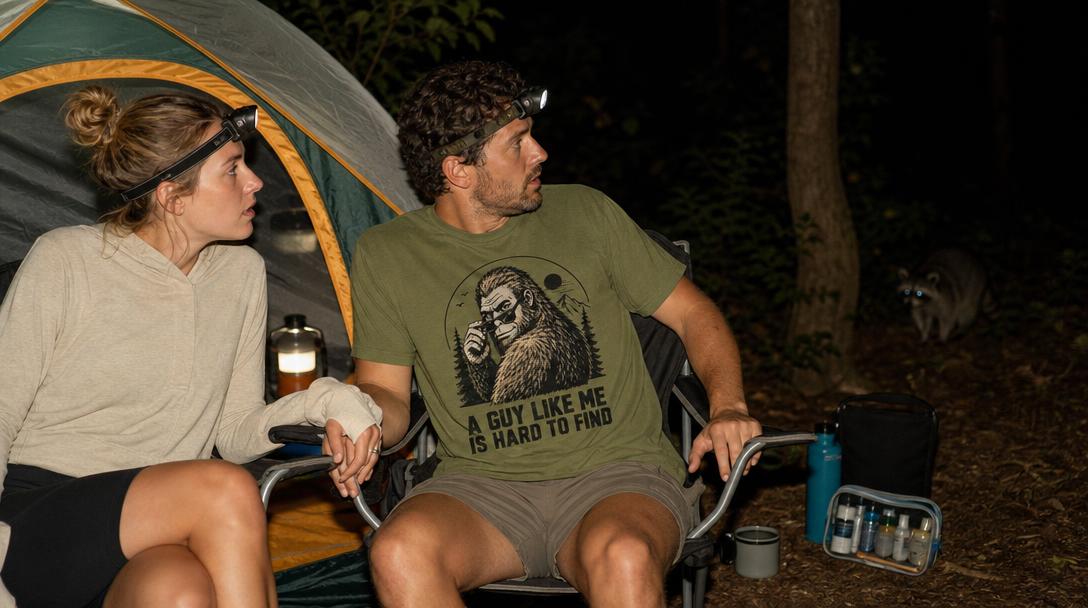
Most camping tips for beginners focus on what to pack. Useful, yes. But what nobody tells you about camping for the first time is that your comfort often comes from timing, expectations, and tiny habits more than gear.
Camping may not feel relaxing immediately
There is a rhythm to camp life. The first time, you do not know it yet. Everything takes longer: finding the lighter, locating your socks, boiling water, brushing your teeth, changing clothes in a tent without elbowing the wall like a trapped raccoon.
That does not mean you are bad at camping. It means you are new.
Talk expectations before you go
This is one of the sneakiest trip-wreckers. One person pictures a quiet weekend reading by the fire. Another wants hiking, swimming, fishing, games, and a sunrise photo mission. By Saturday afternoon, nobody is saying anything, but everyone is aggressively stirring trail mix.
Before you leave, ask:
- Are we relaxing or doing activities?
- Are we cooking or keeping meals simple?
- What time do we want to sleep?
- Are we okay with music, or is this a quiet trip?
- What happens if weather gets bad?
Camping is easier when everyone is imagining the same trip.
Nighttime feels different outside
Dark is darker. Sounds are louder. Your tent fabric will move. Leaves will scratch. Animals will exist loudly and rudely.
Make nighttime easier by staging your essentials before bed:
- Headlamp
- Shoes or sandals
- Bathroom supplies
- Water bottle
- Warm layer
- Phone, if you use it as backup light
Put them in the same place every night. At 2 a.m., you do not want to conduct an archaeological dig through your duffel.
What to do before your first camping trip
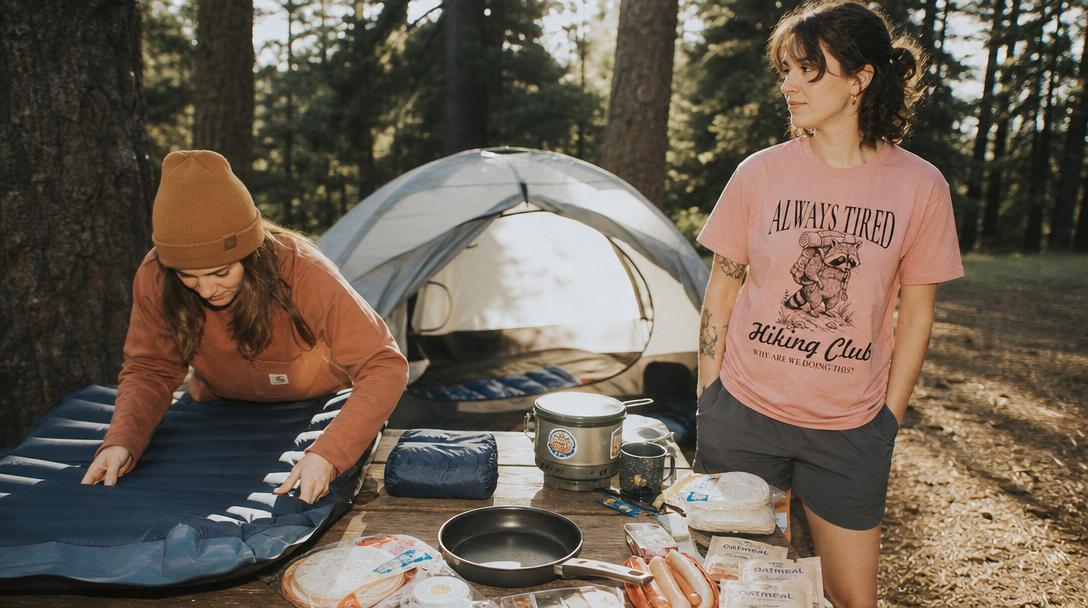
The best first time camping experience usually happens before you even leave home.
Test your sleep system
Your sleep system matters more than your camp kitchen, camp chairs, lantern vibe, or matching mugs.
The big three:
- Tent
- Sleeping bag or quilt rated for the actual temperature
- Sleeping pad with insulation
A sleeping pad is not just cushion. The ground steals warmth from underneath you. A great sleeping bag on a bad pad can still feel cold and miserable. A real insulated sleeping pad changed my camping sleep more than almost any gear upgrade.
Also pack dedicated sleep clothes. Not hiking clothes. Not the hoodie you wore around the smoky fire. Clean, dry, warm clothes that are only for sleeping. It sounds too simple, but it is magic.
If you are heading out in cooler weather, read our cold weather camping tips before you commit to a chilly night.
Make meals embarrassingly simple
Camp cooking is not just kitchen cooking outdoors. Wind changes stove performance. Heat control feels different. Cleanup takes longer. And hunger makes everyone less charming.
For your first trip, try this:
- Lunch or arrival meal: sandwiches or wraps
- Dinner: hot dogs, foil packets, or pre-made chili
- Breakfast: instant oatmeal, bagels, or breakfast bars
- Snacks: more than you think you need
Prep at home. Chop vegetables at home. Test your stove at home. Bring one pot, one pan, one spatula, one mug, and the minimum you need.
You do not need a spice rack, three-burner kitchen, French press system, and artisanal pancake ritual for one night. The woods do not care how ambitious your menu is.
Pack less, but pack smarter
Beginners often overbuy camp kitchen gear and just-in-case accessories. Most of it becomes car clutter.
Borrow what you can. Rent if available. Skip the decorative extras until you know what you actually enjoy.
Spend money where it affects sleep and safety:
- Reliable tent
- Warm sleeping bag or quilt
- Insulated sleeping pad
- Headlamp
- Basic first aid kit
- Weather-appropriate layers
For clothing, think layers. Around camp, a casual cotton tee is totally fine when the weather is mild and you are not relying on it for sweaty hiking warmth. If you want a lighthearted camp shirt for hanging by the fire, the 5 Billion Star Hotel Shirt gets the point across without trying too hard. For actual hiking or hot weather, moisture management matters more, and our guide to moisture-wicking hiking shirts explains the difference.
Choosing a campsite: what reservation apps do not show you
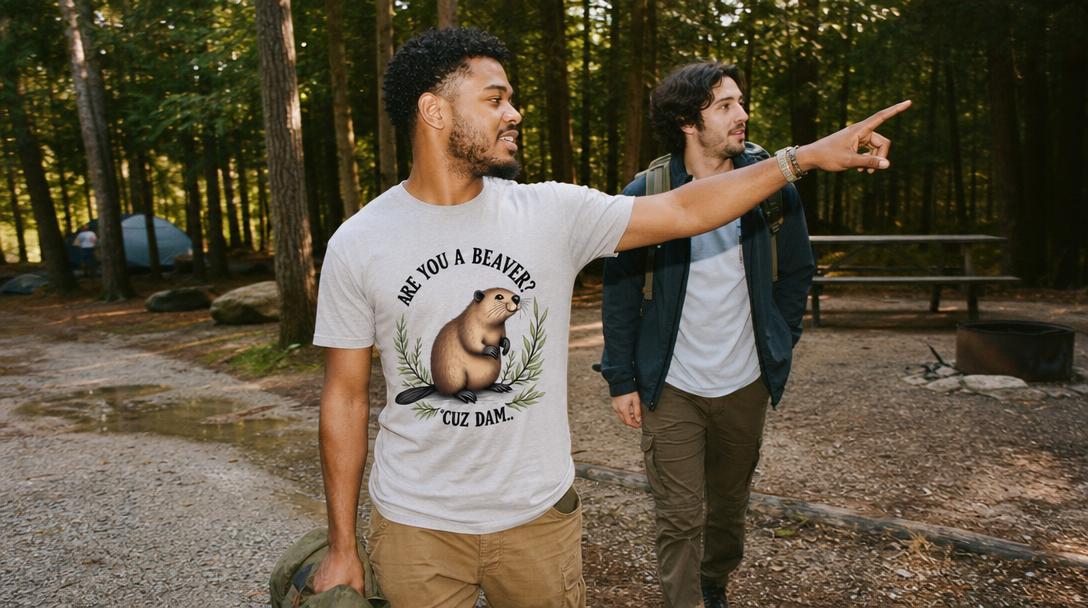
Reservation apps tell you what exists. They do not always tell you how a site behaves.
I have booked sites that looked perfect online and arrived to find they were low, damp, windy, directly behind a bathroom, or blasted by morning sun at 6 a.m. A campsite is not just a rectangle with a number. It has drainage, exposure, traffic, shade, and personality.
Look for drainage
Choose slightly elevated ground when possible. Avoid obvious low spots, dips, or places where rainwater would naturally collect. If rain comes through, you want water moving away from your tent, not under it.
Notice wind exposure
A beautiful open site can become annoying fast if wind hits it directly all evening. Trees, shrubs, slopes, or natural features can provide helpful protection. Do not camp under dead limbs, though. Look up before pitching your tent.
Think about sun direction
Morning sun on your tent can be lovely in spring and brutal in summer. If you are camping in hot weather, shade in the morning can buy you extra sleep. In cooler weather, morning sun can help dry condensation and warm the tent.
Read specific site reviews
Campground descriptions are often too general. Apps like The Dyrt and Hipcamp sometimes include notes from campers about exact site numbers. Those details are gold: noisy bathroom traffic, sloped tent pads, great shade, poor drainage, awkward parking, or the best site in the loop.
Food storage, water, trash, and cleanup
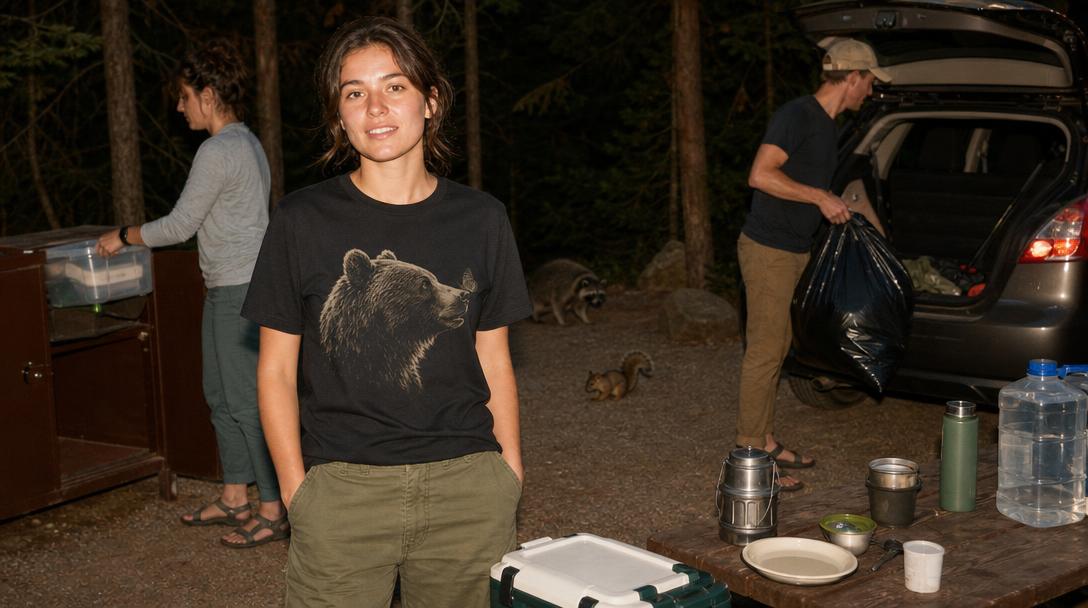
Clean camp is safe camp.
Beginners often think food storage is only about bears. It is not. Raccoons, chipmunks, squirrels, mice, crows, and other camp freeloaders are clever, persistent, and completely unimpressed by your zipper skills.
Follow these rules:
- Store food in your car, bear box, or approved container.
- Never leave snacks in your tent.
- Treat trash like food because wildlife does.
- Seal wrappers and food scraps every night.
- Wash dishes away from your tent.
- Do not dump food water around camp.
- Bring enough drinking water or know exactly where to get it.
If you are camping with a pup, food management and etiquette matter even more. Our dog friendly camping guide covers the extra planning that keeps dogs, campers, and campground neighbors happy.
Campground etiquette beginners should know
Campground etiquette is mostly about being the neighbor people barely notice.
Never walk through someone else's campsite
Even if it is shorter. Even if nobody is sitting there. A campsite is rented personal space. Cutting through it is the campground version of walking through a stranger's living room because you liked their hallway.
Respect quiet hours before they start
Posted quiet hours matter, but the unwritten rule is simpler: if your music, laughter, generator, or speaker can be heard two sites over, it is too loud.
People go outside to escape noise. Be the camper who makes that easier.
Leave shared spaces better
Bathrooms, dishwashing areas, water spigots, trailheads, and fire rings are shared. Clean up after yourself, keep pets leashed, dispose of trash properly, and leave no mystery puddles of dishwater behind.
If you want a fun camp tee for mellow campground time, something like the Adventure Awaits Shirt fits the mood. Just remember: no shirt, no matter how charming, excuses loud music at midnight.
What is the 3-3-3 rule for camping?
The 3-3-3 rule for camping is a travel pacing guideline often used by RVers, but it can help beginners too: drive no more than 300 miles in a day, arrive by 3 p.m., and stay at least 3 nights.
For tent campers on a first trip, I would modify it:
- Drive no more than 90 minutes to 3 hours.
- Arrive by 3 p.m. or earlier.
- Consider staying 1 night if you are nervous, or 2 nights if you want time to settle in.
The real wisdom is arrival time. Getting to camp early gives you daylight, patience, and options.
What is the 200 rule for camping?
The 200 rule usually refers to Leave No Trace guidance: camp at least 200 feet from lakes, rivers, streams, and trails when you are dispersed camping or backpacking.
In developed campgrounds, you should use the assigned site. But the principle still matters. Protect water sources, avoid fragile vegetation, and do not wash dishes, brush teeth, or dump food scraps right next to streams or lakes.
Two hundred feet is about 70 adult steps. When in doubt, give water and trails more space than you think.
What is the most forgotten item when camping?
The most forgotten item when camping is often a light source, especially a headlamp or extra batteries.
People remember the tent and sleeping bag because they are obvious. But a headlamp is what saves you when you need the bathroom, find a dropped tent stake, check dinner, or locate your socks after sunset.
Other commonly forgotten items:
- Lighter or matches
- Trash bags
- Tent stakes
- Pillow
- Can opener
- Dish soap
- Toilet paper
- Warm hat
- Camp shoes
My personal vote? Headlamp. Your phone flashlight works until your phone battery is low and you need both hands.
Beginner camping mistakes to avoid
Here are the big ones I have made or watched happen in real life:
Arriving too late
Darkness turns normal tasks into little dramas. Get there early.
Bringing untested gear
New tent? Practice. New stove? Test it. Old tent? Check the poles, stakes, rainfly, and seams.
Planning complicated meals
Nobody becomes happier because you attempted camp risotto while hungry and swatting mosquitoes.
Overpacking the kitchen and underpacking sleep comfort
Fewer kitchen gadgets. Better sleeping pad.
Leaving food or trash out
Wildlife will find it. Trash smells like food because it basically is food wearing a disguise.
Expecting perfect sleep
You may wake up. You may hear noises. You may need to adjust layers. That is normal. Do not judge the entire camping experience by the first weird hour in the tent.
FAQ
How to start camping as a beginner?
Start with one night at a developed campground close to home. Choose a site with bathrooms and water, practice setting up your tent at home, arrive early, and keep meals simple. Your first goal is confidence, not wilderness mastery.
What is the 3-3-3 rule for camping?
The 3-3-3 rule usually means drive no more than 300 miles, arrive by 3 p.m., and stay at least 3 nights. For a first camping trip, the best takeaway is to arrive early enough to set up in daylight.
What is the most forgotten item when camping?
A headlamp is one of the most forgotten and most useful camping items. It makes nighttime bathroom trips, cooking, and finding gear much easier. Bring extra batteries or make sure it is charged.
What is the 200 rule for camping?
The 200 rule means camping at least 200 feet from water sources and trails when dispersed camping or backpacking. In campgrounds, stay on your assigned site, but still protect water, vegetation, and shared spaces.
What should I do before my first camping trip?
Set up your tent at home, test your stove, check the weather, make a written packing list, prep simple meals, and pack dedicated dry sleep clothes. Also confirm campground rules for fires, pets, arrival times, and food storage.
What should nervous beginners know before camping?
It is normal to feel uneasy at night. Choose a campground with people nearby, stage your headlamp and shoes before bed, learn that most nighttime noises are harmless wildlife, and remember you can always start with one night close to home.
The real goal of your first camping trip
Your first camping trip does not need to be perfect. Honestly, it probably will not be.
Something will be harder than expected. You may sleep lightly. You may forget a small item. Your hot dog may roll into the fire like it has chosen freedom. That is all part of it.
The win is showing up, setting up, spending a night outside, and realizing you can handle more than you thought. Keep it simple. Arrive early. Sleep warm. Store your food. Be kind to your neighbors. Laugh when the plan gets weird.
The version of you that loves being outside is still very much alive. Sometimes it just needs a headlamp, a decent sleeping pad, and permission to start small.


