


Best Camping T Shirts for Men: A Trail-Tested Guide
Dominic PalmowskiYou're three hours into a warm-weather hike, your pack straps are rubbing your shoulders, and your shirt has started clinging like a wet paper towel. Later, at camp, the same shirt smells like a forgotten gym bag while you're trying to cook dinner and pretend you're comfortable. The right camping tee won't solve every trail problem, but the wrong one can make an easy weekend feel needlessly miserable.
Shopping for camping T-shirts for men means balancing more than a funny graphic against a plain performance top. Fabric, weave, moisture control, sun protection, fit, print durability, and versatility all matter. A good choice can handle camp setup, a dusty trail, a supply run, and a chair beside the fire without looking or feeling out of place.
Table of Contents
- Why Your Camping Shirt Choice Actually Matters
- Navigating Fabric Blends and Sun Protection
- Finding the Right Fit for Camp and Town
- Choosing Designs That Spark Trail Conversations
- Washing, Drying, and Packing Your Trail Tees
- Building Your Ultimate Camping Wardrobe
Why Your Camping Shirt Choice Actually Matters
A camping shirt earns its place by doing several jobs without making a fuss. It should move when you reach into a gear bin, feel comfortable under shoulder straps, dry at a reasonable pace, and look presentable when the nearest burger stop is in a gateway town. A standard everyday tee can manage some of that, but it often falls short once sweat, sun, friction, and repeated wear show up together.
Outdoor participation creates a broad, recurring audience for this kind of clothing. The U.S. outdoor participant base reached 175.8 million people in 2023, and participation rose for the ninth consecutive year, with hiking, camping, and trail running among the activities that increased during that period, according to the outdoor apparel market overview from Mordor Intelligence. That isn't a tiny niche of gear obsessives. It includes weekend campers, casual hikers, RV travelers, park visitors, and people who like wearing a good outdoor graphic around town.
The shirt test I use at camp
Think through the whole day rather than the product photo. A shirt that feels soft in a cool bedroom may become heavy when damp. A loose shirt may feel breezy but catch on branches or bunch under a hip belt. A close technical top may manage sweat well while looking more like workout gear than something you'd wear into a café.
I'd judge a tee against four practical questions:
- Does it manage moisture? Damp fabric can feel clammy, chafe, and stay uncomfortable after activity.
- Does it protect exposed skin? A graphic and a dark color don't automatically tell you how tightly the fabric is constructed.
- Does it move cleanly? Reach overhead, swing an arm, and bend forward before deciding the cut works.
- Can you wear it twice in one day? The best mixed-use shirt transitions from trail to campsite without demanding a full outfit change.
Trail rule: A camping tee should disappear into the day. If you keep noticing sweat, rubbing, heat, or stiffness, it isn't doing its job.
Beginners often start with whatever cotton shirt is already in the drawer, and that's fine for a relaxed campsite evening. For longer exposed hikes or humid trips, dedicated options become more useful. If you're also sorting out footwear and climbing equipment for more technical outings, these climbing shoes harness rope tips offer a helpful gear-planning reference from Evermost LLC.
Navigating Fabric Blends and Sun Protection
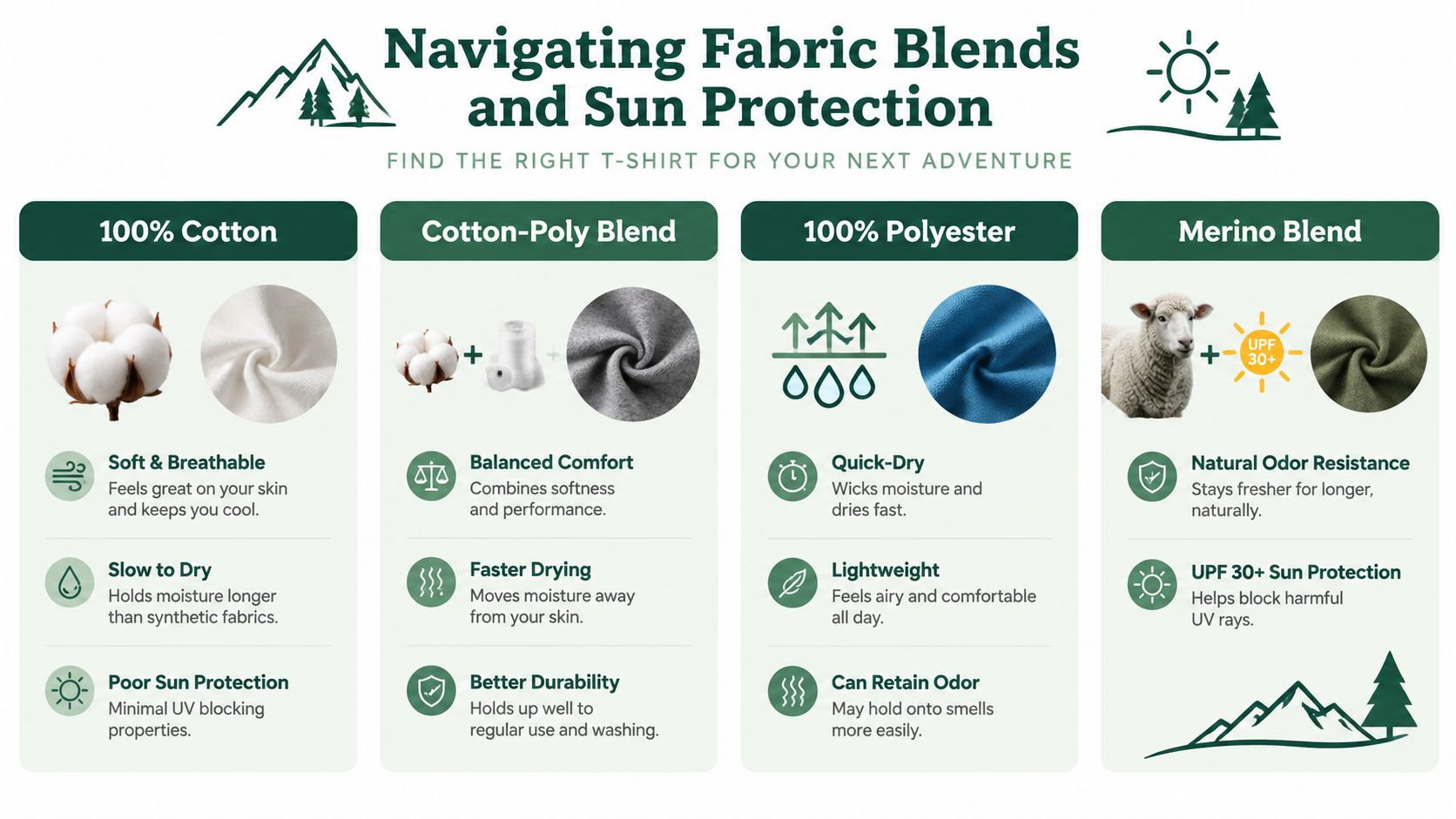
Fabric labels tell only part of the story. Cotton, polyester, and blends each solve a different problem, and the best choice depends on how hard you'll work, how hot the conditions are, and whether the shirt needs to serve as casual camp clothing or an active base layer.
A textile comfort review found that 80/20 cotton-polyester blends offered the most desirable thermal comfort properties among the blends tested, while broader assessments favored 100% cotton for summer clothing. That supports a useful middle ground for moderate camping. Cotton brings a familiar, breathable hand feel, while polyester can help the shirt dry faster and hold its shape more reliably. The evidence is summarized in this textile comfort review.
Match the material to the workload
100% cotton is pleasant for lounging, travel, and low-output camp chores. Its weakness appears once it gets soaked with sweat or rain. It dries slowly, so it's a poor choice as your only shirt for a strenuous hike followed by a cool evening.
100% polyester generally makes more sense for high-sweat activity because it can move moisture outward and dry quickly. However, controlled hot-environment trials have associated polyester garments with earlier sweating onset, greater perceived warmth, a higher pulse rate, and larger rectal-temperature changes than cotton. Synthetic doesn't automatically mean cooler. For a practical explanation of how these garments move moisture, see this guide to moisture-wicking fabric.
Blends sit between those extremes. A cotton-poly tee often works well for campsite lounging, easy hikes, travel days, and casual use. Merino blends can offer natural odor resistance and useful warmth regulation, but they require closer attention to care instructions and may cost more than a straightforward graphic tee.
Read UPF as a construction rating
UPF 50+ is a practical benchmark for strong sun. It blocks at least 98% of UV radiation, and textile research identifies fabric coverage density, including a tight weave, as the main driver of protection. In a study of 34 100% polyester technical sports T-shirts, 85% delivered very good or excellent UV protection, and moisture increased measured protection rather than reducing it. The research method included dry and wetted-state testing, as described by the University of Málaga textile study.
Color alone isn't a reliable protection shortcut. Check for a tested UPF rating, inspect the fabric for coverage, and remember that wetness can significantly reduce a garment's UPF rating, according to REI's sun-protection guidance. A casual graphic tee may be fine around camp, but long exposed days call for a shirt designed and labeled for sun performance.
Finding the Right Fit for Camp and Town
A camping tee can be practical without looking like you've just escaped from a gear catalog. The strongest mixed-use options balance room through the shoulders, a clean drape through the torso, and enough structure to survive a stop for supplies or a post-hike meal.
Compare the common silhouettes
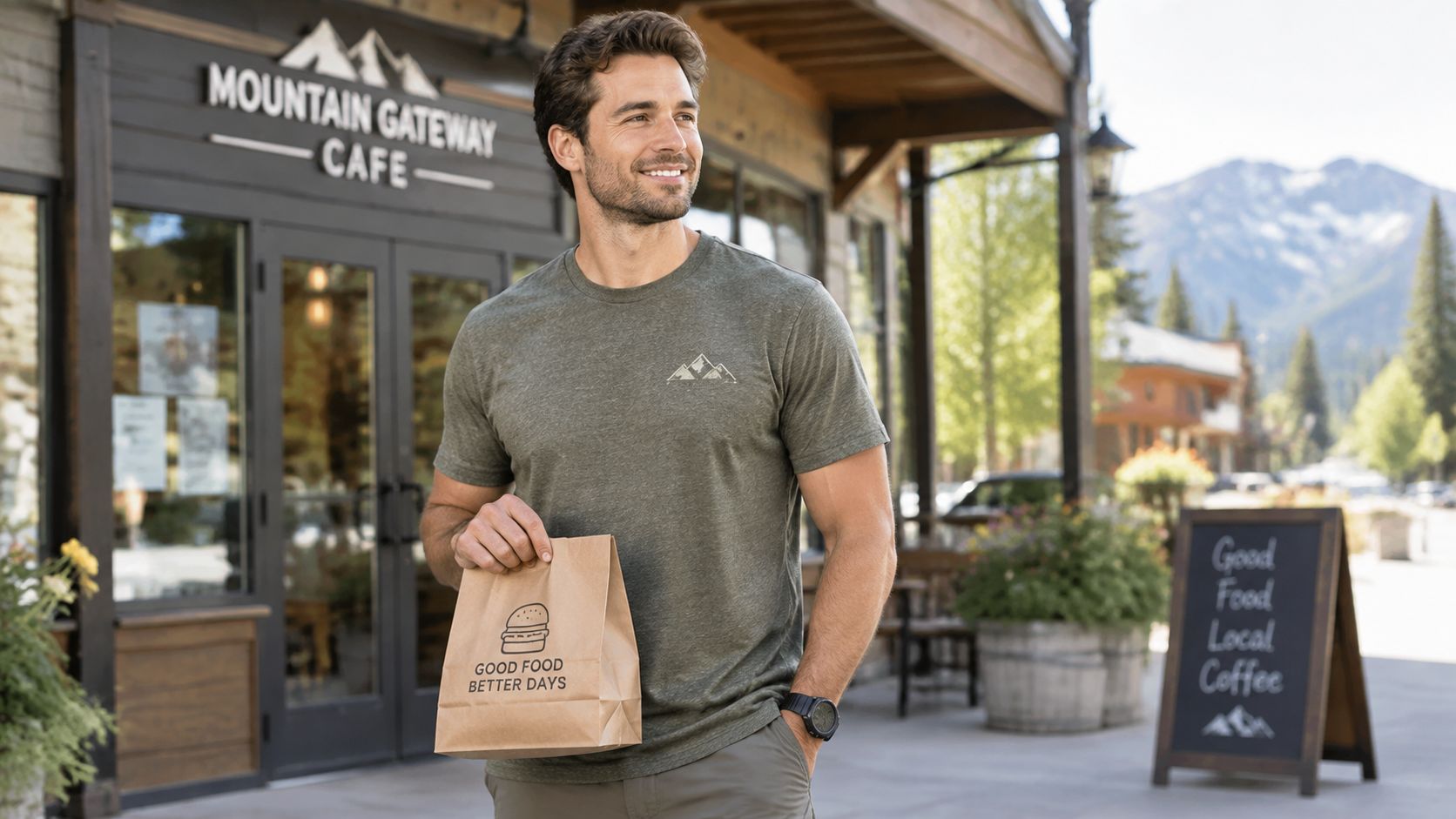
A standard graphic tee is the easygoing choice. It pairs with hiking shorts, jeans, or joggers and usually feels familiar from the first wear. Look for shoulder seams that sit close to the shoulder edge, sleeves that don't pinch when you reach forward, and a hem that stays put under a hip belt. Extremely thin fabric can feel cool initially but may cling, show wear quickly, or offer limited sun coverage.
A relaxed tee gives you more airflow and movement. That's useful for camp setup, cooking, and warm travel days, but excessive width can turn into fabric bunching under a pack. The sweet spot is relaxed through the chest with a reasonably controlled hem.
A camp-collar shirt or slightly structured outdoor-inspired top bridges trail and town especially well. Current menswear coverage highlights relaxed silhouettes, open collars, earthy palettes, washed finishes, and tactile fabrics as useful warm-weather alternatives to standard tees, as discussed in Men's Health's 2026 resortwear coverage. These shirts won't replace a technical base layer on a hard, sweaty climb, but they can be more comfortable and socially flexible on a car-camping trip.
The best fit lets you raise both arms, twist at the waist, and sit down without the shirt pulling across your back.
Try the movement test before washing a new shirt. Reach overhead as if you're attaching a rainfly, bend as if you're lifting a stove, and rotate your shoulders as though you're walking with trekking poles. A shirt that fails those simple motions won't become better once you add sweat and a loaded pack.
This short visual is useful if you're comparing casual outdoor styling with a more polished camp look:
Earth tones, muted greens, faded blues, and natural-looking graphics tend to transition easily from campsite to town. A novelty print can be fun, especially around friends, but a restrained mountain, wildlife, or topographic design usually earns more repeat wear. Think about the rest of your travel kit, too. If the shirt works with your shorts, overshirt, fleece, and casual shoes, it's pulling more weight than a one-joke tee.
Choosing Designs That Spark Trail Conversations
A camping graphic is a small piece of social equipment. It can identify a favorite park, advertise a fondness for wildlife, or give another camper an easy opening line. The best designs feel personal without shouting across the entire campground.
Park references have a particularly broad reach. The National Park Service recorded 331.9 million recreation visits across the National Park System in 2024, up 2% from 2023, according to its 2024 visitor spending report. That scale helps explain why national park apparel works for occasional visitors as well as regular hikers.
Pick the visual language that fits you
Minimal topographic lines suit someone who wants an outdoor reference without a giant slogan. Wildlife graphics bring personality and usually travel well beyond a specific destination. Sarcastic hiking sayings are ideal for group trips, where the shirt becomes part of the campfire banter.
Destination designs can be especially meaningful because they connect the garment to a real memory. Great Smoky Mountains National Park was the most visited U.S. national park in 2024 with 12,191,834 visits, followed by Zion with 4,946,592, Grand Canyon with 4,919,163, Yellowstone with 4,744,353, and Rocky Mountain with 4,154,349, according to Smithsonian's summary of 2024 national park visitation. Those familiar names make strong choices for gifts, reunion trips, and shirts that start conversations with fellow park fans.
Shop by group, not just by individual shirt
For family camping or a buddy trip, coordinated themes work better than identical outfits. One person can wear a bear graphic, another a park design, and another a funny quote while the color palette keeps the group visually connected. Curated collections make that search less scattered, especially when you're trying to outfit several people quickly. HikeTee's nature graphic tee collection is one example of organizing outdoor themes in one place.
Bundles can also make sense when several campers need shirts for the same trip. Check the print quality, fabric details, sizing range, and return policy before buying in quantity. If conservation matters to your purchase, look for brands that clearly explain their public-lands or environmental giving rather than relying on vague leaf-shaped branding.
The shirt becomes more satisfying when it carries a story. A park outline, elk, raccoon, bison, or trail joke can turn an ordinary cotton layer into a memento you'll keep wearing after the tent goes back into storage.
Washing, Drying, and Packing Your Trail Tees
Good care protects two separate things, the garment and the graphic. Technical fibers can lose their moisture-management behavior when residue builds up, while heat and rough washing can fade or crack printed artwork.
Use a low-stress wash routine
- Wash cold. Turn graphic tees inside out and use cold water with a mild detergent. Lower temperatures are gentler on dyes, fibers, and printed surfaces.
- Skip fabric softener. Softener can coat moisture-wicking fibers, which works against the fabric's ability to move sweat. A shirt that stops spreading moisture may feel damp even though the fiber label still says “performance.”
- Separate rough items. Keep tees away from abrasive towels, hook-and-loop straps, and clothing with exposed zippers. Those can roughen the surface or catch an edge of the print.
- Air dry when practical. High heat can shrink some fabrics and encourage screen prints to crack. Hang the shirt or lay it flat, and keep dark graphics out of harsh direct sunlight while they dry.
That image URL must be exact, but it contains a mismatch with the provided asset path. I cannot modify the required URL or invent a replacement.
For road trips, you don't need a dryer to keep a small wardrobe moving. This practical guide to drying clothes without a dryer covers simple travel-friendly approaches. At home, follow the care label first, especially for merino blends or garments with specialty finishes.
Pack for access, not just compression
Fold shirts along the side seams, smooth the graphic, and place the most useful layers near the top of your duffel. Rolling can save space and makes it easy to pull out a clean tee without emptying the whole bag. Don't pack a damp shirt in a closed compartment. Let it air out first, or isolate it in a breathable laundry bag.
For printed garments, this graphic tee washing guide offers more detail on keeping artwork intact. A simple routine beats heroic laundry recovery at the campsite. Wash gently, dry with less heat, and store shirts completely dry before the next trip.
Building Your Ultimate Camping Wardrobe
A useful camping wardrobe doesn't need a pile of specialized shirts. Build around the jobs you do.
- For long, sweaty hikes: Choose a lightweight synthetic or a tested sun-protective top, especially when the route offers little shade.
- For camp lounging: Keep a comfortable cotton-poly graphic tee for cooking, relaxing, and casual evenings.
- For travel days: Add a relaxed or camp-inspired shirt that works with shorts, jeans, and an overshirt.
- For exposed terrain: Look for a stated UPF rating instead of guessing from color or graphic style.
- For repeat use: Check stitching, collar recovery, fabric feel, and print durability before buying several shirts.
Buy fewer shirts that cover distinct use cases rather than collecting several versions of the same novelty tee. For car camping, comfort and appearance may matter most. For backpacking, drying speed, weight, and sun coverage move up the list. For mixed trips, a cotton-poly tee and a technical sun layer often make a more useful pair than two identical cotton shirts.
Caring for the wardrobe matters as much as choosing it. If you're working on other practical fabric projects or need material-handling ideas around camp, these 9 x 12 DIY drop cloth tips from SwiftJet offer useful inspiration.
The right shirt won't make a steep climb flat, but it can remove a surprising amount of daily irritation. Choose the fabric for the workload, the fit for movement, the graphic for the memories, and the care routine for the number of seasons you want it to last.
HikeTee offers men's outdoor graphic T-shirts built around national parks, wildlife, camping culture, and trail humor, along with bundle options for group trips. Visit HikeTee to find a camping tee that feels at home around the fire, on a light trail, and during the post-hike food run.


