


Best Hiking Shirts for Women Who Work Outside
Dominic PalmowskiThe best hiking shirts for female outdoor workers and hikers are the ones that solve real problems: sweat, sun exposure, chafing, pack rub, awkward fit, and the classic why-is-this-shirt-cut-like-a-cardboard-box situation.
Before we get into fabrics, fits, and features, I want to be honest about my lane. I am Dominic, founder of Hike Tee. I am not a female field worker, trail crew member, ranger, guide, or backcountry researcher. I am not going to pretend I have personally spent seasons in women’s technical hiking shirts while clearing trails or hauling gear under a desert sun.
That would be fake, and fake advice is how people end up three miles from the trailhead wearing the wrong shirt and questioning every life choice that led them there.
What I can speak to honestly is this: comfort matters. Feeling like yourself outside matters. And when it comes to women’s hiking shirts, the best choice depends on whether you are working outdoors, hiking hard, backpacking, camping casually, or just wearing something soft around the fire after the boots come off.
So this guide is built from a practical, research-backed perspective, with clear separation between technical hiking shirts and casual outdoor tees. No pretending. No magic shirt that does everything. Just useful advice.
Quick Answer: What Makes a Great Women’s Hiking Shirt?
A great women’s hiking shirt should match the conditions you are actually facing.
For serious hiking, trail work, field work, guiding, or hot-weather backpacking, look for:
- Moisture-wicking fabric
- Quick-drying material
- UPF sun protection
- Flat or low-profile seams
- Enough length to stay tucked or covered under a pack
- Room through the shoulders, bust, and hips
- Odor resistance if you are wearing it for multiple days
For relaxed camping, family hikes, road trips, campground mornings, and post-hike lounging, softness and personality might matter more than technical performance. That is where a comfy outdoor graphic tee can absolutely earn its spot.
The mistake is expecting one shirt to do both jobs perfectly. A lightweight UPF sun hoodie and a soft campfire tee are both outdoor shirts, but they are built for very different moments.
Women’s Hiking Shirt Fit: The Part Brands Still Get Wrong
Fit is not a small detail. It is often the difference between a shirt you forget you are wearing and one you spend all day tugging, adjusting, and muttering about under your breath.
Women’s outdoor shirts commonly miss in a few places.
Bust and Chest Pull
One of the most common fit complaints in women’s outdoor shirts is pulling across the chest. A shirt can technically be the right size and still feel wrong if the pattern was not built with enough room through the bust.
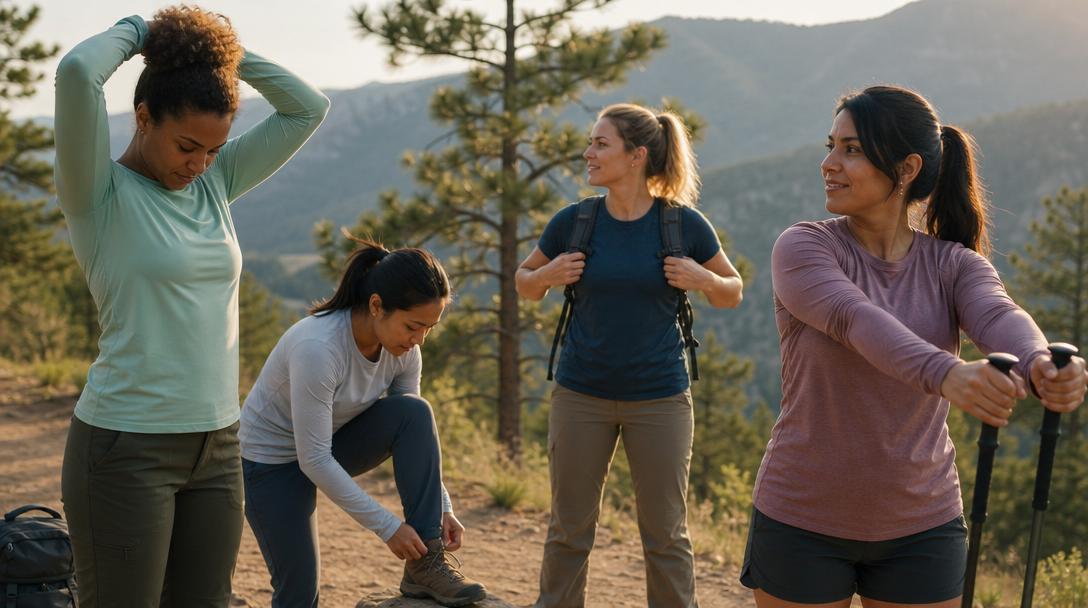
Look for shirts that allow easy movement when you reach forward, lift your arms, use trekking poles, carry tools, or adjust pack straps. If buttons gape or fabric stretches tight across the chest, that shirt is going to annoy you fast.
Shoulders and Arm Movement
Outdoor work and hiking involve more upper-body movement than people think. You are reaching for branches, scrambling over rocks, pulling gear from a pack, setting up camp, or lifting a water bottle for the 47th time because hydration is apparently a full-time job.
A good hiking shirt should not bind across the shoulders. Raglan sleeves, stretch fabric, gusseted underarms, or relaxed cuts can help.
Torso Length
Longer hems matter. If you are bending, climbing, wearing a hip belt, or reaching overhead, a too-short shirt can ride up and leave your lower back exposed to sun, cold, bugs, or pack rub.
For female outdoor workers especially, torso coverage is practical. A shirt that stays put is one less thing to think about during a long day.
Hip Fit
Some women’s shirts taper in at the waist and then get too snug at the hips. That can cause the shirt to bunch up under a pack belt or ride up while walking.
If you have curvier hips, look for shirts with a slight A-line shape, stretch, side vents, or a relaxed hem.
Best Fabrics for Female Outdoor Workers and Hikers
Fabric is where hiking shirts stop being just shirts and start becoming gear.
Polyester and Nylon
Synthetic fabrics like polyester and nylon are popular for hiking because they wick moisture, dry quickly, and are usually durable. For outdoor workers and high-output hikers, this is often the most practical category.
Polyester tends to feel softer and is common in lightweight hiking tops. Nylon is often tougher and can be better for abrasion resistance, especially if you are brushing against rock, tools, branches, or pack straps.
The downside? Synthetics can hold odor more than merino wool unless treated with odor-control technology.
Merino Wool
Merino wool is a favorite among backpackers and multi-day hikers because it naturally resists odor, manages moisture, and regulates temperature well.
It can be excellent for women who need one shirt to work across cool mornings, warm afternoons, and repeated wears. The downside is price and durability. Lightweight merino can develop holes faster than synthetic shirts if used heavily for field work.
Blends
Many of the best women’s hiking shirts use blends: polyester with spandex, nylon with elastane, merino with synthetic fibers. Blends can give you stretch, better durability, faster drying, and improved comfort.
If you are doing physical work outdoors, a little stretch can be a big deal.
Cotton
Cotton feels great when dry. It is soft, familiar, breathable in casual settings, and easy to love around camp. But for sweaty hiking, cold conditions, or field work, cotton is usually not the best choice.
Cotton holds moisture, dries slowly, and can increase chafing. In cold weather, wet cotton can become dangerous because it pulls heat away from your body.
That does not mean cotton has no place outdoors. It just means you should know when to wear it.
When Cotton and Casual Tees Make Sense
This is where I can speak from the heart of Hike Tee. We are not a technical performance brand, and I am not going to dress that up in fancy trail jargon. We make soft, comfortable outdoor lifestyle shirts for people who love camping, hiking culture, national parks, family trips, funny trail sayings, and that feeling of being a little more yourself outside.
A cotton or cotton-blend graphic tee is great for:
- Campground mornings
- Easy nature walks
- Road trips to national parks
- Post-hike comfort
- Cabin weekends
- Campfire evenings
- Outdoor errands and casual travel days
If you want the deeper cotton-versus-hiking breakdown, I have covered that honestly in Are Cotton Shirts Good for Hiking? and Why Is Cotton Bad for Hiking?. For a broader look at choosing the right shirt by adventure type, see Best Shirts for Hiking.
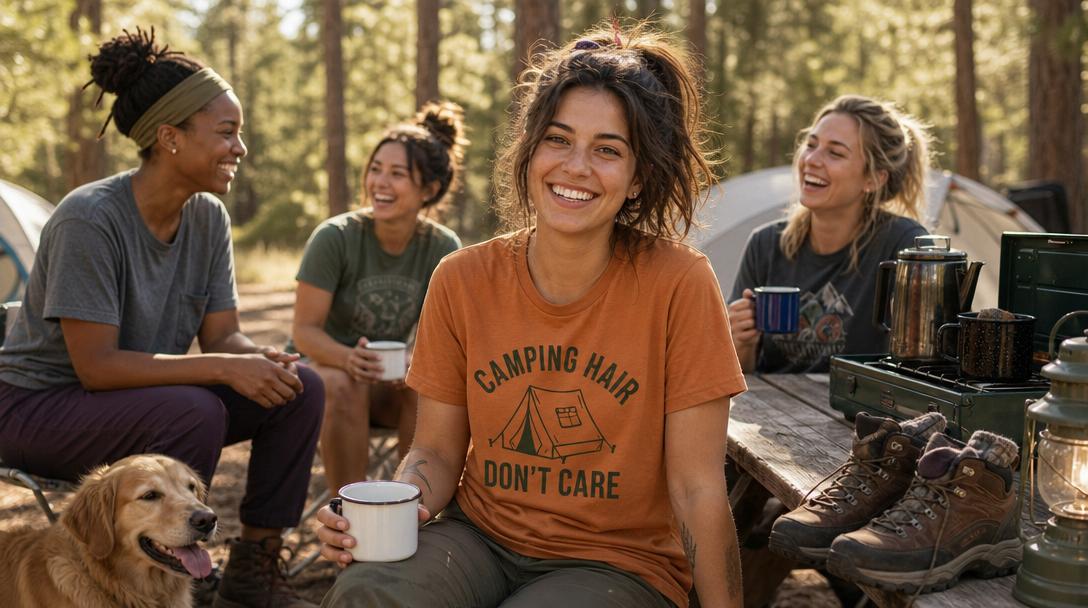
For casual outdoor days, I like shirts that make people smile without trying too hard. Something like the One More Mile Shirt fits that easy hiking mood, while the Camping Hair I Don’t Care Shirt feels right at home after a long day when the ponytail situation has officially become wilderness art.
Just do not confuse these with technical sun shirts or field work tops. They are for comfort, identity, and everyday outdoor joy, not hauling a pack through humid switchbacks for eight hours.
Best Shirt Types by Outdoor Use
For Female Outdoor Workers
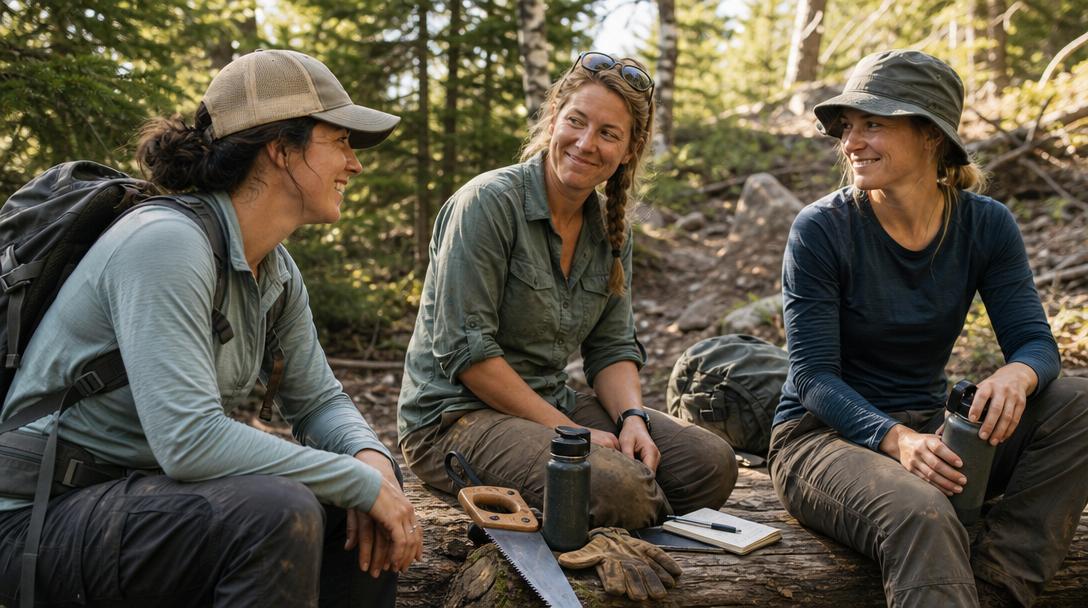
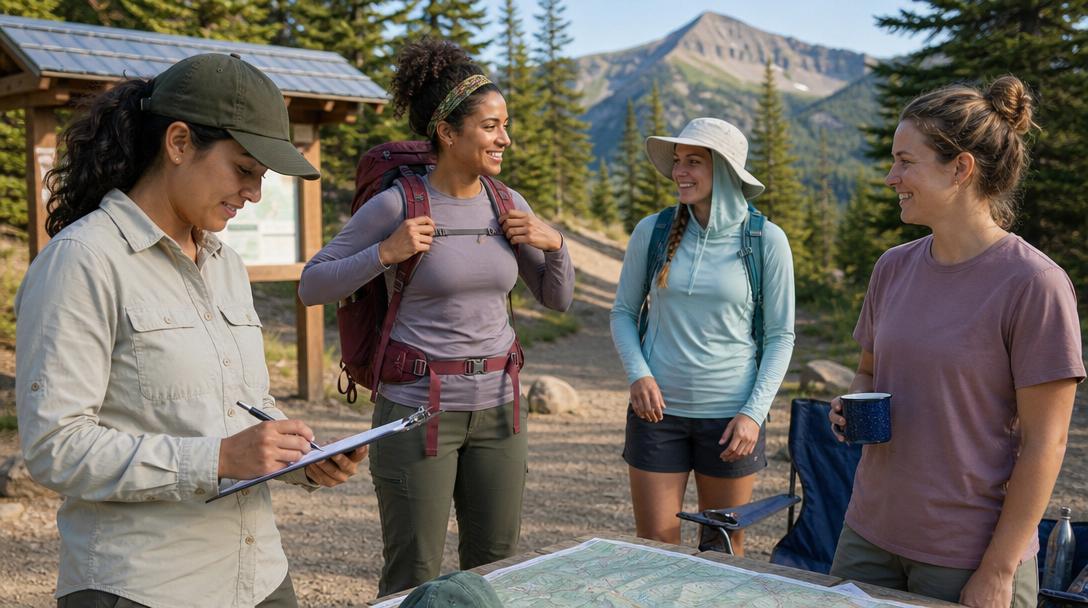
If you work outdoors, your shirt needs to be tougher than a casual hiking top. Think trail crews, park staff, conservation workers, field researchers, farm and ranch workers, outdoor educators, and guides.
Prioritize:
- Durable synthetic or nylon-rich fabric
- UPF 30 to UPF 50+ protection
- Long sleeves for sun, brush, and bug protection
- Ventilation panels or roll-up sleeves
- Secure pockets if useful for your job
- Room to move without excess bagginess
- Fabric that can handle repeated washing
Button-up sun shirts are popular for outdoor work because they offer coverage, airflow, and adjustability. Long-sleeve crew necks and sun hoodies can also be excellent, especially when sun exposure is constant.
If you are wearing a pack, radio harness, tool belt, or safety vest, pay attention to seams. Shoulder seams under pressure can become hot spots fast.
For Hot-Weather Hikers
Hot-weather hiking shirts should focus on sun protection and moisture management. The best options are usually lightweight synthetic shirts, UPF sun hoodies, or airy button-ups.
Look for:
- UPF 50 if hiking in exposed terrain
- Light colors that reflect heat
- Loose but not sloppy fit
- Breathable weave
- Quick-dry performance
Tank tops can feel tempting in heat, but exposed shoulders can burn and pack straps can rub. Many experienced hikers prefer lightweight long sleeves because they reduce sunscreen dependence and protect against brush and bugs.
For Backpackers
Backpacking changes everything because you may wear the same shirt for days. Glamorous? No. Practical? Absolutely.
For backpacking, consider merino wool or odor-resistant synthetic blends. The shirt should dry overnight, resist stink, and feel comfortable under pack straps.
Avoid thick seams on the shoulders. Avoid overly tight fits that trap sweat. Avoid anything that takes forever to dry.
For Cold-Weather Hiking
In cold weather, your hiking shirt is usually your base layer. That means cotton should stay home for active cold-weather hikes.
Choose merino wool or synthetic base layers that wick sweat away from your skin. A damp shirt in cold weather can chill you quickly when you stop moving.
Your base layer should fit close enough to move moisture but not so tight that it restricts movement. If you want more detail on layering, the basic idea is simple: base layer, insulating layer, outer shell.
For Casual Hikers and Campers
If your hike is short, low-intensity, and close to home or camp, comfort and personality can take the lead. This is where soft tees, relaxed fits, and fun graphics shine.
A good casual hiking shirt should still fit well. You want enough length, enough room across the shoulders, and fabric that feels good after a few hours outside.
Just check the weather and trail conditions. A cotton tee on a dry, mild campground loop is one thing. A cotton tee on a steep, sweaty, stormy mountain hike is another beast entirely.
Features Worth Paying For
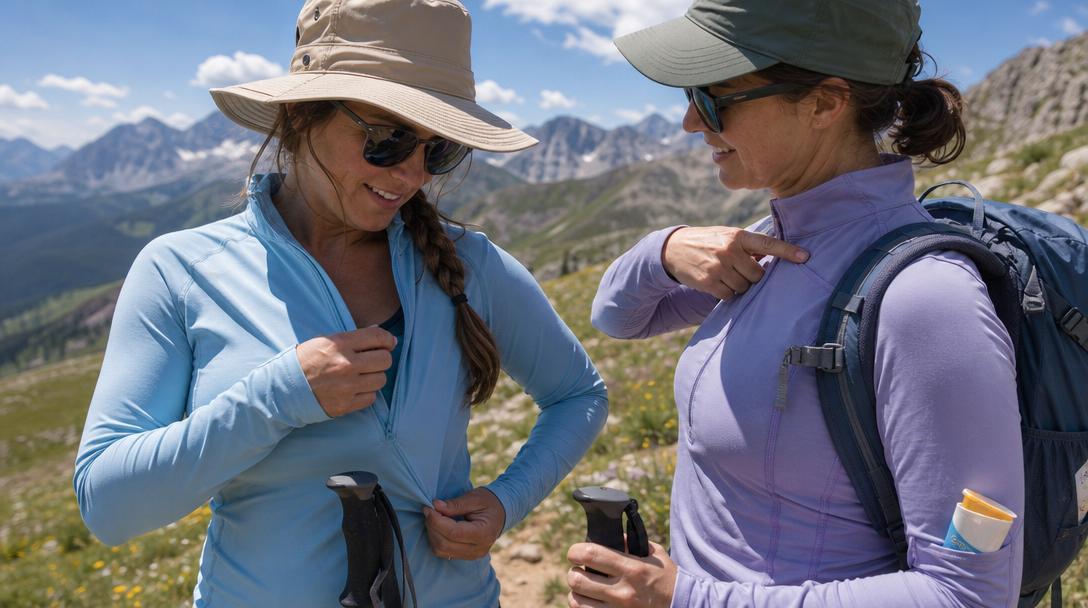
UPF Protection
UPF-rated shirts are one of the best upgrades for women who spend long hours outdoors. UPF 50 blocks most UV radiation and can reduce how much sunscreen you need on covered areas.
This matters for high-elevation hiking, desert work, open water, alpine terrain, and any job where shade is more of a rumor than a reality.
Flat Seams
Flatlock or low-profile seams reduce irritation. This matters most under backpacks, safety vests, sports bras, and shoulder straps.
If you have ever had a seam rub the same spot all day, you know it can turn a beautiful hike into a tiny fabric-based betrayal.
Odor Control
Odor resistance is useful for backpackers, travelers, guides, and anyone working multiple long days outdoors. Merino naturally helps with this. Some synthetics use antimicrobial treatments.
Ventilation
Vents, mesh panels, quarter zips, and button fronts let you dump heat without changing clothes. For humid environments, ventilation can matter just as much as fabric type.
Stretch
Stretch helps with climbing, bending, reaching, tool use, and scrambling. For outdoor workers, stretch can make a shirt feel less restrictive during repetitive movement.
Red Flags: Shirts to Avoid for Serious Hiking or Field Work
Avoid shirts that:
- Stay wet for hours
- Have bulky shoulder seams under pack straps
- Pull across the bust or shoulders
- Ride up when you lift your arms
- Feel scratchy when dry
- Become see-through when wet
- Offer no sun protection in exposed terrain
- Fit only while standing still in front of a mirror
That last one is sneaky. Always test a hiking shirt by moving in it. Reach overhead. Bend. Twist. Put on your pack. If it annoys you in your bedroom, it will definitely annoy you on mile six.
How Many Hiking Shirts Do You Need?
For day hiking, one good technical shirt is enough per hike, with a dry backup in the car if you like comfort.
For weekend camping, pack one technical shirt for hiking and one casual tee for camp.
For backpacking, many hikers carry one shirt to hike in and one dry sleep shirt. Some go ultra-minimal with only one, but that is between them, their laundry strategy, and their trail friends.
For outdoor workers, the number depends on how often you can wash clothes. A practical rotation might include three to five durable work shirts, especially in hot climates.
FAQ: Women’s Hiking Shirts
What is the best material for women’s hiking shirts?
For active hiking and outdoor work, synthetic fabrics like polyester and nylon are usually the most practical because they wick sweat and dry quickly. Merino wool is excellent for odor resistance and temperature regulation, especially on multi-day trips.
Are cotton shirts okay for women hikers?
Cotton shirts are okay for casual, dry, low-intensity outdoor use, like campground walks or relaxing after a hike. They are not ideal for sweaty hikes, cold weather, backpacking, or field work because cotton holds moisture and dries slowly.
Should women hike in long sleeves or short sleeves?
It depends on conditions. Long sleeves are often better for sun, bugs, brush, and high-elevation hiking. Short sleeves can be comfortable in mild weather or shaded trails. In hot exposed areas, lightweight UPF long sleeves can actually be more protective and comfortable than bare skin.
What fit is best for a women’s hiking shirt?
The best fit allows full movement without pulling across the bust, shoulders, or hips. It should be long enough to stay covered under a pack and loose enough to breathe, but not so oversized that it bunches or catches.
Do female outdoor workers need different shirts than casual hikers?
Usually, yes. Outdoor workers often need more durability, sun protection, abrasion resistance, and all-day comfort under gear. Casual hikers may prioritize softness, style, and comfort for shorter outings.
Are sun hoodies good for women hikers?
Yes. Lightweight UPF sun hoodies are a strong choice for exposed trails, desert hikes, alpine routes, and long days outdoors. They protect the neck, arms, and sometimes hands, while reducing the need for constant sunscreen reapplication.
Final Take: Choose the Shirt for the Job
The best hiking shirt for female outdoor workers and hikers is not one single shirt. It is the right shirt for the day’s job.
If you are working outside, hiking hard, backpacking, or dealing with heat, sun, sweat, and pack straps, choose technical fabrics, smart seams, UPF protection, and a fit that respects real movement.
If you are hanging around camp, taking an easy walk, road-tripping through parks, or drinking coffee by the fire while pretending you slept great on a sleeping pad, a soft outdoor tee is perfect.
At Hike Tee, our lane is the second one: comfortable, personality-filled shirts for people who love the outdoors and want to feel at home there. For technical field work, listen to the women who live in that gear every day. For campfire comfort, trail humor, and outdoor identity, we are happy to sit beside you by the fire.
Preferably near the snacks.


